
Biology Semester 1 Final Exam Review - Heart, DNA & Genetics
Comprehensive biology study guide covering heart anatomy, EKG, diabetes, protein synthesis, homeostasis, cell division (mitosis/meiosis), and DNA technology.
PBS Semester 1 Final Exam Review
Heart · Blood · Genetics · Homeostasis · Protein Synthesis
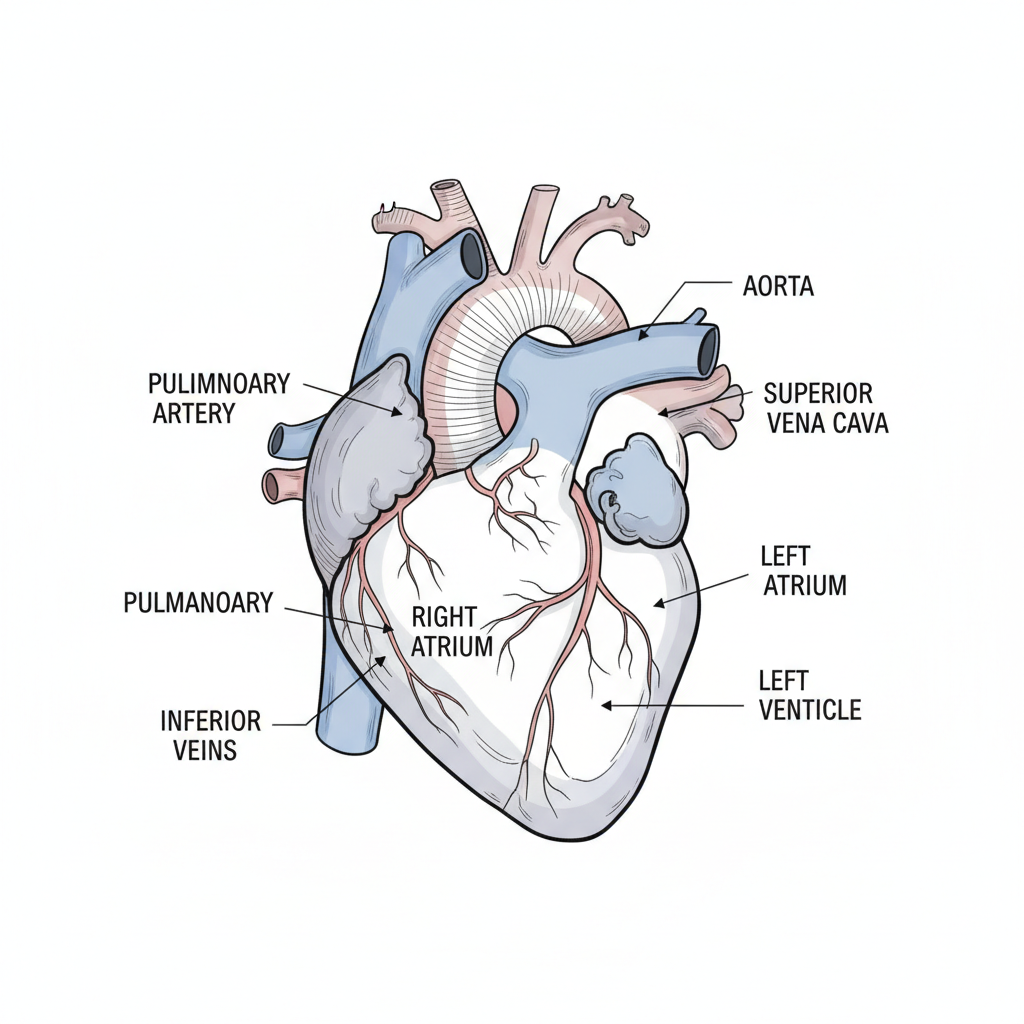
Station 1a: Heart Anatomy
<ul><li style='margin-bottom:20px;'><strong>Right Atrium:</strong> Receives deoxygenated blood from body</li><li style='margin-bottom:20px;'><strong>Right Ventricle:</strong> Pumps blood to lungs</li><li style='margin-bottom:20px;'><strong>Left Atrium:</strong> Receives oxygenated blood from lungs</li><li style='margin-bottom:20px;'><strong>Left Ventricle:</strong> Strongest chamber; pumps to body</li></ul>
<p><strong>Valves:</strong> Tricuspid (Right), Mitral/Bicuspid (Left)</p><p><strong>Vessels:</strong> Aorta (to body), Pulmonary Artery (to lungs), Pulmonary Vein (to heart)</p>
Station 1a: Practice Check
1. Which structure pumps blood to the lungs?
2. Identify the largest artery in the body.
3. Which valve prevents backflow on the left side?
Station 1b: Diffusion & Osmosis
Movement of particles from High to Low concentration.
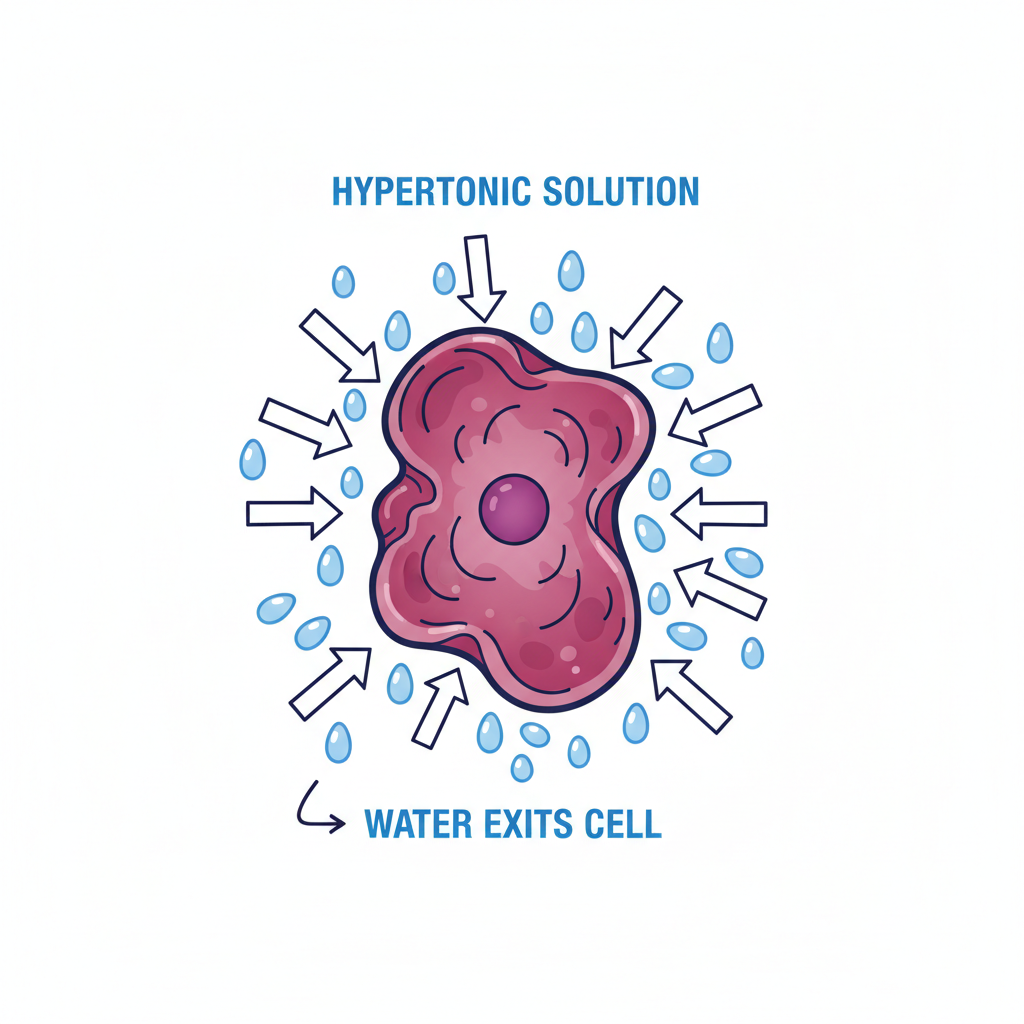
Movement of water across a membrane.
Hyperglycemia (High Blood Sugar): Water moves OUT of the cell to balance the high solute concentration in current. Cell shrinks (dehydration).
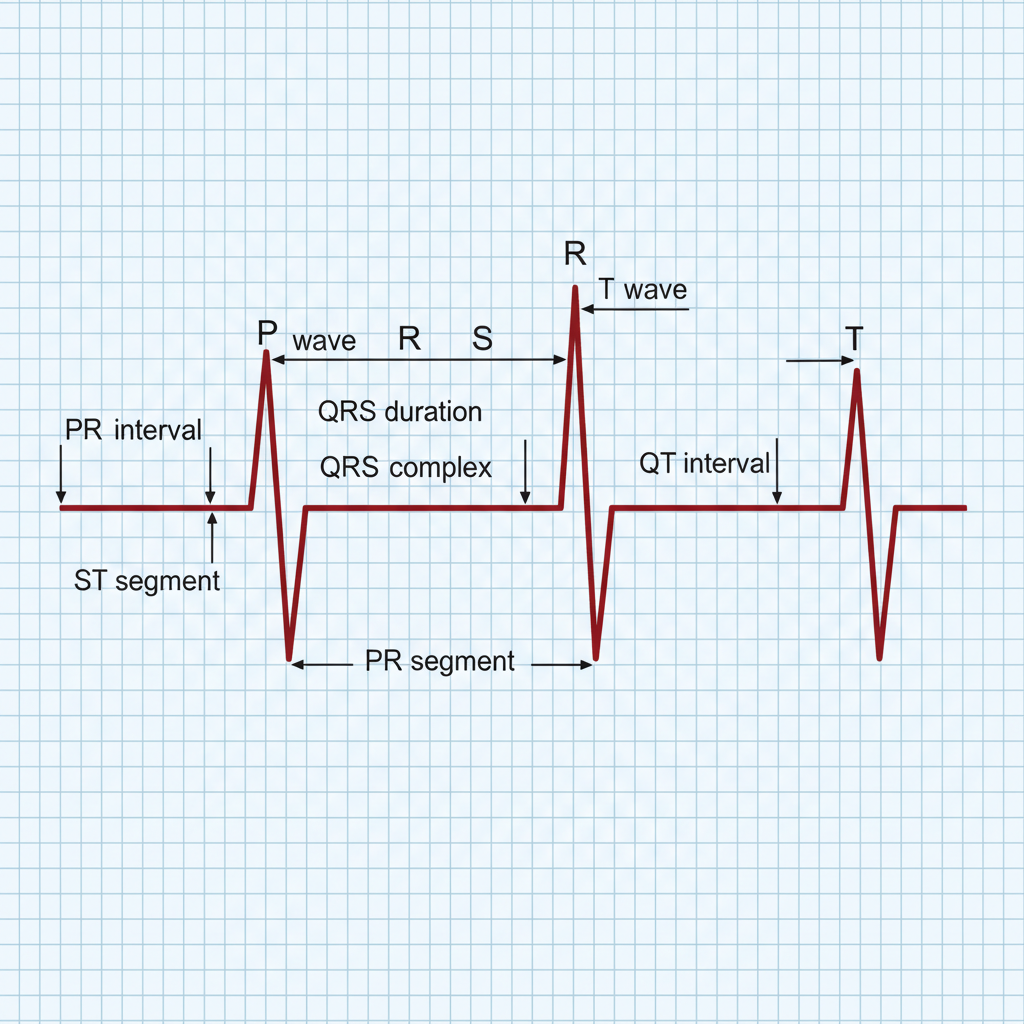
Station 2: Blood Pressure & EKG
Blood Pressure: Normal < 120/80. Systolic = Contracting. Diastolic = Resting.
P Wave: Atria contract QRS: Ventricles contract T Wave: Ventricles relax Math: Count QRS in 6-sec strip x 10
Station 3: Cholesterol & Diabetes
<h3>Lipids</h3><p><strong>HDL:</strong> Good, removes cholesterol.</p><p><strong>LDL:</strong> Bad, clogs arteries.</p><p>Result: Narrow vessels = Increased BP & Heart Disease Risk.</p>
<h3>Diabetes Mellitus</h3><p><strong>Type 1:</strong> No insulin produced (Genetic/Autoimmune).</p><p><strong>Type 2:</strong> Insulin resistance (Lifestyle/Genetic factors).</p><p><strong>Mechanism:</strong> GLUT4 transporters fail to open cell doors for glucose.</p>
Practice: Which diabetes type is primarily associated with insulin resistance?
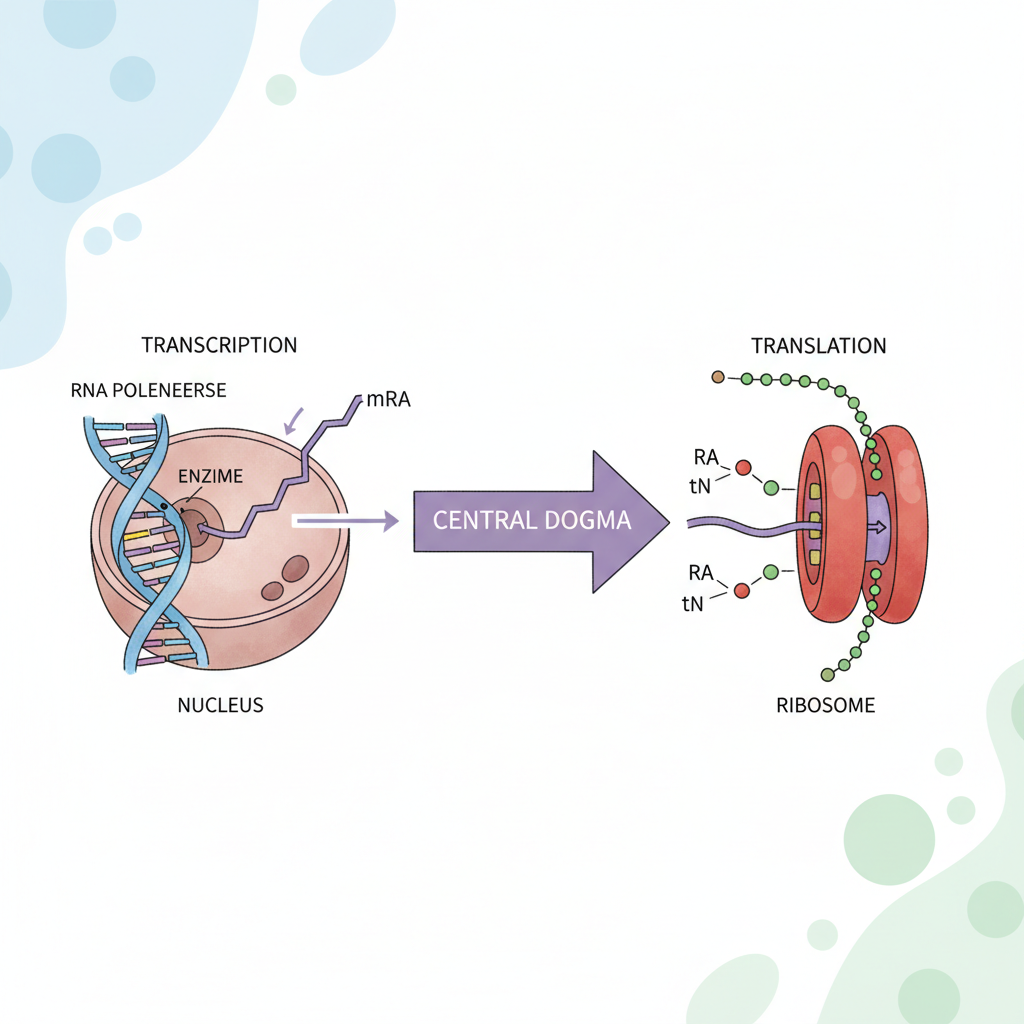
Station 4: Protein Synthesis
DNA -> Transcription -> mRNA -> Translation -> Protein
<ul><li><strong>Transcription:</strong> in Nucleus. A-U, C-G.</li><li><strong>Translation:</strong> in Cytoplasm (Ribosome). Read in 3s (Codons).</li><li><strong>Start Codon:</strong> AUG (Methionine).</li></ul>
Practice: Decode the Sequence
DNA Strand: ATG CGA GAC
<div style='margin-bottom:30px;'>1. Transcribe to mRNA:<br><span style='color:#e74c3c; font-weight:bold;'>________________</span></div><div>2. Translate to Amino Acids (Use Chart):<br><span style='color:#e74c3c; font-weight:bold;'>________________</span></div>
KEY:<br>mRNA: UAC GCU CUG<br>Protein: Tyr - Ala - Leu
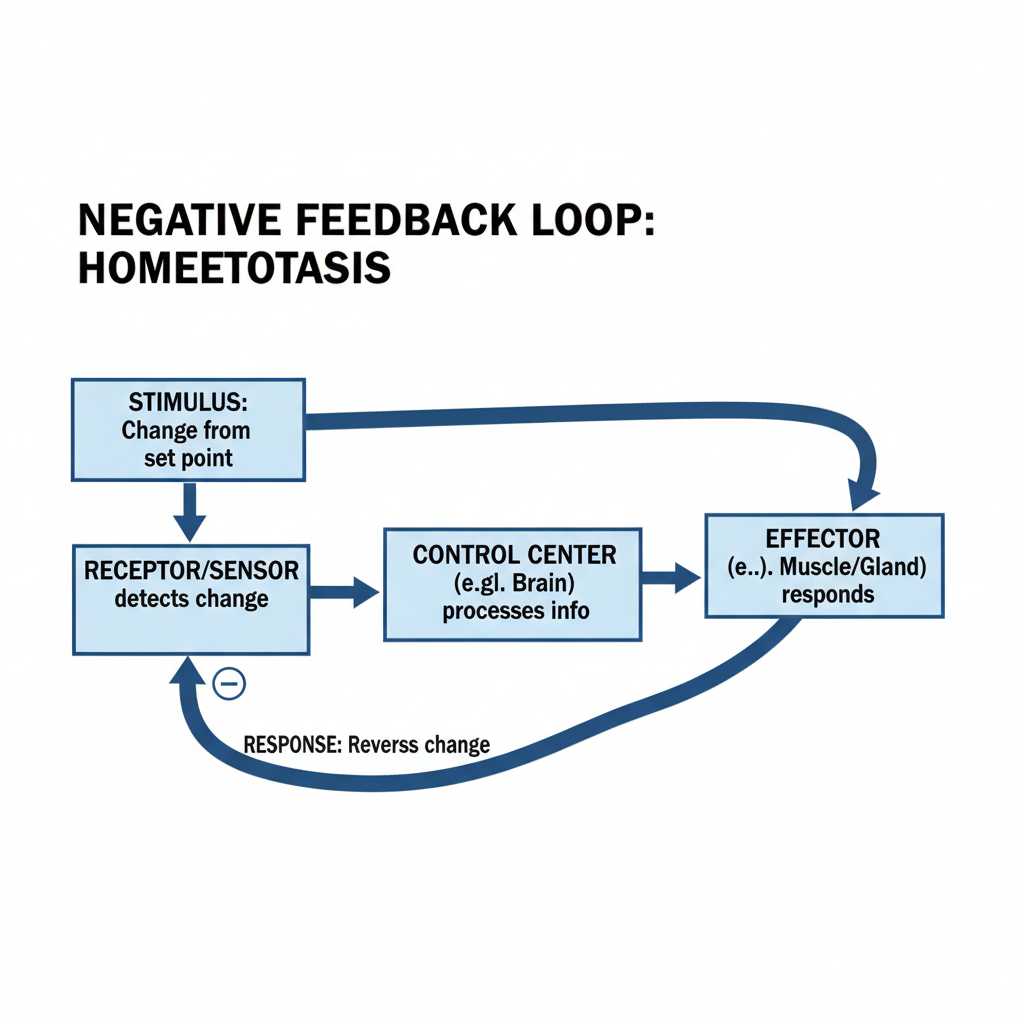
Station 4b: Homeostasis & Feedback
<h3 style='color:#27ae60;'>Negative Feedback</h3><p>Change triggers response to REVERSE the change.</p><p><em>Ex: Body Temp, Blood Pressure, Blood Sugar.</em></p>
<h3 style='color:#c0392b;'>Positive Feedback</h3><p>Change triggers response to AMPLIFY the change.</p><p><em>Ex: Childbirth (Oxytocin), Blood Clotting.</em></p>
Station 5: Cell Division
<strong>Karyotypes:</strong> Image of chromosomes. Homologous pairs match by size, banding, centromere.<br><strong>Diploid (2n):</strong> Body cells (46 in humans).<br><strong>Haploid (n):</strong> Sex cells (23 in humans).
<table style='width:100%; font-size:28px; border-collapse:collapse; margin-top:20px;'><tr style='background:#ddd;'><th style='padding:15px; text-align:left;'>Feature</th><th style='padding:15px; text-align:left;'>Mitosis</th><th style='padding:15px; text-align:left;'>Meiosis</th></tr><tr><td style='padding:15px; border-bottom:1px solid #aaa;'>Cells Made</td><td style='padding:15px; border-bottom:1px solid #aaa;'>2 Identical</td><td style='padding:15px; border-bottom:1px solid #aaa;'>4 Unique</td></tr><tr><td style='padding:15px; border-bottom:1px solid #aaa;'>Type</td><td style='padding:15px; border-bottom:1px solid #aaa;'>Somatic (Body)</td><td style='padding:15px; border-bottom:1px solid #aaa;'>Gametes (Sex)</td></tr><tr><td style='padding:15px; border-bottom:1px solid #aaa;'>Purpose</td><td style='padding:15px; border-bottom:1px solid #aaa;'>Growth/Repair</td><td style='padding:15px; border-bottom:1px solid #aaa;'>Reproduction</td></tr></table>
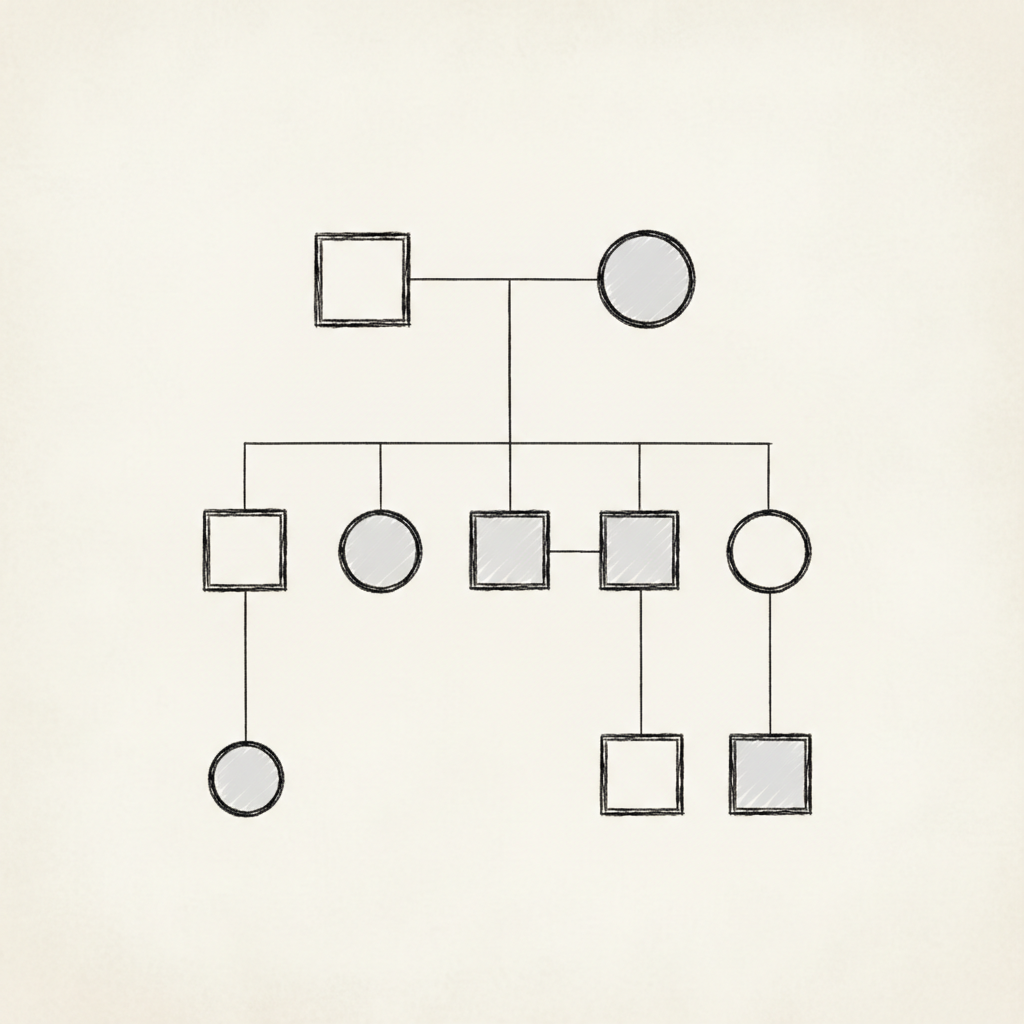
Station 6: Pedigrees & Inheritance
<ul><li><strong>Square:</strong> Male</li><li><strong>Circle:</strong> Female</li><li><strong>Shaded:</strong> Affected</li></ul>
<p><strong>Dominant/Recessive:</strong> Standard inheritance</p><p><strong>Codominance:</strong> Both show (ex: Spots)</p><p><strong>Incomplete Dominance:</strong> Blending (ex: Pink)</p>
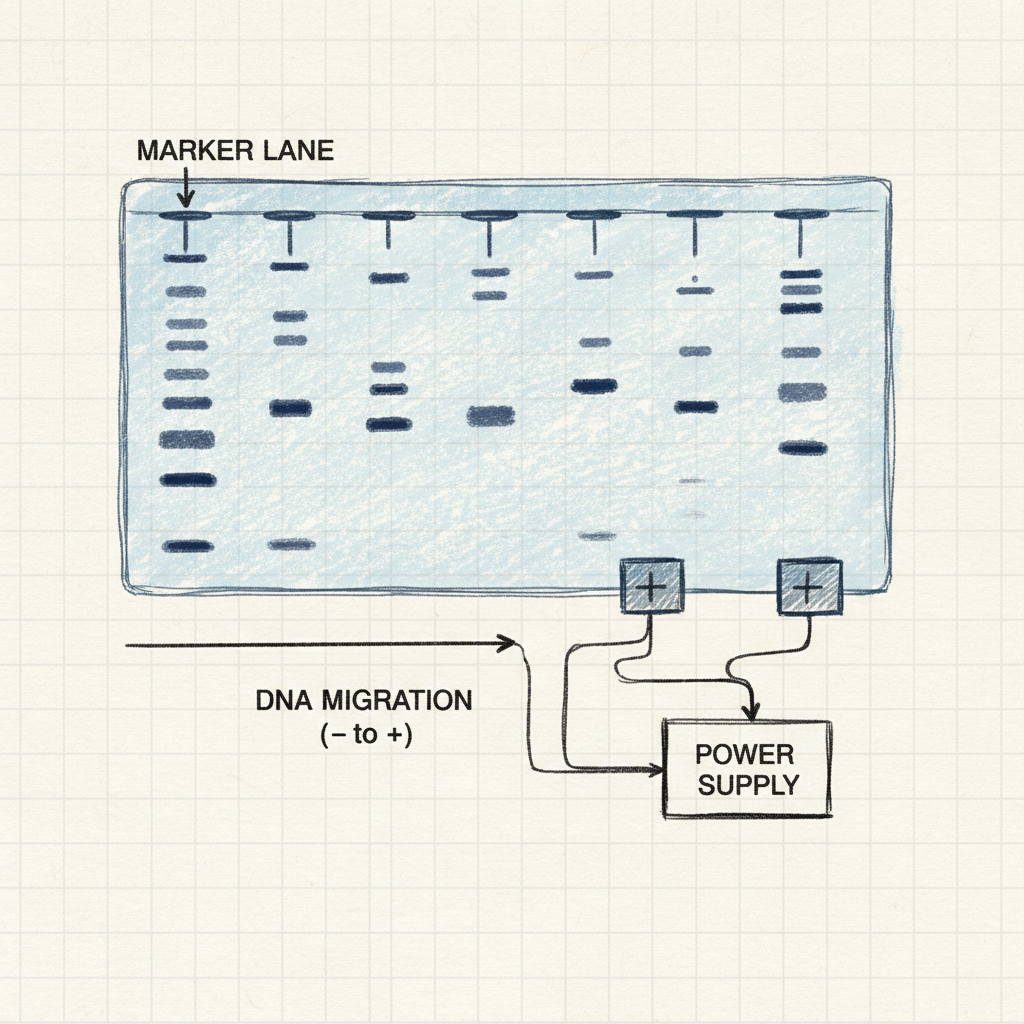
Station 7: DNA Technology
<strong>Restriction Enzymes:</strong> Molecular scissors that cut DNA at specific nucleotide sequences, creating fragments of various lengths.
<strong>Gel Electrophoresis:</strong><br>- Separates DNA by size.<br>- DNA is Negative, moves to Positive.<br>- Small fragments travel FARTHER and FASTER.
- biology-review
- heart-anatomy
- genetics
- protein-synthesis
- mitosis-vs-meiosis
- study-guide
- diabetes-mechanisms
- dna-technology