















AP Human Geography Alphabet Review: Units 1-7 Essential Terms
Master AP Human Geography with this A-Z review. Explore key concepts from Agriculture and Balkanization to Urbanization and Zoning for units 1 through 7.
AP Human Geography Alphabet Review Book
Units 1–7 Review
A
Agriculture
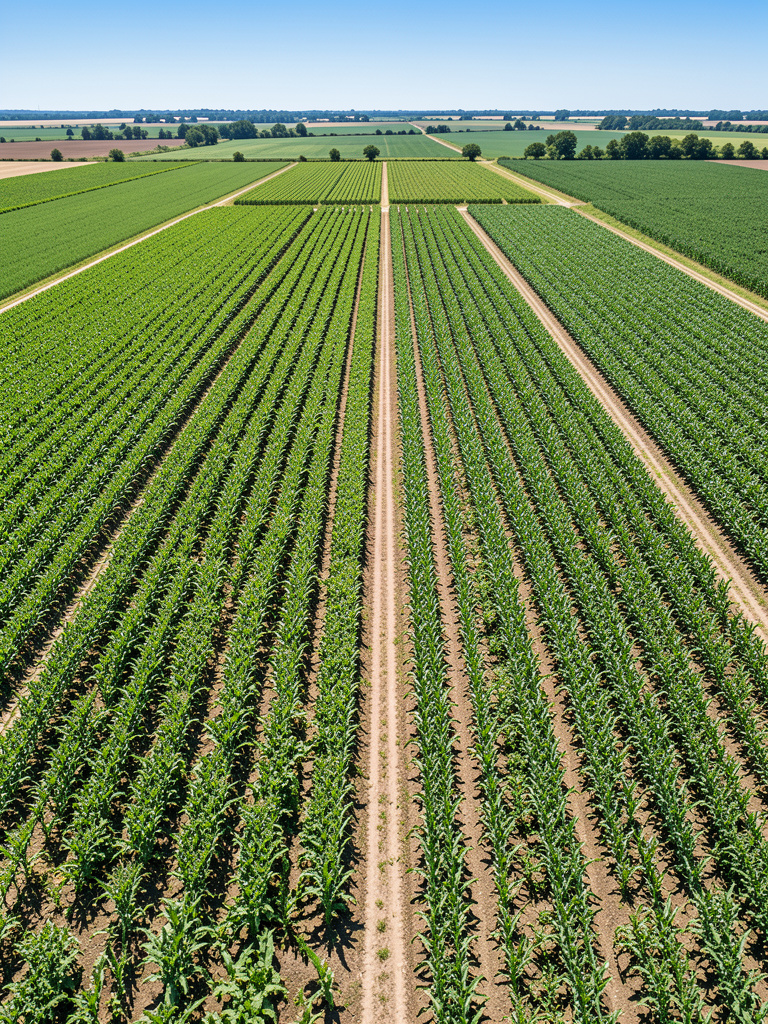
Agriculture is the deliberate cultivation of crops and raising of livestock for food and other products. It is one of the oldest and most widespread human activities. AP Human Geography studies how farming practices shape landscapes and economies.
Unit 5 – Agriculture & Rural Land Use
B
Balkanization
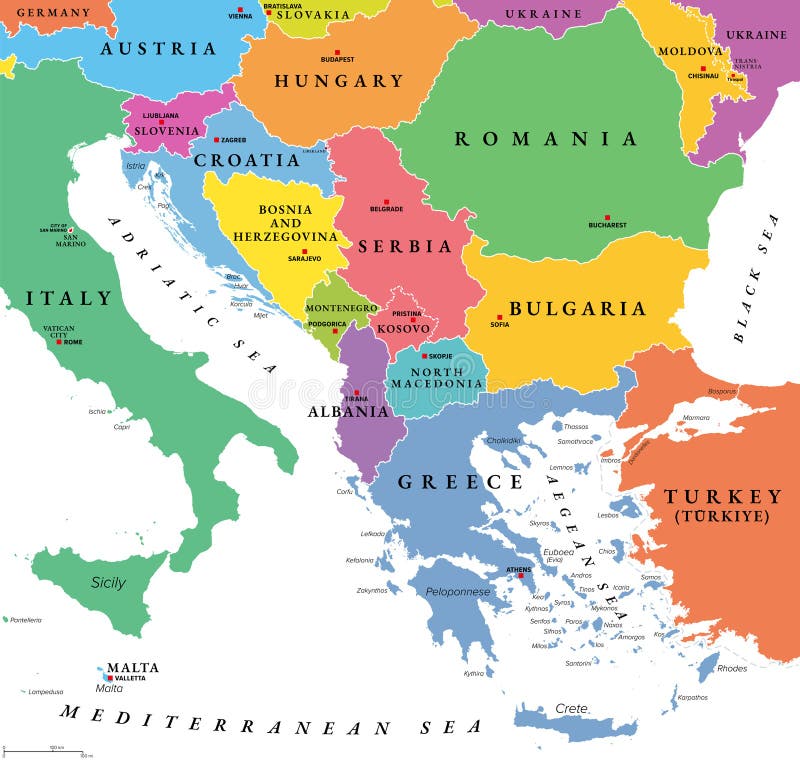
Balkanization is the process by which a country or region breaks apart into smaller, often hostile units. It comes from the fragmentation of the Balkan Peninsula in southeastern Europe. This term is used in AP Human Geography to describe political instability and ethnic conflict.
Unit 4 – Political Geography
C
Cultural Diffusion
Cultural diffusion is the spread of cultural beliefs, practices, and ideas from one society to another. It can happen through trade, migration, or media. AP Human Geography examines how cultures influence each other over time and across space.
Unit 3 – Cultural Patterns & Processes
D
Density
Density refers to the number of people or things within a given unit of area. In AP Human Geography, we look at arithmetic, physiological, and agricultural density. Density helps us understand how populations are distributed across the Earth.
Unit 2 – Population & Migration
Unit 3 – Cultural Patterns & Processes
E
Ethnicity
Ethnicity refers to a group of people who share a common cultural heritage, language, ancestry, or religion. Unlike race, ethnicity is based on shared cultural identity. AP Human Geography studies how ethnic groups form communities and how ethnicity shapes social and political landscapes.
F
Food Desert
A food desert is an area where residents have limited access to affordable, nutritious food. These areas are often found in low-income urban or rural communities. AP Human Geography studies food deserts as an example of spatial inequality and uneven resource distribution.
Unit 5 – Agriculture & Rural Land Use
G
Gentrification
Gentrification is the process by which wealthier residents move into a lower-income neighborhood, raising property values and often displacing long-time residents. It changes the social and economic character of urban areas. AP Human Geography examines gentrification as part of urban development and inequality.
Unit 6 – Cities & Urban Land Use
H
Hierarchical Diffusion
Hierarchical diffusion is the spread of an idea or trend from a person or place of authority to others. It typically moves from large cities to smaller towns, or from influential people to the general public. Fashion trends and political ideas often spread through hierarchical diffusion.
Unit 3 – Cultural Patterns & Processes
I
Industrialization
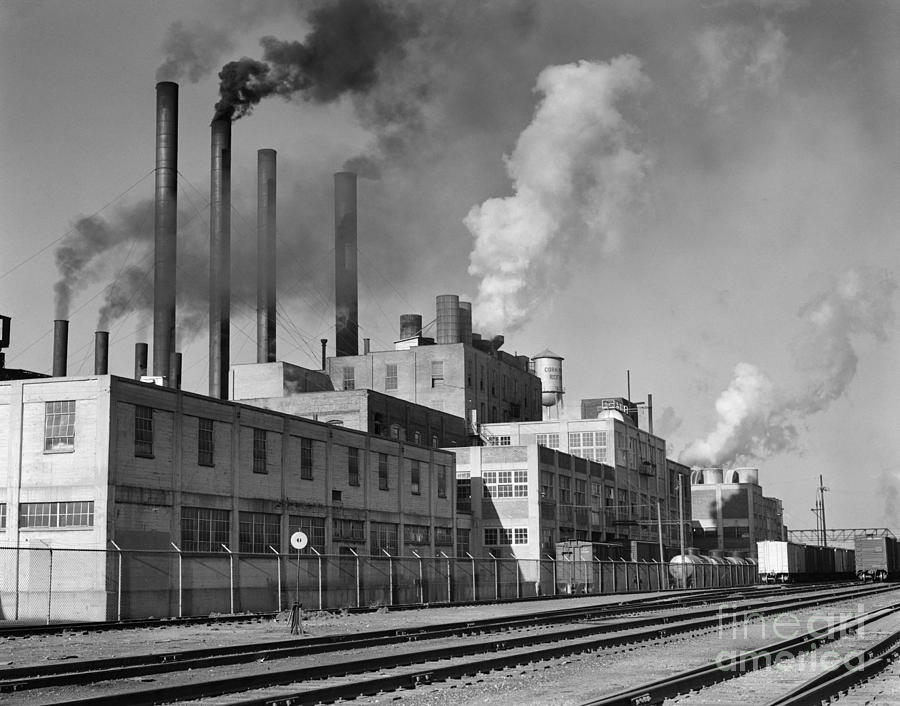
Industrialization is the process by which a society transitions from an agricultural economy to one based on manufacturing and industry. It leads to urbanization, technological advancement, and changes in labor. AP Human Geography studies how industrialization has reshaped economies and environments worldwide.
Unit 7 – Industrial & Economic Development
J
Just-in-Time Delivery
Just-in-time delivery is a supply chain strategy where goods are produced and delivered only as they are needed, reducing inventory costs. It relies on precise logistics and fast transportation networks. This concept is important in AP Human Geography for understanding global trade and economic geography.
Unit 7 – Industrial & Economic Development
K
Kernel of a City
The kernel of a city refers to the core or central area of an urban settlement, typically the oldest and most densely developed part. It often contains the central business district and key historical structures. Understanding the kernel helps in analyzing how cities grow outward from their origins.
Unit 6 – Cities & Urban Land Use
L
Language Families
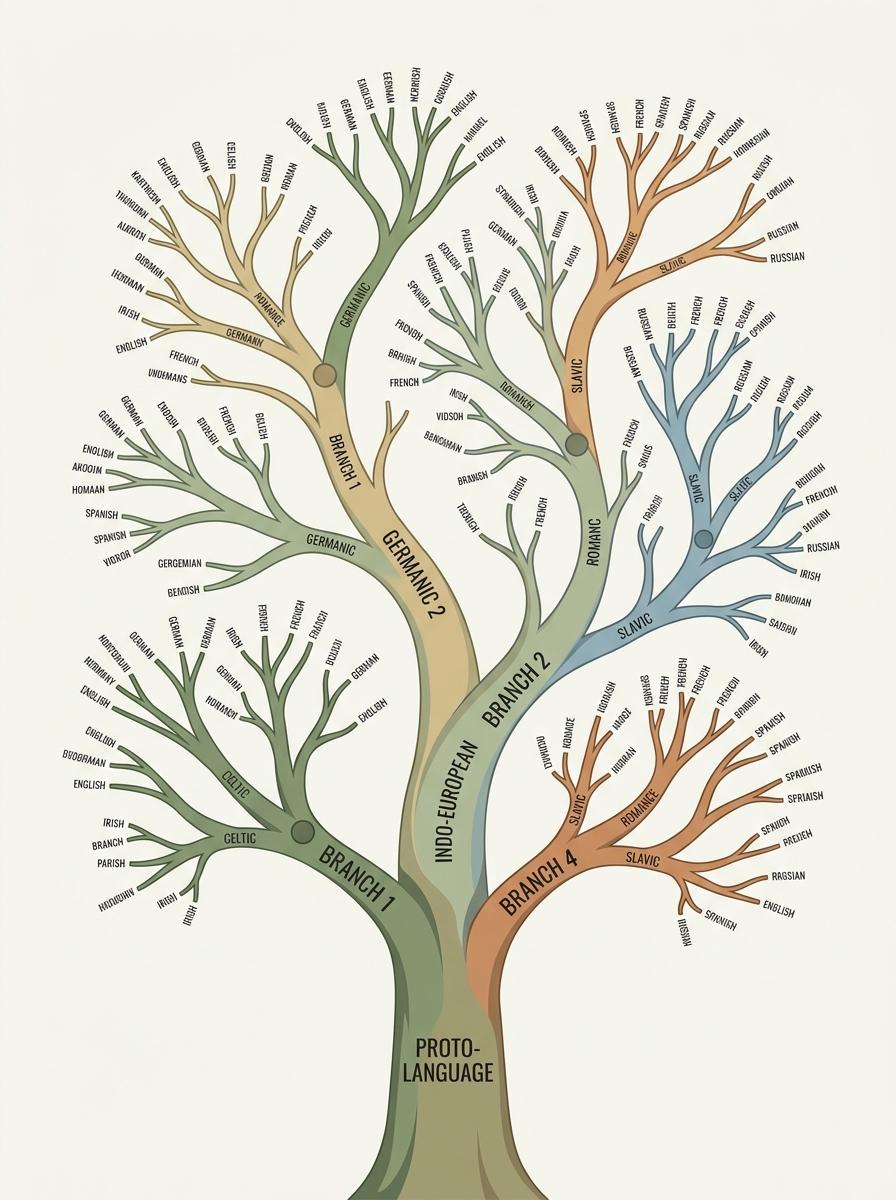
A language family is a group of languages that share a common ancestral language, known as a proto-language. The Indo-European family is the world's largest and includes English, Spanish, and Hindi. AP Human Geography uses language families to understand cultural relationships and the movement of people throughout history.
Unit 3 – Cultural Patterns & Processes
M
Migration
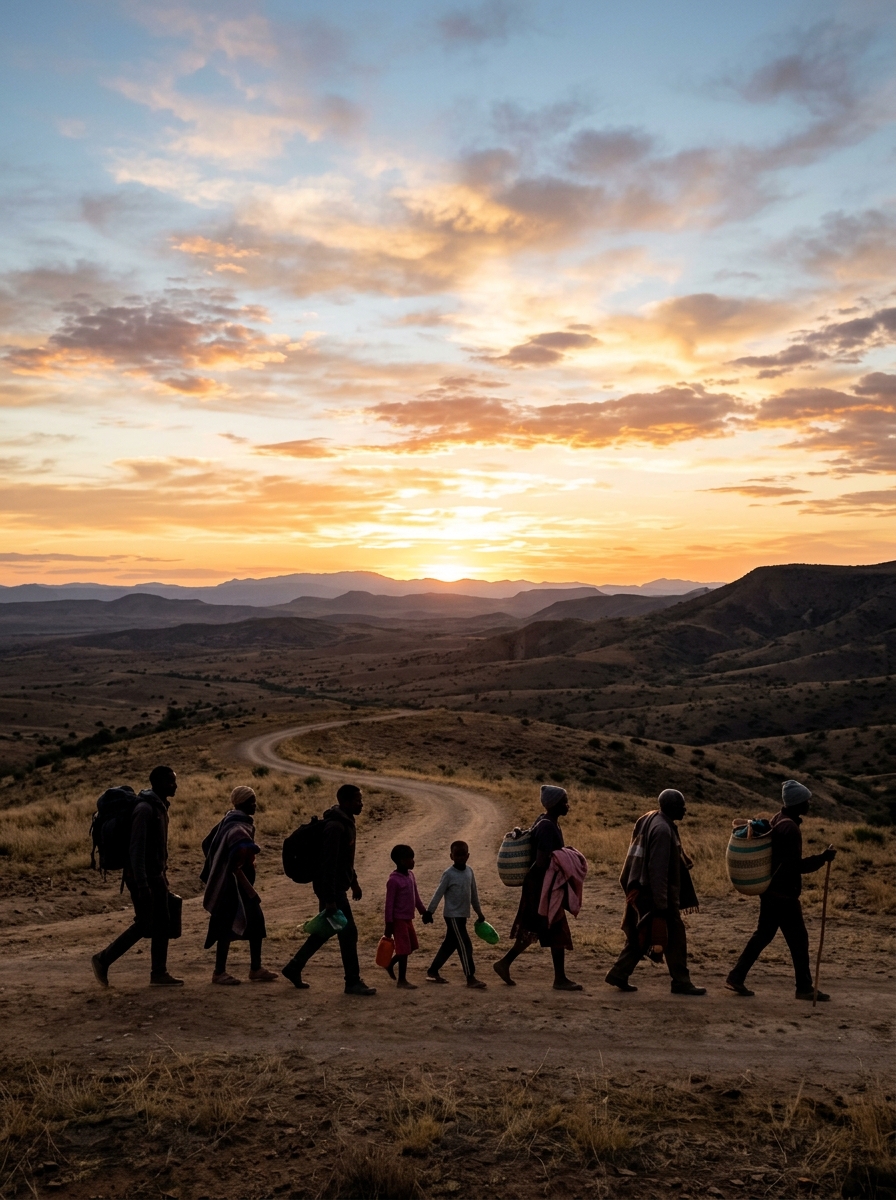
Migration is the movement of people from one place to another, either within a country or across international borders. Push factors like war or poverty and pull factors like jobs or safety drive migration. AP Human Geography examines migration patterns and their effects on both sending and receiving regions.
Unit 2 – Population & Migration
N
Nation-State
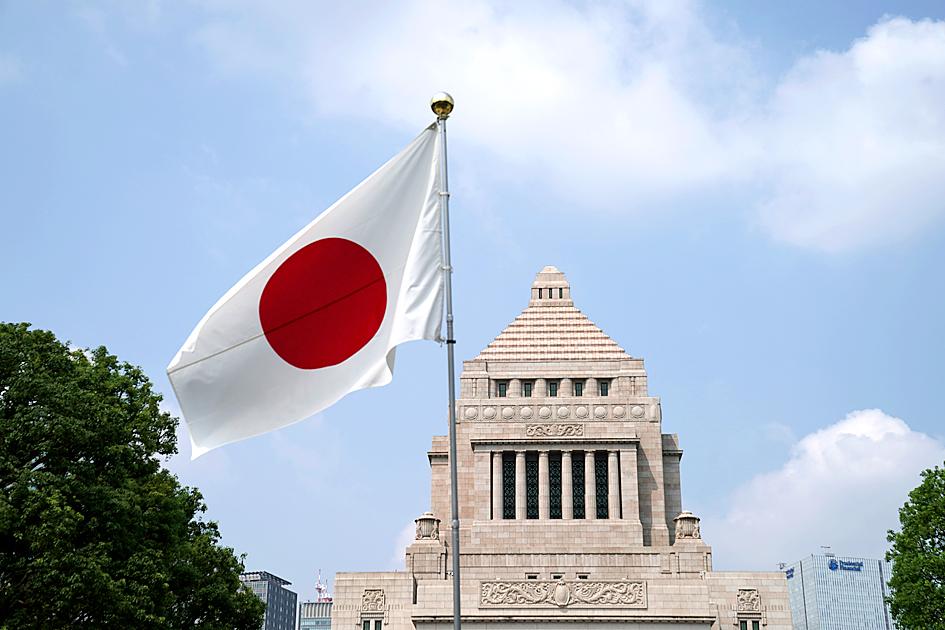
A nation-state is a political unit where the boundaries of a nation and a state largely coincide, meaning the population shares a common culture, language, or identity. It is considered the ideal form of political organization in modern geography. Examples include Japan and Iceland, which have relatively homogeneous populations.
Unit 4 – Political Geography
O
Outsourcing
Outsourcing is the practice of a company hiring workers or services from another country or third-party provider to reduce costs. Many businesses outsource manufacturing or customer service to countries with cheaper labor. AP Human Geography studies outsourcing as part of global economic interdependence and development.
Unit 7 – Industrial & Economic Development
P
Population Pyramid
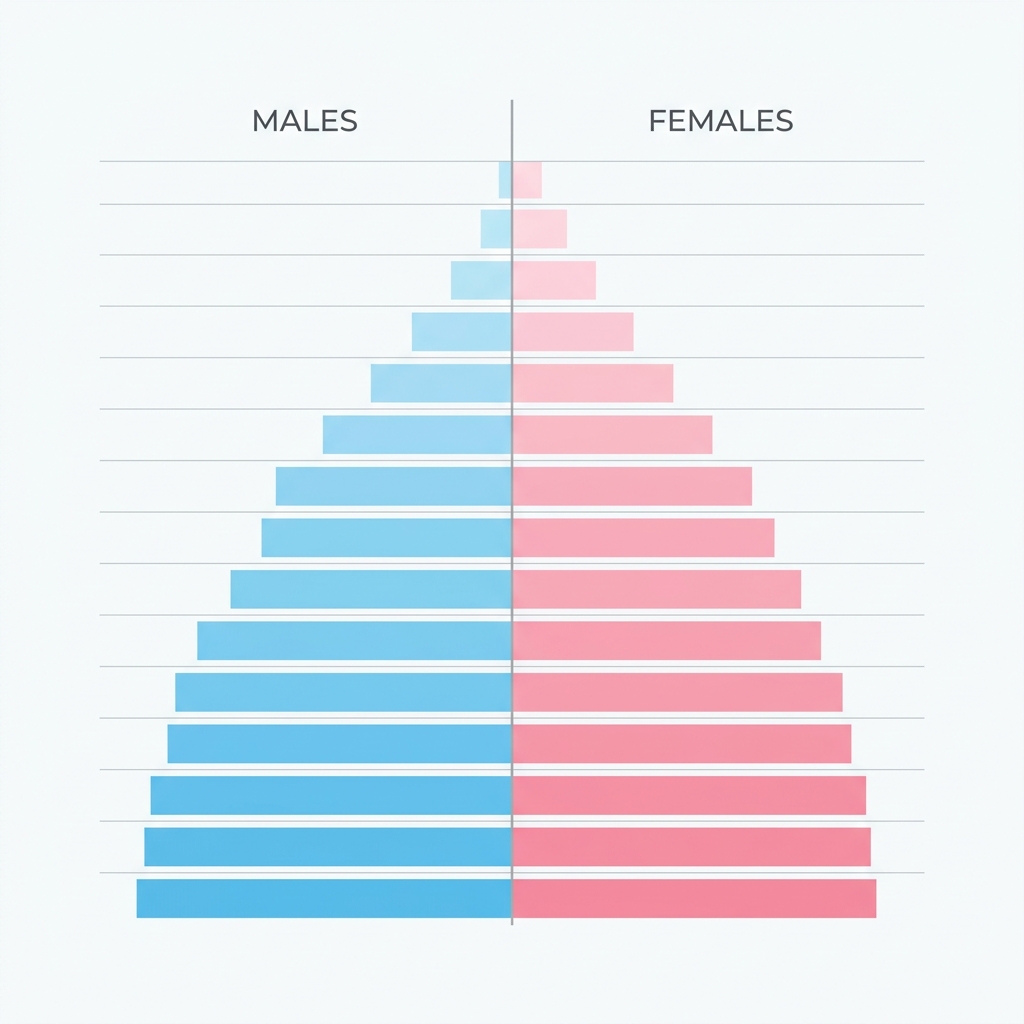
A population pyramid is a bar graph that shows the age and sex distribution of a population. The shape of the pyramid reveals whether a country has a growing, stable, or declining population. AP Human Geography uses population pyramids to analyze demographic trends and stages of development.
Unit 2 – Population & Migration
Q
Quaternary Sector
The quaternary sector of the economy involves knowledge-based industries such as information technology, research, education, and financial services. It goes beyond manufacturing to focus on intellectual and informational work. AP Human Geography studies how developed countries increasingly shift toward quaternary economic activities.
Unit 7 – Industrial & Economic Development
R
Redlining
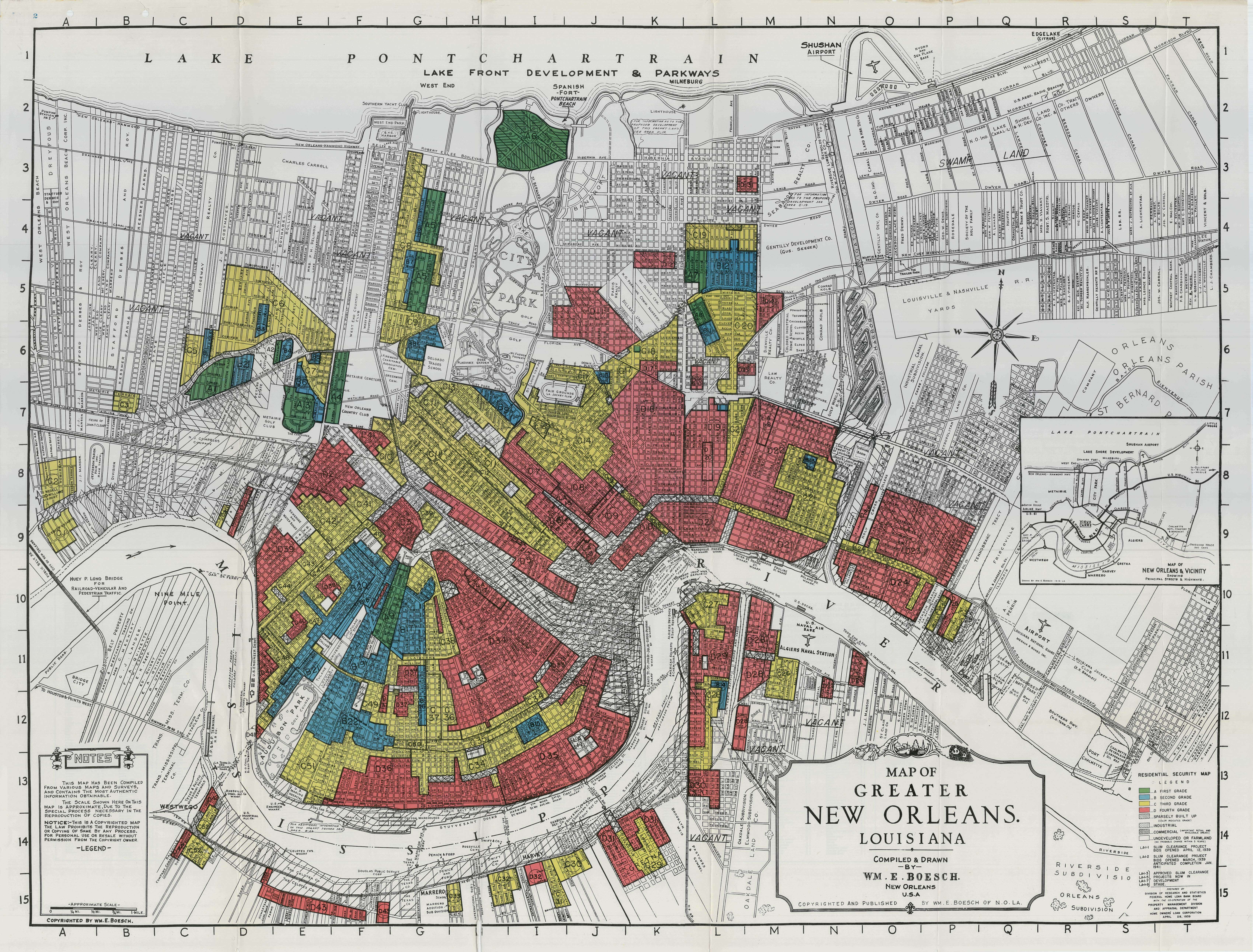
Redlining was a discriminatory practice where banks and government agencies denied services or loans to residents of certain neighborhoods based on race or ethnicity. It was widespread in the United States during the mid-20th century and created lasting patterns of segregation. AP Human Geography studies redlining as an example of how policy shapes urban inequality.
Unit 6 – Cities & Urban Land Use
S
Sustainability
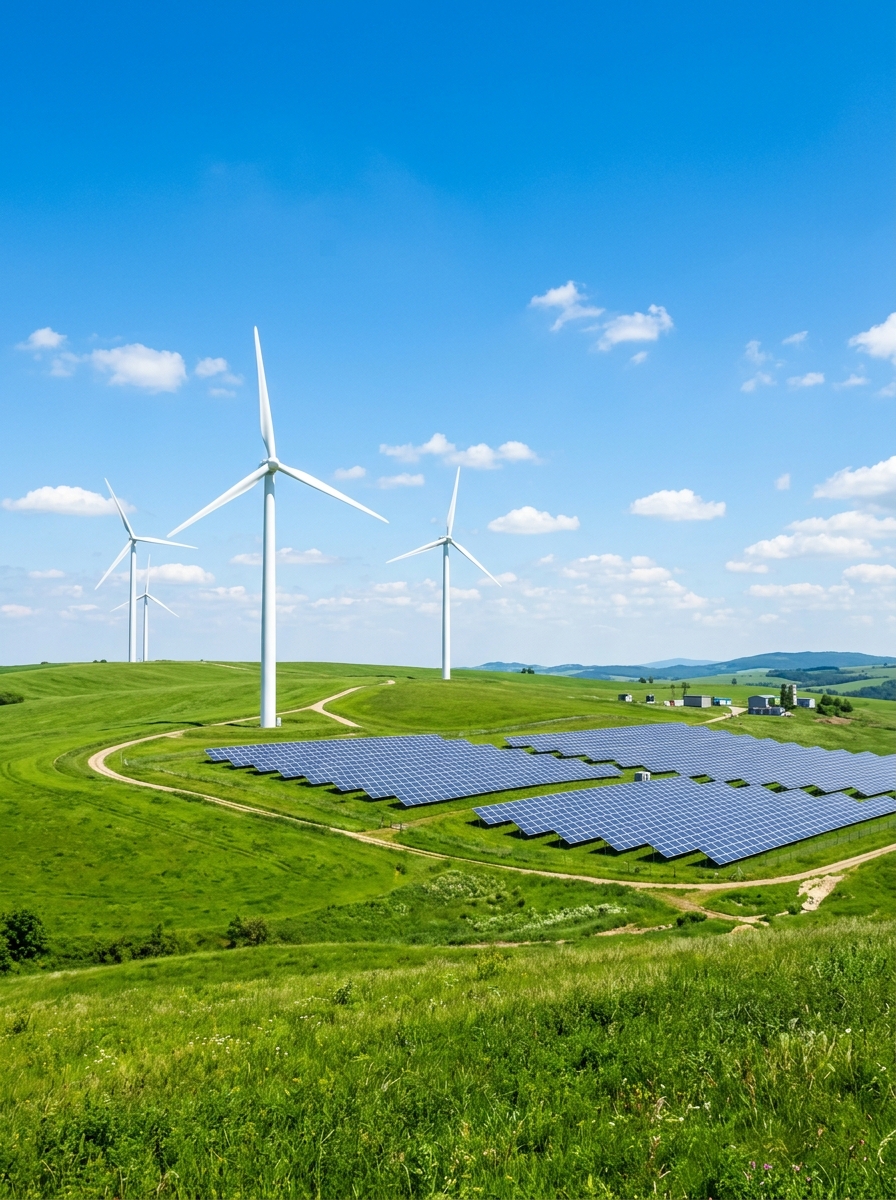
Sustainability refers to using resources in a way that meets current needs without compromising the ability of future generations to meet their own needs. It involves balancing economic development with environmental protection. AP Human Geography examines sustainable practices in agriculture, cities, and global resource use.
Unit 5 – Agriculture & Rural Land Use
T
Transnational Corporation
A transnational corporation (TNC) is a company that operates in multiple countries, often with headquarters in one nation and production or services in others. TNCs play a major role in economic globalization. AP Human Geography studies how TNCs shape labor markets, trade flows, and economic development around the world.
Unit 7 – Industrial & Economic Development
U
Urbanization
Urbanization is the process by which an increasing proportion of a population comes to live in cities and towns. It is driven by rural-to-urban migration and natural population growth in cities. AP Human Geography studies urbanization patterns, challenges like overcrowding, and the growth of megacities around the world.
Unit 6 – Cities & Urban Land Use
V
Von Thünen Model
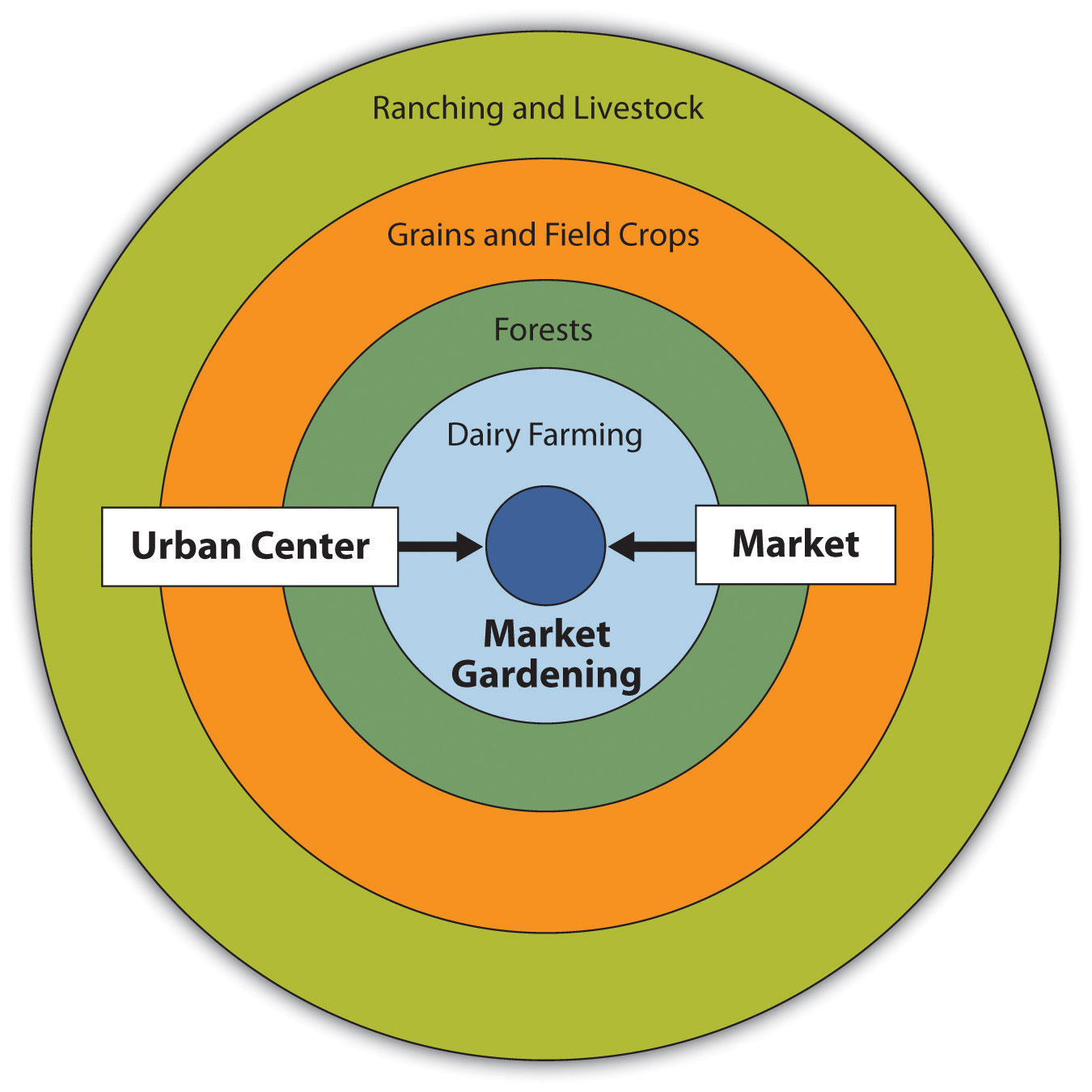
The Von Thünen Model explains how agricultural land use is organized around a central market city in concentric rings. Land closer to the city is used for more intensive, perishable products, while land farther away is used for extensive farming. It is a classic model in AP Human Geography for understanding rural land use patterns.
Unit 5 – Agriculture & Rural Land Use
W
Women in Development
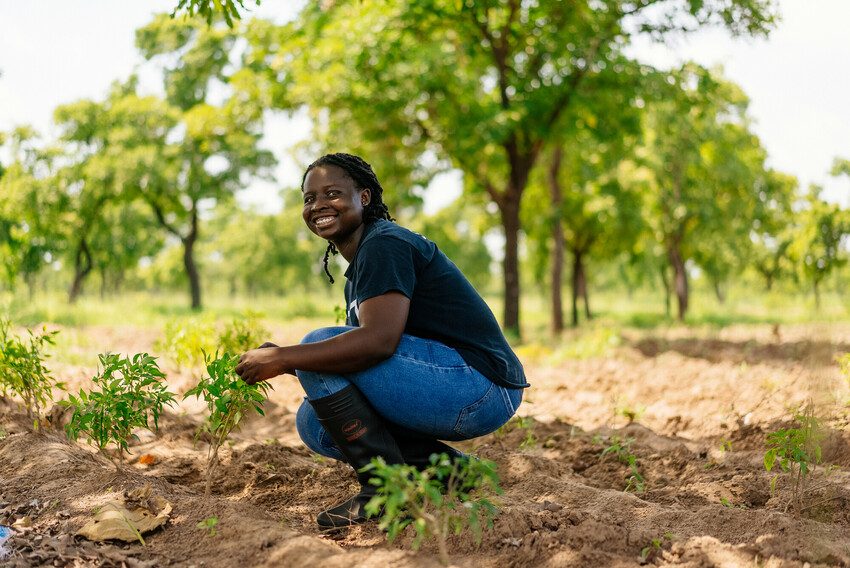
Women in Development (WID) is an approach that emphasizes integrating women into economic development programs to improve gender equality and overall societal progress. Research shows that educating and empowering women leads to lower birth rates and stronger economies. AP Human Geography examines WID as part of understanding global development disparities.
Unit 2 – Population & Migration
X
Xenophobia
Xenophobia is the fear or hatred of people from other countries or cultures. It often leads to discrimination, exclusion, or hostility toward immigrants and ethnic minorities. AP Human Geography examines xenophobia as a force that affects migration patterns, political movements, and social integration.
Unit 3 – Cultural Patterns & Processes
Y
Yield
Yield refers to the amount of agricultural product harvested per unit of land area. Higher yields are achieved through the use of fertilizers, irrigation, improved seeds, and modern farming techniques. AP Human Geography studies crop yields in the context of food security, the Green Revolution, and feeding a growing global population.
Unit 5 – Agriculture & Rural Land Use
Z
Zoning
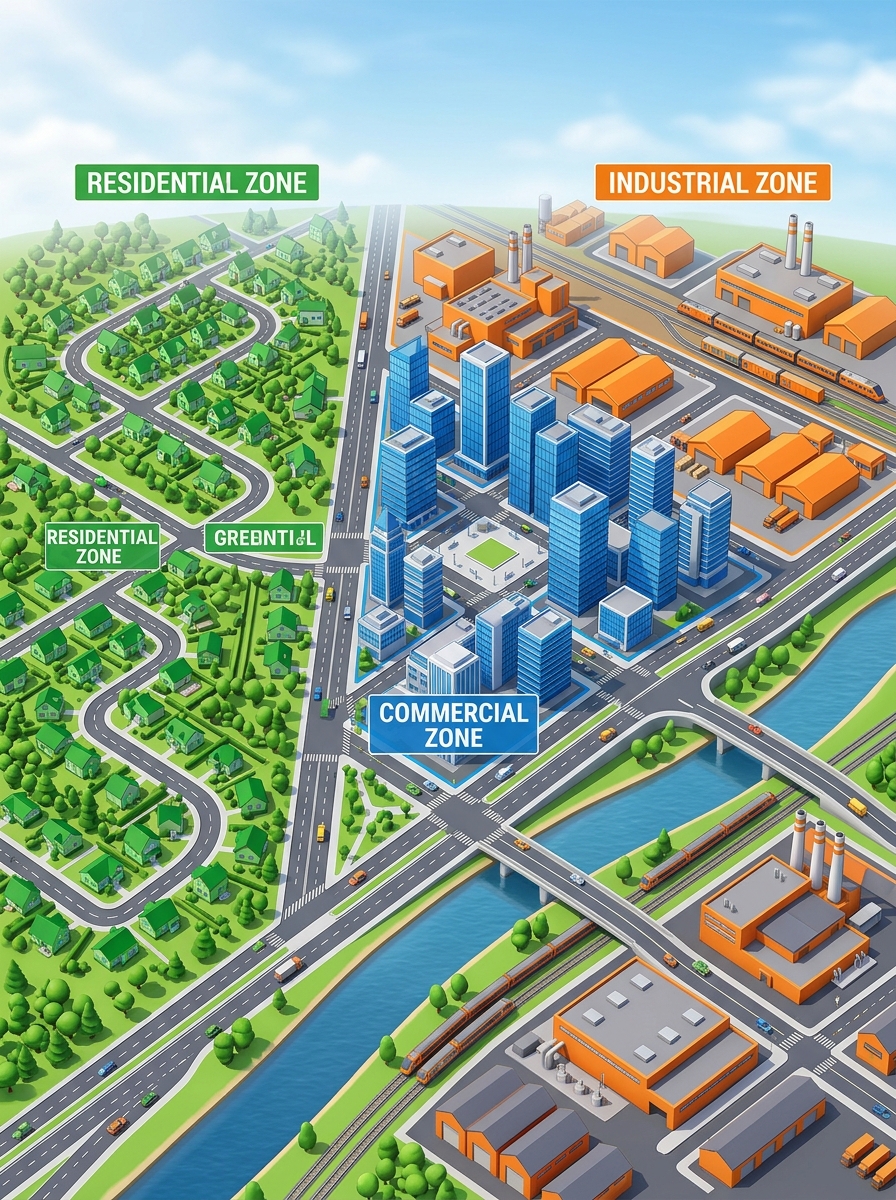
Zoning is the process by which local governments divide land into areas designated for specific uses, such as residential, commercial, or industrial. It shapes the physical layout of cities and controls how land is developed. AP Human Geography studies zoning as a tool of urban planning that affects housing, transportation, and social equity.
Unit 6 – Cities & Urban Land Use
- ap-human-geography
- geography-review
- ap-exam-prep
- social-studies
- education
- study-guide