





Made byBobr AI

Paediatric Respiratory & ENT Emergencies | Medical Revision

Master childhood asthma, bronchiolitis, pneumonia, croup, and cystic fibrosis. UKMLA-aligned revision with practice SBA questions and clinical pearls.

#paediatrics#asthma-management#bronchiolitis#pneumonia#ukmla#medical-education#cystic-fibrosis
Watch
Pitch
45–60 min session

Session 1

Paediatric Respiratory &
ENT Emergencies

Common Conditions & Clinical Reasoning

Asthma
Bronchiolitis
Pneumonia
Croup
Epiglottitis
Cystic Fibrosis

UKMLA Curriculum Aligned   |   BTS/SIGN   |   NICE   |   RCPCH

Made byBobr AI

Learning Objectives

Session 1
1
Diagnose and classify childhood asthma
2
Recognise and manage acute asthma exacerbations
3
Diagnose bronchiolitis and identify admission criteria
4
Differentiate viral from bacterial pneumonia
5
Distinguish croup from epiglottitis in examinations and OSCEs
6
Understand the diagnosis and management of cystic fibrosis
7
Apply UKMLA-style clinical reasoning to paediatric respiratory presentations
Learning Objectives
Asthma
Bronchiolitis
Pneumonia
Croup/Epiglottitis
Cystic Fibrosis
Made byBobr AI

Session Overview

SECTION 1

Asthma

SECTION 2

Bronchiolitis

SECTION 3

Pneumonia / LRTI

SECTION 4

Croup vs Epiglottitis

SECTION 5

Cystic Fibrosis

Format: Question Discussion Key Learning Point | ~1 MCQ every 2–3 slides
UKMLA Aligned | Active Recall | Case-Based Learning
Made byBobr AI
01
SECTION 1

ASTHMA

Epidemiology · Diagnosis · Management · Acute Exacerbations

Epidemiology
Pathophysiology
Diagnosis
BTS/SIGN Steps
Acute Management
Severity Classification
Made byBobr AI

Asthma: Epidemiology & Pathophysiology

Epidemiology

Most common chronic childhood condition in UK

Affects ~1 in 11 children

Peak onset: 5–10 years

2× more common in boys (pre-puberty)

Major cause of school absence & hospital admissions

1,200+ deaths/year in UK (mostly preventable)

Pathophysiology

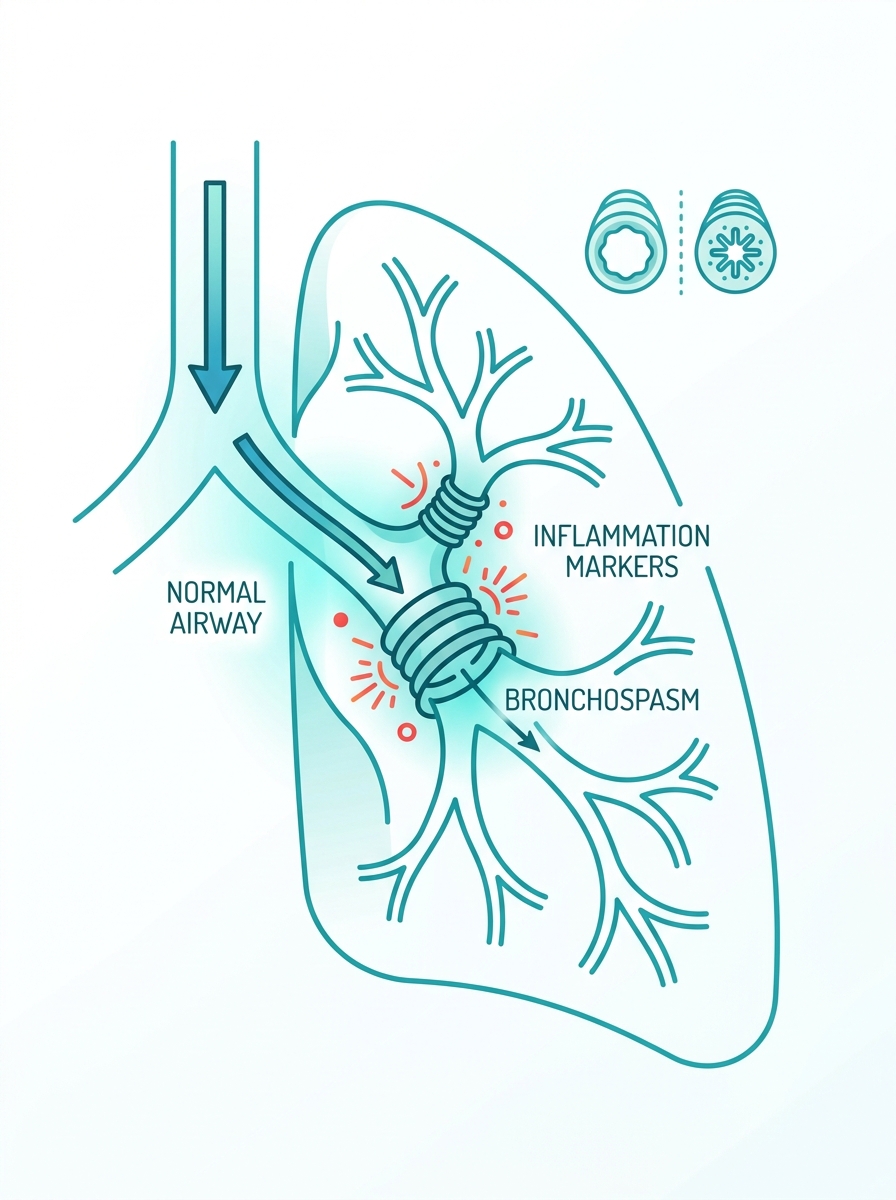
Chronic airway inflammation (eosinophils, mast cells, T-lymphocytes)

Airway hyperresponsiveness

Reversible bronchoconstriction

Triggers: viral URTI, allergens, exercise, cold air, smoke

Remodelling with repeated exacerbations

Exam Pearl

Atopic triad = Asthma + Eczema + Allergic Rhinitis. Ask about family history! Atopy is a key risk factor.

Made byBobr AI

Diagnosing Asthma in Children

Clinical Features

Main Symptoms

Wheeze, cough (worse at night), breathlessness, chest tightness

Diurnal Variation

Symptoms typically observed to be worse in mornings and nights

Episodic Triggers

Often triggered by exercise, viral URTIs, or environmental allergens

Reversibility

Clear positive symptomatic response to bronchodilator (salbutamol)

>5 Years Old

Spirometry: FEV1/FVC ratio <70%
Bronchodilator reversibility: ≥12% increase in FEV1
FeNO >35 ppb supports diagnosis
Peak flow variability >20%

<5 Years Old

Clinical diagnosis only
No reliable spirometry options
Trial of salbutamol MDI + spacer
Watchful waiting acceptable
Response to treatment confirms suspicion
Diagnostic Pearl: Under-5s are diagnosed clinically — spirometry is NOT reliable. Salbutamol response is the key diagnostic tool.

UKMLA Curriculum Aligned   |   BTS/SIGN   |   NICE   |   RCPCH

Made byBobr AI
📋 SBA QUESTION 1
NHS logo
A 7-year-old boy is referred to the paediatric outpatient clinic with a 6-month history of nocturnal cough and wheeze. His mother has asthma. Spirometry shows FEV1/FVC = 64%. After salbutamol, FEV1 increases by 14%. He has mild eczema.
What is the most appropriate next step in management?
A
Start high-dose inhaled corticosteroid immediately
B
Diagnose asthma and start BTS Step 1 — low-dose ICS
C
Arrange FeNO measurement before confirming diagnosis
D
Refer to respiratory paediatrician without starting treatment
E
Trial of 8 weeks montelukast
Think before you click… What criteria confirm asthma here?
Answer on next slide →
Made byBobr AI
ANSWER: B

Correct Answer: B — Diagnose asthma and start BTS Step 1 (low-dose ICS)

EXPLANATION

  • FEV1/FVC <70% = obstructive pattern
  • Bronchodilator reversibility ≥12% = positive
  • Clinical features: nocturnal cough, wheeze, atopic history
  • This meets diagnostic criteria → start treatment

EXAM PEARL

BTS/SIGN Step 1 = Low-dose ICS (e.g. beclometasone 200mcg/day). NEVER start Step 2 without trialling Step 1 first.

WHY THE OTHERS ARE WRONG

A
High-dose ICS not appropriate as first step — start low-dose
C
FeNO is supportive but not required when spirometry is diagnostic
D
No need for specialist referral when diagnosis is confirmed
E
Montelukast is not first-line treatment in asthma
Made byBobr AI

BTS/SIGN Guidelines

Stepwise Management of Childhood Asthma

STEP UP
if uncontrolled
5
High-dose ICS + LABA + consider oral corticosteroids or biologics — Specialist centre
4
Medium-dose ICS + LABA Refer to respiratory paediatrician
3
Low-dose ICS + LABA (salmeterol) Consider LTRA (montelukast) if LABA not tolerated
2
Low-dose ICS Beclometasone 200mcg/day OR equivalent
1
SABA PRN Salbutamol MDI + spacer as needed
STEP DOWN
when stable
for 3 months
Key: Review inhaler technique and adherence BEFORE stepping up! Most 'uncontrolled asthma' = poor technique.
Made byBobr AI

Asthma Guidelines

Acute Asthma: Severity Classification

Clinical Feature MILD MODERATE SEVERE LIFE-THREATENING
SpO₂ ≥94% ≥92% <92% <92% + exhausted
PEFR >50% best 33–50% best <33% best Too exhausted to perform
Speech Normal sentences Short sentences Words only Silent chest
RR Normal for age Slightly raised Significantly raised Bradypnoea (pre-arrest)
HR Normal Mild tachycardia Significant tachycardia Bradycardia
Accessory muscles None Mild Marked Paradoxical breathing
Consciousness Alert Alert Agitated/distressed Drowsy/confused

Life-Threatening Features = Silent chest + SpO₂ <92% + Cyanosis + Poor respiratory effort + Exhaustion + Altered consciousness
Immediate senior review + IV magnesium + ICU alert

Made byBobr AI
NHS

Acute Asthma: Emergency Management Algorithm

Child presents with acute wheeze/breathlessness Assess severity

MILD

  • Salbutamol 2–4 puffs MDI + spacer PRN
  • Review in 1 hour
  • Discharge home with written action plan

MODERATE

  • O2 if SpO2 < 94%
  • Salbutamol 10 puffs MDI + spacer
    OR 2.5mg nebuliser q20min x3
  • Oral prednisolone 1–2mg/kg (max 40mg) for 3–5 days
  • Reassess after 1 hr → Admit if not improving

SEVERE

  • High-flow O2 via non-rebreather mask
  • Back-to-back salbutamol nebs q20min
  • Ipratropium bromide 250mcg neb (x3 doses)
  • IV/oral prednisolone
  • IV MgSO4 40mg/kg if poor response → ADMIT

LIFE-THREATENING

  • Call for help / Senior review / Anaesthetics
  • High-flow O2
  • IV salbutamol + IV MgSO4
  • ICU referral
  • Consider IV aminophylline

UKMLA Curriculum Aligned   |   BTS/SIGN   |   NICE Guidance

Made byBobr AI
📋 SBA QUESTION 2

A 9-year-old girl with known asthma is brought to the ED by her parents. She is using accessory muscles, can only speak in words, and her SpO2 is 90% on air.

Her PEFR is 28% of predicted best. She has already received salbutamol 10 puffs via spacer 30 minutes ago with minimal improvement.

What is the single most appropriate NEXT step in management?

Think before you click

What severity is this? What does PEFR 28% tell you?

A

Repeat salbutamol 10 puffs via spacer and reassess in 20 minutes

B

Give nebulised salbutamol + ipratropium bromide and IV/oral prednisolone

C

Administer IV magnesium sulphate 40mg/kg immediately

D

Arrange urgent CXR to exclude pneumothorax

E

Start IV aminophylline infusion

Answer on next slide →
Made byBobr AI
ANSWER: B
Nebulised salbutamol + ipratropium + prednisolone
UKMLA Aligned
Explanation
  • PEFR 28% = SEVERE (< 33% predicted)
  • SpO2 90% = below threshold → needs O2
  • Words only = SEVERE asthma
  • SEVERE management: back-to-back nebs salbutamol + ipratropium x3, oral/IV prednisolone, O2 to maintain SpO2 ≥94%

Why others are wrong

A
Already had salbutamol via spacer — needs escalation to nebuliser + ipratropium
C
IV MgSO4 is indicated if poor response AFTER first-line severe treatment — not yet
D
CXR not immediate priority — treat first, investigate if deteriorates
E
IV aminophylline is last resort — multiple steps before this

Exam Pearl

IV MgSO4 (40mg/kg, max 2g) is the key escalation after salbutamol + ipratropium in SEVERE asthma not responding to first-line treatment. Common exam question!

Red Flag

SpO2 <92% = SEVERE
SpO2 <92% + silent chest + exhaustion = LIFE-THREATENING → call senior NOW
Made byBobr AI
Exam Pearls

Asthma: Key Facts

🌟

Under-5s diagnosed clinically — no spirometry

🌟

Salbutamol response (≥12% FEV1 increase) supports diagnosis

🌟

SpO2 <92% = SEVERE | Silent chest + exhaustion = LIFE-THREATENING

🌟

Step up ONLY after checking inhaler technique & adherence

🌟

Ipratropium bromide: ONLY add in SEVERE/LIFE-THREATENING — not mild/moderate

🌟

IV MgSO4 = key escalation after failed back-to-back nebs in severe asthma

Life-threatening features:

Silent chest Cyanosis Poor respiratory effort Exhaustion Altered GCS Bradycardia/Bradypnoea
Made byBobr AI
02

Section 2

BRONCHIOLITIS

RSV | Diagnosis | Admission Criteria | Supportive Management

Epidemiology
RSV Pathophysiology
NICE Admission Criteria
NICE Discharge Criteria
Supportive Management
Common Exam Traps

UKMLA Curriculum Aligned   |   BTS/SIGN   |   NICE   |   RCPCH

Made byBobr AI

Bronchiolitis: Presentation & Diagnosis

Key Facts

Most common lower RTI in infants
Peak: November–March (winter)
Age: typically <1 year (peak 3–6 months)
Cause: RSV (75–80% of cases)
Spreads via: droplets / contact

Clinical Features

Coryzal prodrome (2–3 days)
Dry cough
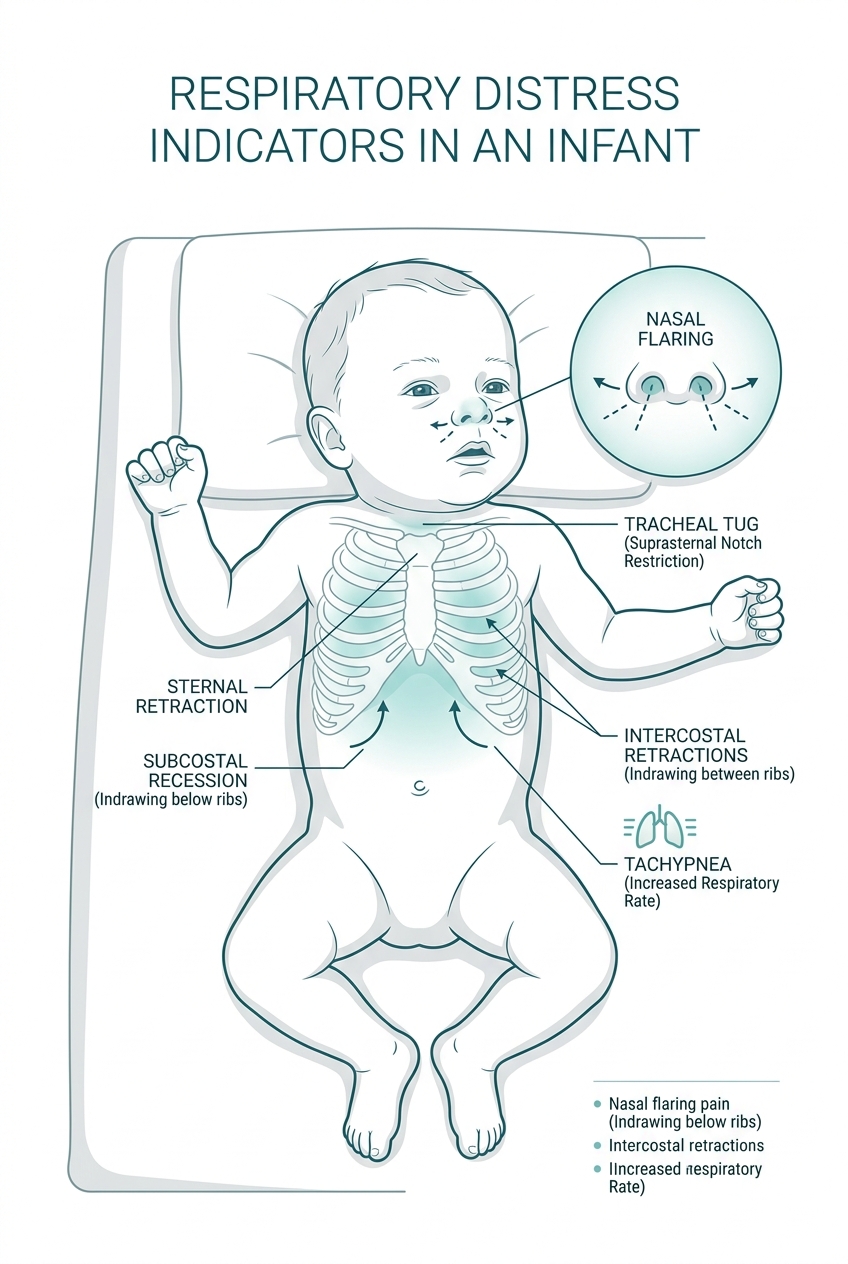
Tachypnoea (most important sign)
Subcostal/intercostal recession
Nasal flaring
Wheeze ± crackles on auscultation
Feeding difficulties (<50% normal feeds = red flag)

Red Flags for Severe Disease

Age <6 weeks
Premature (<37 weeks)
Chronic lung disease / CHD
Immunodeficiency
SpO2 <92%
Poor feeding (<50% normal feeds)
Apnoeas
Severe respiratory distress
Diagnosis is CLINICAL. No routine bloods, CXR or viral swabs needed in typical presentation.
Made byBobr AI

NICE Bronchiolitis: Management Flowchart

Guideline Summary
Infant with bronchiolitis — Assess severity

Mild

  • SpO₂ ≥ 94%
  • Tolerating feeds
  • Mild recession
DISCHARGE HOME
Safety net advice Review if worsens

Moderate

  • SpO₂ 92–94%
  • Feeding 50–75% normal
  • Moderate recession
OBSERVE IN ED/WARD
Consider admission if not improving

Severe

  • SpO₂ < 92%
  • Feeds < 50% normal
  • Apnoeas, severe recession
  • Age < 6wks or high risk
ADMIT
O₂ if SpO₂ < 92% NG feeds if < 75% Consider CPAP/HFNC if escalating

DO NOT USE

Salbutamol
no benefit — RCT evidence
Steroids
no benefit
Antibiotics
viral — unless 2° infection
Hypertonic saline
no benefit in inpatients
Chest physiotherapy
no evidence
Exam Trap

The most common trap: offering salbutamol or steroids for bronchiolitis.

The answer is SUPPORTIVE CARE
Made byBobr AI

📋 SBA QUESTION 3

SBA / MCQ

A 3-month-old infant (born at 34 weeks gestation) is brought to the ED in December with a 2-day history of cough, runny nose, and poor feeding.

On examination: RR 62/min, SpO2 91% on air, intercostal recession, widespread wheeze and crackles. Temperature 37.8°C. He is taking approximately 40% of his normal feeds.

Which of the following is the MOST appropriate management?

Think: What makes this child HIGH RISK? What does NICE say about O2 threshold?

A

Administer nebulised salbutamol and reassess in 1 hour

B

Start oral prednisolone 1mg/kg and discharge with safety netting

C

Admit, apply supplemental oxygen, and consider nasogastric feeds

D

Start amoxicillin 125mg TDS for 5 days

E

Discharge home with intranasal saline drops and safety netting advice

Answer on next slide
Made byBobr AI

ANSWER: C

Correct Answer: C — Admit, supplemental oxygen, consider NG feeds

EXPLANATION

SpO2 91% < NICE threshold of 92% → supplemental O2 required
Feeds 40% of normal → below 50% threshold → NG feeds indicated
Premature (34 weeks gestation) → HIGH RISK group → automatic consideration for admission
Combined: SpO2 <92% + poor feeding + prematurity = clear admission criteria
Apnoeas in bronchiolitis = immediate escalation → PICU/HDU input

WHY OTHERS ARE WRONG

A)
Salbutamol NOT indicated — no RCT evidence, NICE recommends against routine use
B)
Steroids NOT indicated — no evidence of benefit in bronchiolitis
D)
Antibiotics — viral illness, no indication unless proven secondary bacterial infection
E)
Unsafe to discharge — SpO2 <92%, poor feeding, premature = all admission criteria

EXAM PEARL

SpO2 <92% = O2 threshold in bronchiolitis
Feeds <50% normal = NG tube indication
Prematurity <37 weeks = high-risk factor for severe disease
Made byBobr AI
03

Section 3

PNEUMONIA & LRTI

Viral vs Bacterial  |  Investigations  |  NICE Antibiotics  |  Complications

Viral vs Bacterial
CXR Interpretation
Severity Assessment
PEWS
Antibiotic Choice
Complications

UKMLA Curriculum Aligned   |   BTS/SIGN   |   NICE   |   RCPCH

Made byBobr AI
CLINICAL COMPARISON

Viral vs Bacterial Pneumonia | Key Differences

Feature VIRAL BACTERIAL
Age Any age, common <2yrs Any age, common >2yrs
Onset Gradual Rapid
Fever Low-grade (<38.5°C) High-grade (>38.5°C), rigors
Cough Dry, persistent Productive, purulent
URTI symptoms Present (coryzal) Absent
Examination Bilateral wheeze ± crackles Focal crackles, bronchial breathing
WBC Normal/mildly raised Elevated (>15) — neutrophilia
CRP Low High
CXR Bilateral perihilar infiltrates Lobar/segmental consolidation
Causative organisms RSV, adenovirus, influenza, parainfluenza Strep pneumoniae (most common), Mycoplasma, Staph aureus
Treatment Supportive Antibiotics (amoxicillin first-line)

NICE: Amoxicillin is first-line for uncomplicated bacterial pneumonia. Use clarithromycin if atypical (Mycoplasma) suspected. CXR NOT routinely required in uncomplicated cases.

Made byBobr AI

Pneumonia: Assessment & Management

Mild
Manage at home
Oral amoxicillin 40mg/kg/day TDS 5 days
Safety net
Review 48hrs
Moderate
Consider admission
Oral/IV amoxicillin
O₂ if SpO₂ < 94%
IV fluids if needed
CXR
Severe
Admit immediately
IV amoxicillin + O₂
Blood cultures | FBC/CRP/U&E | CXR
Consider co-amoxiclav or ceftriaxone if no improvement

Antibiotic Guide

Uncomplicated Bacterial Amoxicillin 40mg/kg/day (oral, 5 days)
Atypical (Mycoplasma) Clarithromycin / Azithromycin
Penicillin Allergy Clarithromycin
Staphylococcal Flucloxacillin ± Rifampicin
MRSA IV Vancomycin

Complications

Parapneumonic effusion
Empyema
Lung abscess
Septicaemia

Clinical Pearls

CXR shows LOBAR CONSOLIDATION in bacterial pneumonia.
Bilateral perihilar changes = viral.
Round pneumonia = classic for Strep pneumoniae in young children.
Made byBobr AI

📋 SBA QUESTION 4

A 5-year-old boy is brought to his GP with a 3-day history of high fever (39.5°C), rigors, and productive cough. He appears unwell with RR 38/min, SpO2 95% on air, dull percussion and bronchial breathing in the right lower zone.

He has no known drug allergies.

What is the MOST appropriate antibiotic treatment?

A
Co-amoxiclav 400/57mg oral suspension
B
Amoxicillin 250mg TDS oral for 5 days
C
Clarithromycin 125mg BD oral for 5 days
D
Cefalexin 125mg QDS oral for 7 days
E
Doxycycline 100mg BD oral for 5 days

💡 Think: What type of pneumonia is this? What does NICE recommend as first-line?

Answer on next slide →
Made byBobr AI

Correct Answer

B — Amoxicillin 250mg TDS for 5 days

Explanation

  • High fever + rigors + productive cough + focal signs = bacterial pneumonia (Strep pneumoniae most likely)
  • NICE recommends amoxicillin as first-line for uncomplicated community-acquired bacterial pneumonia in children
  • No penicillin allergy mentioned → amoxicillin appropriate
  • SpO2 95% and able to take oral medications → outpatient oral treatment appropriate

Why Others Are Wrong

A) Co-amoxiclav reserve for complicated/hospital-acquired pneumonia, not first-line
C) Clarithromycin for atypical (Mycoplasma) or penicillin allergy, not first-line uncomplicated
D) Cefalexin not standard recommendation for pneumonia
E) Doxycycline NOT used in children <12 years (teeth staining)

Key Learning Points

  • Amoxicillin = NICE first-line for uncomplicated bacterial CAP
  • Clarithromycin = atypical / penicillin allergy
  • Doxycycline contraindicated <12 years
  • CXR NOT required for uncomplicated cases

Amber Pearl

"Mycoplasma pneumoniae: school-age children, insidious onset, 'walking pneumonia', bilateral infiltrates on CXR, treat with macrolide."

UKMLA Curriculum Aligned   |   BTS/SIGN   |   NICE   |   RCPCH

Made byBobr AI
04

SECTION 4

CROUP vs EPIGLOTTITIS

Diagnosis | Emergency Airway Management | When to Call for Help

Westley Croup Score
Dexamethasone
Nebulised Adrenaline
Epiglottitis Red Flags
ENT Involvement
Airway Emergency
Made byBobr AI

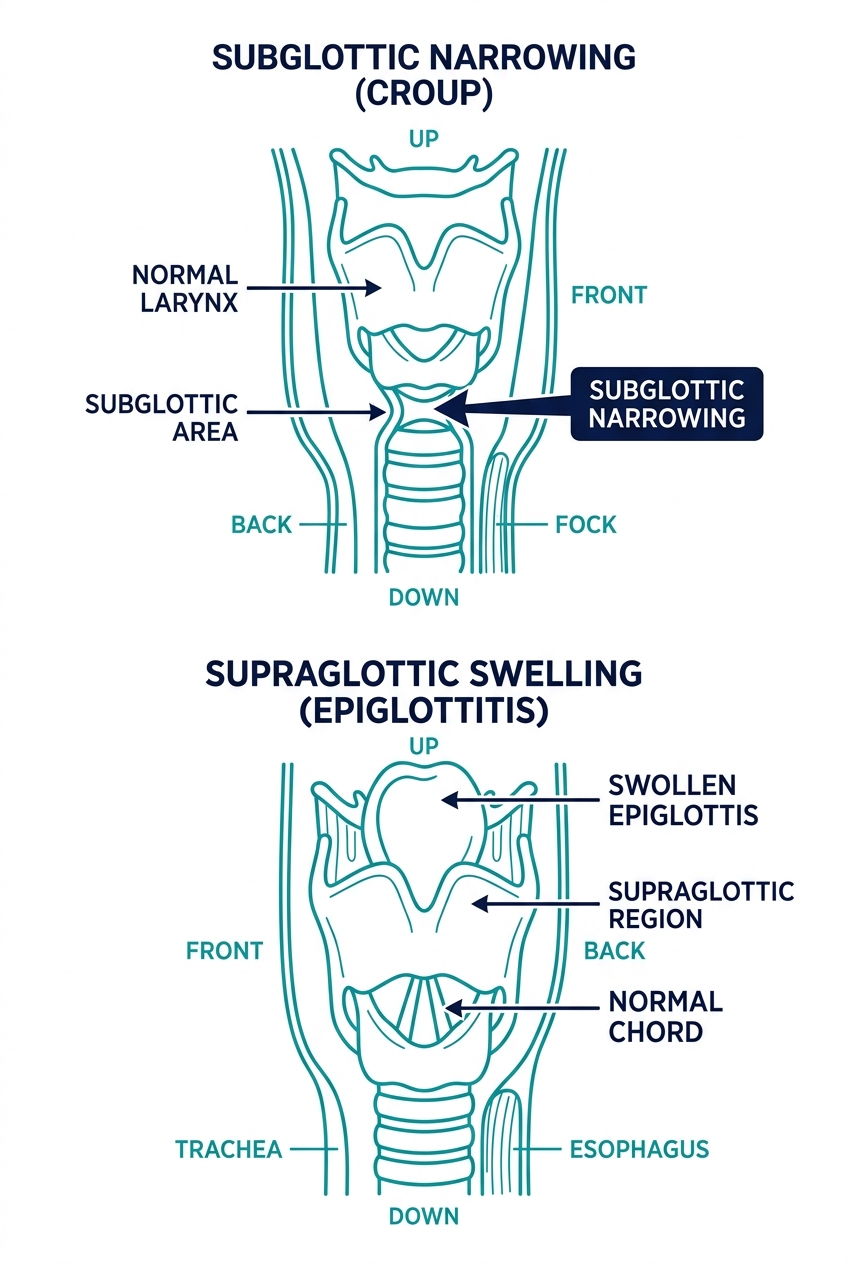
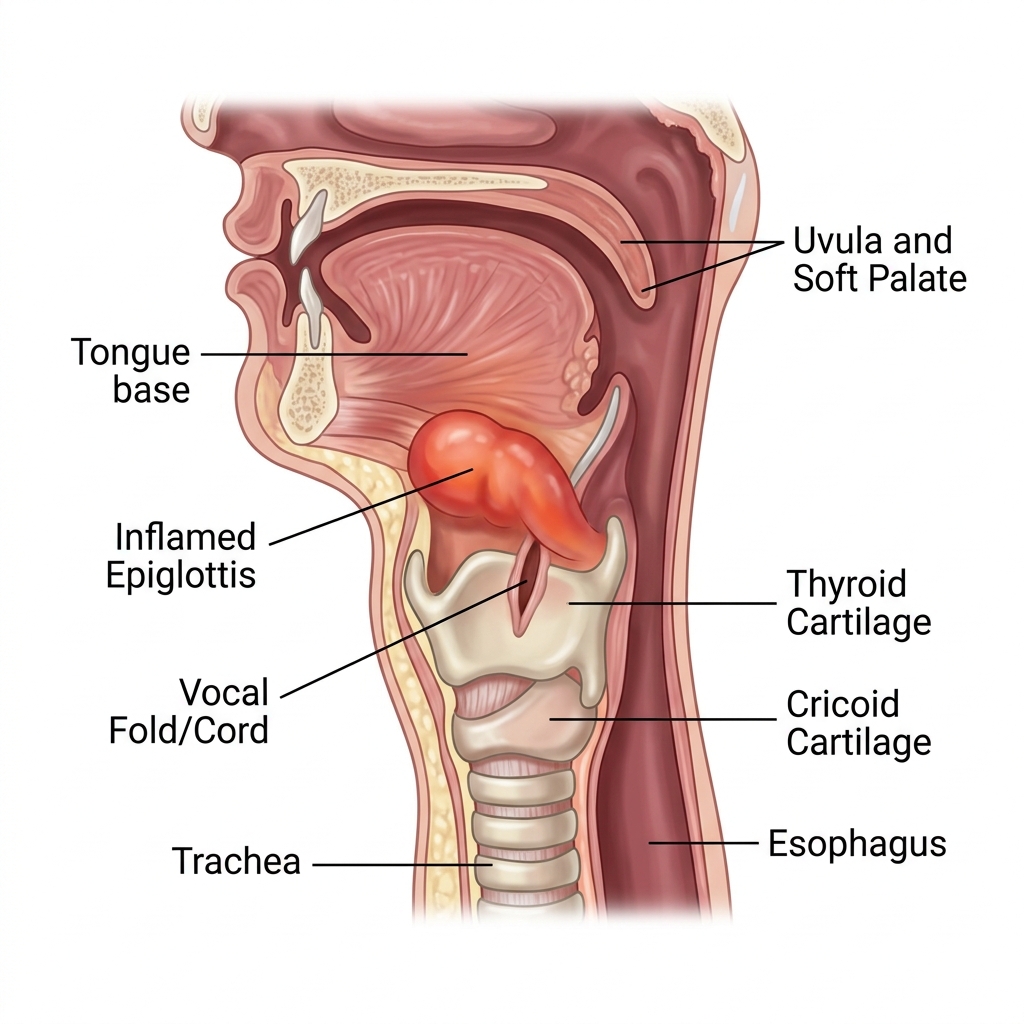
Croup vs Epiglottitis: Key Differentiating Features

FEATURE CROUP (Laryngotracheobronchitis) EPIGLOTTITIS
Age 6 months – 3 years (peak ~18 months) Any age; classically 2–7 years (rare post-Hib vaccine)
Cause Parainfluenza virus (70%) Haemophilus influenzae type b (Hib); Strep, Staph
Onset Gradual (1–3 days) Rapid (hours)
Fever Low-grade (<38.5°C) HIGH grade (>38.5°C), toxic appearance
Cough BARKING seal-like cough Absent or minimal
Stridor Inspiratory Inspiratory (softer, may be absent)
Drooling Absent PRESENT (classic sign)
Voice Hoarse Muffled "hot potato" voice
Position Normal or restless Tripod position — leaning forward
Swallowing Normal Dysphagia / painful swallowing
Distress Mild–moderate EXTREMELY DISTRESSED, toxic
CXR "Steeple sign" (subglottic narrowing) "Thumbprint sign" (epiglottis swelling)
Treatment Dexamethasone ± neb adrenaline DO NOT EXAMINE THROAT → ITU/ENT/Anaesthetics emergency

CRITICAL WARNING

DO NOT examine the throat in suspected epiglottitis — may precipitate complete airway obstruction. Keep child calm. Senior help IMMEDIATELY.

Made byBobr AI

Croup: Assessment & Management

Paediatric Emergencies

Westley Croup Score

Score 0–2: MILD
Score 3–7: MODERATE
Score 8+: SEVERE

Features Scored

  • Level of consciousness
  • Cyanosis
  • Stridor
  • Air entry
  • Retractions

Management by Severity

MILD

  • Stay calm, reassure child
  • Oral dexamethasone 0.15mg/kg single dose
  • Discharge home
  • Review if worsens

MODERATE

  • Oral/IM dexamethasone
  • Humidified O2 if SpO2 <94%
  • Observe 4 hours
  • Discharge if improving

SEVERE

  • Nebulised adrenaline 5ml of 1:1000
  • O2 / Dexamethasone
  • Admit / Anaesthetics aware

Key Drug Info

Dexamethasone

  • 0.15mg/kg single dose oral
  • Reduces severity & duration
  • Works within 30 mins
  • Evidence-based

Neb Adrenaline

  • 5ml 1:1000 nebulised
  • Short acting (2–3 hrs) — can rebound
  • Must admit after use
  • Bridge to dexamethasone

Dexamethasone single dose is effective even in mild croup. Onset 30 mins. Adrenaline = TEMPORARY — always combine with dexamethasone and admit.

Made byBobr AI
?

Case Study

Croup
vs
Epiglottitis

Think

What clinical features point to epiglottitis vs croup? What must you NOT do?

Answer on next slide →

📋 SBA QUESTION 5

A 3-year-old boy is brought to the ED by ambulance. He developed a severe sore throat 4 hours ago and is now sitting upright leaning forward, drooling saliva, and appears extremely distressed and toxic. His temperature is 39.8°C. He is making soft inspiratory noise. He has had all his routine immunisations.

What is the SINGLE MOST IMPORTANT immediate action?

A
Give nebulised adrenaline immediately
B
Administer oral dexamethasone 0.15mg/kg
C
Ask the child to open his mouth and inspect the throat with a tongue depressor
D
Call senior paediatric, anaesthetic, and ENT teams urgently — keep child calm
E
Arrange urgent lateral neck X-ray
Made byBobr AI
💡

Clinical Pearl

Epiglottitis mnemonic: The 4 Ds
Drooling, Dysphagia, Distress, Dysphonia (muffled voice)

✅ ANSWER: D

EPIGLOTTITIS

Correct Answer: D — Call senior paediatric, anaesthetic, and ENT teams urgently — keep child calm

⚠️

CRITICAL RED FLAG

NEVER examine the throat in suspected epiglottitis. Keep the child calm. Any distress can precipitate complete obstruction. This is a theatre emergency.

Explanation

  • Drooling + tripod position + rapid onset + toxic appearance + high fever + soft stridor = EPIGLOTTITIS until proven otherwise.
  • Even if immunised against Hib, epiglottitis can be caused by Strep, Staph etc.
  • This is an AIRWAY EMERGENCY — the priority is securing the airway in a safe environment (theatre/ITU with anaesthetist and ENT present).

Why Others Are Incorrect

  • A) Nebulised adrenaline: not appropriate as first step; won't secure airway; may upset child.
  • B) Dexamethasone: for croup, not epiglottitis management.
  • C) DO NOT EXAMINE THROAT: could cause laryngospasm → complete airway obstruction → death.
  • E) Lateral neck X-ray: might show thumbprint sign, but DON'T DELAY to get imaging; treat as emergency.

PAEDIATRICS   |   AIRWAY EMERGENCIES   |   CLINICAL REASONING

Made byBobr AI
📋 SBA QUESTION 6

Croup Management

An 18-month-old girl is brought to the ED at 2am with a 12-hour history of barking cough and inspiratory stridor.

She is mildly distressed, has mild subcostal recession, audible stridor at rest, SpO2 97%, and RR 32/min. She is alert and taking fluids well. Westley score = 4.

What is the MOST appropriate management?

💡

THINK

Westley score 4 = what severity?
What is first-line treatment?

A
Admit for IV antibiotics and close monitoring
B
Give nebulised adrenaline and discharge once improved
C
Give a single dose of oral dexamethasone 0.15mg/kg and observe for 4 hours
D
Arrange CT neck to identify the cause of stridor
E
Give humidified oxygen via tent and monitor overnight
Answer on next slide →
Made byBobr AI

✅ ANSWER: C

Correct Answer: C — Oral dexamethasone 0.15mg/kg single dose + observe 4 hours

Explanation

  • Classic croup: barking cough, inspiratory stridor, 18-month-old, 2am presentation
  • Westley Score 4 = MODERATE croup
  • Stridor at rest = indicates moderate severity
  • First-line treatment = oral dexamethasone 0.15mg/kg single dose
  • Observe for 4 hours post-treatment then discharge if improving
  • SpO2 97% — no need for supplemental oxygen

Why Others Are Wrong

  • A
    IV antibiotics — croup is viral (parainfluenza), not bacterial; antibiotics not indicated
  • B
    Nebulised adrenaline — reserved for SEVERE croup (Westley ≥8) or imminent respiratory failure; must admit after use due to rebound
  • D
    CT neck — not appropriate in emergency; clinical diagnosis
  • E
    Humidified oxygen tent — evidence does NOT support; can upset child

Amber Pearl

"Dexamethasone 0.15mg/kg single oral dose — works in 30 minutes. Even mild croup benefits from a single dose. Nebulised budesonide = alternative if unable to swallow."

Made byBobr AI
05

SECTION 5

CYSTIC FIBROSIS

Genetics | Screening | Diagnosis | Multisystem Management | CFTR Modulators

CFTR Genetics
Heel Prick Screening
Sweat Chloride Test
Respiratory Management
GI & Nutrition
CFTR Modulators

UKMLA Curriculum Aligned   |   BTS/SIGN   |   NICE

Made byBobr AI

Cystic Fibrosis: Genetics & Diagnosis

Respiratory Medicine

Genetics

Autosomal recessive
CFTR gene — chromosome 7
Most common mutation:
F508del (ΔF508)
~70% of UK cases
CFTR protein = chloride channel
Defective = thick, sticky mucus
1 in 2,500 live births in UK
(most common life-limiting genetic disease)
Carrier frequency: 1 in 25 in UK

Screening

Newborn heel prick
(Guthrie test)
Immunoreactive trypsinogen (IRT)
if raised, DNA mutation analysis
Part of UK Newborn Bloodspot Screening Programme
Most UK cases now diagnosed
pre-symptomatically

Diagnostic Tests

Sweat chloride test

(pilocarpine iontophoresis)
★ GOLD STANDARD

Normal <30 mmol/L
Borderline 30–59 mmol/L
Positive ≥60 mmol/L
DNA mutation analysis (CFTR)
Nasal potential difference
(Specialised centres)

PEARL Most common = F508del. Sweat chloride ≥60 = diagnostic. CFTR = Cystic Fibrosis Transmembrane conductance Regulator.

Made byBobr AI
Cystic Fibrosis

Multisystem Clinical Features

RESPIRATORY
  • Chronic productive cough
  • Recurrent chest infections (Pseudomonas, Staph aureus)
  • Bronchiectasis
  • Haemoptysis
  • Digital clubbing
  • Pneumothorax
HEPATIC
  • Biliary cirrhosis
  • Portal hypertension
  • Gallstones
REPRODUCTIVE
  • Males: bilateral absence of vas deferens → infertility
  • Females: reduced fertility (thick cervical mucus)
  • Sexual development normal
GASTROINTESTINAL
  • Meconium ileus (neonates — first presentation)
  • Distal intestinal obstruction syndrome (DIOS)
  • Rectal prolapse
  • Steatorrhoea
  • Failure to thrive
PANCREATIC / NUTRITION
  • Exocrine pancreatic insufficiency (85%)
  • Fat-soluble vitamin deficiency (A,D,E,K)
  • CF-related diabetes (older patients)
  • Malnutrition

Meconium ileus in a neonate = Cystic Fibrosis until proven otherwise.
Failure to thrive + steatorrhoea + recurrent chest infections = classic CF triad.

Made byBobr AI

CF Management: MDT Approach

Comprehensive Care

RESPIRATORY

Chest physiotherapy (twice daily)
Airway clearance (Active Cycle of Breathing)
DNase (dornase alfa) — reduces sputum viscosity
Hypertonic saline (inhaled)
Prophylactic azithromycin (Pseudomonas)
Tobramycin inhaled (Pseudomonas)
Annual influenza vaccine

NUTRITIONAL

High calorie, high fat diet
PERT — Creon with every meal
Fat-soluble vitamins: A, D, E, K supplementation
NG/gastrostomy feeding if needed
Dietitian input

CFTR MODULATORS

Ivacaftor (G551D mutation) — potentiator
Lumacaftor/ivacaftor (Orkambi) — F508del homozygous
Tezacaftor/ivacaftor — F508del
Elexacaftor/tezacaftor/ivacaftor (Kaftrio) — F508del — GAME CHANGER
Available on NHS — dramatically improves lung function

MDT & MONITORING

3-monthly clinic reviews
Annual lung function tests
Annual OGTT (screen CF-related diabetes)
Microbiology surveillance
Psychosocial support
Genetic counselling

Clinical Pearl

Kaftrio (elexacaftor/tezacaftor/ivacaftor) is eligible for ~90% of CF patients with ≥1 F508del allele.
Transformative — reduces hospitalisations by >60%.

Made byBobr AI
SBA QUESTION 7

A 6-week-old boy is referred to the paediatric team because his newborn blood spot screening showed a raised immunoreactive trypsinogen (IRT) level. A sweat chloride test is performed, showing a result of 72 mmol/L. Genetic testing reveals he is homozygous for F508del.

Which of the following is the MOST appropriate initial dietary supplement he will require?

A
Iron and folic acid supplementation
B
Calcium and vitamin D supplementation
C
Fat-soluble vitamins A, D, E, and K
D
Medium-chain triglyceride (MCT) oil exclusively
E
Water-soluble B and C vitamins
Think
What is the most common nutritional deficiency in CF? Why?
Answer on next slide →

UKMLA Curriculum Aligned   |   Cystic Fibrosis Management

Made byBobr AI

✅ ANSWER: C

Correct Answer: Fat-soluble vitamins A, D, E, and K

📝 Explanation

CF causes exocrine pancreatic insufficiency reduced secretion of lipase/protease
Without lipase fat malabsorption fat-soluble vitamins (A, D, E, K) are not absorbed
Leads to deficiencies of vitamins A (vision), D (bones), E (neuro), K (coagulation)
ALL CF patients with pancreatic insufficiency need routine fat-soluble vitamin supplementation
Water-soluble vitamins (B, C) are absorbed normally no routine supplementation needed

Why the others are wrong

A) Iron/folate
Not the primary concern in CF.
B) Calcium/Vit D alone
Incomplete; all A, D, E, K needed.
D) MCT oil
Used adjunctly, not primary supplement.
E) Vit B & C
Absorbed normally in CF.

💡 CLINICAL PEARL

CF nutrition = 3 things to remember:

💊 Fat-soluble vitamins A, D, E, K supplementation
🏥 Pancreatic enzyme replacement (PERT/Creon) with every meal and snack
🥑 High-calorie, high-fat diet (120% normal requirement)

🚨 RED FLAG

Vitamin K deficiency in CF → coagulopathy → bruising, bleeding. Check INR if unwell.

Made byBobr AI

📋 SBA QUESTION 8

Both parents of a 2-year-old girl have been found to be carriers of the CFTR F508del mutation. They ask about the probability that their next child will also have cystic fibrosis.

What is the probability that their next child will have cystic fibrosis?

A 1 in 2 (50%)
B 1 in 4 (25%)
C 1 in 8 (12.5%)
D 2 in 3 (67%)
E 3 in 4 (75%)

💡 Think: What is the inheritance pattern of CF? Draw a Punnett square mentally.

Answer on next slide →

Made byBobr AI

CF Genetics

Autosomal Recessive Inheritance

ANSWER: B — 1 in 4 (25%)

📝 Explanation

  • Cystic fibrosis is autosomal recessive
  • Both parents are carriers (Ff × Ff)
  • Therefore: 1 in 4 chance of a CF-affected child

Why Others are Wrong

A) 50%
Autosomal dominant
E) 75%
If one parent had CF
C) 12.5%
Incorrect
D) 67%
Wrong

Punnett Square

Father
Mother
F f
F
FF
25%
Unaffected
Ff
50%
Carrier
f
Ff
(Total)
ff
25%
CF Affected
💎

Amber Pearl: Inheritance Summary

  • Carrier × Carrier: 25% affected, 50% carrier, 25% unaffected
  • UK carrier frequency: 1 in 25
  • Random couple risk: 1 in 25 × 1 in 25 × 1 in 4 = 1 in 2,500 births
Made byBobr AI

FINAL REVISION ROUND

RAPID-FIRE REVISION ROUND

15 UKMLA-Style SBA Questions | Mixed Topics | Single Best Answer

All Sections
Exam Difficulty
With Full Explanations

Covering

Asthma | Bronchiolitis | Pneumonia | Croup | Epiglottitis | Cystic Fibrosis

💡

Try to answer each question before the answer is revealed

Made byBobr AI

Knowledge Check

Rapid Fire: Questions 1–5

SBA Format
Q1
A 4-year-old with nocturnal wheeze and cough. Spirometry cannot be performed reliably. What is the MOST appropriate diagnostic approach?
A) FeNO
B) Peak flow monitoring
C) Trial of salbutamol MDI + spacer
D) CT chest
E) Allergy testing
Answer
C
Q2
A 2-month-old with 3-day cough, wheeze, SpO2 93%, feeds 60% normal. Born at term. What is the MOST appropriate management?
A) Discharge with safety netting
B) Admit, O2, monitor feeds
C) Salbutamol nebs
D) Oral steroids
E) Antibiotics
Answer
B
Q3
Which organism is responsible for the majority of croup cases?
A) Streptococcus pneumoniae
B) Haemophilus influenzae
C) Parainfluenza virus
D) RSV
E) Rhinovirus
Answer
C
Q4
A child has PEFR 40%, speaks in short sentences, SpO2 93%. What severity of asthma?
A) Mild
B) Moderate
C) Severe
D) Life-threatening
E) Pre-attack
Answer
B (Moderate: 33-50%)
Q5
Which antibiotic is first-line for uncomplicated CAP in a 6-year-old?
A) Co-amoxiclav
B) Clarithromycin
C) Amoxicillin
D) Cefalexin
E) Doxycycline
Answer
C

UKMLA Curriculum Aligned   |   Quick Knowledge Check Phase 1

Made byBobr AI

Recap Section

Rapid Fire: Questions 6–10

Rapid Fire SBA
Q6

A child with epiglottitis is in ED. Which action is CONTRAINDICATED?

A) Calling anaesthetics
B) Applying high-flow O2
C) Examining throat with tongue depressor
D) Keeping child calm
E) Starting IV ceftriaxone
ANSWER: C
Q7

CF newborn screening: IRT is raised. What is the NEXT step?

A) Sweat chloride test immediately
B) DNA mutation analysis
C) CXR
D) Bronchoscopy
E) Discharge and review at 6 weeks
ANSWER: B
Q8

A 7-month-old admitted with bronchiolitis. SpO2 drops to 91%. What is the SpO2 threshold for supplemental O2 per NICE?

A) 90%
B) 92%
C) 94%
D) 96%
E) 98%
ANSWER: B
Q9

CXR shows steeple sign. Diagnosis?

A) Epiglottitis
B) Foreign body
C) Croup
D) Bacterial tracheitis
E) Retropharyngeal abscess
ANSWER: C
Q10

A CF patient aged 12 is homozygous F508del. Which CFTR modulator is most likely prescribed?

A) Ivacaftor alone
B) Lumacaftor/ivacaftor
C) Elexacaftor/tezacaftor/ivacaftor (Kaftrio)
D) Tezacaftor alone
E) No modulator available
ANSWER: C

UKMLA Curriculum Aligned   |   BTS/SIGN   |   NICE   |   RCPCH

Made byBobr AI

⚡ Rapid Fire: Questions 11–15

Q11
Life-threatening asthma features include all EXCEPT:
A) Silent chest   •   B) SpO₂ <92%   •   C) PEFR >50%   •   D) Cyanosis   •   E) Exhaustion
C
(PEFR >50% is MILD)
Q12
A 5-year-old with 'walking pneumonia', dry cough, bilateral infiltrates on CXR, normal WBC. Likely organism?
A) S. pneumoniae   •   B) S. aureus   •   C) Mycoplasma pneumoniae   •   D) RSV   •   E) H. influenzae
C
(Mycoplasma pneumoniae)
Q13
What is the gold standard diagnostic test for Cystic Fibrosis?
A) Genetic mutation   •   B) CXR   •   C) Nasal potential difference   •   D) Sweat chloride test   •   E) IRT
D
(Sweat chloride test)
Q14
Nebulised adrenaline is given for severe croup. After improvement, what MUST happen?
A) Discharge immediately   •   B) Admit for observation   •   C) Repeat after 30 mins   •   D) Give oral pred & discharge   •   E) Arrange ENT review
B
(Admit due to rebound risk)
Q15
A 6-week-old (premature, 33 weeks) presents with bronchiolitis, SpO₂ 95%, feeds 80% normal, mild recession. MOST appropriate management?
A) Discharge   •   B) Admit for observation (high-risk)   •   C) Salbutamol   •   D) Start steroids   •   E) CXR & blood cultures
B
(Premature <37wks = high risk)
Made byBobr AI

Trickiest Q&A Points from Q1-15

⚡ Rapid Fire: Key Explanations

Q1

Asthma Diagnosis

Under-5s = clinical diagnosis only. Trial of salbutamol MDI + spacer is the practical diagnostic tool. Spirometry unreliable.

Q5

Pneumonia Antibiotics

Amoxicillin = NICE first-line for CAP. Doxycycline contraindicated <12 years (teeth staining).

Q8

Bronchiolitis O₂ Goal

NICE bronchiolitis O₂ threshold = SpO₂ <92%. Different from asthma threshold (94%).

Q11

Asthma Severity

PEFR >50% = MILD asthma. Life-threatening = PEFR <33% + silent chest + SpO₂ <92% + exhaustion.

Q14

Croup Management

Nebulised adrenaline is SHORT-ACTING (2-3 hrs). After improvement, child MUST be admitted — rebound stridor can occur. Always combine with dexamethasone.

Q15

Bronchiolitis Admission

Prematurity <37 weeks = high-risk factor for severe bronchiolitis → admit for observation even if SpO₂ satisfactory.

Made byBobr AI

What the UKMLA Wants You to Know

Core Knowledge Map — Paediatric Respiratory & ENT

ASTHMA
Diagnose using spirometry (>5yrs) or clinical/salbutamol trial (<5yrs) | BTS/SIGN stepwise management | Severity classification | IV MgSO4 in severe asthma
BRONCHIOLITIS
Clinical diagnosis (no bloods/CXR routinely) | NICE admission criteria | Supportive care only | No salbutamol/steroids/antibiotics
PNEUMONIA
Viral vs bacterial features | Amoxicillin first-line | Clarithromycin = atypical/penicillin allergy | CXR not routine
Croup vs Epiglottitis
Barking cough + stridor = croup dexamethasone | Drooling + tripod + toxic = epiglottitis DO NOT examine throat emergency team
CYSTIC FIBROSIS
Autosomal recessive, F508del most common | Sweat chloride ≥60 = diagnostic | MDT management | CFTR modulators (Kaftrio)
UKMLA Content Map: Covered — Respiratory disorders in children | Emergency paediatrics | Genetic conditions
Made byBobr AI

Top 10 Exam Pearls

High Yield
1

Under-5s: Asthma diagnosed CLINICALLY — no spirometry

2

SpO2 <92% = SEVERE asthma | <92% + silent chest + exhaustion = LIFE-THREATENING

3

IV MgSO4 (40mg/kg) = escalation after salbutamol + ipratropium failure in severe asthma

4

Bronchiolitis = SUPPORTIVE CARE ONLY. No salbutamol, no steroids, no antibiotics

5

SpO2 <92% = O2 threshold in bronchiolitis (NICE)

6

Amoxicillin = first-line for uncomplicated bacterial CAP. Doxycycline contraindicated <12 years

7

Epiglottitis = DO NOT examine throat. Keep calm. Emergency: paeds + anaesthetics + ENT

8

The 4 Ds of epiglottitis: Drooling, Dysphagia, Distress, Dysphonia

9

Croup: steeple sign on CXR | Epiglottitis: thumbprint sign

10

CF: F508del most common | Sweat chloride ≥60 = diagnostic | Kaftrio = CFTR modulator

Made byBobr AI

⚠️ Common Exam Traps  —  Don't Fall For These!

TRAP 1

Giving salbutamol for bronchiolitis

No evidence. Answer = supportive care. (Commonest bronchiolitis trap)
TRAP 2

Starting ICS as Step 1 in asthma for all children

SABA first for mild intermittent. ICS = Step 2 only.
TRAP 3

Examining the throat in epiglottitis

FATAL. Can cause complete airway obstruction.
TRAP 4

Using doxycycline in a 10-year-old with pneumonia

Contraindicated <12 years. Use clarithromycin.
TRAP 5

Giving nebulised adrenaline and discharging croup

Adrenaline is SHORT-ACTING (rebound). Must admit.
TRAP 6

Thinking CF is diagnosed by genetic testing alone

Sweat chloride ≥60 is the GOLD STANDARD. Genetics is confirmatory.
TRAP 7

Ordering routine CXR for mild bronchiolitis or uncomplicated CAP

Not indicated in uncomplicated cases (NICE).
TRAP 8

Prescribing antibiotics for croup

Viral — parainfluenza. Steroids not antibiotics.
Made byBobr AI

Reference Guide

Key Drug Doses — Paediatric Respiratory

Drug
Indication
Dose
Notes
Salbutamol MDI
Asthma mild-moderate
10 puffs + spacer q20min
Always with spacer in children
Salbutamol neb
Asthma moderate-severe
2.5–5mg q20min
Back-to-back in severe
Ipratropium neb
Severe / life-threatening asthma
250mcg x3 doses with salbutamol
Only add in severe/LT
IV MgSO4
Severe asthma not responding
40mg/kg (max 2g) IV over 20min
Slow infusion; monitor BP
Oral prednisolone
Acute asthma ≥5yrs
1–2mg/kg (max 40mg) for 3–5 days
Start early in moderate/severe
Dexamethasone
Croup (all severity)
0.15mg/kg single oral dose
Onset 30 min; neb budesonide if can't swallow
Nebulised adrenaline
Severe croup
5ml of 1:1000 solution
Short acting — MUST admit
IV ceftriaxone / benzylpenicillin
Suspected epiglottitis
Weight-based IV
After airway secured
Amoxicillin
Bacterial CAP
40mg/kg/day TDS oral
5 days NICE recommendation
Clarithromycin
Atypical pneumonia / penicillin allergy
Age / weight-based
5–7 days
Clinical Pearl: Always check BNFc for precise weight-based dosing in clinical practice.
Made byBobr AI

Session 1 Complete!

Paediatric Respiratory & ENT Emergencies

What we covered today:

Asthma — diagnosis, stepwise management, acute exacerbations
Bronchiolitis — RSV, NICE criteria, supportive care only
Pneumonia — viral vs bacterial, antibiotic choice
Croup vs Epiglottitis — recognition, emergency management
Cystic Fibrosis — genetics, screening, MDT management

Further Resources:

📚 Passmedicine
📱 Quesmed
📖 BNFc
🌐 NICE Guidelines

Questions? Good luck with your UKMLA!

Made byBobr AI
Bobr AI

DESIGNER-MADE
PRESENTATION,
GENERATED FROM
YOUR PROMPT

Create your own professional slide deck with real images, data charts, and unique design in under a minute.

Generate For Free

Paediatric Respiratory & ENT Emergencies | Medical Revision

Master childhood asthma, bronchiolitis, pneumonia, croup, and cystic fibrosis. UKMLA-aligned revision with practice SBA questions and clinical pearls.

45–60 min session

Session 1

Paediatric Respiratory &<br>ENT Emergencies

Common Conditions & Clinical Reasoning

Asthma

Bronchiolitis

Pneumonia

Croup

Epiglottitis

Cystic Fibrosis

Learning Objectives

Session 1

Diagnose and classify childhood asthma

Recognise and manage acute asthma exacerbations

Diagnose bronchiolitis and identify admission criteria

Differentiate viral from bacterial pneumonia

Distinguish croup from epiglottitis in examinations and OSCEs

Understand the diagnosis and management of cystic fibrosis

Apply UKMLA-style clinical reasoning to paediatric respiratory presentations

Learning Objectives

Asthma

Bronchiolitis

Pneumonia

Croup/Epiglottitis

Cystic Fibrosis

Session Overview

SECTION 1

Asthma

SECTION 2

Bronchiolitis

SECTION 3

Pneumonia / LRTI

SECTION 4

Croup vs Epiglottitis

SECTION 5

Cystic Fibrosis

Format:

Question <span style="color:#006670;font-weight:800;margin:0 4px;">&rarr;</span> Discussion <span style="color:#006670;font-weight:800;margin:0 4px;">&rarr;</span> Key Learning Point

~1 MCQ every 2&ndash;3 slides

UKMLA Aligned <span style="margin: 0 8px; opacity: 0.5;">|</span> Active Recall <span style="margin: 0 8px; opacity: 0.5;">|</span> Case-Based Learning

01

SECTION 1

ASTHMA

Epidemiology · Diagnosis · Management · Acute Exacerbations

Epidemiology

Pathophysiology

Diagnosis

BTS/SIGN Steps

Acute Management

Severity Classification

Asthma: Epidemiology & Pathophysiology

Epidemiology

Most common chronic childhood condition in UK

Affects <span style="font-weight: 800; color: #006670;">~1 in 11 children</span>

Peak onset: <span style="font-weight: 800; color: #006670;">5–10 years</span>

<span style="font-weight: 800; color: #006670;">2× more common</span> in boys (pre-puberty)

Major cause of school absence & hospital admissions

1,200+ deaths/year in UK (mostly preventable)

Pathophysiology

<span style="font-weight: 800; color: #0D2C4E;">Chronic airway inflammation</span> (eosinophils, mast cells, T-lymphocytes)

Airway hyperresponsiveness

Reversible bronchoconstriction

<span style="font-weight: 800; color: #0D2C4E;">Triggers:</span> viral URTI, allergens, exercise, cold air, smoke

Remodelling with repeated exacerbations

Exam Pearl

<span style="font-weight: 800; color: #B4781A;">Atopic triad = Asthma + Eczema + Allergic Rhinitis.</span> Ask about family history! Atopy is a key risk factor.

Diagnosing Asthma in Children

Clinical Features

Main Symptoms

Wheeze, cough (worse at night), breathlessness, chest tightness

Diurnal Variation

Symptoms typically observed to be worse in mornings and nights

Episodic Triggers

Often triggered by exercise, viral URTIs, or environmental allergens

Reversibility

Clear positive symptomatic response to bronchodilator (salbutamol)

&gt;5 Years Old

<strong>Spirometry:</strong> FEV1/FVC ratio &lt;70%

<strong>Bronchodilator reversibility:</strong> ≥12% increase in FEV1

<strong>FeNO</strong> &gt;35 ppb supports diagnosis

<strong>Peak flow variability</strong> &gt;20%

&lt;5 Years Old

<strong>Clinical diagnosis only</strong>

No reliable spirometry options

Trial of salbutamol MDI + spacer

Watchful waiting acceptable

Response to treatment confirms suspicion

<strong>Diagnostic Pearl:</strong> Under-5s are diagnosed clinically — spirometry is NOT reliable. Salbutamol response is the key diagnostic tool.

SBA QUESTION 1

A 7-year-old boy is referred to the paediatric outpatient clinic with a 6-month history of nocturnal cough and wheeze. His mother has asthma. Spirometry shows FEV1/FVC = 64%. After salbutamol, FEV1 increases by 14%. He has mild eczema.

What is the most appropriate next step in management?

Start high-dose inhaled corticosteroid immediately

Diagnose asthma and start BTS Step 1 — low-dose ICS

Arrange FeNO measurement before confirming diagnosis

Refer to respiratory paediatrician without starting treatment

Trial of 8 weeks montelukast

Think before you click… What criteria confirm asthma here?

Answer on next slide →

ANSWER: B

Correct Answer: B — Diagnose asthma and start BTS Step 1 (low-dose ICS)

EXPLANATION

FEV1/FVC <70% = obstructive pattern

Bronchodilator reversibility ≥12% = positive

Clinical features: nocturnal cough, wheeze, atopic history

This meets diagnostic criteria → start treatment

EXAM PEARL

BTS/SIGN Step 1 = Low-dose ICS (e.g. beclometasone 200mcg/day). NEVER start Step 2 without trialling Step 1 first.

WHY THE OTHERS ARE WRONG

High-dose ICS not appropriate as first step — start low-dose

FeNO is supportive but not required when spirometry is diagnostic

No need for specialist referral when diagnosis is confirmed

Montelukast is not first-line treatment in asthma

BTS/SIGN Guidelines

Stepwise Management of Childhood Asthma

High-dose ICS + LABA

+ consider oral corticosteroids or biologics — Specialist centre

Medium-dose ICS + LABA

Refer to respiratory paediatrician

Low-dose ICS + LABA (salmeterol)

Consider LTRA (montelukast) if LABA not tolerated

Low-dose ICS

Beclometasone 200mcg/day OR equivalent

SABA PRN

Salbutamol MDI + spacer as needed

Review inhaler technique and adherence BEFORE stepping up! Most 'uncontrolled asthma' = poor technique.

Asthma Guidelines

Acute Asthma: Severity Classification

Clinical Feature

MILD

MODERATE

SEVERE

LIFE-THREATENING

SpO₂

≥94%

≥92%

<92%

<92% + exhausted

PEFR

>50% best

33–50% best

<33% best

Too exhausted to perform

Speech

Normal sentences

Short sentences

Words only

Silent chest

RR

Normal for age

Slightly raised

Significantly raised

Bradypnoea (pre-arrest)

HR

Normal

Mild tachycardia

Significant tachycardia

Bradycardia

Accessory muscles

None

Mild

Marked

Paradoxical breathing

Consciousness

Alert

Alert

Agitated/distressed

Drowsy/confused

Life-Threatening Features

Silent chest + SpO₂ <92% + Cyanosis + Poor respiratory effort + Exhaustion + Altered consciousness

Immediate senior review + IV magnesium + ICU alert

Acute Asthma: Emergency Management Algorithm

Child presents with acute wheeze/breathlessness <span style="margin: 0 15px; color: #94A3B8;">&rarr;</span> <span style="font-weight: 500; opacity: 0.9;">Assess severity</span>

MILD

<ul style="margin: 0; padding-left: 24px; color: #1E293B; font-size: 22px; line-height: 1.4; font-weight: 500;"> <li style="margin-bottom: 20px;">Salbutamol 2–4 puffs MDI + spacer PRN</li> <li style="margin-bottom: 20px;">Review in 1 hour</li> <li style="margin-bottom: 0;">Discharge home with written action plan</li> </ul>

MODERATE

<ul style="margin: 0; padding-left: 24px; color: #1E293B; font-size: 22px; line-height: 1.4; font-weight: 500;"> <li style="margin-bottom: 20px;"><strong style="color: #D97706;">O<sub style="font-size: 16px; bottom: -2px; position: relative;">2</sub></strong> if SpO<sub style="font-size: 16px; bottom: -2px; position: relative;">2</sub> &lt; 94%</li> <li style="margin-bottom: 20px;">Salbutamol 10 puffs MDI + spacer <br><span style="color: #64748B; font-size: 18px; font-weight: 700;">OR</span> 2.5mg nebuliser q20min x3</li> <li style="margin-bottom: 20px;">Oral prednisolone 1–2mg/kg (max 40mg) for 3–5 days</li> <li style="margin-bottom: 0;">Reassess after 1 hr &rarr; <strong style="color: #D97706;">Admit if not improving</strong></li> </ul>

SEVERE

<ul style="margin: 0; padding-left: 24px; color: #1E293B; font-size: 22px; line-height: 1.4; font-weight: 500;"> <li style="margin-bottom: 20px;">High-flow <strong style="color: #DC2626;">O<sub style="font-size: 16px; bottom: -2px; position: relative;">2</sub></strong> via non-rebreather mask</li> <li style="margin-bottom: 20px;">Back-to-back salbutamol nebs q20min</li> <li style="margin-bottom: 20px;">Ipratropium bromide 250mcg neb (x3 doses)</li> <li style="margin-bottom: 20px;">IV/oral prednisolone</li> <li style="margin-bottom: 0;">IV MgSO<sub style="font-size: 16px; bottom: -2px; position: relative;">4</sub> 40mg/kg if poor response &rarr; <strong style="color: #DC2626;">ADMIT</strong></li> </ul>

LIFE-THREATENING

<ul style="margin: 0; padding-left: 24px; color: #1E293B; font-size: 22px; line-height: 1.4; font-weight: 500;"> <li style="margin-bottom: 20px;"><strong style="color: #7F1D1D;">Call for help / Senior review / Anaesthetics</strong></li> <li style="margin-bottom: 20px;">High-flow <strong style="color: #7F1D1D;">O<sub style="font-size: 16px; bottom: -2px; position: relative;">2</sub></strong></li> <li style="margin-bottom: 20px;">IV salbutamol + IV MgSO<sub style="font-size: 16px; bottom: -2px; position: relative;">4</sub></li> <li style="margin-bottom: 20px;">ICU referral</li> <li style="margin-bottom: 0;">Consider IV aminophylline</li> </ul>

<strong style="color: #006670;">UKMLA</strong> Curriculum Aligned &nbsp;&nbsp;|&nbsp;&nbsp; BTS/SIGN &nbsp;&nbsp;|&nbsp;&nbsp; NICE Guidance

SBA QUESTION 2

A 9-year-old girl with known asthma is brought to the ED by her parents. She is using accessory muscles, can only speak in words, and her SpO2 is 90% on air.

Her PEFR is 28% of predicted best. She has already received salbutamol 10 puffs via spacer 30 minutes ago with minimal improvement.

What is the single most appropriate NEXT step in management?

Think before you click

What severity is this? What does PEFR 28% tell you?

Repeat salbutamol 10 puffs via spacer and reassess in 20 minutes

Give nebulised salbutamol + ipratropium bromide and IV/oral prednisolone

Administer IV magnesium sulphate 40mg/kg immediately

Arrange urgent CXR to exclude pneumothorax

Start IV aminophylline infusion

Answer on next slide →

ANSWER: B

Nebulised salbutamol + ipratropium + prednisolone

<b>PEFR 28%</b> = SEVERE (< 33% predicted)

<b>SpO<sub>2</sub> 90%</b> = below threshold &rarr; needs O<sub>2</sub>

<b>Words only</b> = SEVERE asthma

<b>SEVERE management:</b> back-to-back nebs salbutamol + ipratropium x3, oral/IV prednisolone, O<sub>2</sub> to maintain SpO<sub>2</sub> &ge;94%

Already had salbutamol via spacer &mdash; needs escalation to nebuliser + ipratropium

IV MgSO<sub>4</sub> is indicated if poor response AFTER first-line severe treatment &mdash; not yet

CXR not immediate priority &mdash; treat first, investigate if deteriorates

IV aminophylline is last resort &mdash; multiple steps before this

<b>IV MgSO<sub>4</sub> (40mg/kg, max 2g)</b> is the key escalation after salbutamol + ipratropium in SEVERE asthma not responding to first-line treatment. Common exam question!

<b>SpO<sub>2</sub> <92%</b> = SEVERE

<b>SpO<sub>2</sub> <92% + silent chest + exhaustion</b> = LIFE-THREATENING &rarr; call senior NOW

Exam Pearls

Asthma: Key Facts

Under-5s diagnosed clinically — no spirometry

Salbutamol response (≥12% FEV1 increase) supports diagnosis

SpO2 &lt;92% = <b>SEVERE</b> <span style="color:#CBD5E1; margin:0 8px;">|</span> Silent chest + exhaustion = <b>LIFE-THREATENING</b>

Step up ONLY after checking inhaler technique & adherence

Ipratropium bromide: ONLY add in <b>SEVERE/LIFE-THREATENING</b> — not mild/moderate

<b>IV MgSO4</b> = key escalation after failed back-to-back nebs in severe asthma

Life-threatening features:

<span style="background: rgba(220,38,38,0.1); padding: 5px 14px; border-radius: 6px;">Silent chest</span> <span style="color:#FCA5A5; font-size: 20px;">•</span> <span style="background: rgba(220,38,38,0.1); padding: 5px 14px; border-radius: 6px;">Cyanosis</span> <span style="color:#FCA5A5; font-size: 20px;">•</span> <span style="background: rgba(220,38,38,0.1); padding: 5px 14px; border-radius: 6px;">Poor respiratory effort</span> <span style="color:#FCA5A5; font-size: 20px;">•</span> <span style="background: rgba(220,38,38,0.1); padding: 5px 14px; border-radius: 6px;">Exhaustion</span> <span style="color:#FCA5A5; font-size: 20px;">•</span> <span style="background: rgba(220,38,38,0.1); padding: 5px 14px; border-radius: 6px;">Altered GCS</span> <span style="color:#FCA5A5; font-size: 20px;">•</span> <span style="background: rgba(220,38,38,0.1); padding: 5px 14px; border-radius: 6px;">Bradycardia/Bradypnoea</span>

02

Section 2

BRONCHIOLITIS

RSV | Diagnosis | Admission Criteria | Supportive Management

Epidemiology

RSV Pathophysiology

NICE Admission Criteria

NICE Discharge Criteria

Supportive Management

Common Exam Traps

<span style="color: #006670; font-weight: 700;">UKMLA</span> Curriculum Aligned &nbsp;&nbsp;|&nbsp;&nbsp; BTS/SIGN &nbsp;&nbsp;|&nbsp;&nbsp; NICE &nbsp;&nbsp;|&nbsp;&nbsp; RCPCH

Bronchiolitis: Presentation & Diagnosis

Key Facts

Clinical Features

Red Flags for Severe Disease

<strong>Diagnosis is CLINICAL.</strong> No routine bloods, CXR or viral swabs needed in typical presentation.

NICE Bronchiolitis: Management Flowchart

Infant with bronchiolitis — Assess severity

📋 SBA QUESTION 3

A 3-month-old infant (born at 34 weeks gestation) is brought to the ED in December with a 2-day history of cough, runny nose, and poor feeding.

On examination: RR 62/min, SpO2 91% on air, intercostal recession, widespread wheeze and crackles. Temperature 37.8°C. He is taking approximately 40% of his normal feeds.

Which of the following is the MOST appropriate management?

Administer nebulised salbutamol and reassess in 1 hour

Start oral prednisolone 1mg/kg and discharge with safety netting

Admit, apply supplemental oxygen, and consider nasogastric feeds

Start amoxicillin 125mg TDS for 5 days

Discharge home with intranasal saline drops and safety netting advice

Think: What makes this child HIGH RISK? What does NICE say about O2 threshold?

Answer on next slide

ANSWER: C

Correct Answer: C &mdash; Admit, supplemental oxygen, consider NG feeds

<b>SpO2 91%</b> &lt; NICE threshold of 92% &rarr; supplemental O2 required

<b>Feeds 40% of normal</b> &rarr; below 50% threshold &rarr; NG feeds indicated

<b>Premature (34 weeks gestation)</b> &rarr; HIGH RISK group &rarr; automatic consideration for admission

Combined: SpO2 &lt;92% + poor feeding + prematurity = <b>clear admission criteria</b>

Apnoeas in bronchiolitis = immediate escalation &rarr; PICU/HDU input

<b>Salbutamol NOT indicated</b> &mdash; no RCT evidence, NICE recommends against routine use

<b>Steroids NOT indicated</b> &mdash; no evidence of benefit in bronchiolitis

<b>Antibiotics</b> &mdash; viral illness, no indication unless proven secondary bacterial infection

<b>Unsafe to discharge</b> &mdash; SpO2 &lt;92%, poor feeding, premature = all admission criteria

SpO2 &lt;92% = O2 threshold in bronchiolitis

Feeds &lt;50% normal = NG tube indication

Prematurity &lt;37 weeks = high-risk factor for severe disease

03

Section 3

PNEUMONIA & LRTI

Viral vs Bacterial &nbsp;|&nbsp; Investigations &nbsp;|&nbsp; NICE Antibiotics &nbsp;|&nbsp; Complications

Viral vs Bacterial

CXR Interpretation

Severity Assessment

PEWS

Antibiotic Choice

Complications

Viral vs Bacterial Pneumonia

Key Differences

CLINICAL COMPARISON

NICE:

Amoxicillin is first-line for uncomplicated bacterial pneumonia. Use clarithromycin if atypical (Mycoplasma) suspected. CXR NOT routinely required in uncomplicated cases.

Pneumonia: Assessment & Management

Mild

Manage at home

Oral amoxicillin 40mg/kg/day TDS 5 days

Safety net

Review 48hrs

Moderate

Consider admission

Oral/IV amoxicillin

O₂ if SpO₂ < 94%

IV fluids if needed

CXR

Severe

Admit immediately

IV amoxicillin + O₂

Blood cultures | FBC/CRP/U&E | CXR

Consider co-amoxiclav or ceftriaxone if no improvement

Antibiotic Guide

Uncomplicated Bacterial

Amoxicillin 40mg/kg/day (oral, 5 days)

Atypical (Mycoplasma)

Clarithromycin / Azithromycin

Penicillin Allergy

Clarithromycin

Staphylococcal

Flucloxacillin ± Rifampicin

MRSA

IV Vancomycin

Complications

Parapneumonic effusion

Empyema

Lung abscess

Septicaemia

Clinical Pearls

CXR shows LOBAR CONSOLIDATION in bacterial pneumonia.

Bilateral perihilar changes = viral.

Round pneumonia = classic for Strep pneumoniae in young children.

📋 SBA QUESTION 4

A 5-year-old boy is brought to his GP with a 3-day history of high fever (39.5°C), rigors, and productive cough. He appears unwell with RR 38/min, SpO2 95% on air, dull percussion and bronchial breathing in the right lower zone.

He has no known drug allergies.

What is the MOST appropriate antibiotic treatment?

Co-amoxiclav 400/57mg oral suspension

Amoxicillin 250mg TDS oral for 5 days

Clarithromycin 125mg BD oral for 5 days

Cefalexin 125mg QDS oral for 7 days

Doxycycline 100mg BD oral for 5 days

Think: What type of pneumonia is this? What does NICE recommend as first-line?

Answer on next slide →

B &mdash; Amoxicillin 250mg TDS for 5 days

<b>High fever + rigors + productive cough + focal signs</b> = bacterial pneumonia (Strep pneumoniae most likely)

<b>NICE recommends amoxicillin</b> as first-line for uncomplicated community-acquired bacterial pneumonia in children

No penicillin allergy mentioned &rarr; amoxicillin appropriate

SpO2 95% and able to take oral medications &rarr; outpatient oral treatment appropriate

A) Co-amoxiclav

reserve for complicated/hospital-acquired pneumonia, not first-line

C) Clarithromycin

for atypical (Mycoplasma) or penicillin allergy, not first-line uncomplicated

D) Cefalexin

not standard recommendation for pneumonia

E) Doxycycline

<b>NOT used in children &lt;12 years</b> (teeth staining)

Amoxicillin = NICE first-line for uncomplicated bacterial CAP

Clarithromycin = atypical / penicillin allergy

Doxycycline contraindicated &lt;12 years

CXR NOT required for uncomplicated cases

&quot;Mycoplasma pneumoniae: school-age children, insidious onset, 'walking pneumonia', bilateral infiltrates on CXR, treat with macrolide.&quot;

04

SECTION 4

CROUP vs EPIGLOTTITIS

Diagnosis | Emergency Airway Management | When to Call for Help

Westley Croup Score

Dexamethasone

Nebulised Adrenaline

Epiglottitis Red Flags

ENT Involvement

Airway Emergency

Croup vs Epiglottitis: Key Differentiating Features

CRITICAL WARNING

DO NOT examine the throat in suspected epiglottitis — may precipitate complete airway obstruction. Keep child calm. Senior help IMMEDIATELY.

Croup: Assessment & Management

Westley Croup Score

Score 0–2: MILD

Score 3–7: MODERATE

Score 8+: SEVERE

Features Scored

Level of consciousness

Cyanosis

Stridor

Air entry

Retractions

Management by Severity

MILD

Stay calm, reassure child

Oral dexamethasone 0.15mg/kg single dose

Discharge home

Review if worsens

MODERATE

Oral/IM dexamethasone

Humidified O2 if SpO2 <94%

Observe 4 hours

Discharge if improving

SEVERE

Nebulised adrenaline 5ml of 1:1000

O2

Dexamethasone

Admit

Anaesthetics aware

Key Drug Info

Dexamethasone

0.15mg/kg single dose oral

Reduces severity & duration

Works within 30 mins

Evidence-based

Neb Adrenaline

5ml 1:1000 nebulised

Short acting (2–3 hrs) — can rebound

Must admit after use

Bridge to dexamethasone

<strong>Dexamethasone single dose</strong> is effective even in mild croup. Onset 30 mins. <strong>Adrenaline = TEMPORARY</strong> — always combine with dexamethasone and admit.

📋 SBA QUESTION 5

A 3-year-old boy is brought to the ED by ambulance. He developed a severe sore throat 4 hours ago and is now sitting upright leaning forward, drooling saliva, and appears extremely distressed and toxic. His temperature is 39.8°C. He is making soft inspiratory noise. He has had all his routine immunisations.

What is the SINGLE MOST IMPORTANT immediate action?

Give nebulised adrenaline immediately

Administer oral dexamethasone 0.15mg/kg

Ask the child to open his mouth and inspect the throat with a tongue depressor

Call senior paediatric, anaesthetic, and ENT teams urgently — keep child calm

Arrange urgent lateral neck X-ray

What clinical features point to epiglottitis vs croup? What must you NOT do?

Answer on next slide &rarr;

<strong>Epiglottitis mnemonic: The 4 Ds</strong><br>Drooling, Dysphagia, Distress, Dysphonia (muffled voice)

Correct Answer: D — Call senior paediatric, anaesthetic, and ENT teams urgently — keep child calm

NEVER examine the throat in suspected epiglottitis. Keep the child calm. Any distress can precipitate complete obstruction. This is a theatre emergency.

📋 SBA QUESTION 6

Croup Management

An 18-month-old girl is brought to the ED at 2am with a 12-hour history of barking cough and inspiratory stridor.

She is mildly distressed, has mild subcostal recession, audible stridor at rest, SpO2 97%, and RR 32/min. She is alert and taking fluids well. Westley score = 4.

What is the MOST appropriate management?

Admit for IV antibiotics and close monitoring

Give nebulised adrenaline and discharge once improved

Give a single dose of oral dexamethasone 0.15mg/kg and observe for 4 hours

Arrange CT neck to identify the cause of stridor

Give humidified oxygen via tent and monitor overnight

THINK

Westley score 4 = what severity?<br>What is first-line treatment?

Answer on next slide →

✅ ANSWER: C

Correct Answer: C — Oral dexamethasone 0.15mg/kg single dose + observe 4 hours

<b>Classic croup:</b> barking cough, inspiratory stridor, 18-month-old, 2am presentation

<b>Westley Score 4</b> = MODERATE croup

<b>Stridor at rest</b> = indicates moderate severity

<b>First-line treatment</b> = oral dexamethasone 0.15mg/kg single dose

<b>Observe for 4 hours</b> post-treatment then discharge if improving

<b>SpO2 97%</b> — no need for supplemental oxygen

<b>IV antibiotics</b> — croup is viral (parainfluenza), not bacterial; antibiotics not indicated

<b>Nebulised adrenaline</b> — reserved for SEVERE croup (Westley ≥8) or imminent respiratory failure; must admit after use due to rebound

<b>CT neck</b> — not appropriate in emergency; clinical diagnosis

<b>Humidified oxygen tent</b> — evidence does NOT support; can upset child

"Dexamethasone 0.15mg/kg single oral dose — works in 30 minutes. Even mild croup benefits from a single dose. Nebulised budesonide = alternative if unable to swallow."

05

SECTION 5

CYSTIC FIBROSIS

Genetics | Screening | Diagnosis | Multisystem Management | CFTR Modulators

CFTR Genetics

Heel Prick Screening

Sweat Chloride Test

Respiratory Management

GI & Nutrition

CFTR Modulators

Respiratory Medicine

Cystic Fibrosis: Genetics & Diagnosis

Genetics

Screening

Diagnostic Tests

Most common = F508del. Sweat chloride ≥60 = diagnostic. CFTR = Cystic Fibrosis Transmembrane conductance Regulator.

Cystic Fibrosis

Multisystem Clinical Features

CF Management: MDT Approach

RESPIRATORY

Chest physiotherapy (twice daily)

Airway clearance (Active Cycle of Breathing)

<strong>DNase (dornase alfa)</strong> — reduces sputum viscosity

Hypertonic saline (inhaled)

Prophylactic azithromycin (Pseudomonas)

Tobramycin inhaled (Pseudomonas)

Annual influenza vaccine

NUTRITIONAL

High calorie, high fat diet

<strong>PERT</strong> — Creon with every meal

Fat-soluble vitamins: <strong>A, D, E, K</strong> supplementation

NG/gastrostomy feeding if needed

Dietitian input

CFTR MODULATORS

<strong>Ivacaftor</strong> (G551D mutation) — potentiator

<strong>Lumacaftor/ivacaftor</strong> (Orkambi) — F508del homozygous

<strong>Tezacaftor/ivacaftor</strong> — F508del

<strong>Elexacaftor/tezacaftor/ivacaftor</strong> (Kaftrio) — F508del — <span style="background-color: #FEF3C7; color: #B45309; border: 1px solid #F59E0B; padding: 2px 8px; border-radius: 6px; font-weight: 800; font-size: 16px; margin-left: 6px; vertical-align: middle;">GAME CHANGER</span>

Available on NHS — dramatically improves lung function

MDT & MONITORING

3-monthly clinic reviews

Annual lung function tests

Annual OGTT (screen CF-related diabetes)

Microbiology surveillance

Psychosocial support

Genetic counselling

Clinical Pearl

<strong>Kaftrio (elexacaftor/tezacaftor/ivacaftor)</strong> is eligible for <strong>~90%</strong> of CF patients with <strong>≥1 F508del allele</strong>.<br>Transformative — reduces hospitalisations by <strong>>60%</strong>.

SBA QUESTION 7

A 6-week-old boy is referred to the paediatric team because his newborn blood spot screening showed a raised immunoreactive trypsinogen (IRT) level. A sweat chloride test is performed, showing a result of 72 mmol/L. Genetic testing reveals he is homozygous for F508del.

Which of the following is the MOST appropriate initial dietary supplement he will require?

Iron and folic acid supplementation

Calcium and vitamin D supplementation

Fat-soluble vitamins A, D, E, and K

Medium-chain triglyceride (MCT) oil exclusively

Water-soluble B and C vitamins

Think

What is the most common nutritional deficiency in CF? Why?

Answer on next slide →

✅ ANSWER: C

Fat-soluble vitamins A, D, E, and K

Explanation

CF causes exocrine pancreatic insufficiency <strong style='color: #0D2C4E;'>→</strong> reduced secretion of lipase/protease

Without lipase <strong style='color: #0D2C4E;'>→</strong> fat malabsorption <strong style='color: #0D2C4E;'>→</strong> fat-soluble vitamins (A, D, E, K) are not absorbed

Leads to deficiencies of vitamins A (vision), D (bones), E (neuro), K (coagulation)

ALL CF patients with pancreatic insufficiency need routine fat-soluble vitamin supplementation

Water-soluble vitamins (B, C) are absorbed normally <strong style='color: #0D2C4E;'>→</strong> no routine supplementation needed

Why the others are wrong

<strong style='color: #0D2C4E; font-size: 24px;'>A) Iron/folate</strong><br><span style='margin-top: 6px; display: inline-block;'>Not the primary concern in CF.</span>

<strong style='color: #0D2C4E; font-size: 24px;'>B) Calcium/Vit D alone</strong><br><span style='margin-top: 6px; display: inline-block;'>Incomplete; all A, D, E, K needed.</span>

<strong style='color: #0D2C4E; font-size: 24px;'>D) MCT oil</strong><br><span style='margin-top: 6px; display: inline-block;'>Used adjunctly, not primary supplement.</span>

<strong style='color: #0D2C4E; font-size: 24px;'>E) Vit B & C</strong><br><span style='margin-top: 6px; display: inline-block;'>Absorbed normally in CF.</span>

💡 CLINICAL PEARL

CF nutrition = 3 things to remember:

Fat-soluble vitamins <strong style='color: #B45309;'>A, D, E, K</strong> supplementation

Pancreatic enzyme replacement (<strong style='color: #B45309;'>PERT/Creon</strong>) with every meal and snack

<strong style='color: #B45309;'>High-calorie, high-fat diet</strong> (120% normal requirement)

🚨 RED FLAG

Vitamin K deficiency in CF <strong style='color: #7F1D1D;'>→ coagulopathy →</strong> bruising, bleeding. <span style='background-color: #FECACA; padding: 2px 8px; border-radius: 4px;'>Check INR if unwell.</span>

📋 SBA QUESTION 8

Both parents of a 2-year-old girl have been found to be carriers of the CFTR F508del mutation. They ask about the probability that their next child will also have cystic fibrosis.

What is the probability that their next child will have cystic fibrosis?

1 in 2 (50%)

1 in 4 (25%)

1 in 8 (12.5%)

2 in 3 (67%)

3 in 4 (75%)

Think: What is the inheritance pattern of CF? Draw a Punnett square mentally.

Answer on next slide →

ANSWER: B — 1 in 4 (25%)

FINAL REVISION ROUND

RAPID-FIRE REVISION ROUND

15 UKMLA-Style SBA Questions <span style='color: #94A3B8; margin: 0 10px;'>|</span> Mixed Topics <span style='color: #94A3B8; margin: 0 10px;'>|</span> Single Best Answer

All Sections

Exam Difficulty

With Full Explanations

Asthma <span style='color: #CBD5E1; margin: 0 10px;'>|</span> Bronchiolitis <span style='color: #CBD5E1; margin: 0 10px;'>|</span> Pneumonia <span style='color: #CBD5E1; margin: 0 10px;'>|</span> Croup <span style='color: #CBD5E1; margin: 0 10px;'>|</span> Epiglottitis <span style='color: #CBD5E1; margin: 0 10px;'>|</span> Cystic Fibrosis

Try to answer each question before the answer is revealed

Rapid Fire: Questions 1–5

Q1

A 4-year-old with nocturnal wheeze and cough. Spirometry cannot be performed reliably. What is the MOST appropriate diagnostic approach?

<div style="display: flex; gap: 24px; flex-wrap: wrap; line-height: 1.4; align-items: center;"><div>A) FeNO</div><div>B) Peak flow monitoring</div><div style="color: #166534; font-weight: 800; background-color: #DCFCE7; padding: 2px 10px; border-radius: 6px;">C) Trial of salbutamol MDI + spacer</div><div>D) CT chest</div><div>E) Allergy testing</div></div>

C

Q2

A 2-month-old with 3-day cough, wheeze, SpO2 93%, feeds 60% normal. Born at term. What is the MOST appropriate management?

<div style="display: flex; gap: 24px; flex-wrap: wrap; line-height: 1.4; align-items: center;"><div>A) Discharge with safety netting</div><div style="color: #166534; font-weight: 800; background-color: #DCFCE7; padding: 2px 10px; border-radius: 6px;">B) Admit, O2, monitor feeds</div><div>C) Salbutamol nebs</div><div>D) Oral steroids</div><div>E) Antibiotics</div></div>

B

Q3

Which organism is responsible for the majority of croup cases?

<div style="display: flex; gap: 24px; flex-wrap: wrap; line-height: 1.4; align-items: center;"><div>A) Streptococcus pneumoniae</div><div>B) Haemophilus influenzae</div><div style="color: #166534; font-weight: 800; background-color: #DCFCE7; padding: 2px 10px; border-radius: 6px;">C) Parainfluenza virus</div><div>D) RSV</div><div>E) Rhinovirus</div></div>

C

Q4

A child has PEFR 40%, speaks in short sentences, SpO2 93%. What severity of asthma?

<div style="display: flex; gap: 24px; flex-wrap: wrap; line-height: 1.4; align-items: center;"><div>A) Mild</div><div style="color: #166534; font-weight: 800; background-color: #DCFCE7; padding: 2px 10px; border-radius: 6px;">B) Moderate</div><div>C) Severe</div><div>D) Life-threatening</div><div>E) Pre-attack</div></div>

B <span style="font-size: 15px; margin-left: 8px; font-weight: 700; opacity: 0.9;">(Moderate: 33-50%)</span>

Q5

Which antibiotic is first-line for uncomplicated CAP in a 6-year-old?

<div style="display: flex; gap: 24px; flex-wrap: wrap; line-height: 1.4; align-items: center;"><div>A) Co-amoxiclav</div><div>B) Clarithromycin</div><div style="color: #166534; font-weight: 800; background-color: #DCFCE7; padding: 2px 10px; border-radius: 6px;">C) Amoxicillin</div><div>D) Cefalexin</div><div>E) Doxycycline</div></div>

C

Rapid Fire: Questions 6–10

Recap Section

A child with epiglottitis is in ED. Which action is CONTRAINDICATED?

A) Calling anaesthetics

B) Applying high-flow O2

<span style="color: #006670; font-weight: 700;">C) Examining throat with tongue depressor</span>

D) Keeping child calm

E) Starting IV ceftriaxone

ANSWER: C

CF newborn screening: IRT is raised. What is the NEXT step?

A) Sweat chloride test immediately

<span style="color: #006670; font-weight: 700;">B) DNA mutation analysis</span>

C) CXR

D) Bronchoscopy

E) Discharge and review at 6 weeks

ANSWER: B

A 7-month-old admitted with bronchiolitis. SpO2 drops to 91%. What is the SpO2 threshold for supplemental O2 per NICE?

A) 90%

<span style="color: #006670; font-weight: 700;">B) 92%</span>

C) 94%

D) 96%

E) 98%

ANSWER: B

CXR shows steeple sign. Diagnosis?

A) Epiglottitis

B) Foreign body

<span style="color: #006670; font-weight: 700;">C) Croup</span>

D) Bacterial tracheitis

E) Retropharyngeal abscess

ANSWER: C

A CF patient aged 12 is homozygous F508del. Which CFTR modulator is most likely prescribed?

A) Ivacaftor alone

B) Lumacaftor/ivacaftor

<span style="color: #006670; font-weight: 700;">C) Elexacaftor/tezacaftor/ivacaftor (Kaftrio)</span>

D) Tezacaftor alone

E) No modulator available

ANSWER: C

⚡ Rapid Fire: Questions 11–15

Life-threatening asthma features include all EXCEPT:

A) Silent chest &nbsp;&nbsp;•&nbsp;&nbsp; B) SpO₂ <92% &nbsp;&nbsp;•&nbsp;&nbsp; C) PEFR >50% &nbsp;&nbsp;•&nbsp;&nbsp; D) Cyanosis &nbsp;&nbsp;•&nbsp;&nbsp; E) Exhaustion

C

(PEFR >50% is MILD)

A 5-year-old with 'walking pneumonia', dry cough, bilateral infiltrates on CXR, normal WBC. Likely organism?

A) S. pneumoniae &nbsp;&nbsp;•&nbsp;&nbsp; B) S. aureus &nbsp;&nbsp;•&nbsp;&nbsp; C) Mycoplasma pneumoniae &nbsp;&nbsp;•&nbsp;&nbsp; D) RSV &nbsp;&nbsp;•&nbsp;&nbsp; E) H. influenzae

C

(Mycoplasma pneumoniae)

What is the gold standard diagnostic test for Cystic Fibrosis?

A) Genetic mutation &nbsp;&nbsp;•&nbsp;&nbsp; B) CXR &nbsp;&nbsp;•&nbsp;&nbsp; C) Nasal potential difference &nbsp;&nbsp;•&nbsp;&nbsp; D) Sweat chloride test &nbsp;&nbsp;•&nbsp;&nbsp; E) IRT

D

(Sweat chloride test)

Nebulised adrenaline is given for severe croup. After improvement, what MUST happen?

A) Discharge immediately &nbsp;&nbsp;•&nbsp;&nbsp; B) Admit for observation &nbsp;&nbsp;•&nbsp;&nbsp; C) Repeat after 30 mins &nbsp;&nbsp;•&nbsp;&nbsp; D) Give oral pred & discharge &nbsp;&nbsp;•&nbsp;&nbsp; E) Arrange ENT review

B

(Admit due to rebound risk)

A 6-week-old (premature, 33 weeks) presents with bronchiolitis, SpO₂ 95%, feeds 80% normal, mild recession. MOST appropriate management?

A) Discharge &nbsp;&nbsp;•&nbsp;&nbsp; B) Admit for observation (high-risk) &nbsp;&nbsp;•&nbsp;&nbsp; C) Salbutamol &nbsp;&nbsp;•&nbsp;&nbsp; D) Start steroids &nbsp;&nbsp;•&nbsp;&nbsp; E) CXR & blood cultures

B

(Premature <37wks = high risk)

⚡ Rapid Fire: Key Explanations

Trickiest Q&A Points from Q1-15

Q1

Asthma Diagnosis

<b style="color: #0D2C4E; font-weight: 700;">Under-5s = clinical diagnosis only.</b> Trial of salbutamol MDI + spacer is the practical diagnostic tool. Spirometry unreliable.

Q5

Pneumonia Antibiotics

<b style="color: #0D2C4E; font-weight: 700;">Amoxicillin = NICE first-line for CAP.</b> Doxycycline contraindicated &lt;12 years (teeth staining).

Q8

Bronchiolitis O₂ Goal

<b style="color: #006670; font-weight: 700;">NICE bronchiolitis O₂ threshold = SpO₂ &lt;92%.</b> Different from asthma threshold (94%).

Q11

Asthma Severity

<b style="color: #006670; font-weight: 700;">PEFR &gt;50% = MILD asthma.</b> Life-threatening = PEFR &lt;33% + silent chest + SpO₂ &lt;92% + exhaustion.

Q14

Croup Management

<b style="color: #0D2C4E; font-weight: 700;">Nebulised adrenaline is SHORT-ACTING (2-3 hrs).</b> After improvement, child MUST be admitted — rebound stridor can occur. Always combine with dexamethasone.

Q15

Bronchiolitis Admission

<b style="color: #0D2C4E; font-weight: 700;">Prematurity &lt;37 weeks</b> = high-risk factor for severe bronchiolitis → admit for observation even if SpO₂ satisfactory.

What the UKMLA Wants You to Know

Core Knowledge Map — Paediatric Respiratory & ENT

ASTHMA

Diagnose using spirometry (>5yrs) or clinical/salbutamol trial (<5yrs) <span style="color: #CBD5E1; margin: 0 12px; font-weight: 300;">|</span> BTS/SIGN stepwise management <span style="color: #CBD5E1; margin: 0 12px; font-weight: 300;">|</span> Severity classification <span style="color: #CBD5E1; margin: 0 12px; font-weight: 300;">|</span> IV MgSO<sub style="font-size:16px">4</sub> in severe asthma

BRONCHIOLITIS

Clinical diagnosis (no bloods/CXR routinely) <span style="color: #CBD5E1; margin: 0 12px; font-weight: 300;">|</span> NICE admission criteria <span style="color: #CBD5E1; margin: 0 12px; font-weight: 300;">|</span> Supportive care <strong style="color: #064E3B; font-weight: 800;">only</strong> <span style="color: #CBD5E1; margin: 0 12px; font-weight: 300;">|</span> No salbutamol/steroids/antibiotics

PNEUMONIA

Viral vs bacterial features <span style="color: #CBD5E1; margin: 0 12px; font-weight: 300;">|</span> <strong>Amoxicillin</strong> first-line <span style="color: #CBD5E1; margin: 0 12px; font-weight: 300;">|</span> <strong>Clarithromycin</strong> = atypical/penicillin allergy <span style="color: #CBD5E1; margin: 0 12px; font-weight: 300;">|</span> CXR not routine

Croup vs Epiglottitis

Barking cough + stridor = <strong>croup</strong> <span style="color: #EF4444; font-weight: 900; margin: 0 6px;">→</span> dexamethasone <span style="color: #CBD5E1; margin: 0 12px; font-weight: 300;">|</span> Drooling + tripod + toxic = <strong>epiglottitis</strong> <span style="color: #EF4444; font-weight: 900; margin: 0 6px;">→</span> DO NOT examine throat <span style="color: #EF4444; font-weight: 900; margin: 0 6px;">→</span> emergency team

CYSTIC FIBROSIS

Autosomal recessive, <strong>F508del</strong> most common <span style="color: #CBD5E1; margin: 0 12px; font-weight: 300;">|</span> Sweat chloride ≥60 = diagnostic <span style="color: #CBD5E1; margin: 0 12px; font-weight: 300;">|</span> MDT management <span style="color: #CBD5E1; margin: 0 12px; font-weight: 300;">|</span> CFTR modulators (Kaftrio)

UKMLA Content Map:

Covered — Respiratory disorders in children <span style="color: rgba(255,255,255,0.4); margin: 0 12px;">|</span> Emergency paediatrics <span style="color: rgba(255,255,255,0.4); margin: 0 12px;">|</span> Genetic conditions

Top 10 Exam Pearls

Under-5s: Asthma diagnosed <strong style="color: #006670; font-weight: 800;">CLINICALLY</strong> &mdash; no spirometry

SpO2 &lt;92% = <strong style="color: #006670; font-weight: 800;">SEVERE</strong> asthma | &lt;92% + silent chest + exhaustion = <strong style="color: #006670; font-weight: 800;">LIFE-THREATENING</strong>

<strong style="color: #006670; font-weight: 800;">IV MgSO4</strong> (40mg/kg) = escalation after salbutamol + ipratropium failure in severe asthma

Bronchiolitis = <strong style="color: #006670; font-weight: 800;">SUPPORTIVE CARE ONLY</strong>. No salbutamol, no steroids, no antibiotics

<strong style="color: #006670; font-weight: 800;">SpO2 &lt;92%</strong> = O2 threshold in bronchiolitis (NICE)

<strong style="color: #006670; font-weight: 800;">Amoxicillin</strong> = first-line for uncomplicated bacterial CAP. Doxycycline contraindicated &lt;12 years

Epiglottitis = <strong style="color: #EF4444; font-weight: 800;">DO NOT</strong> examine throat. Keep calm. Emergency: paeds + anaesthetics + ENT

The 4 Ds of epiglottitis: <strong style="color: #006670; font-weight: 800;">Drooling, Dysphagia, Distress, Dysphonia</strong>

Croup: <strong style="color: #006670; font-weight: 800;">steeple sign</strong> on CXR | Epiglottitis: <strong style="color: #006670; font-weight: 800;">thumbprint sign</strong>

CF: <strong style="color: #006670; font-weight: 800;">F508del</strong> most common | Sweat chloride <strong style="color: #006670; font-weight: 800;">≥60</strong> = diagnostic | Kaftrio = CFTR modulator

⚠️ Common Exam Traps &nbsp;—&nbsp; Don't Fall For These!

TRAP 1

Giving salbutamol for bronchiolitis

<b>No evidence.</b> Answer = supportive care. <span style="font-size: 16px; opacity: 0.85; margin-left: 6px;">(Commonest bronchiolitis trap)</span>

TRAP 2

Starting ICS as Step 1 in asthma for all children

<b>SABA first</b> for mild intermittent. ICS = Step 2 only.

TRAP 3

Examining the throat in epiglottitis

<b>FATAL.</b> Can cause complete airway obstruction.

TRAP 4

Using doxycycline in a 10-year-old with pneumonia

<b>Contraindicated <12 years.</b> Use clarithromycin.

TRAP 5

Giving nebulised adrenaline and discharging croup

<b>Adrenaline is SHORT-ACTING</b> (rebound). Must admit.

TRAP 6

Thinking CF is diagnosed by genetic testing alone

<b>Sweat chloride ≥60</b> is the GOLD STANDARD. Genetics is confirmatory.

TRAP 7

Ordering routine CXR for mild bronchiolitis or uncomplicated CAP

<b>Not indicated</b> in uncomplicated cases (NICE).

TRAP 8

Prescribing antibiotics for croup

<b>Viral &mdash; parainfluenza.</b> Steroids not antibiotics.

Key Drug Doses — Paediatric Respiratory

Always check BNFc for precise weight-based dosing in clinical practice.

Session 1 Complete!

Paediatric Respiratory & ENT Emergencies

What we covered today:

<strong>Asthma</strong> — diagnosis, stepwise management, acute exacerbations

<strong>Bronchiolitis</strong> — RSV, NICE criteria, supportive care only

<strong>Pneumonia</strong> — viral vs bacterial, antibiotic choice

<strong>Croup vs Epiglottitis</strong> — recognition, emergency management

<strong>Cystic Fibrosis</strong> — genetics, screening, MDT management

Further Resources:

📚 Passmedicine

📱 Quesmed

📖 BNFc

🌐 NICE Guidelines

Questions? Good luck with your UKMLA!