

Made byBobr AI

Refraction of Light: Physics Investigatory Project

Explore the laws of refraction, Snell's Law, and refractive indices in this comprehensive physics study on the bending of light through different media.

#physics-project#refraction#snells-law#optics#light-experiment#science-investigation#refractive-index
Watch
Pitch

Investigatory Project on Refraction

Physics | Exploring the Bending of Light

Made byBobr AI

Table of Contents

  • Certificate & Declaration
  • Introduction to Refraction
  • Theory & Laws of Refraction
  • Apparatus Required
  • Observations & Results
  • Conclusion & Bibliography
Made byBobr AI

Certificate

This is to certify that the student has successfully completed the investigatory project on the topic 'Refraction' under the guidance of the Physics Department during the academic year 2025-2026. This project is the result of bona fide work and fulfills the requirements set forth by the curriculum standards.

Teacher's SignatureExaminer's Signature
Made byBobr AI

Declaration

I hereby declare that the project work entitled 'Refraction of Light' submitted to the Physics Department is a record of original work done by me under supervision. This project has not been submitted elsewhere for the award of any other degree or diploma.

Student Signature
Made byBobr AI

Acknowledgement

I would like to express my special thanks of gratitude to my teacher as well as our principal who gave me the golden opportunity to do this wonderful project on the topic of Refraction. Their guidance and support were vital in completing this research. I would also like to thank my parents and friends who helped me finalize this project within the limited time frame.

Made byBobr AI

Introduction

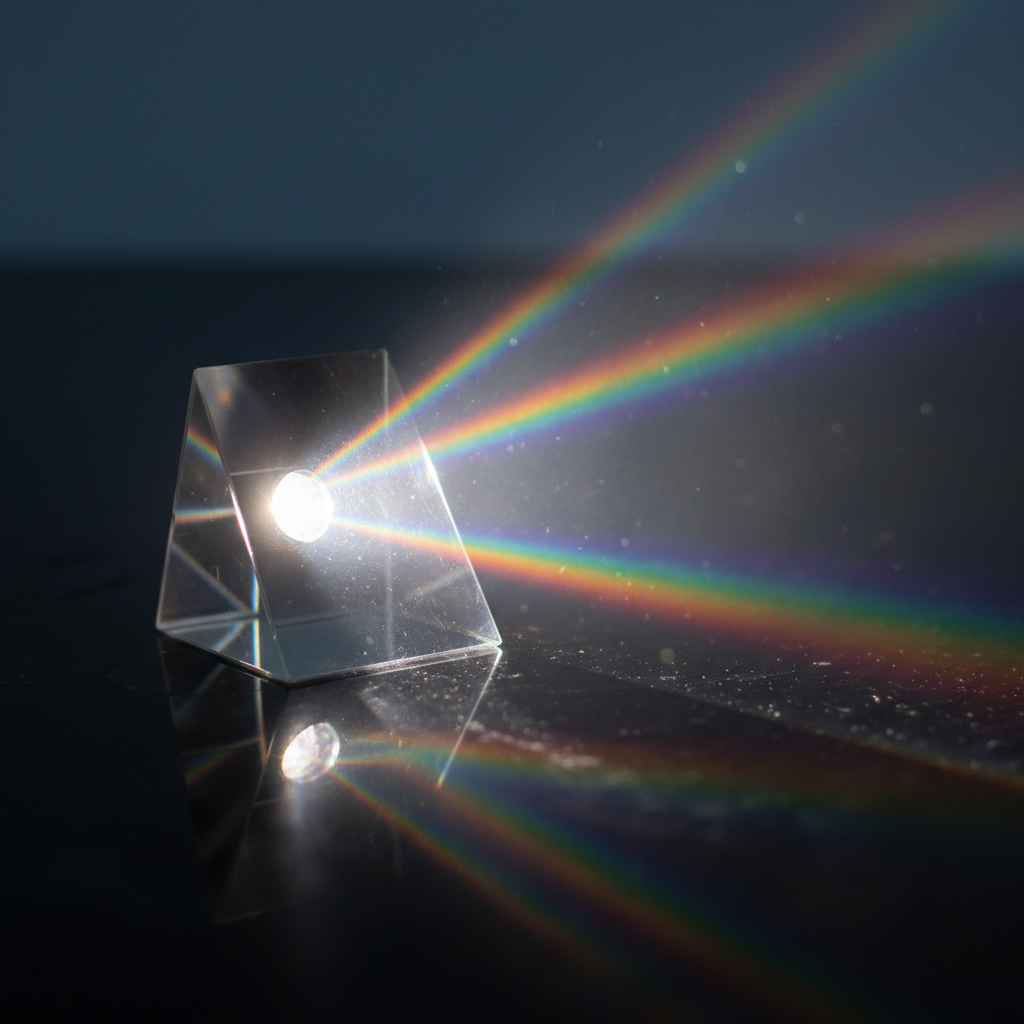
Light, being a fundamental form of energy, shows fascinating behaviour when it passes through different media. One such phenomenon is refraction, the bending of light as it moves from one medium to another with a different optical density. Studying the refractive index is crucial for understanding the nature of light and has practical applications in lenses, optical instruments, communication, and medical technologies.

Made byBobr AI

Theory of Refraction

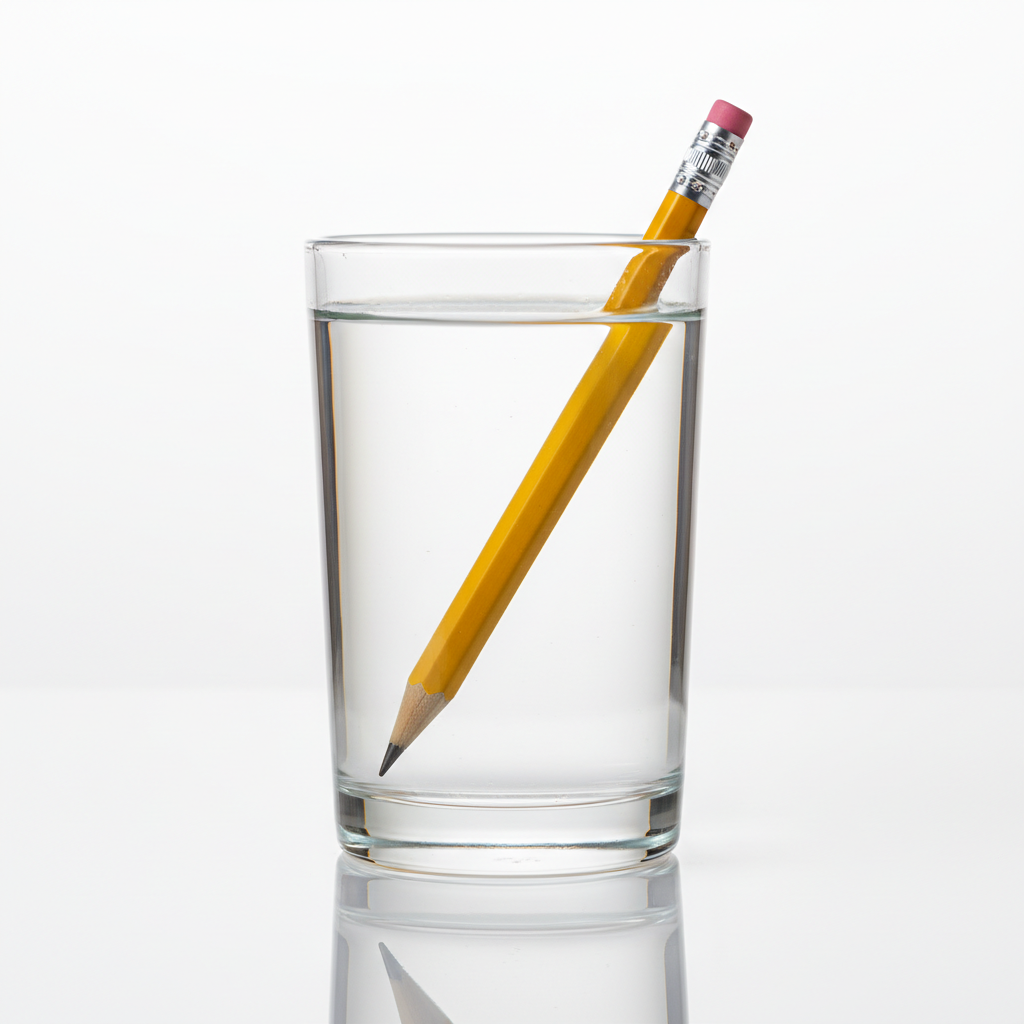
Refraction is the phenomenon where a light ray changes direction when passing between transparent media. The cause is the change in light speed: it moves fastest in air, slower in water, and slowest in glass.

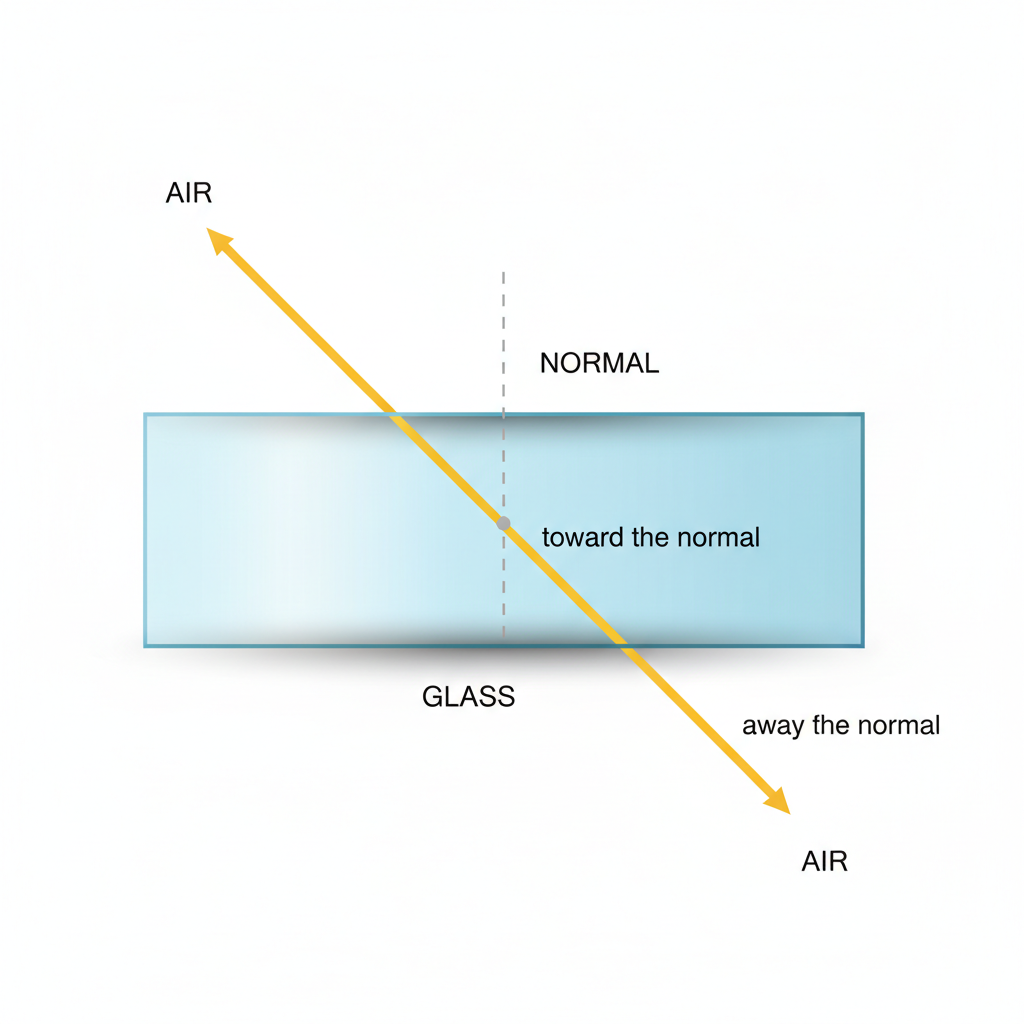
When light enters a denser medium, it continuously slows down and bends towards the normal. Conversely, when entering a rarer medium, it speeds up and bends away from the normal.

Made byBobr AI

Laws of Refraction

  • 1. Snell's Law: The ratio of the sine of the angle of incidence (i) to the sine of the angle of refraction (r) is constant for a given pair of media.
  • Mathematical Formula: sin i / sin r = μ₂ / μ₁
    Where μ₂ = Refractive index of 2nd medium, μ₁ = Refractive index of 1st medium.
  • 2. Second Law: The incident ray, the refracted ray, and the normal at the point of incidence all lie in the same plane.
Made byBobr AI

Apparatus Required

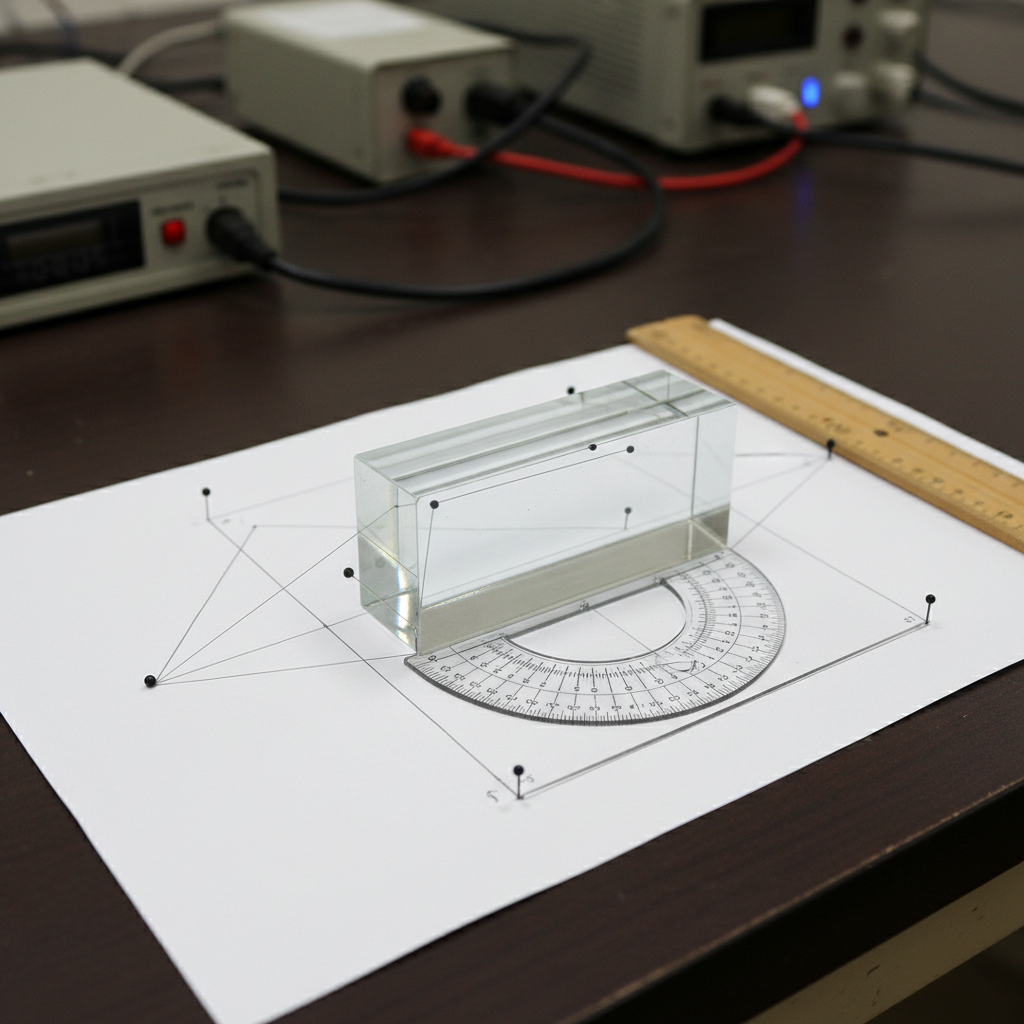
To conduct the experiment verifying the laws of refraction, the following materials are essential:

• A Rectangular Glass Slab
• Drawing Board & White Paper
• Sharp Pencil & Scale
• Protractor
• Drawing Pins (Thumb Tacks)
• Pins for ray tracing
Made byBobr AI

Refractive Indices of Common Media

The refractive index is a measure of how much the speed of light is reduced inside a medium. A higher index indicates the light travels slower and bends more. Diamond has one of the highest refractive indices, causing brilliant sparkle.
Chart
Made byBobr AI

Result

  • The light ray bent towards the normal when traveling from Air (Rare) to Glass (Dense).
  • The light ray bent away from the normal when traveling from Glass (Dense) to Air (Rare).
  • The emergent ray is parallel to the incident ray but laterally displaced.
  • The ratio sin i / sin r was found to be constant (approx 1.5 for glass), verifying Snell's Law.
Made byBobr AI

Conclusion

The experiment successfully demonstrates the phenomenon of refraction. It is concluded that light travels in straight lines but changes direction at the interface of two media of different optical densities. The extent of bending depends on the refractive index of the medium. These principles are fundamental to the working of lenses, prisms, and optical instruments.

Made byBobr AI

Bibliography

  • NCERT Physics Textbook for Class 12
  • Halliday, Resnick & Walker - Fundamentals of Physics
  • Website: www.physicsclassroom.com/class/refrn
  • Wikipedia - Refraction
Made byBobr AI
Bobr AI

DESIGNER-MADE
PRESENTATION,
GENERATED FROM
YOUR PROMPT

Create your own professional slide deck with real images, data charts, and unique design in under a minute.

Generate For Free

Refraction of Light: Physics Investigatory Project

Explore the laws of refraction, Snell's Law, and refractive indices in this comprehensive physics study on the bending of light through different media.

Investigatory Project on Refraction

Physics | Exploring the Bending of Light

Table of Contents

Certificate & Declaration

Introduction to Refraction

Theory & Laws of Refraction

Apparatus Required

Observations & Results

Conclusion & Bibliography

Certificate

This is to certify that the student has successfully completed the investigatory project on the topic 'Refraction' under the guidance of the Physics Department during the academic year 2025-2026. This project is the result of bona fide work and fulfills the requirements set forth by the curriculum standards.

Declaration

I hereby declare that the project work entitled 'Refraction of Light' submitted to the Physics Department is a record of original work done by me under supervision. This project has not been submitted elsewhere for the award of any other degree or diploma.

Acknowledgement

I would like to express my special thanks of gratitude to my teacher as well as our principal who gave me the golden opportunity to do this wonderful project on the topic of Refraction. Their guidance and support were vital in completing this research. I would also like to thank my parents and friends who helped me finalize this project within the limited time frame.

Introduction

Light, being a fundamental form of energy, shows fascinating behaviour when it passes through different media. One such phenomenon is refraction, the bending of light as it moves from one medium to another with a different optical density. Studying the refractive index is crucial for understanding the nature of light and has practical applications in lenses, optical instruments, communication, and medical technologies.

Theory of Refraction

Refraction is the phenomenon where a light ray changes direction when passing between transparent media. The cause is the change in light speed: it moves fastest in air, slower in water, and slowest in glass.<br><br>When light enters a denser medium, it continuously slows down and bends <b>towards the normal</b>. Conversely, when entering a rarer medium, it speeds up and bends <b>away from the normal</b>.

Laws of Refraction

<b>1. Snell's Law:</b> The ratio of the sine of the angle of incidence (i) to the sine of the angle of refraction (r) is constant for a given pair of media.

<b>Mathematical Formula:</b> sin i / sin r = μ₂ / μ₁<br><span style='font-size:0.8em; opacity:0.8;'>Where μ₂ = Refractive index of 2nd medium, μ₁ = Refractive index of 1st medium.</span>

<b>2. Second Law:</b> The incident ray, the refracted ray, and the normal at the point of incidence all lie in the same plane.

Apparatus Required

To conduct the experiment verifying the laws of refraction, the following materials are essential:<br><br>• A Rectangular Glass Slab<br>• Drawing Board & White Paper<br>• Sharp Pencil & Scale<br>• Protractor<br>• Drawing Pins (Thumb Tacks)<br>• Pins for ray tracing

Refractive Indices of Common Media

The refractive index is a measure of how much the speed of light is reduced inside a medium. A higher index indicates the light travels slower and bends more. Diamond has one of the highest refractive indices, causing brilliant sparkle.

Result

The light ray bent towards the normal when traveling from Air (Rare) to Glass (Dense).

The light ray bent away from the normal when traveling from Glass (Dense) to Air (Rare).

The emergent ray is parallel to the incident ray but laterally displaced.

The ratio sin i / sin r was found to be constant (approx 1.5 for glass), verifying Snell's Law.

Conclusion

The experiment successfully demonstrates the phenomenon of refraction. It is concluded that light travels in straight lines but changes direction at the interface of two media of different optical densities. The extent of bending depends on the refractive index of the medium. These principles are fundamental to the working of lenses, prisms, and optical instruments.

Bibliography

NCERT Physics Textbook for Class 12

Halliday, Resnick & Walker - Fundamentals of Physics

Website: www.physicsclassroom.com/class/refrn

Wikipedia - Refraction

  • physics-project
  • refraction
  • snells-law
  • optics
  • light-experiment
  • science-investigation
  • refractive-index