



Maruti Suzuki's Negative Working Capital Case Study
Learn how Maruti Suzuki stays ahead with negative working capital, supplier credit strategies, and exceptional inventory efficiency.
Maruti Suzuki's Negative Working Capital
Turning Conventional Finance Upside Down: A Strategic Advantage
Understanding the Concept
Traditionally, positive working capital is seen as a sign of health. However, Maruti Suzuki operates on a <b>Negative Working Capital</b> model.<br><br><b>The Formula:</b><br>Working Capital = Current Assets - Current Liabilities<br><br><b>The Maruti Reality:</b><br>Liabilities > Assets<br><br>This means the company operates using suppliers' money and customer advances rather than its own funds.
Inventory Efficiency: Maruti vs. Global Avg
Maruti's ability to turn inventory into cash is exceptional. While the global industry average hovers around 40-60 days, Maruti clears its inventory in just 15-20 days. This rapid turnover is the engine of their cash cycle.
The Four Pillars of Strategy
<b>Advance Payments:</b> Dealers pay upfront before vehicles are even manufactured or delivered, creating immediate cash inflow.
<b>Minimal Inventory:</b> Cars move from production to customer rapidly (15-20 days), preventing cash from getting locked in stock.
<b>Extended Supplier Credit:</b> Component manufacturers provide 60-90 day credit periods, allowing Maruti to sell cars before paying for parts.
<b>Cash Sales Model:</b> Minimal receivables mean cash arrives quickly while payables remain extended.
The Cash Flow Gap Advantage
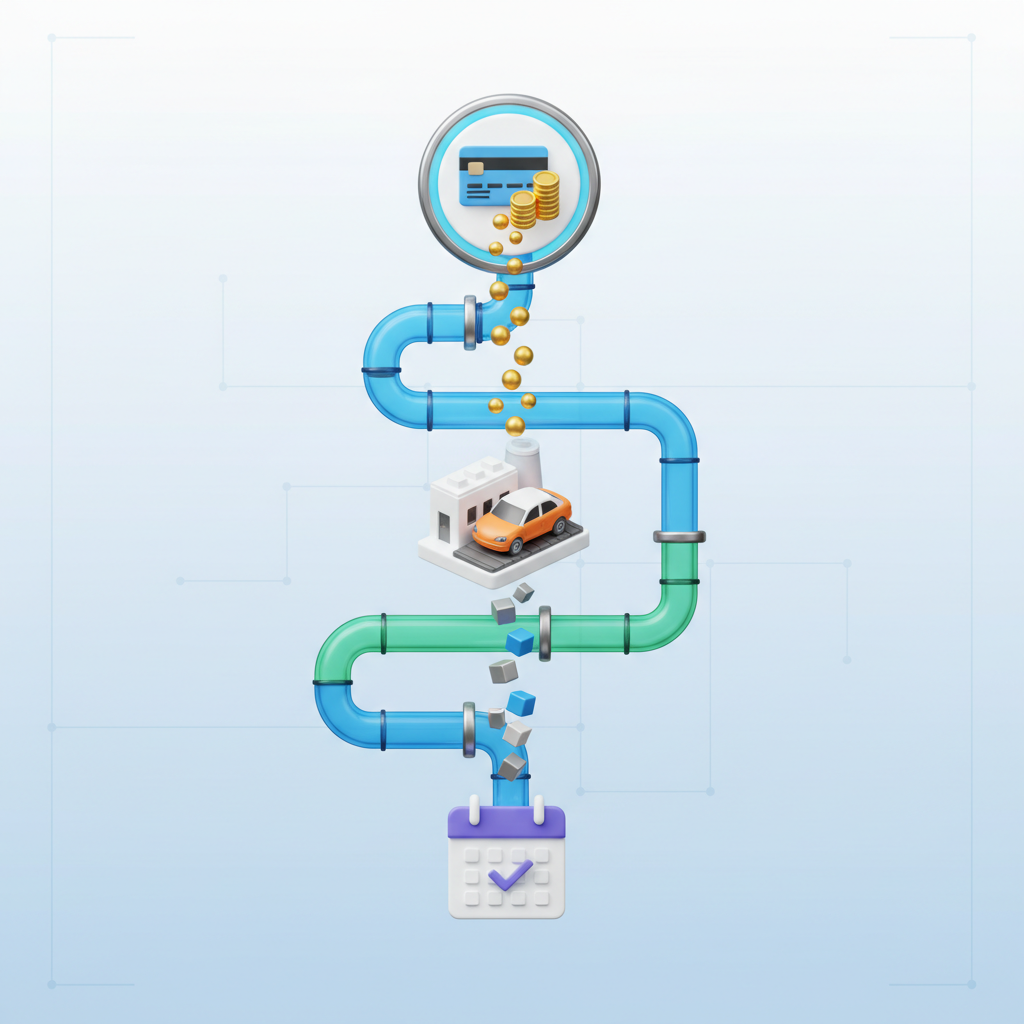
The secret lies in the 'Float'. Maruti collects cash from selling a car ~70 days before it has to pay the suppliers who made the parts. This creates a massive pool of interest-free capital.
The Cash Cycle Timeline
<b>Day 0:</b> Dealer transfers order payment (Cash Inflow).<br><br><b>Day 15:</b> Vehicle manufactured and delivered.<br><br><b>Day 60-90:</b> Maruti pays component suppliers (Cash Outflow).<br><br><b>Result:</b> 2-3 months of free liquidity to invest in R&D or earn interest.
Market Dominance: The Enabler
This model is not possible for everyone. It requires immense negotiating power.<br><br>With <b>50%+ market share</b> in India's passenger vehicle segment, suppliers cannot afford to lose Maruti's business. This allows Maruti to dictate favorable credit terms that smaller competitors cannot command.<br><br>Similarly, dealers compete for allocation, making them willing to pay advances.
Financial Impact Analysis
The strategic use of working capital directly impacts two Critical metrics: Cost of Capital and ROCE. By using supplier credit, Maruti reduces reliance on bank loans, lowering interest costs by ~30% compared to traditional models.
Negative working capital is a double-edged sword. It generates cash in good times, but requires consistent demand volume to sustain. A drop in sales can quickly turn this liquidity engine into a liquidity trap.
Strategic Risk Assessment
Key Takeaways
<b>Strategic Strength:</b> Negative working capital is not a weakness for Maruti, but a massive competitive advantage.
<b>OPM Strategy:</b> Using 'Other People's Money' (suppliers and dealers) to fund operations leads to zero-cost capital.
<b>Efficiency:</b> Just-in-time inventory (15-20 days) ensures cash isn't tied up in the warehouse.
<b>Growth Fuel:</b> The free cash flow generated is reinvested into R&D and capacity expansion, maintaining market leadership.
- working-capital
- maruti-suzuki
- business-strategy
- finance-case-study
- inventory-management
- cash-flow
- automotive-industry