

Made byBobr AI

A-Level Sport Biomechanics: Technology & Kinetic Analysis

Explore the use of limb kinetics, force plates, and wind tunnels in sports. Learn how biomechanical technology enhances athletic performance and prevents injury.

#sport-biomechanics#limb-kinetics#force-plates#wind-tunnels#kinesiology#athletic-training#a-level-physical-education#sports-science
Watch
Pitch
A-Level Sport Biomechanics
Analysis Through the Use of Technology
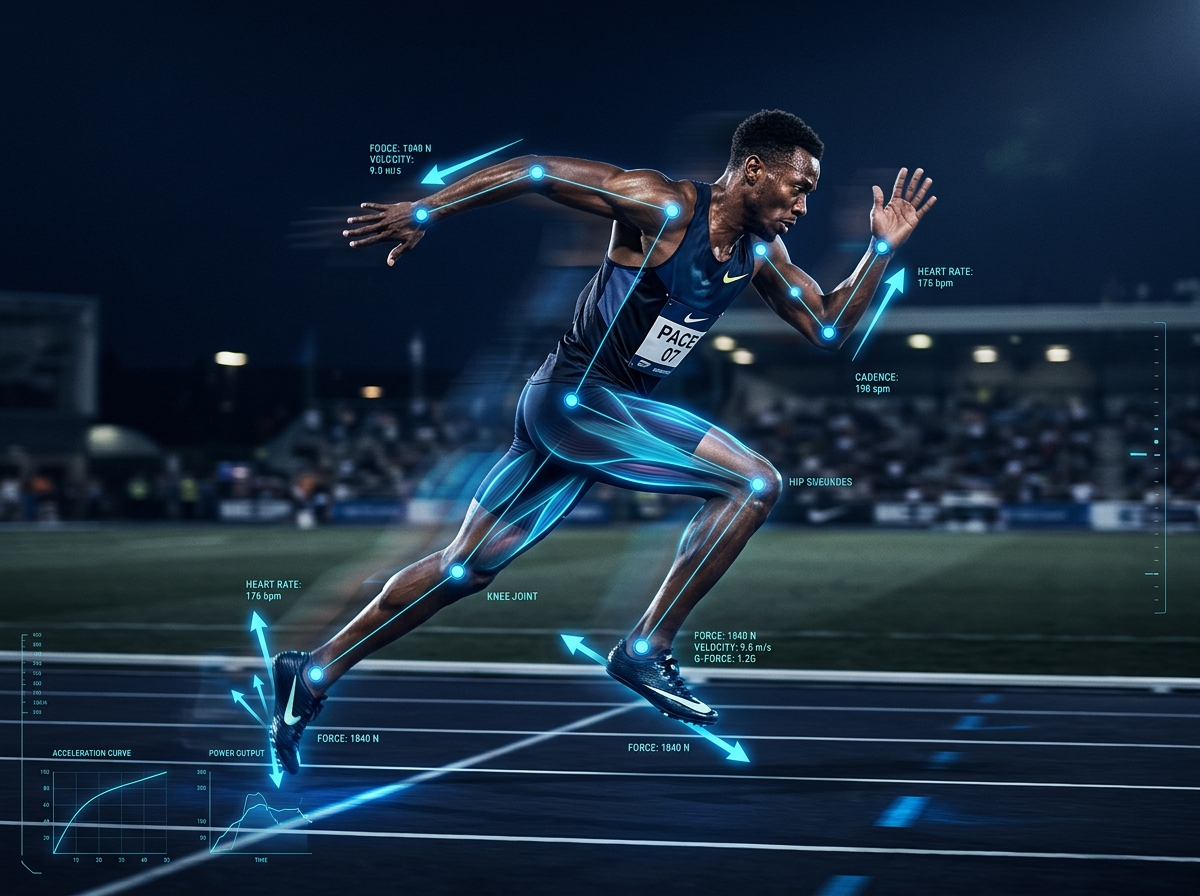
Limb Kinetics Force Plates Wind Tunnels
Made byBobr AI
A-Level Sport Biomechanics
Topics Covered
Limb Kinetics
What is it the study of?
What does it involve?
How is it carried out?
What sports is it useful for?
Any issues?
Force Plates
What is it the study of?
What does it involve?
How is it carried out?
What sports is it useful for?
Any issues?
Wind Tunnels
What is it the study of?
What does it involve?
How is it carried out?
What sports is it useful for?
Any issues?
Made byBobr AI
The Study of Forces Acting on the Limbs
Limb Kinetics
What is the Study of?
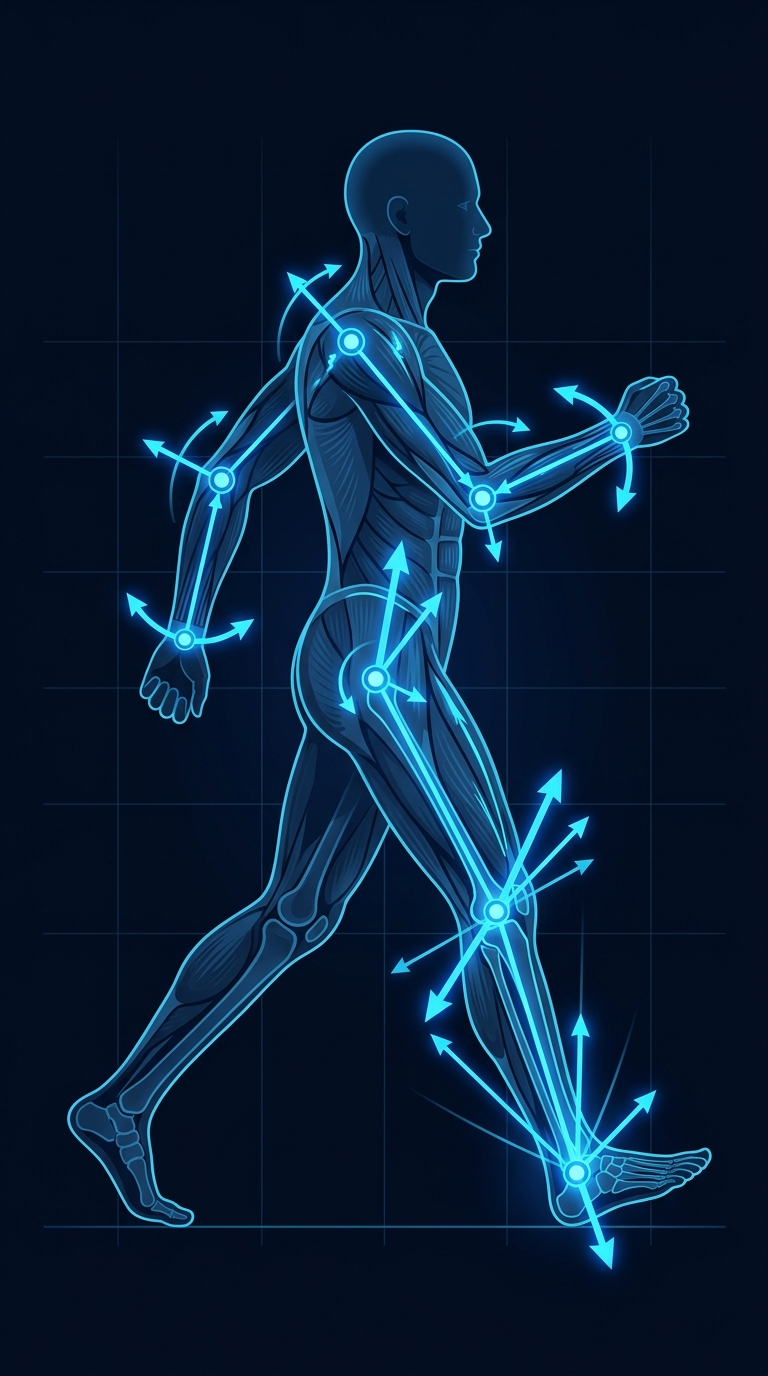
The study of forces that cause motion in the limbs
Examines internal forces (muscles, tendons, ligaments) and external forces (gravity, reaction forces)
Part of the broader field of biomechanics
Analyses how forces produce, control and modify limb movement
What Does it Involve?
Measurement of joint torques, moments and angular velocities
Use of sensors, motion capture cameras and EMG (electromyography)
Recording muscle activation patterns during movement
Calculating net joint forces and moments throughout a movement
Made byBobr AI
How is it Carried Out & Sports Applications
Limb Kinetics
How is it Carried Out?
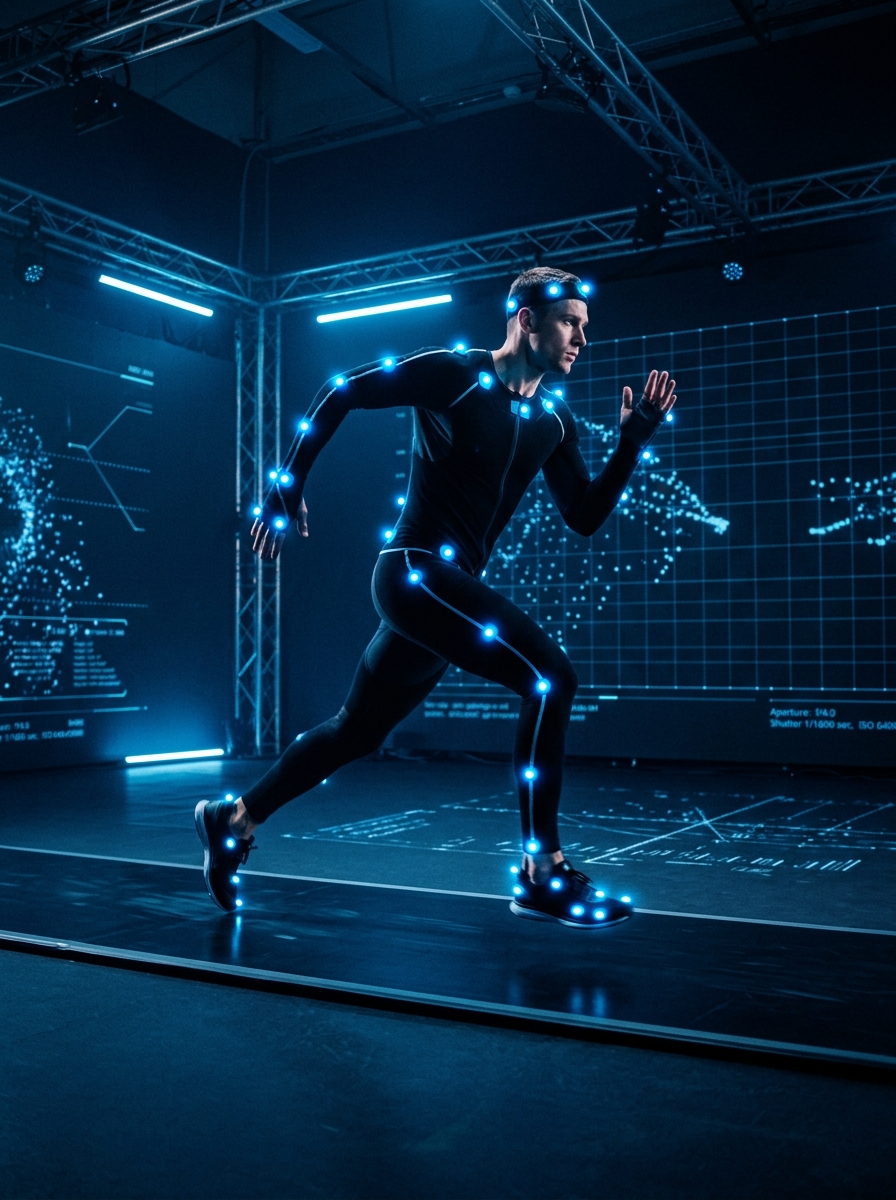
Athletes are fitted with reflective markers on joints and limbs
Motion capture cameras (e.g. Vicon system) track marker positions in 3D
Force plates record ground reaction forces simultaneously
EMG electrodes measure muscle activation timing
Data is processed using specialist software to calculate joint moments and powers
Inverse dynamics modelling used to estimate internal forces
What Sports is it Useful For & Why?
Athletics (sprinting/jumping) — optimise stride mechanics and take-off angles
Swimming — analyse stroke efficiency and joint loading
Gymnastics — assess landing forces and injury risk
Rugby/Football — study tackling and kicking mechanics
Cycling — optimise pedalling technique and power output
Made byBobr AI
Limb Kinetics Technology
Issues with Limb Kinetics Technology

Cost & Accessibility

Motion capture labs are expensive to build and maintain; not accessible to all athletes or clubs.

Skin Marker Artefact

Markers attached to skin can move relative to the underlying bone, causing measurement errors.

Lab vs. Real-World

Testing is often done in controlled lab settings which may not reflect actual sports performance conditions.

Time-Consuming Analysis

Processing and interpreting kinetic data requires specialist knowledge and significant time.

Invasiveness of EMG

Placing electrodes can be uncomfortable and may slightly alter movement patterns.

Made byBobr AI
The Study of Ground Reaction Forces
Force Plates

What is the Study of?

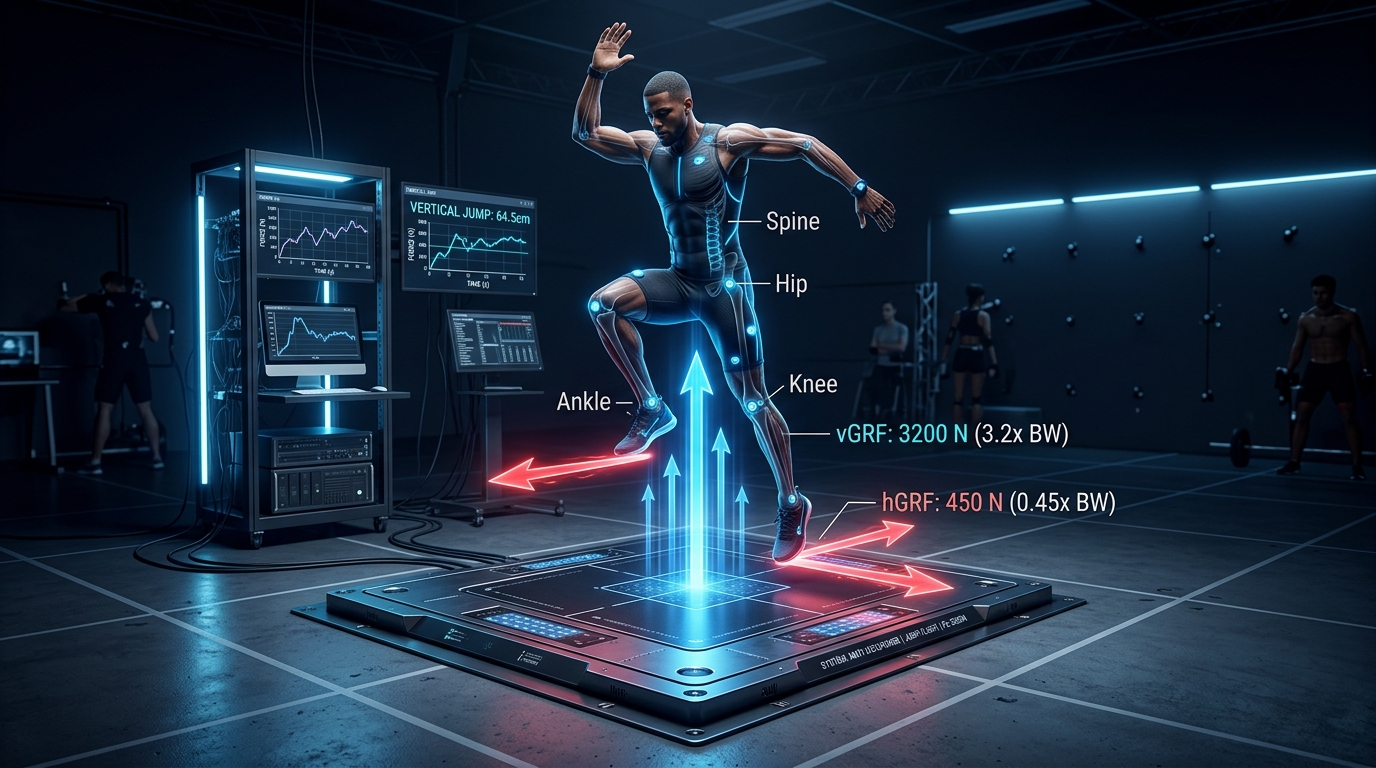
The study of forces exerted between an athlete's foot and the ground
Analyses Ground Reaction Forces (GRFs) in three directions: vertical, horizontal and lateral
Helps understand how force production relates to athletic performance and injury
Rooted in Newton's Third Law — every action has an equal and opposite reaction

What Does it Involve?

Piezoelectric or strain-gauge sensors embedded in a flat platform
Measures force in three axes (Fx, Fy, Fz) and the centre of pressure
Records rate of force development, impulse and contact time
Often combined with motion capture and EMG for full biomechanical analysis
Made byBobr AI
Force Plates — How is it Carried Out & Sports Applications
How is it Carried Out?
Force plate is embedded flush in the floor of a lab or sports facility
Athlete performs the movement (jump, run, kick, landing) on the plate
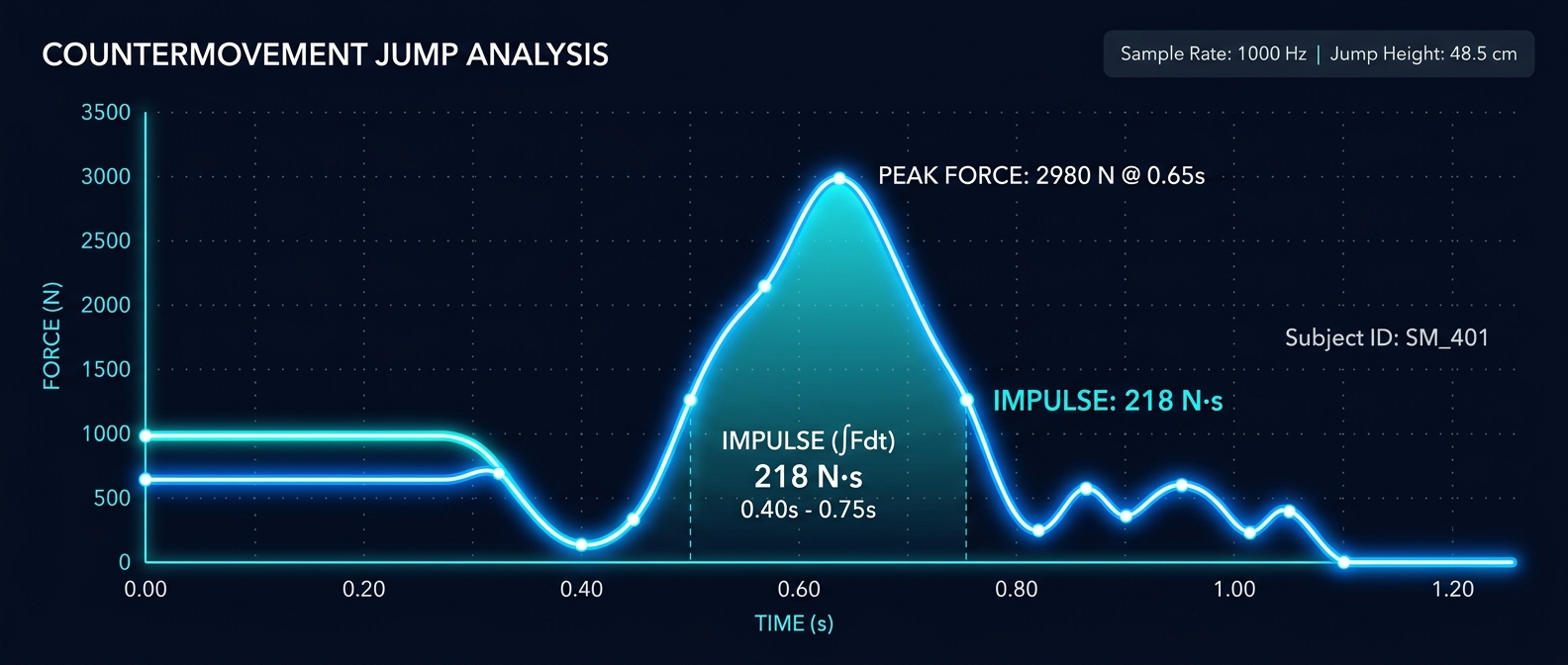
Sensors capture force data at high frequency (1000–2000 Hz)
Data is output as force-time curves showing impulse, peak force and rate of force development
Centre of pressure path is mapped to show balance and weight distribution
Results are compared to normative data or used to track athlete progress over time
What Sports is it Useful For & Why?
Weightlifting measures explosive force production and technique efficiency
Athletics (long/high jump) analyses take-off and landing forces
Basketball/Volleyball assesses vertical jump height and asymmetry
Football evaluates kicking and cutting movement forces
Rehabilitation monitors return-to-sport readiness after injury
Made byBobr AI
Force Plates
Issues with Force Plate Technology
Limited to Lab Settings
Most force plates are fixed in labs; portable versions exist but have reduced accuracy.
Single Step Analysis
Traditional force plates only capture one foot strike at a time, limiting full gait analysis.
High Cost
Professional-grade force plates cost thousands of pounds, limiting accessibility to elite sport.
Ecological Validity
Artificial testing environment may not accurately replicate real competitive conditions.
Data Interpretation
Requires expert knowledge in biomechanics to correctly interpret complex force-time curves.
Made byBobr AI
The Study of Aerodynamic Forces
Wind Tunnels
What is the Study of?
  • The study of aerodynamic forces acting on an athlete or equipment in motion
  • Examines drag (air resistance opposing motion) and lift forces
  • Analyses how body position and equipment shape affect airflow
  • Uses principles of fluid dynamics applied to sport performance
What Does it Involve?
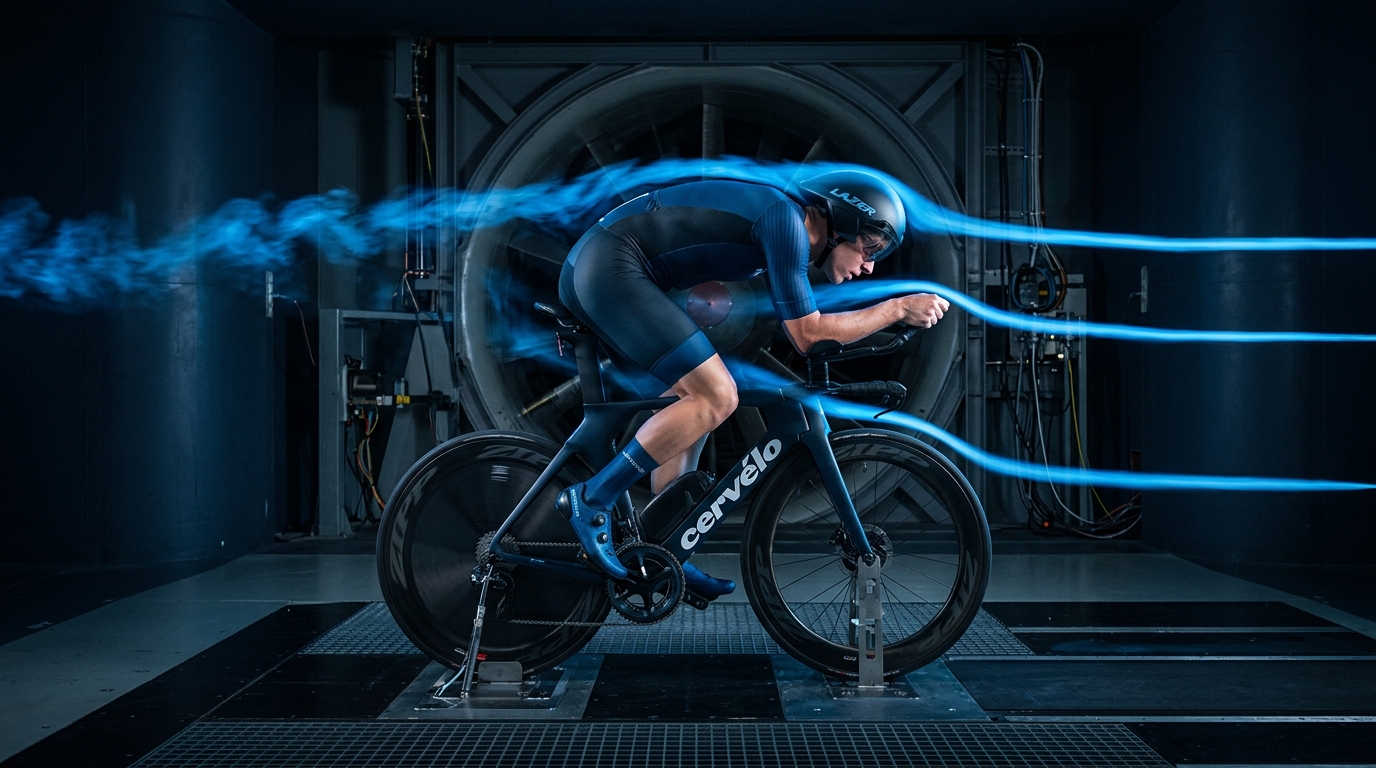
  • Athlete or equipment model is placed inside a controlled airflow chamber
  • Air is pushed at controlled speeds to simulate real movement conditions
  • Pressure sensors, smoke/laser visualisation and force transducers measure airflow
  • Drag coefficient (Cd) and lift coefficient are calculated
  • Body posture adjustments are tested to find the most aerodynamically efficient position
Made byBobr AI
Aerodynamic Analysis Techniques
Wind Tunnels — How is it Carried Out & Sports Applications
How is it Carried Out?
Athlete or scale model is positioned in the test section of the tunnel
Fans generate a controlled, uniform airflow at specific speeds (up to 200 km/h)
Smoke, tufts or laser-sheet flow visualisation reveals airflow patterns
Force balances measure drag and lift forces on the subject
Pressure tappings on the surface measure pressure distribution
Data is used to calculate drag coefficient and compare different positions or equipment configurations
Wind tunnel testing can be combined with CFD (Computational Fluid Dynamics) for deeper analysis
What Sports is it Useful For & Why?
Cycling — optimise riding position and helmet/frame design to reduce drag
Skiing/Ski Jumping — test tuck positions and suit design for aerodynamic advantage
Athletics (sprinters) — reduce air resistance through suit and posture design
Formula 1/Motor Sport — car aerodynamics and driver helmet design
Javelin/Discus — optimise implement design and release angle for maximum range
Made byBobr AI
Wind Tunnels — Issues with the Technology
Issues with Wind Tunnel Technology
Extremely High Cost
Full-scale wind tunnels cost millions to build and operate; only elite teams or nations can afford them, limiting widespread access.
Static vs. Dynamic Testing
Athletes must remain still in the tunnel while accurate capturing occurs; real sport involves actively dynamic and constantly changing body positions.
Scale Model Limitations
Relying on scaled-down models instead of real athletes can produce highly inaccurate or incomplete aerodynamic data that fails to translate.
Environmental Differences
Tunnels cannot fully or accurately replicate unpredictable real conditions, such as ambient temperature, humidity, crosswinds, and sudden altitude shifts.
Athlete Discomfort
Intense, high-speed airflow can be physically uncomfortable for the test subject, causing unnatural posture changes that invalidate readings.
Made byBobr AI
Key Takeaways
Limb Kinetics
Analyses internal and external forces on limbs using motion capture and EMG. Vital for optimising technique and reducing injury risk.
Force Plates
Measures ground reaction forces to understand how athletes generate and apply force. Key for explosive sports and rehab.
Wind Tunnels
Studies aerodynamic drag and lift to streamline body position and equipment. Critical in cycling, skiing and athletics.
Technology in biomechanics enables athletes and coaches to make data-driven decisions that enhance performance and reduce injury.
A-Level Sport Biomechanics
Made byBobr AI
Bobr AI

DESIGNER-MADE
PRESENTATION,
GENERATED FROM
YOUR PROMPT

Create your own professional slide deck with real images, data charts, and unique design in under a minute.

Generate For Free

A-Level Sport Biomechanics: Technology & Kinetic Analysis

Explore the use of limb kinetics, force plates, and wind tunnels in sports. Learn how biomechanical technology enhances athletic performance and prevents injury.

Analysis Through the Use of Technology

A-Level Sport Biomechanics

Limb Kinetics

Force Plates

Wind Tunnels

A-Level Sport Biomechanics

Topics Covered

Limb Kinetics

Force Plates

Wind Tunnels

What is it the study of?

What does it involve?

How is it carried out?

What sports is it useful for?

Any issues?

Limb Kinetics

The Study of Forces Acting on the Limbs

What is the Study of?

The study of forces that cause motion in the limbs

Examines internal forces (muscles, tendons, ligaments) and external forces (gravity, reaction forces)

Part of the broader field of biomechanics

Analyses how forces produce, control and modify limb movement

What Does it Involve?

Measurement of joint torques, moments and angular velocities

Use of sensors, motion capture cameras and EMG (electromyography)

Recording muscle activation patterns during movement

Calculating net joint forces and moments throughout a movement

Limb Kinetics

How is it Carried Out & Sports Applications

How is it Carried Out?

Athletes are fitted with reflective markers on joints and limbs

Motion capture cameras (e.g. Vicon system) track marker positions in 3D

Force plates record ground reaction forces simultaneously

EMG electrodes measure muscle activation timing

Data is processed using specialist software to calculate joint moments and powers

Inverse dynamics modelling used to estimate internal forces

What Sports is it Useful For & Why?

<span style="color: #ffffff; font-weight: 600;">Athletics (sprinting/jumping)</span> &mdash; optimise stride mechanics and take-off angles

<span style="color: #ffffff; font-weight: 600;">Swimming</span> &mdash; analyse stroke efficiency and joint loading

<span style="color: #ffffff; font-weight: 600;">Gymnastics</span> &mdash; assess landing forces and injury risk

<span style="color: #ffffff; font-weight: 600;">Rugby/Football</span> &mdash; study tackling and kicking mechanics

<span style="color: #ffffff; font-weight: 600;">Cycling</span> &mdash; optimise pedalling technique and power output

Issues with Limb Kinetics Technology

Cost & Accessibility

Motion capture labs are expensive to build and maintain; not accessible to all athletes or clubs.

Skin Marker Artefact

Markers attached to skin can move relative to the underlying bone, causing measurement errors.

Lab vs. Real-World

Testing is often done in controlled lab settings which may not reflect actual sports performance conditions.

Time-Consuming Analysis

Processing and interpreting kinetic data requires specialist knowledge and significant time.

Invasiveness of EMG

Placing electrodes can be uncomfortable and may slightly alter movement patterns.

The Study of Ground Reaction Forces

Force Plates

What is the Study of?

The study of forces exerted between an athlete's foot and the ground

Analyses Ground Reaction Forces (GRFs) in three directions: vertical, horizontal and lateral

Helps understand how force production relates to athletic performance and injury

Rooted in Newton's Third Law — every action has an equal and opposite reaction

What Does it Involve?

Piezoelectric or strain-gauge sensors embedded in a flat platform

Measures force in three axes (Fx, Fy, Fz) and the centre of pressure

Records rate of force development, impulse and contact time

Often combined with motion capture and EMG for full biomechanical analysis

Force Plates

— How is it Carried Out & Sports Applications

How is it Carried Out?

Force plate is embedded flush in the floor of a lab or sports facility

Athlete performs the movement (jump, run, kick, landing) on the plate

Sensors capture force data at high frequency (1000–2000 Hz)

Data is output as force-time curves showing impulse, peak force and rate of force development

Centre of pressure path is mapped to show balance and weight distribution

Results are compared to normative data or used to track athlete progress over time

What Sports is it Useful For & Why?

Weightlifting

measures explosive force production and technique efficiency

Athletics (long/high jump)

analyses take-off and landing forces

Basketball/Volleyball

assesses vertical jump height and asymmetry

Football

evaluates kicking and cutting movement forces

Rehabilitation

monitors return-to-sport readiness after injury

Force Plates

Issues with Force Plate Technology

Limited to Lab Settings

Most force plates are fixed in labs; portable versions exist but have reduced accuracy.

Single Step Analysis

Traditional force plates only capture one foot strike at a time, limiting full gait analysis.

High Cost

Professional-grade force plates cost thousands of pounds, limiting accessibility to elite sport.

Ecological Validity

Artificial testing environment may not accurately replicate real competitive conditions.

Data Interpretation

Requires expert knowledge in biomechanics to correctly interpret complex force-time curves.

The Study of Aerodynamic Forces

Wind Tunnels

What is the Study of?

The study of aerodynamic forces acting on an athlete or equipment in motion

Examines drag (air resistance opposing motion) and lift forces

Analyses how body position and equipment shape affect airflow

Uses principles of fluid dynamics applied to sport performance

What Does it Involve?

Athlete or equipment model is placed inside a controlled airflow chamber

Air is pushed at controlled speeds to simulate real movement conditions

Pressure sensors, smoke/laser visualisation and force transducers measure airflow

Drag coefficient (Cd) and lift coefficient are calculated

Body posture adjustments are tested to find the most aerodynamically efficient position

Wind Tunnels — How is it Carried Out & Sports Applications

How is it Carried Out?

Athlete or scale model is positioned in the test section of the tunnel

Fans generate a controlled, uniform airflow at specific speeds (up to 200 km/h)

Smoke, tufts or laser-sheet flow visualisation reveals airflow patterns

Force balances measure drag and lift forces on the subject

Pressure tappings on the surface measure pressure distribution

Data is used to calculate drag coefficient and compare different positions or equipment configurations

Wind tunnel testing can be combined with CFD (Computational Fluid Dynamics) for deeper analysis

What Sports is it Useful For & Why?

<strong style="color: #00D2FF;">Cycling</strong> — optimise riding position and helmet/frame design to reduce drag

<strong style="color: #00D2FF;">Skiing/Ski Jumping</strong> — test tuck positions and suit design for aerodynamic advantage

<strong style="color: #00D2FF;">Athletics (sprinters)</strong> — reduce air resistance through suit and posture design

<strong style="color: #00D2FF;">Formula 1/Motor Sport</strong> — car aerodynamics and driver helmet design

<strong style="color: #00D2FF;">Javelin/Discus</strong> — optimise implement design and release angle for maximum range

Issues with Wind Tunnel Technology

Wind Tunnels — Issues with the Technology

Extremely High Cost

Full-scale wind tunnels cost millions to build and operate; only elite teams or nations can afford them, limiting widespread access.

Static vs. Dynamic Testing

Athletes must remain still in the tunnel while accurate capturing occurs; real sport involves actively dynamic and constantly changing body positions.

Scale Model Limitations

Relying on scaled-down models instead of real athletes can produce highly inaccurate or incomplete aerodynamic data that fails to translate.

Environmental Differences

Tunnels cannot fully or accurately replicate unpredictable real conditions, such as ambient temperature, humidity, crosswinds, and sudden altitude shifts.

Athlete Discomfort

Intense, high-speed airflow can be physically uncomfortable for the test subject, causing unnatural posture changes that invalidate readings.

Key Takeaways

Limb Kinetics

Analyses internal and external forces on limbs using motion capture and EMG. Vital for optimising technique and reducing injury risk.

Force Plates

Measures ground reaction forces to understand how athletes generate and apply force. Key for explosive sports and rehab.

Wind Tunnels

Studies aerodynamic drag and lift to streamline body position and equipment. Critical in cycling, skiing and athletics.

Technology in biomechanics enables athletes and coaches to make data-driven decisions that enhance performance and reduce injury.

A-Level Sport Biomechanics

  • sport-biomechanics
  • limb-kinetics
  • force-plates
  • wind-tunnels
  • kinesiology
  • athletic-training
  • a-level-physical-education
  • sports-science