
Made byBobr AI

Impact of Community Policing on Crime and Public Trust

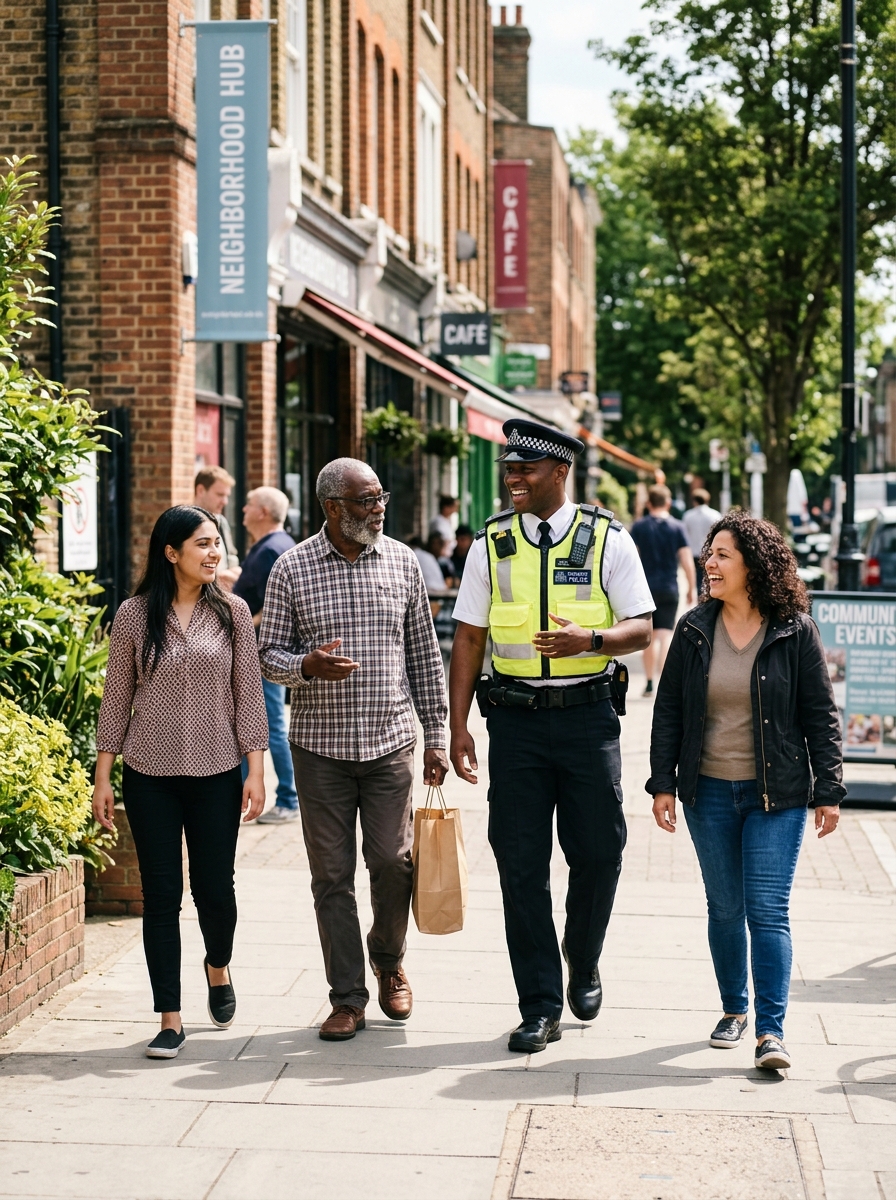
Explore how community policing strategies influence crime reduction and public legitimacy in urban areas. Analyzing methods, stakeholders, and outcomes.

#criminal-justice#community-policing#public-safety#crime-reduction#police-reform#sociology#policy-analysis
Watch
Pitch

CRIMINAL JUSTICE RESEARCH

The Impact of Community Policing on Crime Reduction and Public Trust


Analyzing Strategies and Outcomes

Samuel Edwards

CRIJ 1301: Introduction to Criminal Justice | Dr. Destinee' Rush

April 2026
Background Image
Made byBobr AI
01
ABSTRACT

This research examines how community policing affects crime reduction and public trust in urban areas, exploring whether collaborative law enforcement strategies produce measurable, lasting outcomes.

πŸ” Research Problem

Although community policing is widely adopted, its impact on crime reduction remains inconsistent and depends on implementation, resources, and broader social conditions.

🎯 Objectives

Determine the effectiveness of community policing in improving public trust and reducing crime; identify key factors that influence outcomes.

πŸ”¬ Methods

Analysis of crime data, scholarly literature review, and community survey findings from prior empirical studies.

πŸ“‹ Expected Outcomes

Evidence-based policy recommendations for law enforcement agencies; guidance on long-term, resource-supported community policing models.

Made byBobr AI
02

INTRODUCTION

Background & Context

β€’

Community policing shifted policing from reactive, incident-driven models to proactive, prevention-focused partnerships (Kelling & Moore, 1988).

β€’

Rising crime, police misconduct, and strained police-community relations in the 1980s–90s drove the movement toward community-centered approaches.

β€’

High-profile use-of-force incidents and racial bias allegations have intensified public demand for reform and transparency (Skogan, 2006).

Research Problem

Despite widespread adoption, empirical evidence on community policing's impact on crime rates remains inconclusive β€” effectiveness depends on consistent implementation, adequate resources, and social conditions.

Objectives

β€’ Assess the effectiveness of community policing programs on public trust

β€’ Evaluate crime reduction outcomes across different urban contexts

β€’ Provide actionable, evidence-based policy recommendations

1980s

Community policing emerged as a reform movement in response to civil unrest and distrust

↓ Crime

Modest decreases in crime observed when community policing is combined with social interventions (Gill et al., 2014)

↑ Trust

Communities with stronger police relationships show higher cooperation and compliance with the law (Tyler, 2004)

Made byBobr AI
03 |

THE ISSUE & CORE RESEARCH FINDINGS

EVOLUTION OF COMMUNITY POLICING

1960s
Traditional policing β€” reactive, incident-driven model
1980s
Community policing reforms emerge post-civil unrest
1994
COPS Act β€” federal funding for community officers
2000s
Problem-oriented policing expands nationally
2020s
Reform demands reshape policing priorities

Historical Context

Traditional policing focused on rapid response and strict enforcement. Community policing emerged to address underlying causes of crime and reduce police-community tension (Kelling & Moore, 1988; Goldstein, 1990).

Theoretical Foundation

Social disorganization theory: crime thrives where social bonds are weak. Procedural justice theory: compliance increases when people perceive authorities as fair and respectful (Tyler, 2004).

Current Significance

Increased public scrutiny of policing, racial bias concerns, and post-pandemic crime spikes have renewed urgency for community-based policing models (Mastrofski, 2006; Braga & Weisburd, 2019).

Made byBobr AI
04 | IMPACT ANALYSIS

Who Is Affected?

PRIMARY STAKEHOLDERS

Minority & Marginalized Communities

Minority and marginalized communities face the highest stakes β€” historically over-policed yet under-protected. Community policing can rebuild trust, though racial profiling concerns persist (Tyler, 2004; Skogan, 2006).

SECONDARY STAKEHOLDERS

Government, Policymakers & Researchers

Municipal leaders, policymakers, and researchers shape policing through resource allocation and legislation. Increased trust leads to higher crime reporting and more effective prosecutions (Rosenbaum, 2010).

Data & Evidence

Impact of Community Policing by Outcome

Improved Public Trust 18%
Higher Crime Reporting 12%
Reduced Fear of Crime 22%
Consistent Crime Reduction 8%

Sources: Gill et al. (2014); Crowl (2017); Blair et al. (2021); Rosenbaum (2010)

Made byBobr AI
05 |

SOLUTIONS

Measures Taken and Proposed Strategies for the Future

Implemented Measures

Officer Training Programs

Communication, cultural awareness, and problem-solving training programs are being implemented to improve officer-community interactions (Skogan, 2006).

Body Cameras & Oversight

Body cameras, community advisory boards, and citizen oversight committees enhance transparency, accountability, and public confidence in law enforcement.

Foot Patrols & Liaison Offices

Regular community meetings and embedded neighborhood officers have strengthened personal relationships between police and residents (Braga & Weisburd, 2019).

Proposed Solutions

Invest in Social Services

Greater investment in education, housing, and mental health support addresses root causes of crime. A combined policing-plus-social-support model produces lasting results.

Data-Driven Strategies

Use empirical data to evaluate program effectiveness and identify best practices. Align resource allocation with community needs and crime patterns.

Community-Led Decision Making

When residents have a voice in shaping policing strategies, trust and cooperation increase β€” creating a more effective and equitable public safety system (Blair et al., 2021).

Long-term commitment, adequate resources, and organizational change within police departments are essential for community policing to succeed.

Made byBobr AI
06
CONCLUSIONS

Key Findings

Community policing is most effective at improving public trust and police legitimacy, particularly through consistent positive interactions.
Its impact on crime reduction is less consistent β€” effectiveness depends on implementation quality, funding, and broader social conditions.
Increased trust may raise crime reporting rates, creating the misleading appearance of higher crime when crime has not actually increased.
Community policing should be viewed as one component of a comprehensive criminal justice reform strategy, not a standalone solution.

Broader Implications

A paradigm shift from reactive to proactive, partnership-based policing is essential for rebuilding legitimacy in marginalized communities.
Long-term commitment, adequate resourcing, and organizational culture change within police departments are required for meaningful impact.

Future Research Directions

Longitudinal studies on community policing outcomes across diverse urban settings
Deeper examination of policing in communities with severe socioeconomic disadvantages
Intersectionality research: race, class, and geography in policing outcomes
Evaluating the role of social media in shaping police-community relations

"Community policing has the potential to create safer, more just, and more cohesive communities β€” but only with sustained collaboration between law enforcement and the people they serve."

— Edwards, S. (2026)

Made byBobr AI
07
REFERENCES
American Psychological Association (APA) Format
Blair, G., Karim, S., & Morse, B. (2021). Establishing the rule of law in weak states through community policing. Nature Human Behaviour, 5(7), 1–10.
Braga, A. A., & Weisburd, D. (2019). Problem-oriented policing and crime prevention. Criminology & Public Policy, 18(4), 1–26.
Crowl, J. N. (2017). The effect of community policing on crime reduction and police legitimacy. Criminal Justice Review, 42(1), 1–20.
Gill, C., Weisburd, D., Telep, C., Vitter, Z., & Bennett, T. (2014). Community-oriented policing to reduce crime. Campbell Systematic Reviews, 10(1), 1–172.
Goldstein, H. (1990). Problem-oriented policing. McGraw-Hill.
Kelling, G. L., & Moore, M. H. (1988). The evolving strategy of policing. Perspectives on Policing.
Mastrofski, S. D. (2006). Community policing: A skeptical view. Police Innovation.
Rosenbaum, D. P. (2010). Police and community partnerships. Crime and Justice, 39(1), 1–54.
Skogan, W. G. (2006). Police and community in Chicago. Oxford University Press.
Tyler, T. R. (2004). Enhancing police legitimacy. The Annals of the American Academy of Political and Social Science, 593, 84–100.
Prairie View A&M University β€’ CRIJ 1301: Introduction to Criminal Justice β€’ Dr. Destinee’ Rush β€’ April 6, 2026
Made byBobr AI
Bobr AI

DESIGNER-MADE
PRESENTATION,
GENERATED FROM
YOUR PROMPT

Create your own professional slide deck with real images, data charts, and unique design in under a minute.

Generate For Free

Impact of Community Policing on Crime and Public Trust

Explore how community policing strategies influence crime reduction and public legitimacy in urban areas. Analyzing methods, stakeholders, and outcomes.

CRIMINAL JUSTICE RESEARCH

The Impact of Community Policing on Crime Reduction and Public Trust

Analyzing Strategies and Outcomes

Samuel Edwards

CRIJ 1301: Introduction to Criminal Justice | Dr. Destinee' Rush

April 2026

01

ABSTRACT

This research examines how community policing affects crime reduction and public trust in urban areas, exploring whether collaborative law enforcement strategies produce measurable, lasting outcomes.

πŸ” Research Problem

Although community policing is widely adopted, its impact on crime reduction remains inconsistent and depends on implementation, resources, and broader social conditions.

🎯 Objectives

Determine the effectiveness of community policing in improving public trust and reducing crime; identify key factors that influence outcomes.

πŸ”¬ Methods

Analysis of crime data, scholarly literature review, and community survey findings from prior empirical studies.

πŸ“‹ Expected Outcomes

Evidence-based policy recommendations for law enforcement agencies; guidance on long-term, resource-supported community policing models.

02

INTRODUCTION

Background & Context

Community policing shifted policing from reactive, incident-driven models to proactive, prevention-focused partnerships (Kelling & Moore, 1988).

Rising crime, police misconduct, and strained police-community relations in the 1980s–90s drove the movement toward community-centered approaches.

High-profile use-of-force incidents and racial bias allegations have intensified public demand for reform and transparency (Skogan, 2006).

Research Problem

Despite widespread adoption, empirical evidence on community policing's impact on crime rates remains inconclusive β€” effectiveness depends on consistent implementation, adequate resources, and social conditions.

Objectives

β€’ Assess the effectiveness of community policing programs on public trust

β€’ Evaluate crime reduction outcomes across different urban contexts

β€’ Provide actionable, evidence-based policy recommendations

1980s

Community policing emerged as a reform movement in response to civil unrest and distrust

↓ Crime

Modest decreases in crime observed when community policing is combined with social interventions (Gill et al., 2014)

↑ Trust

Communities with stronger police relationships show higher cooperation and compliance with the law (Tyler, 2004)

03

THE ISSUE & CORE RESEARCH FINDINGS

EVOLUTION OF COMMUNITY POLICING

1960s

Traditional policing β€” reactive, incident-driven model

1980s

Community policing reforms emerge post-civil unrest

1994

COPS Act β€” federal funding for community officers

2000s

Problem-oriented policing expands nationally

2020s

Reform demands reshape policing priorities

Historical Context

Traditional policing focused on rapid response and strict enforcement. Community policing emerged to address underlying causes of crime and reduce police-community tension (Kelling & Moore, 1988; Goldstein, 1990).

Theoretical Foundation

Social disorganization theory: crime thrives where social bonds are weak. Procedural justice theory: compliance increases when people perceive authorities as fair and respectful (Tyler, 2004).

Current Significance

Increased public scrutiny of policing, racial bias concerns, and post-pandemic crime spikes have renewed urgency for community-based policing models (Mastrofski, 2006; Braga & Weisburd, 2019).

04

IMPACT ANALYSIS

Who Is Affected?

PRIMARY STAKEHOLDERS

Minority & Marginalized Communities

Minority and marginalized communities face the highest stakes β€” historically over-policed yet under-protected. Community policing can rebuild trust, though racial profiling concerns persist (Tyler, 2004; Skogan, 2006).

SECONDARY STAKEHOLDERS

Government, Policymakers & Researchers

Municipal leaders, policymakers, and researchers shape policing through resource allocation and legislation. Increased trust leads to higher crime reporting and more effective prosecutions (Rosenbaum, 2010).

Data & Evidence

Impact of Community Policing by Outcome

Improved Public Trust

Higher Crime Reporting

Reduced Fear of Crime

Consistent Crime Reduction

Sources: Gill et al. (2014); Crowl (2017); Blair et al. (2021); Rosenbaum (2010)

05

SOLUTIONS

Measures Taken and Proposed Strategies for the Future

Implemented Measures

Officer Training Programs

Communication, cultural awareness, and problem-solving training programs are being implemented to improve officer-community interactions (Skogan, 2006).

Body Cameras & Oversight

Body cameras, community advisory boards, and citizen oversight committees enhance transparency, accountability, and public confidence in law enforcement.

Foot Patrols & Liaison Offices

Regular community meetings and embedded neighborhood officers have strengthened personal relationships between police and residents (Braga & Weisburd, 2019).

Proposed Solutions

Invest in Social Services

Greater investment in education, housing, and mental health support addresses root causes of crime. A combined policing-plus-social-support model produces lasting results.

Data-Driven Strategies

Use empirical data to evaluate program effectiveness and identify best practices. Align resource allocation with community needs and crime patterns.

Community-Led Decision Making

When residents have a voice in shaping policing strategies, trust and cooperation increase β€” creating a more effective and equitable public safety system (Blair et al., 2021).

Long-term commitment, adequate resources, and organizational change within police departments are essential for community policing to succeed.

06

CONCLUSIONS

Key Findings

Community policing is most effective at improving public trust and police legitimacy, particularly through consistent positive interactions.

Its impact on crime reduction is less consistent β€” effectiveness depends on implementation quality, funding, and broader social conditions.

Increased trust may raise crime reporting rates, creating the misleading appearance of higher crime when crime has not actually increased.

Community policing should be viewed as one component of a comprehensive criminal justice reform strategy, not a standalone solution.

Broader Implications

A paradigm shift from reactive to proactive, partnership-based policing is essential for rebuilding legitimacy in marginalized communities.

Long-term commitment, adequate resourcing, and organizational culture change within police departments are required for meaningful impact.

Future Research Directions

Longitudinal studies on community policing outcomes across diverse urban settings

Deeper examination of policing in communities with severe socioeconomic disadvantages

Intersectionality research: race, class, and geography in policing outcomes

Evaluating the role of social media in shaping police-community relations

Community policing has the potential to create safer, more just, and more cohesive communities β€” but only with sustained collaboration between law enforcement and the people they serve.

Edwards, S. (2026)

07

REFERENCES

American Psychological Association (APA) Format

Blair, G., Karim, S., & Morse, B. (2021). Establishing the rule of law in weak states through community policing. Nature Human Behaviour, 5(7), 1–10.

Braga, A. A., & Weisburd, D. (2019). Problem-oriented policing and crime prevention. Criminology & Public Policy, 18(4), 1–26.

Crowl, J. N. (2017). The effect of community policing on crime reduction and police legitimacy. Criminal Justice Review, 42(1), 1–20.

Gill, C., Weisburd, D., Telep, C., Vitter, Z., & Bennett, T. (2014). Community-oriented policing to reduce crime. Campbell Systematic Reviews, 10(1), 1–172.

Goldstein, H. (1990). Problem-oriented policing. McGraw-Hill.

Kelling, G. L., & Moore, M. H. (1988). The evolving strategy of policing. Perspectives on Policing.

Mastrofski, S. D. (2006). Community policing: A skeptical view. Police Innovation.

Rosenbaum, D. P. (2010). Police and community partnerships. Crime and Justice, 39(1), 1–54.

Skogan, W. G. (2006). Police and community in Chicago. Oxford University Press.

Tyler, T. R. (2004). Enhancing police legitimacy. The Annals of the American Academy of Political and Social Science, 593, 84–100.

Prairie View A&M University β€’ CRIJ 1301: Introduction to Criminal Justice β€’ Dr. Destinee’ Rush β€’ April 6, 2026

  • criminal-justice
  • community-policing
  • public-safety
  • crime-reduction
  • police-reform
  • sociology
  • policy-analysis