



Pascal’s Law and the Principle of a Hydraulic Lift
Learn how hydraulic lifts work using Pascal's Law. Includes mathematical formulas, experimental setup, and real-world applications like brakes and cranes.
Principle of a Hydraulic Lift
Demonstrating Pascal’s Law of Fluid Pressure
Introduction
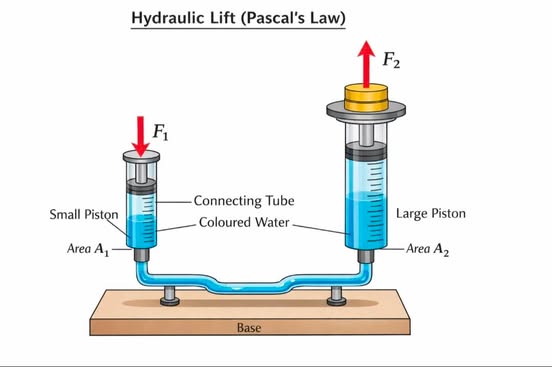
A hydraulic lift is a device used to lift heavy objects by applying a relatively small force. It operates on the principle that pressure exerted anywhere in a confined incompressible fluid is transmitted equally in all directions throughout the fluid.
The pressure exerted on an enclosed liquid is transmitted undiminished in all directions and acts at right angles to the surfaces of the container.
Pascal's Law
Mathematical Formula
If a force F1 is applied to a small piston of area A1, the pressure P created is P = F1/A1. This same pressure is transmitted to the larger piston A2. Therefore, the upward force F2 on the larger piston is F2 = P × A2, resulting in F1/A1 = F2/A2.
Apparatus Required
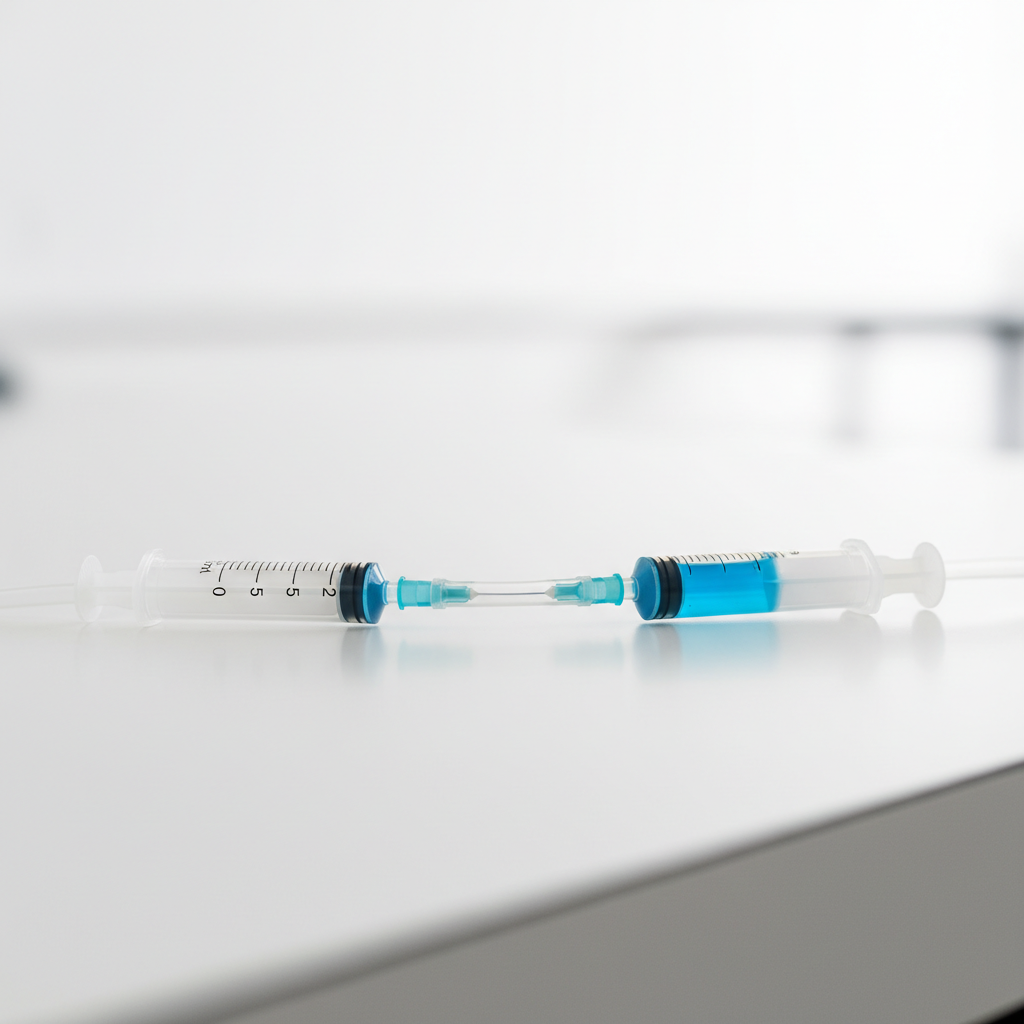
Two syringes of different cross-sectional areas (without needles)
Rubber or plastic connecting tube
Coloured water (for visibility)
Thermocol or cardboard base with adhesive
Small weights
Procedure (Setup)
1. Two syringes of unequal areas are fixed vertically on a thermocol base. <br><br> 2. Nozzles are connected tightly with a rubber tube to form a closed system. <br><br> 3. Coloured water is filled carefully, ensuring no air bubbles remain.
Procedure (Execution)
Pistons are adjusted so water levels are steady.
A platform with a known weight is placed on the larger piston.
Downward force is applied slowly on the smaller piston.
Observe the upward movement of the larger piston lifting the load.
Observations
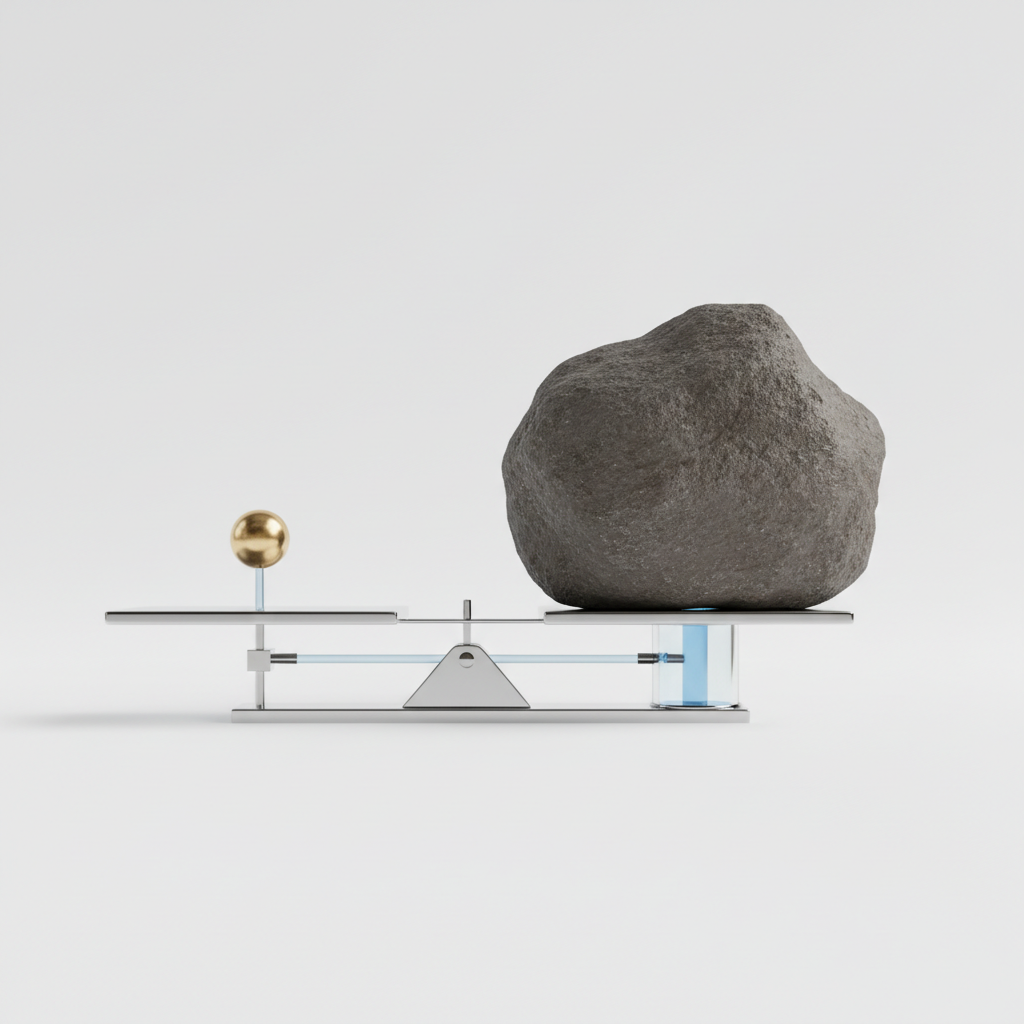
When the smaller plunger is pushed a longer distance, the larger plunger moves a shorter distance but lifts a heavier load. The pressure applied to the smaller area creates a force capable of lifting much more weight on the larger area.
Real-World Applications
Automobile Service Stations • Hydraulic Brakes • Heavy Excavators • Cranes
Precautions & Sources of Error
System must be completely filled with liquid (no air bubbles).
All joints must be leak-proof.
Force should be applied slowly and uniformly.
Error: Presence of air bubbles compresses the fluid.
Error: Friction between piston and syringe walls.
Result
The experiment successfully verifies Pascal’s Law. The pressure applied to the liquid in the smaller syringe was transmitted equally, producing a significantly larger force on the piston of greater area, allowing us to lift a heavy load with minimal effort.
- pascals-law
- hydraulic-lift
- fluid-mechanics
- physics-experiment
- mechanical-advantage
- engineering-principles