










LOTO and Isolation Guide: Industrial Safety Best Practices
Learn the essentials of Lockout/Tagout (LOTO). A simple guide for authorized employees on energy isolation, safety locks, and accidental startup prevention.
Authorized Isolation Officer
Your Key to Safety: Simple Rules for Isolation
Definitions
LOTO Devices & Equipment
<strong style='color:#FF8C00'>Isolation Device / Energy-Isolating Device:</strong> A mechanical device that physically prevents the release or transmission of energy (e.g., circuit breaker, disconnect switch, manual valve, blind flange, block).<br><br><strong style='color:#FF8C00'>Lockout Device:</strong> A positive means (e.g., lock, circuit breaker clasp, blank flange) that physically prevents the energization or operation of equipment.<br><br><strong style='color:#FF8C00'>Tagout Device:</strong> A prominent warning tag (e.g., "Danger - Do NOT OPERATE") which is attached to an energy-isolating device to indicate the equipment status and the authorized person.<br><br><strong style='color:#FF8C00'>Lock Box:</strong> A red central lockbox used to house the master isolating locks and keys. All personal locks are attached to this box, ensuring centralized control during group lockout.<br><br><strong style='color:#FF8C00'>Personal Lock & Tag:</strong> A unique, individually assigned lock and identification tag. Placed on an isolation point or a Lock Box, it indicates that the employee is personally involved in the work.<br><br><strong style='color:#FF8C00'>Isolation Point:</strong> The specific, physical location where an Isolation Device is installed and locked/tagged out (e.g., the main circuit breaker, the manual shut-off valve). This is where the personal lock is applied.
Key Personnel
<strong style='color:#FF8C00'>Authorized Employee:</strong> A worker who has received specialized LOTO training and is qualified to perform lockout/tagout on specific equipment and authorized to apply and remove lockout/tagout devices, and perform servicing on isolated equipment.<br>In simple terms: "The person who DOES the work" and is responsible for their personal lock.<br><br><strong style='color:#FF8C00'>Work responsible person (WRP):</strong> The authorized employee who personally supervises or performs the work. This person receives the Permit to Work (PTW), is responsible for implementing safety measures, and often applies the first (or group) lock.<br><br><strong style='color:#FF8C00'>Authorized Isolator Officer (AIO):</strong> A designated Authorized Employee (often a lead technician, electrician, or operator) who physically performs the comprehensive equipment isolation according to the plan. Verifies all energy sources, conducts the Verification of Isolation (Control Test), and typically completes the Isolation Certificate. In simple terms: "The person in charge of DISCONNECTIONS," ensuring the system is 100% safe.<br><br><strong style='color:#FF8C00'>Permit Issuer (Authorizing Manager):</strong> A qualified, authorized person (e.g., Area Supervisor, Operations Manager) with the authority to issue the PTW. Reviews and validates the Isolation Certificate, coordinates work activities, and ensures all pre-conditions are met before authorizing work. In simple terms: "The final authority" who gives the official green light for work to begin.
Procedures & Documents
<strong style='color:#FF8C00'>Control Test (Verify):</strong> A mandatory procedure performed after lockout/tagout but before starting work. Verifies that all energy sources are effectively isolated.<br><br><strong style='color:#FF8C00'>Out of Service Tag:</strong> A yellow and black tag used to mark equipment that is defective or unsafe. It checks status but provides no physical restraint.<br><br><strong style='color:#FF8C00'>Permit to Work (PTW):</strong> A formal document authorizing work. It details scope, hazards, LOTO points, safety measures, and authorizations.<br><br><strong style='color:#FF8C00'>Isolation Certificate:</strong> A formal, stand-alone document that provides a detailed, step-by-step record of all isolations performed. It lists every isolation point, device used, method of isolation, and includes signatures of the isolator and verifier.
Why Do We Need LOTO?
Machines are powerful. If a machine accidentally starts while you are fixing it, cleaning it, or unjamming it, you can get seriously hurt. LOTO (Lockout/Tagout) is a system to ensure zero energy is moving while you work.
Why Do We Need LOTO?
What Exactly is LOTO?
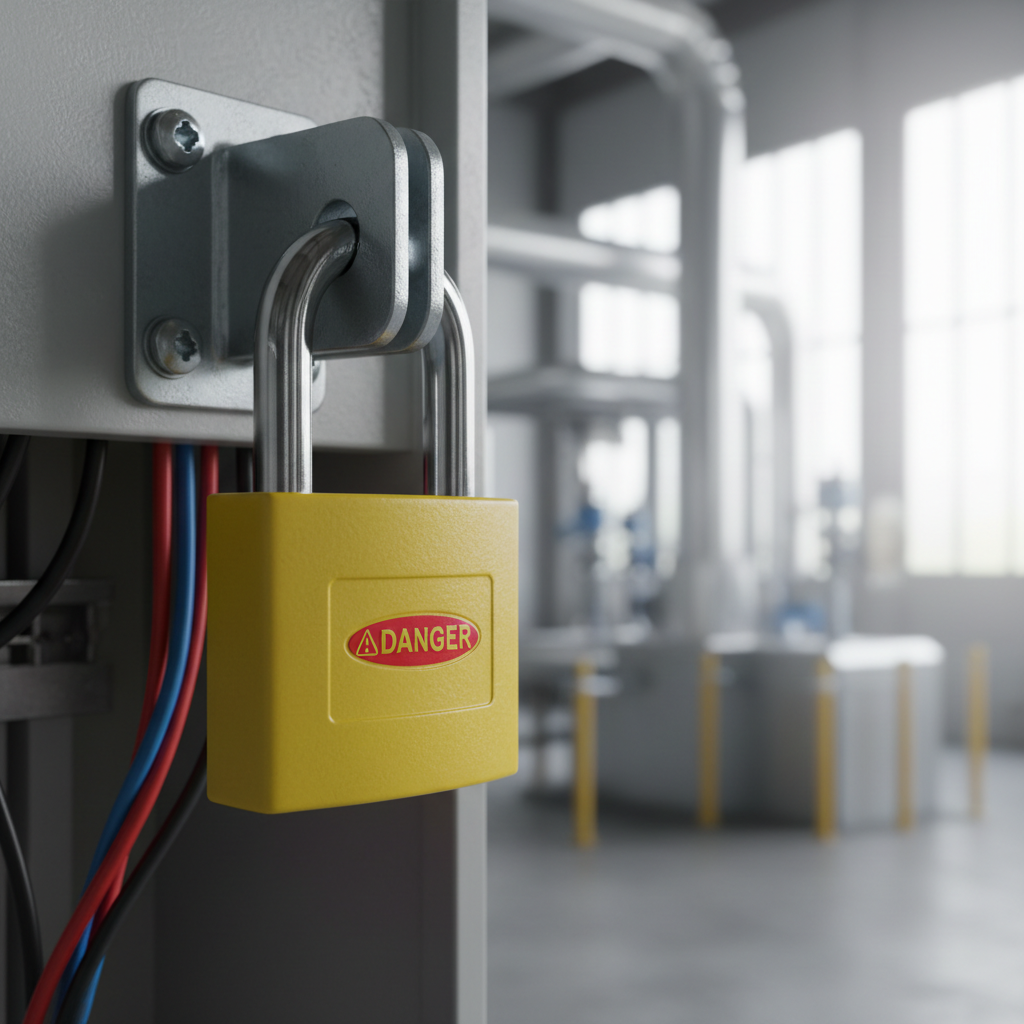
Lockout - involves placing a lock on an isolation point to prevent the operation of the equipment. You put a physical lock on the power switch. No one can turn it on without your key.
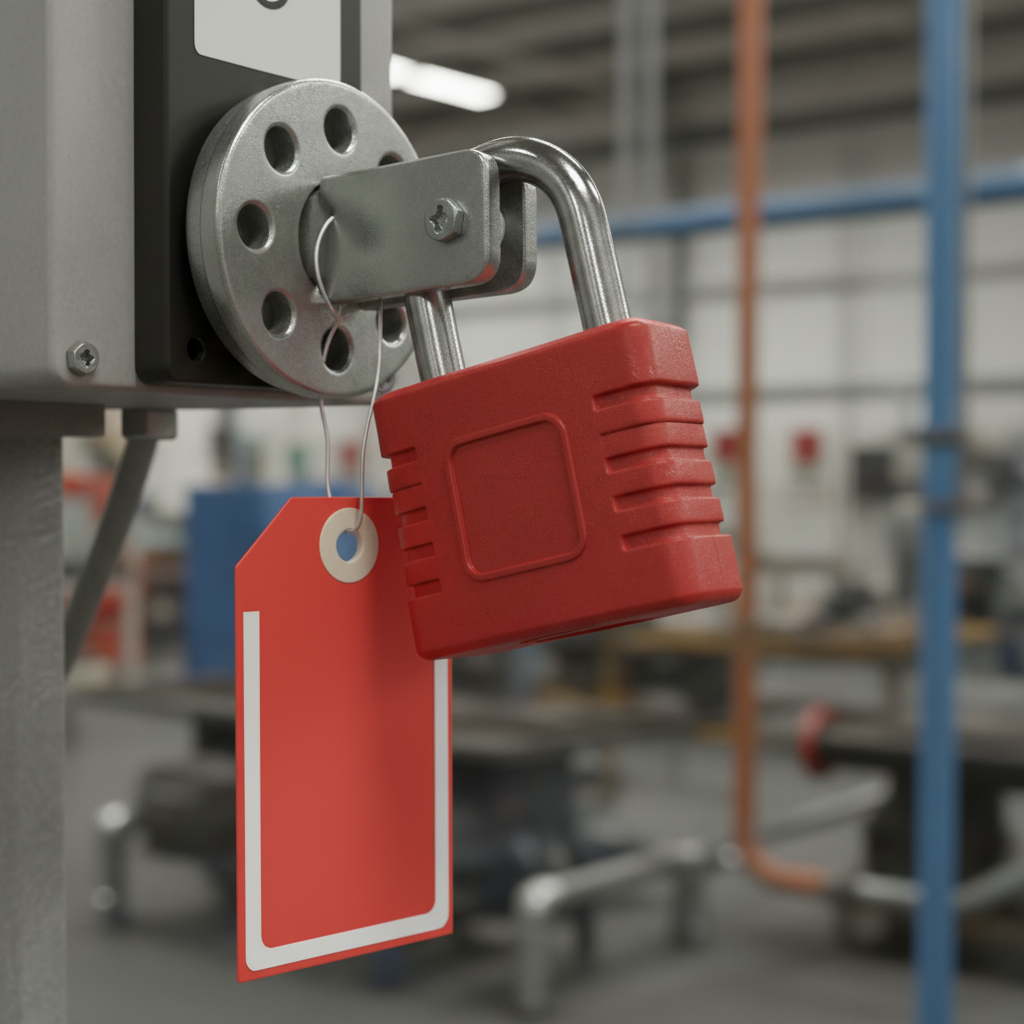
Tagout - is the placement of tags on equipment controls to alert personnel that the equipment operation or starting, or the change of position of valve or disconnecting/changeover device is prohibited. You hang a tag (label) that says "Danger" and shows who is working.
<b>Goal:</b> To create a physical barrier between you and the dangerous energy.
Protects employees from unexpected energization or startup of machinery.
Required whenever servicing or maintaining equipment where hazardous energy exists.
A specific safety procedure to ensure dangerous machines are properly shut off.
Prevents accidental release of hazardous energy during maintenance.
Controls electrical, mechanical, hydraulic, pneumatic, and thermal energy.
Hazardous Energy Sources
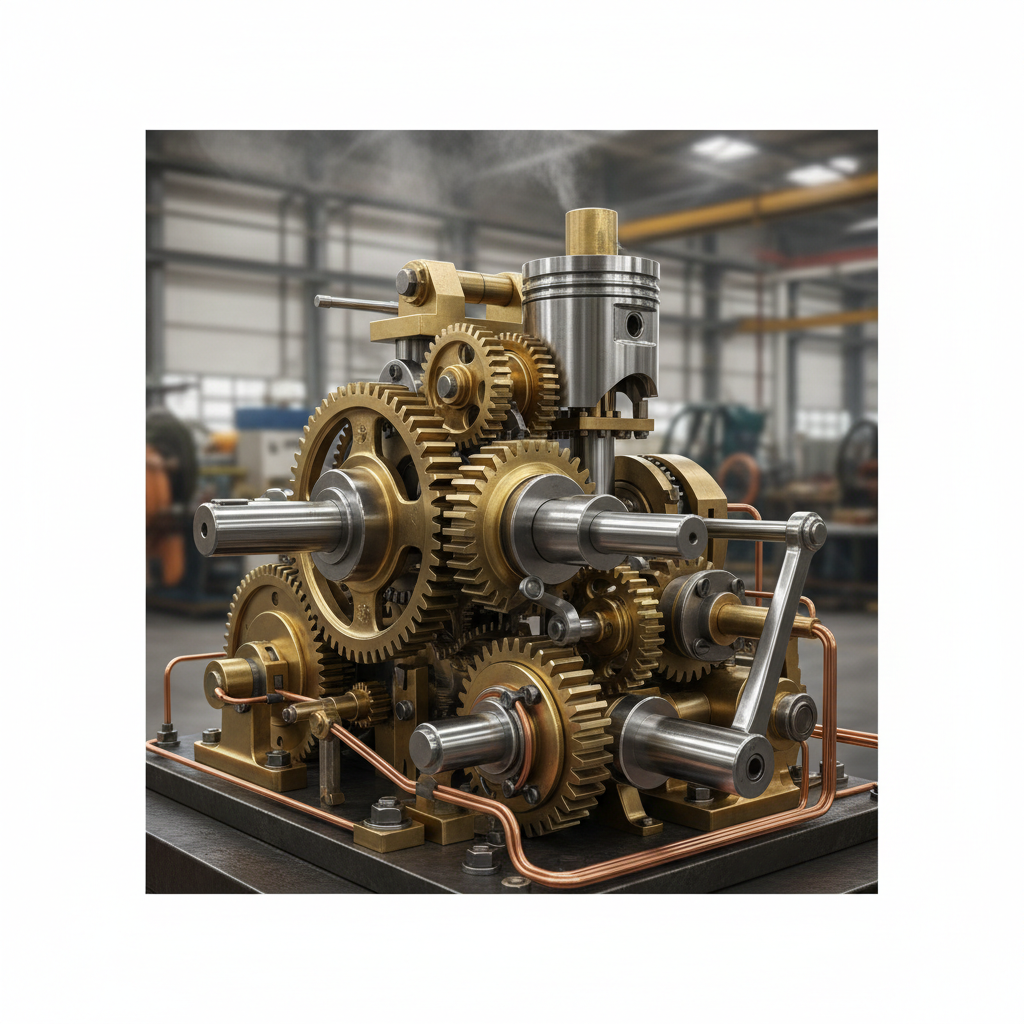
<ul style="list-style: none; padding: 0;"><li style="margin-bottom: 20px;"><strong style="color: #FF8C00;">Electrical:</strong> Power lines, transformers, motors. (Shock, Arc Flash)</li><li style="margin-bottom: 20px;"><strong style="color: #FF8C00;">Mechanical:</strong> Moving parts, gears, springs. (Crushing, Cutting)</li><li style="margin-bottom: 20px;"><strong style="color: #FF8C00;">Hydraulic:</strong> Fluid under pressure. (Injection, Crushing)</li><li style="margin-bottom: 20px;"><strong style="color: #FF8C00;">Pneumatic:</strong> Air/Gas under pressure. (Flying debris, whipping hoses)</li><li style="margin-bottom: 20px;"><strong style="color: #FF8C00;">Chemical:</strong> Corrosive substances, gases. (Burns, Explosion, Organ toxicity)</li><li style="margin-bottom: 20px;"><strong style="color: #FF8C00;">Thermal:</strong> Steam, hot surfaces, cold. (Burns, Freezing)</li><li style="margin-bottom: 20px;"><strong style="color: #FF8C00;">Gravity:</strong> Suspended loads, raised equipment. (Falling/Crushing)</li></ul>
Hazardous energy comes in many forms. We must isolate ALL of them.
Main Types of Hazardous Energy Isolation
Hazardous energy comes in many forms. We must isolate ALL of them. Here is a breakdown of common energy types found in industrial accidents when not properly isolated.
Each energy type requires specific lockout methods and devices.
1. Electrical Isolation
<strong style='color:#FFD700'>Primary Goal:</strong> Prevent shock, arc flash, and unexpected energization.<br><br><strong style='color:#FFD700'>Key Isolation Points:</strong> Circuit breakers, disconnect switches, plug/socket outlets.<br><br><strong style='color:#FFD700'>LOTO Devices Applied:</strong> Personal safety locks applied with: lockout hasps, breaker lockouts, or plug lockouts.<br><br><strong style='color:#FFD700'>Critical Tag Info:</strong> "DANGER – DO NOT ENERGIZE. Electrical Maintenance in Progress."
2. Mechanical Isolation
<strong style='color:#FFD700'>Primary Goal:</strong> Stop hazardous motion and release of hydraulic, pneumatic, or kinetic energy.<br><br><strong style='color:#FFD700'>Key Isolation Points:</strong> Manual valves, piping flanges, mechanical actuators.<br><br><strong style='color:#FFD700'>LOTO Devices Applied:</strong> Personal locks secured with: valve lockouts, blank flanges (blinds), or chain & block kits.<br><br><strong style='color:#FFD700'>Critical Tag Info:</strong> "DANGER – DO NOT OPERATE/OPEN. System Isolated. Stored Energy Present."
3. Instrumentation & Control (I&C) Isolation
<strong style='color:#FFD700'>Primary Goal:</strong> Prevent accidental actuation via control signals or automated sequences.<br><br><strong style='color:#FFD700'>Key Isolation Points:</strong> Solenoid valves, control circuit breakers, selector switches.<br><br><strong style='color:#FFD700'>LOTO Devices Applied:</strong> Personal locks applied with: mini lockouts, cable lockouts, or switch lockouts.<br><br><strong style='color:#FFD700'>Critical Tag Info:</strong> "DANGER – CONTROLS LOCKED OUT. Do Not Reset or Energize."
<div style="display: flex; gap: 30px; text-align: left; align-items: center;"> <div style="flex: 1; border-right: 2px solid rgba(255,69,0,0.3); padding-right: 20px;"> <h3 style="color:#FF4500; margin:0 0 10px 0; font-size: 24px; text-transform:uppercase;">The Central Rule: The Lock is the Barrier</h3> <p style="margin:0 0 10px 0; font-size: 18px;">🔒 For every isolation point, a lock <strong>must</strong> be applied. A Personal Safety Padlock makes isolation physical.</p> <p style="margin:0; font-size: 22px; font-weight:bold; color:#FFD700;">⚠️ No Lock = No Isolation.</p> </div> <div style="flex: 1; padding-left: 10px;"> <h3 style="color:#FF4500; margin:0 0 10px 0; font-size: 24px; text-transform:uppercase;">Critical: Multiple Energy Sources</h3> <p style="margin:0; font-size: 18px;">Most equipment is powered by several energy types simultaneously (e.g., electrical + fluid + controls). <strong>Each source</strong> must be individually isolated, locked, and verified.</p> </div> </div>
One Person, One Lock, One Key.
The Golden Rule of LOTO
To completely eliminate the possibility of accidental or unauthorized removal of the lockout by someone else before the original worker has completed the task and ensured it is safe. This protects each individual worker.
One Person, One Lock, One Key
The Golden Rule of LOTO
Each worker performing maintenance or repairs on equipment is personally responsible for their own safety.
Each such worker must apply their own personal, individual padlock to every source of hazardous energy. This physically locks the device in a safe position.
The key must be kept personally by the worker at all times. Only the person who applied the lock is authorized to remove it.
The Tag Tells the Story
A lock stops the machine physically. A tag explains WHY. A proper LOTO tag must represent the person who placed it. It says: 'Do Not Operate - My Life is on the Line.' Never remove someone else's tag.
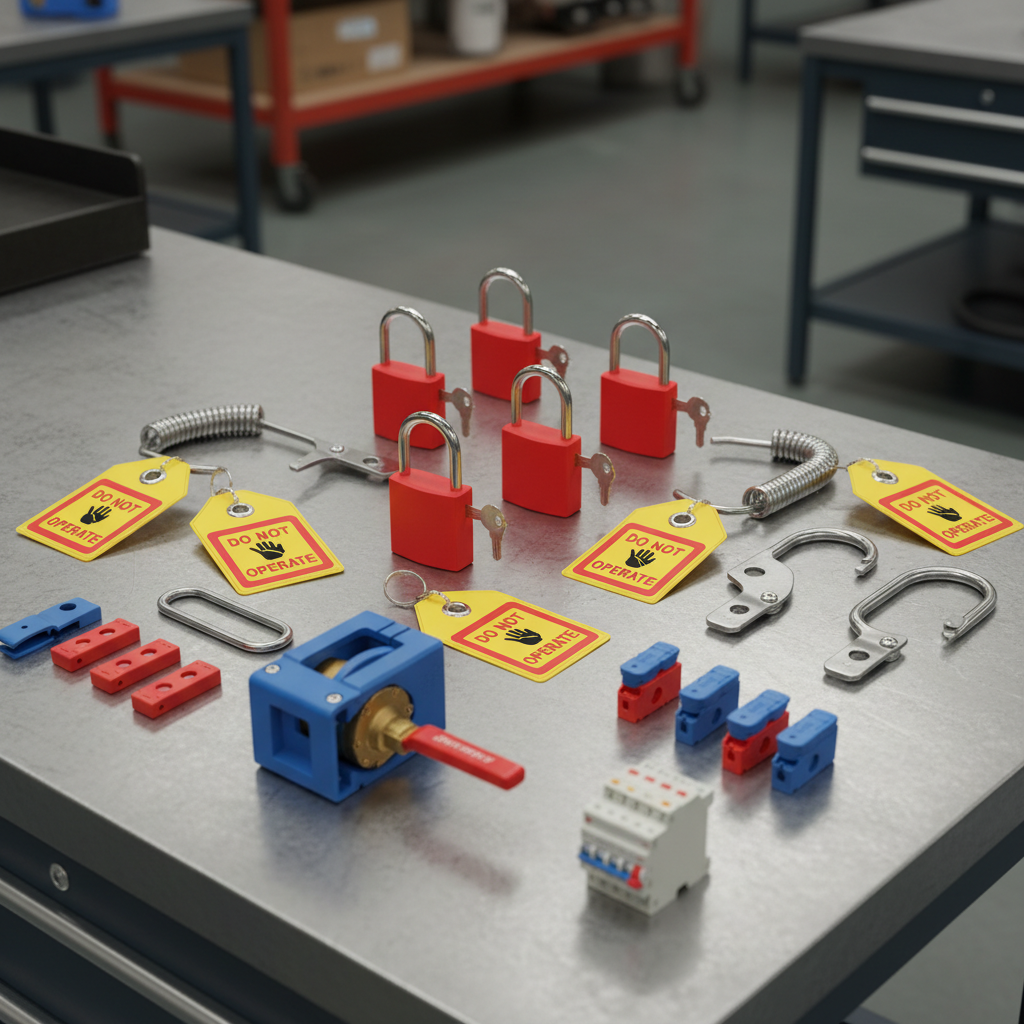
EXAMPLES OF ISOLATION EQUIPMENT LOTO
Identify all energy sources: Is it just electric, or is there compressed air too?
Notify affected employees: Tell operators you are about to stop the machine.
Normal Shutdown: Turn off the machine using the standard stop button or control panel.
Safety Padlocks (Keyed different to ensure individual security)
Lockout Hasps (Allow multiple workers to lock out one point)
Tags (Must be durable and clearly state 'Do Not Operate')
Valve & Circuit Breaker Lockouts (Devices to fit specific energy controls)
Step 3: Isolate Energy
This is the most critical step. We must physically disconnect the machine from its power. This means flipping the main breaker switch, closing a gas valve, or blocking a hydraulic pipe. The control button is NOT isolation.
Step 4 & 5: Apply LOTO & Test
Apply your personal lock and tag. Keep your key in your pocket. Then, TRY to start the machine. This is called the 'Try-Out' or verification step. If the machine does not start, you know it is safe to work.
Returning to Service
Inspect the area: Ensure no tools were left inside the machine.
Notify everyone: Tell people the machine is coming back on.
Remove LOTO: Only the owner of the lock can remove it. Turn the power back on.
Go Home Safe.
Types of Hazardous Energy
Electrical & Mechanical: Power lines, motors, moving gears, belts, and gravity-fed mechanisms.
Fluid & Pressure: Hydraulic oil, pneumatic (air) pressure, water, and steam systems.
Chemical & Thermal: Hazardous chemicals, gases, hot surfaces, and extreme cold conditions.
Work responsible person (WRP)
• Remove tools and materials from the disconnected equipment<br>• Inform the personnel around about the work completion<br>• Install the protective enclosures and guards
Remove tools and materials from the disconnected equipment
Inform the personnel around about the work completion
Install the protective enclosures and guards
The Work Responsible Person (WRP) is the authorized employee who personally supervises or performs the work.<br><br><b>Key Responsibilities:</b><ul style="margin-top: 20px; padding-left: 40px; list-style-type: disc; color: #FFD700;"><li style="margin-bottom: 30px;"><span style="color: white;">receives the Permit to Work (PTW)</span></li><li style="margin-bottom: 30px;"><span style="color: white;">is responsible for implementing safety measures</span></li><li style="margin-bottom: 30px;"><span style="color: white;">often applies the first (or group) lock</span></li><li style="margin-bottom: 30px;"><span style="color: white;">ensures all workers adhere to LOTO procedures</span></li></ul>
Lock Color Coding
<b>RED:</b> Personal Lock (Authorized Employee)<br><br><b>BLUE:</b> Group Lock / Production<br><br><b>YELLOW:</b> Butterfly Valve / Contractor<br><br><i>Use correct colors to identify who is working.</i>
Authorized Isolation Officer
Authorized Employee: Trained to perform LO/TO. Applies the locks and performs the service.
Affected Employee: Operates the equipment. Must be notified of LO/TO and stop work.
Other Employees: Anyone else in the area. Must stay clear of locked-out machinery.
Andrey Ryabtsev
PTW Coordinator
- loto
- lockout-tagout
- workplace-safety
- industrial-maintenance
- energy-isolation
- osha-compliance
- safety-training