



Toyota Production System: Guide to Lean Manufacturing
Master the principles of TPS: Just-In-Time, Jidoka, Kaizen, and the 7 Mudas. Learn how Lean Manufacturing drives quality and efficiency.
Toyota Production System
A Comprehensive Guide to Lean Manufacturing Principles
What is TPS?
The Toyota Production System (TPS) is an integrated manufacturing philosophy developed to achieve high quality, low cost, and short lead times. Its core mission is the total elimination of waste, respect for people, and continuous improvement (Kaizen). TPS serves as the global foundation for Lean Manufacturing.
Core Objectives of TPS
Limit Waste (Muda): Eliminate non-value-added activities.
Reduce Variability (Mura): Ensure consistent quality and process capability.
Avoid Overburden (Muri): Protect workers and equipment from excessive strain.
Achieve Continuous Flow: Produce only what is needed, when needed.
The TPS 'House' Diagram
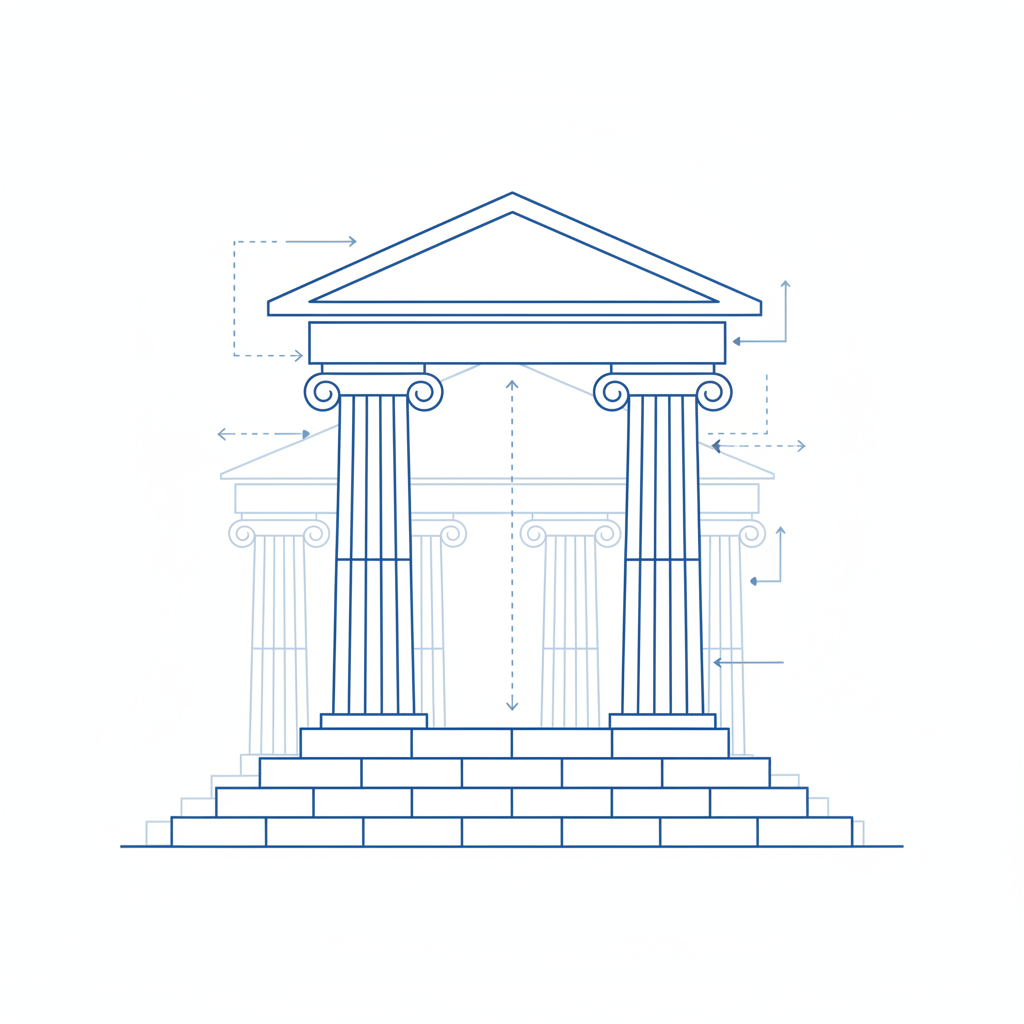
The structure of TPS is visualized as a house. The goal (Roof) is driven by Customer Demand. The system rests on two main vertical pillars: Just-In-Time (JIT) and Jidoka. The entire structure stands on a Foundation of stable, standardized processes and Heijunka (Leveled Production).
Pillar 1: Just-In-Time (JIT)
JIT relies on making only what is needed, when it is needed, in the amount needed. Key components include: • Continuous Flow • Pull System (Kanban) • Takt Time adherence This minimizes inventory and exposes hidden problems immediately.
“
Jidoka means built-in quality. If an abnormality occurs, the equipment stops automatically, preventing defects from passing to the next process.
Core Principle of TPS
Elimination of Waste (The 7 Mudas)
Overproduction: Producing more than required.
Waiting: Idle time for operators or machines.
Transportation: Unnecessary movement of parts.
Over-processing: Doing more work than necessary.
Excess Inventory: Hides problems and ties up capital.
Motion: Unnecessary movement of people.
Defects: Rework and scrap.
Kaizen: Continuous Improvement
Kaizen is the philosophy of small, continuous improvements involving everyone from management to the assembly line workers. It relies on Standardized Work as a baseline. Without a standard, there can be no improvement. The focus is on processes, not just results.
Respect for People & Stability
Employee Empowerment: Workers are encouraged to stop the line to fix problems.
Heijunka: Leveling production to reduce variation (Mura) and overburden (Muri).
Visual Management: Use of signs and Andon boards to make problems immediately visible.
Standardized Work: Documenting the best known method for every task.
Conclusion
The Toyota Production System is not just a set of tools; it is a culture. By integrating technical tools (JIT, Jidoka) with human principles (Respect, Kaizen), TPS achieves world-class manufacturing performance and sustainability.
- toyota-production-system
- lean-manufacturing
- kaizen
- jit
- continuous-improvement
- supply-chain-management
- business-operations