
Madagascar Plastic Footwear Market Study 2026
Comprehensive analysis of Madagascar's plastic footwear market, covering import trends, retail pricing, customs duty, and local manufacturing opportunities.
MADAGASCAR
PLASTIC FOOTWEAR
MARKET STUDY 2026
Manufacturing, Import, Sales & Distribution of Rain Boots, Safety Boots, Flip Flops, Sandals & Clogs.
JUNE 2026
FIELD SURVEY + STATISTICAL DATA
TABLE OF CONTENTS
PRESENTATION OVERVIEW
Madagascar Market Overview
Macro-economic climate and general overview of the local footwear industry.
Product Categories & Segments
Demand distribution for safety boots, rain boots, sandals, flip-flops, and clogs.
Import Market Analysis
Historical data tracking, major supplying countries, and total import volumes.
Pricing Survey – Field Data (June 2026)
Retail and wholesale market prices observed across major regional sales channels.
Market by Segment: Consumer, Medical & Hotel
Specific insights targeting private consumers and specialized commercial applications.
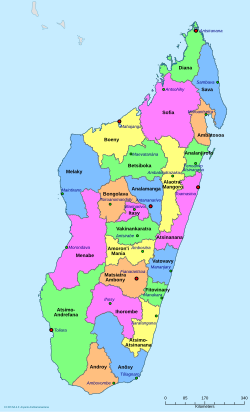
Madagascar's 22 Regions – Market Potential
Geographical mapping of market reach, structural distributions, and local hotspots.
Customs, Tariffs & Trade Regulations
Detailed breakdown of import duties, standardized compliance, and trade protocols.
Strategic Opportunity & Local Manufacturing
Case for local production, domestic competitive advantages, and potential ROI.
Madagascar Market Overview
~32M
Population
Growth rate 2.5%/year (2024)
US$545
GDP Per Capita
One of the lowest globally (2024)
$4.83B
Total Imports
Overall annual imports (2024)
$14M
Footwear Imports
0.3% of total imports (2024)
Economic Context
Main Import Partner
China accounts for ~25% of all national imports.
Administrative Structure
Divided into 22 distinct administrative regions (Faritra).
Informal Economy
Vast majority of sales are conducted via open-air markets and street vendors.
Market Drivers
The tropical and subtropical climate brings distinct wet seasons across the island.
This continuous weather pattern creates an ongoing, robust demand for durable, water-resistant, and cost-effective plastic footwear year-round.
Product Categories
5 Types of Plastic Footwear Under Scope
RAIN BOOTS
PVC / Rubber
High shaft, waterproof boots with EN ISO 20347 certification. Predominantly used in agricultural and construction sectors.
Industrial
SAFETY BOOTS
PVC / EVA
Heavy-duty work footwear featuring a steel toe cap, slip-resistant sole, and S1P to S3 SRC industrial certification.
Industrial / PPE
FLIP FLOPS
Rubber / EVA
Flat sole with a classic toe-post strap. Lightweight, everyday casual footwear targeting the general mass market.
Consumer
SLIDES
EVA Foam
Single strap slide design. Casual, branded-style footwear popular for athletic leisure and daily casual use.
Leisure
CLOGS
EVA Foam
Closed toe design with perforations. Lightweight and easily washable shoe favored for medical and consumer use.
Medical / Hotel
IMPORT MARKET ANALYSIS
MADAGASCAR PLASTIC FOOTWEAR • CURRENT LANDSCAPE
~$14M
Total Footwear Imports (2024)
TOP SUPPLIER COUNTRIES
(Based on estimated volume of plastic/rubber pairs)
China
~65-70%
India
~10%
Indonesia
~8%
South Africa
~6%
UAE
~5%
PRODUCTION & MATERIAL OUTLOOK
Zero Local Manufacturing
No significant local plastic footwear production exists currently; the market relies entirely on imports.
High Plastic Share
Plastic and rubber account for an estimated 50–70% of total imported footwear volume.
IMPORT TARIFF STRUCTURE
20%
Finished Footwear
PVC / EVA shoes (HS 6401, 6402)
10%
Raw Materials
PVC / EVA granules and resins
5%
Recycling / Waste
Plastic waste materials (HS 3915)
LOGISTICS & MARKET DISTRIBUTION
PRIMARY HUB
Ivato, Antananarivo
Largest entry point. Safety & PPE footwear sales remain heavily concentrated in the capital region.
NATIONAL REACH
Informal Markets
Casual staples like flip flops and sandals are distributed nationwide primarily through informal trade networks.
FIELD PRICE SURVEY
ACTUAL MARKET PRICES RECORDED IN ANTANANARIVO STORES
JUNE 2026
PVC / SAFETY BOOTS
Yellow Safety Boot WORKSiTE (PT44)
EN ISO 20347 CE
39,000 Ar
PVC Construction Boot CDT8 (T44)
EN ISO 20347 CE ORO
59,000 Ar
PVC Construction Boot CDT8 (T38)
EN ISO 20347 CE ORO
39,000 Ar
Green PVC Boot (PT43)
EN ISO 20347 CE
59,000 Ar
LOW-CUT SAFETY SHOES
ROCKLANDER S1P (size 38)
Oil Resistant
99,000 Ar
ROCKLANDER S3 (size 39)
S3 certified
105,000 Ar
DELTAPLUS Robion S2 White (size 37)
Medical/Food use
199,000 Ar
HIGH-CUT SAFETY SHOES
Safety Boot S3 1P (T38)
S3 1P
169,000 Ar
ATACAMA S3 SRC DELTAPLUS (PT42)
S3 SRC
451,500 Ar
39,000 Ar (entry) → 451,500 Ar (premium)
Source: In-store survey
1 USD ≈ 4,500 Ar (2026)
MARKET SEGMENTS
Consumer, Medical & Hospitality Analysis
CONSUMER
LARGEST SEGMENT
32M pop, price-sensitive
PRICE RANGE
2K – 20K Ar
CHANNELS
Open Markets
Key products: flip flops, sandals & basic clogs
Highly dominated by imported unbranded footwear
Sales driven by utility with high replacement rates
MEDICAL
GROWING SEGMENT
200+ health facilities
KEY PRODUCTS
White EVA Clogs
REQUIREMENTS
Slip-Resistant
Health sector spans Ministry & regional directorates
Currently relying on imported premium brands
Strong market potential for local mass production
HOSPITALITY
NICHE BUT PREMIUM
Hotels & resorts
MARKET UNITS
~1,500+ Hotels
TOURISM INFLOW
500K+ Annually
Key products: room slippers, sandals & staff shoes
B2B sector valuing customizable & hygienic footwear
Premium pricing tied to growing ecotourism sector
MADAGASCAR'S 22 REGIONS
PLASTIC FOOTWEAR MARKET POTENTIAL
TOTAL ADDRESSABLE POPULATION
~31.2 MILLION
TOP TIER
High Potential >1M
SECOND TIER
Medium 500K–1M
LOWER TIER
Emerging <500K
DISTRIBUTION STRATEGY
Customs, Tariffs & Trade Regulations
Madagascar's Trade Framework for Plastic Footwear
1. Customs Duty Structure
2. Key Customs Articles (Madagascar Customs Code)
3. Strategic Implications
PVC/EVA Raw materials (granules, resins)
HS 3901-3904
10%
Finished plastic/rubber footwear
HS 6401, 6402
20%
Plastic waste for recycling
HS 3915
5%
Safety footwear (EN ISO certified)
HS 6402
20%
Articles 8-11:
Tariff law — defines duty rates for plastics & derivatives
Articles 16-19:
Classification under HS Chapter 39 (polymers, films, footwear)
Articles 20-22:
Origin determination (China, India, South Africa vs. local)
Articles 23-25:
Customs valuation methods
Chapter VI (Prohibitions):
Non-recyclable plastics restrictions
20% import duty on finished products
PROTECTS LOCAL INDUSTRY
10% duty on raw materials
ENCOURAGES MANUFACTURING
Lower domestic production costs =
COMPETITIVE ADVANTAGE
STRATEGIC
OPPORTUNITY
Local PVC/EVA Manufacturing Plant
PROJECT
Establishment of a PVC/EVA Footwear Manufacturing Plant in Madagascar
OBJECTIVE
Produce durable, affordable, climate-appropriate plastic footwear for domestic and regional African markets.
PRODUCT ROADMAP
Flip flops & slides
Mass market, simple tooling
EVA clogs
Consumer, medical & hotel grades
PVC rain & safety boots
Industrial & certified grades
COST ADVANTAGE
Local production beats 20% import duty on finished goods. Raw material import duty only 10%, making local manufacturing financially viable.
MARKET SIZE
32M population (2024), growing 2.5%/yr. Estimated 50M+ pairs/year market potential for plastic footwear across all segments.
UNTAPPED SEGMENTS
Medical (200+ facilities), Hotel/Tourism (1,500+ units), Safety/PPE (industrial boom in capital). These rely on expensive imports.
REGIONAL EXPORT
Madagascar's geographic position enables export to Indian Ocean islands, East Africa (COMESA zone). First-mover advantage.
Current import price range:
39,000–451,500 Ar/pair
Local production target:
30-50% cost reduction
- market-study
- madagascar
- footwear-industry
- manufacturing
- import-export
- business-analysis
- pvc-eva
- safety-boots