


Norwegian Education System: Kindergarten to Higher Ed Guide
Explore the core philosophy of the Norwegian school system, including its grade-free primary years, the equality-focused 'Unity School', and vocational paths.
The Norwegian School Journey
A Student-Centered Perspective: From Kindergarten to Higher Education
The Core Philosophy: Likhetsskole
Equality & Inclusion
The 'Unity School' ensures all students, regardless of background or ability, attend the same schools. No streaming by ability.
Well-being First
Social development is prioritized over academic competition in early years.
No Repetition
Students move up with their age group automatically. Grade repetition is virtually non-existent.
The Educational Path
Kindergarten (Barnehage)
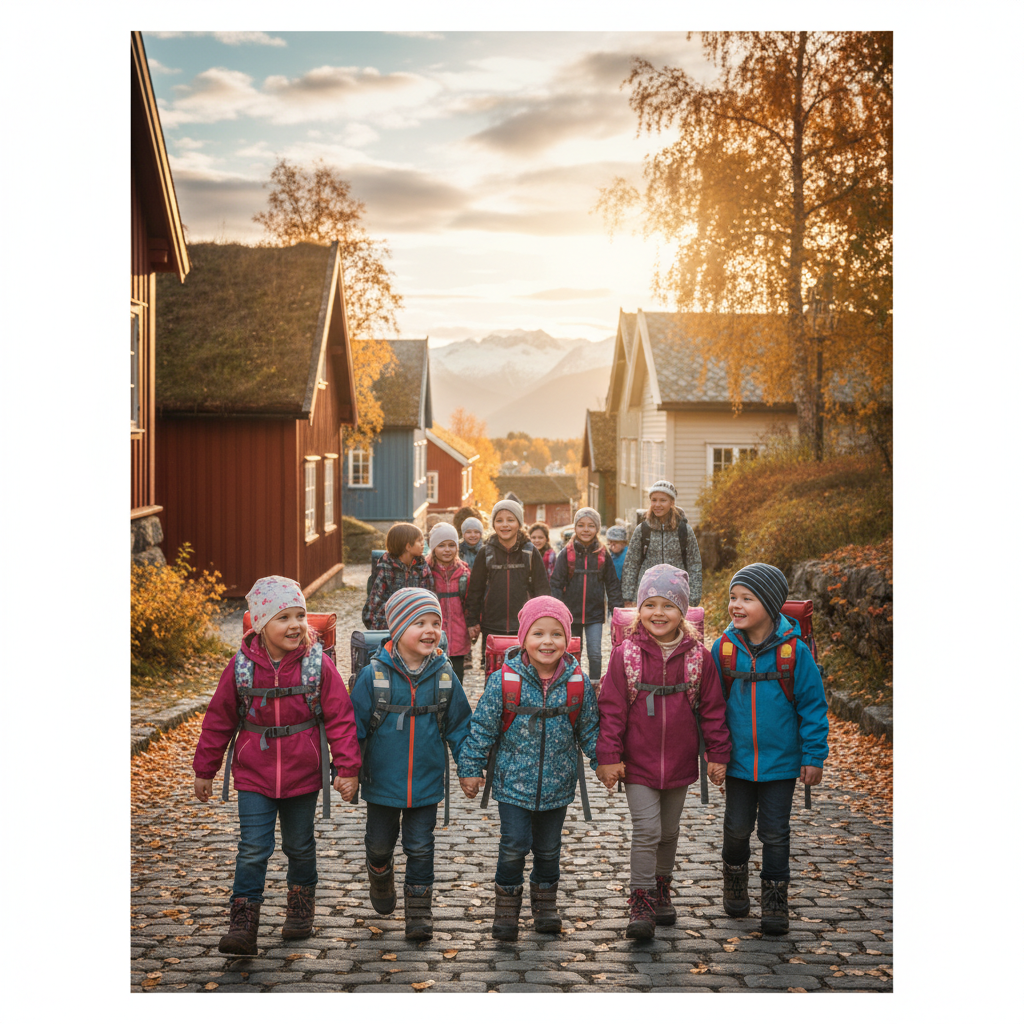
Outdoor Life (Friluftsliv): Children spend significant time outside in all weather types.
Play over Academics: Focus on social skills, autonomy, and language development.
Heavily Subsidized: Capped fees ensure affordability for all families.
The Grade-Free Primary Years
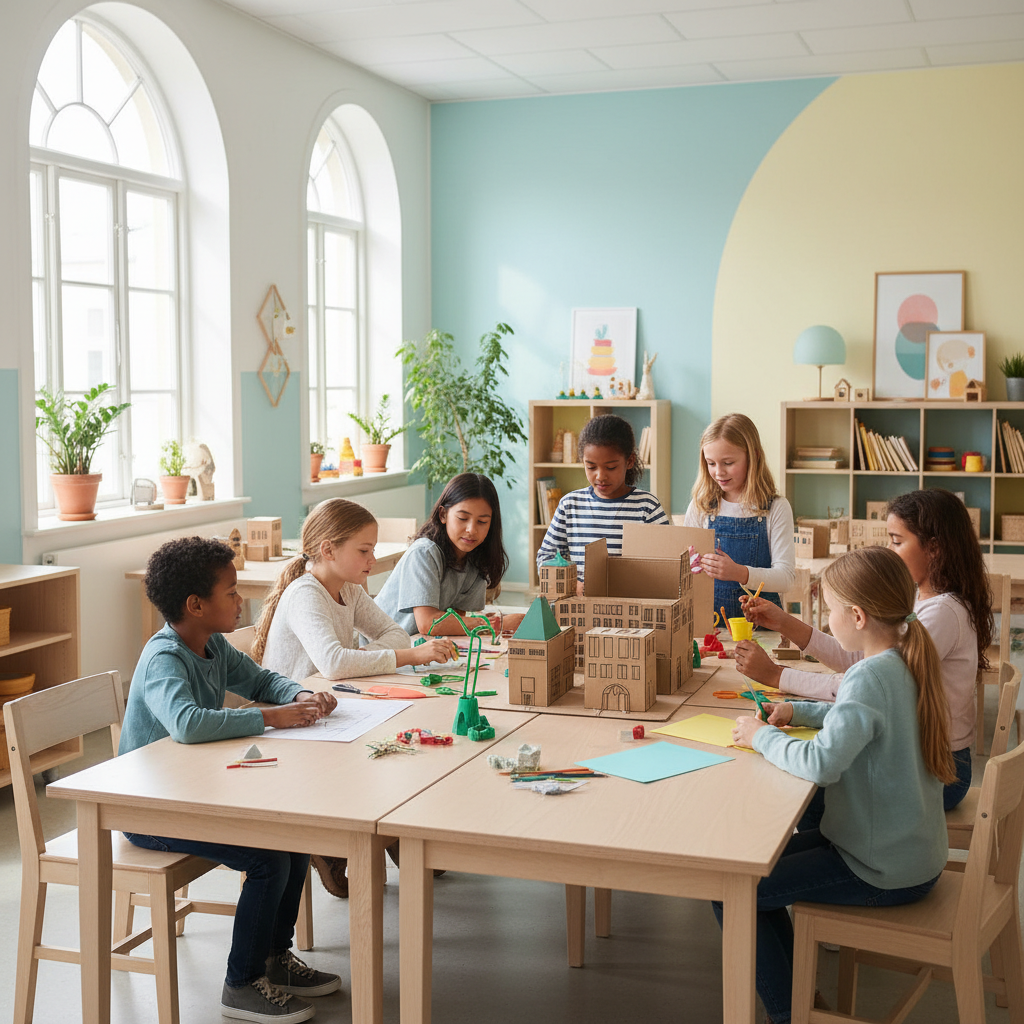
From Grades 1 to 7 (Ages 6-13), Norwegian students receive NO formal letter or number grades.
Descriptive Assessment: Teachers provide written/oral feedback on progress.
Development Talks: Twice a year, teachers meet parents/students to discuss well-being and growth.
Weekly Homework Load
Homework volume in Norway is relatively low compared to international averages, emphasizing free time for extracurriculars.
Upper Secondary: The Big Choice
At age 16, students choose between two main paths. The split is nearly even.
Vocational: 2 years in school + 2 years apprenticeship (paid). Leads to trade certificate.
General Studies: 3 years in school. Prepares for University/Higher Ed.
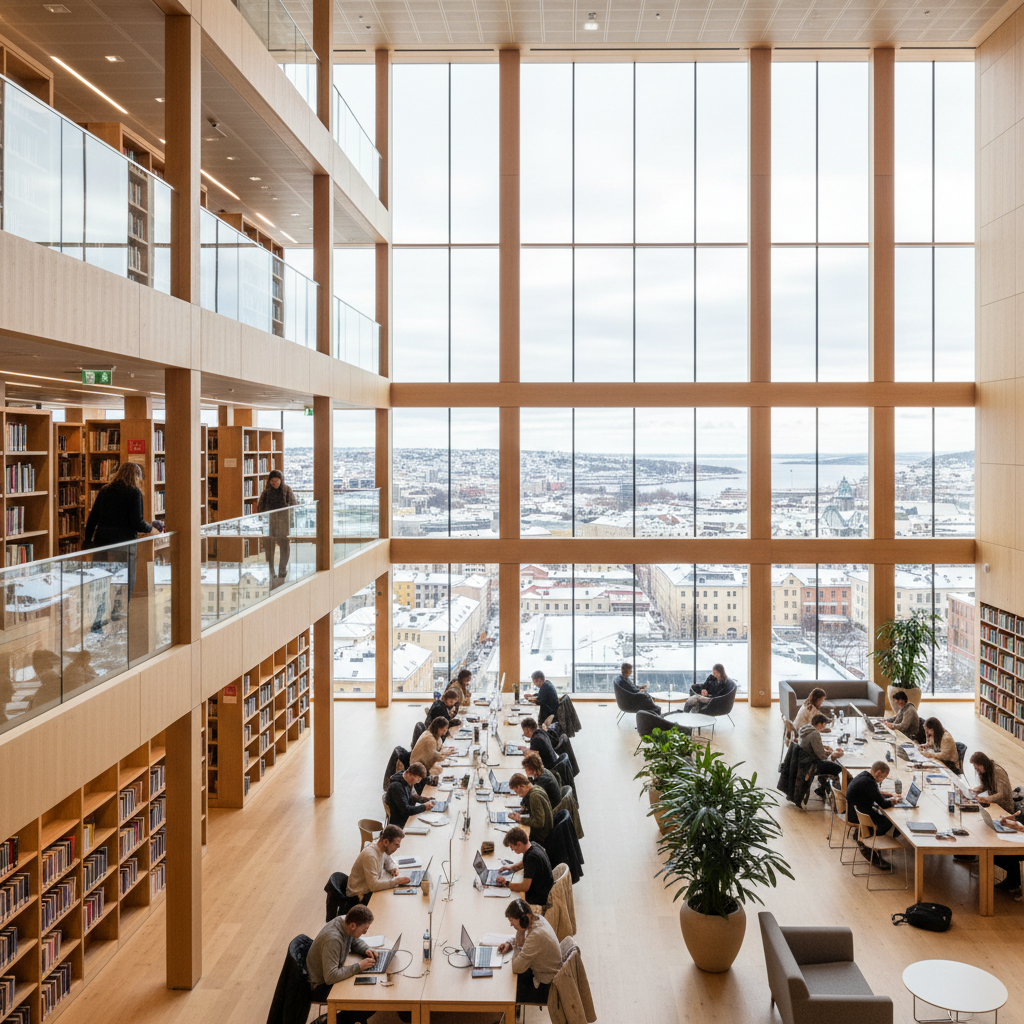
Higher Education
• Tuition-free for EU/EEA students • Autonomous student life • Informal hierarchy between professors and students • Grading switches to A-F Scale
Grading Systems: Norway vs. Latvia
Norway uses a compressed 1-6 scale for compulsory education, whereas Latvia uses a broader 1-10 scale. This affects how granularity in student performance is reported.
Classroom Culture Comparison
NO: Norway
• Informal (First names used) • Low hierarchy • High autonomy • Focus: 'Good Citizen'
LV: Latvia
• More formal structure • Higher respect for authority positions • Stronger academic competition • Focus: Academic Achievement
Summary
The Norwegian system is designed to create independent, confident individuals rather than just academic performers. The journey from the play-oriented Barnehage to the grade-free Barneskole builds a foundation of trust that supports deep learning.
Tusen takk! (Thank you)
- norwegian-education
- study-in-norway
- pedagogy
- scandinavian-schooling
- vocational-training
- educational-philosophy