
Made byBobr AI

VR & Perturbation Training for Elderly Fall Prevention

Explore a randomized controlled trial proposal using VR and perturbation-based balance training to reduce falls in high-risk older adults.

#virtual-reality#fall-prevention#geriatrics#rehabilitation#physical-therapy#medical-research#motor-learning
Watch
Pitch

Add-On VR to Perturbation-Based Balance Training

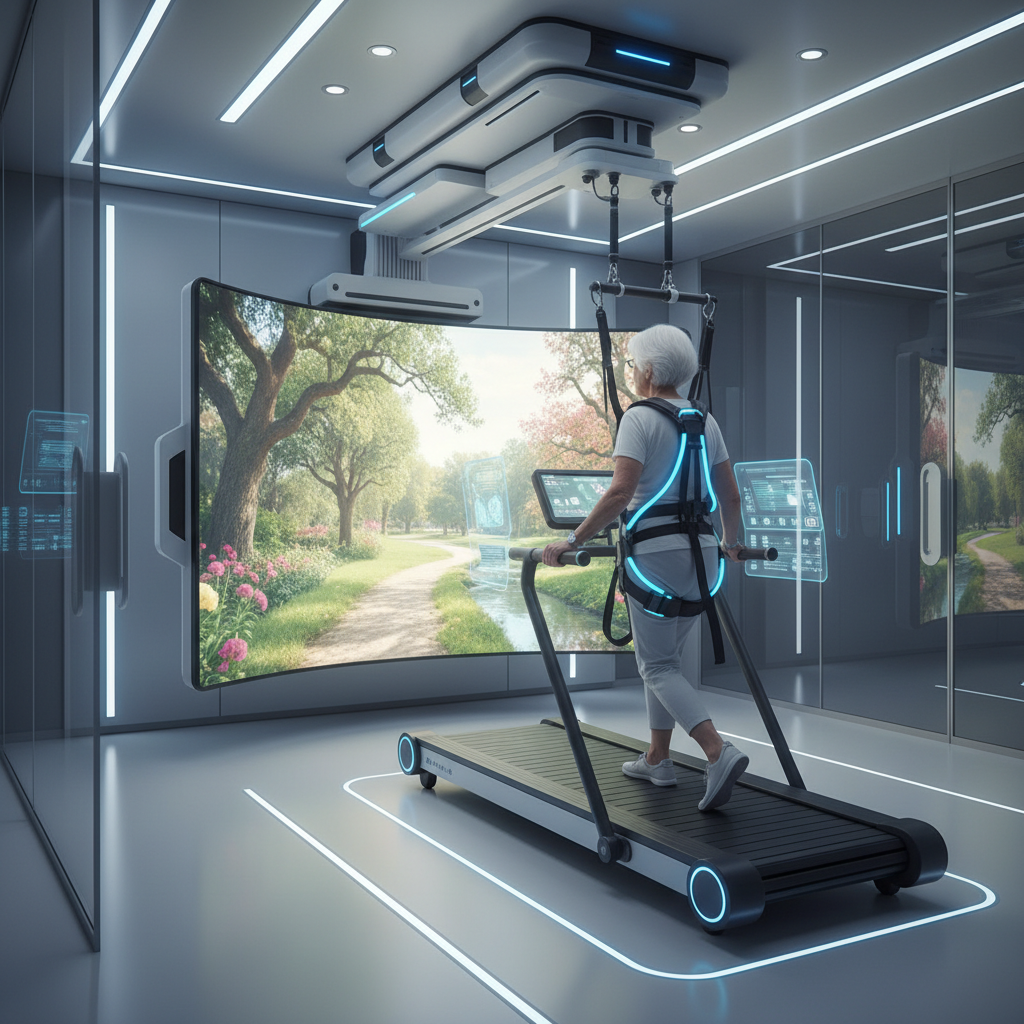
A Randomized Controlled Trial Proposal for Fall Prevention in Older Adults

A futuristic yet clinical rehabilitation setting showing an elderly patient walking on a high-tech treadmill with a safety harness, looking at a large screen displaying a virtual park path, representing the merger of physical therapy and virtual reality, soft professional lighting, photorealistic 8k
Made byBobr AI

VR Integration

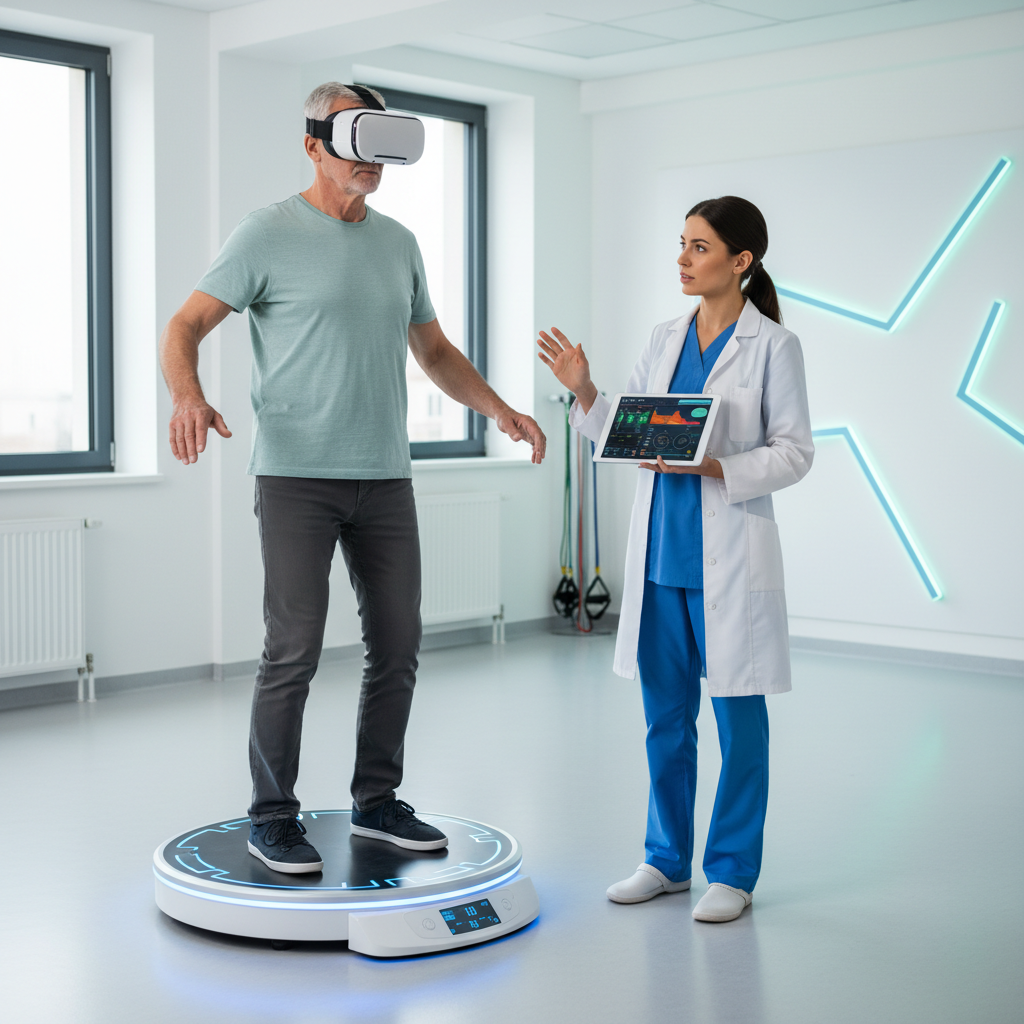
Visualizing the setup where virtual reality environments are synchronized with physical platform perturbations to enhance motor learning.

A high-quality medical photograph showing a senior patient wearing a sleek VR headset standing on a computerized balance platform, with a physical therapist monitoring a tablet nearby, clean bright clinical environment, 4k resolution
Made byBobr AI

Scientific Background: The Challenge of Falls

  • Falls are a leading cause of ER visits and hospitalizations among seniors, with 28% of adults over 65 falling at least once a year.
  • Most falls occur during walking (~85%) following an unexpected perturbation (trip or slip).
  • Safe gait requires a complex integration of the Motor System (execution), Sensory System (feedback), and Cognitive Function (planning/attention).
Made byBobr AI

The Missing Link: Reactive vs. Proactive

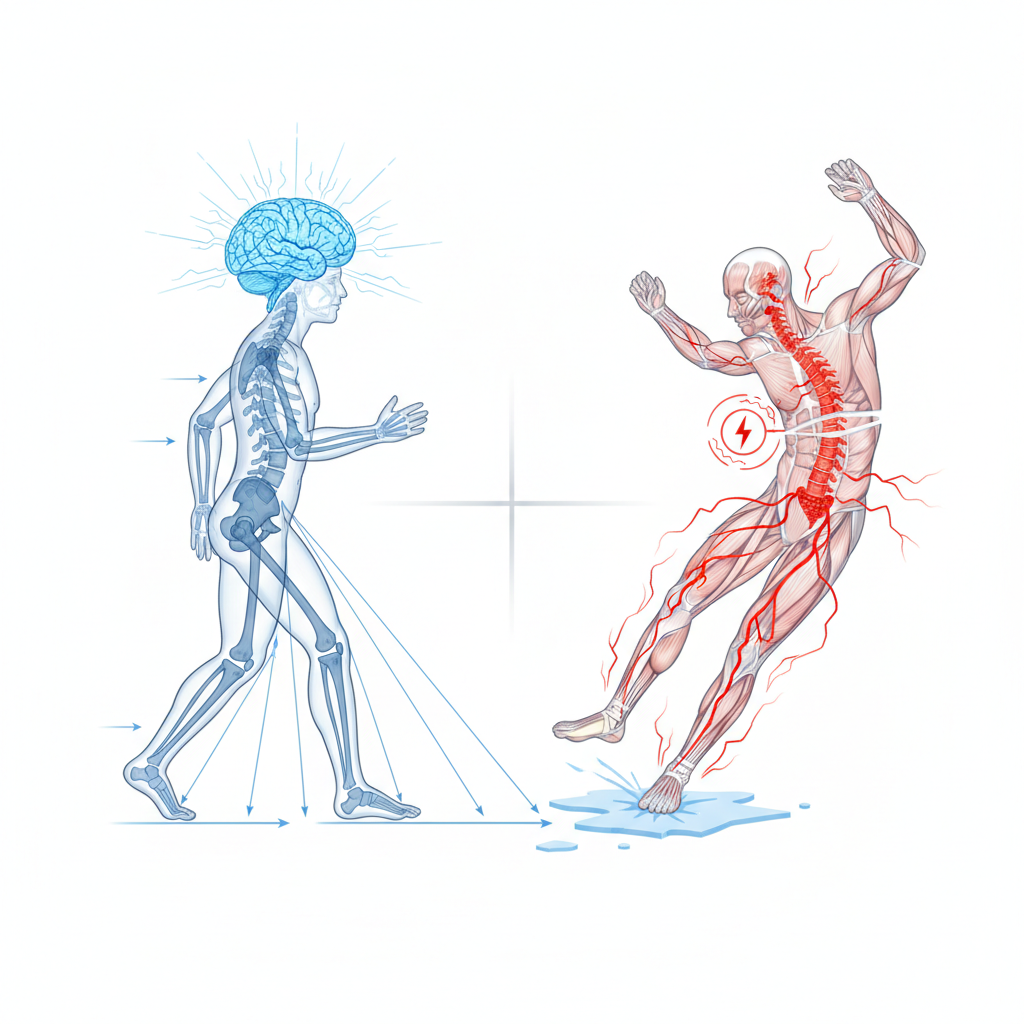
Standard rehab focuses on Proactive Responses (anticipatory). However, real-world falls often require Reactive Responses (compensatory adjustments) to unexpected perturbations. BalanceTutor technology addresses this by mechanically disrupting balance to train the 'righting reflex', while GaitBetter VR addresses the cognitive deficit in planning.

Diagram illustration comparing proactive gait planning versus reactive balance recovery. On one side a brain planning a step, on the other side a reflex arc reacting to a slip, medical schematic style, clean white background
Made byBobr AI

Research Question

Does the addition of a virtual reality (VR) component to Perturbation-based Reactive Balance Training (PRBT) improve the effectiveness of fall prevention in high-risk older adults, compared to Perturbation Training alone?

Made byBobr AI

Target Population: High-Risk Older Adults

  • Age: 60–90 years old.
  • Fall History: Self-reported two or more falls within the 6 months prior to the study.
  • Mobility: Able to walk for 5 minutes unassisted.
  • Cognition: MMSE score > 21 (to ensure ability to engage with VR tasks).
Made byBobr AI

Study Design & Intervention

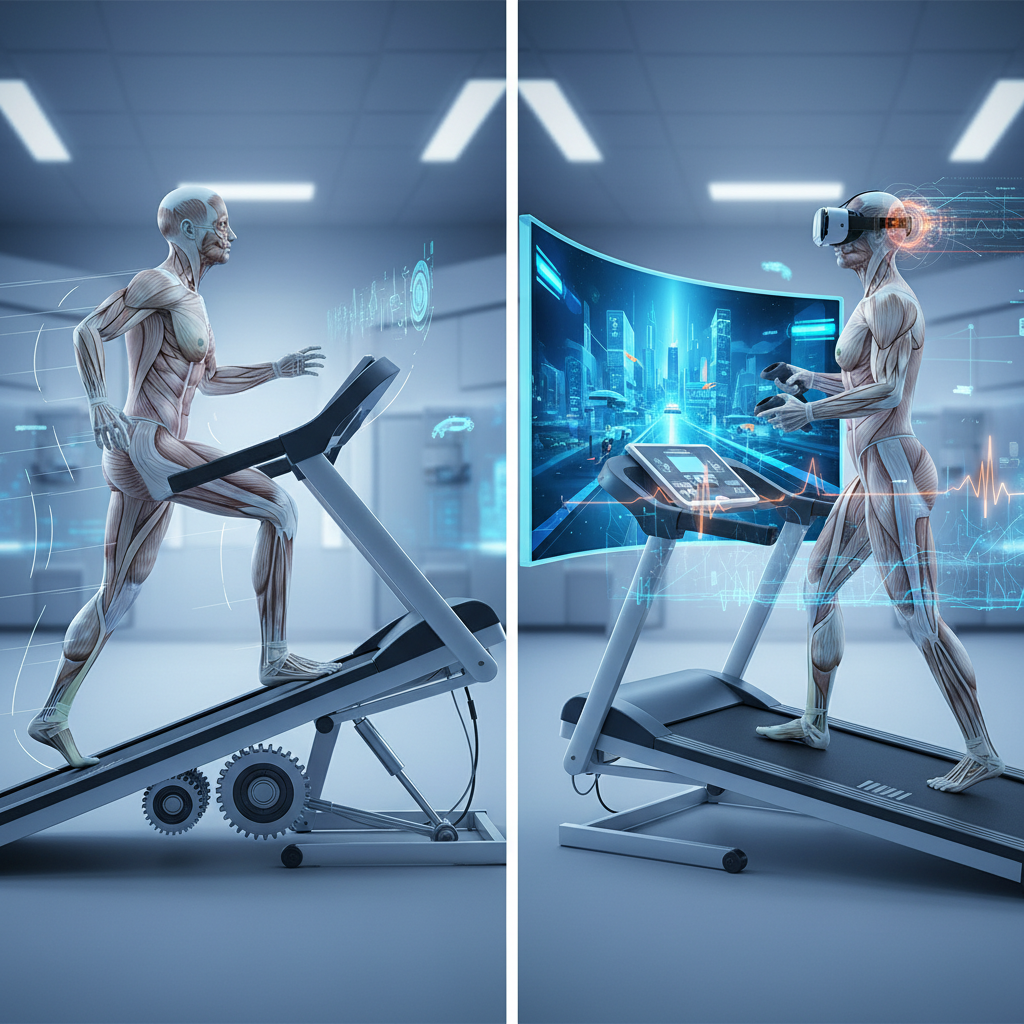
Prospective, Single-blinded RCT. Group 1 (Experimental): Perturbation-Based Training (PBT) + Add-on VR. Subjects manage virtual obstacles (motor-cognitive) while facing random platform slips (reactive). Group 2 (Control): PBT Only. Mechanical perturbations only, without the cognitive load of the virtual environment.

Split screen illustration: Left side shows a treadmill shifting suddenly under a users feet (perturbation). Right side shows a user on a treadmill navigating a virtual city on a screen (VR cognitive training). Clean medical style.
Made byBobr AI

Justification: Efficacy of VR in Fall Reduction

Chart

Existing data from GaitBetter studies demonstrates significant reductions in adverse events. Combining this with reactive balance training (BalanceTutor) addresses the 40-46% efficacy gap found in single-modality studies.

Made byBobr AI

Primary & Secondary Outcomes

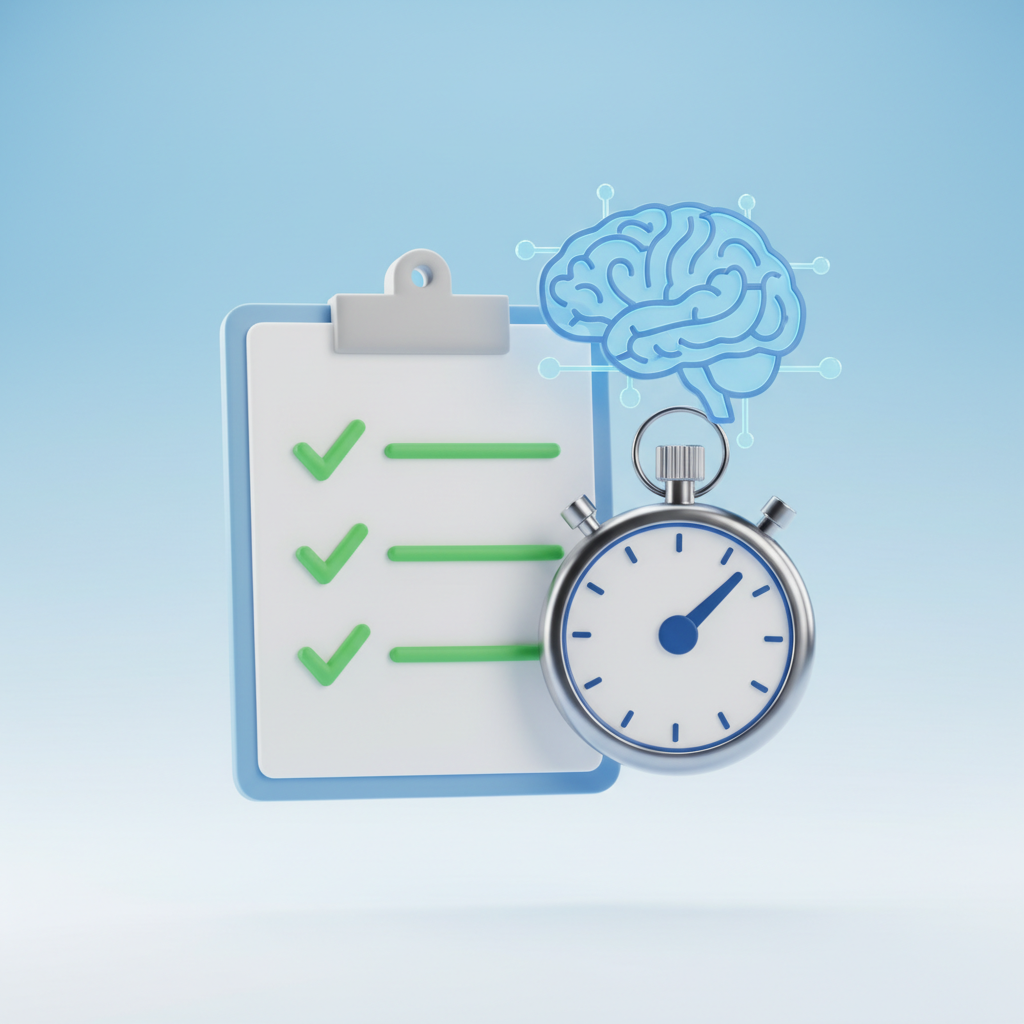
PRIMARY: • Incident Rate of Falls (IRR) measured over 6 months post-training. SECONDARY: • Balance: SPPB (Short Physical Performance Battery) & Mini-BESTest. • Gait: Speed (10m walk) & Dual-Task cost. • Cognitive: Trail Making Test (Part B). • Quality of Life: FES-I (Falls Efficacy Scale) & SF-36.

Visual representation of medical metrics: a clipboard with a checklist, a stopwatch for gait speed, and a brain icon for cognition, clean minimalistic 3D render
Made byBobr AI

Measuring Difficulty Levels

Chart

The study protocol utilizes 18-24 levels of difficulty. As the patient progresses, we increase platform displacement (up to 18cm) and introduce complex cognitive tasks (VR obstacles, memory games) simultaneously.

Made byBobr AI

Significance of the Study

"Accidental slips account for ~50% of falls, while poor motor-cognitive processing contributes significantly to the rest. By integrating VR with Perturbation training, we address the full spectrum of fall etiology—planned and reactive—aiming for a new standard in comprehensive fall prevention."
Made byBobr AI
Bobr AI

DESIGNER-MADE
PRESENTATION,
GENERATED FROM
YOUR PROMPT

Create your own professional slide deck with real images, data charts, and unique design in under a minute.

Generate For Free

VR & Perturbation Training for Elderly Fall Prevention

Explore a randomized controlled trial proposal using VR and perturbation-based balance training to reduce falls in high-risk older adults.

Add-On VR to Perturbation-Based Balance Training

A Randomized Controlled Trial Proposal for Fall Prevention in Older Adults

VR Integration

Visualizing the setup where virtual reality environments are synchronized with physical platform perturbations to enhance motor learning.

Scientific Background: The Challenge of Falls

Falls are a leading cause of ER visits and hospitalizations among seniors, with 28% of adults over 65 falling at least once a year.

Most falls occur during walking (~85%) following an unexpected perturbation (trip or slip).

Safe gait requires a complex integration of the Motor System (execution), Sensory System (feedback), and Cognitive Function (planning/attention).

The Missing Link: Reactive vs. Proactive

Standard rehab focuses on Proactive Responses (anticipatory). However, real-world falls often require Reactive Responses (compensatory adjustments) to unexpected perturbations. BalanceTutor technology addresses this by mechanically disrupting balance to train the 'righting reflex', while GaitBetter VR addresses the cognitive deficit in planning.

Research Question

Does the addition of a virtual reality (VR) component to Perturbation-based Reactive Balance Training (PRBT) improve the effectiveness of fall prevention in high-risk older adults, compared to Perturbation Training alone?

Target Population: High-Risk Older Adults

Age: 60–90 years old.

Fall History: Self-reported two or more falls within the 6 months prior to the study.

Mobility: Able to walk for 5 minutes unassisted.

Cognition: MMSE score > 21 (to ensure ability to engage with VR tasks).

Study Design & Intervention

Prospective, Single-blinded RCT. Group 1 (Experimental): Perturbation-Based Training (PBT) + Add-on VR. Subjects manage virtual obstacles (motor-cognitive) while facing random platform slips (reactive). Group 2 (Control): PBT Only. Mechanical perturbations only, without the cognitive load of the virtual environment.

Justification: Efficacy of VR in Fall Reduction

Existing data from GaitBetter studies demonstrates significant reductions in adverse events. Combining this with reactive balance training (BalanceTutor) addresses the 40-46% efficacy gap found in single-modality studies.

Primary & Secondary Outcomes

PRIMARY: • Incident Rate of Falls (IRR) measured over 6 months post-training. SECONDARY: • Balance: SPPB (Short Physical Performance Battery) & Mini-BESTest. • Gait: Speed (10m walk) & Dual-Task cost. • Cognitive: Trail Making Test (Part B). • Quality of Life: FES-I (Falls Efficacy Scale) & SF-36.

Measuring Difficulty Levels

The study protocol utilizes 18-24 levels of difficulty. As the patient progresses, we increase platform displacement (up to 18cm) and introduce complex cognitive tasks (VR obstacles, memory games) simultaneously.

Significance of the Study

Accidental slips account for ~50% of falls, while poor motor-cognitive processing contributes significantly to the rest. By integrating VR with Perturbation training, we address the full spectrum of fall etiology—planned and reactive—aiming for a new standard in comprehensive fall prevention.

  • virtual-reality
  • fall-prevention
  • geriatrics
  • rehabilitation
  • physical-therapy
  • medical-research
  • motor-learning