


VR and Perturbation Training for Fall Prevention in Seniors
Explore a research study on combining Virtual Reality with Perturbation-Based Balance Training to improve gait and prevent falls in high-risk older adults.
Research Proposal: Non-Immersive VR & Perturbation-Based Balance Training
Transforming Fall Prevention in Older Adults: A Randomized Controlled Trial
Utay & Arik | BGU MSc Physiotherapy Research Methods
The Challenge: Falls in Older Adults
Falls are a growing public health crisis. Approximately 28% of adults over 65 fall at least once a year, making it a leading cause of ER visits and hospitalizations. These incidents are often caused by poor obstacle negotiation, tripping, and deficits in cognitive processing during gait.
The Formula of Safe Gait
Safe ambulation requires the integration of three key systems: Cognitive, Motor, and Sensory.
Executive Functions are critical: Attention, Decision Making, and Adaptation.
Real-world challenges involve Obstacle Negotiation and Dual Tasking (walking while thinking/processing).
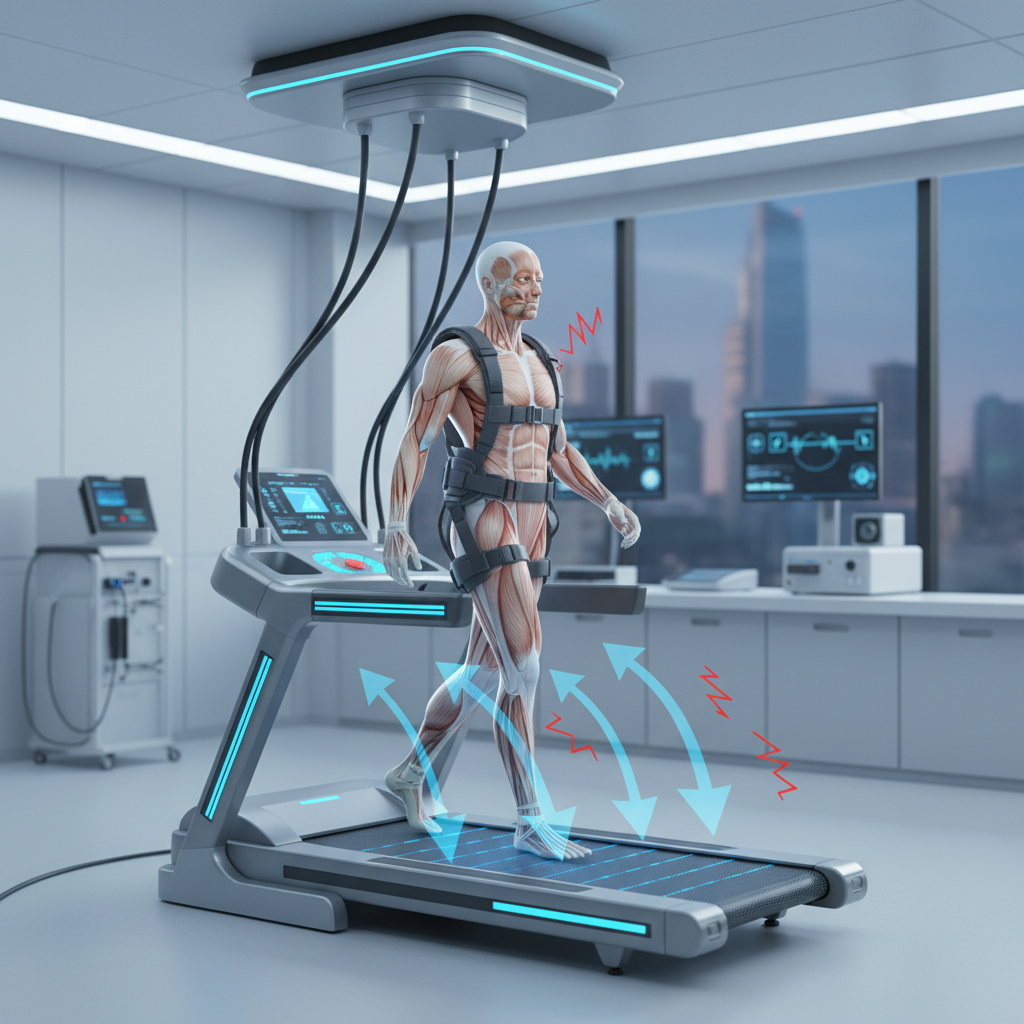
Perturbation-Based Balance Training (PBBT)
PBBT is a task-specific intervention designed to improve reactive balance control. Participants walk on a specialized treadmill that introduces unannounced surface translations (slips/trips). The goal is to train rapid balance recovery in a safe, controlled environment using a safety harness.
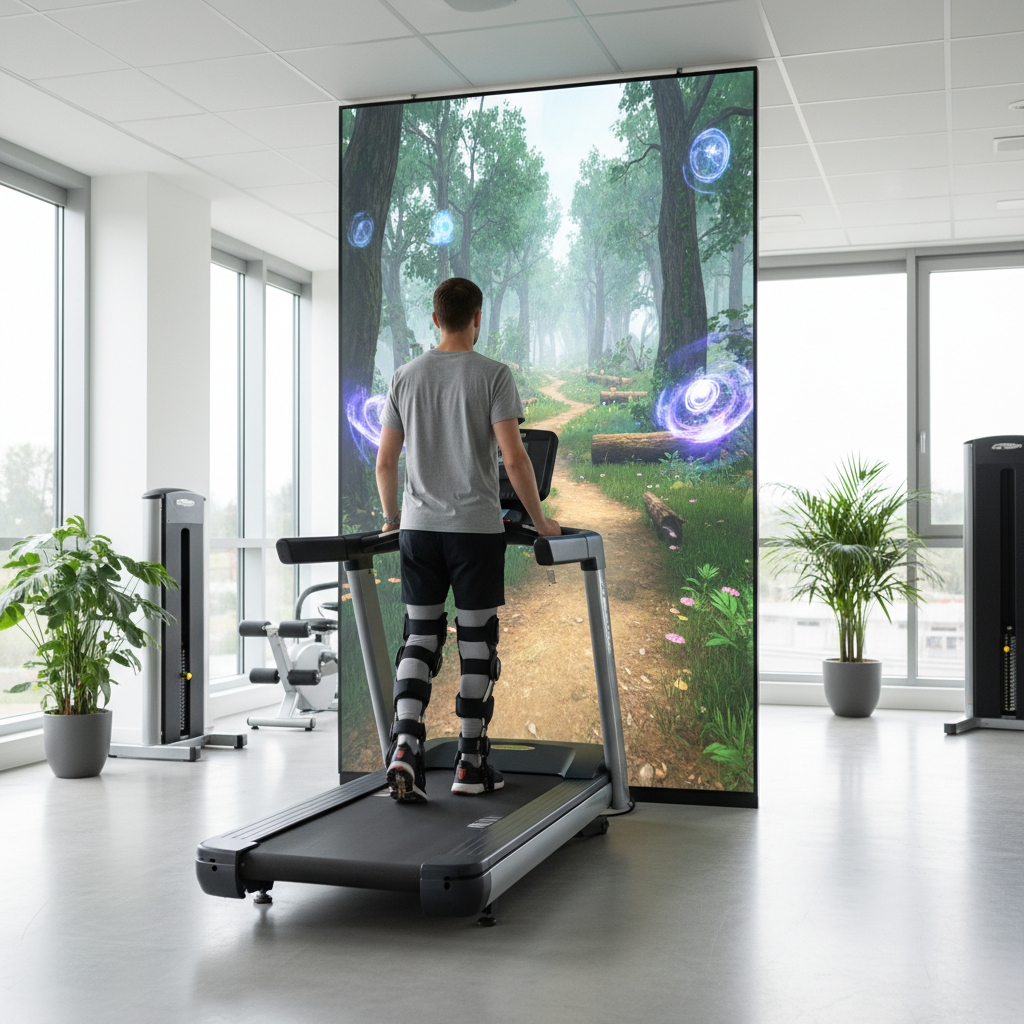
The VR Add-On: Motor-Cognitive Training
Combines treadmill training with semi-immersive Virtual Reality. Participants navigate virtual urban or park environments projected on a screen, requiring them to step over virtual obstacles. This creates a dual-task environment that maximizes engagement and targets cognitive processing during gait.
Does the addition of a VR component to Perturbation Reactive Balance Training (PRBT) improve fall prevention effectiveness in high-risk older adults compared to PRBT alone?
The Research Question
Target Population & Design
Study Design: Prospective, single-blinded, two-arm Randomized Controlled Trial (RCT).
Inclusion Criteria: Ages 60–90, history of 2+ falls in the last 6 months, able to walk 5 mins unassisted.
Exclusion Criteria: Psychiatric comorbidity, severe neurological disorders (e.g., history of stroke), or acute pain interfering with walking.
Intervention Protocol
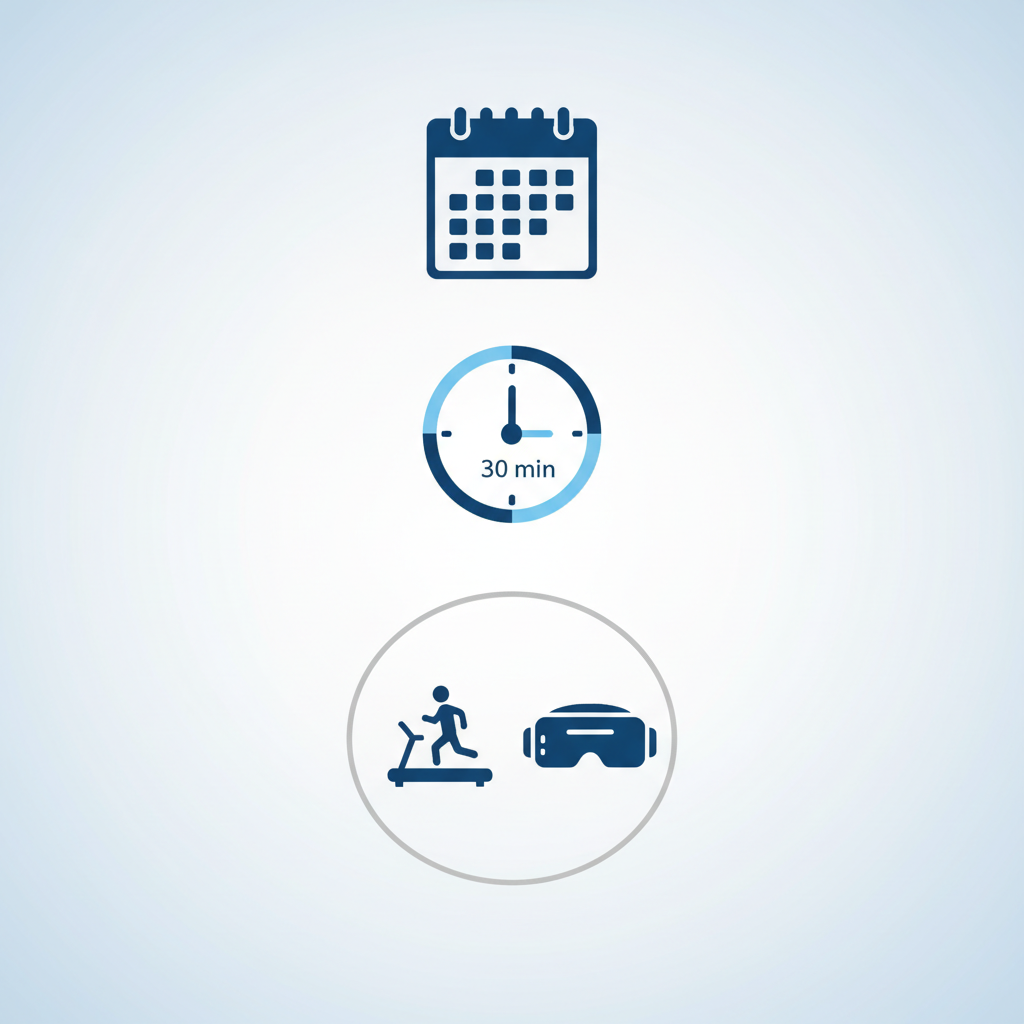
Duration: 6 weeks, 3 sessions/week (Total 18 sessions).<br><br>Session Structure: 30 minutes total.<br>- 2 min warm-up<br>- 24 min training (RBT or VR+RBT)<br>- 2 min cool down<br><br>Group 1 (Combined): Unannounced perturbations + VR cognitive challenges.<br>Group 2 (Control): Unannounced perturbations only.
Outcome Measures
Primary Outcome: Incident Rate of Falls (IRR) recorded via fall calendar for 6 months post-training.
Balance & Mobility: Mini-BESTest, TUG, and 2-Minute Walk Test.
Gait Quality: Gait variability and foot clearance during obstacle negotiation.
Psychological/Cognitive: Trail Making Test (TMT-B) and Falls Efficacy Scale (FES-I).
Expected Impact: Fall Rate Reduction
Evidence suggests a synergistic effect. While Reactive Balance Training (RBT) significantly reduces falls (~46%), and VR-Treadmill training reduces falls by ~50%, combining these modalities addresses both the mechanical response to slips and the cognitive planning required for safe gait.
Significance of the Study
Addresses Multifactorial Etiology: Targets 2 primary fall mechanisms—accidental slips (50% of falls) and cognitive-motor deficits.
Synergistic Value: Tests whether training reactive recovery AND executive function together yields greater benefits than single-modality treatments.
Clinical Implication: Could establish a new, robust standard for rehabilitation programs in day care centers and clinics.
- physiotherapy
- geriatrics
- virtual-reality
- balance-training
- fall-prevention
- rehabilitation
- clinical-trial