






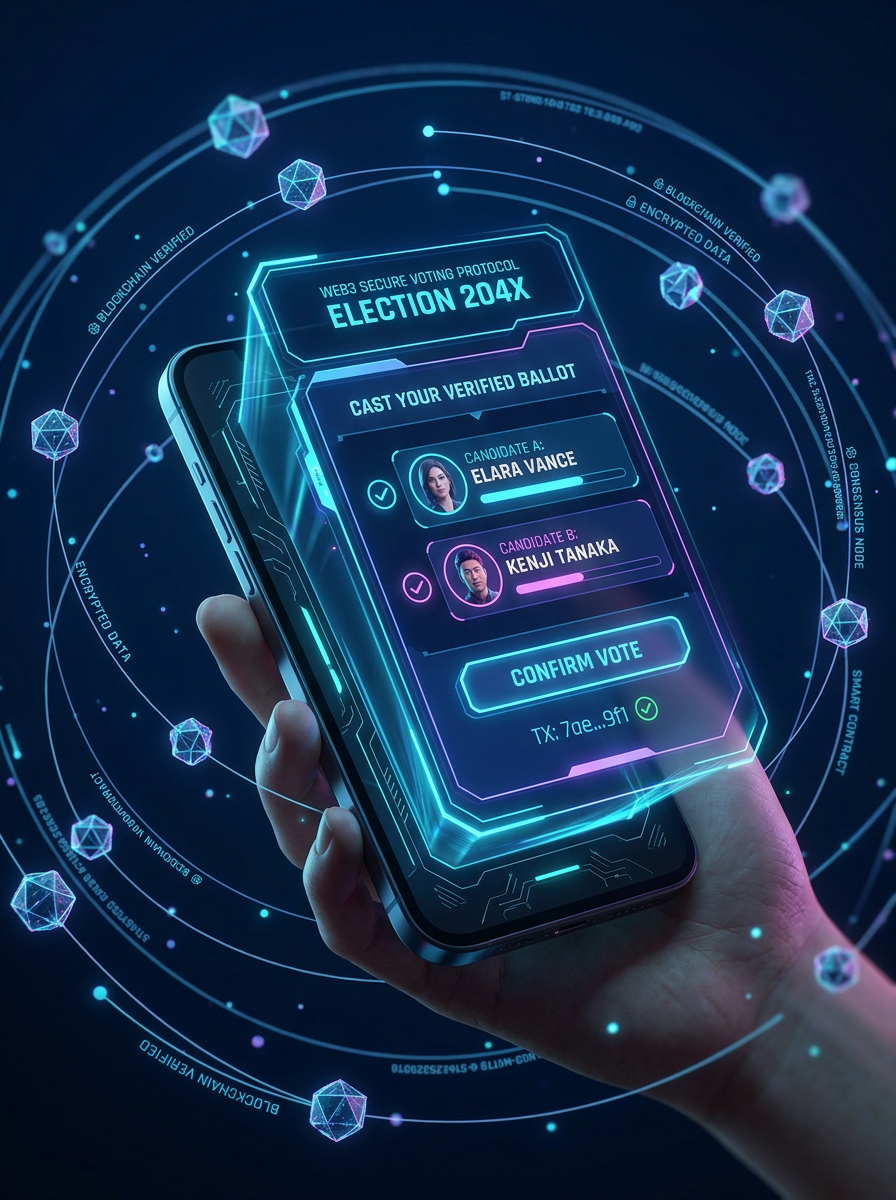

Blockchain Voting Systems: Securing the Future of Elections
Explore how blockchain-based voting systems solve traditional election issues like fraud and transparency through decentralized, immutable technology.
Blockchain-Based Voting System
Securing Democracy Through Decentralized Technology
The Future of Elections
2026
The Problem with Traditional Voting
Traditional voting systems face critical vulnerabilities that undermine democratic processes.
Voter Fraud
Ballot manipulation and identity fraud
Lack of Transparency
Opaque counting process
High Costs
Paper ballots, polling stations, staff
Low Voter Turnout
Inconvenience and accessibility barriers
Core Technology
What is Blockchain?
The Foundation of a Secure Voting System
Decentralized
Votes are processed by a distributed network of independent nodes, eliminating any central point of control.
Immutable
Once cast, a vote is cryptographically locked into a block and can never be altered, deleted, or tampered with.
Transparent
The entire history of transactions is fully verifiable by anyone, ensuring complete electoral integrity.
Process Flow
How Blockchain Voting Works
Voters register and receive a unique digital identity
Each eligible voter receives one ballot token in a digital wallet
Voter transfers token to chosen candidate's address
Vote is verified by consensus nodes & added to the blockchain
Votes are tallied automatically and results are publicly auditable
Key Benefits of Blockchain Voting
Immutability
Votes cannot be altered once recorded
Transparency
All transactions are publicly verifiable
Fraud Prevention
Cryptographic proof ensures one vote per person
Cost Reduction
Eliminates paper ballots and reduces administrative overhead
Increased Accessibility
Remote voting from any device
Real-Time Results
Instant counting without manual tallying
Security Architecture
Cryptographic Layers Protecting Every Vote
Vulnerabilities & Risks
Challenges &<br/>Limitations
Digital Divide
Not all voters have internet access or necessary technical literacy.
Privacy Concerns
Balancing transparency with essential voter anonymity.
Scalability Issues
Handling millions of simultaneous votes on decentralized networks.
Cybersecurity Risks
Smart contract vulnerabilities and potential 51% attacks.
These challenges are actively being researched and addressed by blockchain developers worldwide.
Real-World Implementations
Global Adoption of Blockchain Voting Technology
🇺🇸
2018
Voatz App (USA)
Used in West Virginia primary for secure mobile blockchain voting for overseas military.
🇸🇱
2018
Sierra Leone
Historic first national election featuring blockchain vote tallying provided by Agora.
🇺🇸
2019
Utah GOP
Successfully utilized the Voatz mobile app for a secure state republican convention.
🇷🇺
2019
Moscow Duma
Pioneered Russia's innovative blockchain-based electronic voting pilot program.
The Future of Blockchain Voting
Zero-Knowledge Proofs
Fully anonymous yet verifiable votes
Cross-Chain Interoperability
Multi-platform voting networks
Biometric Integration
Fingerprint and facial ID authentication
AI-Powered Fraud Detection
Real-time anomaly detection
Global Digital Democracy
Borderless participation in governance
By 2030, over 30 countries may adopt blockchain-based elections
Conclusion: Blockchain is the Future of Democracy
Blockchain eliminates vote tampering through cryptographic immutability
Increased accessibility and transparency builds greater public trust
Ongoing innovation is addressing privacy and scalability challenges
"The question is no longer IF blockchain will transform elections — but WHEN."
The future of secure, transparent democracy starts with blockchain.
- blockchain
- voting-technology
- e-voting
- democracy
- fintech
- security
- smart-contracts
- future-tech