


Understanding Pain: Perception, Types & Management Guide
Learn how the body perceives pain, the differences between acute and chronic pain, and various medical or holistic treatment options for pain relief.
Understanding<br>Pain
What It Is, How We Feel It & How to Manage It
A guide for patients & curious minds
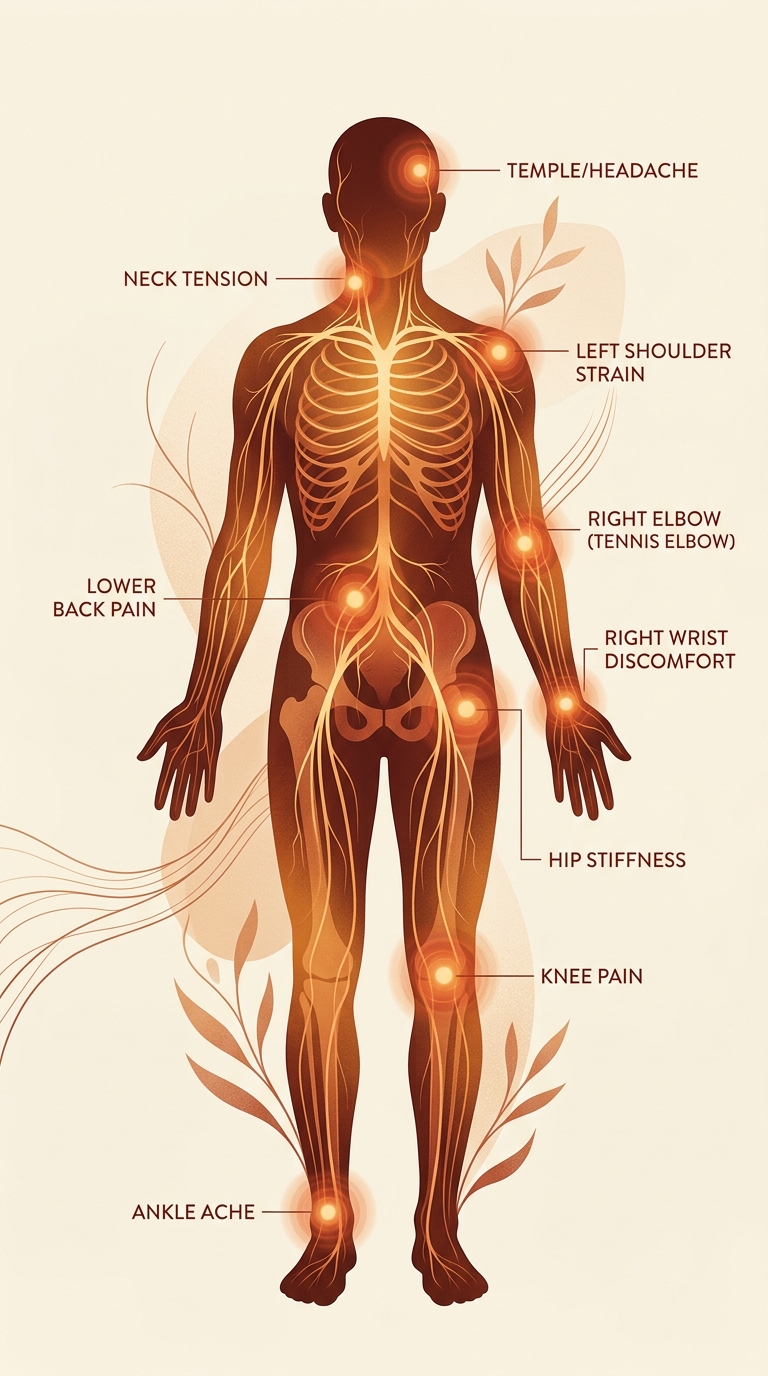
What Is Pain?
Pain is an unpleasant sensory and emotional experience associated with actual or potential tissue damage.
World Health Organization
Pain is your body's alarm system — it signals danger
It involves both the body AND the mind
Everyone experiences pain differently
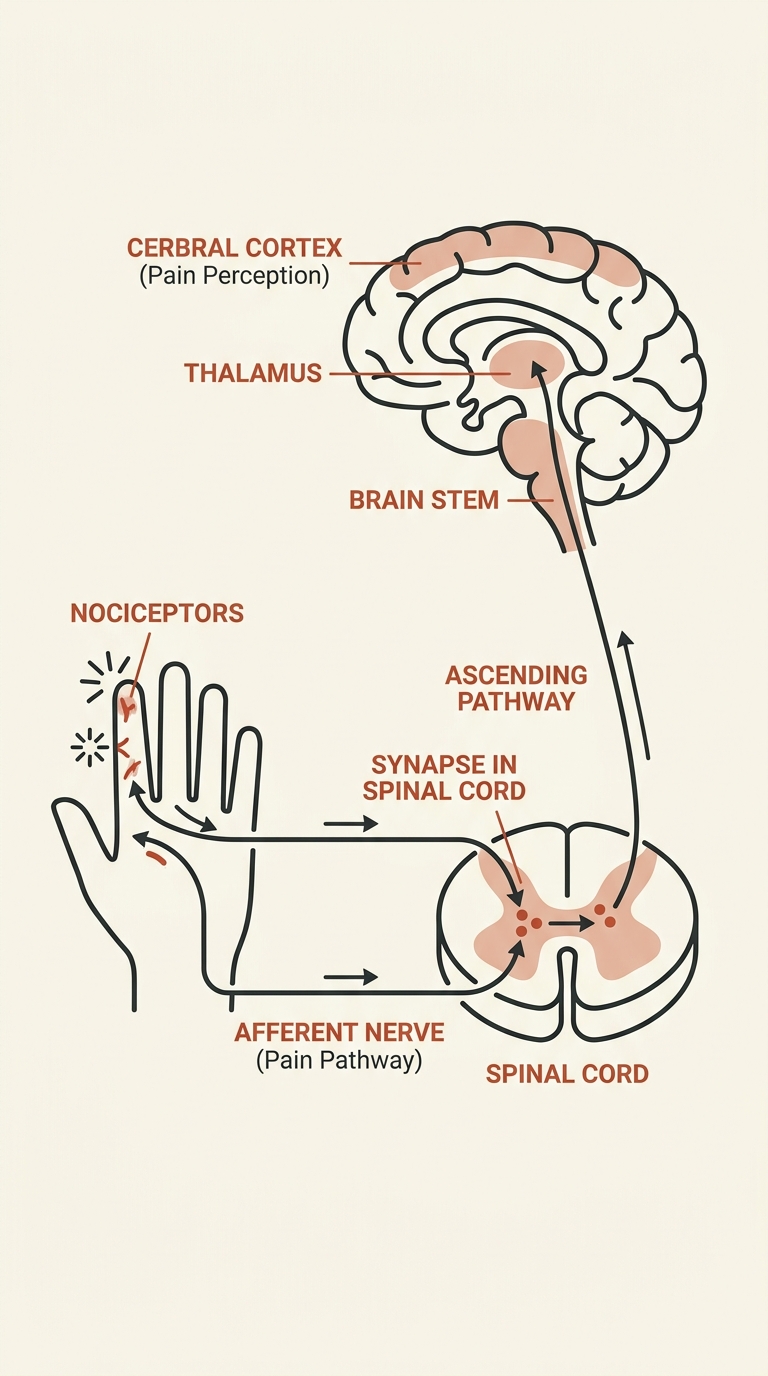
How Do We Perceive Pain?
The journey from injury to sensation
Nociception
Nerve endings detect the harmful stimulus
Transmission
Signal travels along nerves to the spinal cord
Perception
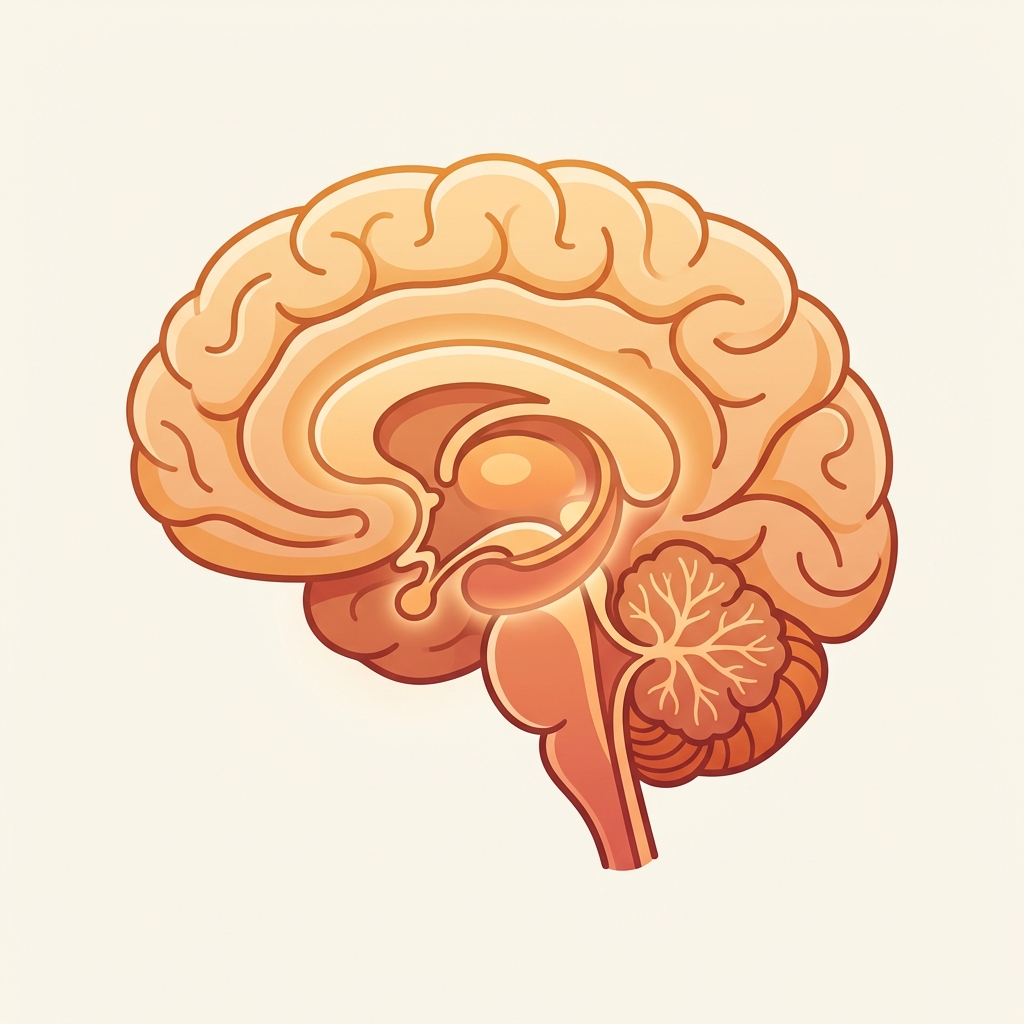
Brain interprets the signal as "pain"
Modulation
Brain can amplify or dampen the pain signal
Pain is not just physical — emotions, stress, and memories all shape how we feel pain.
Types of Pain
Acute Pain
Short-lived, protective pain acting as a warning signal.<span style='display: block; margin-top: 16px; font-size: 22px;'><span style='color: #C45A3E; font-weight: 600; text-transform: uppercase; letter-spacing: 1px; font-size: 20px;'>Example:</span> <span style='color: #2A2A28; font-weight: 500;'>A burn or broken bone</span></span>
Chronic Pain
Persistent pain lasting more than 3 months, often outliving its protective purpose.<span style='display: block; margin-top: 16px; font-size: 22px;'><span style='color: #C45A3E; font-weight: 600; text-transform: uppercase; letter-spacing: 1px; font-size: 20px;'>Example:</span> <span style='color: #2A2A28; font-weight: 500;'>Arthritis, chronic back pain</span></span>
Neuropathic Pain
Caused by nerve damage, producing a burning, tingling, or shooting sensation.<span style='display: block; margin-top: 16px; font-size: 22px;'><span style='color: #C45A3E; font-weight: 600; text-transform: uppercase; letter-spacing: 1px; font-size: 20px;'>Example:</span> <span style='color: #2A2A28; font-weight: 500;'>Diabetes-related neuropathy, sciatica</span></span>
Nociceptive Pain
Arises from tissue damage. Includes somatic (muscles, skin) and visceral (internal organs) pain.<span style='display: block; margin-top: 16px; font-size: 22px;'><span style='color: #C45A3E; font-weight: 600; text-transform: uppercase; letter-spacing: 1px; font-size: 20px;'>Example:</span> <span style='color: #2A2A28; font-weight: 500;'>Cuts, bruises, organ inflammation</span></span>
Acute vs. Chronic Pain
Acute Pain
Chronic Pain
Hours to weeks
3+ months
Clear injury or illness
Often complex or unclear
Protective warning signal
No longer protective
Surgery, broken bone, headache
Fibromyalgia, arthritis, back pain
Usually resolves with treatment
Affects sleep, mood, and daily life
Chronic pain affects 1 in 5 adults worldwide
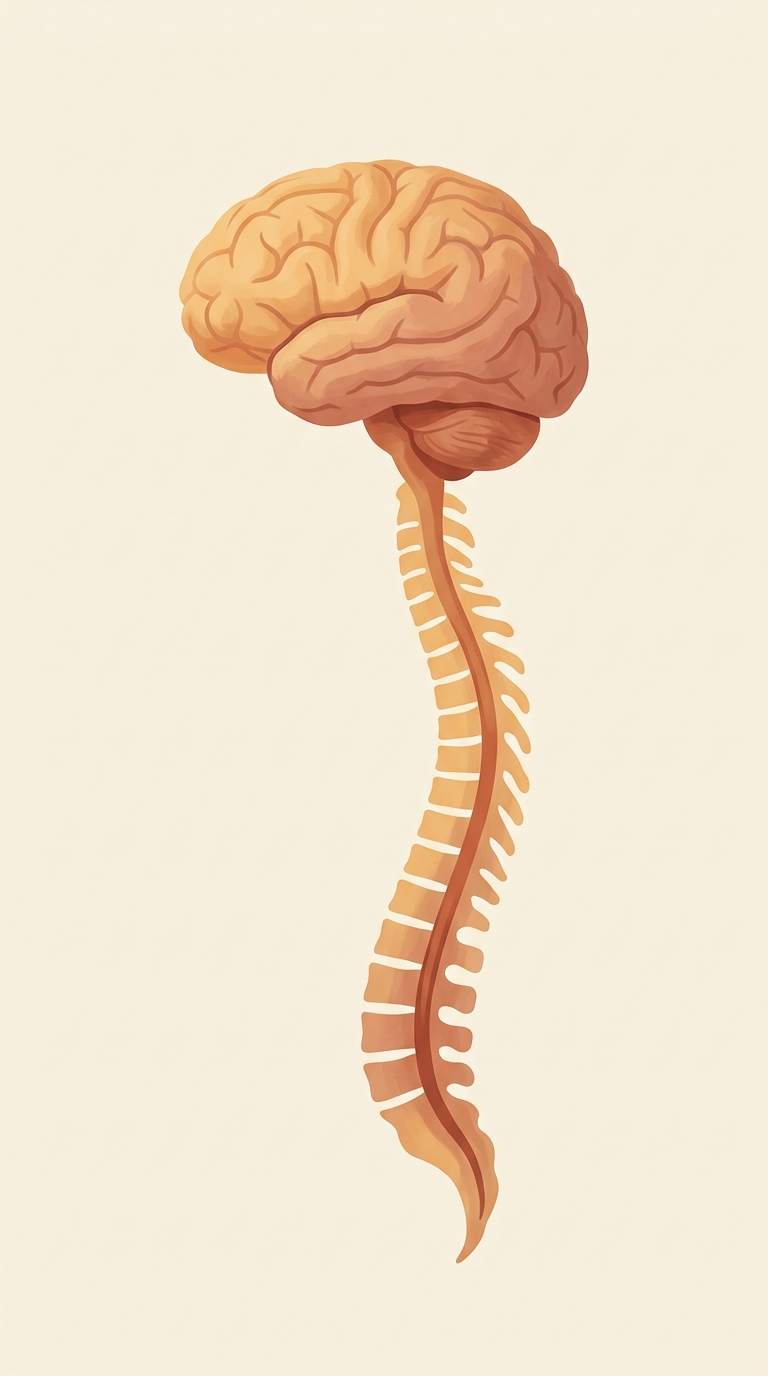
The Brain's Role in Pain
Pain is always real — even when there's no visible injury
Understanding the brain's role helps us develop better treatments.
The Pain Gate Theory
The spinal cord acts as a "gate" that can open or close to pain signals. Non-painful sensations (rubbing, heat) can close the gate.
Emotional Influence
Anxiety, depression, and stress amplify pain. Positive emotions and distraction reduce it.
Pain Memory
The brain can learn to produce pain. In chronic conditions, the nervous system becomes hypersensitive (central sensitization).
How Is Pain Measured?
Pain is subjective — no single test can measure it
<span style="font-weight: 700;">Doctors also ask about:</span> <span style="font-weight: 400; color: #6D6961;">location, quality (sharp/burning/aching), duration, and what makes it better or worse</span>
Medical Treatments for Pain
Medications
<svg width="40" height="40" viewBox="0 0 24 24" fill="none" stroke="#FBF8F0" stroke-width="2.2" stroke-linecap="round" stroke-linejoin="round"><path d="m10.5 20.5 10-10a4.95 4.95 0 1 0-7-7l-10 10a4.95 4.95 0 1 0 7 7Z"></path><path d="m8.5 8.5 7 7"></path></svg>
<ul style="margin: 0; padding-left: 0; list-style-type: none; display: flex; flex-direction: column; gap: 14px;"> <li style="display: flex; align-items: flex-start; gap: 12px;"> <span style="color: #C45A3E; font-size: 24px; line-height: 1.3;">•</span> <span style="font-family: 'Inter', sans-serif; font-size: 21px; color: #4A463F; line-height: 1.45;"><strong style="color: #2A2A28; font-weight: 600;">NSAIDs & Paracetamol:</strong> First-line options for mild to moderate pain (e.g., ibuprofen).</span> </li> <li style="display: flex; align-items: flex-start; gap: 12px;"> <span style="color: #C45A3E; font-size: 24px; line-height: 1.3;">•</span> <span style="font-family: 'Inter', sans-serif; font-size: 21px; color: #4A463F; line-height: 1.45;"><strong style="color: #2A2A28; font-weight: 600;">Opioids:</strong> Prescribed strictly for treating severe or acute pain conditions.</span> </li> <li style="display: flex; align-items: flex-start; gap: 12px;"> <span style="color: #C45A3E; font-size: 24px; line-height: 1.3;">•</span> <span style="font-family: 'Inter', sans-serif; font-size: 21px; color: #4A463F; line-height: 1.45;"><strong style="color: #2A2A28; font-weight: 600;">Antidepressants & Anticonvulsants:</strong> Highly effective for addressing complex nerve pain.</span> </li> </ul>
Interventional Procedures
<svg width="40" height="40" viewBox="0 0 24 24" fill="none" stroke="#FBF8F0" stroke-width="2.2" stroke-linecap="round" stroke-linejoin="round"><path d="m18 2 4 4"></path><path d="m17 7 3-3"></path><path d="M19 9 8.7 19.3c-1 1-2.5 1-3.4 0l-.6-.6c-1-1-1-2.5 0-3.4L15 5"></path><path d="m9 11 4 4"></path><path d="m5 19-3 3"></path><path d="m14 4 6 6"></path></svg>
<ul style="margin: 0; padding-left: 0; list-style-type: none; display: flex; flex-direction: column; gap: 14px;"> <li style="display: flex; align-items: flex-start; gap: 12px;"> <span style="color: #C45A3E; font-size: 24px; line-height: 1.3;">•</span> <span style="font-family: 'Inter', sans-serif; font-size: 21px; color: #4A463F; line-height: 1.45;"><strong style="color: #2A2A28; font-weight: 600;">Nerve Blocks:</strong> Targeted injections to disrupt and block specific pain signals to the brain.</span> </li> <li style="display: flex; align-items: flex-start; gap: 12px;"> <span style="color: #C45A3E; font-size: 24px; line-height: 1.3;">•</span> <span style="font-family: 'Inter', sans-serif; font-size: 21px; color: #4A463F; line-height: 1.45;"><strong style="color: #2A2A28; font-weight: 600;">Epidural Injections:</strong> Corticosteroids delivered around the spinal cord to reduce inflammation.</span> </li> <li style="display: flex; align-items: flex-start; gap: 12px;"> <span style="color: #C45A3E; font-size: 24px; line-height: 1.3;">•</span> <span style="font-family: 'Inter', sans-serif; font-size: 21px; color: #4A463F; line-height: 1.45;"><strong style="color: #2A2A28; font-weight: 600;">Spinal Cord Stimulation:</strong> Mild electrical impulses that intercept and interrupt pain pathways.</span> </li> </ul>
Physical Therapy
<svg width="40" height="40" viewBox="0 0 24 24" fill="none" stroke="#FBF8F0" stroke-width="2.2" stroke-linecap="round" stroke-linejoin="round"><circle cx="12" cy="5" r="2"></circle><path d="m14 20-2-5-2 5"></path><path d="m10 11-2 2-3-3"></path><path d="m14 11 2 2 3-3"></path><path d="M12 7v8"></path></svg>
<ul style="margin: 0; padding-left: 0; list-style-type: none; display: flex; flex-direction: column; gap: 14px;"> <li style="display: flex; align-items: flex-start; gap: 12px;"> <span style="color: #C45A3E; font-size: 24px; line-height: 1.3;">•</span> <span style="font-family: 'Inter', sans-serif; font-size: 21px; color: #4A463F; line-height: 1.45;"><strong style="color: #2A2A28; font-weight: 600;">Exercise & Manual Therapy:</strong> Strengthening, targeted stretching, and joint mobilization.</span> </li> <li style="display: flex; align-items: flex-start; gap: 12px;"> <span style="color: #C45A3E; font-size: 24px; line-height: 1.3;">•</span> <span style="font-family: 'Inter', sans-serif; font-size: 21px; color: #4A463F; line-height: 1.45;"><strong style="color: #2A2A28; font-weight: 600;">Heat / Cold Therapy:</strong> Relieves muscle spasms and effectively curbs local tissue inflammation.</span> </li> <li style="display: flex; align-items: flex-start; gap: 12px;"> <span style="color: #C45A3E; font-size: 24px; line-height: 1.3;">•</span> <span style="font-family: 'Inter', sans-serif; font-size: 21px; color: #4A463F; line-height: 1.45;"><strong style="color: #2A2A28; font-weight: 600;">TENS Therapy:</strong> Transcutaneous electrical nerve stimulation for drug-free, localized pain relief.</span> </li> </ul>
Surgery
<svg width="40" height="40" viewBox="0 0 24 24" fill="none" stroke="#FBF8F0" stroke-width="2.2" stroke-linecap="round" stroke-linejoin="round"><circle cx="6" cy="6" r="3"></circle><circle cx="6" cy="18" r="3"></circle><line x1="20" y1="4" x2="8.12" y2="15.88"></line><line x1="14.47" y1="14.48" x2="20" y2="20"></line><line x1="8.12" y1="8.12" x2="12" y2="12"></line></svg>
<ul style="margin: 0; padding-left: 0; list-style-type: none; display: flex; flex-direction: column; gap: 14px;"> <li style="display: flex; align-items: flex-start; gap: 12px;"> <span style="color: #C45A3E; font-size: 24px; line-height: 1.3;">•</span> <span style="font-family: 'Inter', sans-serif; font-size: 21px; color: #4A463F; line-height: 1.45;"><strong style="color: #2A2A28; font-weight: 600;">Structural Corrections:</strong> Used appropriately when specific physical damage is the root cause.</span> </li> <li style="display: flex; align-items: flex-start; gap: 12px;"> <span style="color: #C45A3E; font-size: 24px; line-height: 1.3;">•</span> <span style="font-family: 'Inter', sans-serif; font-size: 21px; color: #4A463F; line-height: 1.45;"><strong style="color: #2A2A28; font-weight: 600;">Repairs & Replacements:</strong> Focuses on treating herniated discs, degrading joints, or pinched nerves.</span> </li> <li style="display: flex; align-items: flex-start; gap: 12px;"> <span style="color: #C45A3E; font-size: 24px; line-height: 1.3;">•</span> <span style="font-family: 'Inter', sans-serif; font-size: 21px; color: #4A463F; line-height: 1.45;"><strong style="color: #2A2A28; font-weight: 600;">A Last Resort Option:</strong> Typically evaluated and considered only when non-invasive approaches fail.</span> </li> </ul>
Always consult a healthcare professional before starting any pain treatment.
Holistic & Non-Medical Pain Relief
Treating the whole person — body, mind & lifestyle
Mindfulness & Meditation
Reduces pain perception and stress
Cognitive Behavioral Therapy
Changes negative thoughts about pain
Acupuncture
Stimulates natural pain-relieving endorphins
Exercise & Movement
Releases endorphins; reduces inflammation
Heat & Cold Therapy
Heat relaxes muscles; cold reduces swelling
Sleep & Nutrition
Poor sleep worsens pain; anti-inflammatory diet helps
Small lifestyle changes can make a big difference.
Key Takeaways
Pain is a protective signal — but it can become a problem when it persists.
Pain perception involves the nerves, spinal cord, <strong>AND</strong> brain.
There are many types of pain — each requiring a different approach.
Both medical and non-medical treatments can effectively manage pain.
You don't have to live with pain — help is available.
Talk to your doctor if pain is affecting your quality of life.
Understanding Pain is the First Step to Managing It
- pain-management
- chronic-pain
- neurology
- healthcare
- patient-education
- physical-therapy
- health-and-wellness