








Beyond Logic: Real-World Decision Making & Dynamics
Explore the hidden dynamics of how decisions are actually made, moving beyond linear frameworks to understand rationalization, data traps, and uncertainty.
How Decisions Are Actually Made
Beyond Logic and Frameworks: A Calibration
The Myth of Linearity
We pretend decisions follow a clean sequence: Data collection, analysis, option weighing, and final choice. In books, this looks like a funnel. In reality, it is rarely linear.
What Actually Drives Choice
Inertia: The path of least organizational resistance.
Timing: Exhaustion often mimics resolution.
Social Pressure: Agreement feels safer than correctness.
Fear: The avoidance of regret outweighs the pursuit of gain.
Decisions are Accumulations
We treat decisions as events. In reality, they are tipping points. The 'sudden' decision to pivot, quit, or launch is actually the result of months of microscopic erosions and context shifts. The meeting was just the ceremony.
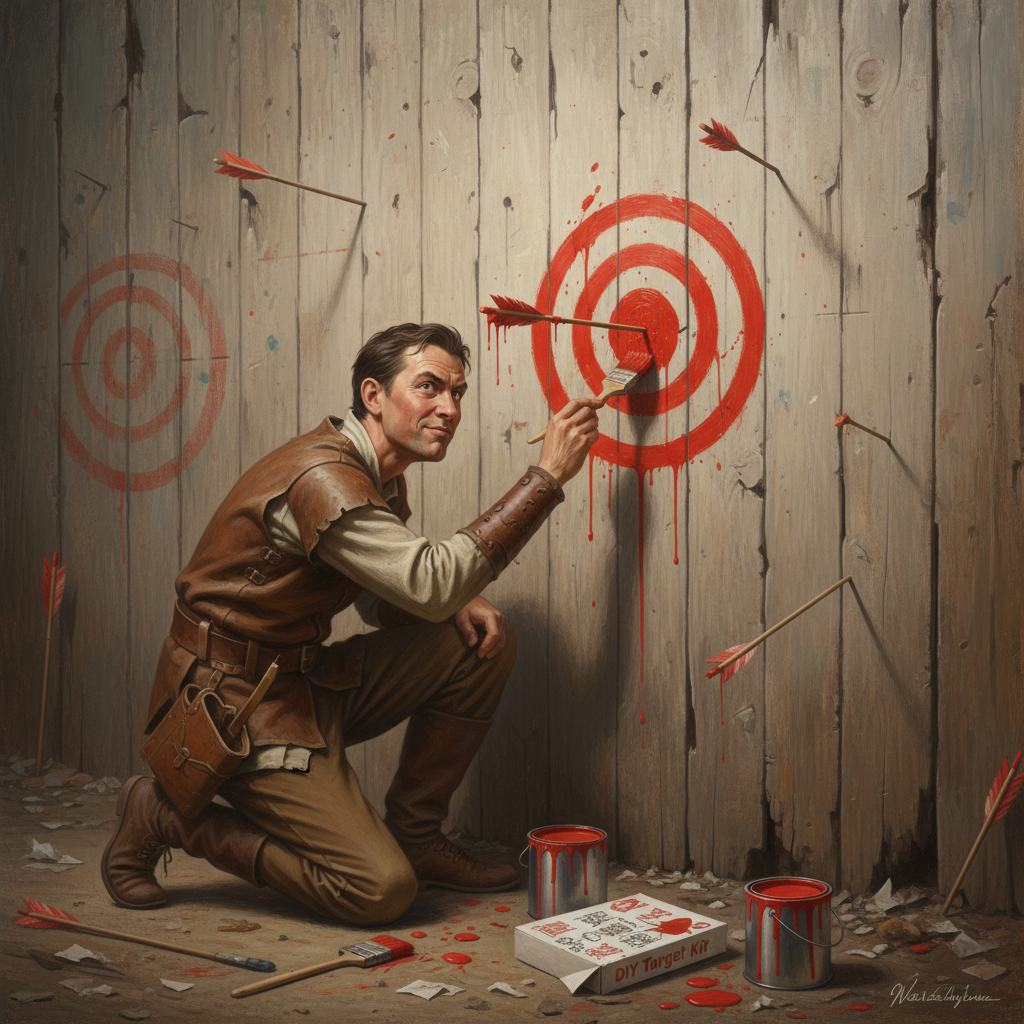
Logic comes later. It is the architect we hire to explain the building we already built.
The Data Trap
Often, requesting "more data" is not a search for truth, but a stall tactic. It’s an emotional defense mechanism against the anxiety of being wrong. Data is signal; waiting for perfect certainty is paralysis.
Signals of Rationalization
Obsession with consensus (diluting responsibility).
Arguments focusing on definitions rather than outcomes.
Silence in meetings, followed by back-channel complaints.
The decision feels 'obvious' but no one can explain why simply.
Retrospective Coherence
Once a decision is made, the brain deletes the uncertainty that preceded it. This is why bad decisions often look reasonable in the moment, and why good decisions can look reckless. We only judge the outcome, never the process.
Calibration Questions
1. If I couldn't use any data to justify this, would I still do it?
2. Am I waiting for information that will actually change my mind, or just make me feel safer?
3. When did this decision actually happen? (Yesterday, or three months ago?)
The Invisible Threshold
Most decisions are made long before the meeting starts. They happen in hallways, in threads, or in shared silence. The meeting is often just a ceremony to ratify what has already occurred.
Signs of Rationalization
How to tell if your team is just justifying a choice:<br><br>• No viable alternatives are discussed<br>• Data is cherry-picked to support one view<br>• Disagreement is treated as annoyance<br>• The decision feels 'obvious' too quickly
If a decision feels obvious, pause. Ask yourself: When did this become the only option?
Diagnostic Questions
Before finalizing, ask:<br><br>1. What must be true for this to be the WRONG decision?<br>2. Are we deciding or just relieving anxiety?<br>3. If no one was watching, would we still choose this?
Calibration, Not Control
You cannot control the outcome of a decision under uncertainty. You can only control the quality of the process. Stop trying to be right. Start trying to be clear.
Reframing Uncertainty
The quality of a decision is visible only before it is justified. If a choice feels completely safe, you probably aren't deciding—you're just executing the inevitable. Uncertainty is not the enemy. False certainty is.
- decision-making
- leadership
- critical-thinking
- management
- rationalization
- organizational-behavior
- business-strategy