
Made byBobr AI

Pathogenesis of Emphysema: Alveolar Destruction Mechanisms

Explore the mechanisms of emphysema, including protease imbalance, oxidative stress, and chronic inflammation in this comprehensive medical presentation.

#emphysema#pathogenesis#pulmonary-pathology#medical-education#copd#alveolar-destruction#respiratory-disease
Watch
Pitch
PULMONARY PATHOLOGY

Pathogenesis of Emphysema

Mechanisms of Alveolar Destruction & Disease Progression

For Medical Students Academic Presentation
2026
Made byBobr AI
AGENDA

Contents

A comprehensive journey through the mechanisms of emphysema.

2026
1
What is Emphysema?
Definition & Disease Overview
2
Epidemiology & Risk Factors
Demographics, Smoking & Environmental Exposures
3
Types of Emphysema
Centriacinar, Panacinar & Paraseptal Classifications
4
Protease–Antiprotease Imbalance
Alpha-1 Antitrypsin Deficiency & Enzymatic Destruction
5
Oxidative Stress Mechanisms
Exogenous Toxins & Reactive Oxygen Species
6
Chronic Inflammation Cascade
Macrophages, Neutrophils & Cytokine Signaling
7
Alveolar Cell Death & Apoptosis
Loss of Epithelial & Endothelial Integrity
8
Impaired Lung Repair & Remodeling
Defective Extracellular Matrix Restoration
9
Integrated Pathogenic Model
Synthesis of Destructive Pathways
10
Clinical Manifestations & Complications
Symptomatology & Systemic Consequences
Made byBobr AI
01

What is Emphysema?

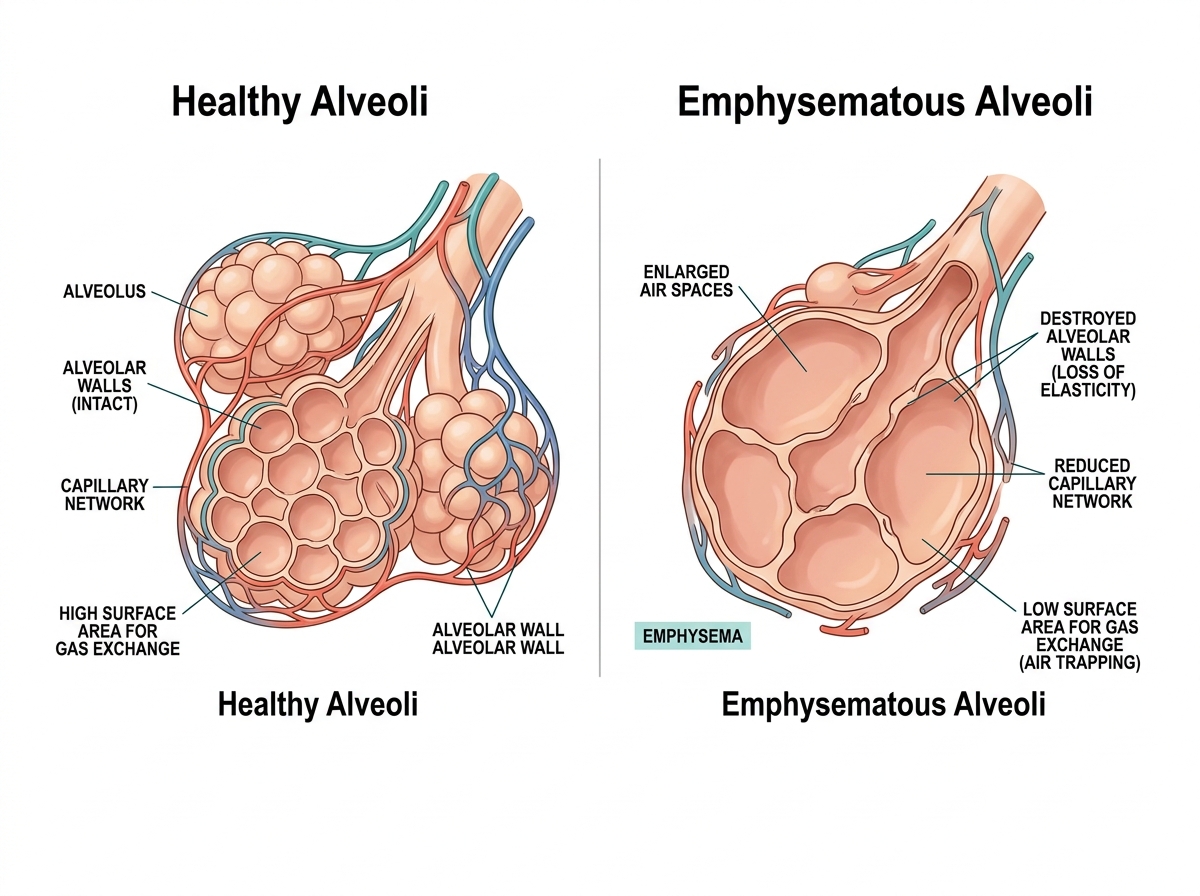
Emphysema is a chronic obstructive pulmonary disease (COPD) characterized by permanent, abnormal enlargement of the airspaces distal to the terminal bronchiole, accompanied by destruction of alveolar walls, without obvious fibrosis.

Permanent alveolar enlargement

Destruction of alveolar walls

Loss of lung elasticity & reduced gas exchange

Part of the COPD spectrum alongside chronic bronchitis

Normal vs. Emphysematous Alveoli

Made byBobr AI
02

Epidemiology & Risk Factors

Global Burden

380M+
people affected worldwide
3rd
leading cause of death globally
10-15%
of smokers develop COPD/emphysema
↑ Age
Prevalence directly correlates with advancing age

Primary Risk Factors

🚬 Cigarette Smoking (80–90% of cases)
💨 Air Pollution & Occupational Dust
🧬 Alpha-1 Antitrypsin Deficiency (1–2%)
🦠 Recurrent Pulmonary Infections
👶 Low Birth Weight / Premature Birth
🧓 Aging

Alpha-1 Antitrypsin Deficiency

Autosomal codominant inheritance
PiZZ genotype: highest risk
Causes panacinar emphysema
Affects lower lobes predominantly
Gene therapy under active research
Made byBobr AI
03

Types of Emphysema

Centriacinar

(Centrilobular)
Association: Associated with cigarette smoking
Location: Predominantly UPPER lobes
Pathology: Affects respiratory bronchioles centrally
Clinical Fact: Most common type (95%)

Panacinar

(Panlobular)
Association: Associated with Alpha-1 Antitrypsin deficiency
Location: Predominantly LOWER lobes
Pathology: Affects entire acinus uniformly
Clinical Fact: More severe gas exchange impairment

Paraseptal

(Distal Acinar)
Association: Often seen in young adults
Location: Adjacent to pleura and septa
Pathology: Affects distal alveolar ducts & sacs
Clinical Fact: Can cause spontaneous pneumothorax

Irregular

(Scar Emphysema)
Association: Associated with scarring / fibrosis
Location: Irregular distribution throughout
Pathology: Not linked to airway obstruction
Clinical Fact: Usually an incidental finding
Made byBobr AI
04

The Protease–Antiprotease Imbalance

ESTABLISHED THEORY — 1960s, REMAINS CENTRAL TODAY
CIGARETTE SMOKE disrupts balance

PROTEASES

— EXCESS —
  • Neutrophil Elastase
  • Matrix Metalloproteases
    (MMP-1, 9, 12)
  • Macrophage Elastase
  • Cathepsins
    (B, L, S)

ANTIPROTEASES

— DEPLETED —
  • Alpha-1 Antitrypsin (AAT)
    PRIMARY INHIBITOR
  • SLPI
    (Secretory Leukocyte Protease Inhibitor)
  • Elafin
  • TIMPs
CONSEQUENCE OF EXCESS
Elastin Degradation Loss of alveolar wall integrity
GENETIC FACTOR
AAT Deficiency Genetic predisposition to early emphysema
Made byBobr AI
05

Oxidative Stress Mechanisms

Cigarette Smoke & Pollutants
↑ Reactive Oxygen Species (ROS) & RNS
↓ Antioxidant Depletion
Glutathione, Vitamin A & E
SOD, Catalase
Nrf2 activity reduced
OXIDANT–ANTIOXIDANT IMBALANCE
DNA Damage & Telomere Shortening
Antiprotease Inactivation
→ Compounds protease imbalance
HDAC2 Inactivation
→ Perpetuates pro-inflammatory gene expression
Apoptosis Activation
→ Alveolar cell death
Oxidative stress markers persist even in ex-smokers — indicating endogenous ongoing inflammation
Made byBobr AI
PULMONARY PATHOLOGY
06

Chronic Inflammation Cascade

Cigarette Smoke / Irritant Exposure

Macrophages

5-10x Increase
  • Release LTB4
  • Release IL-8
  • Release MMPs & Elastase
  • Recruit neutrophils

Neutrophils

Acute Responders
  • Release Elastase, PR3
  • Produce ROS & H₂O₂
  • Amplify tissue destruction
  • Overcome anti-proteases

CD8+ T Cells

Cytotoxic Action
  • Release TNF-α
  • Release Perforins
  • Drive alveolar apoptosis
  • Correlates with obstruction

B Cells

Adaptive Immunity
  • Form lymphoid follicles
  • Auto-antibodies (elastin)
  • Complement-mediated injury
  • Follicles match severity
Amplification Loop
Elastin/Collagen fragments → Matrikines → Further inflammation amplification → Self-perpetuating cycle
Made byBobr AI
07

Alveolar Cell Death & Apoptosis

APOPTOSIS

Programmed Cell Death
Activated by oxidative stress
Caspase cascade activation
Affects: Epithelial, Endothelial, Fibroblast cells
Releases DAMPs → amplifies inflammation

AUTOPHAGY

Cellular Self-Digestion
mTOR pathway disruption
Cigarette smoke activates
Mitochondrial dysfunction
NLRP3 inflammasome activation

NECROSIS

Uncontrolled Cell Death
Secondary to severe oxidative damage
Inflammatory cell infiltration
cGAS-STING pathway activation
DNA sensing mechanisms

VEGF — Critical Survival Factor

Abundantly expressed in healthy lungs
Required for endothelial cell survival
VEGF reduction → airspace enlargement (inflammation-independent)
Targeted in experimental therapies

Ceramide Pathway

Endogenous lipid mediator
Activated by cigarette smoke
Engages: apoptosis + protease imbalance + oxidative stress
Persists AFTER smoking cessation ⚠️
Loss of alveolar surface area reduces gas exchange capacity permanently
Made byBobr AI
08

Impaired Lung Repair & Remodeling

Emphysema reflects not only destruction — but failure to repair

mTOR — Stress Sensor

  • Mammalian Target of Rapamycin
  • Critical sensor for stress response
  • Regulates alveolar maintenance programs
Disruption Rtp801 activated by cigarette smoke → inhibits mTOR → airspace enlargement
Alveolar Maintenance FAILS

Accelerated Lung Aging

  • Telomeres shorten in alveolar cells
  • Promotes cellular senescence
  • Increases susceptibility to exacerbations
  • Mitochondrial dysfunction co-occurs
Premature Aging of Lung Tissue

Tissue Remodeling Failure

  • Notch & Wnt pathways govern differentiation
  • Epithelial & mesenchymal cell fate
  • Combined Pulmonary Fibrosis & Emphysema (CPFE)
  • Emerging area of research (2024–2025)
Abnormal Tissue Remodeling
"
"Once initiated, multiple reinforcing loops perpetuate progression — even without ongoing smoke exposure"
Made byBobr AI
09

Integrated Pathogenic Model

Four synergistic mechanisms driving alveolar destruction

OXIDATIVE STRESS INACTIVATES ANTIPROTEASES CELL DAMPs FUEL INFLAMMATION PROTEASES TRIGGER CELL DEATH INFLAMMATION AMPLIFIES ROS
ALVEOLAR
DESTRUCTION
& AIRSPACE ENLARGEMENT
1. Protease–Antiprotease Imbalance
Elastin degradation
Matrix destruction
↑ MMPs, ↓ AAT
2. Oxidative Stress
ROS overload
Antioxidant depletion
DNA & cell damage
3. Chronic Inflammation
Macrophage/Neutrophil infiltration
Cytokine amplification
Auto-immune components
4. Cell Death & Repair Failure
Apoptosis cascade
VEGF reduction
mTOR disruption
Only ~10–15% of smokers develop emphysema — genetic susceptibility plays a key role
Made byBobr AI
10

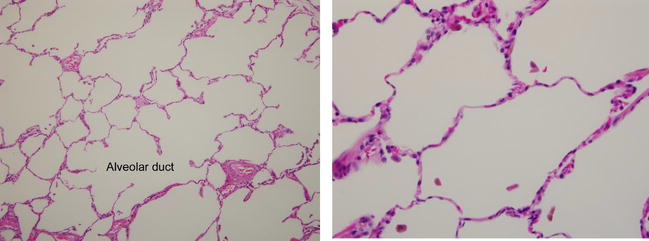
Histopathology

Microscopic features of emphysematous lung tissue

Enlarged airspaces
Thin/destroyed alveolar walls
Reduced capillary network
H&E stain: Normal (left) vs. Emphysematous (right) lung tissue

Microscopic Findings

Enlarged Airspaces — abnormal permanent enlargement distal to terminal bronchiole
Alveolar Wall Destruction — loss of alveolar septa, no fibrosis
Reduced Capillary Bed — vascular remodeling, fewer capillaries
Inflammatory Cell Infiltrate — macrophages, neutrophils, lymphocytes
Bronchiolar Changes — wall thickening in small airways
Key Distinction Emphysema = PERMANENT airspace enlargement WITHOUT significant fibrosis — differentiating from fibrotic lung diseases
Made byBobr AI
11

Clinical Manifestations & Complications

Classic Clinical Picture

Pink Puffer

Type A Emphysema
  • Barrel-shaped chest (hyperinflation)
  • Pursed-lip breathing
  • Prolonged expiration
  • Lean, thin patient
  • Relatively well-oxygenated until late
  • Accessory muscle use

Pulmonary Function Tests

Spacer
  • ↓ FEV1/FVC ratio (obstruction)
  • ↓ FEV1 (airflow limitation)
  • ↑ Total Lung Capacity (hyperinflation)
  • ↑ Residual Volume (air trapping)
  • ↓ DLCO (diffusion capacity — hallmark)
  • ↓ Elastic recoil

Symptoms Progression

Spacer
  • Insidious onset
  • Progressive exertional dyspnea
  • Chronic cough (less prominent)
  • Weight loss
  • Fatigue
  • Reduced exercise tolerance

Complications

🫁 Respiratory Failure
🫀 Cor Pulmonale
💨 Spontaneous Pneumothorax
🦠 Recurrent Infections
❤️ Pulmonary Hypertension
Made byBobr AI
12

Diagnosis & Imaging

Pulmonary Function

Gold standard for diagnosis
Spirometry: FEV1/FVC < 0.70 post-bronchodilator
Post-BD FEV1 determines severity
DLCO markedly reduced — specific for emphysema vs. chronic bronchitis

GOLD Staging (by FEV1)

Stage I  (Mild) ≥ 80%
Stage II  (Moderate) 50–79%
Stage III  (Severe) 30–49%
Stage IV  (Very Severe) < 30%

Imaging Findings

Chest X-Ray

Hyperinflated lungs (> 6 anterior ribs)
Flat hemidiaphragms
Widened intercostal spaces
Barrel chest & visible bullae

CT Chest (High Res)

Definitive: low-attenuation areas
Identifies distribution (centrilobular vs. panacinar)
Quantifies extent of disease
Detects microscopic bullae & blebs

Laboratory & Other

ABG: Hypoxemia, normocapnia early; hypercapnia late
Alpha-1 Antitrypsin: Test if early onset or non-smoker
CBC: Polycythemia secondary to chronic hypoxia
ECG: Right heart strain pattern (Cor Pulmonale)
6MWT: 6-Minute Walk Test for functional capacity
Pulse Oximetry: Continuous SpO&sub2; monitoring
GOLD Severity Progression
I
II
III
IV
Made byBobr AI
13

Management & Treatment Strategies

Tier 3

Surgical &
Interventional
LVRS (removes 20-30% tissue)
BLVR (endobronchial valves)
Lung Transplant (end-stage)
Bullectomy (dominant bullae)

Tier 2

Pharmacological
Bronchodilators
SABA / LABA (rescue / maint.) LAMA (reduces hyperinflation) LABA + LAMA (combination is superior to monotherapy)
Inhaled Corticosteroids (ICS)
• For frequent exacerbations
• Not recommended as monotherapy
PDE-4 Inhibitor
Roflumilast
• Severe disease w/ chronic bronchitis

Tier 1

Non-Pharmacological
Smoking Cessation — single most important intervention, slows decline
Pulmonary Rehab — improves exercise capacity
Oxygen Therapy (LTOT) — if PaO2 < 55mmHg
Vaccinations — Influenza & Pneumococcal
Nutritional support

Emerging
Therapies

Alpha-1 Antitrypsin
augmentation therapy
Anti-inflammatory biologics
Stem cell therapy
(investigational)
Gene therapy
for AAT deficiency
Made byBobr AI
14

Recent Research & Future Directions

Emerging discoveries reshaping our understanding of emphysema (2024–2026)

🤖 Machine Learning Discovery

Novel Emphysema Inflammatory Subgroup (EIS)

  • Identified via machine learning analysis (2024–2025)
  • Distinct inflammatory phenotype within emphysema spectrum
  • Highlights heterogeneity — not one disease, multiple subtypes
  • Implications for personalized medicine approaches
🔬 Emerging Syndrome

Combined Pulmonary Fibrosis & Emphysema (CPFE)

  • Coexistence of active fibrosis + alveolar destruction
  • Notch and Wnt signaling pathways implicated
  • More complex remodeling than classical models
  • Poorer prognosis than emphysema alone
💊 Therapeutic Target

Ceramide Pathway — Post-Cessation Progression

  • Disease progression independent of ongoing smoke
  • Ceramide activation persists after smoking cessation
  • Potential therapeutic target
  • Explains why some patients worsen after quitting
🧬 Novel Target 2025

NLRP3 Inflammasome & cGAS-STING

  • Mitochondrial dysfunction activates NLRP3
  • DNA sensing via cGAS-STING pathway
  • Novel anti-inflammatory targets
  • Small molecule inhibitors in trials

"Understanding the precise molecular mechanisms opens doors to targeted therapies beyond bronchodilation"

Made byBobr AI
15

Key Takeaways

What every medical student should remember

1
Emphysema = permanent airspace enlargement + alveolar wall destruction WITHOUT fibrosis — the definition to remember
2
4 Core Mechanisms: Protease–Antiprotease Imbalance + Oxidative Stress + Chronic Inflammation + Cell Death/Repair Failure — all synergistic
3
Smoking is #1 cause (80–90%) — but only 10–15% of smokers develop it — genetic susceptibility matters
4
Alpha-1 Antitrypsin Deficiency = most important genetic cause — causes panacinar emphysema of lower lobes
5
↓ DLCO is the hallmark PFT finding — distinguishes emphysema from chronic bronchitis
6
Smoking cessation is the only intervention proven to slow disease progression — prevention is paramount
Review Complete — 15 Topics Covered
Made byBobr AI

Thank You

Questions & Discussion

"Every breath reminds us of the intricate machinery we must protect. Understanding its failure is the first step to healing."

— Pulmonary Pathology

Global Initiative for Chronic Obstructive Lung Disease (GOLD) 2024
Barnes PJ. New concepts in COPD. Annu Rev Med. 2023
Stockley RA et al. Emphysema Mechanisms. Thorax. 2024

Pathogenesis of Emphysema

Presented by [Your Name]

2026 | Medical Student Presentation
Made byBobr AI
Bobr AI

DESIGNER-MADE
PRESENTATION,
GENERATED FROM
YOUR PROMPT

Create your own professional slide deck with real images, data charts, and unique design in under a minute.

Generate For Free

Pathogenesis of Emphysema: Alveolar Destruction Mechanisms

Explore the mechanisms of emphysema, including protease imbalance, oxidative stress, and chronic inflammation in this comprehensive medical presentation.

Pathogenesis of Emphysema

Mechanisms of Alveolar Destruction & Disease Progression

Contents

A comprehensive journey through the mechanisms of emphysema.

What is Emphysema?

Definition & Disease Overview

Epidemiology & Risk Factors

Demographics, Smoking & Environmental Exposures

Types of Emphysema

Centriacinar, Panacinar & Paraseptal Classifications

Protease–Antiprotease Imbalance

Alpha-1 Antitrypsin Deficiency & Enzymatic Destruction

Oxidative Stress Mechanisms

Exogenous Toxins & Reactive Oxygen Species

Chronic Inflammation Cascade

Macrophages, Neutrophils & Cytokine Signaling

Alveolar Cell Death & Apoptosis

Loss of Epithelial & Endothelial Integrity

Impaired Lung Repair & Remodeling

Defective Extracellular Matrix Restoration

Integrated Pathogenic Model

Synthesis of Destructive Pathways

Clinical Manifestations & Complications

Symptomatology & Systemic Consequences

What is Emphysema?

Emphysema is a chronic obstructive pulmonary disease (COPD) characterized by permanent, abnormal enlargement of the airspaces distal to the terminal bronchiole, accompanied by destruction of alveolar walls, without obvious fibrosis.

Permanent alveolar enlargement

Destruction of alveolar walls

Loss of lung elasticity & reduced gas exchange

Part of the COPD spectrum alongside chronic bronchitis

Normal vs. Emphysematous Alveoli

Epidemiology & Risk Factors

Global Burden

380M+

people affected worldwide

3rd

leading cause of death globally

10-15%

of smokers develop COPD/emphysema

↑ Age

Prevalence directly correlates with advancing age

Primary Risk Factors

Cigarette Smoking (80–90% of cases)

Air Pollution & Occupational Dust

Alpha-1 Antitrypsin Deficiency (1–2%)

Recurrent Pulmonary Infections

Low Birth Weight / Premature Birth

Aging

Alpha-1 Antitrypsin Deficiency

Autosomal codominant inheritance

PiZZ genotype: highest risk

Causes panacinar emphysema

Affects lower lobes predominantly

Gene therapy under active research

Types of Emphysema

Centriacinar

(Centrilobular)

Associated with cigarette smoking

Predominantly UPPER lobes

Affects respiratory bronchioles centrally

Most common type (95%)

Panacinar

(Panlobular)

Associated with Alpha-1 Antitrypsin deficiency

Predominantly LOWER lobes

Affects entire acinus uniformly

More severe gas exchange impairment

Paraseptal

(Distal Acinar)

Often seen in young adults

Adjacent to pleura and septa

Affects distal alveolar ducts & sacs

Can cause spontaneous pneumothorax

Irregular

(Scar Emphysema)

Associated with scarring / fibrosis

Irregular distribution throughout

Not linked to airway obstruction

Usually an incidental finding

04

The Protease–Antiprotease Imbalance

ESTABLISHED THEORY — 1960s, REMAINS CENTRAL TODAY

PROTEASES

— EXCESS —

Neutrophil Elastase

Matrix Metalloproteases

(MMP-1, 9, 12)

Macrophage Elastase

Cathepsins

(B, L, S)

ANTIPROTEASES

— DEPLETED —

Alpha-1 Antitrypsin (AAT)

PRIMARY INHIBITOR

SLPI

(Secretory Leukocyte Protease Inhibitor)

Elafin

TIMPs

CIGARETTE SMOKE

disrupts balance

CONSEQUENCE OF EXCESS

Elastin Degradation

Loss of alveolar wall integrity

GENETIC FACTOR

AAT Deficiency

Genetic predisposition to early emphysema

05

Oxidative Stress Mechanisms

Cigarette Smoke & Pollutants

↑ Reactive Oxygen Species (ROS) & RNS

↓ Antioxidant Depletion

Glutathione, Vitamin A & E

SOD, Catalase

Nrf2 activity reduced

OXIDANT–ANTIOXIDANT IMBALANCE

DNA Damage & Telomere Shortening

Antiprotease Inactivation

→ Compounds protease imbalance

HDAC2 Inactivation

→ Perpetuates pro-inflammatory gene expression

Apoptosis Activation

→ Alveolar cell death

Oxidative stress markers persist even in ex-smokers — indicating endogenous ongoing inflammation

Chronic Inflammation Cascade

Cigarette Smoke / Irritant Exposure

Elastin/Collagen fragments → Matrikines → Further inflammation amplification → Self-perpetuating cycle

Alveolar Cell Death & Apoptosis

APOPTOSIS

Programmed Cell Death

Activated by oxidative stress

Caspase cascade activation

Affects: Epithelial, Endothelial, Fibroblast cells

Releases DAMPs → amplifies inflammation

AUTOPHAGY

Cellular Self-Digestion

mTOR pathway disruption

Cigarette smoke activates

Mitochondrial dysfunction

NLRP3 inflammasome activation

NECROSIS

Uncontrolled Cell Death

Secondary to severe oxidative damage

Inflammatory cell infiltration

cGAS-STING pathway activation

DNA sensing mechanisms

VEGF — Critical Survival Factor

Abundantly expressed in healthy lungs

Required for endothelial cell survival

VEGF reduction → airspace enlargement (inflammation-independent)

Targeted in experimental therapies

Ceramide Pathway

Endogenous lipid mediator

Activated by cigarette smoke

Engages: apoptosis + protease imbalance + oxidative stress

Persists AFTER smoking cessation ⚠️

Loss of alveolar surface area reduces gas exchange capacity permanently

Impaired Lung Repair & Remodeling

Emphysema reflects not only destruction — but failure to repair

mTOR — Stress Sensor

Mammalian Target of Rapamycin

Critical sensor for stress response

Regulates alveolar maintenance programs

Rtp801 activated by cigarette smoke → inhibits mTOR → airspace enlargement

Alveolar Maintenance FAILS

Accelerated Lung Aging

Telomeres shorten in alveolar cells

Promotes cellular senescence

Increases susceptibility to exacerbations

Mitochondrial dysfunction co-occurs

Premature Aging of Lung Tissue

Tissue Remodeling Failure

Notch & Wnt pathways govern differentiation

Epithelial & mesenchymal cell fate

Combined Pulmonary Fibrosis & Emphysema (CPFE)

Emerging area of research (2024–2025)

Abnormal Tissue Remodeling

Once initiated, multiple reinforcing loops perpetuate progression — even without ongoing smoke exposure

Integrated Pathogenic Model

Four synergistic mechanisms driving alveolar destruction

Only ~10–15% of smokers develop emphysema — genetic susceptibility plays a key role

Histopathology

Microscopic features of emphysematous lung tissue

H&E stain: Normal (left) vs. Emphysematous (right) lung tissue

Clinical Manifestations & Complications

Classic Clinical Picture

Pink Puffer

Type A Emphysema

Barrel-shaped chest (hyperinflation)

Pursed-lip breathing

Prolonged expiration

Lean, thin patient

Relatively well-oxygenated until late

Accessory muscle use

Pulmonary Function Tests

↓ FEV1/FVC ratio (obstruction)

↓ FEV1 (airflow limitation)

↑ Total Lung Capacity (hyperinflation)

↑ Residual Volume (air trapping)

↓ DLCO (diffusion capacity — hallmark)

↓ Elastic recoil

Symptoms Progression

Insidious onset

Progressive exertional dyspnea

Chronic cough (less prominent)

Weight loss

Fatigue

Reduced exercise tolerance

Complications

Respiratory Failure

Cor Pulmonale

Spontaneous Pneumothorax

Recurrent Infections

Pulmonary Hypertension

Diagnosis & Imaging

Pulmonary Function

Imaging Findings

Laboratory & Other

Management & Treatment Strategies

14

Recent Research & Future Directions

Emerging discoveries reshaping our understanding of emphysema (2024–2026)

🤖

Machine Learning Discovery

Novel Emphysema Inflammatory Subgroup (EIS)

Identified via machine learning analysis (2024–2025)

Distinct inflammatory phenotype within emphysema spectrum

Highlights heterogeneity — not one disease, multiple subtypes

Implications for personalized medicine approaches

🔬

Emerging Syndrome

Combined Pulmonary Fibrosis & Emphysema (CPFE)

Coexistence of active fibrosis + alveolar destruction

Notch and Wnt signaling pathways implicated

More complex remodeling than classical models

Poorer prognosis than emphysema alone

💊

Therapeutic Target

Ceramide Pathway — Post-Cessation Progression

Disease progression independent of ongoing smoke

Ceramide activation persists after smoking cessation

Potential therapeutic target

Explains why some patients worsen after quitting

🧬

Novel Target 2025

NLRP3 Inflammasome & cGAS-STING

Mitochondrial dysfunction activates NLRP3

DNA sensing via cGAS-STING pathway

Novel anti-inflammatory targets

Small molecule inhibitors in trials

Understanding the precise molecular mechanisms opens doors to targeted therapies beyond bronchodilation

Key Takeaways

What every medical student should remember

Emphysema = permanent airspace enlargement + alveolar wall destruction WITHOUT fibrosis — the definition to remember

4 Core Mechanisms: Protease–Antiprotease Imbalance + Oxidative Stress + Chronic Inflammation + Cell Death/Repair Failure — all synergistic

Smoking is #1 cause (80–90%) — but only 10–15% of smokers develop it — genetic susceptibility matters

Alpha-1 Antitrypsin Deficiency = most important genetic cause — causes panacinar emphysema of lower lobes

↓ DLCO is the hallmark PFT finding — distinguishes emphysema from chronic bronchitis

Smoking cessation is the only intervention proven to slow disease progression — prevention is paramount

Review Complete — 15 Topics Covered

Thank You

Questions & Discussion

Every breath reminds us of the intricate machinery we must protect. Understanding its failure is the first step to healing.

— Pulmonary Pathology

Global Initiative for Chronic Obstructive Lung Disease (GOLD) 2024

Barnes PJ. New concepts in COPD. Annu Rev Med. 2023

Stockley RA et al. Emphysema Mechanisms. Thorax. 2024

Pathogenesis of Emphysema

Presented by [Your Name]

2026 | Medical Student Presentation

  • emphysema
  • pathogenesis
  • pulmonary-pathology
  • medical-education
  • copd
  • alveolar-destruction
  • respiratory-disease