



Made byBobr AI

Top-Down vs Bottom-Up Urbanism: DDP & Seongsu-dong Study

Explore urban production models in Seoul through a critical comparison of Dongdaemun Design Plaza and Seongsu-dong's community-led regeneration.

#urban-planning#architecture#seoul#gentrification#urban-regeneration#top-down-design#bottom-up-urbanism#ddp
Watch
Pitch
Field Study · Seoul

Urban Production Models

DDP vs Seongsu-dong

Top-down vs Bottom-up Urbanism
Dongdaemun Design Plaza
Seongsu-dong
Made byBobr AI
TOP-DOWN MODEL

Dongdaemun Design Plaza

Top-down, Iconic Architecture
Parametric Design Translated into Built Form
Event-based Programming
Critical Question
Is this architecture 'too autonomous'? Where does it disconnect from the city?
Zaha Hadid Architects · Completed 2014
Made byBobr AI
Critical Talking Points · DDP

Critical Issues

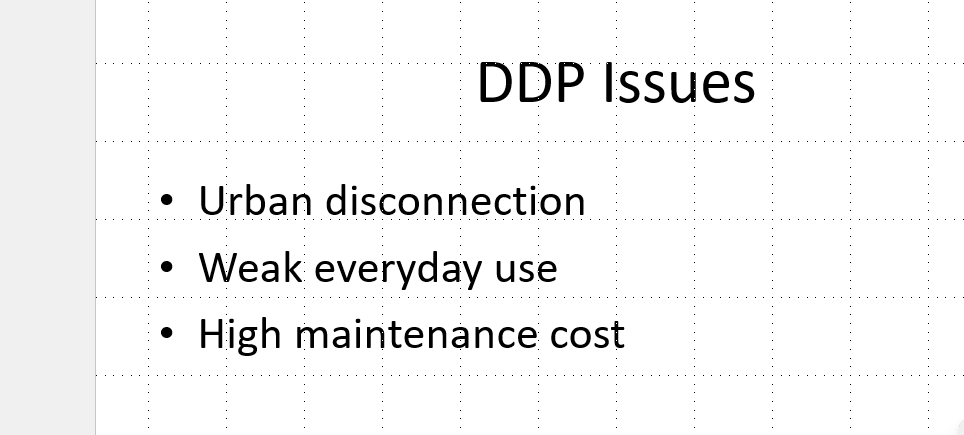
High Construction & Maintenance Cost

Capital-intensive infrastructure strains public budgets long-term

Urban Discontinuity

The building's form creates barriers to pedestrian flow and street-level connectivity

Event-based vs. Everyday Use

Programming relies on events rather than fostering daily civic life

👉
Teaching Angle Is iconic architecture sustainable as public infrastructure?
Made byBobr AI
BOTTOM-UP MODEL

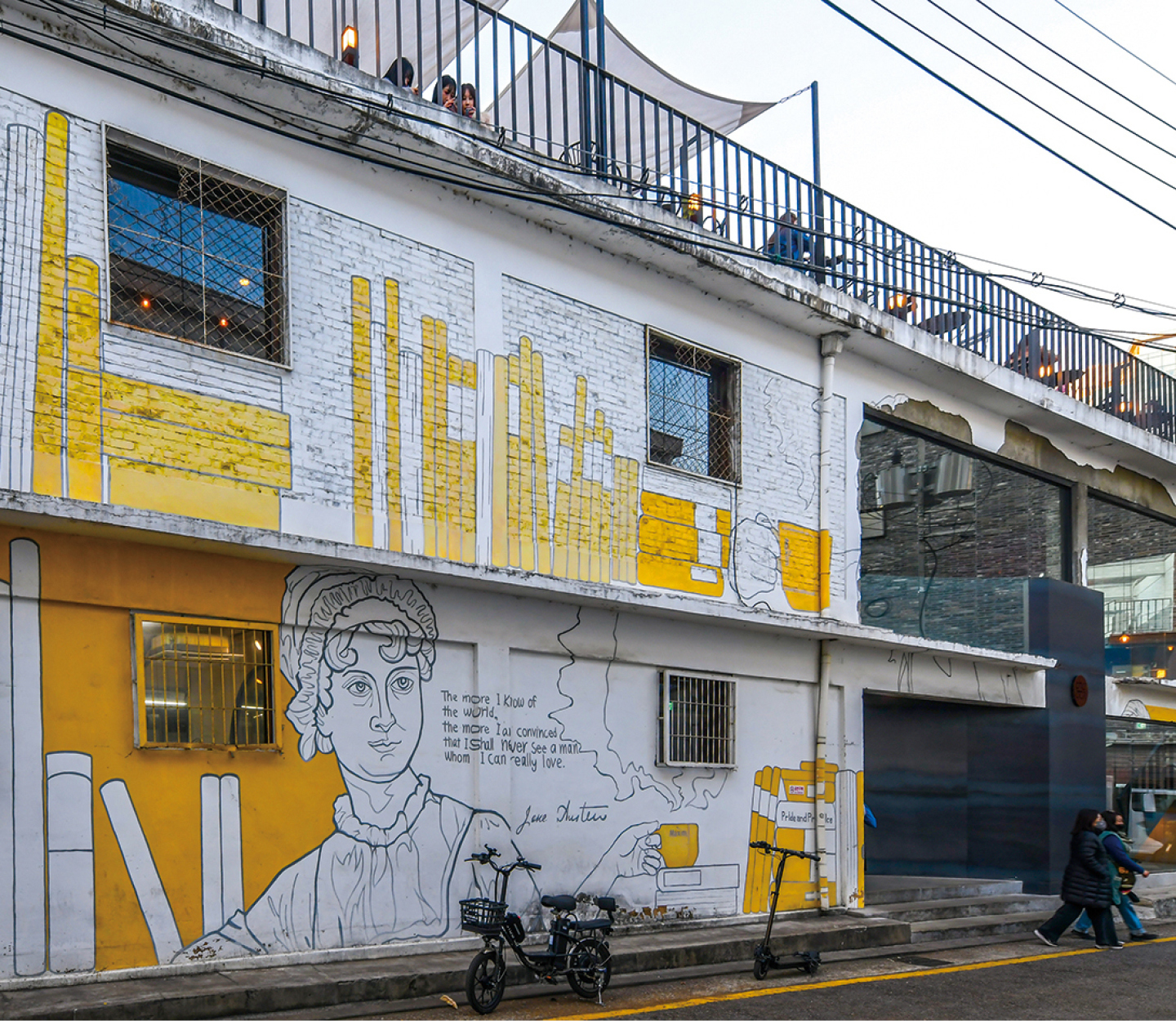
Seongsu-dong

Seoul's Creative Industrial District

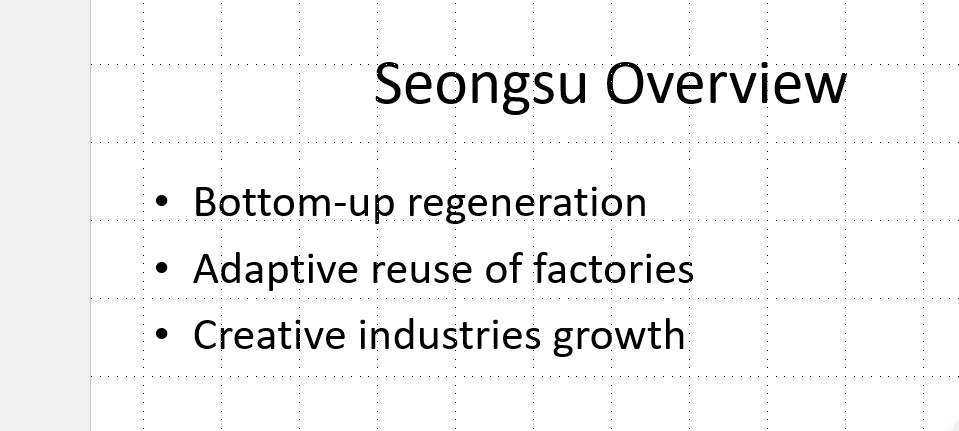
Organic, Incremental Urban Regeneration
Industrial Fabric Transformed Through Reuse
Community-led Creative Industries Growth
Critical Question
Where does authenticity begin to disappear? Can bottom-up regeneration remain sustainable?
👉 TEACHING ANGLE
"Can bottom-up regeneration remain sustainable?"
Made byBobr AI
CRITICAL TALKING POINTS · SEONGSU

Critical Issues

1

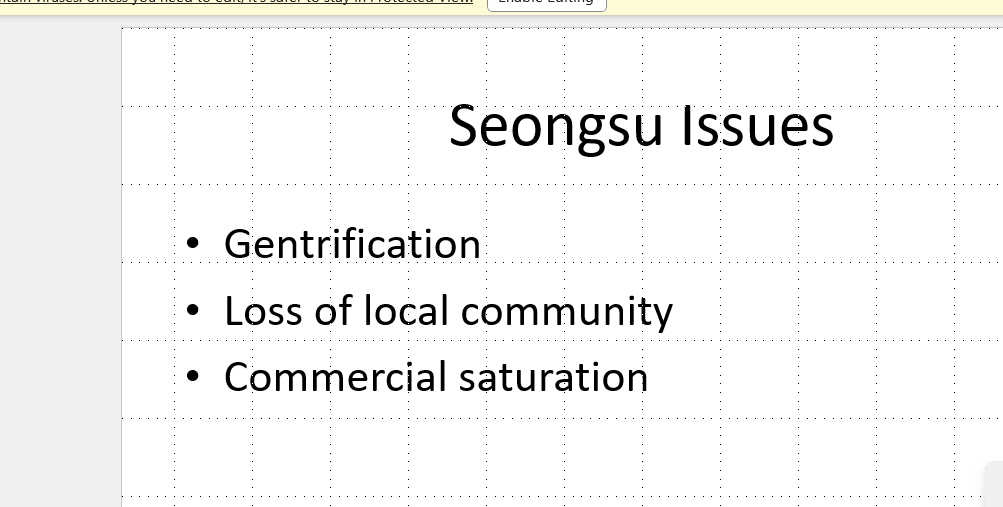
Gentrification Pressure

Rising rents displace original workshops and lower-income residents who created the character

2

Loss of Original Community

The artisan and manufacturing culture that defined Seongsu is eroding under commercial pressure

3

Commercial Over-Saturation

Trendy cafés and brands replace authentic industrial reuse, hollowing out the district's identity

👉
Teaching Angle: Can bottom-up regeneration remain sustainable once it becomes desirable?
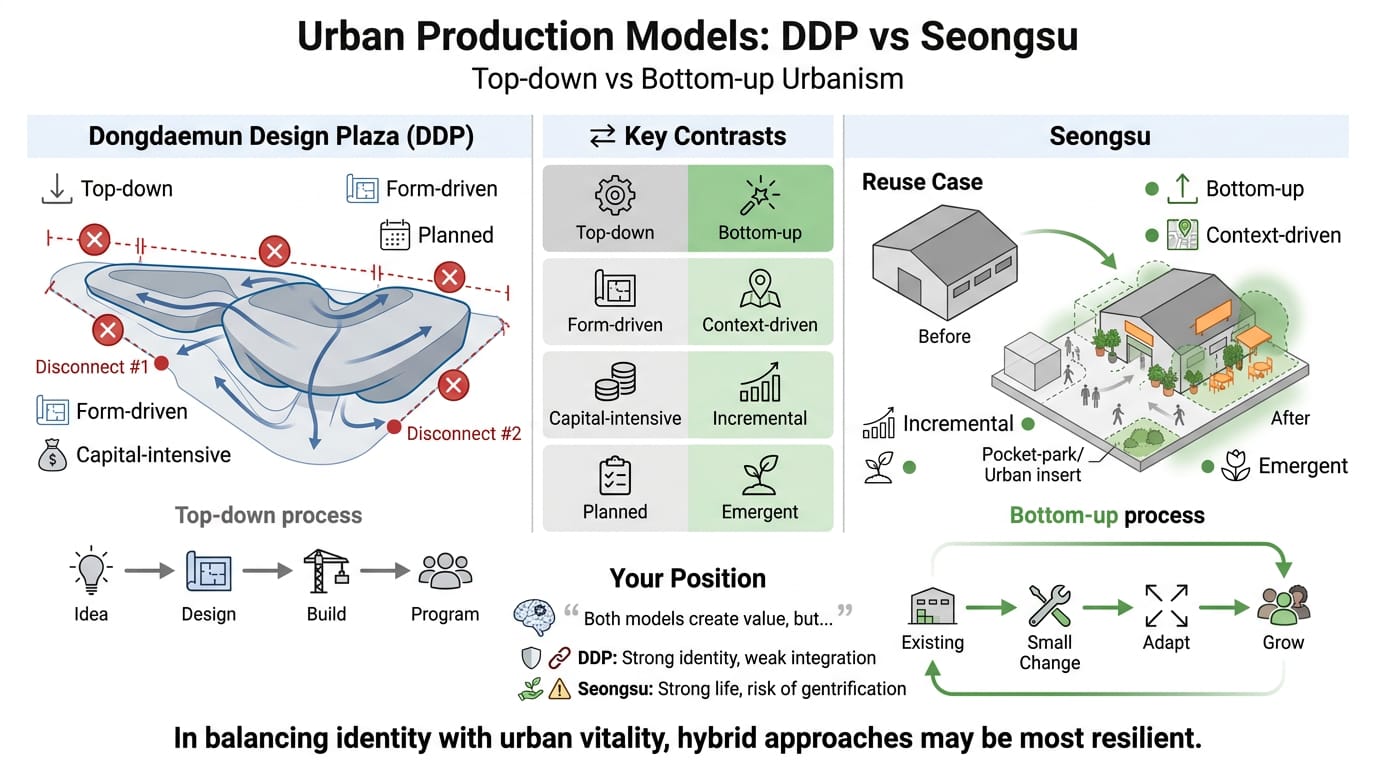
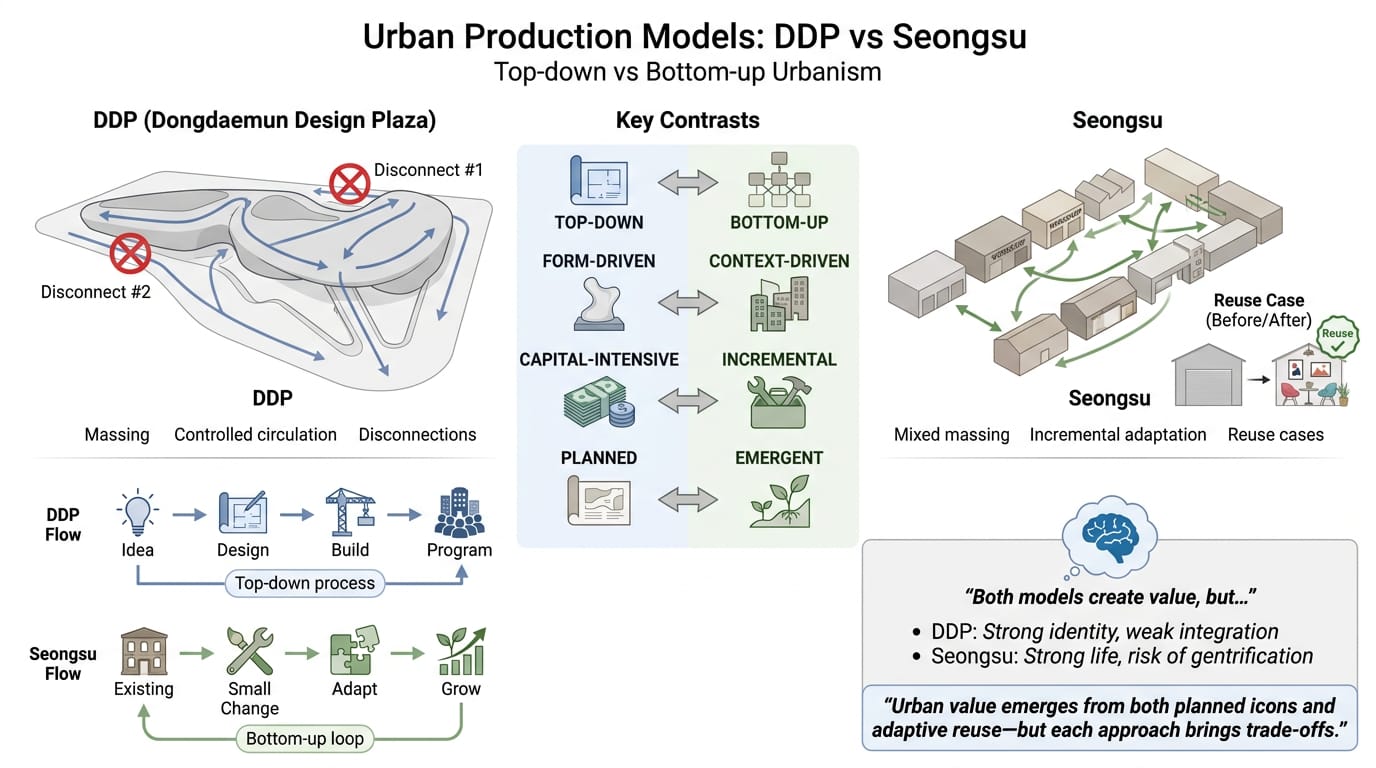
Seongsu Reuse Diagram
Made byBobr AI
Analytical Framework

Comparative Framework

Structuring the analysis between two urban models
DDP
Key Dimension
Seongsu
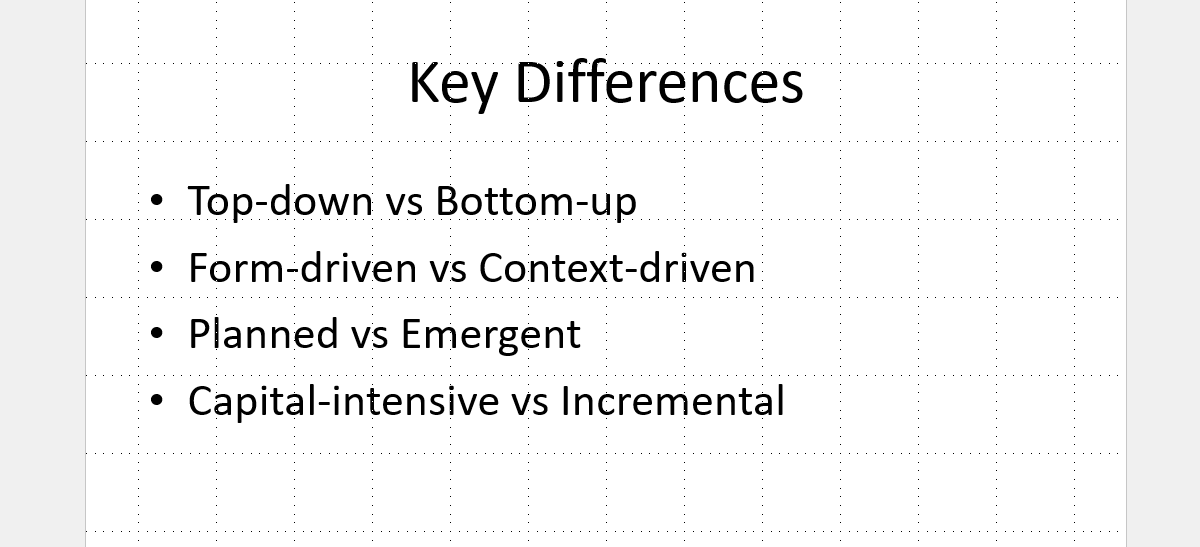
Top-down
Process
Bottom-up
Form-driven
Design Logic
Context-driven
Capital-intensive
Economy
Incremental
Planned
Nature
Emergent
Both models produce value — and both produce problems.
Made byBobr AI
Instructor Guide · Field Visit

On-site Tasks

📍 At DDP

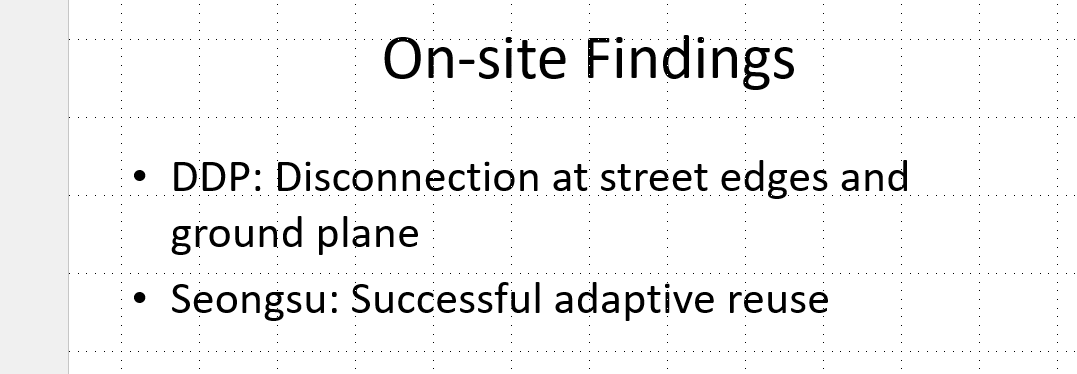
Identify 2 spatial moments of urban disconnection
  • Edge conditions between building and street
  • Ground plane transitions
  • Pedestrian flow barriers

📍 At Seongsu

1. Document 1 strong adaptive reuse case
2. Analyze intervention level:
  • Structure (load-bearing changes?)
  • Façade (surface transformation?)
  • Program (new use inserted?)
Made byBobr AI
STUDENT ASSIGNMENT
Post-Visit Assignment
1-Page Analytical Diagram
Urban Production Models: DDP vs Seongsu
Encourage:
Diagrams over text — let visuals carry the argument
Systems thinking — show relationships and feedback loops
Critical positioning — take a clear analytical stance
Format: A3 or digital · Due: next session · Medium: hand-drawn or digital
Made byBobr AI
CRITICAL ANALYSIS

Analysis

What each model produces — and at what cost

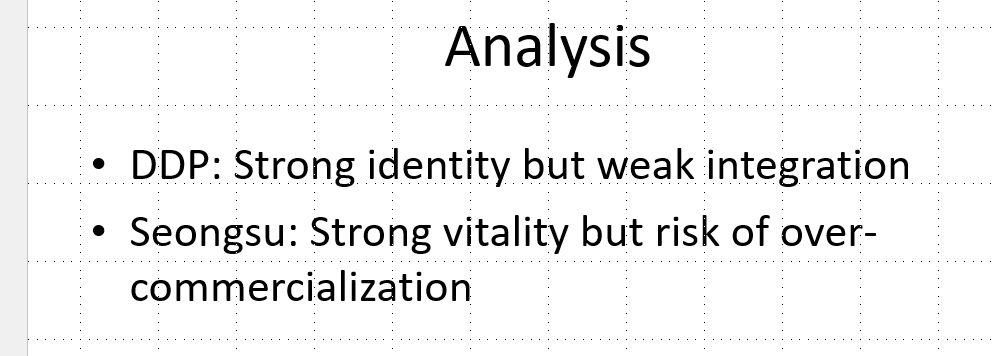
DDP

Strong Identity

Iconic landmark with global recognition and bold design excellence

Weak Urban Integration

Disconnected from street life, high maintenance burden, event-dependent activation

"Strong form, fragile urban relationship"

Seongsu

Strong Urban Vitality

Authentic, lived-in character with creative energy and community identity

Risk of Over-commercialization

Gentrification threatens the very conditions that made Seongsu successful

"Strong life, fragile authenticity"

Both models create value — and both produce problems.

Made byBobr AI
CLOSING DISCUSSION PROMPT

Should architects lead cities, or respond to them?

Optional Extensions
Compare with NYC: High Line vs SoHo
Compare with European regeneration models
DDP
Strong identity, weak integration
Seongsu
Strong life, risk of gentrification
"In balancing identity with urban vitality, hybrid approaches may be most resilient."
Made byBobr AI
Bobr AI

DESIGNER-MADE
PRESENTATION,
GENERATED FROM
YOUR PROMPT

Create your own professional slide deck with real images, data charts, and unique design in under a minute.

Generate For Free

Top-Down vs Bottom-Up Urbanism: DDP & Seongsu-dong Study

Explore urban production models in Seoul through a critical comparison of Dongdaemun Design Plaza and Seongsu-dong's community-led regeneration.

Field Study · Seoul

Urban Production Models

DDP vs Seongsu-dong

Top-down vs Bottom-up Urbanism

Dongdaemun Design Plaza

Seongsu-dong

TOP-DOWN MODEL

Dongdaemun Design Plaza

Top-down, Iconic Architecture

Parametric Design Translated into Built Form

Event-based Programming

Is this architecture 'too autonomous'? Where does it disconnect from the city?

Zaha Hadid Architects · Completed 2014

Critical Talking Points · DDP

Critical Issues

High Construction & Maintenance Cost

Capital-intensive infrastructure strains public budgets long-term

Urban Discontinuity

The building's form creates barriers to pedestrian flow and street-level connectivity

Event-based vs. Everyday Use

Programming relies on events rather than fostering daily civic life

Is iconic architecture sustainable as public infrastructure?

BOTTOM-UP MODEL

Seongsu-dong

Seoul's Creative Industrial District

Organic, Incremental Urban Regeneration

Industrial Fabric Transformed Through Reuse

Community-led Creative Industries Growth

Where does authenticity begin to disappear? Can bottom-up regeneration remain sustainable?

CRITICAL TALKING POINTS · SEONGSU

Critical Issues

Gentrification Pressure

Rising rents displace original workshops and lower-income residents who created the character

Loss of Original Community

The artisan and manufacturing culture that defined Seongsu is eroding under commercial pressure

Commercial Over-Saturation

Trendy cafés and brands replace authentic industrial reuse, hollowing out the district's identity

Can bottom-up regeneration remain sustainable once it becomes desirable?

Analytical Framework

Comparative Framework

Structuring the analysis between two urban models

DDP

Key Dimension

Seongsu

Top-down

Process

Bottom-up

Form-driven

Design Logic

Context-driven

Capital-intensive

Economy

Incremental

Planned

Nature

Emergent

Both models produce value — and both produce problems.

Instructor Guide · Field Visit

On-site Tasks

📍 At DDP

Identify 2 spatial moments of urban disconnection

Edge conditions between building and street

Ground plane transitions

Pedestrian flow barriers

📍 At Seongsu

Document 1 strong adaptive reuse case

Analyze intervention level:

load-bearing changes?

surface transformation?

new use inserted?

STUDENT ASSIGNMENT

Post-Visit Assignment

1-Page Analytical Diagram

Urban Production Models: DDP vs Seongsu

Encourage:

Diagrams over text

— let visuals carry the argument

Systems thinking

— show relationships and feedback loops

Critical positioning

— take a clear analytical stance

Format: A3 or digital · Due: next session · Medium: hand-drawn or digital

CRITICAL ANALYSIS

Analysis

What each model produces — and at what cost

DDP

Strong Identity

Iconic landmark with global recognition and bold design excellence

Weak Urban Integration

Disconnected from street life, high maintenance burden, event-dependent activation

Strong form, fragile urban relationship

Seongsu

Strong Urban Vitality

Authentic, lived-in character with creative energy and community identity

Risk of Over-commercialization

Gentrification threatens the very conditions that made Seongsu successful

Strong life, fragile authenticity

Both models create value — and both produce problems.

CLOSING DISCUSSION PROMPT

Should architects lead cities, or respond to them?

Optional Extensions

Compare with NYC: High Line vs SoHo

Compare with European regeneration models

DDP

Strong identity, weak integration

Seongsu

Strong life, risk of gentrification

In balancing identity with urban vitality, hybrid approaches may be most resilient.