
Made byBobr AI

Teaching Early Numeracy Through Role Play Shopping

Discover how play-based shopping scenarios help children develop number sense, coin recognition, and financial awareness through meaningful learning.

#early-numeracy#play-based-learning#math-education#role-play-shop#early-childhood#teaching-resources#number-sense
Watch
Pitch

Learning Numeracy Through Role Play Shop

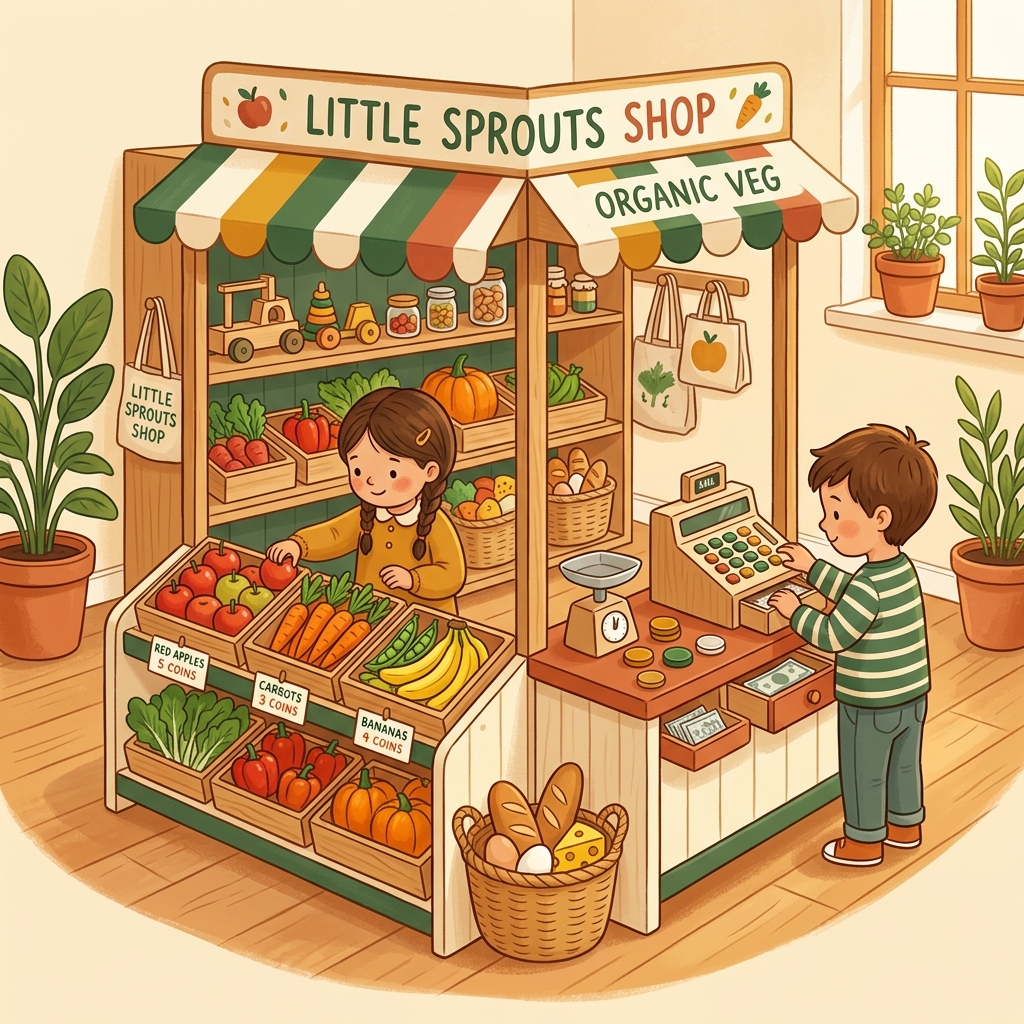
Children use coins, toys, and pretend shopping scenarios

Outcome 2: Community Connection
Outcome 4: Confident Learning
Outcome 5: Number Communication

Focus on Number Sense:

Counting coins
Recognising numbers (prices)
Understanding value and quantity

Teacher's Role:Guide children to explore numbers in meaningful, real-life contexts through play.

Children Play Shop Illustration
Made byBobr AI

De-coding: Understanding Numbers & Concepts

Number Representations

  • Coins: $1, $2, 50c
  • Price tags (e.g., $3, $5)
  • Counting objects

Key Terminology

Money total cost change more less equal Buy sell pay

Key Mathematical Concepts: Number Sense

1

Counting and one-to-one correspondence

2

Recognising numbers

3

Comparing values

Teacher Support

Model counting aloud

Ask: "How many coins do you need?"

Use visuals and real objects

Real objects + Real language = Real understanding
Made byBobr AI

Meaning-Making & Using

Meaning-Making

  • Children connect learning to real-life shopping
  • Use prior knowledge (going to shops with family)
  • Understand: Coins = value | Prices = amount to pay
Teacher asks:
"Do you have enough money?"
"What happens if you don't?"

Using (21st Century Numeracy)

Apply maths in real situations:
  • Paying for items
  • Giving correct coins
  • Making simple decisions
Develop:
Problem-solving, Decision-making, Financial awareness

Activity Ideas

  • Predict totals
  • Role-play customer & shopkeeper
  • Create simple price lists
Made byBobr AI

Analysing & Problem-Solving Cycle

Analysing

Check understanding:

Is the total correct?
Did the child count properly?

Encourage thinking:

"Is there another way to pay?"
"Who has more money?"
STEP 1 Understand What is the price?
STEP 2 Plan Which coins to use?
STEP 3 Solve Count and pay
STEP 4 Reflect Was it correct?

Teacher's Role

Scaffold learning through questions
Encourage different strategies
Support mistakes as learning opportunities
Made byBobr AI
Bobr AI

DESIGNER-MADE
PRESENTATION,
GENERATED FROM
YOUR PROMPT

Create your own professional slide deck with real images, data charts, and unique design in under a minute.

Generate For Free

Teaching Early Numeracy Through Role Play Shopping

Discover how play-based shopping scenarios help children develop number sense, coin recognition, and financial awareness through meaningful learning.

Learning Numeracy Through Role Play Shop

Children use coins, toys, and pretend shopping scenarios

Outcome 2: Community Connection

Outcome 4: Confident Learning

Outcome 5: Number Communication

Focus on Number Sense:

Counting coins

Recognising numbers (prices)

Understanding value and quantity

Guide children to explore numbers in meaningful, real-life contexts through play.

De-coding: Understanding Numbers & Concepts

Number Representations

Coins: $1, $2, 50c

Price tags (e.g., $3, $5)

Counting objects

Key Terminology

Money

total

cost

change

more

less

equal

Buy

sell

pay

Key Mathematical Concepts: Number Sense

Counting and one-to-one correspondence

Recognising numbers

Comparing values

Teacher Support

Model counting aloud

Ask: "How many coins do you need?"

Use visuals and real objects

Real objects + Real language = Real understanding

Meaning-Making & Using

Meaning-Making

Children connect learning to real-life shopping

Use prior knowledge (going to shops with family)

Understand: Coins = value | Prices = amount to pay

Do you have enough money?

What happens if you don't?

Using (21st Century Numeracy)

Apply maths in real situations:

Paying for items

Giving correct coins

Making simple decisions

Develop:

Problem-solving, Decision-making, Financial awareness

Activity Ideas

Predict totals

Role-play customer & shopkeeper

Create simple price lists

Analysing & Problem-Solving Cycle

Analysing

Check understanding:

Is the total correct?

Did the child count properly?

Encourage thinking:

Is there another way to pay?

Who has more money?

Understand

What is the price?

Plan

Which coins to use?

Solve

Count and pay

Reflect

Was it correct?

Teacher's Role

Scaffold learning through questions

Encourage different strategies

Support mistakes as learning opportunities

  • early-numeracy
  • play-based-learning
  • math-education
  • role-play-shop
  • early-childhood
  • teaching-resources
  • number-sense