
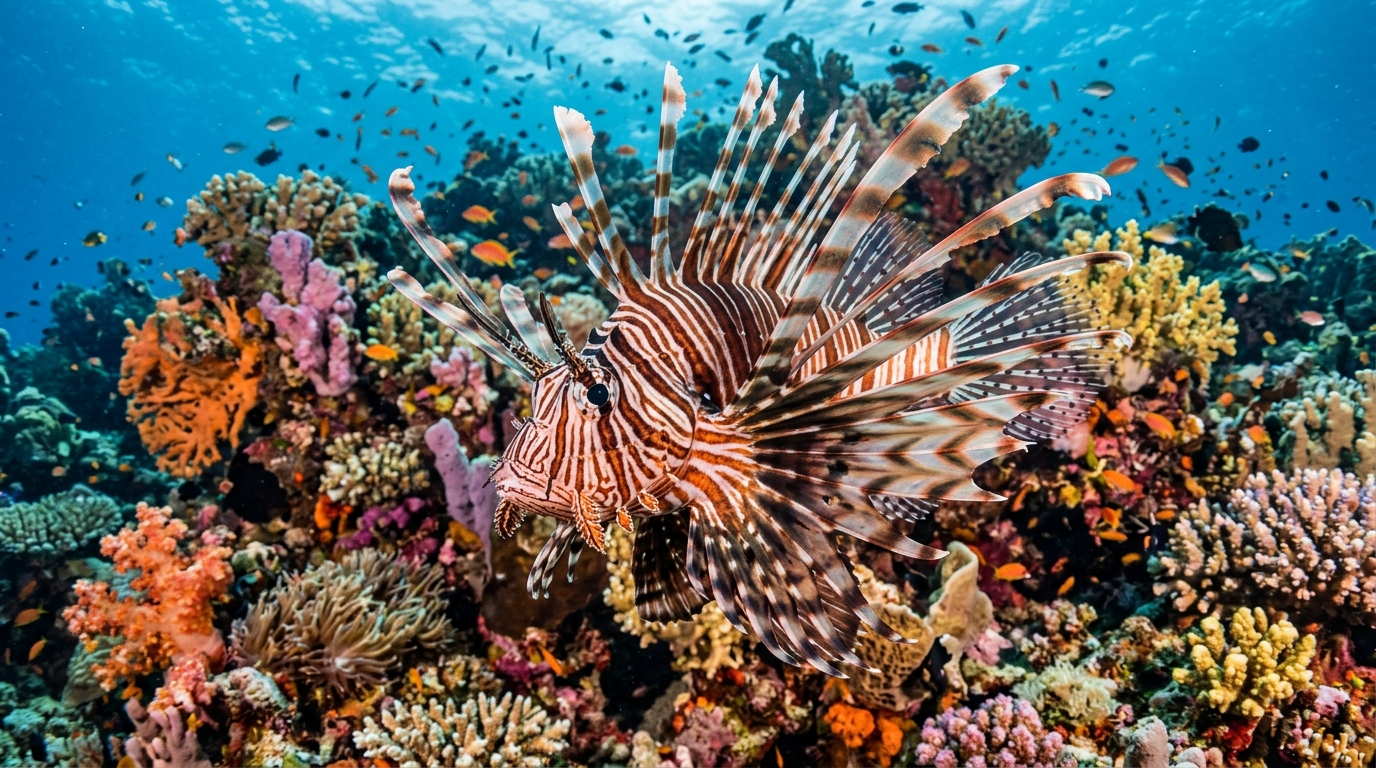
Coral Reef Communities: Marine Biology and Conservation
Explore the ecology, formation, and biology of coral reefs. Learn about biodiversity, reef types, zooxanthellae symbiosis, and current conservation threats.
Chapter 15 · Marine Biology
Coral Reef
Communities
Oases of Biodiversity in Tropical Seas
· Types & Formation of Reefs
· Ecology & Productivity
· Threats & Conservation
Part 3 — Marine Ecosystems
INTRODUCTION
What Are Coral Reefs?
Coral reefs are among Earth's most complex ecosystems — often compared to tropical rainforests in their diversity and abundance of life. Found in warm, nutrient-poor tropical waters, they host 25% of all marine species.
25%
of marine species live on reefs
2,500 g C/m²
annual net primary productivity
"Like underwater cities, coral reefs teem with organisms representing virtually every major animal phylum."
REEF BUILDERS
Organisms That Build Coral Reefs
Scleractinian Corals
Also called stony or true corals. Primary organisms depositing calcium carbonate (CaCO₃). Hermatypic species build reefs only in shallow tropical waters. Harbor zooxanthellae in their tissues.
Zooxanthellae
Symbiotic dinoflagellates living within coral tissues. Provide up to 90% of coral's energy needs — supplying glucose, glycerol, and amino acids. In return, corals provide CO₂, nitrogen, and shelter.
90% of coral energy
Other Contributors
Coralline algae cement carbonate rubble together — critical to Pacific reef structure. Fire coral (Millepora), a hydrozoan, contributes to Caribbean reef carbonates. Calcareous green algae (Halimeda) add to sediment.
CORAL BIOLOGY
Nutrition & Reproduction
How Corals Feed
Prey on zooplankton using cnidocyte-lined tentacles
Cilia sweep detritus and microbes toward the mouth
Mesenterial filaments absorb dissolved organic matter (DOM)
Zooxanthellae supply up to 90% of energy via photosynthesis
90%
Zooxanthellae (Photosynthesis)
Other Feeding (Zooplankton, DOM)
Asexual & Sexual
Asexual
Budding
— colonies grow by polyp division.
Fragmentation
— storm-broken branches reattach and form new colonies (2× more new colonies than from larvae in Caribbean).
Sexual
Broadcast spawning
— gametes released into water.
Brooders
retain eggs internally.
Pacific reefs: synchronous mass spawning events. Caribbean: nonsynchronous, spread over time.
REEF TYPES
Types of Coral Reefs
Charles Darwin's theory links all three reef types through the gradual sinking of volcanic islands.
01
Fringing Reefs
Grow directly along shores of tropical islands or continents. Most affected by human activity and freshwater runoff. World's largest: Red Sea fringing reef.
Most Common
02
Barrier Reefs
Separated from landmass by a lagoon or deepwater channel. World's largest: Great Barrier Reef, Australia — 2,100 km long, visible from space.
Largest on Earth
03
Atolls
Elliptical reefs arising from submerged volcanoes, with a central lagoon. 300+ atolls in Indian & Pacific Oceans. Kwajalein (Marshall Islands): 130 km long.
300+ Worldwide
REEF ANATOMY
Reef Structure
Each zone of a reef supports distinct coral species shaped by wave energy, light, and depth.
Reef Front / Forereef
Rises from ocean depths. Features spur-and-groove formations that disperse wave energy. Rich coral growth on spurs.
Reef Crest
Highest point; receives maximum wave impact. May form an algal ridge of encrusting coralline algae.
Reef Flat / Back Reef
Behind crest; shallow or cut by surge channels. Seagrass beds common here.
Lagoon
Calm, shallow water behind barrier reefs and atolls. Home to patch reefs and diverse life.
DISTRIBUTION
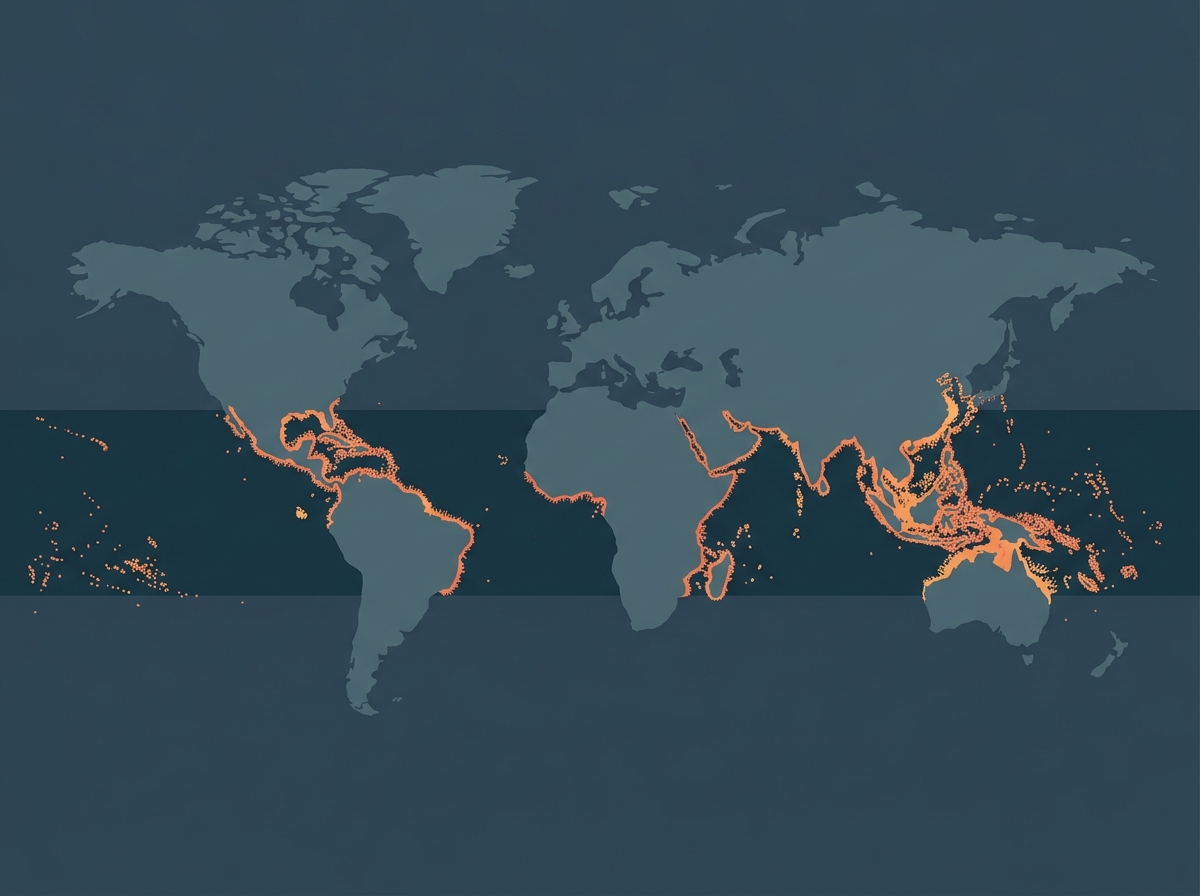
Where Do Coral Reefs Grow?
Tropic of Cancer
Tropic of Capricorn
Distribution within the 20°C Isotherm
<svg width="26" height="26" viewBox="0 0 24 24" fill="none" stroke="#E8855A" stroke-width="2" stroke-linecap="round" stroke-linejoin="round"><path d="M14 14.76V3.5a2.5 2.5 0 0 0-5 0v11.26a4.5 4.5 0 1 0 5 0z"></path></svg>
Temperature
23–25°C optimal, min 18°C annual average
<svg width="26" height="26" viewBox="0 0 24 24" fill="none" stroke="#E8855A" stroke-width="2" stroke-linecap="round" stroke-linejoin="round"><circle cx="12" cy="12" r="5"></circle><line x1="12" y1="1" x2="12" y2="3"></line><line x1="12" y1="21" x2="12" y2="23"></line><line x1="4.22" y1="4.22" x2="5.64" y2="5.64"></line><line x1="18.36" y1="18.36" x2="19.78" y2="19.78"></line><line x1="1" y1="12" x2="3" y2="12"></line><line x1="21" y1="12" x2="23" y2="12"></line><line x1="4.22" y1="19.78" x2="5.64" y2="18.36"></line><line x1="18.36" y1="5.64" x2="19.78" y2="4.22"></line></svg>
Light
Rarely below 60m depth, most growth <25m
<svg width="26" height="26" viewBox="0 0 24 24" fill="none" stroke="#E8855A" stroke-width="2" stroke-linecap="round" stroke-linejoin="round"><polyline points="22 12 18 12 15 21 9 3 6 12 2 12"></polyline></svg>
Salinity
Avoid large river mouths (Amazon, Orinoco)
<svg width="26" height="26" viewBox="0 0 24 24" fill="none" stroke="#E8855A" stroke-width="2" stroke-linecap="round" stroke-linejoin="round"><path d="M12 2.69l5.66 5.66a8 8 0 1 1-11.31 0z"></path></svg>
Sedimentation
Runoff smothers polyps & blocks light
<svg width="26" height="26" viewBox="0 0 24 24" fill="none" stroke="#E8855A" stroke-width="2" stroke-linecap="round" stroke-linejoin="round"><path d="M9.59 4.59A2 2 0 1 1 11 8H2m10.59 11.41A2 2 0 1 0 14 16H2m15.73-8.27A2.5 2.5 0 1 1 19.5 12H2"></path></svg>
Wave Action
Moderate needed; hurricanes cause damage
<svg width="26" height="26" viewBox="0 0 24 24" fill="none" stroke="#E8855A" stroke-width="2" stroke-linecap="round" stroke-linejoin="round"><circle cx="12" cy="5" r="3"></circle><line x1="12" y1="22" x2="12" y2="8"></line><path d="M5 12H2a10 10 0 0 0 20 0h-3"></path></svg>
Air Exposure
Lowest tide level limits upward growth
REEF COMPARISON
Atlantic vs. Indo-Pacific Reefs
Indo-Pacific Reefs
Atlantic Reefs
Older reefs, greater depth of carbonates
Coral covers up to 100% of surface
Growth seldom exceeds 60m depth
500 species of stony corals
Acropora: ~200 species
5,000+ mollusc species; 2,200 fish species
Algal ridges more common
Many species diurnal; mostly sexual reproduction
Giant clams & coral-predating sea stars present
Younger reefs
Coral coverage usually <60%
Buttress zone deeper; growth to 100m
~62 species of stony corals
Acropora: only 3 species
~1,200 molluscs; 550 fish species
Fire coral (Millepora) dominant
Most corals nocturnal; fragmentation common
Greater sponge biomass; no giant clams
REEF ECOLOGY
Productivity in Nutrient-Poor Seas
"Coral reefs rival tropical rainforests in productivity — yet exist in near-desert ocean water."
2,500 g C/m²/yr
Net primary productivity on reefs
<50 g C/m²/yr
Tropical open ocean productivity
~1 P:R ratio
Production closely balanced by respiration
Sources of Nutrients
Efficient recycling of dissolved & particulate organic matter
Nitrogen fixation by cyanobacteria (e.g., Trichodesmium)
Fish fecal matter from off-reef feeding
Reef bacteria concentrate nutrients from water
Wind-driven accumulation of nitrogen-fixing cyanobacteria
Relative Importance of Primary Producers
Turf algae
Most organic carbon processed
Zooxanthellae
Critical endosymbionts in coral tissue
Coralline algae
Crucial for reef calcification & stability
Seagrasses
Productive back-reef & lagoon habitats
Phytoplankton
Minimal biomass due to oligotrophic waters
Reef Ecology
Community Interactions
Competition Among Corals
Fast-growing branching corals overgrow slower species. Defensive responses include mesenterial filaments and sweeper tentacles. Slower-growing massive corals dominate deeper, shadier zones.
Keystone Species
Grazing & Herbivory
Urchins (Diadema) and herbivorous fish control algal overgrowth. In Jamaica (1982), loss of Diadema to pathogen caused coral cover to drop from 52% to 3%, while algae rose from 4% to 92%.
Predation
Crown-of-thorns sea stars (Acanthaster) devastated ~1/3 of Indo-Pacific corals since 1957. Parrotfish and surgeonfish graze coral skeletons. Corallivores preferentially attack fast-growing branching species.
Symbioses
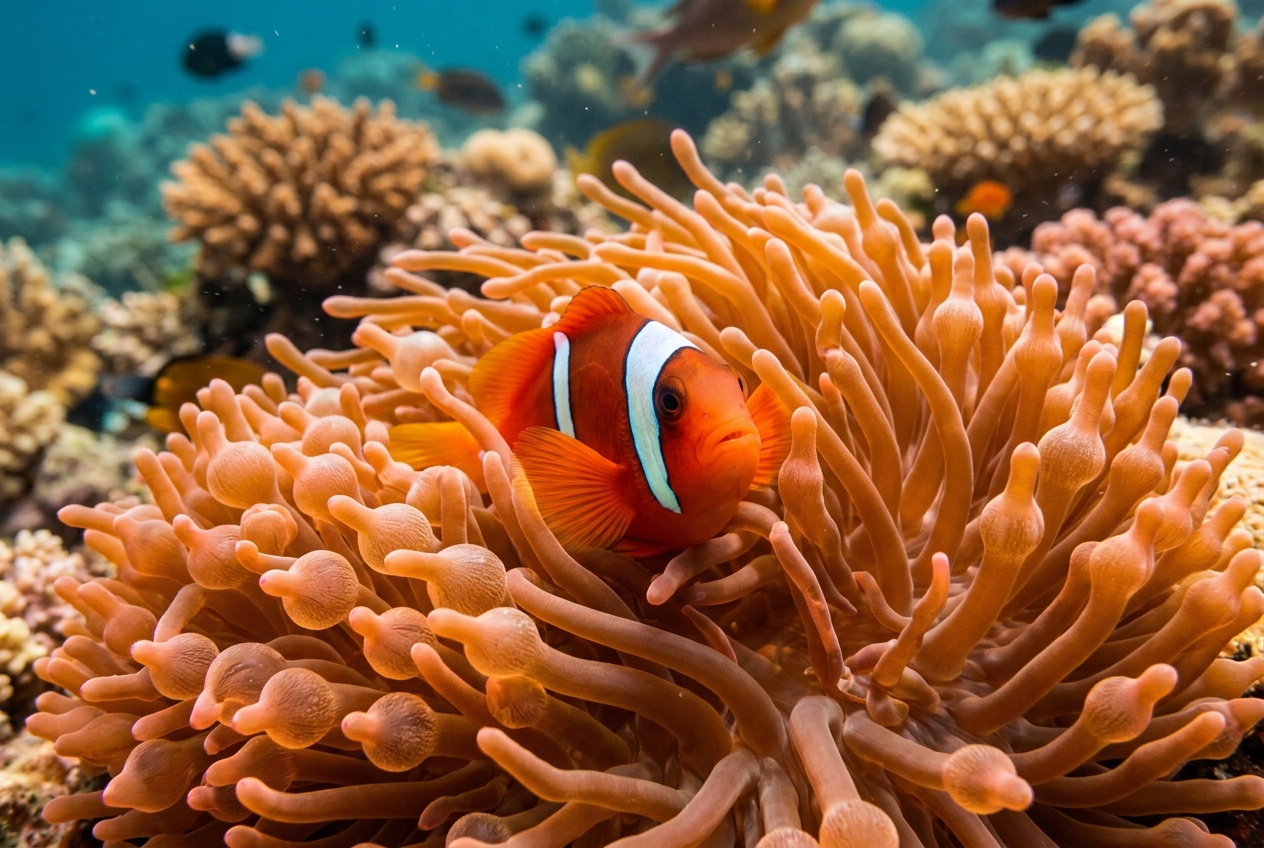
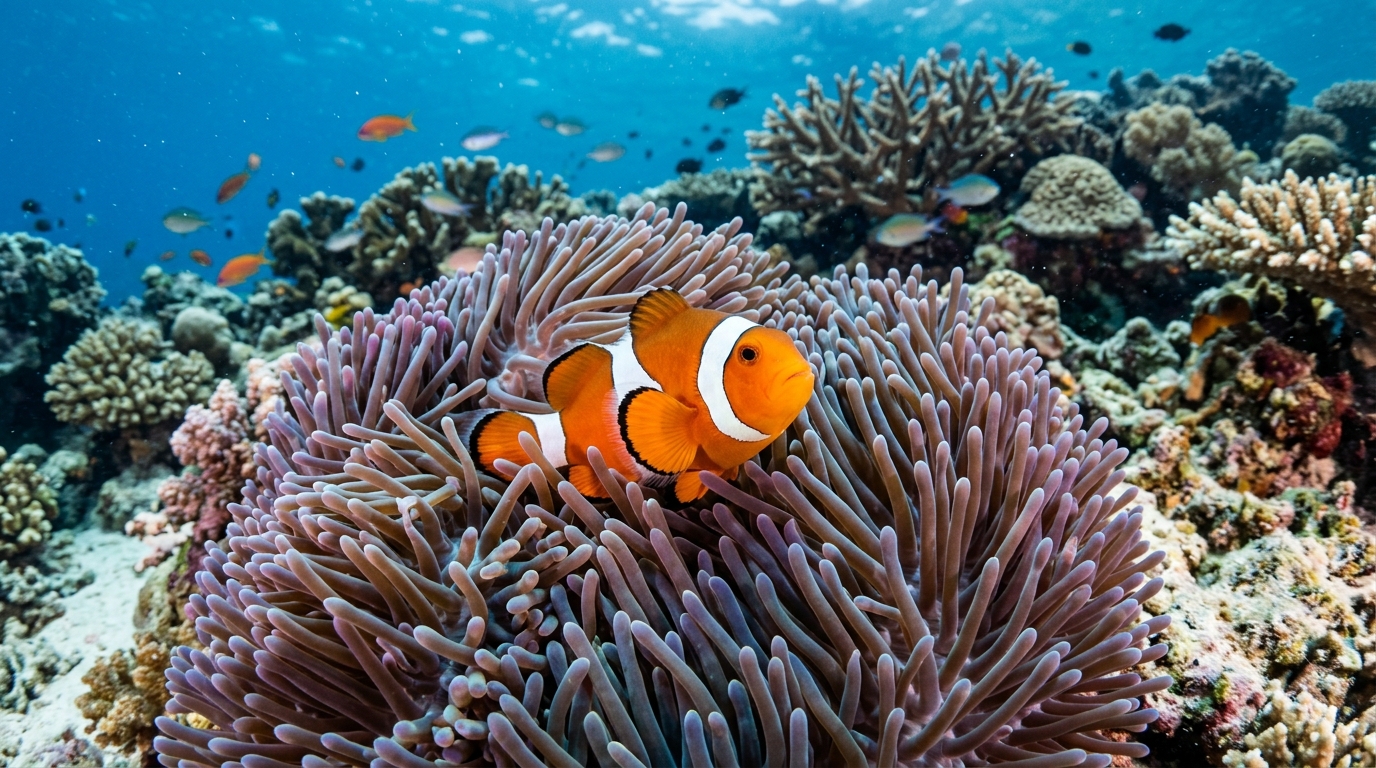
Cleaning stations: cleaner wrasses remove parasites from 'client' fish. Clownfish shelter in anemone tentacles. Gobies guard shrimp burrows. Giant clams host zooxanthellae. Hundreds of such relationships exist on every reef.
ADAPTATIONS
Survival on the Reef
Avoiding Predation
Sea cucumbers eviscerate organs as decoys. Soapfish produce toxic sudsy mucus. Pufferfish inflate their bodies. Parrotfish secrete mucus cocoons at night. Pearly razorfish dives into sand headfirst.
Structural Feeding Adaptations
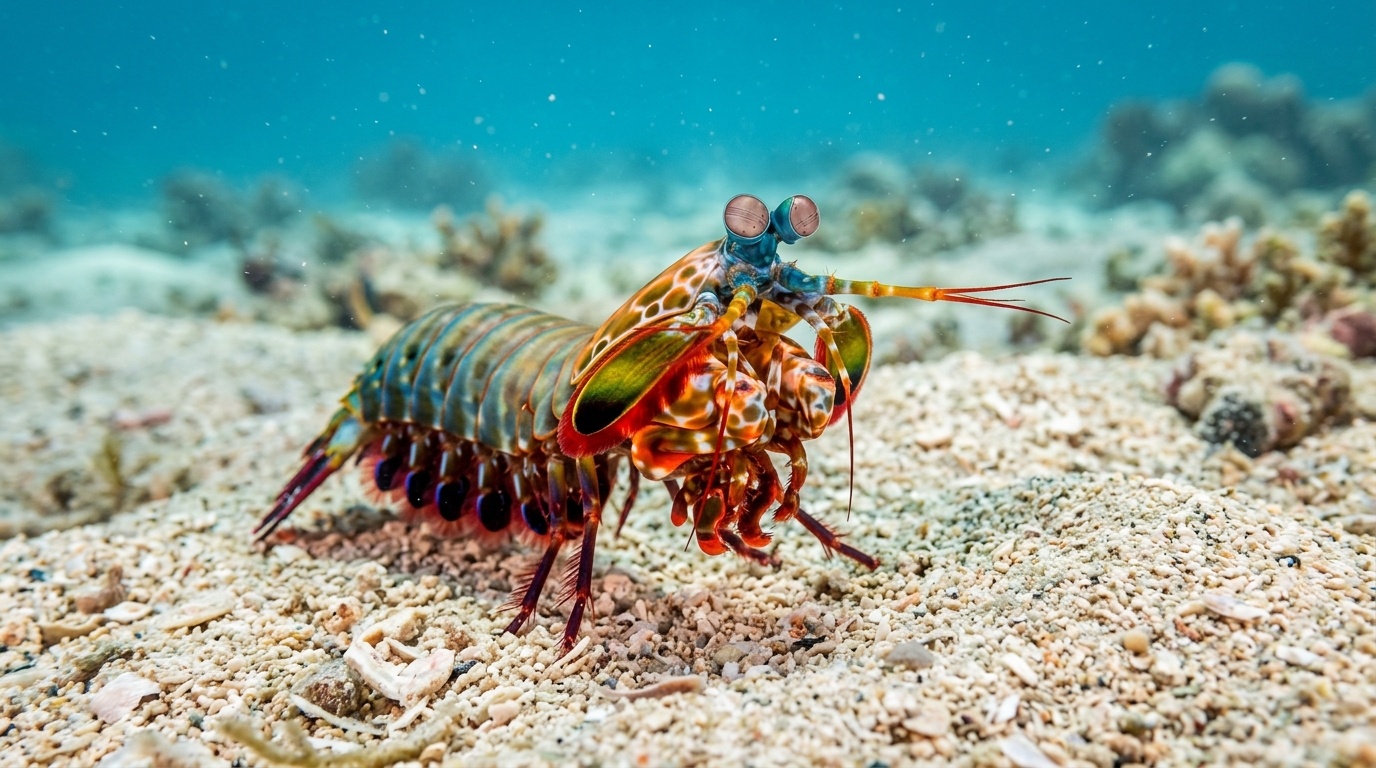
Anemones & corals: cnidocyte-tipped tentacles. Christmas tree worms: radiole fans filter plankton. Mantis shrimp: razor-sharp forelimbs stun prey. Octopus: tentacles with suckers + keen eyesight + color change.
Protective Body Coverings
Molluscs: calcium carbonate shells. Crustaceans: hardened exoskeletons. Trunkfish: turtle-like bony skin. Sea urchins: hardened tests and long spines.
The Role of Color
Camouflage: cryptic patterns blend with reef. Warning coloration: lionfish display bold stripes near venomous spines. Territory defense: harlequin tusk wrasse uses bright colors. Mating signals: parrotfish colors indicate sex.
Threats
Threats to Coral Reefs
27% of coral reefs lost in the past 40 years
Natural Threats
Hurricanes & Typhoons
Topple coral formations; remove organisms from reef. Frequent storms give insufficient time for recovery.
El Niño (ENSO)
1982–83 ENSO: raised temps 2–4°C, destroyed 50–98% of corals on some East Pacific reefs. 1997–98 event equally devastating.
Crown-of-Thorns Sea Stars
Acanthaster planci consumed ~1/3 of Indo-Pacific corals since 1957 in population explosion events.
Human Threats
Destructive Fishing
Cyanide & blast fishing kill coral. Overfishing removes herbivores, causing algal overgrowth. Bottom-trawling destroys deep-water reefs.
Coastal Development
Nutrient runoff triggers algal blooms (Kaneohe Bay case study). Sedimentation smothers polyps. Freshwater influx from storms kills coral.
Climate Change
Rising CO₂ → ocean warming → coral bleaching. Increased CO₂ → ocean acidification → reduced CaCO₃ deposition. Predicted 40% decline in calcification by 2065.
Other Activities
Coral mining for cement/curios. Diver damage. Tourism sewage. Lost fishing gear ('ghost nets'). Invasive algae species introduction.
REEF HEALTH
Coral Bleaching & Disease
What Causes Bleaching?
Corals expel zooxanthellae in response to stress
Lose 60–90% of symbionts; each symbiont loses 50–80% of photosynthetic pigments
Causes: elevated temperature, excessive radiation, aerial exposure, bacterial infection
If stress prolonged → coral death. If mild → recovery possible
Bleaching events greatly increased since 1980
1997–98 ENSO bleaching killed many Indian Ocean corals
Major Coral Diseases
Black Band Disease
Bacterial/cyanobacterial consortium; spreads 1cm/day; attacks massive corals
White Pox
Serratia marcescens (fecal bacteria); killed 85% of elkhorn coral in Florida Keys
White Band Disease
Tissue peels from Acropora (staghorn/elkhorn) skeletons
Caribbean Yellow Band
Spreading yellow patch; kills center of coral colony; mainly Montastraea
KEY TAKEAWAYS
Coral Reefs: Key Concepts
01
Tropical Oases
Found in clear, warm, nutrient-poor seas; rival tropical rainforests in biodiversity.
02
Three Reef Types
Fringing, barrier, and atoll reefs — all linked by Darwin's volcanic island theory.
03
Zooxanthellae Partnership
Symbiotic dinoflagellates provide up to 90% of coral's energy needs.
04
Efficient Nutrient Cycling
Reefs recycle nutrients so efficiently they thrive despite surrounding ocean poverty.
05
Rich Interactions
Competition, predation, grazing, and symbiosis shape the reef community structure.
06
Under Threat
27% of reefs lost — from bleaching, disease, overfishing, pollution, and climate change.
Conservation Matters — Coral reefs protect coastlines, feed millions, drive tourism, and hold medicinal promise.
- coral-reefs
- marine-biology
- ecology
- ocean-conservation
- biodiversity
- zooxanthellae
- climate-change