
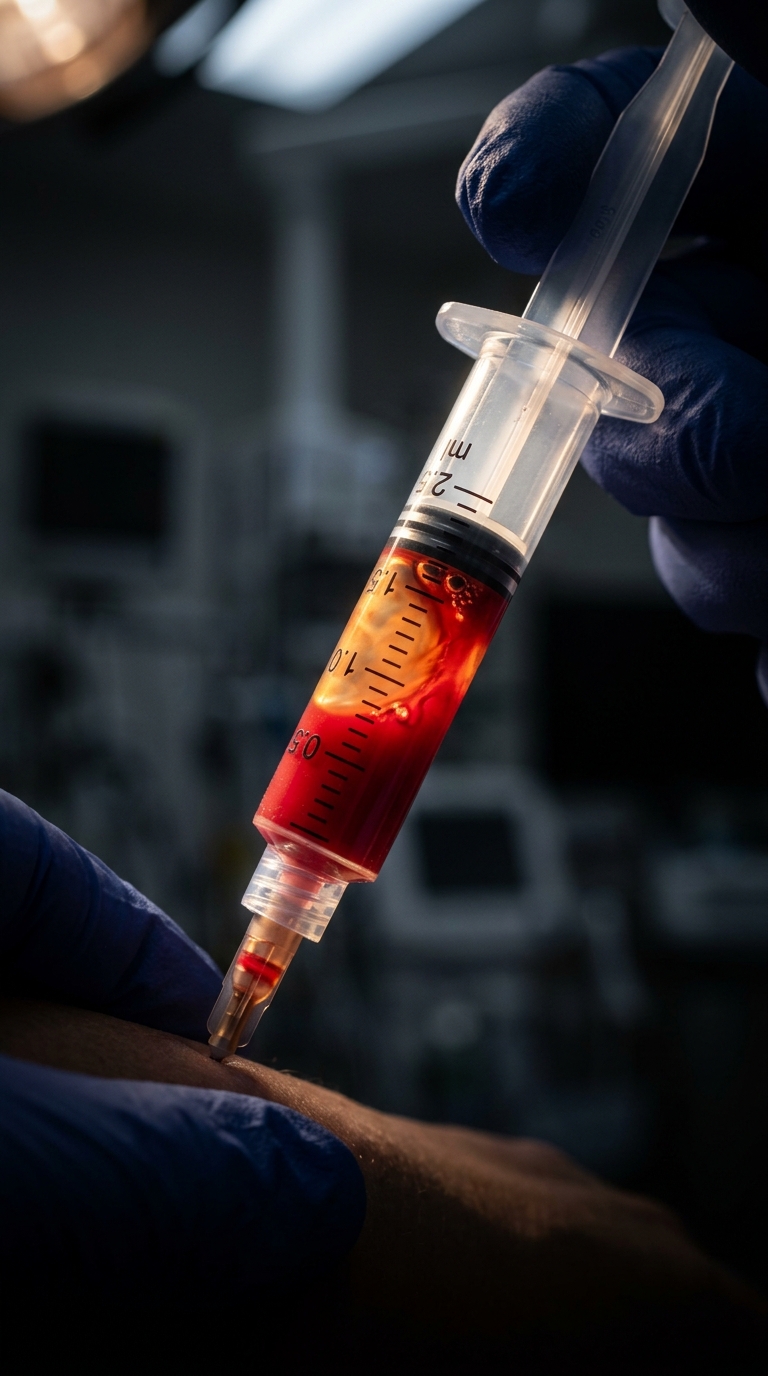
Blood Gas Analysis: A Systematic 5-Step Approach in the ED
Master ABG interpretation with this 5-step clinical approach. Learn to analyze pH, PaCO2, and Base Excess for acute respiratory and metabolic disorders.
Clinical Blood Gas<br>Analysis in the ED
A Systematic 5-Step Approach for the Acute Setting
Emergency Medicine Education <span style="opacity:0.4; margin: 0 6px;">|</span> Junior Doctor Series
ALS Chapter 15 <span style="opacity:0.5; margin: 0 6px;">|</span> Advanced Life Support
01
INTRODUCTION
The ED Context
The Golden Rule
Never interpret numerical data in isolation. Always ask first: 'How is the patient?'
Clinical Correlation
Include history, current FiO₂, and medications BEFORE looking at the printout.
Venous vs. Arterial
During cardiac arrest, arterial values correlate poorly with tissue status. VBG may be more accurate for acid-base. Post-ROSC: use ABG to titrate FiO₂ and ventilation.
ALS Chapter 15 <span style="opacity: 0.4; margin: 0 10px;">|</span> Clinical Blood Gas Analysis
02 | THE BASICS
Understanding the Components
pH
Normal: 7.35 – 7.45
A change of 0.3 = doubling or halving of H⁺ concentration
PaCO₂
Normal: 4.7 – 6.0 kPa (35–45 mmHg)
Acts as an ACID
HCO₃⁻ & Base Excess
22–26 mmol/L
−2 to +2 mmol/L
Negative BE = Base Deficit = Metabolic Acidosis
PaO₂
Normal on air: 11–13 kPa
PaO₂ ≈ FiO₂% − 10
On 40% O₂ → PaO₂ should be ~30 kPa
ALS Chapter 15 <span style="opacity:0.5; margin: 0 10px;">|</span> Clinical Blood Gas Analysis
03 | METHODOLOGY
The Systematic 5-Step Approach
1
How is the patient?
Clinically assess first. Predict the result — e.g., post-arrest → expect mixed acidosis.
2
Is the patient hypoxaemic?
Compare PaO₂ to FiO₂. A gap >10 between % and kPa = ventilatory/perfusion defect.
3
Acidaemia or Alkalaemia?
pH < 7.35 = Acidaemia <span style=\"margin: 0 16px; color: rgba(255,255,255,0.25); font-weight: 700;\">|</span> pH > 7.45 = Alkalaemia
4
What is the PaCO₂?
pH < 7.35 + CO₂ > 6.0 → Respiratory Acidosis <span style=\"margin: 0 16px; color: rgba(255,255,255,0.25); font-weight: 700;\">|</span> pH > 7.45 + CO₂ < 4.7 → Respiratory Alkalosis
5
What is the BE/Bicarbonate?
pH < 7.35 + BE < −2 → Metabolic Acidosis <span style=\"margin: 0 16px; color: rgba(255,255,255,0.25); font-weight: 700;\">|</span> pH > 7.45 + BE > +2 → Metabolic Alkalosis
The Golden Principle:
The body NEVER overcompensates. The direction the pH leans tells you the PRIMARY cause.
Chronic COPD
↑ PaCO₂
Respiratory Acidosis (primary)
↑ HCO₃⁻ / ↑ BE
Metabolic Compensation
pH ≈ 7.35 (low-normal)
Compensated Respiratory Acidosis
Kidney retains bicarbonate over days/weeks
DKA
↓ BE / ↓ HCO₃⁻
Metabolic Acidosis (primary)
↓ PaCO₂
Respiratory Compensation (Kussmaul breathing)
pH ≈ 7.35 (low-normal)
Compensated Metabolic Acidosis
Lungs blow off CO₂ to reduce acid load
ALS Chapter 15 <span style="opacity:0.5; margin: 0 10px;">|</span> Clinical Blood Gas Analysis
05 | ED PEARLS
Practical ED Pearls
Key clinical tips for Junior Doctors
Lactate
Normal: 0.7 – 1.8 mmol/L
Key marker of tissue perfusion
Monitor TRENDS — rising lactate = inadequate resuscitation
Falling lactate = responding to treatment ✓
Pulse Oximetry (SpO₂)
The 5th Vital Sign
Cyanosis is a LATE sign
Only appears at SpO₂ 80–85%
Act on SpO₂ trends early — don't wait for cyanosis
Post-ROSC Management
Use ABG not VBG post-ROSC
Optimize FiO₂ — AVOID hyperoxia
Titrate minute ventilation to PaCO₂
Target PaO₂ 11–13 kPa on lowest safe FiO₂
Remember: Treat the PATIENT, not the numbers.
CASE CHALLENGE
The Scenario
A 58-year-old male with known COPD is brought in by ambulance. He is drowsy, using accessory muscles, and his wife says he has been unwell for 3 days with a productive cough.
Observations
RR: 28 | SpO₂: 84% on 15L O₂
BP: 110/70 | HR: 118 | GCS: 13
FiO₂: 0.60 (60%)
─── ABG RESULT ───
<div style="display: flex; gap: 30px; border-bottom: 2px dashed #2a2a35; padding-bottom: 12px; margin-bottom: 8px;"> <span style="flex: 1;">pH</span> <span style="color: #555;">→</span> <span style="color: #ff4d4d; font-weight: 700; width: 220px;">7.29</span> </div> <div style="display: flex; gap: 30px; border-bottom: 2px dashed #2a2a35; padding-bottom: 12px; margin-bottom: 8px;"> <span style="flex: 1;">PaCO₂</span> <span style="color: #555;">→</span> <span style="color: #ff4d4d; font-weight: 700; width: 220px;">8.4 kPa</span> </div> <div style="display: flex; gap: 30px; border-bottom: 2px dashed #2a2a35; padding-bottom: 12px; margin-bottom: 8px;"> <span style="flex: 1;">PaO₂</span> <span style="color: #555;">→</span> <span style="color: #ff4d4d; font-weight: 700; width: 220px;">6.1 kPa</span> </div> <div style="display: flex; gap: 30px; border-bottom: 2px dashed #2a2a35; padding-bottom: 12px; margin-bottom: 8px;"> <span style="flex: 1;">HCO₃⁻</span> <span style="color: #555;">→</span> <span style="color: #f39c12; font-weight: 700; width: 220px;">32 mmol/L</span> </div> <div style="display: flex; gap: 30px; border-bottom: 2px dashed #2a2a35; padding-bottom: 12px; margin-bottom: 8px;"> <span style="flex: 1;">BE</span> <span style="color: #555;">→</span> <span style="color: #f39c12; font-weight: 700; width: 220px;">+7 mmol/L</span> </div> <div style="display: flex; gap: 30px; border-bottom: 2px dashed #2a2a35; padding-bottom: 12px; margin-bottom: 8px;"> <span style="flex: 1;">Lactate</span> <span style="color: #555;">→</span> <span style="color: #f39c12; font-weight: 700; width: 220px;">2.4 mmol/L</span> </div> <div style="display: flex; gap: 30px; padding-bottom: 12px;"> <span style="flex: 1;">SpO₂</span> <span style="color: #555;">→</span> <span style="color: #ff4d4d; font-weight: 700; width: 220px;">84%</span> </div>
Apply the 5-Step Approach — What is the diagnosis? What do you do next?
ALS Chapter 15 | Clinical Blood Gas Analysis
CASE DEBRIEF
Acute-on-Chronic Hypercapnic Respiratory Failure (Type 2) — Compensated Respiratory Acidosis with Hypoxaemia
5-Step Walkthrough
Sick patient — drowsy, accessory muscles, SpO₂ 84% → Expect severe abnormality
PaO₂ 6.1 kPa with FiO₂ 60% → Gap = 54 − 6.1 = 47.9 → SEVERE hypoxaemia
pH 7.29 → ACIDAEMIA confirmed
PaCO₂ 8.4 kPa (above 6.0) + Acidaemia → PRIMARY Respiratory Acidosis
HCO₃⁻ 32 / BE +7 → CHRONIC metabolic compensation → Acute-on-CHRONIC
Immediate Management
Reduce FiO₂ — target SpO₂ 88–92% (controlled O₂ in COPD)
Initiate NIV (BiPAP) — treat hypercapnic respiratory failure
IV access, serial ABGs every 30–60 mins, involve senior/ICU early
Treat underlying cause: antibiotics and bronchodilators
ALS Chapter 15 | Clinical Blood Gas Analysis
SUMMARY
Key Takeaways
Always start with the PATIENT — clinical context before numbers.
Use the 5-Step Approach every time — build the habit.
Compensation ≠ Correction — pH direction reveals the PRIMARY problem.
Lactate trends matter as much as a single value.
Post-ROSC: ABG always — avoid hyperoxia, titrate ventilation.
When in doubt — call for senior support early.
ABGs guide management, they don't replace clinical judgment.
ALS Chapter 15 | Advanced Life Support | Emergency Medicine Education — Junior Doctor Series
- blood-gas-analysis
- emergency-medicine
- abg-interpretation
- medical-education
- respiratory-failure
- critical-care