



Understanding Evil and Suffering in Islam | Islamic Studies
Explore the Islamic perspective on suffering, the problem of evil, and human judgment. Includes the story of Musa & Khidr and philosophical reflections.
LESSON 1
How Can Evil Coexist with a Merciful God?
A Journey of Faith, Reason & Reflection
Think Critically
Reflect on Beliefs
Understand Hardship
بسم الله
ISLAMIC STUDIES
JOURNAL ACTIVITY
5–7 Minutes
Reflect & Respond
Take out your notebook and answer the following:
How do you personally relate to evil and suffering?
How have these experiences affected your belief in God?
Keep your responses — we will revisit them later.
KEY DEFINITION
What is Evil?
That which displeases Allah and distances us from Him
Evil is real
Our understanding of it is limited
والله يعلم وأنتم لا تعلمون
KEY DEFINITION
What is Suffering?
Pain that seems undeserved and caused by another source
I want you to think — what are examples caused by:
Individuals
e.g. bullying, abuse, injustice
Society
e.g. racism, oppression
Natural Causes
e.g. illness, disasters
Three Sources of Suffering
Share an example for each ↓
1
Individual
Bullying · ظلم · Abuse
2
Societal
Racism · Injustice · Oppression
3
Natural
Illness · Disasters · Hardship
👉 Share your examples with the class
TODAY'S KEY IDEA
Can we truly judge something as completely evil?
Explore · Reflect · Discuss
CLASS ACTIVITY
The Halo Effect
I will show you two images.
Your Task: Quickly write your FIRST judgment about each person.
✏️ Don't overthink — write your instinct!
Person A
Person B
CLASS DISCUSSION
Reflect Together
Why did you judge them that way?
What changed after knowing the full story?
Think · Discuss · Reconsider
Your judgment is limited by your knowledge
KEY CONCEPT
When You Lack Context...
You may judge incorrectly.
LIMITED
INCOMPLETE
BIASED
limited
incomplete
biased
➤ Partial knowledge leads to partial judgment
QUICK POLL
Can you judge something as absolute evil?
👍
Yes
👎
No
Be ready to explain your answer!
CORE CONCEPT
You see pixels — partial reality
Limited human knowledge
Allah sees the full picture
Complete, perfect knowledge
مقابل
“And Allah encompasses all things in knowledge.”
QURANIC STORY
Musa & Khidr
Surah Al-Kahf (The Cave) — Chapter 18
I will guide you through a story of three mysterious incidents. Your task: pay attention to what seems 'evil' at first glance.
Watch closely — things may not be what they seem
Incident 1
Incident 2
Incident 3
INCIDENT 1 OF 3
Khidr Damages the Boat
Khidr deliberately damages the boat of poor fishermen who had helped them cross the river.
“Have you made a hole in it to drown its people?”
❓ Is this evil?
What is your immediate reaction?
Write it down before reading further.
INCIDENT 2 OF 3
Khidr Kills a Young Boy
Khidr encounters a young boy and kills him — without any apparent reason or crime.
Have you killed an innocent soul without just cause? This is something terrible!
❓ How do you react?
Is this the most disturbing incident so far?
What would you have done in Musa's place?
INCIDENT 3 OF 3
Khidr Repairs a Wall — For Free
They arrive at a town where the people refuse to give them food or shelter. Yet Khidr freely repairs a crumbling wall for those same people.
Musa's Reaction
If you wished, you could have taken payment for this!
❓ Does this make sense?
Why help people who refused to help you?
What is going on?
GROUP ACTIVITY
Groups of 3
Breaking News!
Form groups of 3
You are NEWS REPORTERS covering the Khidr & Musa story
Create a headline using ONLY limited information
Report from ONE perspective only
You only know part of the story. Report what you see — not what you know.
Be ready to share your headline with the class!
BREAKING NEWS
REFLECTION
Can you truly judge something as evil with limited knowledge?
Think about the Khidr incidents
Think about the Halo Effect
Think about your own judgments today
Write your thoughts silently for 2 minutes
KEY LEARNING
What Have We Discovered?
What looks evil may not be evil
Appearances can deceive without context
Perspective changes judgment
The same event seen differently leads to different conclusions
The more knowledge you have → the better your judgment
PHILOSOPHICAL REFLECTION
You cannot know a crooked line without a straight one.
C.S. Lewis (adapted)
Do all societies agree on what is evil?
Culture A
Culture B
Culture C
Is there a universal moral standard?
CLASS DISCUSSION
Would All Societies Agree?
Marriage Systems
Are certain practices universally acceptable?
Gender Roles
Who decides what is 'normal'?
Lifestyle Choices
What one culture accepts, another rejects
Discuss with the class — give examples from different cultures you know
There may be no one-size-fits-all answer.
CASE STUDIES
You Decide: Good or Evil?
Arranged Marriage
In some cultures, families help choose a spouse. In others, this is seen as a violation of freedom.
Women Working
In some societies, women in the workforce is empowerment. In others historically, it challenged family structure.
✅ Good
❌ Evil
🤔 It Depends
Your judgment reflects
YOUR context
— not universal truth
KEY INSIGHT
Your Judgment Is Shaped By...
= Your Moral Framework
Culture
The society you grew up in
Time
The era you live in
Society
The norms around you
No human moral framework is complete or universal
REAL-WORLD CASE STUDY
When One Group Defines 'Good' for All
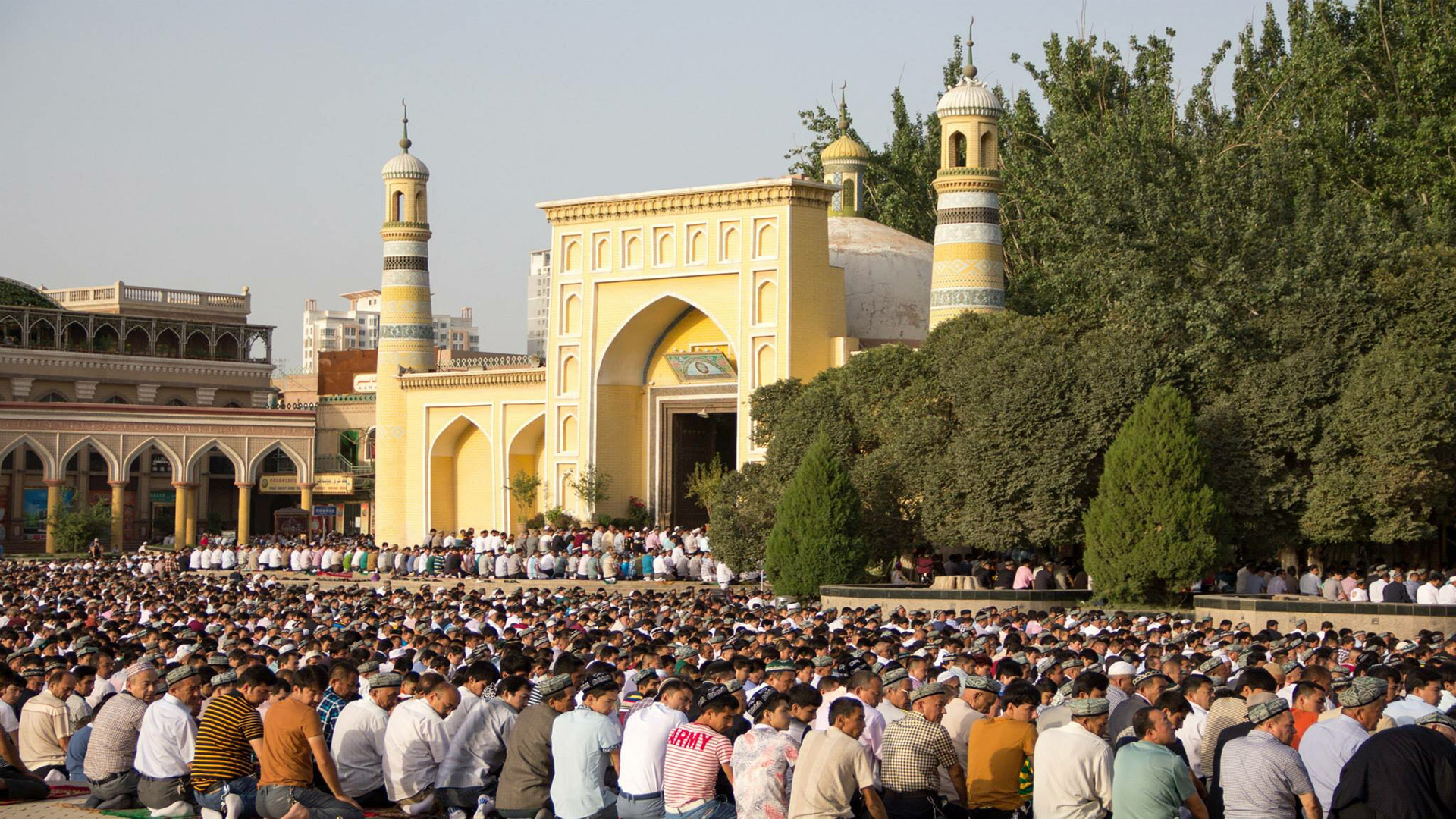
The Uyghur Muslim community in China has faced policies that aimed to 're-educate' and reshape their culture — justified by those in power as 'for the good of society.'
❓ What happens when one group imposes its definition of 'good' on another?
Who decides what is 'good'?
What happens to those who disagree?
Is enforced 'goodness' truly good?
Power does not equal moral authority
بسم الله
ISLAMIC STUDIES
DEEP REFLECTION
Why does suffering exist?
Think deeply. There is no single simple answer.
Is suffering random?
Is suffering purposeful?
Is suffering a test?
Sit with the question. We will explore it together.
الصبر
QUR'ANIC REFLECTION
وَكَيْفَ تَصْبِرُ عَلَىٰ مَا لَمْ تُحِطْ بِهِ خُبْرًا
How can you be patient over what you do not fully understand?
— Surah Al-Kahf, 18:68
You do not have full knowledge
Allah does — and He is All-Knowing, All-Wise
CORE CONCLUSION
The Lesson of This Unit
You see pixels
Partial. Limited. Human.
Allah sees the full picture
Complete. Perfect. Divine.
Trust in His wisdom — even when yours is incomplete.
الله أعلم
EXIT TICKET
Before You Leave...
What are the 3 sources of suffering?
Why can't we judge absolute evil?
One question you still have about today's topic.
Write your answers on your card and hand it in.
Your questions are valued — they drive our next lesson.
🔥 Assessment
ASSESSMENT
A Tale of Two Travelers
You will read a short story about two travelers who witness the same event. Your task: analyze how their different perspectives lead to different conclusions about what is 'evil.'
Assessment Criteria
Identify sources of suffering
Apply the concept of limited knowledge
Connect to Qur'anic teachings
This will assess your understanding of today's lesson.
- islamic-studies
- problem-of-evil
- theology
- faith-and-reason
- philosophy
- religious-education
- quran-stories
- ethics