

Made byBobr AI

Democracy in the United States: History & Evolution

Explore the foundations of U.S. democracy, focusing on the Constitution, the three branches of government, voting rights history, and modern challenges.

#us-democracy#civics-education#voting-rights#government-branches#political-science#us-history
Watch
Pitch

Democracy in the United States

Foundations, Evolution, and Modern Challenges

Made byBobr AI

Founding Principles

  • The U.S. Constitution (1787) establishes the framework of the federal government.
  • Popular Sovereignty: The principle that the authority of a state and its government is created and sustained by the consent of its people.
  • Separation of Powers: Dividing government responsibilities into distinct branches to limit any one branch from exercising the core functions of another.
Made byBobr AI

Separation of Powers: Three Branches

Legislative

Congress (House & Senate). Makes laws, approves budget, declares war.

Executive

President & Cabinet. Enforces laws, commands armed forces, conducts foreign policy.

Judicial

Supreme Court & Lower Courts. Interprets laws, decides constitutionality.

Made byBobr AI

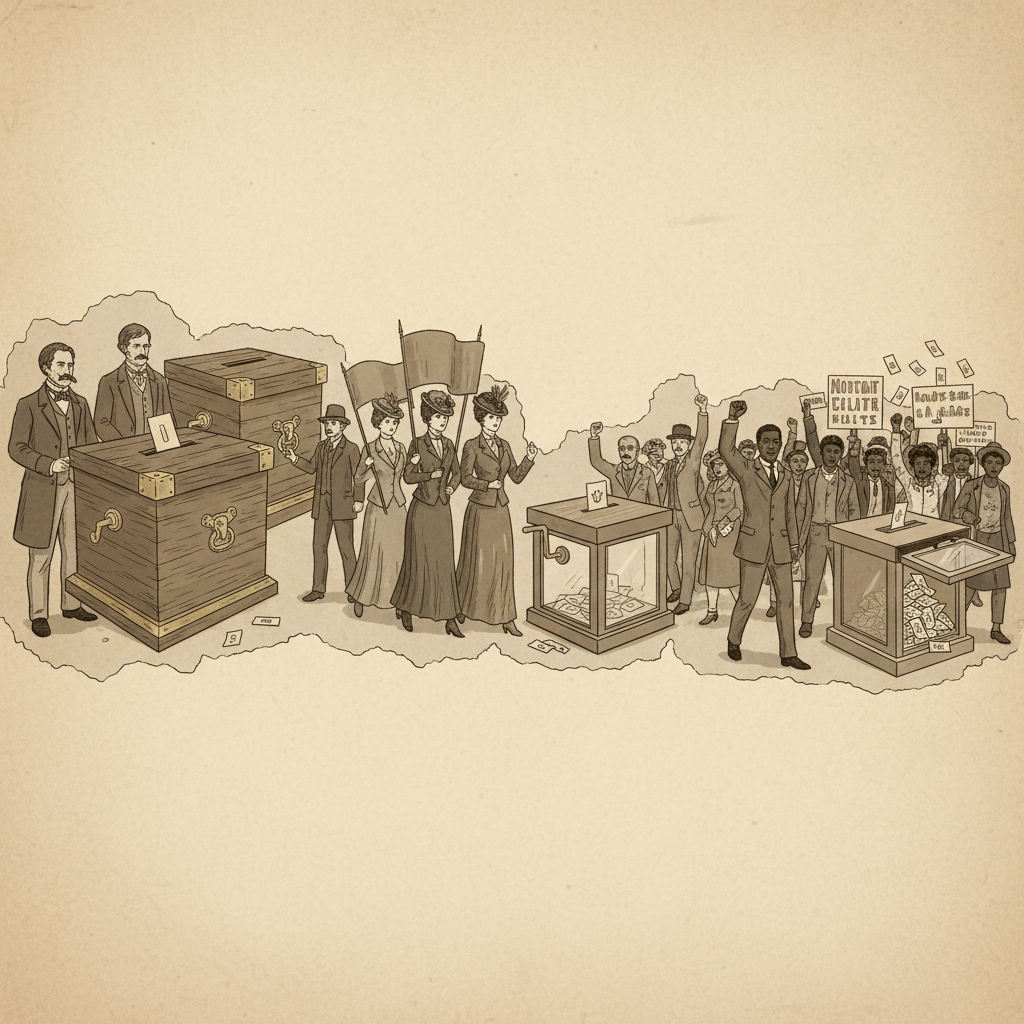
The Evolution of Voting Rights

Original Constitution: Mostly limited to white male property owners.
15th Amendment (1870): Vote cannot be denied based on race (though effectively suppressed for decades).
19th Amendment (1920): Women granted the right to vote.
Voting Rights Act (1965): Enforced 15th amendment, prohibiting racial discrimination in voting.
Made byBobr AI

Presidential Election Voter Turnout (2000-2024)

Chart

Source: United States Elections Project / Historical Data

Made byBobr AI

The Political Party System

Two-Party Domination: The Democratic and Republican parties have dominated modern American politics since the mid-19th century.

Primaries & Caucuses: The intricate process by which parties select candidates before the general election.

Third Parties: While often influential in bringing up new issues, the 'Winner-Take-All' electoral system makes it difficult for them to win seats.

Made byBobr AI

Federalism: The Balance of Power

Federal Powers

• Print money
• Declare war
• Regulate interstate trade
• Make treaties

State Powers

• Conduct elections
• Establish schools
• Regulate intrastate business
• Issue licenses
Made byBobr AI

Modern Challenges to Democracy

  • Political Polarization: Increasing ideological divide making compromise difficult.
  • Misinformation: The spread of false information via social media impacting voter perception.
  • Campaign Finance: The role of large financial contributions and 'Super PACs' in elections.
Made byBobr AI

Public Trust in Government (1964-2024)

Chart

Data Source: Pew Research Center (Public Trust in Government 1958-2024)

Made byBobr AI

The Future of US Democracy

"Democracy is not a state. It is an act, and each generation must do its part to help build what we call the Beloved Community."

— John Lewis

Made byBobr AI
Bobr AI

DESIGNER-MADE
PRESENTATION,
GENERATED FROM
YOUR PROMPT

Create your own professional slide deck with real images, data charts, and unique design in under a minute.

Generate For Free

Democracy in the United States: History & Evolution

Explore the foundations of U.S. democracy, focusing on the Constitution, the three branches of government, voting rights history, and modern challenges.

Democracy in the United States

Foundations, Evolution, and Modern Challenges

Founding Principles

The U.S. Constitution (1787) establishes the framework of the federal government.

Popular Sovereignty: The principle that the authority of a state and its government is created and sustained by the consent of its people.

Separation of Powers: Dividing government responsibilities into distinct branches to limit any one branch from exercising the core functions of another.

Separation of Powers: Three Branches

Legislative

Congress (House & Senate). Makes laws, approves budget, declares war.

Executive

President & Cabinet. Enforces laws, commands armed forces, conducts foreign policy.

Judicial

Supreme Court & Lower Courts. Interprets laws, decides constitutionality.

The Evolution of Voting Rights

Original Constitution: Mostly limited to white male property owners.

15th Amendment (1870): Vote cannot be denied based on race (though effectively suppressed for decades).

19th Amendment (1920): Women granted the right to vote.

Voting Rights Act (1965): Enforced 15th amendment, prohibiting racial discrimination in voting.

Presidential Election Voter Turnout (2000-2024)

The Political Party System

Two-Party Domination: The Democratic and Republican parties have dominated modern American politics since the mid-19th century.

Primaries & Caucuses: The intricate process by which parties select candidates before the general election.

Third Parties: While often influential in bringing up new issues, the 'Winner-Take-All' electoral system makes it difficult for them to win seats.

Federalism: The Balance of Power

Federal Powers

• Print money<br>• Declare war<br>• Regulate interstate trade<br>• Make treaties

State Powers

• Conduct elections<br>• Establish schools<br>• Regulate intrastate business<br>• Issue licenses

Modern Challenges to Democracy

Political Polarization: Increasing ideological divide making compromise difficult.

Misinformation: The spread of false information via social media impacting voter perception.

Campaign Finance: The role of large financial contributions and 'Super PACs' in elections.

Public Trust in Government (1964-2024)

The Future of US Democracy

"Democracy is not a state. It is an act, and each generation must do its part to help build what we call the Beloved Community."

— John Lewis

  • us-democracy
  • civics-education
  • voting-rights
  • government-branches
  • political-science
  • us-history