

Kepler's Laws & Planetary Motion: Simulation Study
Learn Johannes Kepler's three laws of planetary motion, barycentres, and orbital velocity through physics simulation data and gravitational formulas.
Orbital Distance & Period:<br/>A Simulation Study
Demonstrating Kepler's Third Law Through Simulation
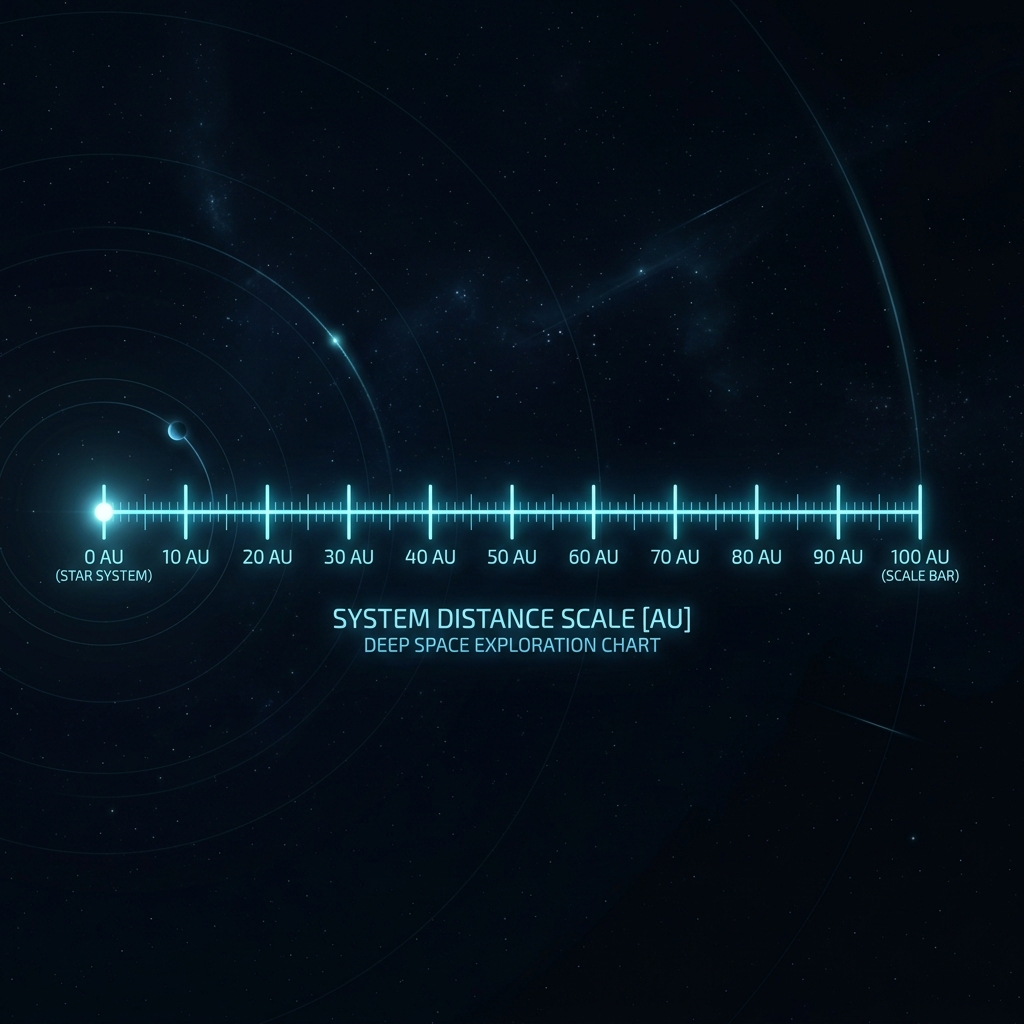
Scale: 1 AU ≈ 73.6 million km
Simulation Scale & Setup
The simulation used a custom scale to model orbital mechanics
<strong style="color: #B3E5FC;">1 Astronomical Unit (AU)</strong> = approximately 73.6 million kilometres
Four different orbital distances were tested
Orbital period was recorded for each distance
Results compared against Kepler's Third Law predictions
Scale: 1 AU ≈ 73.6 million km
Simulation Results — Orbital Data
As distance increases, orbital period increases significantly.
0.98
67
1.59
189
2.04
248
2.25
513
Distance vs. Orbital Period
The relationship is non-linear — period grows much faster than distance, consistent with <strong style="color: #4FC3F7;">Kepler's Third Law (T² ∝ r³)</strong>.
Kepler's Third Law
The square of the orbital period is proportional to the cube of the orbital radius
As the orbital distance from the central body increases, the time it takes to complete one full orbit increases at an even greater rate
This law applies to all planets in the Solar System
First described by Johannes Kepler in 1619
Law of Harmonies
Conclusion
The simulation clearly demonstrated that orbital period increases with orbital distance
Results are consistent with Kepler's Third Law (T² ∝ r³)
Scale used: 1 AU ≈ 73.6 million kilometers
Four test distances (0.98, 1.59, 2.04, 2.25 AU) all confirmed the trend
While values may not perfectly match real Solar System data, the proportional relationship is clearly evident
The simulation successfully models the fundamental mechanics of planetary orbits
Distance shapes time — the further the orbit, the longer the journey.
- astrophysics
- kepler-laws
- planetary-motion
- orbital-mechanics
- gravity
- astronomy
- physics-simulation