

Made byBobr AI

How Photolithography Shapes Semiconductor Wafers

Learn how photolithography prints billions of transistors onto silicon wafers using UV light, photoresist, and reticles in chip manufacturing.

#photolithography#semiconductor#silicon-wafer#chip-manufacturing#euv#electronics#nanotechnology
Watch
Pitch

Painting with Light

How Photolithography Prints the Brains of Our Devices

Made byBobr AI

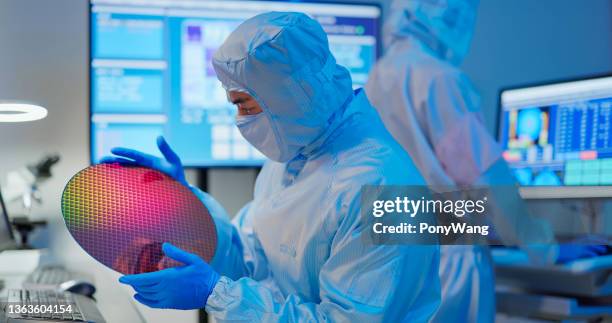
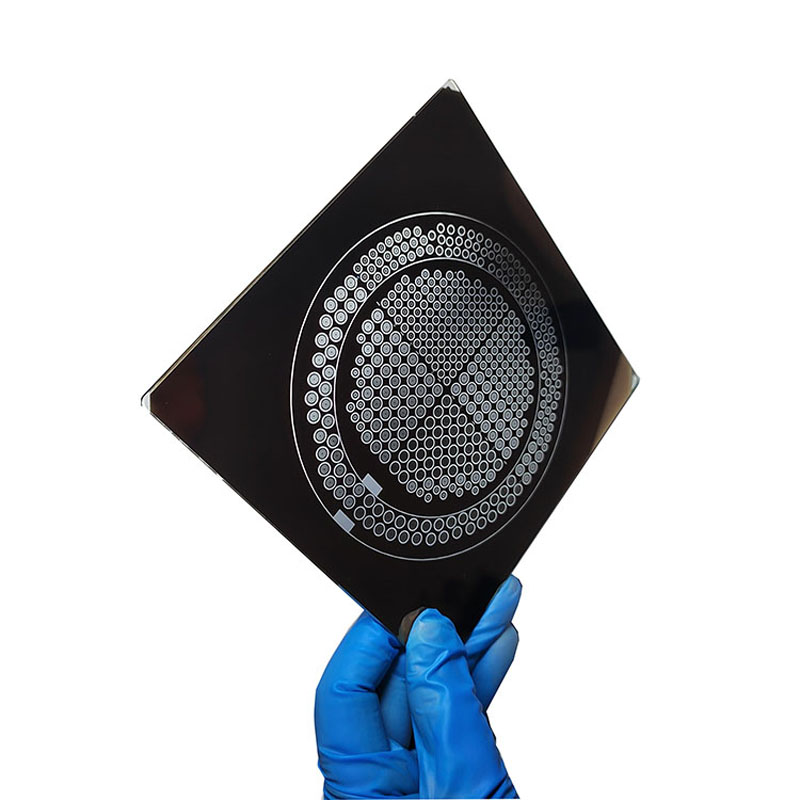
The Canvas: What is a Wafer?

  • A wafer is a thin slice of ultra-pure crystalline silicon.
  • It acts as the foundation (or canvas) for building electronic circuits.
  • Before we build, the surface must be polished to atomic smoothness.
Made byBobr AI

The Impossible Scale

Modern chips have billions of transistors. Placing them one by one is impossible.

Chart
Made byBobr AI

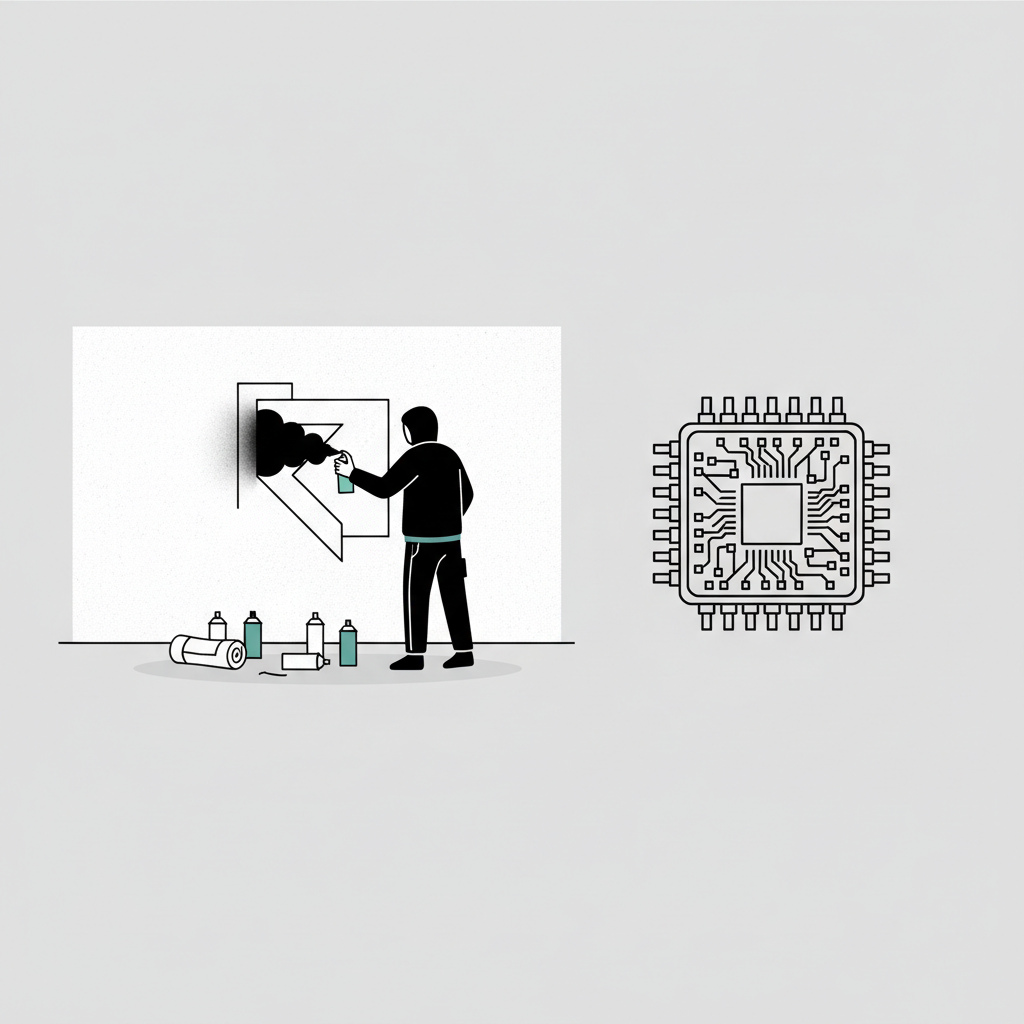
The Solution: A High-Tech Stencil

Instead of drawing every line, we use a process similar to stenciling or screen printing. We create a master pattern and copy it onto the wafer using light. This allows us to print billions of parts simultaneously.

Made byBobr AI

What is Photolithography?

Photo = Light
Litho = Stone (Silicon)
Graphy = Writing

Literally: 'Writing on stone with light.'

Made byBobr AI

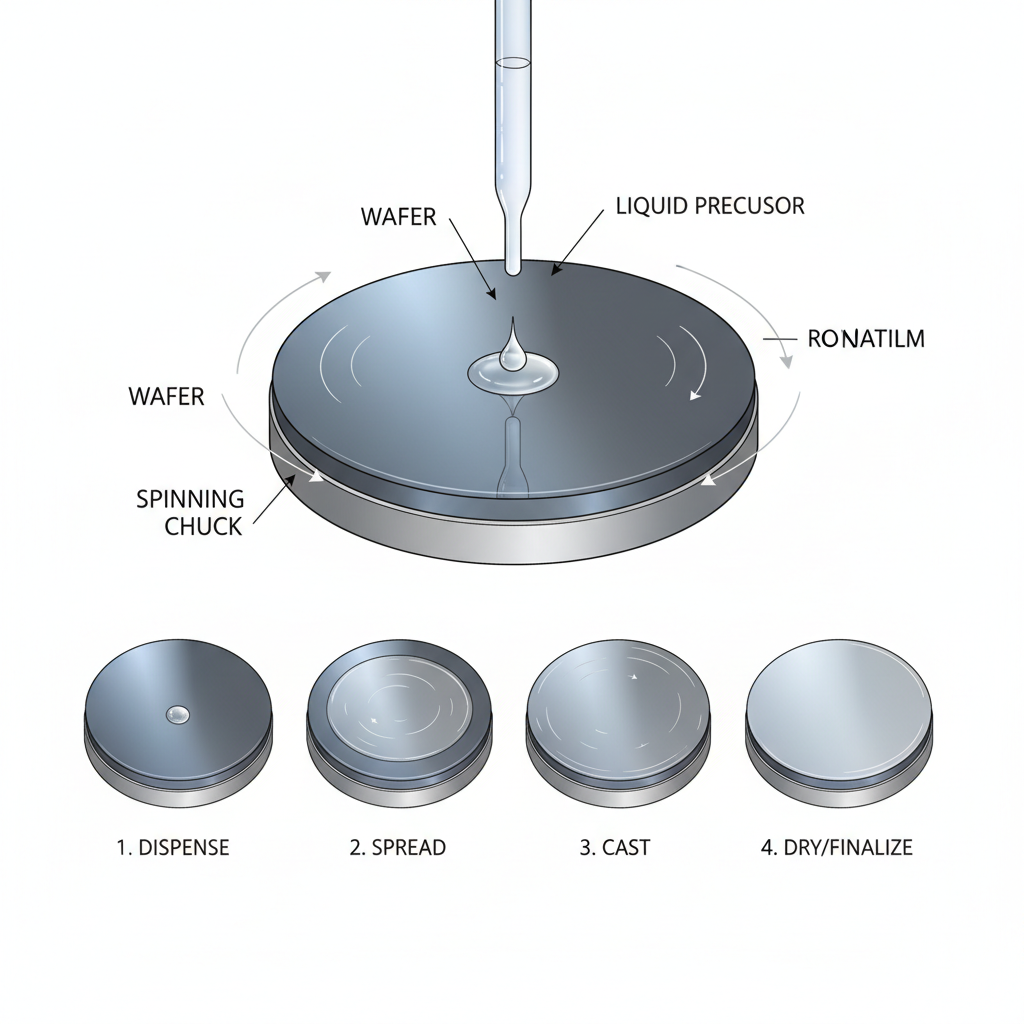
Step 1: The 'Film' (Photoresist)

Just like film in a camera reacts to light, we coat the wafer in a light-sensitive liquid called Photoresist.

Analogy: Think of it like spreading extreme sunscreen. Where the sun (UV light) hits, the chemistry changes.

Made byBobr AI

Step 2: The 'Blueprint' (Reticle)

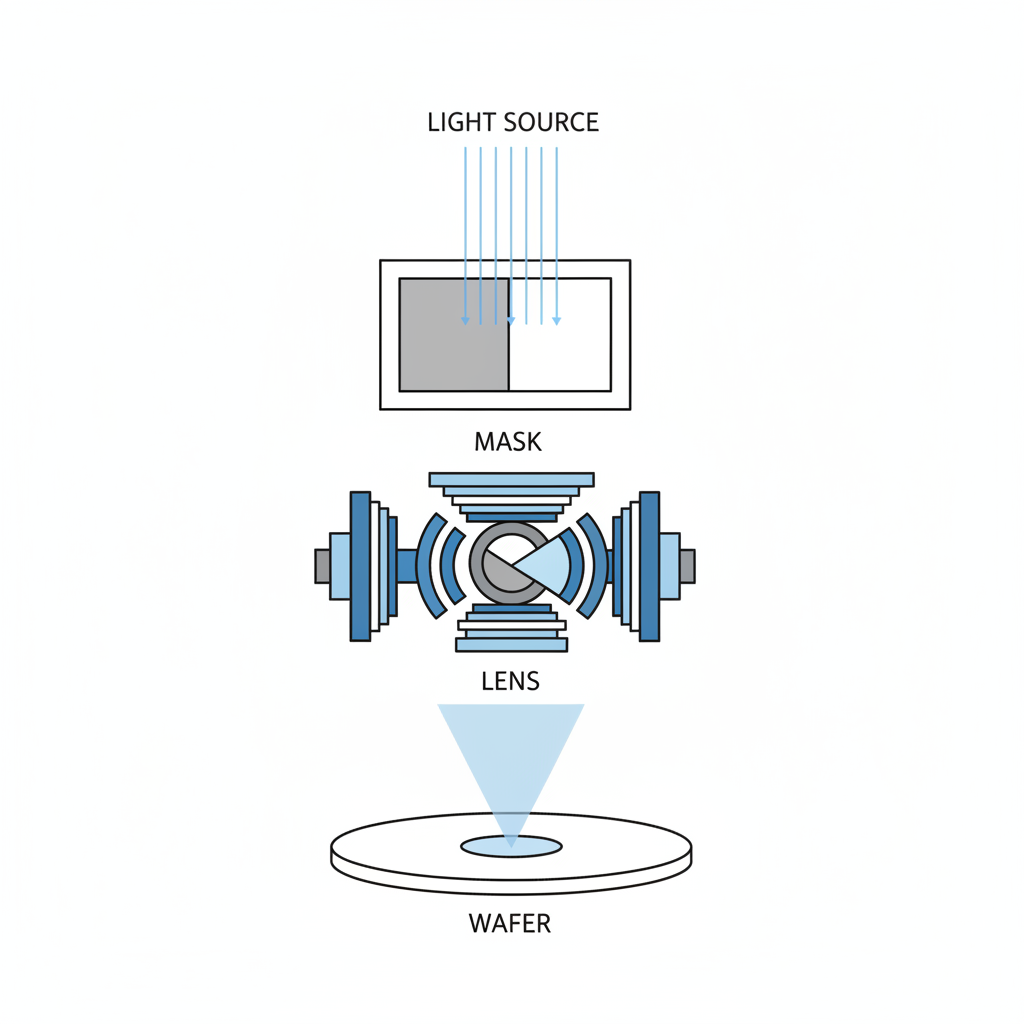
We don't draw on the wafer. We draw on a quartz plate called a 'Reticle' or 'Mask' first. This is our master negative.

  • Light passes through transparent areas.
  • Chrome blocks light in other areas.
Made byBobr AI

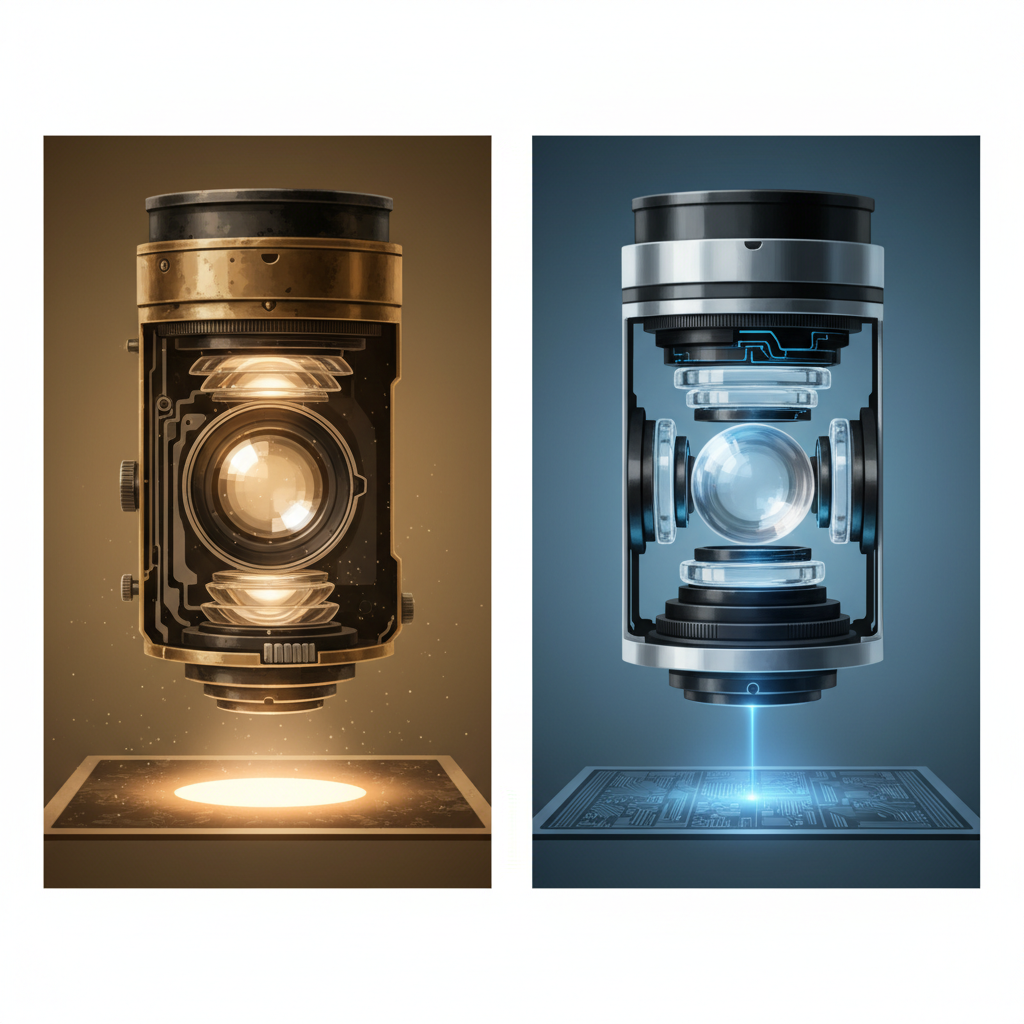
Step 3: Exposure (The Printing)

High-powered UV light is blasted through the mask.

Lenses shrink the image to 1/4th the original size for extreme precision.

The image is printed onto the photoresist on the wafer.

Made byBobr AI

Why is this the ONLY way?

Chart

Unmatched Speed

Speed: We print billions of transistors in seconds. Mechanical arms would take thousands of years.

Atomic Precision

Precision: Light creates features only a few atoms wide.

Made byBobr AI

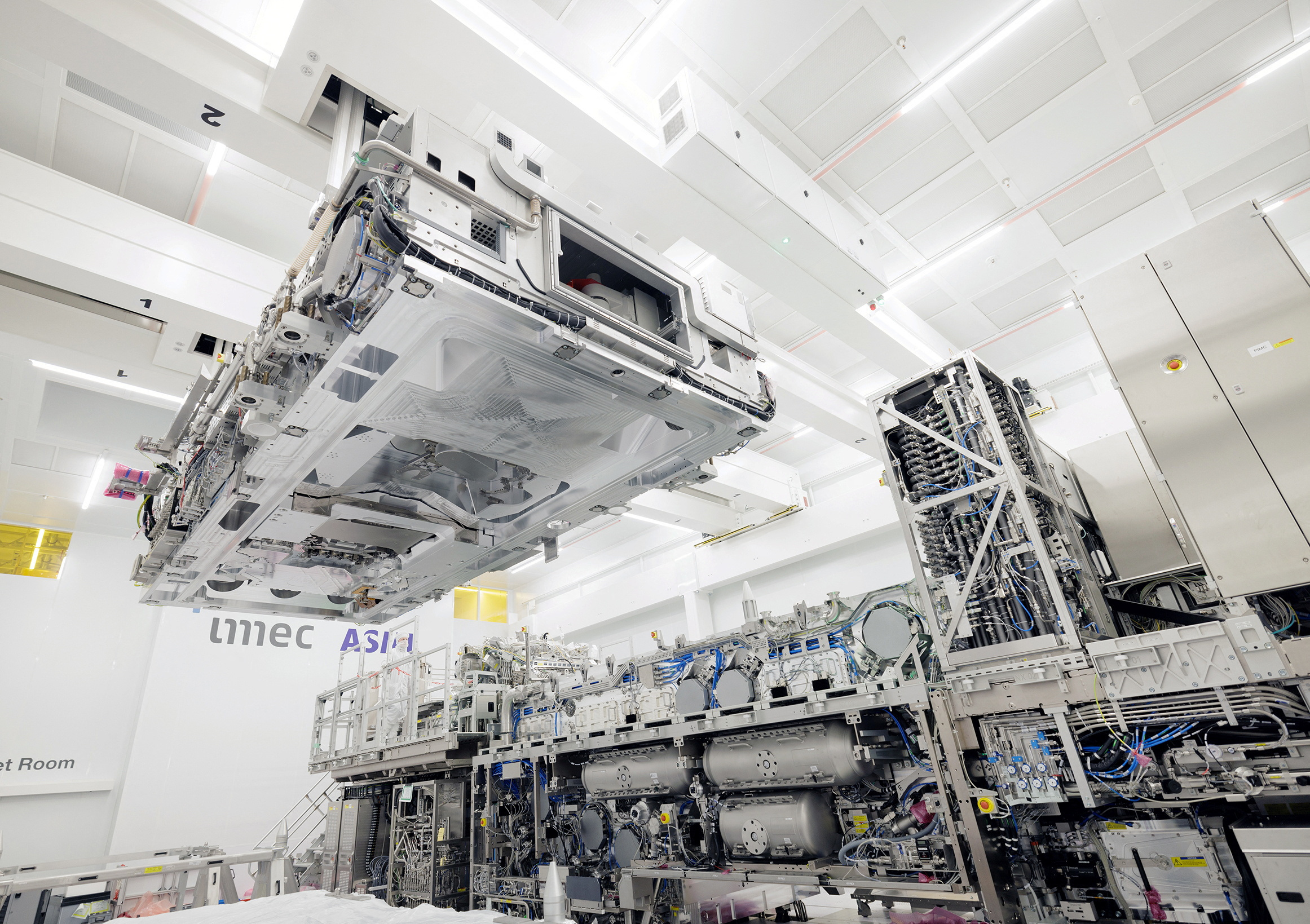
Pushing the Limit: EUV

To make chips faster, we need smaller patterns. We now use Extreme Ultraviolet (EUV) light.

💡 The wavelength is just 13.5 nanometers. That's like writing with a pen tip the size of a DNA strand.

Made byBobr AI

The Most Sophisticated Printing Press

  • Photolithography turns silicon into supercomputers.
  • It allows us to print circuitry smaller than a virus.
  • Without it, the modern digital world would simply not exist.
Made byBobr AI
Bobr AI

DESIGNER-MADE
PRESENTATION,
GENERATED FROM
YOUR PROMPT

Create your own professional slide deck with real images, data charts, and unique design in under a minute.

Generate For Free

How Photolithography Shapes Semiconductor Wafers

Learn how photolithography prints billions of transistors onto silicon wafers using UV light, photoresist, and reticles in chip manufacturing.

Painting with Light

How Photolithography Prints the Brains of Our Devices

The Canvas: What is a Wafer?

A wafer is a thin slice of ultra-pure crystalline silicon.

It acts as the foundation (or canvas) for building electronic circuits.

Before we build, the surface must be polished to atomic smoothness.

The Impossible Scale

Modern chips have billions of transistors. Placing them one by one is impossible.

The Solution: A High-Tech Stencil

Instead of drawing every line, we use a process similar to stenciling or screen printing. We create a master pattern and copy it onto the wafer using light. This allows us to print billions of parts simultaneously.

What is Photolithography?

Photo = Light

Litho = Stone (Silicon)

Graphy = Writing

Literally: 'Writing on stone with light.'

Step 1: The 'Film' (Photoresist)

Just like film in a camera reacts to light, we coat the wafer in a light-sensitive liquid called Photoresist.

Analogy: Think of it like spreading extreme sunscreen. Where the sun (UV light) hits, the chemistry changes.

Step 2: The 'Blueprint' (Reticle)

We don't draw on the wafer. We draw on a quartz plate called a 'Reticle' or 'Mask' first. This is our master negative.

Light passes through transparent areas.

Chrome blocks light in other areas.

Step 3: Exposure (The Printing)

High-powered UV light is blasted through the mask.

Lenses shrink the image to 1/4th the original size for extreme precision.

The image is printed onto the photoresist on the wafer.

Why is this the ONLY way?

Speed: We print billions of transistors in seconds. Mechanical arms would take thousands of years.

Precision: Light creates features only a few atoms wide.

Pushing the Limit: EUV

To make chips faster, we need smaller patterns. We now use Extreme Ultraviolet (EUV) light.

The wavelength is just 13.5 nanometers. That's like writing with a pen tip the size of a DNA strand.

The Most Sophisticated Printing Press

Photolithography turns silicon into supercomputers.

It allows us to print circuitry smaller than a virus.

Without it, the modern digital world would simply not exist.

  • photolithography
  • semiconductor
  • silicon-wafer
  • chip-manufacturing
  • euv
  • electronics
  • nanotechnology