
Made byBobr AI

Theology and Veneration of Holy Icons in Orthodoxy

Learn the theological meaning of Eastern Orthodox icons, the distinction between worship and veneration, and the history of the Seventh Ecumenical Council.

#orthodoxy#theology#icons#religious-education#church-history#antiochian-orthodox#sacred-art
Watch
Pitch
Antiochian Seal
WHY WE VENERATE ICONS
A Spiritual Teaching for the Faithful
Eastern Orthodox Antiochian Church
Spiritual Meeting · 2026
Made byBobr AI
Antiochian Seal
I.
WHAT IS AN ICON?
The word 'icon' comes from the Greek εἰκών (eikón) — meaning 'image' or 'likeness'
Icons are sacred images depicting Christ, the Theotokos, saints, angels, and events of sacred history
They are written (not painted) — the Church uses the term 'writing' to emphasize their theological nature
Icons are windows into Heaven — a visible link between the earthly and the divine
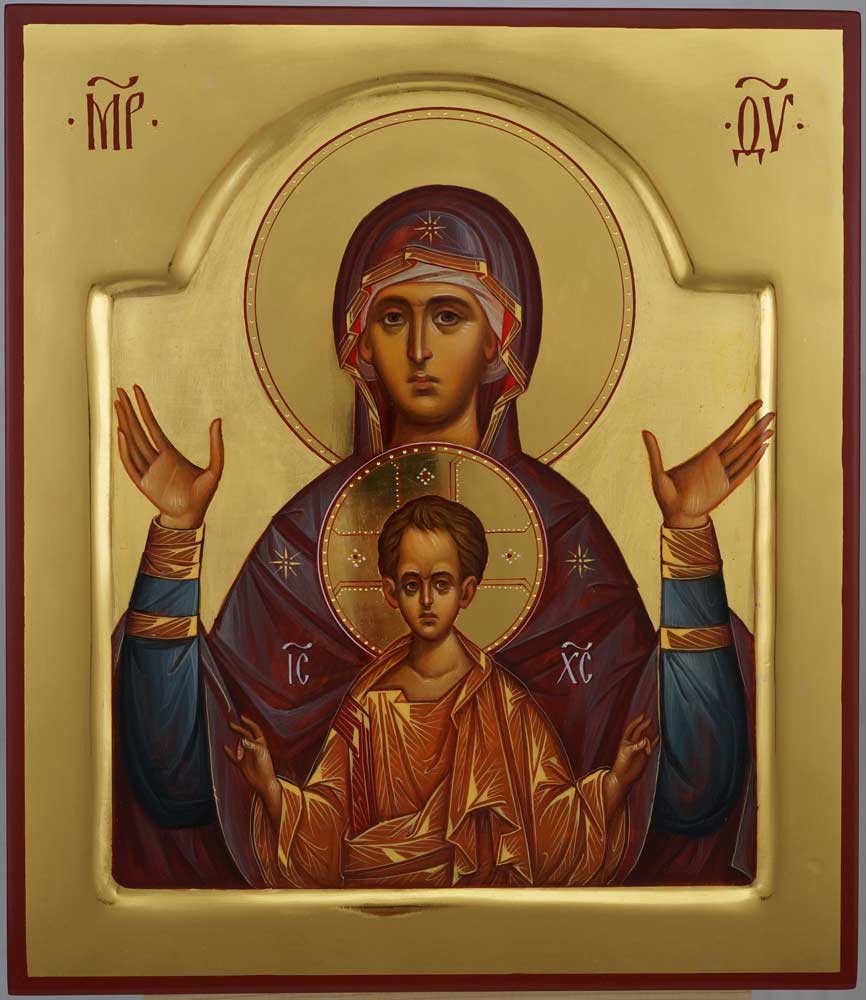
Theotokos of the Sign
Made byBobr AI
Seal
II
THE THEOLOGICAL FOUNDATION
The Incarnation Makes Icons Possible
Before Christ, imaging God was forbidden — God was invisible and uncircumscribable. But in the Incarnation, the eternal Son of God took on human flesh. He became visible. He became depictable. To refuse to depict Christ is to deny the reality of His Incarnation.
"In the beginning was the Word... and the Word became flesh and dwelt among us." — John 1:1, 14
St. John of Damascus teaches:
" I do not venerate matter, I venerate the fashioner of matter, who became matter for my sake and through matter worked my salvation.
— St. John of Damascus, On the Divine Images
The icon is a confession of faith in the Incarnation.
Made byBobr AI
Seal
III
VENERATION VS. WORSHIP
A Critical Distinction
LATRIA (Λατρεία)
WORSHIP
Worship is due to God ALONE — Father, Son, and Holy Spirit. This is absolute adoration, sacrifice, and devotion reserved exclusively for the Holy Trinity. Offering latria to anyone or anything other than God is idolatry.
To God Alone ☦
PROSKYNESIS (Προσκύνησις)
VENERATION / HONOR
Veneration is the honor we give to holy persons and sacred things. We honor icons as we honor the Cross, the Gospel Book, relics, and saints. The honor passes through the image to the person depicted — just as we kiss a photo of a loved one.
Honor Passes to the Prototype
The honor rendered to the image passes to its prototype. — St. Basil the Great
Made byBobr AI
787 AD · NICAEA
Antiochian Seal
IV
THE SEVENTH ECUMENICAL COUNCIL
The Second Council of Nicaea · 787 AD
After over 100 years of Iconoclasm — the violent destruction of icons — the Church convened the Seventh Ecumenical Council in Nicaea in 787 AD.
Empress Irene and Patriarch Tarasios convened 350+ bishops
The Council dogmatically defined that icon veneration is Orthodox and holy
Iconoclasm (icon-smashing) was condemned as heresy
The Triumph of Orthodoxy is celebrated every year on the First Sunday of Great Lent
"
We define with all accuracy and care that the venerable and holy icons be set up... in the holy churches of God.
— Definition of the Seventh Ecumenical Council
Made byBobr AI
Antiochian Seal
V
WHAT HAPPENS WHEN WE VENERATE?
The act of veneration is a bodily prayer — a confession of faith
We Kiss the Icon
Kissing an icon is like kissing a letter from a beloved friend — the love passes to the person, not the paper. We kiss the hand or foot of Christ, never His face.
We Bow and Prostrate
Our bodies join our souls in prayer. The physical gesture of bowing expresses our humility before God and the saints who stand before His throne.
We Light a Candle
Candles represent our prayers rising to God like incense. They also symbolize Christ as the Light of the World shining through His saints.
We Ask for Intercession
We ask the saints — who are alive in Christ — to pray for us. Just as we ask a friend to pray, we ask those who stand before God's throne.
The icon is a meeting point between Heaven and Earth.
Made byBobr AI
Antiochian Seal
VI
COMMON OBJECTIONS ANSWERED
?
"Isn't this forbidden by the Second Commandment — 'You shall not make graven images'?"
The same God who gave that commandment also commanded Moses to make the golden Cherubim above the Ark (Ex. 25:18-20) and the bronze serpent (Num. 21:8-9). The commandment forbids making idols to worship as gods — not all sacred imagery.
?
"Aren't you worshipping statues and pictures?"
No. The Church clearly distinguishes worship (latria) — given to God alone — from veneration (proskynesis) — the honor given to holy persons and things. We do not pray TO icons; we pray through them, as windows to Heaven.
?
"This seems like a tradition of men, not Scripture."
St. Paul writes: 'Hold fast to the traditions you were taught' (2 Thess. 2:15). The veneration of icons is an ancient Apostolic Tradition, practiced from the earliest centuries of the Church and defined by an Ecumenical Council.
Made byBobr AI
VII
ICONS IN THE ANTIOCHIAN TRADITION
The Church of Antioch is one of the most ancient Christian communities — founded by the Apostles Peter and Paul. It was in Antioch that disciples were FIRST called Christians (Acts 11:26).
Antioch gave the world great Fathers: St. John Chrysostom, St. Ignatius of Antioch, St. John of Damascus — the great defender of icons
St. Luke the Evangelist is traditionally held to have written (painted) the first icon of the Theotokos
The iconostasis in our churches is a foretaste of the Heavenly worship described in Revelation
Our icons are not decorations — they are the Church's confession of faith in wood and pigment
"An icon is a theology in color." — Orthodox saying
Small Seal Logo
Antiochian Seal Main
The Church of Antioch · Est. ~37 AD
Made byBobr AI
Antiochian Seal
VIII
HOW TO VENERATE AN ICON
A Guide for the Faithful
1
Approach with reverence
Walk to the icon with a quiet, prayerful heart. Remember you are approaching a holy presence.
2
Make the Sign of the Cross
Cross yourself once or twice before venerating. This is a confession of the Holy Trinity.
3
Bow with a prostration (metanoia)
Make a full or partial bow as an act of humility. On Sundays and Paschal season, a simple bow is made.
4
Kiss the icon
Kiss the hand, foot, or Gospel book depicted — never the face of Christ or the Theotokos. This is a sign of love and honor.
5
Cross yourself again and step aside
After venerating, cross yourself and quietly move aside so others may approach.
Note: There is no requirement to memorize elaborate prayers. Simply approach with a humble and loving heart.
Made byBobr AI
Antiochian Seal
THE ICON AS A FORETASTE OF THE KINGDOM
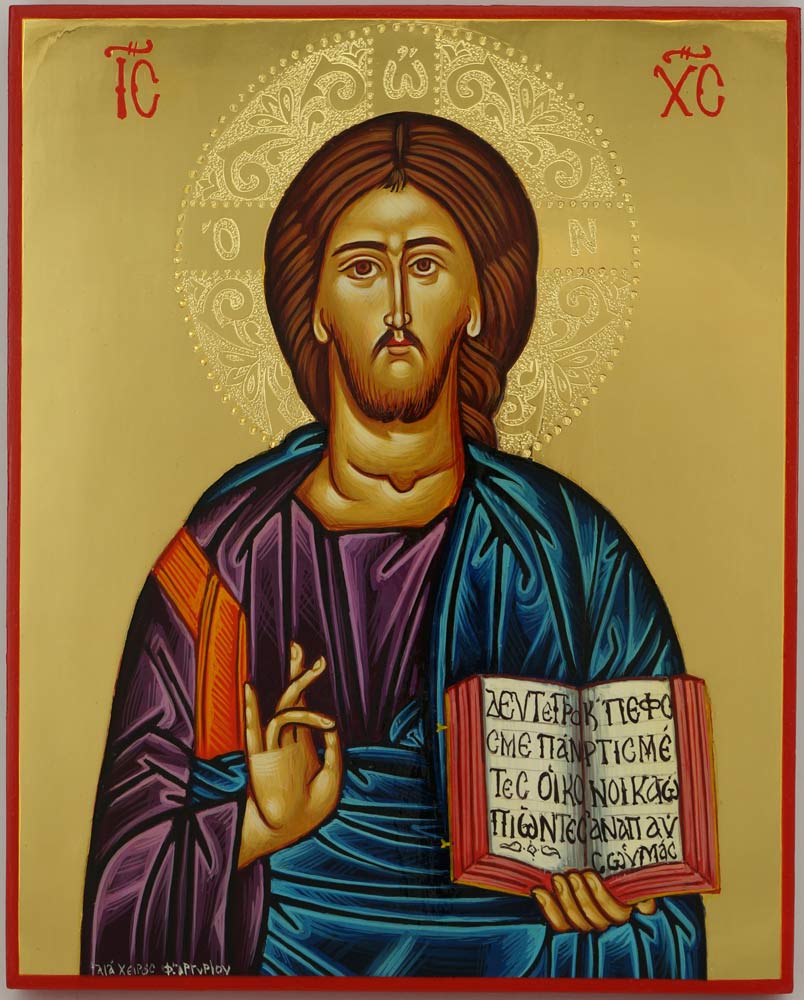
Christ Pantocrator
"Every icon is a small apocalypse — a revelation of the Kingdom that is coming."
"Beloved, we are God's children now, and what we will be has not yet appeared; but we know that when He appears we shall be like Him, because we shall see Him as He is."
— 1 John 3:2 —
Glory to God for all things.
Eastern Orthodox Antiochian Church · Spiritual Meeting 2026
Made byBobr AI
Bobr AI

DESIGNER-MADE
PRESENTATION,
GENERATED FROM
YOUR PROMPT

Create your own professional slide deck with real images, data charts, and unique design in under a minute.

Generate For Free

Theology and Veneration of Holy Icons in Orthodoxy

Learn the theological meaning of Eastern Orthodox icons, the distinction between worship and veneration, and the history of the Seventh Ecumenical Council.

WHY WE VENERATE ICONS

A Spiritual Teaching for the Faithful

Eastern Orthodox Antiochian Church

Spiritual Meeting · 2026

WHAT IS AN ICON?

The word 'icon' comes from the Greek εἰκών (eikón) — meaning 'image' or 'likeness'

Icons are sacred images depicting Christ, the Theotokos, saints, angels, and events of sacred history

They are written (not painted) — the Church uses the term 'writing' to emphasize their theological nature

Icons are windows into Heaven — a visible link between the earthly and the divine

II

THE THEOLOGICAL FOUNDATION

The Incarnation Makes Icons Possible

Before Christ, imaging God was forbidden — God was invisible and uncircumscribable. But in the Incarnation, the eternal Son of God took on human flesh. He became visible. He became depictable. To refuse to depict Christ is to deny the reality of His Incarnation.

In the beginning was the Word... and the Word became flesh and dwelt among us.

— John 1:1, 14

St. John of Damascus teaches:

I do not venerate matter, I venerate the fashioner of matter, who became matter for my sake and through matter worked my salvation.

— St. John of Damascus, On the Divine Images

The icon is a confession of faith in the Incarnation.

III

VENERATION VS. WORSHIP

A Critical Distinction

LATRIA (Λατρεία)

WORSHIP

Worship is due to God ALONE — Father, Son, and Holy Spirit. This is absolute adoration, sacrifice, and devotion reserved exclusively for the Holy Trinity. Offering latria to anyone or anything other than God is idolatry.

To God Alone ☦

PROSKYNESIS (Προσκύνησις)

VENERATION / HONOR

Veneration is the honor we give to holy persons and sacred things. We honor icons as we honor the Cross, the Gospel Book, relics, and saints. The honor passes through the image to the person depicted — just as we kiss a photo of a loved one.

Honor Passes to the Prototype

The honor rendered to the image passes to its prototype.

— St. Basil the Great

IV

THE SEVENTH ECUMENICAL COUNCIL

The Second Council of Nicaea · 787 AD

After over 100 years of Iconoclasm — the violent destruction of icons — the Church convened the Seventh Ecumenical Council in Nicaea in 787 AD.

Empress Irene and Patriarch Tarasios convened 350+ bishops

The Council dogmatically defined that icon veneration is Orthodox and holy

Iconoclasm (icon-smashing) was condemned as heresy

The Triumph of Orthodoxy is celebrated every year on the First Sunday of Great Lent

We define with all accuracy and care that the venerable and holy icons be set up... in the holy churches of God.

— Definition of the Seventh Ecumenical Council

787 AD · NICAEA

V

WHAT HAPPENS WHEN WE VENERATE?

The act of veneration is a bodily prayer — a confession of faith

We Kiss the Icon

Kissing an icon is like kissing a letter from a beloved friend — the love passes to the person, not the paper. We kiss the hand or foot of Christ, never His face.

We Bow and Prostrate

Our bodies join our souls in prayer. The physical gesture of bowing expresses our humility before God and the saints who stand before His throne.

We Light a Candle

Candles represent our prayers rising to God like incense. They also symbolize Christ as the Light of the World shining through His saints.

We Ask for Intercession

We ask the saints — who are alive in Christ — to pray for us. Just as we ask a friend to pray, we ask those who stand before God's throne.

The icon is a meeting point between Heaven and Earth.

VI

COMMON OBJECTIONS ANSWERED

"Isn't this forbidden by the Second Commandment — 'You shall not make graven images'?"

The same God who gave that commandment also commanded Moses to make the golden Cherubim above the Ark (Ex. 25:18-20) and the bronze serpent (Num. 21:8-9). The commandment forbids making idols to worship as gods — not all sacred imagery.

"Aren't you worshipping statues and pictures?"

No. The Church clearly distinguishes worship (latria) — given to God alone — from veneration (proskynesis) — the honor given to holy persons and things. We do not pray TO icons; we pray through them, as windows to Heaven.

"This seems like a tradition of men, not Scripture."

St. Paul writes: 'Hold fast to the traditions you were taught' (2 Thess. 2:15). The veneration of icons is an ancient Apostolic Tradition, practiced from the earliest centuries of the Church and defined by an Ecumenical Council.

VII

ICONS IN THE ANTIOCHIAN TRADITION

The Church of Antioch is one of the most ancient Christian communities — founded by the Apostles Peter and Paul. It was in Antioch that disciples were FIRST called Christians (Acts 11:26).

Antioch gave the world great Fathers: St. John Chrysostom, St. Ignatius of Antioch, St. John of Damascus — the great defender of icons

St. Luke the Evangelist is traditionally held to have written (painted) the first icon of the Theotokos

The iconostasis in our churches is a foretaste of the Heavenly worship described in Revelation

Our icons are not decorations — they are the Church's confession of faith in wood and pigment

"An icon is a theology in color." — Orthodox saying

The Church of Antioch · Est. ~37 AD

VIII

HOW TO VENERATE AN ICON

A Guide for the Faithful

Approach with reverence

Walk to the icon with a quiet, prayerful heart. Remember you are approaching a holy presence.

Make the Sign of the Cross

Cross yourself once or twice before venerating. This is a confession of the Holy Trinity.

Bow with a prostration (metanoia)

Make a full or partial bow as an act of humility. On Sundays and Paschal season, a simple bow is made.

Kiss the icon

Kiss the hand, foot, or Gospel book depicted — never the face of Christ or the Theotokos. This is a sign of love and honor.

Cross yourself again and step aside

After venerating, cross yourself and quietly move aside so others may approach.

Note: There is no requirement to memorize elaborate prayers. Simply approach with a humble and loving heart.

THE ICON AS A FORETASTE OF THE KINGDOM

"Every icon is a small apocalypse — a revelation of the Kingdom that is coming."

"Beloved, we are God's children now, and what we will be has not yet appeared; but we know that when He appears we shall be like Him, because we shall see Him as He is."

1 John 3:2

Glory to God for all things.

Eastern Orthodox Antiochian Church · Spiritual Meeting 2026

  • orthodoxy
  • theology
  • icons
  • religious-education
  • church-history
  • antiochian-orthodox
  • sacred-art