







The Expanding Universe: Discovery, Big Bang & Cosmic Fate
Explore the history of cosmic expansion, from Lemaître’s 1927 discovery to the Big Bang vs. Steady State debate and theories like the Big Crunch and Big Rip.
THE EXPANDING UNIVERSE
Discovery, controversy, and ultimate fate
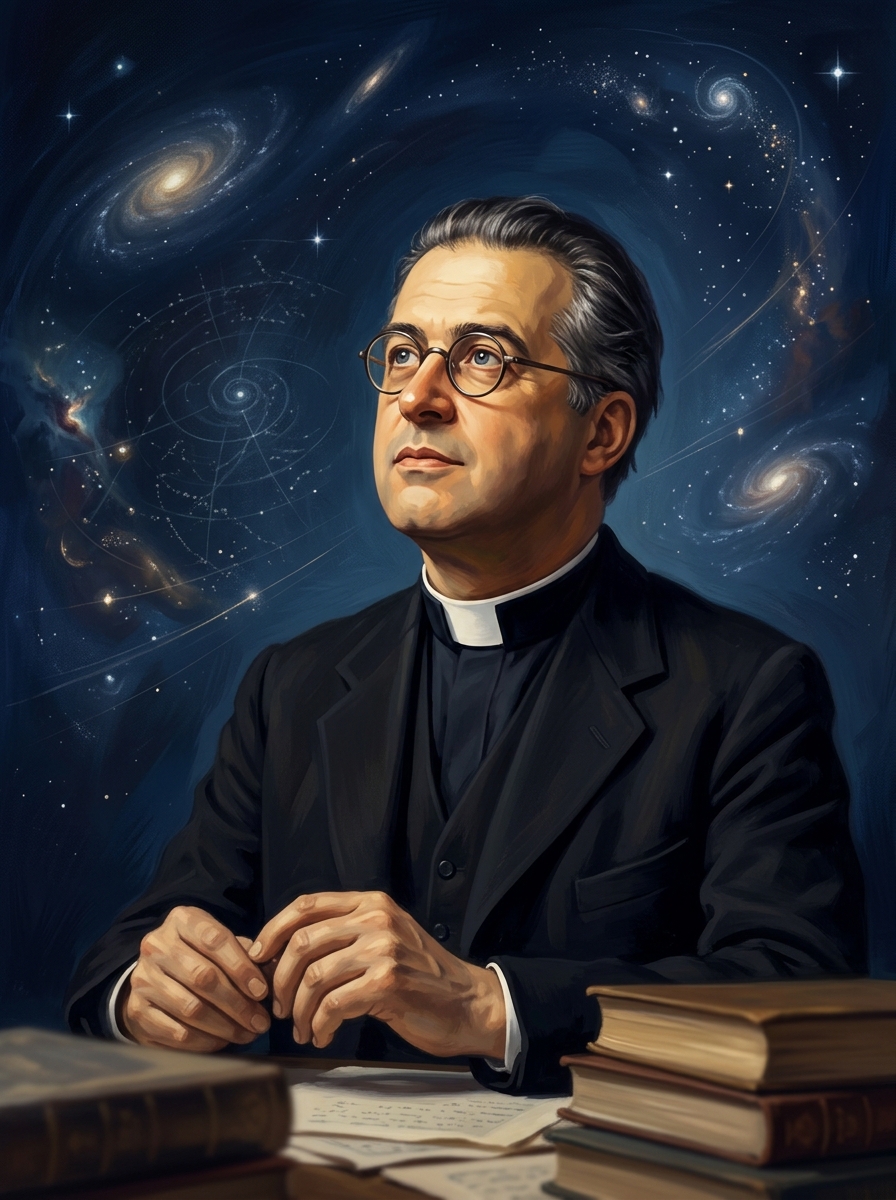
LEMAÎTRE
DID IT FIRST
IN 1927
Used Slipher's redshift data
Derived distance-velocity relation
Two years before Hubble's famous paper
1931
THE MISSING
TRANSLATION
Lemaître's paper translated to English
The key derivation was somehow
missing
Hubble got all the credit
Lemaître became a
footnote
BIG BANG VS. STEADY STATE
THE BIG BANG
Expands radially from an intensely hot, incredibly dense singularity.
Postulates a distinct "moment of creation" and beginning to overall space and time.
The cosmos continuously evolves and cools as its expansion drives density downward.
STEADY STATE
Proposed by Hoyle, Bondi & Gold in <span style="font-size: 30px; font-weight: 800; color: #ffffff; text-shadow: 0 0 20px rgba(255,255,255,0.8); margin-left: 5px;">1948</span>.
No distinct beginning; cosmos is identical throughout time and continually creates new matter.
Strongly preferred by critics who felt the Big Bang theory sounded "too religious".
HOW THE DEBATE ENDED
(1964)
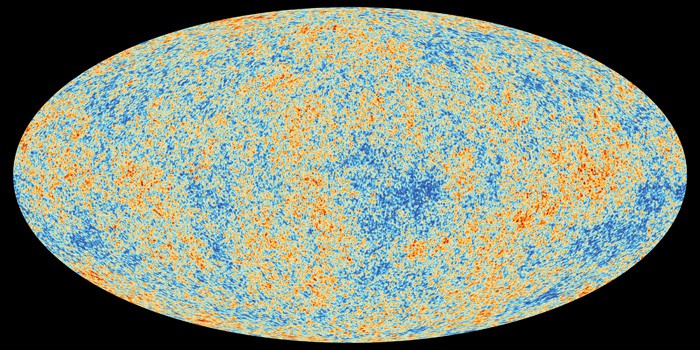
Cosmic Microwave Background discovered
Leftover radiation from the early universe
Steady State could not explain it
BIG BANG WON.
Steady State was forgotten.
THE 1998 SURPRISE
EXPECTED
Expansion to slow down
(Driven by the pull of gravity)
REALITY
Expansion is speeding up
(Supernova observations showed the opposite)
Caused by
DARK ENERGY
— still a profound mystery
THREE POSSIBLE ENDINGS
BIG CRUNCH
Gravity wins. The expansion of the universe reverses, pulling all matter, galaxies, and space-time itself back into a magnificent, collapsing inferno.
BIG FREEZE
The universe expands forever. Star formation ceases as gas runs out. Everything drifts apart, plunging the cosmos into an eternal, cold, and dark void.
BIG RIP
Dark energy accelerates relentlessly, overcoming all fundamental forces. It violently tears apart galaxy clusters, stars, planets, and finally, atomic structures.
CLOSING REMARKS
Lemaître discovered expansion first (1927), but a missing translation let Hubble take credit.
The Big Bang defeated Steady State in 1964 with CMB evidence.
The 1998 acceleration discovery added the Big Rip as a new possible fate.
THANK YOU
Any questions?
- cosmology
- big-bang-theory
- astronomy
- dark-energy
- hubble-law
- lemaitre
- science-history