
Made byBobr AI

Nematodes Biology & Impact: Meloidogyne incognita Guide

Learn about Meloidogyne incognita biology, life cycle, and crop impact. Explore laboratory diagnostics and integrated disease management for root-knot nematodes.

#nematology#plant-pathology#meloidogyne-incognita#crop-protection#agriculture#biology#integrated-pest-management
Watch
Pitch

Plant Pathology Series

NEMATODES

Biology, Classification, Life Cycle
& Meloidogyne incognita

Impact on Crops
Lab Diagnostics
Mode of Action
Made byBobr AI

INTRODUCTION

What Are Nematodes?

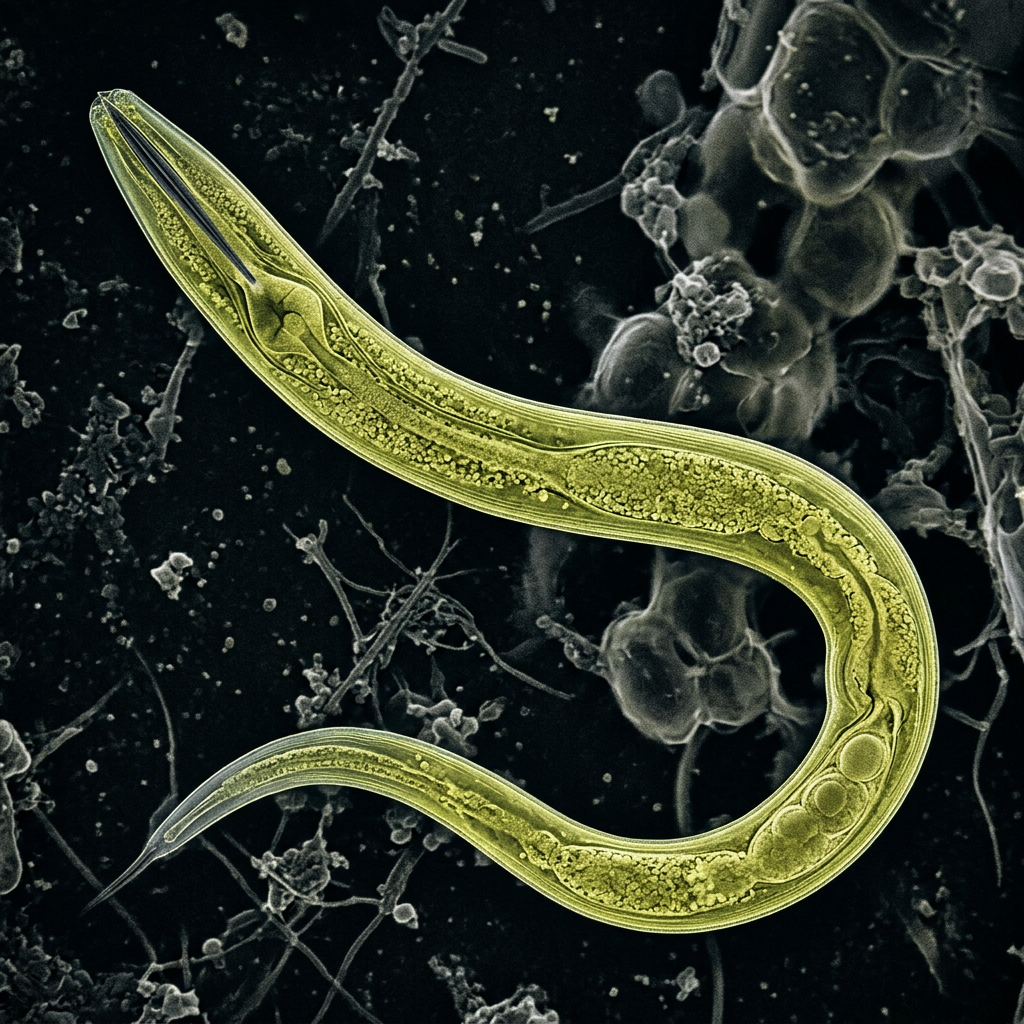
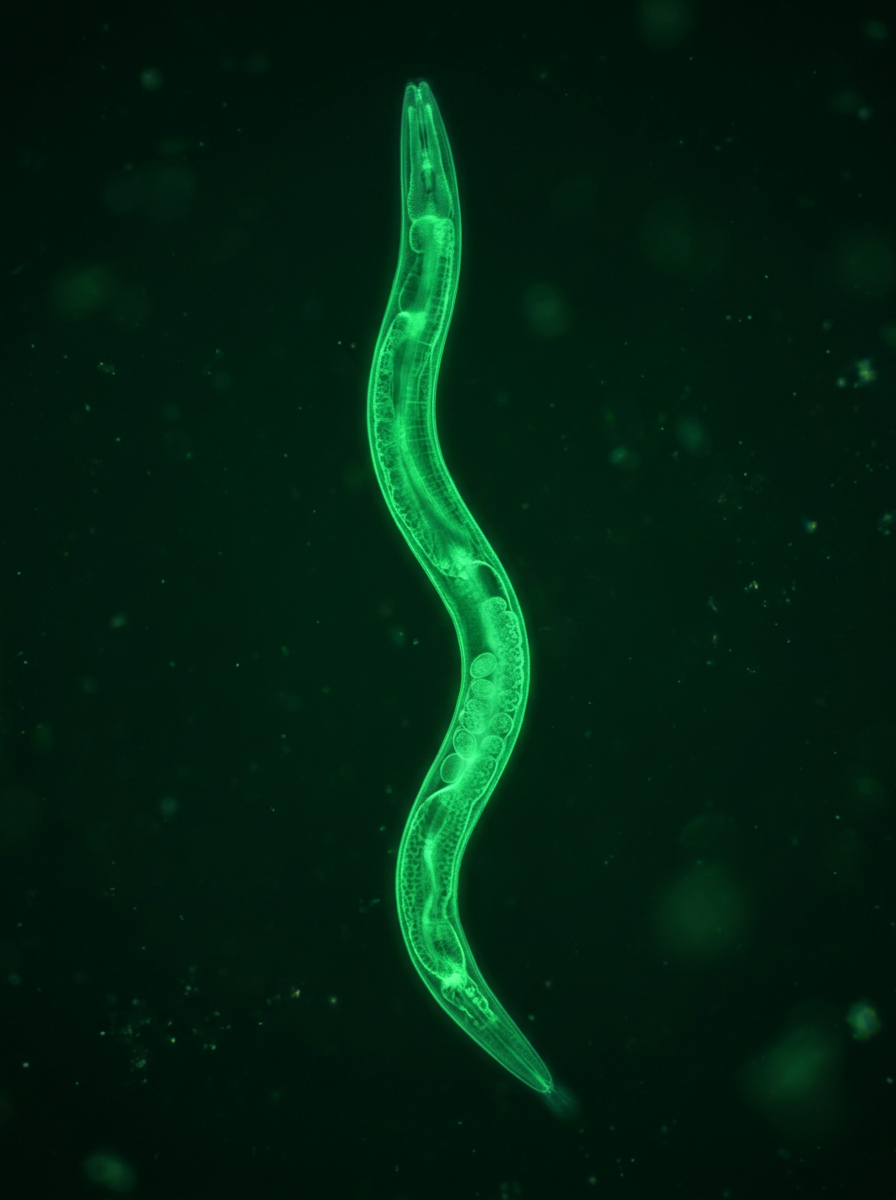
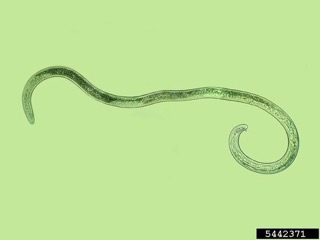
Nematodes are microscopic, unsegmented roundworms belonging to phylum Nematoda
Among the most abundant multicellular organisms on Earth — over 57 billion per human!
Found in soil, water, plants, and animals worldwide
~4,100 species are plant-parasitic, causing massive agricultural losses
Also called "eelworms" due to their eel-like movement
Global crop losses exceed $157 billion annually
Size ranges from 0.3 mm to several millimeters in length
Made byBobr AI

SCIENTIFIC CLASSIFICATION

Taxonomic Hierarchy of Nematodes

Kingdom Animalia
Phylum Nematoda
Class Secernentea
Order Tylenchida
Family Meloidogynidae
Genus Meloidogyne
Species Meloidogyne incognita
~30,000 described species
~4,100 plant-parasitic species
Made byBobr AI

CLASSIFICATION

Types of Plant-Parasitic Nematodes

Root-Knot Nematodes

Meloidogyne spp.

Most destructive globally; forming distinct protective galls that heavily disrupt water and nutrient uptake in roots.

Cyst Nematodes

Heterodera, Globodera spp.

Form highly durable protective cysts derived from the female body, allowing eggs to survive for years in soil.

Lesion Nematodes

Pratylenchus spp.

Migratory endoparasites that cause characteristic root lesions, exposing the host plant to secondary infections.

Stem & Bulb Nematodes

Ditylenchus spp.

Attack above-ground stems and bulbs directly, often causing unusual swelling, severe tissue distortion, and decay.

Foliar Nematodes

Aphelenchoides spp.

Infect leaves and delicate buds above ground, typically causing distinctive angular leaf lesions bounded by veins.

Citrus Nematodes

Tylenchulus spp.

Semi-endoparasites that specifically target citrus root systems, ultimately leading to slow decline disease in orchards.

Focus of this presentation: Root-Knot Nematodes (Meloidogyne incognita)
Made byBobr AI

CROP SYMPTOMS

Visible Signs of Nematode Attack

ABOVE-GROUND SYMPTOMS

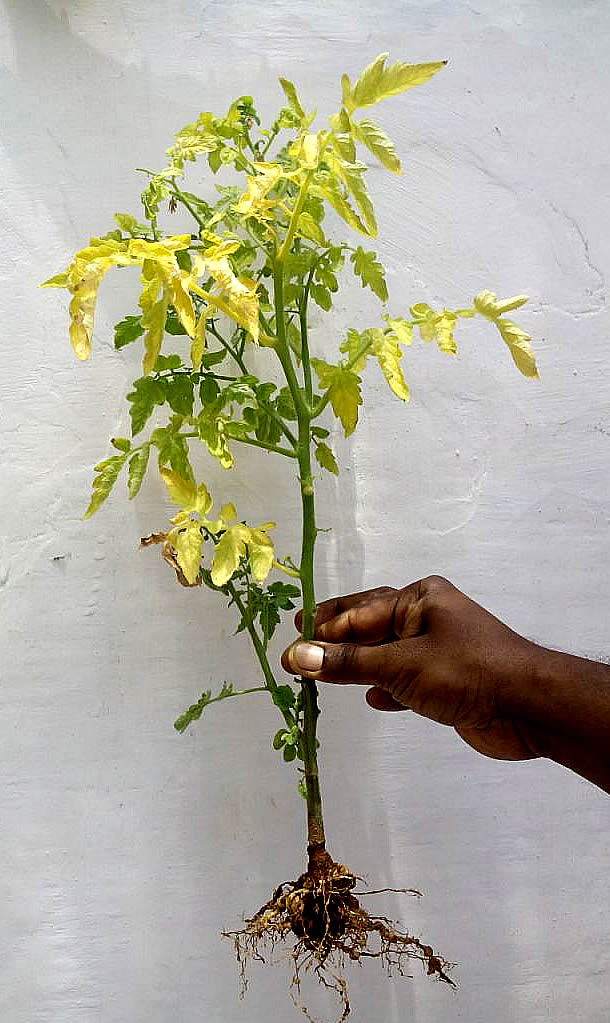
Stunted & reduced plant growth

Yellowing (chlorosis) of leaves

Wilting during hot hours

Reduced yield & poor fruit set

Nutrient deficiency symptoms

BELOW-GROUND SYMPTOMS

Root galls / knots (1–10 mm)

Stunted root system

Excessive root branching

Root decay & lesions

Poor water/nutrient uptake

Early detection is critical for management

Made byBobr AI

BELOW-GROUND SYMPTOMS

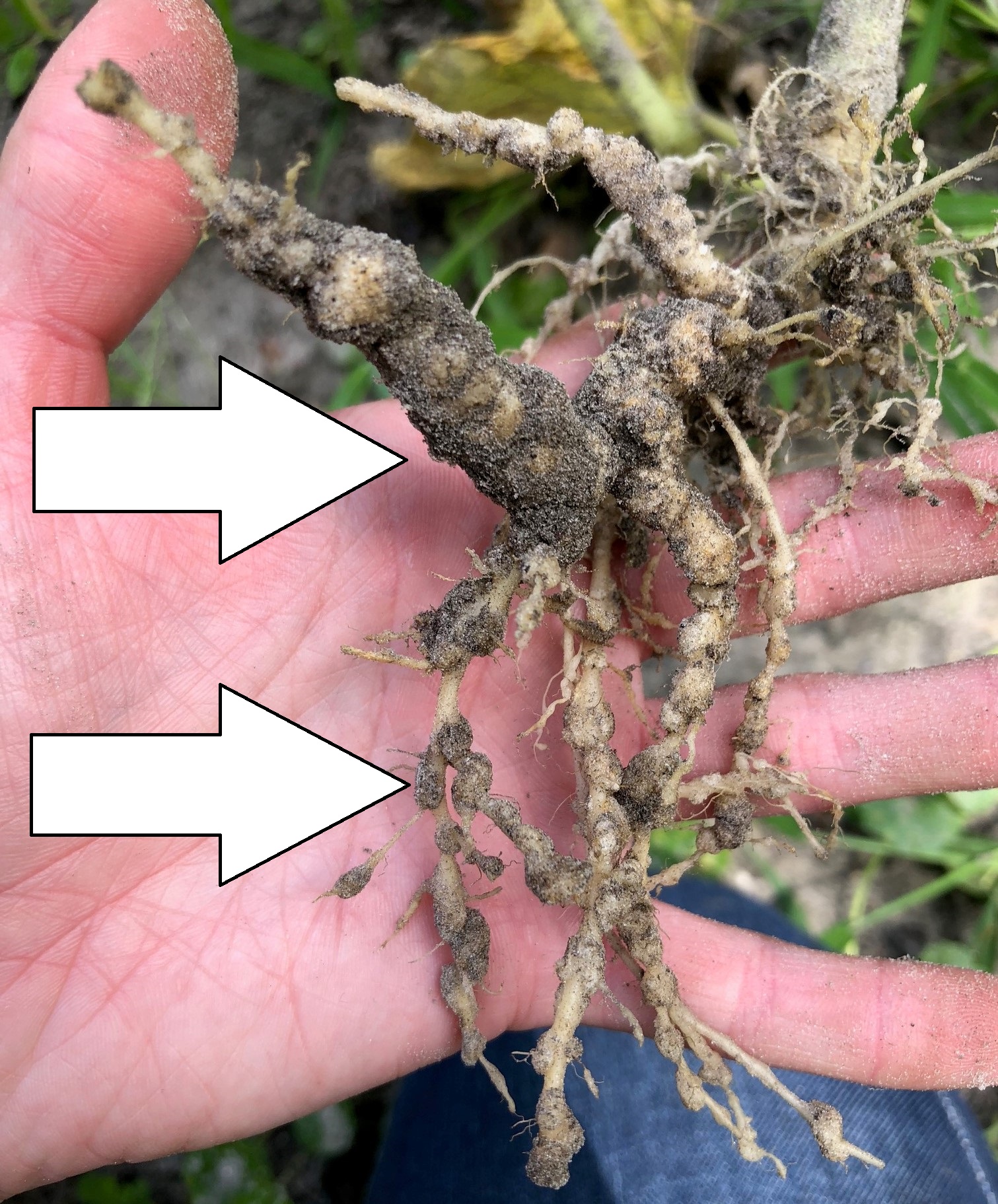
Root Galls: The Hallmark of Nematode Infection

1
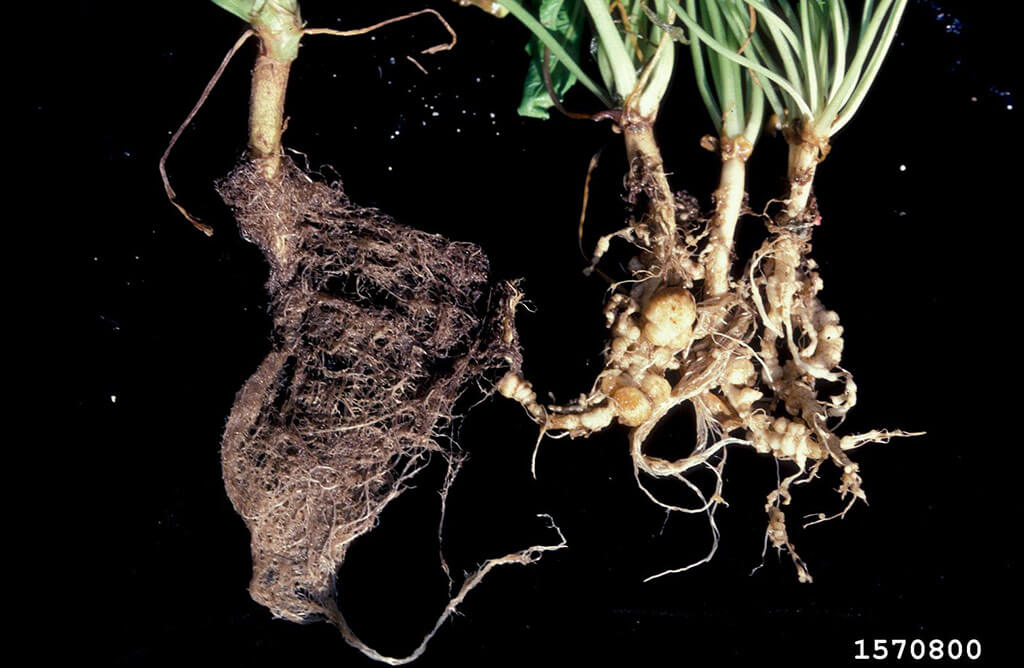
Galls = abnormal swellings of 1–10 mm on roots
2
Caused by giant cell formation induced by nematodes
3
Disrupt water and nutrient transport
4
Provide feeding sites for female nematodes
5
Can be confused with nitrogen-fixing nodules
6
Severity increases with nematode population density
Comparison: Normal vs Galled
Affected crops: Tomato, Pepper, Soybean, Cotton, Eggplant & 3,000+ species
Made byBobr AI

LIFE CYCLE

Nematode Life Cycle

Completes in 20–37 days at 25–28°C

Stage 1: EGG
Female lays 200–1,000 eggs in gelatinous matrix on root surface
Stage 2: J1
Develops inside egg, first molt occurs within egg
Stage 3: J2
Infective stage — hatches and migrates through soil to root tips
Stage 4: J3/J4
Penetrates root, becomes sedentary, molts twice more
Stage 5: ADULT FEMALE
Pear-shaped, sedentary, induces giant cells for feeding
Stage 6: ADULT MALE
Vermiform, leaves root, fertilizes female (facultative)
KEY FACTS
Optimal Temperature
25–28°C
Cycle Duration
20–37 days
Eggs per Female
200–1,000
Reproduction
Mitotic parthenogenesis
Made byBobr AI

INFECTION MECHANISM

How Nematodes Penetrate Plant Roots

1

ROOT DETECTION

J2 detects CO₂ gradient and root exudates using chemosensory organs (amphids)

2

ROOT PENETRATION

J2 uses stylet (hollow needle) to pierce root cells near elongation zone

3

CELL MIGRATION

Migrates intercellularly toward vascular tissue (endodermis)

4

GIANT CELL INDUCTION

Secretes esophageal gland proteins — transforms 5–7 cells into multinucleate giant cells

5

SEDENTARY FEEDING

Female becomes swollen (pear-shaped), feeds on giant cells, lays eggs externally

Stylet Size:
15–16 μm (female), 23–26 μm (male)
Giant Cells:
Metabolically hyperactive, serve as nutrient sinks
Made byBobr AI

LABORATORY DIAGNOSTICS

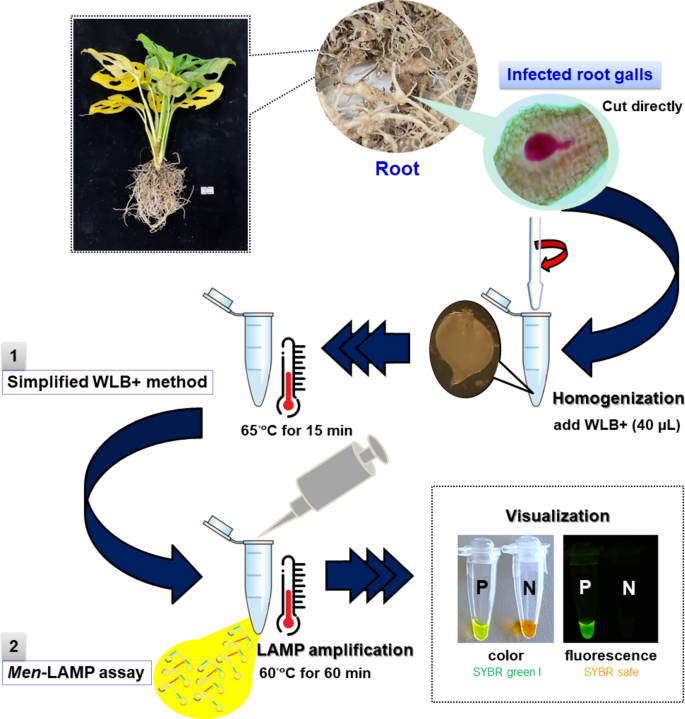
Lab Assays for Nematode Detection in Plant Roots

🔬
1

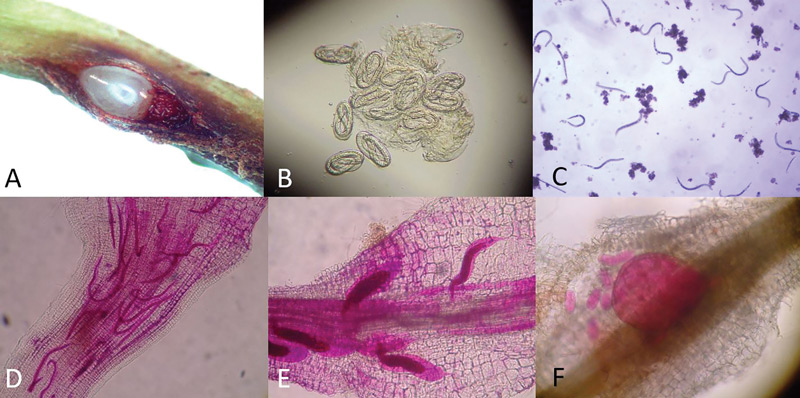
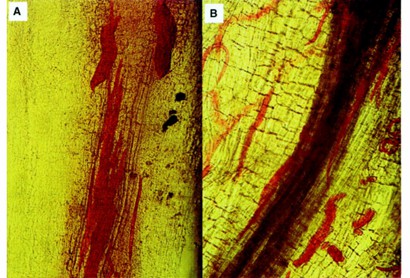
Acid Fuchsin Staining

Roots cleared and stained to visualize nematodes inside

🧪
2

Baermann Funnel Technique

Extraction of nematodes from roots/soil using water migration

🧬
3

PCR & Molecular Assays

Species-level identification using DNA markers

🫧
4

LAMP Assay

Loop-mediated isothermal amplification for rapid field diagnosis

📊
5

Egg Mass Counting

Phloxine B staining to count egg masses on roots

🖥️
6

Root Staining & Microscopy

Detailed morphological identification

Lab Assay Process
Root Staining Visualization
Early and accurate diagnosis enables targeted nematode management
Made byBobr AI

LAB PROTOCOL

Acid Fuchsin Root Staining Method

Standard method for visualizing endoparasitic nematodes in roots

1

ROOT COLLECTION

Wash fresh plant roots thoroughly under running water to remove soil

2

CLEARING

Autoclave or boil roots in 0.05% acid fuchsin stain + lactic acid (1:1) for 1 min at 121°C OR boil in 10% KOH for 2 min to clear root tissue

3

DESTAINING

Transfer to acidified glycerol (95% glycerol + lactic acid) and destain by heating gently

4

MOUNTING

Mount cleared/stained root segments on glass slides with glycerol

5

MICROSCOPY

Examine under compound microscope at 10x–40x — nematodes stain pink/red against clear root tissue

6

DOCUMENTATION

Count and photograph nematodes (J2, females, males, eggs)

Alternative: Phloxine B staining for egg mass visualization; Trypan blue for general staining

Made byBobr AI

Meloidogyne
incognita

FEATURED SPECIES

Meloidogyne incognita

The Southern Root-Knot Nematode

KEY BIOLOGICAL FACTS
Common Name: Southern Root-Knot Nematode
Distribution: Tropical & subtropical regions worldwide
Host Range: 3,000+ plant species
Female Size: 0.4–1.0 mm, pear-shaped
Stylet: 15–16 μm (females)
J2 Length: 350–450 μm
Reproduction: Mitotic parthenogenesis (no male required)
Optimal Temp: 25–28°C
One of the top 10 most economically important plant pathogens globally
Made byBobr AI

MODE OF ACTION

Meloidogyne incognita: How It Attacks Plants

STYLET INJECTION

The nematode uses its hollow stylet (needle-like mouthpart) to inject esophageal gland secretions (EGS) directly into root cells. These secretions contain:

  • Cell wall-degrading enzymes (pectinases, cellulases)
  • Gene-silencing effector proteins
  • Hormonal mimics (cytokinin-like compounds)
These effectors reprogram plant cell gene expression

GIANT CELL FORMATION

5–7 root cells are transformed into multinucleate GIANT CELLS (GCs):

  • Each GC undergoes repeated nuclear divisions without cell division
  • GC walls thicken dramatically
  • Plasmodesmata multiply for nutrient flow
  • Plant genes for cell expansion are hijacked
  • GCs become permanent nutrient sinks for the nematode

GALL DEVELOPMENT

Surrounding cells proliferate (hyperplasia + hypertrophy) forming the visible GALL:

  • Disrupts xylem & phloem continuity
  • Blocks water and mineral transport
  • Creates physical barrier in root architecture
  • Allows secondary pathogen entry
  • Causes systemic plant stress responses
Result: Stunted growth, chlorosis, wilting, yield loss up to 88% in some crops
Made byBobr AI

ECONOMIC IMPACT

Crop Losses Caused by Meloidogyne incognita

Estimated Crop Yield Loss Levels

Severe
Moderate
Cassava
Up to 88%
Cowpea
Up to 50%
Tomato
35–50%
Soybean
Up to 50%
Cotton
25–40%
Pepper
20–35%
Eggplant
20–30%
$157 Billion
Global annual crop losses from all plant-parasitic nematodes
3,000+
Number of host plant species affected by M. incognita
35–88%
Yield loss range in highly susceptible crops
Multiple
Generations per growing season (up to 5–6 per year)
M. incognita is listed among the top 10 most devastating plant pathogens worldwide
Made byBobr AI

DISEASE MANAGEMENT

Integrated Management of Meloidogyne incognita

🌱

CROP ROTATION

Rotate with non-host crops: maize, sunflower, sorghum. Reduces nematode population in soil by 60–80% over 2 seasons.

🧬

RESISTANT VARIETIES

Mi-1 gene in tomato confers resistance. Resistant cultivars of soybean, pepper, cowpea available. Virulent biotypes emerging.

☠️

NEMATICIDES

Chemical options: Oxamyl, Aldicarb, Fenamiphos. Applied as soil drench or granules. Effective but environmentally restricted.

🦠

BIOLOGICAL CONTROL

Paecilomyces lilacinus, Purpureocillium lilacinum, Bacillus subtilis, Trichoderma spp. attack nematode eggs and juveniles.

🌡️

SOLARIZATION

Covering moist soil with transparent plastic for 4–6 weeks raises soil temp to 55°C+ killing nematodes and eggs.

🌿

ORGANIC AMENDMENTS

Neem cake, compost, vermicompost applied to soil release nematicidal compounds and boost beneficial microbes.

IPM Approach: Combine 2–3 strategies for most effective and sustainable nematode suppression

Made byBobr AI

CONCLUSION & SUMMARY

Key Takeaways

1.
Nematodes are microscopic roundworms — among Earth's most abundant and destructive agricultural pests
2.
Meloidogyne incognita (Southern Root-Knot Nematode) infects 3,000+ plant species globally
3.
Life cycle: Egg → J2 (infective) → J3/J4 → Adults — completed in 20–37 days
4.
Giant cell formation disrupts water & nutrient transport, causing root galls and systemic plant stress
5.
Crop losses range from 35–88% in highly susceptible crops; global losses exceed $157 billion/year
6.
Lab diagnosis uses root staining (acid fuchsin), molecular PCR, LAMP assays, and Baermann funnel
7.
Integrated Pest Management (IPM) combining crop rotation, biocontrol & resistant varieties is most effective
Thank You | Plant Pathology & Nematology
Made byBobr AI
Bobr AI

DESIGNER-MADE
PRESENTATION,
GENERATED FROM
YOUR PROMPT

Create your own professional slide deck with real images, data charts, and unique design in under a minute.

Generate For Free

Nematodes Biology & Impact: Meloidogyne incognita Guide

Learn about Meloidogyne incognita biology, life cycle, and crop impact. Explore laboratory diagnostics and integrated disease management for root-knot nematodes.

Plant Pathology Series

NEMATODES

Biology, Classification, Life Cycle

& Meloidogyne incognita

Impact on Crops

Lab Diagnostics

Mode of Action

INTRODUCTION

What Are Nematodes?

Nematodes are microscopic, unsegmented roundworms belonging to phylum Nematoda

Among the most abundant multicellular organisms on Earth — over 57 billion per human!

Found in soil, water, plants, and animals worldwide

~4,100 species are plant-parasitic, causing massive agricultural losses

Also called "eelworms" due to their eel-like movement

Global crop losses exceed $157 billion annually

Size ranges from 0.3 mm to several millimeters in length

SCIENTIFIC CLASSIFICATION

Taxonomic Hierarchy of Nematodes

Kingdom

Animalia

Phylum

Nematoda

Class

Secernentea

Order

Tylenchida

Family

Meloidogynidae

Genus

Meloidogyne

Species

Meloidogyne incognita

~30,000 described species

~4,100 plant-parasitic species

CLASSIFICATION

Types of Plant-Parasitic Nematodes

Root-Knot Nematodes

Meloidogyne spp.

Most destructive globally; forming distinct protective galls that heavily disrupt water and nutrient uptake in roots.

Cyst Nematodes

Heterodera, Globodera spp.

Form highly durable protective cysts derived from the female body, allowing eggs to survive for years in soil.

Lesion Nematodes

Pratylenchus spp.

Migratory endoparasites that cause characteristic root lesions, exposing the host plant to secondary infections.

Stem & Bulb Nematodes

Ditylenchus spp.

Attack above-ground stems and bulbs directly, often causing unusual swelling, severe tissue distortion, and decay.

Foliar Nematodes

Aphelenchoides spp.

Infect leaves and delicate buds above ground, typically causing distinctive angular leaf lesions bounded by veins.

Citrus Nematodes

Tylenchulus spp.

Semi-endoparasites that specifically target citrus root systems, ultimately leading to slow decline disease in orchards.

Focus of this presentation: Root-Knot Nematodes (Meloidogyne incognita)

CROP SYMPTOMS

Visible Signs of Nematode Attack

ABOVE-GROUND SYMPTOMS

Stunted & reduced plant growth

Yellowing (chlorosis) of leaves

Wilting during hot hours

Reduced yield & poor fruit set

Nutrient deficiency symptoms

BELOW-GROUND SYMPTOMS

Root galls / knots (1–10 mm)

Stunted root system

Excessive root branching

Root decay & lesions

Poor water/nutrient uptake

Early detection is critical for management

BELOW-GROUND SYMPTOMS

Root Galls: The Hallmark of Nematode Infection

Galls = abnormal swellings of 1–10 mm on roots

Caused by giant cell formation induced by nematodes

Disrupt water and nutrient transport

Provide feeding sites for female nematodes

Can be confused with nitrogen-fixing nodules

Severity increases with nematode population density

Tomato, Pepper, Soybean, Cotton, Eggplant & 3,000+ species

LIFE CYCLE

Nematode Life Cycle

Completes in 20–37 days at 25–28°C

Stage 1: EGG

Female lays 200–1,000 eggs in gelatinous matrix on root surface

Stage 2: J1

Develops inside egg, first molt occurs within egg

Stage 3: J2

Infective stage — hatches and migrates through soil to root tips

Stage 4: J3/J4

Penetrates root, becomes sedentary, molts twice more

Stage 5: ADULT FEMALE

Pear-shaped, sedentary, induces giant cells for feeding

Stage 6: ADULT MALE

Vermiform, leaves root, fertilizes female (facultative)

25–28°C

20–37 days

200–1,000

Mitotic parthenogenesis

INFECTION MECHANISM

How Nematodes Penetrate Plant Roots

1

ROOT DETECTION

J2 detects CO₂ gradient and root exudates using chemosensory organs (amphids)

2

ROOT PENETRATION

J2 uses stylet (hollow needle) to pierce root cells near elongation zone

3

CELL MIGRATION

Migrates intercellularly toward vascular tissue (endodermis)

4

GIANT CELL INDUCTION

Secretes esophageal gland proteins — transforms 5–7 cells into multinucleate giant cells

5

SEDENTARY FEEDING

Female becomes swollen (pear-shaped), feeds on giant cells, lays eggs externally

Stylet Size:

15–16 μm (female), 23–26 μm (male)

Giant Cells:

Metabolically hyperactive, serve as nutrient sinks

LABORATORY DIAGNOSTICS

Lab Assays for Nematode Detection in Plant Roots

Acid Fuchsin Staining

Roots cleared and stained to visualize nematodes inside

🔬

Baermann Funnel Technique

Extraction of nematodes from roots/soil using water migration

🧪

PCR & Molecular Assays

Species-level identification using DNA markers

🧬

LAMP Assay

Loop-mediated isothermal amplification for rapid field diagnosis

🫧

Egg Mass Counting

Phloxine B staining to count egg masses on roots

📊

Root Staining & Microscopy

Detailed morphological identification

🖥️

Early and accurate diagnosis enables targeted nematode management

Lab Assay Process

Root Staining Visualization

LAB PROTOCOL

Acid Fuchsin Root Staining Method

Standard method for visualizing endoparasitic nematodes in roots

ROOT COLLECTION

Wash fresh plant roots thoroughly under running water to remove soil

CLEARING

Autoclave or boil roots in 0.05% acid fuchsin stain + lactic acid (1:1) for 1 min at 121°C OR boil in 10% KOH for 2 min to clear root tissue

DESTAINING

Transfer to acidified glycerol (95% glycerol + lactic acid) and destain by heating gently

MOUNTING

Mount cleared/stained root segments on glass slides with glycerol

MICROSCOPY

Examine under compound microscope at 10x–40x — nematodes stain pink/red against clear root tissue

DOCUMENTATION

Count and photograph nematodes (J2, females, males, eggs)

Phloxine B staining for egg mass visualization; Trypan blue for general staining

Meloidogyne

incognita

FEATURED SPECIES

Meloidogyne incognita

The Southern Root-Knot Nematode

Southern Root-Knot Nematode

Tropical & subtropical regions worldwide

3,000+ plant species

0.4–1.0 mm, pear-shaped

15–16 μm (females)

350–450 μm

Mitotic parthenogenesis (no male required)

25–28°C

One of the top 10 most economically important plant pathogens globally

MODE OF ACTION

Meloidogyne incognita: How It Attacks Plants

STYLET INJECTION

The nematode uses its hollow stylet (needle-like mouthpart) to inject esophageal gland secretions (EGS) directly into root cells. These secretions contain:

Cell wall-degrading enzymes (pectinases, cellulases)

Gene-silencing effector proteins

Hormonal mimics (cytokinin-like compounds)

These effectors reprogram plant cell gene expression

GIANT CELL FORMATION

5–7 root cells are transformed into multinucleate GIANT CELLS (GCs):

Each GC undergoes repeated nuclear divisions without cell division

GC walls thicken dramatically

Plasmodesmata multiply for nutrient flow

Plant genes for cell expansion are hijacked

GCs become permanent nutrient sinks for the nematode

GALL DEVELOPMENT

Surrounding cells proliferate (hyperplasia + hypertrophy) forming the visible GALL:

Disrupts xylem & phloem continuity

Blocks water and mineral transport

Creates physical barrier in root architecture

Allows secondary pathogen entry

Causes systemic plant stress responses

Result: Stunted growth, chlorosis, wilting, yield loss up to 88% in some crops

ECONOMIC IMPACT

Crop Losses Caused by Meloidogyne incognita

M. incognita is listed among the top 10 most devastating plant pathogens worldwide

Cassava

Up to 88%

Cowpea

Up to 50%

Tomato

35–50%

Soybean

Up to 50%

Cotton

25–40%

Pepper

20–35%

Eggplant

20–30%

$157 Billion

Global annual crop losses from all plant-parasitic nematodes

3,000+

Number of host plant species affected by M. incognita

35–88%

Yield loss range in highly susceptible crops

Multiple

Generations per growing season (up to 5–6 per year)

DISEASE MANAGEMENT

Integrated Management of

Meloidogyne incognita

CROP ROTATION

Rotate with non-host crops: maize, sunflower, sorghum. Reduces nematode population in soil by 60–80% over 2 seasons.

RESISTANT VARIETIES

Mi-1 gene in tomato confers resistance. Resistant cultivars of soybean, pepper, cowpea available. Virulent biotypes emerging.

NEMATICIDES

Chemical options: Oxamyl, Aldicarb, Fenamiphos. Applied as soil drench or granules. Effective but environmentally restricted.

BIOLOGICAL CONTROL

Paecilomyces lilacinus, Purpureocillium lilacinum, Bacillus subtilis, Trichoderma spp. attack nematode eggs and juveniles.

SOLARIZATION

Covering moist soil with transparent plastic for 4–6 weeks raises soil temp to 55°C+ killing nematodes and eggs.

ORGANIC AMENDMENTS

Neem cake, compost, vermicompost applied to soil release nematicidal compounds and boost beneficial microbes.

IPM Approach: Combine 2–3 strategies for most effective and sustainable nematode suppression

CONCLUSION & SUMMARY

Key Takeaways

Nematodes are microscopic roundworms — among Earth's most abundant and destructive agricultural pests

Meloidogyne incognita (Southern Root-Knot Nematode) infects 3,000+ plant species globally

Life cycle: Egg → J2 (infective) → J3/J4 → Adults — completed in 20–37 days

Giant cell formation disrupts water & nutrient transport, causing root galls and systemic plant stress

Crop losses range from 35–88% in highly susceptible crops; global losses exceed $157 billion/year

Lab diagnosis uses root staining (acid fuchsin), molecular PCR, LAMP assays, and Baermann funnel

Integrated Pest Management (IPM) combining crop rotation, biocontrol & resistant varieties is most effective

Thank You | Plant Pathology & Nematology

  • nematology
  • plant-pathology
  • meloidogyne-incognita
  • crop-protection
  • agriculture
  • biology
  • integrated-pest-management