



Made byBobr AI

Guide to Exponential Growth and Decay Functions

Learn to calculate exponential growth and decay using real-world examples like compound interest, population, and depreciation with step-by-step formulas.

#exponential-growth#exponential-decay#mathematics#algebra-functions#growth-rate-formula#educational-presentation

Exponential Growth & Decay

Step-by-Step Guide to Understanding Real-World Functions

Made byBobr AI

What is Exponential Growth?

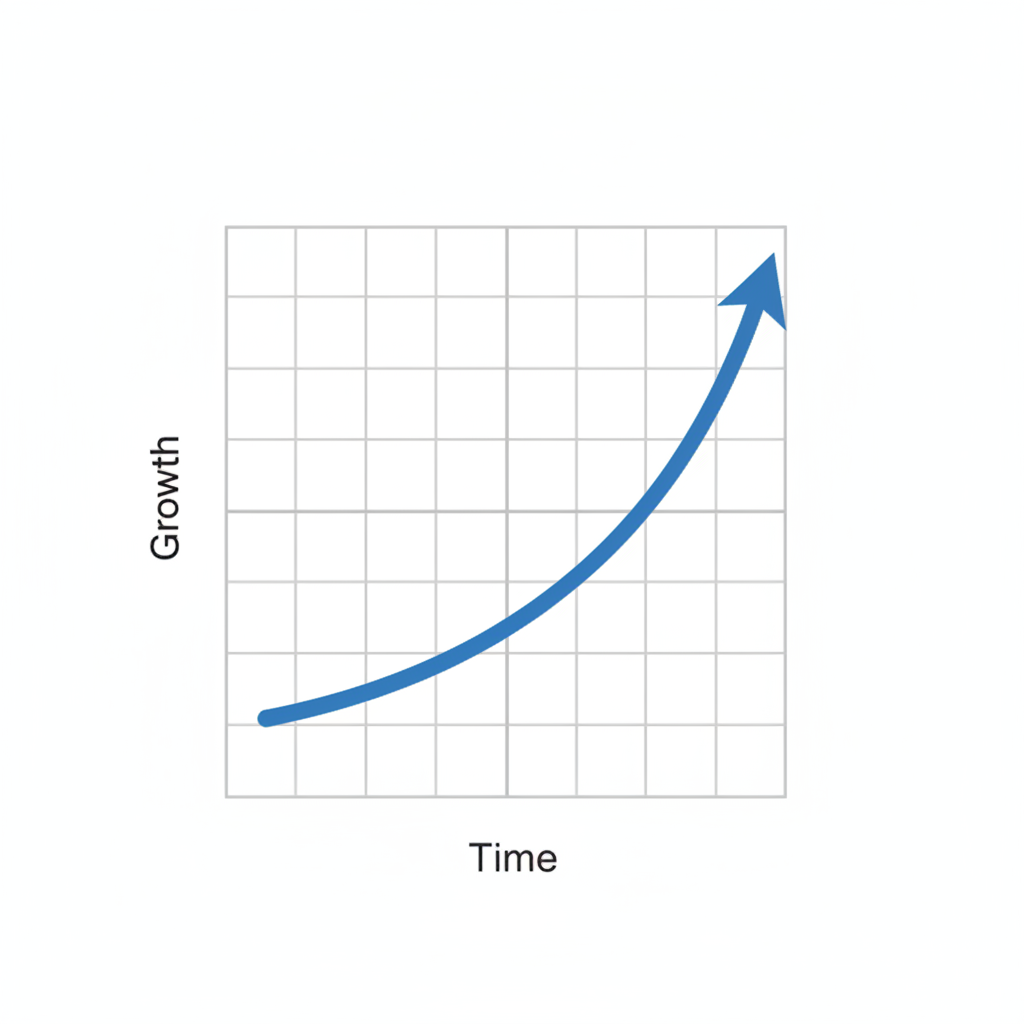
Definition: Exponential growth occurs when quantity increases by the same percentage (or factor) in each unit of time. The curve starts slowly and then shoots upward rapidly.

Key Features:
  • The base (b) is greater than 1.
  • Graph curves upwards from left to right.
  • Example: Population growth, compound interest.
Made byBobr AI

What is Exponential Decay?

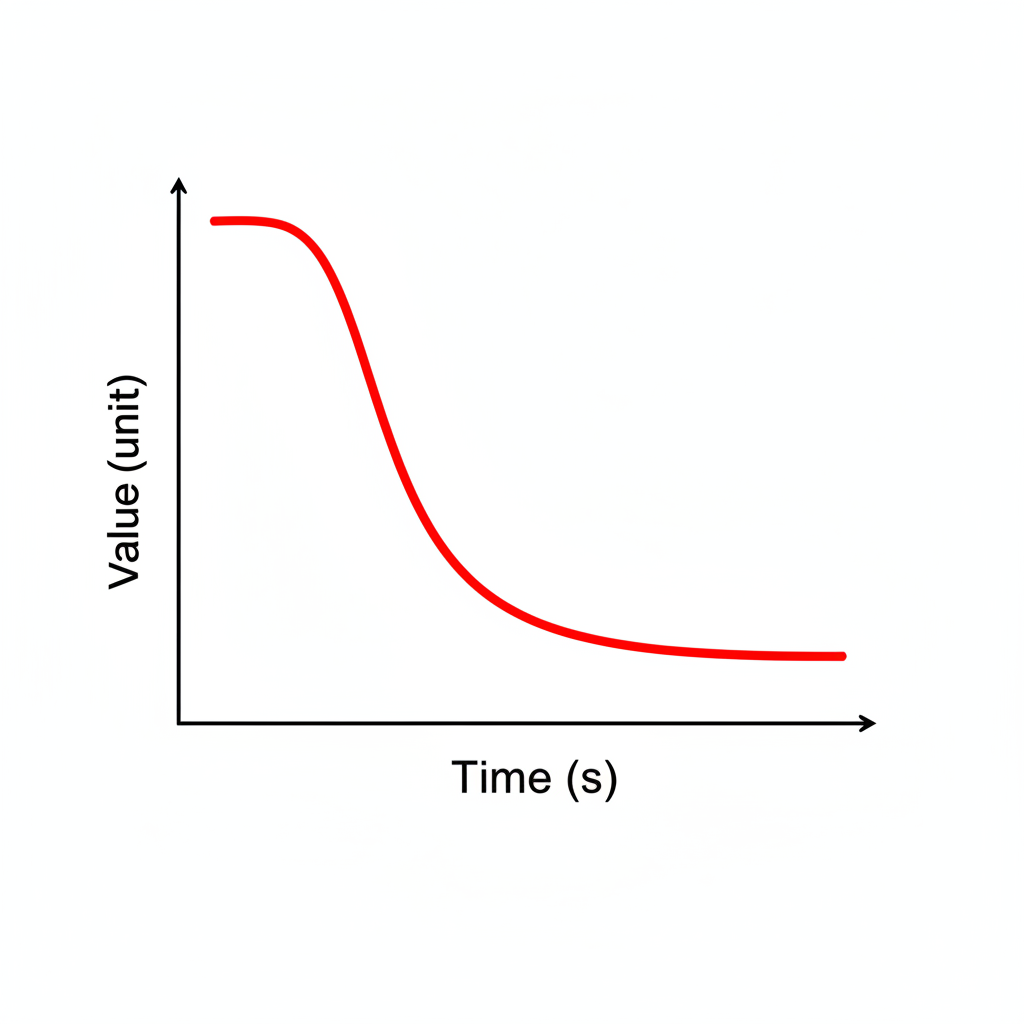
Definition: Exponential decay occurs when a quantity decreases by the same percentage over time. It drops rapidly at first and then levels off.

Key Features:
  • The base (b) is between 0 and 1.
  • Graph curves downwards from left to right.
  • Example: Radioactive decay, car depreciation.
Made byBobr AI

The General Formula

y = a(1 ± r)^t
  • y = Final amount
  • a = Initial amount (Principal)
  • r = Growth or Decay rate (decimal)
  • t = Time period
  • Use (1 + r) for Growth
  • Use (1 - r) for Decay
Made byBobr AI

Step-by-Step Example 1

Scenario: A bacteria culture starts with 500 bacteria and grows at a rate of 12% per hour. How many bacteria will there be after 6 hours?
1. Identify variables: a=500, r=0.12, t=6
2. Determine type: Growth (use +)
3. Write equation: y = 500(1 + 0.12)^6
4. Solve: y = 500(1.12)^6 ≈ 987
Made byBobr AI

Step-by-Step Example 2

Scenario: You bought a car for $25,000. It depreciates in value by 10% each year. write the function for the car's value.
1. Identify variables: a=25,000, r=0.10
2. Determine type: Decay (use -)
3. Base factor: (1 - 0.10) = 0.90
4. Function: y = 25,000(0.90)^t
Made byBobr AI

Practice Problems: Table 1

Question Exponential Growth or Decay? Write a function that represents this situation Answer (Notes)
An investment of $10,000 gains 8% interest per year. Exponential Growth y = 10,000(1.08)^t Value increases over time.
A town of 5,000 people loses 2% of its population annually. Exponential Decay y = 5,000(0.98)^t Value decreases over time.
Made byBobr AI

Practice Problems: Table 2

Question Exponential Growth or Decay? Write a function that represents this situation Answer (Notes)
The value of a rare coin ($500) appreciates by 4.5% yearly. Exponential Growth y = 500(1.045)^t Base is 1.045
Amount of medicine (200mg) in the blood decreases by 20% per hour. Exponential Decay y = 200(0.80)^t Base is 0.80
Made byBobr AI

Visualizing the Difference

Comparison of Growth (10% rate) vs Decay (10% rate) starting at 100 units over 10 years.

Chart
Made byBobr AI

Key Takeaways

  • Formula: y = a(1 ± r)^t
  • Growth: Base is > 1. Value increases.
  • Decay: Base is between 0 and 1. Value decreases.
Made byBobr AI
Bobr AI

DESIGNER-MADE
PRESENTATION,
GENERATED FROM
YOUR PROMPT

Create your own professional slide deck with real images, data charts, and unique design in under a minute.

Generate For Free

Guide to Exponential Growth and Decay Functions

Learn to calculate exponential growth and decay using real-world examples like compound interest, population, and depreciation with step-by-step formulas.

Exponential Growth & Decay

Step-by-Step Guide to Understanding Real-World Functions

What is Exponential Growth?

Exponential growth occurs when quantity increases by the same percentage (or factor) in each unit of time. The curve starts slowly and then shoots upward rapidly.

Key Features:<ul><li>The base (b) is greater than 1.</li><li>Graph curves upwards from left to right.</li><li>Example: Population growth, compound interest.</li></ul>

What is Exponential Decay?

Exponential decay occurs when a quantity decreases by the same percentage over time. It drops rapidly at first and then levels off.

Key Features:<ul><li>The base (b) is between 0 and 1.</li><li>Graph curves downwards from left to right.</li><li>Example: Radioactive decay, car depreciation.</li></ul>

The General Formula

y = a(1 ± r)^t

<ul><li><strong>y</strong> = Final amount</li><li><strong>a</strong> = Initial amount (Principal)</li><li><strong>r</strong> = Growth or Decay rate (decimal)</li><li><strong>t</strong> = Time period</li><li>Use <strong>(1 + r)</strong> for Growth</li><li>Use <strong>(1 - r)</strong> for Decay</li></ul>

Step-by-Step Example 1

Scenario: A bacteria culture starts with 500 bacteria and grows at a rate of 12% per hour. How many bacteria will there be after 6 hours?

1. Identify variables: a=500, r=0.12, t=6<br>2. Determine type: Growth (use +)<br>3. Write equation: y = 500(1 + 0.12)^6<br>4. Solve: y = 500(1.12)^6 ≈ 987

Step-by-Step Example 2

Scenario: You bought a car for $25,000. It depreciates in value by 10% each year. write the function for the car's value.

1. Identify variables: a=25,000, r=0.10<br>2. Determine type: Decay (use -)<br>3. Base factor: (1 - 0.10) = 0.90<br>4. Function: y = 25,000(0.90)^t

Practice Problems: Table 1

An investment of $10,000 gains 8% interest per year.

Exponential Growth

y = 10,000(1.08)^t

Value increases over time.

A town of 5,000 people loses 2% of its population annually.

Exponential Decay

y = 5,000(0.98)^t

Value decreases over time.

Practice Problems: Table 2

The value of a rare coin ($500) appreciates by 4.5% yearly.

Exponential Growth

y = 500(1.045)^t

Base is 1.045

Amount of medicine (200mg) in the blood decreases by 20% per hour.

Exponential Decay

y = 200(0.80)^t

Base is 0.80

Visualizing the Difference

Comparison of Growth (10% rate) vs Decay (10% rate) starting at 100 units over 10 years.

Key Takeaways

Formula: y = a(1 ± r)^t

Growth: Base is > 1. Value increases.

Decay: Base is between 0 and 1. Value decreases.

  • exponential-growth
  • exponential-decay
  • mathematics
  • algebra-functions
  • growth-rate-formula
  • educational-presentation