

Advances in Bone Tissue 3D Bioprinting | Biofabrication
Learn about extrusion-based 3D bioprinting, hybrid scaffold strategies, and bioink development for critical-size bone defect repair in tissue engineering.
Biofabrication in Bone Tissue Engineering
Advances in Extrusion-Based 3D Bioprinting and Hybrid Scaffold Strategies
Graduate Research Seminar | 2026
Presentation Outline
Critical-sized bone defects represent a significant clinical challenge in orthopedics.
Autografts (gold standard) suffer from donor site morbidity and limited availability.
Allografts face risks of immune rejection and disease transmission.
3D Bioprinting enables patient-specific geometries and heterogeneous structures.
Introduction
The Clinical Challenge of Critical-Size Defects
Proposed Solution
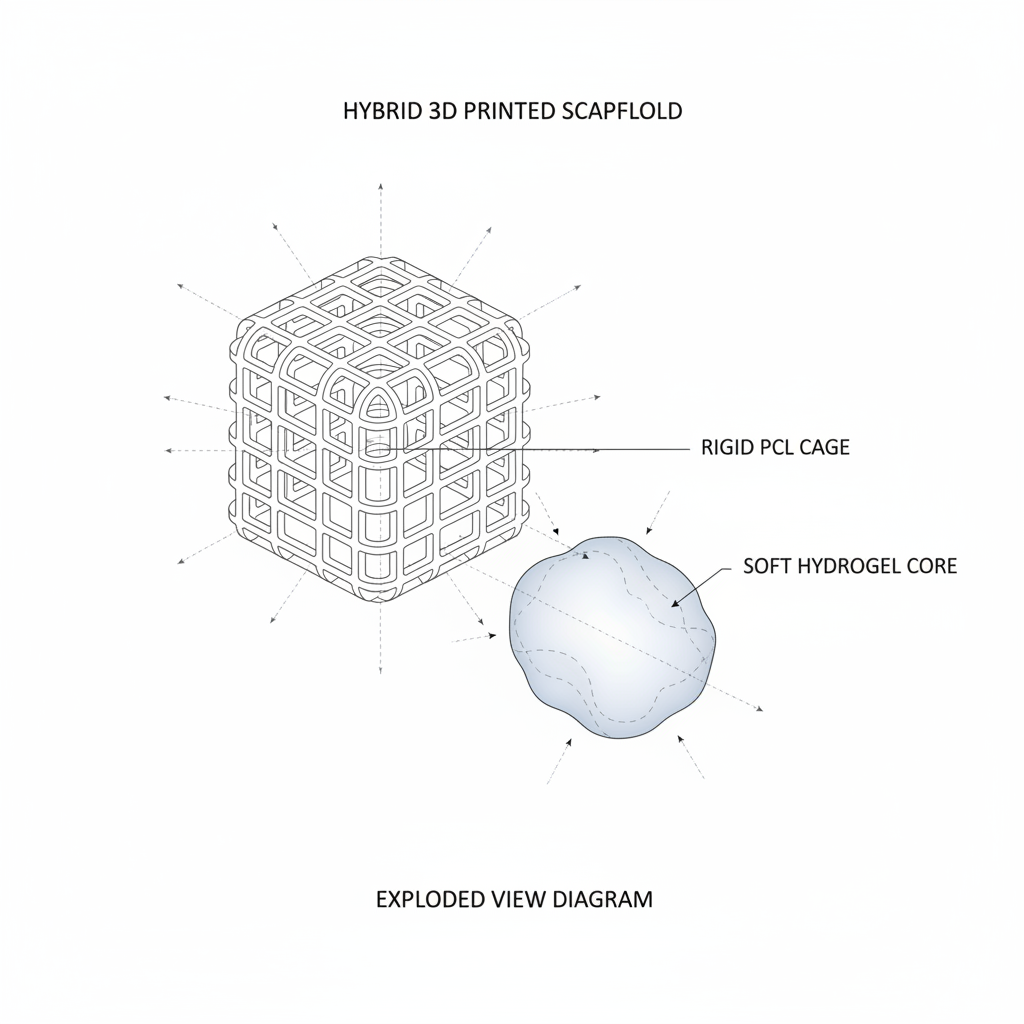
The Hybrid Scaffold Concept
Methodology
Melt Extrusion (PCL) vs. Bioprinting (Hydrogel)
Geometric Design "Contestants"
Engineering Analysis
Mechanical Strength vs. Permeability
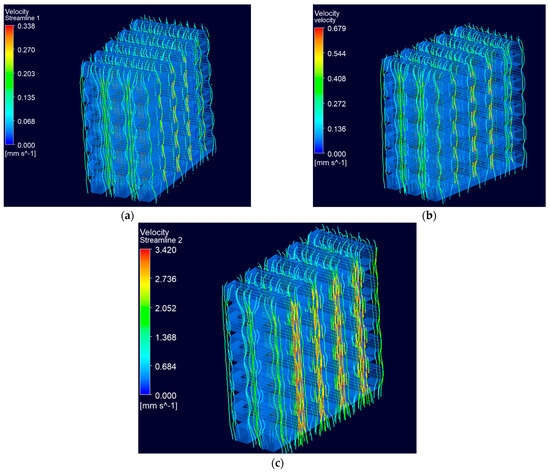
CFD Simulation & Wall Shear Stress (WSS)
Biological Validation
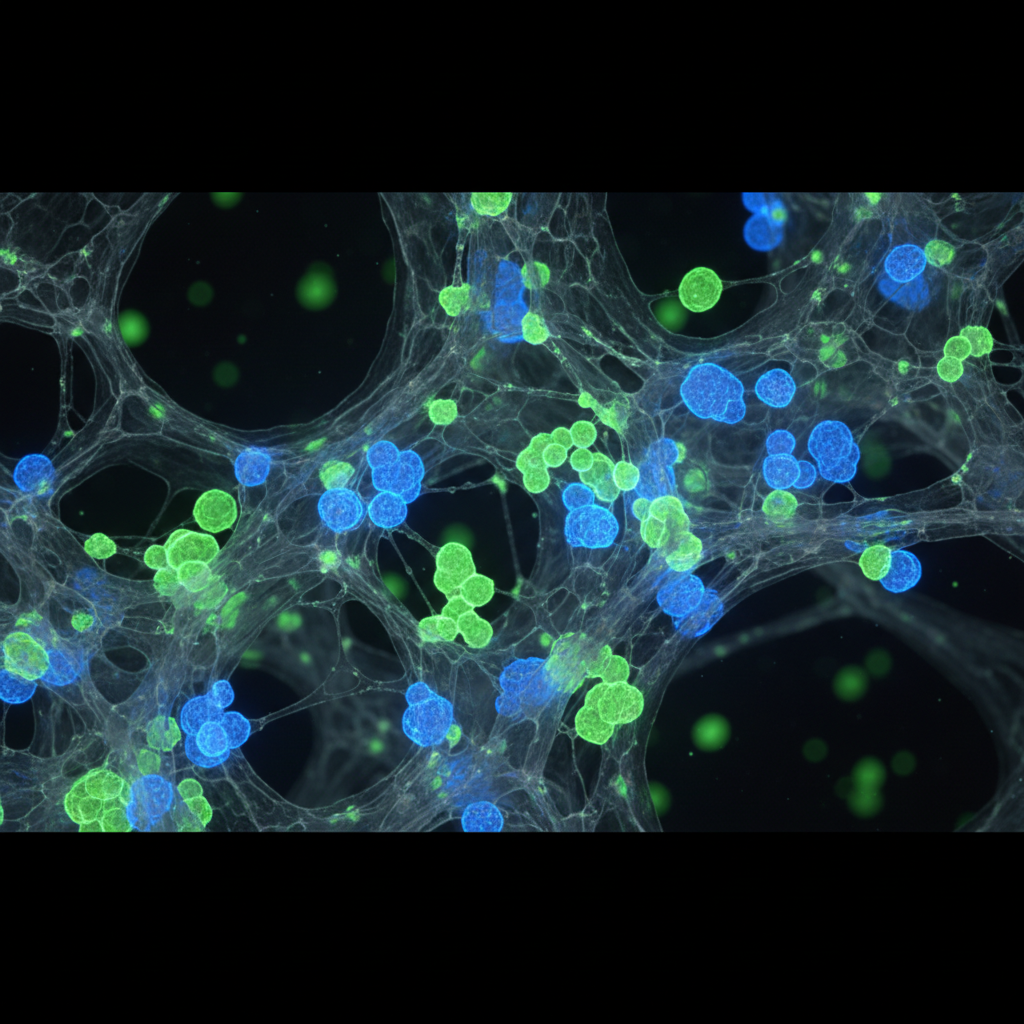
Cell Viability & Gradient Mineralization
Critical Review & Conclusions
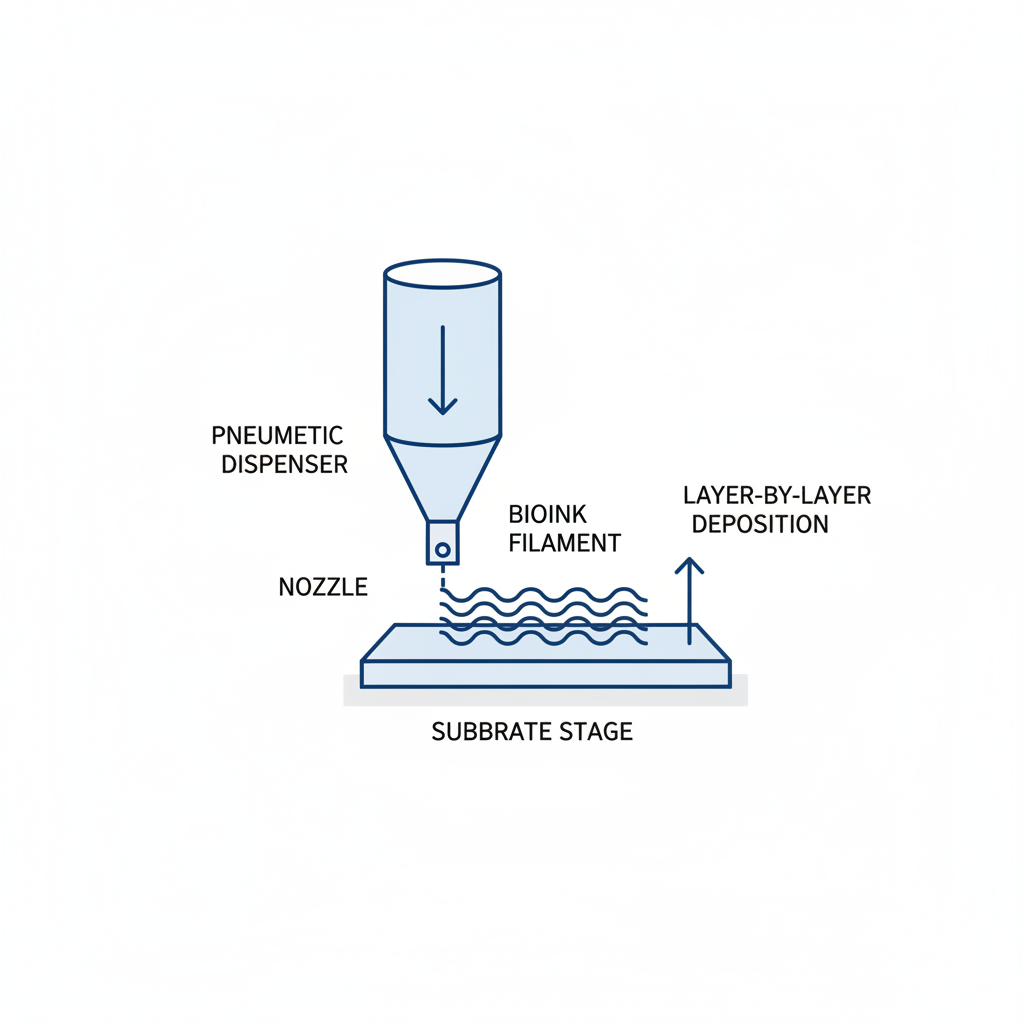
Extrusion Bioprinting Fundamentals
Extrusion-based printing dispenses continuous filaments of material through a micro-nozzle using pneumatic, piston, or screw-driven pressure. It is the most versatile modality for viscous polymers and cell-laden hydrogels.
Key Parameters
Rheology: Shear-thinning behavior required for nozzle transit.
Crosslinking: UV, enzymatic, or thermal gelation post-extrusion.
Biomaterial: Rigid Scaffolds (Synthetic)
To mimic the cortical bone, synthetic polymers like Polycaprolactone (PCL) and PLA are used for their high mechanical strength and slow degradation rates.
Mechanical Strength Comparison
Biomaterial: Bioinks & Hydrogels
Mimic the extracellular matrix (ECM) to support cell viability.
Common Materials: GelMA, Alginate, PEG, Collagen.
Challenge: Low mechanical integrity makes them unsuitable for load-bearing applications alone.
Hybrid Biofabrication Strategy
Combines the load-bearing capacity of synthetic frames with the biological activity of cell-laden hydrogels.
Rigid PCL Frame (Mechanical Support)
Soft Bioink (Cell Niche)
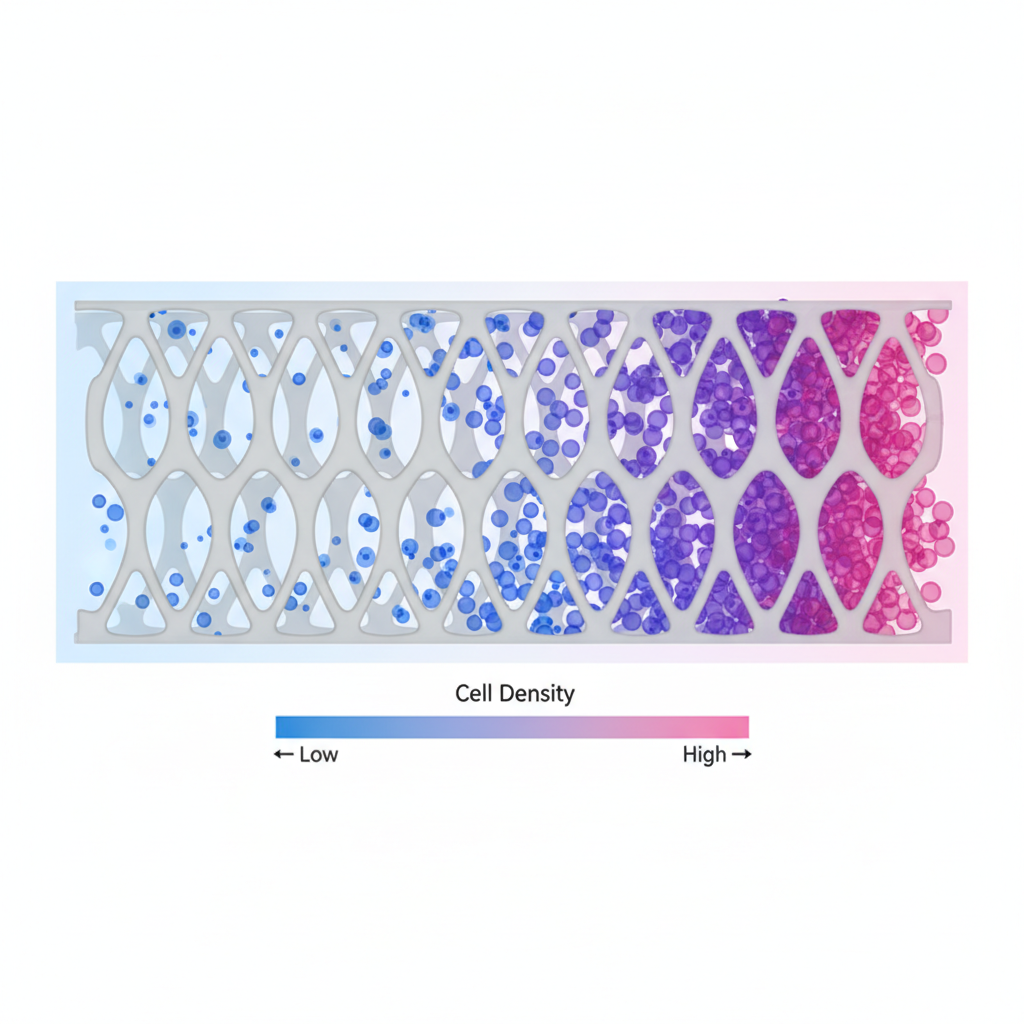
Landmark Study: Gradient Bioink Deposition
Hybrid Scaffold with PCL Cage & hBMSCs
A hybrid scaffold was fabricated via 3D printing of a PCL cage structure and a PEG-based bioink comprising a varying number of human bone marrow mesenchymal stem cells (hBMSCs).
Microcapillary extrusion used to deposit the gradient bioink inside the PCL cage to generate a mineralized gradient structure mimicking natural bone transition.
Biological Performance Data
The hybrid approach demonstrates superior osteogenic potential compared to standard PCL scaffolds. Presence of bioceramics (HA/TCP) further enhances mineralization markers like ALP activity.
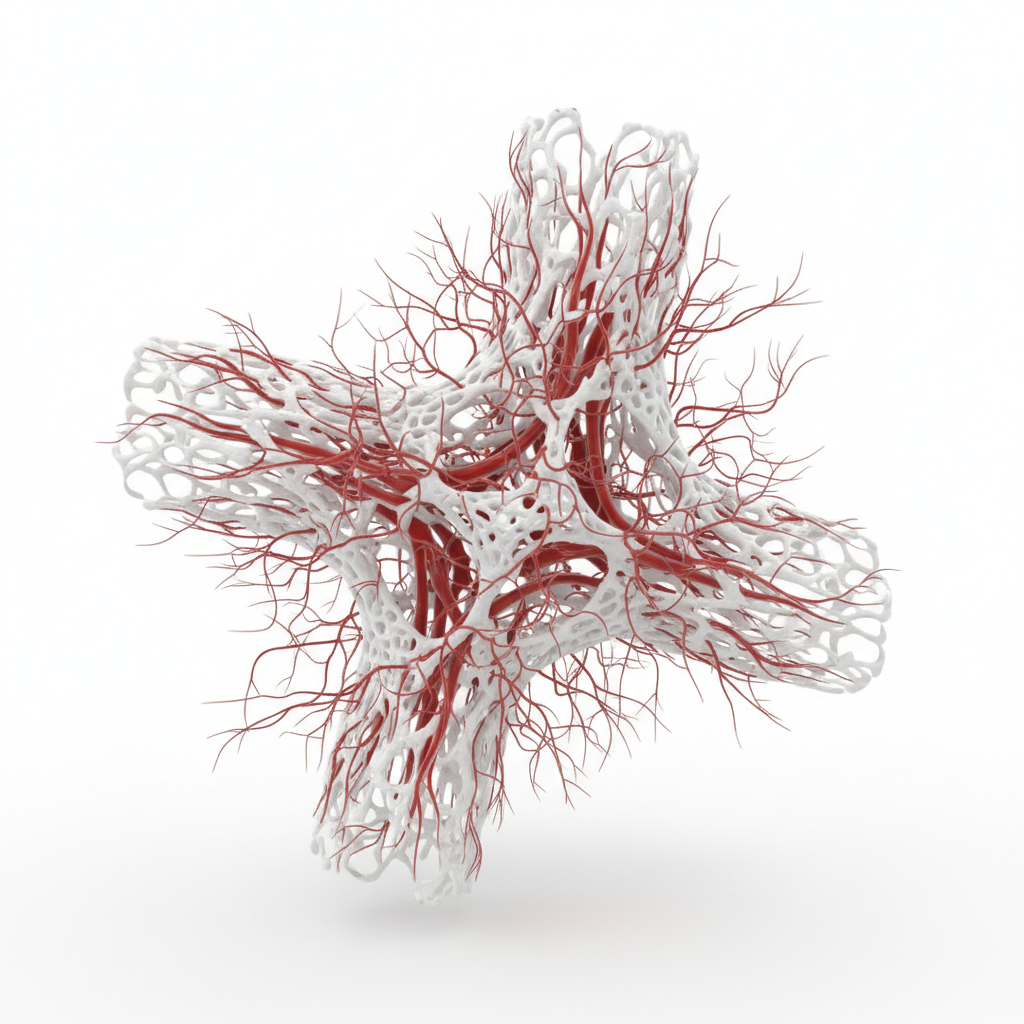
The Vascularization Challenge
Cells deeper than 200 µm from a nutrient source typically undergo necrosis.
Solution: Co-printing endothelial cells (HUVECs) or using sacrificial bioinks (e.g., Pluronic F-127) to create perfusable microchannels.
Future Directions in Bone Biofabrication
4D Printing: Scaffolds that change shape or properties post-implantation.
In Situ Bioprinting: Handheld devices (e.g., Biopen) for direct printing into defects.
Smart Bioinks: Materials responsive to pH or enzymatic triggers for controlled drug release.
- 3d-bioprinting
- biofabrication
- tissue-engineering
- bone-regeneration
- hydrogels
- biomaterials
- hybrid-scaffolds
- medical-research