


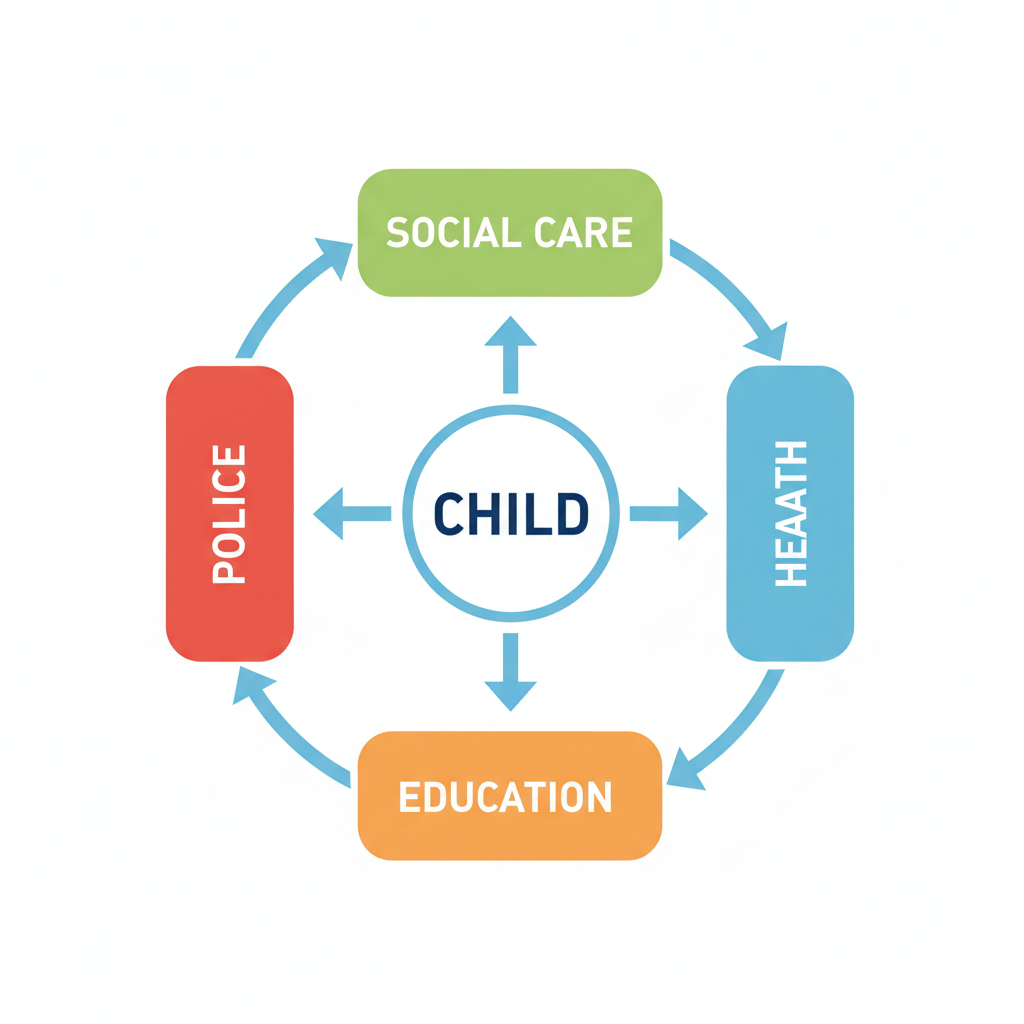






Surrey Child Protection: Integrating Education and Family Help
Explore Surrey's strategic response to the Children’s Wellbeing and Schools Bill, focusing on multi-agency safeguarding and data-driven family support.
Embedding Education in Family Help & Child Protection
Strategic Response to the Children’s Wellbeing and Schools Bill: An FFPP Education Lead Perspective
Presented to Surrey CC Senior Leadership | January 2026
Strategic Context: The Children’s Wellbeing & Schools Bill
Legislative Mandate: New statutory duties for 'Children Not in School' registers requiring tighter integration between education and social care.
The Gap: Historic disconnects between school attendance data and multi-agency risk assessments have created blind spots.
The Opportunity: Leveraging the FFPP role to move schools from 'referrers' to active strategic partners in Family Help.
Core Expectations to Embed
Children Not in School
Mandatory registers and duty to provide support. We must treat 'missing education' as a primary safeguarding indicator.
Multi-Agency Safeguarding
Schools as statutory safeguarding partners with equal weight in decision-making processes.
Inclusion & Attendance
Proactive identification of attendance barriers before statutory intervention is required.
Target Operating Model: The Education Integration
Education is often the only universal service seeing the child daily. In the new Family Help model, the FFPP lead ensures schools are not just 'informants' but 'co-designers' of the support plan.
Priority 1: Real-Time Data Sharing & Attendance
Establishing a 'Tell It Once' approach between schools and Family Help.
Implement data bridges to flag persistent absence directly into the MASH (Multi-Agency Safeguarding Hub) dashboard.
Utilize the 'Children Not in School' register to conduct joint home visits for high-risk unknown absences.
Priority 2: Escalating the DSL Role
Transitioning Designated Safeguarding Leads (DSLs) from external referrers to integrated team members within the Multi-agency Child Protection Team structures.
Strategy for Empowerment:
Joint training on threshold decisions.
Direct access to Family Help consultation lines.
DSLs attending strategy discussions as standard practice.
Priority 3: Inclusion & Alternative Provision
School exclusion is a key risk factor for exploitation. The Bill requires inclusive practice to be central to wellbeing.
Educational Psychologists embedded within Family Help teams to review behavior policies.
Fast-track access to blended learning for children on CP plans to prevent complete disengagement.
Governance & Assurance Layers
Strategic: Surrey Safeguarding Children Partnership (SSCP)
Operational: Local Family Help Hub meetings
Tactical: Weekly integrated case reviews (Ed + Social Care)
Implementation Timeline: Q1-Q4 2026
Q1: Launch 'Children Not in School' register pilots in North & South quadrants.
Q2: Roll out new DSL training modules on Family Help integration.
Q3: Full integration of attendance data into MASH dashboards.
Q4: Audit & Review: Impact assessment on reduction of persistent absence.
The Strategic Ask
Endorsement for the mandated data-sharing protocol between schools and social care.
Support for the FFPP Education Lead to audit current multi-agency meeting structures.
Successful implementation of the Bill requires Education to be a definition of Family Help, not just a service user of it.
- child-protection
- safeguarding
- surrey-county-council
- education-policy
- family-help
- multi-agency
- school-attendance
- social-care