


Muscle Hypertrophy Research: Meta-Analytic Insights
Explore the latest research on muscle hypertrophy, including mechanical tension, metabolic stress, volume, intensity, and training to failure.
Synthesizing Hypertrophy: A Meta-Analytic Perspective
Tracing the convergence of evidence in mechanotransduction and resistance training variables
The Outline: A Forest Plot of Variables
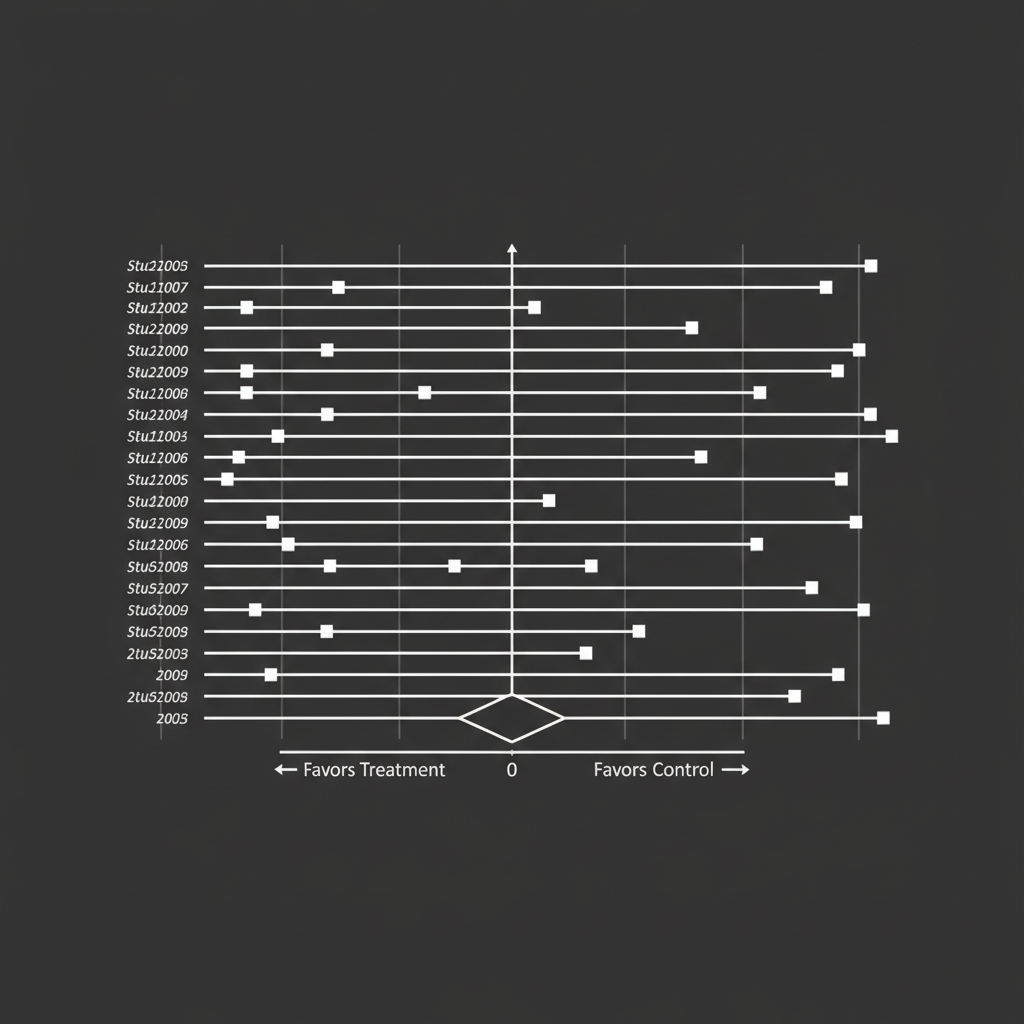
We will treat this presentation as a living forest plot. Each section represents a distinct intervention 'row'. Our goal is to observe how confidence intervals have narrowed over the last decade of research.
Row 1: Intensity (Load Parameters)
Row 2: Volume (Dose-Response)
Row 3: Proximity to Failure (RIR)
Synthesis (The Pooled Estimate)
Mechanistic Underpinnings
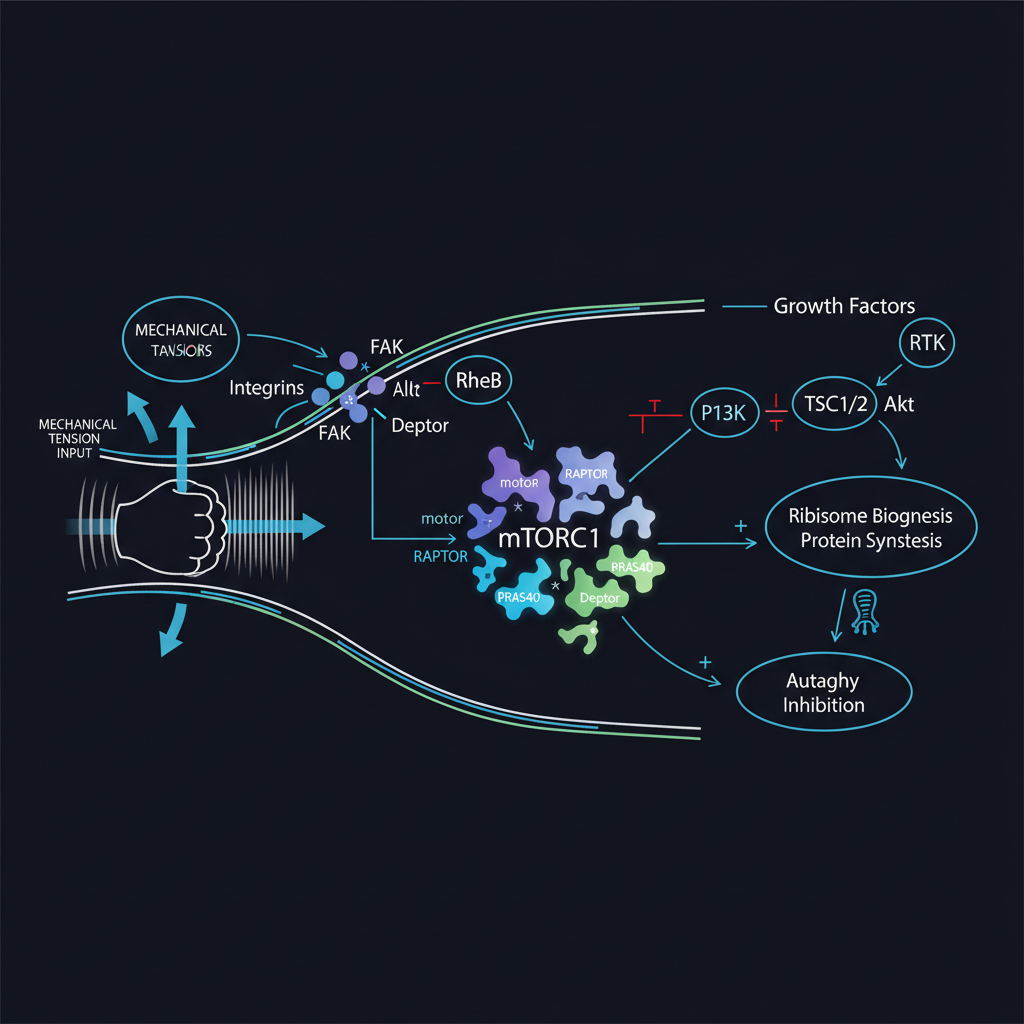
Mechanical Tension
The primary driver. Force sensed by mechanoreceptors (integrins/titin) initiates the mTORC1 pathway. Dependent on high motor unit recruitment and slow overlapping actin-myosin bridge detachment.
Metabolic Stress
Accumulation of metabolites (lactate, H+, Pi). While sufficient for hypertrophy, current consensus suggests it is largely additive or facilitating rather than a primary independent driver compared to tension.
Row 1: Intensity (Load)
Early dogma suggested >65% 1RM was necessary. Modern meta-analyses show that loads as low as 30% 1RM stimulate comparable hypertrophy, provided sets are taken near failure.
Fiber Recruitment Dynamics
Following Henneman's Size Principle, low-load training must reach high levels of fatigue to recruit high-threshold motor units (Type II fibers), whereas heavy loads recruit them immediately.
Row 2: Volume (Dose-Response)
A significant predictor of hypertrophy. Meta-analyses demonstrate a 'graded dose-response' relationship up to a point, after which diminishing returns or overtraining set in. The 'sweet spot' is likely 10-20 hard sets per muscle, per week.
Row 3: Proximity to Failure
Training to failure (0 RIR) creates high fatigue disproportionate to stimulus magnitude.
Evidence suggests 1-3 Reps In Reserve (RIR) provides nearly identical hypertrophic stimulus to failure.
Leaving >4 RIR yields statistically inferior results due to insufficient fiber recruitment.
Row 4: Frequency
When volume is equated, frequency (days/week) does not significantly impact hypertrophy. 3 sets performed once a week roughly equals 1 set performed 3 times a week.
However, frequency is a tool to organize high volumes. Doing 20 sets in one session compromises intensity; splitting it into two sessions maintains quality.
The Cumulative Effect
Convergence of Evidence (2010-2025)
As methodology improved, extreme outliers vanished. We now have high confidence that volume-matched interventions yield similar hypertrophy across modalities.
Practical Applications: The Evidence-Based Guide
Load is flexible (30-85% 1RM) provided effort is high.
Volume is the primary lever (10-20 sets/week).
Target 1-3 Reps in Reserve (RIR); failure is not mandatory.
Use frequency to manage session quality, not as a driver.
- muscle-hypertrophy
- resistance-training
- exercise-science
- meta-analysis
- fitness-research
- bodybuilding-science
- strength-training