






Made byBobr AI

Understanding Business Cooperatives: Models and Principles

Learn about the 7 cooperative principles, governance structures, and types of cooperatives like worker, consumer, and producer models.

#cooperatives#business-models#worker-co-op#governance#ica-principles#social-enterprise#economics
Watch
Pitch

Cooperatives in Business

An Academic Overview of Models, Principles, and Governance

Cooperation Illustration
Made byBobr AI

What is a Cooperative?

A cooperative is an autonomous association of persons united voluntarily to meet their common economic, social, and cultural needs and aspirations through a jointly-owned and democratically-controlled enterprise.

Source: International Co-operative Alliance (ICA)

Made byBobr AI

The 7 Cooperative Principles

Cooperatives around the world operate according to the same core principles adopted by the ICA.

1. Voluntary and Open Membership

2. Democratic Member Control

3. Member Economic Participation

4. Autonomy and Independence

5. Education, Training, and Information

6. Cooperation among Cooperatives

7. Concern for Community

Made byBobr AI

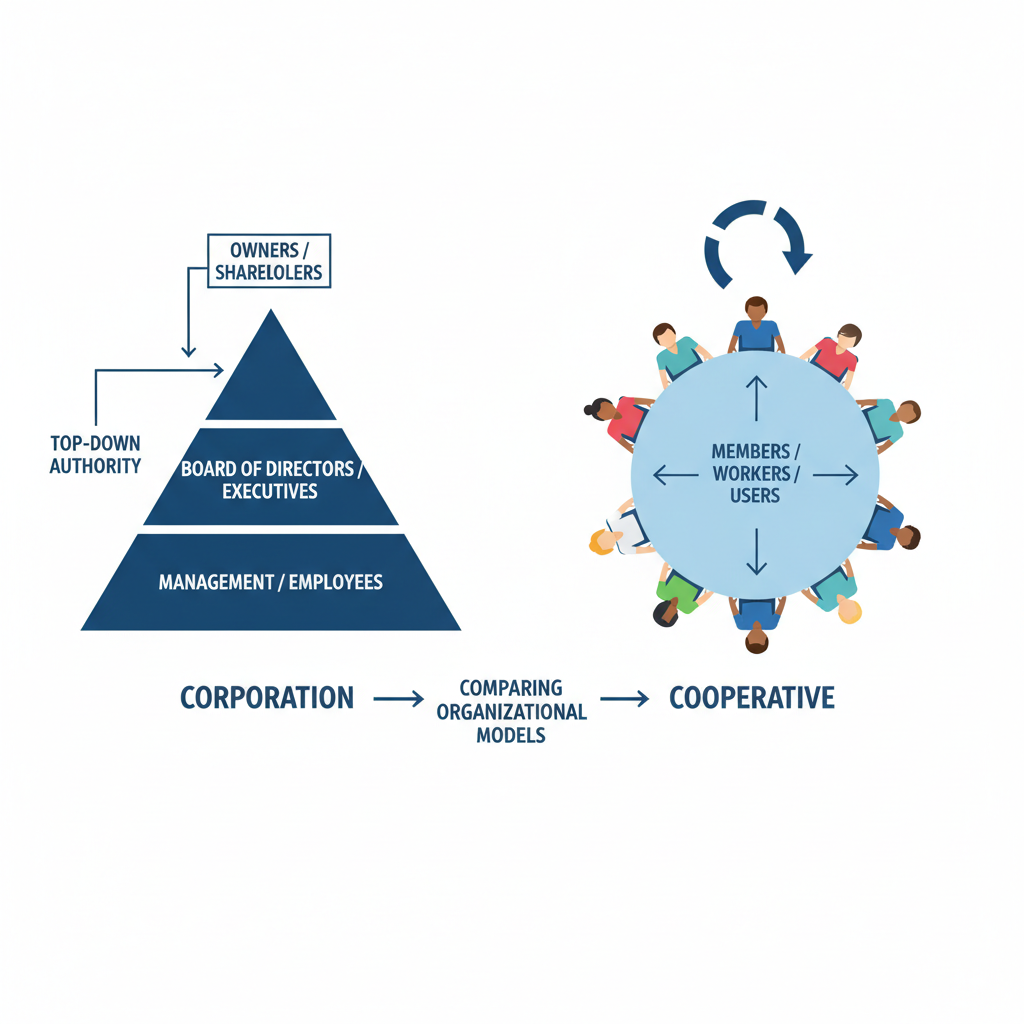
Governance: One Member, One Vote

Unlike traditional corporations where voting power is based on the number of shares owned (capital-centric), cooperatives are people-centric. Every member has an equal say in major decisions.

Equity vs. Equality
Board elected by members
Made byBobr AI

Types of Cooperatives

worker

Owned by employees.

Consumer

Owned by customers (e.g., REI, Credit Unions).

Producer

Owned by producers (e.g., farmers).

Purchasing

Small businesses banding together for scale.

Made byBobr AI

Focus: Worker Cooperatives

A business owned and self-managed by its workers. The primary purpose is to provide employment and reasonable wages rather than maximizing profit for external shareholders. Decisions are made democratically.

Key Example: Mondragon Corporation (Spain) - A federation of worker cooperatives employs over 80,000 people.

Made byBobr AI

Focus: Consumer Cooperatives

Businesses owned by the people who buy their goods or services. The goal is to provide quality goods at fair prices. Profits are often returned to members as patronage dividends.

Examples: Credit Unions (financial services), REI (retail), Local Food Co-ops.

Made byBobr AI

Focus: Producer Cooperatives

Formed by independent producers (typically farmers or artisans) to process and market their products collectively. This allows them to achieve economies of scale and access larger markets.

Did you know? Ocean Spray (Cranberries) and Land O'Lakes (Butter) are huge producer co-ops.

Made byBobr AI

Business Model Comparison

Feature
Traditional Corporation
Cooperative
Ownership
Shareholders / Investors
Members (Workers/Consumers)
Voting Rights
Per Share (More $ = More Votes)
Per Person (1 Member, 1 Vote)
Profit Goal
Maximize Investor Returns
Maximize Member Benefit
Made byBobr AI

Business Resilience: 5-Year Survival Rates

Chart

Data indicative of studies in France, Quebec, and other regions showing co-ops often outlast traditional startups.

Made byBobr AI

Conclusion: The Cooperative Advantage

• Focuses on long-term value and community welfare over short-term profit.
• Resilient business model with democratic member engagement.
• Operates in all sectors: from agriculture to high-tech and banking.
Made byBobr AI
Bobr AI

DESIGNER-MADE
PRESENTATION,
GENERATED FROM
YOUR PROMPT

Create your own professional slide deck with real images, data charts, and unique design in under a minute.

Generate For Free

Understanding Business Cooperatives: Models and Principles

Learn about the 7 cooperative principles, governance structures, and types of cooperatives like worker, consumer, and producer models.

Cooperatives in Business

An Academic Overview of Models, Principles, and Governance

What is a Cooperative?

A cooperative is an autonomous association of persons united voluntarily to meet their common economic, social, and cultural needs and aspirations through a jointly-owned and democratically-controlled enterprise.

Source: International Co-operative Alliance (ICA)

The 7 Cooperative Principles

Cooperatives around the world operate according to the same core principles adopted by the ICA.

1. Voluntary and Open Membership

2. Democratic Member Control

3. Member Economic Participation

4. Autonomy and Independence

5. Education, Training, and Information

6. Cooperation among Cooperatives

7. Concern for Community

Governance: One Member, One Vote

Unlike traditional corporations where voting power is based on the number of shares owned (capital-centric), cooperatives are people-centric. Every member has an equal say in major decisions.

Equity vs. Equality

Board elected by members

Types of Cooperatives

worker

Owned by employees.

Consumer

Owned by customers (e.g., REI, Credit Unions).

Producer

Owned by producers (e.g., farmers).

Purchasing

Small businesses banding together for scale.

Focus: Worker Cooperatives

A business owned and self-managed by its workers. The primary purpose is to provide employment and reasonable wages rather than maximizing profit for external shareholders. Decisions are made democratically.

Key Example: Mondragon Corporation (Spain) - A federation of worker cooperatives employs over 80,000 people.

Focus: Consumer Cooperatives

Businesses owned by the people who buy their goods or services. The goal is to provide quality goods at fair prices. Profits are often returned to members as patronage dividends.

Examples: Credit Unions (financial services), REI (retail), Local Food Co-ops.

Focus: Producer Cooperatives

Formed by independent producers (typically farmers or artisans) to process and market their products collectively. This allows them to achieve economies of scale and access larger markets.

Did you know? Ocean Spray (Cranberries) and Land O'Lakes (Butter) are huge producer co-ops.

Feature

Traditional Corporation

Cooperative

Ownership

Shareholders / Investors

Members (Workers/Consumers)

Voting Rights

Per Share (More $ = More Votes)

Per Person (1 Member, 1 Vote)

Profit Goal

Maximize Investor Returns

Maximize Member Benefit

Business Resilience: 5-Year Survival Rates

Data indicative of studies in France, Quebec, and other regions showing co-ops often outlast traditional startups.

Conclusion: The Cooperative Advantage

• Focuses on long-term value and community welfare over short-term profit.

• Resilient business model with democratic member engagement.

• Operates in all sectors: from agriculture to high-tech and banking.

  • cooperatives
  • business-models
  • worker-co-op
  • governance
  • ica-principles
  • social-enterprise
  • economics