

CAF Communications & Electronics (C&E) Branch Careers
Explore roles, responsibilities, and training pathways for CELE Officers and NCM occupations in the Canadian Armed Forces C&E Branch.
COMMUNICATIONS & ELECTRONICS (C&E) BRANCH
Roles, Responsibilities & Occupations
CELE Candidate Debrief Presentation
2Lt Farquharson
March 2026
Velox, Versutus, Vigilans — Swift, Accurate, Watchful
RESTRICTED — FOR TRAINING PURPOSES ONLY
TABLE OF CONTENTS
Velox, Versutus, Vigilans
Introduction & Background
The C&E Branch — Overview & History
The C&E Branch — Mandate & Mission
CAF C&E Units — Regular Force
CAF C&E Units — Reserve Force
CAF C&E Units — Cyber & Intelligence
CELE Officer — Overview & Role
CELE Employment Areas — Air Force
CELE Employment Areas — Land & Joint
CELE Employment Areas — Headquarters & Ops
NCM C&E Occupations — Overview
Signal Operator (Sig Op)
Signal Technician (Sig Tech)
Line Technician
Cyber Operator
Communicator Research (Comm Rsch)
Training & Career Progression
C&E in Operations
Summary & Conclusion
References
INTRODUCTION & PURPOSE
Purpose of This Briefing
This presentation has been prepared to fulfil the CELE (Communications and Electronics Engineering Officer) candidate debrief requirement. It provides a comprehensive overview of the Communications and Electronics (C&E) Branch of the Canadian Armed Forces (CAF), covering:
<strong style="color: #ffffff; font-weight: 600;">CAF C&E Units</strong> <span style="color: #cbd5e1; font-weight: 300;">— structure and roles of all C&E units across Regular and Reserve forces</span>
<strong style="color: #ffffff; font-weight: 600;">CELE Employment Areas</strong> <span style="color: #cbd5e1; font-weight: 300;">— where and how CELE officers are employed across the CAF</span>
<strong style="color: #ffffff; font-weight: 600;">NCM C&E Occupations</strong> <span style="color: #cbd5e1; font-weight: 300;">— the Non-Commissioned Member trades within the C&E Branch</span>
This briefing is presented by 2Lt Farquharson as part of the CELE candidate assessment process.
Abbreviations Used:
<table style="width: 100%; border-collapse: separate; border-spacing: 0 14px; font-size: 20px; color: #e2e8f0; line-height: 1.3;"> <tr><td style="width: 28%; font-weight: 600; color: #FFC000; vertical-align: top;">CAF</td><td style="vertical-align: top; font-weight: 300;">Canadian Armed Forces</td></tr> <tr><td style="font-weight: 600; color: #FFC000; vertical-align: top;">C&E</td><td style="vertical-align: top; font-weight: 300;">Communications and Electronics</td></tr> <tr><td style="font-weight: 600; color: #FFC000; vertical-align: top;">CELE</td><td style="vertical-align: top; font-weight: 300;">Communications and Electronics Engineering Officer</td></tr> <tr><td style="font-weight: 600; color: #FFC000; vertical-align: top;">NCM</td><td style="vertical-align: top; font-weight: 300;">Non-Commissioned Member</td></tr> <tr><td style="font-weight: 600; color: #FFC000; vertical-align: top;">MOC</td><td style="vertical-align: top; font-weight: 300;">Military Occupational Classification</td></tr> <tr><td style="font-weight: 600; color: #FFC000; vertical-align: top;">RCAF</td><td style="vertical-align: top; font-weight: 300;">Royal Canadian Air Force</td></tr> <tr><td style="font-weight: 600; color: #FFC000; vertical-align: top;">RC Sigs</td><td style="vertical-align: top; font-weight: 300;">Royal Canadian Corps of Signals</td></tr> <tr><td style="font-weight: 600; color: #FFC000; vertical-align: top;">CFSCE</td><td style="vertical-align: top; font-weight: 300;">Canadian Forces School of Communications and Electronics</td></tr> <tr><td style="font-weight: 600; color: #FFC000; vertical-align: top;">OC</td><td style="vertical-align: top; font-weight: 300;">Officer Commanding</td></tr> <tr><td style="font-weight: 600; color: #FFC000; vertical-align: top;">CIS</td><td style="vertical-align: top; font-weight: 300;">Communication and Information Systems</td></tr> <tr><td style="font-weight: 600; color: #FFC000; vertical-align: top;">Flt</td><td style="vertical-align: top; font-weight: 300;">Flight</td></tr> </table>
3
THE C&E BRANCH — HISTORY & BACKGROUND
Origins & Formation
The Communications and Electronics (C&E) Branch of the Canadian Armed Forces (CAF) traces its origins to 24 October 1903, when the Canadian Signal Corps was established via General Order 167 — making it the FIRST independent signal corps in the British Empire.
The Branch was formed in 1968 under the Canadian Forces Reorganization Act, unifying the communications elements of the Royal Canadian Navy, Canadian Army, and Royal Canadian Air Force into a single tri-service branch.
In 2013, the Royal Canadian Corps of Signals (RC Sigs) was re-instituted within the Army component of the Branch.
1903
Signal Corps formed
1939-45
WWII service
1968
Unification
1986
CFSCE established
2013
RC Sigs re-instituted
2024
CAFCYBERCOM formed
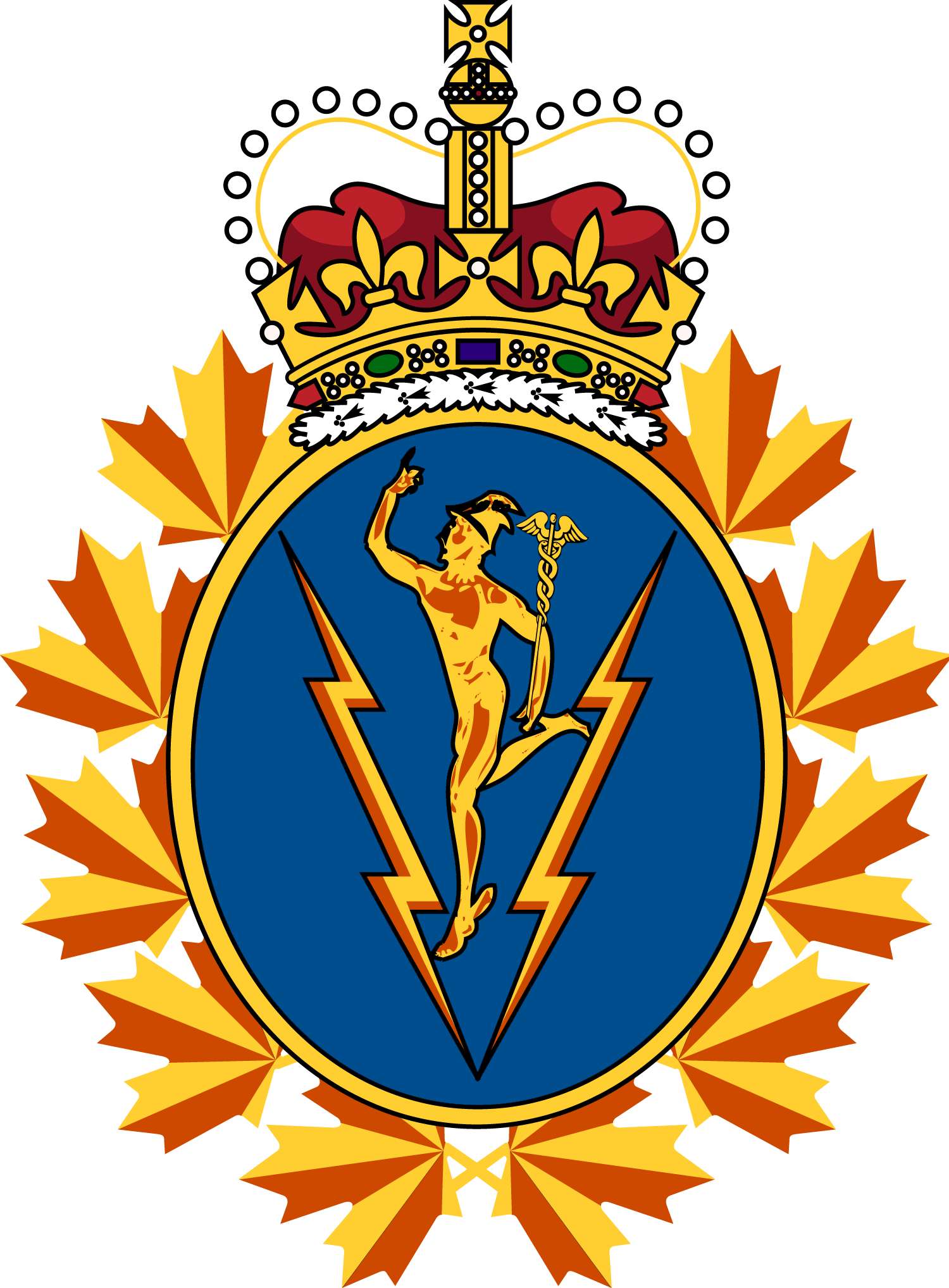
Badge approved October 1970
Velox, Versutus, Vigilans
Swift, Accurate, Watchful
French Grey and Dark Blue
Mercury (Hermes) — messenger of the gods, representing speed and communication
RESTRICTED — FOR TRAINING PURPOSES ONLY
THE C&E BRANCH — MANDATE, MISSION & STRUCTURE
MISSION STATEMENT
To provide the Canadian Armed Forces with qualified, trained, and motivated Communications and Electronics personnel capable of delivering telecommunications, information systems, cyber, electronic warfare, and signals intelligence support across all operations — at home and abroad.
WHO WE ARE
WHAT WE DO
WHERE WE SERVE
"The C&E Branch is the backbone of military communications enabling commanders to see, decide and act across all domains."
SECTION 1
CAF COMMUNICATIONS & ELECTRONICS UNITS
Regular Force | Reserve Force | Cyber & Intelligence Units
Covering: Royal Canadian Corps of Signals • Electronic Warfare • Cyber Command • Training Establishments
Velox, Versutus, Vigilans
CAF C&E UNITS — REGULAR FORCE
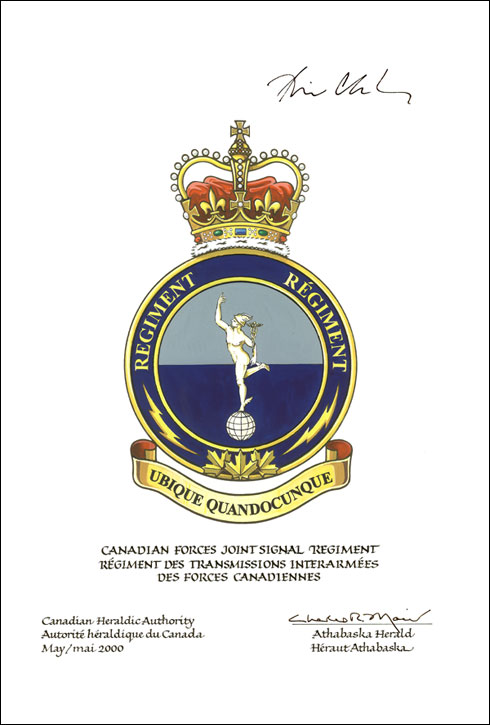
Canadian Forces Joint Signal Regiment (CFJSR)
CFB Kingston, Ontario
Provides joint tactical and strategic communications and information systems support to the CAF. Conducts satellite communications, joint signal operations, and CIS support to operational HQs.
"Ubique Quandocunque" (Everywhere Whenever)
21 Electronic Warfare Regiment (21 EW Regt)
CFB Kingston, Ontario
Canada's primary land EW unit. Provides electronic attack, electronic protection, and electronic support (SIGINT/ELINT) to CAF operations. Squadrons: 211, 212, 215, 218 CSS. Part of Canadian Combat Support Brigade.
"Intenti et Usque" (Alert and Always)
HQ & Signal Squadrons — CMBG
Edmonton (1 CMBG), Petawawa (2 CMBG), Valcartier (5 CMBG)
Provide dedicated communications and information systems support to each Canadian Mechanized Brigade Group (CMBG). Embedded within brigade structure to support command and control during operations and exercises.
Regular Force C&E units provide full-time, trained communications capability for domestic and international operations.
CAF C&E UNITS — REGULAR FORCE & TRAINING ESTABLISHMENT
Canadian Division Support Group (CDSG) Signal Squadrons
Various — 3 CDSG, 4 CDSG, 5 CDSG
Signal squadrons embedded within Canadian Division Support Groups providing administrative, logistical, and communications support to divisional-level formations. Support sustained operations in both domestic and expeditionary contexts.
Canadian Forces Information Operations Group (CFIOG)
Ottawa / Kingston area
Umbrella organization for CAF information operations including: CFNOC (Network Operations Centre — cyber defence), CFEWC (Electronic Warfare Centre), CFS Leitrim (SIGINT collection), CFSOC (Satellite Operations Centre). Coordinates cyber, EW, and SIGINT effects at strategic/operational level.
Canadian Forces School of Communications and Electronics (CFSCE)
CFB Kingston, Ontario (Vimy Barracks)
The Home of the C&E Branch
Established 1937, redesignated CFSCE in 1986. CFB Kingston is the institutional home of the C&E Branch.
~260 permanent staff; 3-day to 8-month course durations
CELE Officer trade training — 19 weeks
Signal Operator basic qualification — 12 weeks
Signal Technician — 16 months
Line Technician — 20 weeks
Cyber Operator — 16 weeks
Advanced courses: EW, SIGINT, crypto, satellite comms, network security
2,800+ graduates annually from 84+ courses
CAF C&E UNITS — RESERVE FORCE SIGNAL REGIMENTS
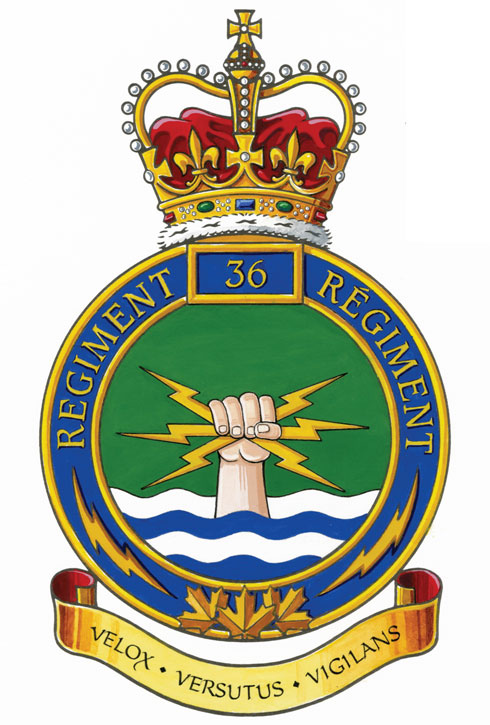
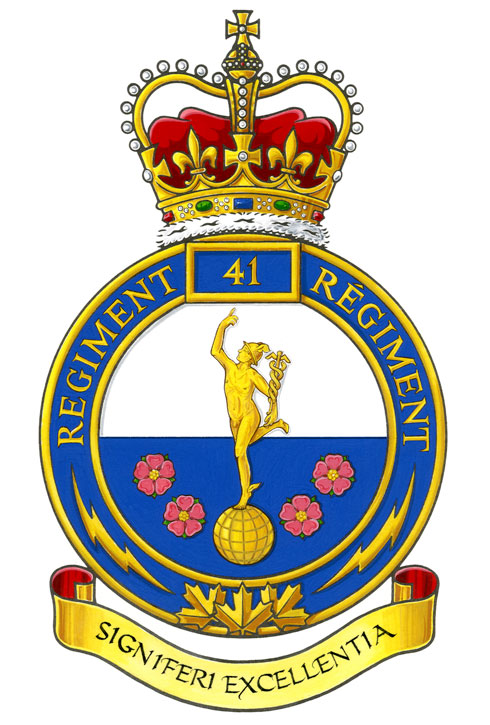
Reserve Signal Regiments augment Regular Force capability and provide part-time communications support to their respective Canadian Brigade Groups (CBG).
Additional Reserve Units: 76 Communication Regiment | 77 Line Regiment | 214 Squadron (21 EW Regt Reserve element)
Reserve Force soldiers serve part-time (approx. 1 evening/week + weekends) at 92.8% Regular Force pay with full benefits and pension.
CAF C&E UNITS — CYBER COMMAND & INTELLIGENCE
Canadian Armed Forces Cyber Command (CAFCYBERCOM)
26 September 2024
Major-General Dave Yarker
Ottawa, Ontario
CAFCYBERCOM leads all CAF cyber operations, joint electronic warfare (EW), and signals intelligence (SIGINT) — delivering coordinated effects across land, sea, air, space, and cyberspace domains.
$917.4 million over 5 years (Budget 2024)
CFNOC — Canadian Forces Network Operations Centre
24/7 enterprise cyber defence and network monitoring. Protects and defends CAF networks from intrusion, malware, and cyber attacks.
CFEWC — Canadian Forces Electronic Warfare Centre
Electromagnetic intelligence collection and analysis. Provides mission data and EW support to CAF operations and NATO partners.
CFS Leitrim — Canadian Forces Station Leitrim
Ottawa, Ontario
Primary SIGINT collection site. Intercepts, processes and analyses foreign signals intelligence. Member of Five Eyes intelligence alliance.
CTU — Cyber Training Unit
Algonquin College
Trains CAF Cyber Operators in network security, digital forensics, malware analysis, and cyber operations. 16-week structured curriculum.
CAFCYBERCOM participated in NATO Cyber Coalition 25 (November 2025) and delivered cyber training to Philippines armed forces (January 2026).
SECTION 2
CELE EMPLOYMENT AREAS
Communications & Electronics Engineering Officer (MOC 083)
Where CELE Officers Serve Across the Canadian Armed Forces
✈ Air Force
⚔ Land / Army
⚓ Joint / Naval
🏛 HQ & Staff
Velox, Versutus, Vigilans — Swift, Accurate, Watchful
RESTRICTED — FOR TRAINING PURPOSES ONLY
CELE OFFICER — ROLE & OVERVIEW
Who is a CELE Officer?
The Communications and Electronics Engineering (CELE) Officer (Military Occupational Classification — MOC 083) is the primary commissioned officer within the C&E Branch. CELE Officers manage all aspects of telecommunications, information systems, and electronic systems to support CAF operations across all environments.
Primary Responsibilities:
Plan and manage tactical and strategic communications systems
Oversee deployment of CIS (Communication and Information Systems) during operations
Advise commanders on communications requirements and capabilities
Manage acquisition and life-cycle management of C&E equipment
Supervise NCM C&E trades (Signal Operators, Technicians, etc.)
Provide expertise in electronic warfare, SIGINT, and cyber operations
Operate systems from HF to EHF frequency ranges
Support air traffic control, surveillance, navigation, and data management
Entry Requirements:
University degree (engineering, science, IT, or related field)
Alternatively: CAF-funded education via Royal Military College (RMC) through ROTP
Age 18–57 (Regular Force)
Canadian citizenship
MOC 083 — CELE Officer at a Glance
Full Name:
Communications and Electronics Engineering Officer
MOC:
083 / 083A
Branch:
Communications and Electronics (C&E)
Environment:
Tri-service (Army, Navy, Air Force, Joint)
Home Base:
CFB Kingston, Ontario
Training School:
CFSCE (Canadian Forces School of Communications and Electronics)
Basic Training:
12 weeks at CFLRS, Saint-Jean-sur-Richelieu, QC
Trade Training:
19 weeks at CFSCE, Kingston, ON
In peacetime, CELE Officers function like civilian engineers at a base or headquarters. On operations, they enable combat by keeping commanders connected.
CELE OFFICER — TRAINING PATHWAY
Entry
<li style="margin-bottom: 8px;">Direct Entry Officer (DEO) with university degree</li><li style="margin-bottom: 8px;">OR Royal Military College (RMC) via ROTP</li><li style="margin-bottom: 8px;">Commission as Officer Cadet</li>
Basic Military Qualification
<li style="margin-bottom: 8px;"><strong>12 Weeks</strong></li><li style="margin-bottom: 8px;">Location: CFLRS, Saint-Jean-sur-Richelieu, QC</li><li style="margin-bottom: 8px;">Canadian Forces Leadership and Recruit School</li><li style="margin-bottom: 8px;">Military knowledge, leadership, weapons, fitness, first aid</li>
CELE Trade Training
<li style="margin-bottom: 8px;"><strong>19 Weeks</strong></li><li style="margin-bottom: 8px;">Location: CFSCE, Kingston, ON</li><li style="margin-bottom: 8px;">C&E Branch organization and structure</li><li style="margin-bottom: 8px;">Communications and electronics theory</li><li style="margin-bottom: 8px;">Systems management and deployment planning</li><li style="margin-bottom: 8px;">Business and project management skills</li>
First Posting
<li style="margin-bottom: 8px;">Posted to a CAF unit (Air Force base, Signal Regiment, HQ, etc.)</li><li style="margin-bottom: 8px;">OJT — On-the-Job Training</li><li style="margin-bottom: 8px;">Promoted 2Lt → Lt → Capt</li>
Advanced Courses
<li style="margin-bottom: 8px;">Air Ops C2 systems</li><li style="margin-bottom: 8px;">Satellite & radio communications</li><li style="margin-bottom: 8px;">SIGINT and crypto</li><li style="margin-bottom: 8px;">Network security and cyber</li><li style="margin-bottom: 8px;">EW fundamentals</li>
Senior Roles
<li style="margin-bottom: 8px;">Staff Officer (Major/LCol)</li><li style="margin-bottom: 8px;">Project management</li><li style="margin-bottom: 8px;">NATO/Joint postings</li><li style="margin-bottom: 8px;">Command and senior leadership</li>
Regular Force Path
Full-time service, mandatory postings across Canada and internationally, possible command roles
Reserve Force Path
Part-time service, ~1 night/week + weekends, serve locally without mandatory relocation, same branch qualifications
RESTRICTED — FOR TRAINING PURPOSES ONLY
CELE EMPLOYMENT — AIR FORCE ENVIRONMENT
CELE Officers are primarily associated with the Royal Canadian Air Force (RCAF) and provide critical communications and electronics support at air bases across Canada.
Key RCAF Postings
Air Force CELE Roles
Key Technologies Managed
CFB Trenton (RCAF 8 Wing)
Canada's primary air transport hub; CELE officers manage communications for strategic airlift and NORAD tasking
CFB North Bay (NORAD/RCAF)
Air defence operations, integrated NORAD C2 communications and radar systems management
CFB Cold Lake (4 Wing)
Fighter operations; tactical comms, electronic warfare systems management
CFB Bagotville (3 Wing)
Fighter wing in QC; CIS and EW support
CFB Comox (19 Wing)
Maritime patrol and SAR; coastal surveillance comms
Airfield Communications Systems Manager
Air Operations Command & Control (C2) Systems Officer
Tactical Communications Officer
Avionics and Electronic Warfare Systems advisor
Radio spectrum management and frequency allocation
NORAD communications systems officer
Satellite communications management
Air Traffic Control systems oversight
HF/VHF/UHF/SHF/EHF radio systems
Satellite communications (MILSATCOM)
Air traffic control (ATC) radar systems
Air defence networks and data links
Navigation systems (ILS, TACAN, VOR)
Electronic warfare systems
Cryptographic systems
Ground-to-air communications
CELE Officers in air environments bridge the gap between traditional engineering and operational communications, ensuring air power can be effectively commanded and controlled.
CELE EMPLOYMENT — LAND & ARMY ENVIRONMENT
Army / Land Force Roles
CELE Officers serve embedded with Canadian Army units, particularly within the Royal Canadian Corps of Signals (RC Sigs), providing tactical communications and CIS support to brigade-level operations.
Typical Land Postings:
HQ & Signal Squadrons at 1 CMBG (Edmonton), 2 CMBG (Petawawa), 5 CMBG (Valcartier)
Canadian Forces Joint Signal Regiment (CFJSR), Kingston
21 Electronic Warfare Regiment, Kingston
Canadian Division Support Group (CDSG) Signal Squadrons
Task Force Signal Officer on deployed operations (Afghanistan, Latvia, etc.)
Reserve Signal Regiments as OC or staff officer
Land CELE Key Duties:
Command deployed communications nodes (radio, satellite, fibre)
Plan brigade communications architecture
Manage tactical data links and radio networks
Advise on electromagnetic spectrum management
Lead electronic warfare planning and coordination
Supervise signal troops in garrison and field
Ensure interoperability with NATO/Allied forces
The Royal Canadian Corps of Signals (RC Sigs)
2013
Velox, Versutus, Vigilans
French Grey and Dark Blue
"Sigs" / "Jimmies"
Officers (CELE) + NCMs (Sig Op, Sig Tech, Line Tech, etc.)
CFSCE, Kingston
On operations, CELE Officers ensure that commanders have reliable, secure, and interoperable communications — enabling effective command and control of ground forces.
CELE EMPLOYMENT — JOINT, HQ & SPECIAL ENVIRONMENTS
Joint & National Headquarters
Special & Remote Postings
Project & Acquisition Roles
Naval / Maritime Employment
CELE Officers can serve anywhere the CAF operates — from Arctic stations to deployed NATO headquarters.
SECTION 3
NCM C&E OCCUPATIONS
Non-Commissioned Member Communications & Electronics Trades
Signal Operator | Signal Technician | Line Technician | Cyber Operator | Communicator Research
1
Signal Operator
(Sig Op)
2
Signal Technician
(Sig Tech)
3
Line Technician
(Line Tech)
4
Cyber Operator
(Cyber Op)
5
Communicator Research
(Comm Rsch)
NCMs are the backbone of C&E operations — they are the hands that make communications happen in the field.
Velox, Versutus, Vigilans
RESTRICTED — FOR TRAINING PURPOSES ONLY
NCM OCCUPATION — SIGNAL OPERATOR (Sig Op)
MOC: 00383-01 | Trade Group: C&E Branch
Signal Operators install, operate, troubleshoot, and maintain both wired and wireless voice and data communications systems. They are the primary tactical communications specialist within CAF units, ensuring reliable communications for command and control in all environments — from garrison to deployed operations.
<li style="position: relative; padding-left: 28px;"><span style="color: #FFC000; position: absolute; left: 0; top: -2px; font-size: 22px;">•</span>Install and operate tactical radio systems (HF, VHF, UHF)</li> <li style="position: relative; padding-left: 28px;"><span style="color: #FFC000; position: absolute; left: 0; top: -2px; font-size: 22px;">•</span>Set up and maintain military command post communications</li> <li style="position: relative; padding-left: 28px;"><span style="color: #FFC000; position: absolute; left: 0; top: -2px; font-size: 22px;">•</span>Operate military computer networks and IT equipment</li> <li style="position: relative; padding-left: 28px;"><span style="color: #FFC000; position: absolute; left: 0; top: -2px; font-size: 22px;">•</span>Manage and operate cryptographic (crypto) equipment</li> <li style="position: relative; padding-left: 28px;"><span style="color: #FFC000; position: absolute; left: 0; top: -2px; font-size: 22px;">•</span>Establish and operate satellite ground terminals</li> <li style="position: relative; padding-left: 28px;"><span style="color: #FFC000; position: absolute; left: 0; top: -2px; font-size: 22px;">•</span>Manage communications security (COMSEC)</li> <li style="position: relative; padding-left: 28px;"><span style="color: #FFC000; position: absolute; left: 0; top: -2px; font-size: 22px;">•</span>Maintain inventory of signal equipment</li> <li style="position: relative; padding-left: 28px;"><span style="color: #FFC000; position: absolute; left: 0; top: -2px; font-size: 22px;">•</span>Supervise communications in command posts during exercises and operations</li>
<li style="position: relative; padding-left: 28px;"><span style="color: #FFC000; position: absolute; left: 0; top: -2px; font-size: 22px;">•</span><strong style="color: #ffffff; font-weight: 600;">Basic Military Qualification (BMQ):</strong> 10 weeks at CFLRS Saint-Jean</li> <li style="position: relative; padding-left: 28px;"><span style="color: #FFC000; position: absolute; left: 0; top: -2px; font-size: 22px;">•</span><strong style="color: #ffffff; font-weight: 600;">Signal Operator Trade Training:</strong> ~12 weeks at CFSCE Kingston</li> <li style="position: relative; padding-left: 28px;"><span style="color: #FFC000; position: absolute; left: 0; top: -2px; font-size: 22px;">•</span><strong style="color: #ffffff; font-weight: 600;">Topics:</strong> Signal theory, radio operations, network management, crypto, inventory management</li>
<li style="position: relative; padding-left: 28px;"><span style="color: #FFC000; position: absolute; left: 0; top: -2px; font-size: 22px;">•</span>Grade 10 education (or Québec Secondary IV)</li> <li style="position: relative; padding-left: 28px;"><span style="color: #FFC000; position: absolute; left: 0; top: -2px; font-size: 22px;">•</span>Math and Science required</li> <li style="position: relative; padding-left: 28px;"><span style="color: #FFC000; position: absolute; left: 0; top: -2px; font-size: 22px;">•</span>Secret Security Clearance</li> <li style="position: relative; padding-left: 28px;"><span style="color: #FFC000; position: absolute; left: 0; top: -2px; font-size: 22px;">•</span>Physical fitness standard</li>
<li style="position: relative; padding-left: 28px;"><span style="color: #FFC000; position: absolute; left: 0; top: 0px; font-weight: 600; font-size: 24px;">-</span>HQ & Signal Squadrons at CMBGs</li> <li style="position: relative; padding-left: 28px;"><span style="color: #FFC000; position: absolute; left: 0; top: 0px; font-weight: 600; font-size: 24px;">-</span>Canadian Forces Joint Signal Regiment</li> <li style="position: relative; padding-left: 28px;"><span style="color: #FFC000; position: absolute; left: 0; top: 0px; font-weight: 600; font-size: 24px;">-</span>Reserve Signal Regiments (31–41)</li> <li style="position: relative; padding-left: 28px;"><span style="color: #FFC000; position: absolute; left: 0; top: 0px; font-weight: 600; font-size: 24px;">-</span>Deployed Task Forces (NATO, UN)</li> <li style="position: relative; padding-left: 28px;"><span style="color: #FFC000; position: absolute; left: 0; top: 0px; font-weight: 600; font-size: 24px;">-</span>CAFCYBERCOM support roles</li> <li style="position: relative; padding-left: 28px;"><span style="color: #FFC000; position: absolute; left: 0; top: 0px; font-weight: 600; font-size: 24px;">-</span>Any CAF unit requiring comms support</li>
<div style="background: rgba(0, 0, 0, 0.4); border: 1px solid rgba(255, 192, 0, 0.3); padding: 25px 20px; border-radius: 8px; text-align: center; box-shadow: inset 0 2px 10px rgba(0,0,0,0.5); display: flex; flex-wrap: wrap; justify-content: center; align-items: center; gap: 8px;"> <span style="white-space: nowrap;"><span style="color: #ffffff; font-size: 22px; font-weight: 600;">Pte</span> <span style="color: #FFC000; font-size: 22px; margin: 0 4px;">→</span></span> <span style="white-space: nowrap;"><span style="color: #ffffff; font-size: 22px; font-weight: 600;">Cpl</span> <span style="color: #FFC000; font-size: 22px; margin: 0 4px;">→</span></span> <span style="white-space: nowrap;"><span style="color: #ffffff; font-size: 22px; font-weight: 600;">MCpl</span> <span style="font-size: 16px; font-weight: 400; color: #cbd5e1; margin-left: 2px;">(Supervisor)</span> <span style="color: #FFC000; font-size: 22px; margin: 0 4px;">→</span></span> <span style="white-space: nowrap;"><span style="color: #ffffff; font-size: 22px; font-weight: 600;">Sgt</span> <span style="color: #FFC000; font-size: 22px; margin: 0 4px;">→</span></span> <span style="white-space: nowrap;"><span style="color: #ffffff; font-size: 22px; font-weight: 600;">WO</span> <span style="color: #FFC000; font-size: 22px; margin: 0 4px;">→</span></span> <span style="white-space: nowrap;"><span style="color: #ffffff; font-size: 22px; font-weight: 600;">MWO</span> <span style="color: #FFC000; font-size: 22px; margin: 0 4px;">→</span></span> <span style="white-space: nowrap;"><span style="color: #ffffff; font-size: 22px; font-weight: 600;">CWO</span></span> </div>
Signal Operators are deployed wherever CAF units operate — ensuring commanders stay connected 24/7, in garrison and in the field.
NCM OCCUPATION — SIGNAL TECHNICIAN (Sig Tech)
MOC: C&E Branch | Civilian Equivalent: 2-Year Electronics Technician Diploma
What is a Signal Technician?
Signal Technicians specialize in the repair, configuration, and administration of advanced military telecommunications systems. They use specialized test equipment to troubleshoot, maintain, and optimize complex communications systems — from satellite terminals to fibre-optic networks and cybersecurity systems.
Key Duties:
Repair and maintain satellite communication systems
Configure and administer military network equipment (routers/switches)
Maintain fibre-optic and microwave communication systems
Install and configure cryptographic (crypto) systems
Operate specialized electronic test and measurement equipment
Configure and maintain software-defined radios (SDR)
Support network defence and cyber monitoring tasks
Perform depot-level maintenance on strategic communications equipment
Maintain radar and navigation aid systems
Training:
BMQ: 10 weeks at CFLRS Saint-Jean
Signal Technician Trade Training: 16 MONTHS at CFSCE Kingston (one of the longest NCM trade training programs in CAF)
Topics: Electronics theory, radio security, routing/switching, power systems, fibre optics, EW basics, cryptography
Civilian equivalent: 2-year electronics technician diploma
Entry Requirements:
Grade 10 with Math and Science
Strong technical aptitude
Secret Security Clearance
Specializations Available:
Electronic Warfare Technician
Satellite Systems Technician
Crypto Technician
Network Defence Technician
Radar Maintenance Technician
Where Sig Techs Serve:
CFSCE Kingston (instructors/staff)
All major CAF bases
CFJSR and Signal Squadrons
CFS Alert and remote sites
CAFCYBERCOM
NATO/deployed operations
Career Progression:
Pte → Cpl → MCpl → Sgt → WO → MWO → CWO
Signal Technicians are the technical backbone of C&E — they keep the systems running so operators can keep communications flowing.
RESTRICTED — FOR TRAINING PURPOSES ONLY
NCM OCCUPATION — LINE TECHNICIAN (Line Tech)
MOC: C&E Branch | Also Known As: 'Lineman'
What is a Line Technician?
Line Technicians install, maintain, and repair military cable and wireless infrastructure — including fibre-optic cables, copper cables, antenna masts, and tower systems. They work both in garrison (base infrastructure) and in tactical field environments, often at height and in confined spaces.
Key Duties:
<li style="position: relative; padding-left: 20px; margin-bottom: 10px;"><span style="color: #FFC000; position: absolute; left: 0; top: 0;">•</span> Install and maintain fibre-optic and copper cable systems</li><li style="position: relative; padding-left: 20px; margin-bottom: 10px;"><span style="color: #FFC000; position: absolute; left: 0; top: 0;">•</span> Erect, maintain, and repair antenna masts and tower systems</li><li style="position: relative; padding-left: 20px; margin-bottom: 10px;"><span style="color: #FFC000; position: absolute; left: 0; top: 0;">•</span> Work aloft (at height) on towers and structures — specialized qualification required</li><li style="position: relative; padding-left: 20px; margin-bottom: 10px;"><span style="color: #FFC000; position: absolute; left: 0; top: 0;">•</span> Install field cable for tactical communications networks</li><li style="position: relative; padding-left: 20px; margin-bottom: 10px;"><span style="color: #FFC000; position: absolute; left: 0; top: 0;">•</span> Maintain strategic cable infrastructure at CAF bases</li>
<li style="position: relative; padding-left: 20px; margin-bottom: 10px;"><span style="color: #FFC000; position: absolute; left: 0; top: 0;">•</span> Conduct confined space work (tunnels, cable vaults, etc.)</li><li style="position: relative; padding-left: 20px; margin-bottom: 10px;"><span style="color: #FFC000; position: absolute; left: 0; top: 0;">•</span> Perform rescue procedures for working aloft/confined space</li><li style="position: relative; padding-left: 20px; margin-bottom: 10px;"><span style="color: #FFC000; position: absolute; left: 0; top: 0;">•</span> Rig and support wireless communication systems</li><li style="position: relative; padding-left: 20px; margin-bottom: 10px;"><span style="color: #FFC000; position: absolute; left: 0; top: 0;">•</span> Maintain IT cabling infrastructure (Cat5e/6, patch panels)</li>
Training:
<li style="position: relative; padding-left: 20px; margin-bottom: 10px;"><span style="color: #FFC000; position: absolute; left: 0; top: 0;">•</span> BMQ: 10 weeks at CFLRS Saint-Jean</li><li style="position: relative; padding-left: 20px; margin-bottom: 10px;"><span style="color: #FFC000; position: absolute; left: 0; top: 0;">•</span> Line Technician Trade Training: 20 WEEKS at CFSCE Kingston</li><li style="position: relative; padding-left: 20px; margin-bottom: 10px;"><span style="color: #FFC000; position: absolute; left: 0; top: 0;">•</span> Topics: Cable installation/maintenance, working aloft qualification, confined space entry, rescue procedures, strategic and tactical cabling, antenna rigging, IT infrastructure</li><li style="position: relative; padding-left: 20px; margin-bottom: 10px;"><span style="color: #FFC000; position: absolute; left: 0; top: 0;">•</span> Safety emphasis: Working at Height and Confined Space certifications</li>
Entry Requirements:
<li style="position: relative; padding-left: 20px; margin-bottom: 10px;"><span style="color: #FFC000; position: absolute; left: 0; top: 0;">•</span> Grade 10 with Math and Science</li><li style="position: relative; padding-left: 20px; margin-bottom: 10px;"><span style="color: #FFC000; position: absolute; left: 0; top: 0;">•</span> Must be comfortable working at height and in confined spaces</li><li style="position: relative; padding-left: 20px; margin-bottom: 10px;"><span style="color: #FFC000; position: absolute; left: 0; top: 0;">•</span> Good physical fitness</li><li style="position: relative; padding-left: 20px; margin-bottom: 10px;"><span style="color: #FFC000; position: absolute; left: 0; top: 0;">•</span> Secret Security Clearance</li>
Key Skills & Qualifications:
<li style="position: relative; padding-left: 20px; margin-bottom: 12px;"><span style="color: #FFC000; position: absolute; left: 0; top: 0;">•</span> Working Aloft Certificate</li><li style="position: relative; padding-left: 20px; margin-bottom: 12px;"><span style="color: #FFC000; position: absolute; left: 0; top: 0;">•</span> Confined Space Entry/Rescue</li><li style="position: relative; padding-left: 20px; margin-bottom: 12px;"><span style="color: #FFC000; position: absolute; left: 0; top: 0;">•</span> Rigging and Crane Signal</li><li style="position: relative; padding-left: 20px; margin-bottom: 12px;"><span style="color: #FFC000; position: absolute; left: 0; top: 0;">•</span> Fibre Optic Splicing</li><li style="position: relative; padding-left: 20px; margin-bottom: 12px;"><span style="color: #FFC000; position: absolute; left: 0; top: 0;">•</span> Tower Climbing</li>
Where Line Techs Serve:
<li style="position: relative; padding-left: 20px; margin-bottom: 12px;"><span style="color: #FFC000; position: absolute; left: 0; top: 0;">•</span> All major CAF bases and stations</li><li style="position: relative; padding-left: 20px; margin-bottom: 12px;"><span style="color: #FFC000; position: absolute; left: 0; top: 0;">•</span> CFSCE Kingston</li><li style="position: relative; padding-left: 20px; margin-bottom: 12px;"><span style="color: #FFC000; position: absolute; left: 0; top: 0;">•</span> Forward deployed locations</li><li style="position: relative; padding-left: 20px; margin-bottom: 12px;"><span style="color: #FFC000; position: absolute; left: 0; top: 0;">•</span> Remote sites (CFS Alert, CFS Leitrim)</li><li style="position: relative; padding-left: 20px; margin-bottom: 12px;"><span style="color: #FFC000; position: absolute; left: 0; top: 0;">•</span> NATO/deployed operations</li>
Career Progression:
Line Technicians are vital to establishing the physical layer of military communications — without cable and antenna infrastructure, there are no communications.
NCM OCCUPATION — CYBER OPERATOR (Cyber Op)
MOC: C&E Branch | Newest C&E Trade | Critical Shortage Occupation
What is a Cyber Operator?
Cyber Operators are CAF's front-line cyber warriors. They monitor, defend, and respond to cyber threats against CAF networks and information systems, supporting multi-domain operations across all environments. This is one of the CAF's newest and most critical trades, established in response to the growing cyber threat landscape.
Key Duties:
Monitor CAF networks for intrusions, malware, and anomalous activity
Conduct vulnerability assessments and penetration testing
Perform digital forensics and malware analysis
Develop and implement cyber threat intelligence reports
Support incident response and network recovery operations
Conduct active defensive cyber operations
Assist in offensive cyber operations planning (under legal authority)
Support SIGINT collection and analysis
Work with Canadian Security Establishment (CSE) and allied cyber organizations
Training:
BMQ: 10 weeks at CFLRS Saint-Jean
NCMSTEP: CAF-subsidized college cybersecurity diploma (Algonquin College partnership)
Cyber Operator Trade Training: 16 weeks at CTU (Cyber Training Unit), Kingston
Topics: Network security, digital forensics, malware analysis, threat intelligence, active cyber operations
Entry Requirements:
High school diploma with Math/Computer Studies
Strong IT aptitude
Top Secret Security Clearance (enhanced screening)
Canadian citizenship (required)
Why It Matters:
The cyber threat to Canada and the CAF grows daily. Cyber Operators protect Canada's military networks, critical infrastructure, and sensitive information from state and non-state actors.
Where Cyber Ops Serve:
CAFCYBERCOM (Ottawa)
CFNOC — 24/7 network monitoring
CFS Leitrim — SIGINT support
Embedded with operational units
NORAD and NATO cyber roles
Five Eyes intelligence partnerships
Incentives (2026):
Critical Occupation Recruitment Allowance
Payments after BMQ, trade qualification, and 6-year commitment
Competitive with civilian cyber sector
CAFCYBERCOM was established September 2024 — Canada's dedicated military cyber command is growing rapidly and Cyber Operators are its foundation.
- canadian-armed-forces
- cele-officer
- military-communications
- cyber-operator
- signal-corps
- defense-careers
- electronics-engineering