



ANZDATA Transplanting Hospital Outcomes Report 2019-2024
Explore ANZDATA registry outcomes for Australia and New Zealand hospitals, focusing on graft failure ratios, patient mortality, and transplant risk factors.
Transplanting Hospital Report: 2019-2024
Summary of ANZDATA Registry Outcomes for Australia & New Zealand
Published: September 2025 | Data Source: ANZDATA
Report Scope & Methodology
Cohort: Patients transplated between Jan 2019 and Dec 2024, aged ≥16 years.
Includes both deceased and living donor transplants; excludes multi-organ grafts.
Statistical Model: Random effects logistic regression used to calculate expected events versus observed events.
Graft Failure Outcomes (1 Year)
Graft failure represents a return to dialysis or death within one year of transplant. The analysis compares actual observed failures against the risk-adjusted expected number of failures based on patient case-mix.
Key Metric: Risk-Adjusted Graft Failure Ratio. A ratio > 1 indicates more failures than expected.
Graft Failure Ratios by Hospital (Selected)
Christchurch Hospital (2.50) and St Vincent's NSW (2.23) showed higher than expected graft failure rates, while Royal Melbourne (0.55) performed significantly better than expected.
Risk Factors: Graft Failure (Odds Ratios)
Significant predictors of graft failure include donor age ≥60 years and prolonged ischaemic time (≥12 hours) in deceased donors.
Patient Mortality Outcomes (1 Year)
This section analyzes patient deaths occurring within one year post-transplant. As with graft failure, results are risk-adjusted to account for comorbidities like vascular disease and age.
Model Fit: 82.6% AUC
Metric: Observed/Expected Deaths
Mortality Ratios by Hospital (Selected)
Note: CHCH had 4 observed deaths vs 1.1 expected. Smaller hospitals may show higher variability due to sample size.
Significant Risk Factors for Mortality
Prolonged ischaemic time (≥12 hours) in non-CVA deceased donors is the strongest predictor of mortality (OR 2.88). Recipient Lung Disease is also a critical factor (OR 2.39).
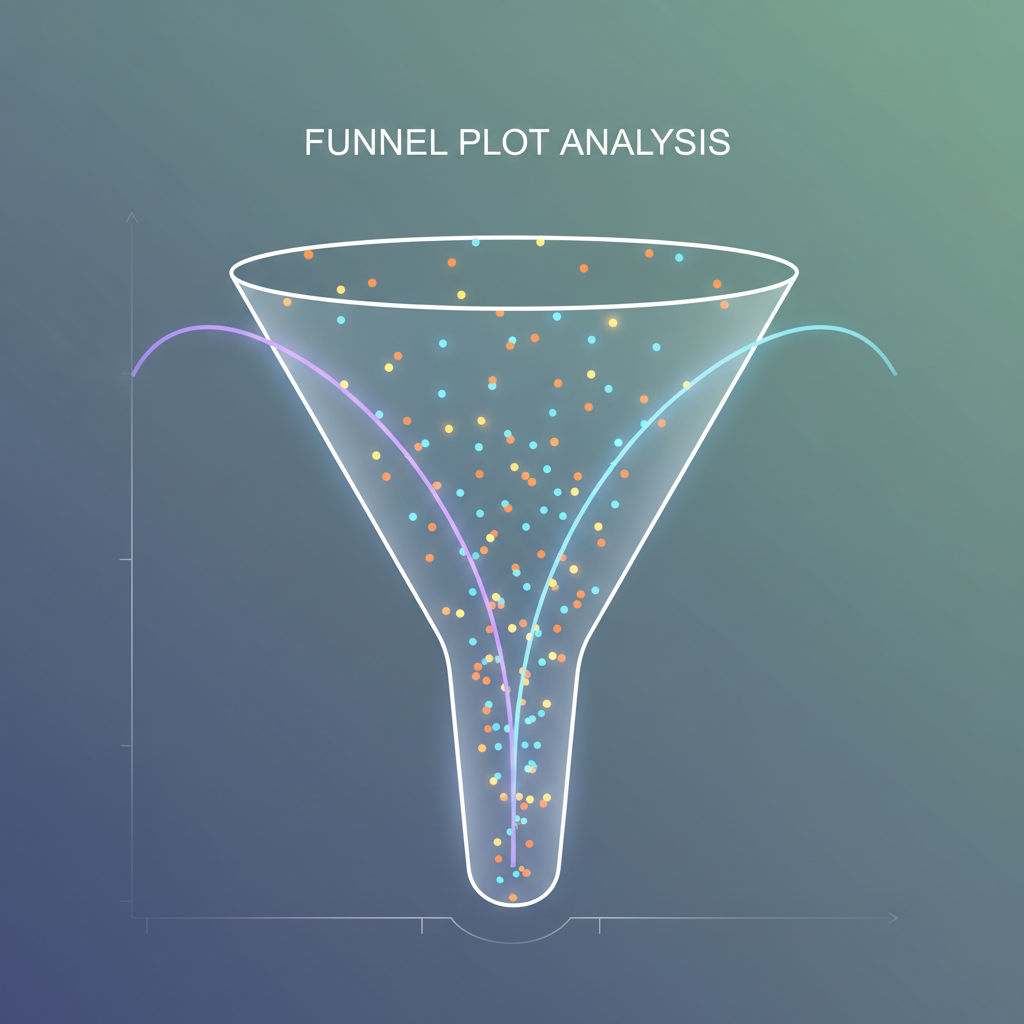
Understanding the Data: Funnel Plots
Hospitals are plotted by effective sample size vs. observed/expected ratio. The 'funnel' lines represent 95% confidence intervals.
Inside the funnel: statistically consistent variation.
Outside the funnel: potential outlier performing better or worse than expected.
Conclusion & Recommendations
Data Interpretation: Results showing inferiority should be viewed as 'signals' for deeper investigation rather than definitive proof of poor care.
Factors: Variations may be driven by unmeasured confounders, chance, or natural variation.
Predictive Power: Models predict ~70% of variation; residual confounding remains a limitation.
- anzdata
- organ-transplant
- medical-statistics
- hospital-outcomes
- graft-failure
- mortality-rates
- healthcare-data