





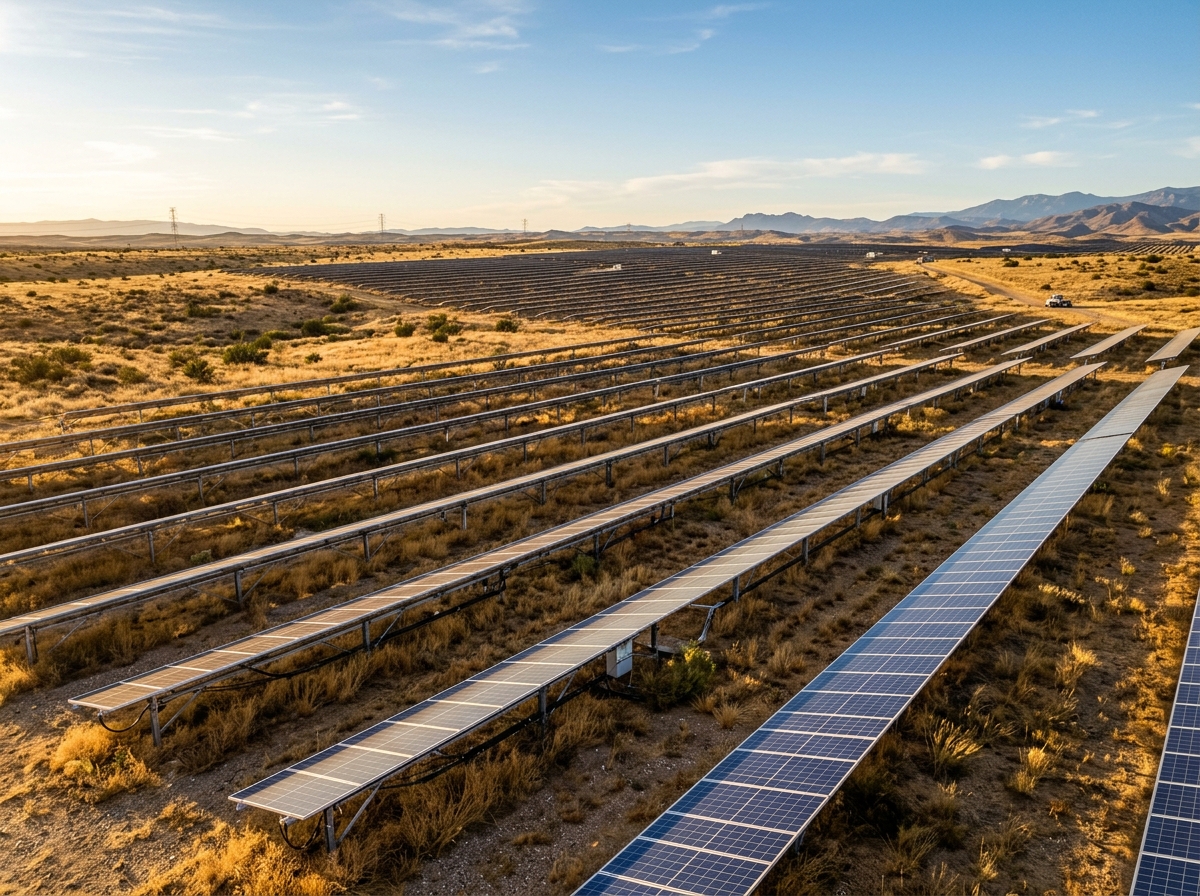










10 MW Solar Plant Financial Appraisal - Sri Lanka Project
Detailed financial appraisal of a 10 MW solar power plant in Sri Lanka, featuring NPV, IRR, and payback analysis for renewable energy investment.
Module: Financial Management of Projects
Financial Appraisal of a
10 MW Utility-Scale Solar Power Plant
Project in Sri Lanka
Focus on investment appraisal using traditional and advanced financial techniques
Evaluation includes profitability, affordability, strategic fit, and risk assessment
10 MW solar plant with 20-year operational life
Prepared to support investment decision-making for renewable energy infrastructure
Financial Management of Projects | Sri Lanka Solar Energy Initiative
02
Introduction & Project Background
Sri Lanka faces rising electricity demand due to industrial growth, urbanisation, and increasing household energy consumption
Heavy dependence on imported fossil fuels has increased energy costs and created foreign exchange pressure
The government promotes renewable energy development to improve energy security and reduce carbon emissions
Solar power offers long-term financial benefits through low operating costs and stable electricity generation
The proposed project is a 10 MW solar power plant with a 20-year operational life
Financial Management of Projects | Sri Lanka Solar Energy Initiative
03
Project Scope & Investment Opportunity
The project involves developing a ground-mounted solar photovoltaic power plant in Sri Lanka's dry zone region
Major components include land acquisition, solar panel procurement, engineering works, and grid connection systems
Regulatory approvals are required from the Ceylon Electricity Board and Sustainable Energy Authority
Maintenance systems, monitoring technologies, and operational controls ensure long-term efficiency and reliability
Revenue will be generated by selling electricity to the national grid through fixed tariff agreements
Financial Management of Projects | Sri Lanka Solar Energy Initiative
04
Strategic Justification
The project supports Sri Lanka's renewable energy policy and national sustainability goals
It reduces dependency on imported fuel and improves national energy security and foreign exchange stability
Solar investment aligns with ESG principles and attracts green financing opportunities from lenders and investors
Fixed power purchase agreements create predictable and stable long-term revenue streams
The project contributes to carbon reduction targets and strengthens sustainable infrastructure development
Financial Management of Projects | Sri Lanka Solar Energy Initiative
05
INITIAL INVESTMENT COST & FINANCIAL ASSUMPTIONS
LKR 2,350M
Total Initial Investment
18M kWh
Annual Electricity Generation
LKR 28
Selling Price per kWh
10%
Discount Rate
Annual operating and maintenance costs estimated at LKR 95 million
Project evaluated over a 20-year operational life
Residual value of LKR 150 million at end of project life
Financial Management of Projects | Sri Lanka Solar Energy Initiative
06
TRADITIONAL APPRAISAL TECHNIQUES
PAYBACK PERIOD
5.75 Years
Within acceptable benchmark of 6–8 years
ACCOUNTING RATE OF RETURN (ARR)
12.72%
Exceeds minimum expected return level
Traditional methods are simple, easy to understand, and useful for quick management decisions
The project recovers initial capital within the acceptable industry benchmark period
However, these methods ignore the time value of money and long-term wealth creation potential
Financial Management of Projects | Sri Lanka Solar Energy Initiative
07
Advanced Appraisal Techniques
NET PRESENT VALUE (NPV)
LKR 1,154M
Strong value creation
INTERNAL RATE OF RETURN (IRR)
16.8%
Exceeds 10% cost of capital
PROFITABILITY INDEX (PI)
1.49
Each rupee generates value
REQUIRED RETURN
10.0%
Minimum hurdle rate
A positive NPV confirms the project generates returns above the required cost of capital
These advanced techniques provide stronger financial evidence for strategic investment decisions
Financial Management of Projects | Sri Lanka Solar Energy Initiative
08
SENSITIVITY ANALYSIS & RISK ASSESSMENT
Electricity Selling Price (−10%)
HIGH
Significantly reduces NPV and profitability
Lower Power Generation Output
HIGH
Highest financial risk for project performance
Construction Cost Increases
MEDIUM
Moderate effect on investment returns
Higher Maintenance Expenses
MEDIUM
Moderate effect on operational cash flows
Sensitivity analysis tests tariff rates, installation costs, and electricity generation assumptions
Risk can be reduced through fixed tariff contracts, equipment warranties, and strong maintenance planning
Financial Management of Projects | Sri Lanka Solar Energy Initiative
09
AFFORDABILITY & FINANCING OPTIONS
EQUITY FINANCING
Strong NPV and IRR improve investor confidence and project bankability
LONG-TERM BANK LOANS
Stable cash inflows improve debt servicing capability
GREEN FINANCING
Highly suitable — renewable energy receives strong lender and investor support
PUBLIC-PRIVATE PARTNERSHIP
Government support enhances project viability and risk sharing
Strong NPV and IRR results increase investor confidence and improve project bankability
Long-term financial sustainability makes the project attractive for both private and institutional investors
Financial Management of Projects | Sri Lanka Solar Energy Initiative
10
FINAL RECOMMENDATION & CONCLUSION
PROJECT RECOMMENDED
The 10 MW Solar Power Plant Project should proceed as a profitable and sustainable investment
Payback: 5.75 Yrs
ARR: 12.72%
NPV: +LKR 1,154M
IRR: 16.8%
PI: 1.49
Strategic alignment with national renewable energy goals further strengthens the project's long-term value
Sensitivity analysis confirms manageable financial risks with proper operational and contractual controls
Financial Management of Projects | Sri Lanka Solar Energy Initiative
- solar-energy
- financial-appraisal
- renewable-energy
- investment-analysis
- sri-lanka
- green-financing
- npv-irr
- energy-security