
Made byBobr AI

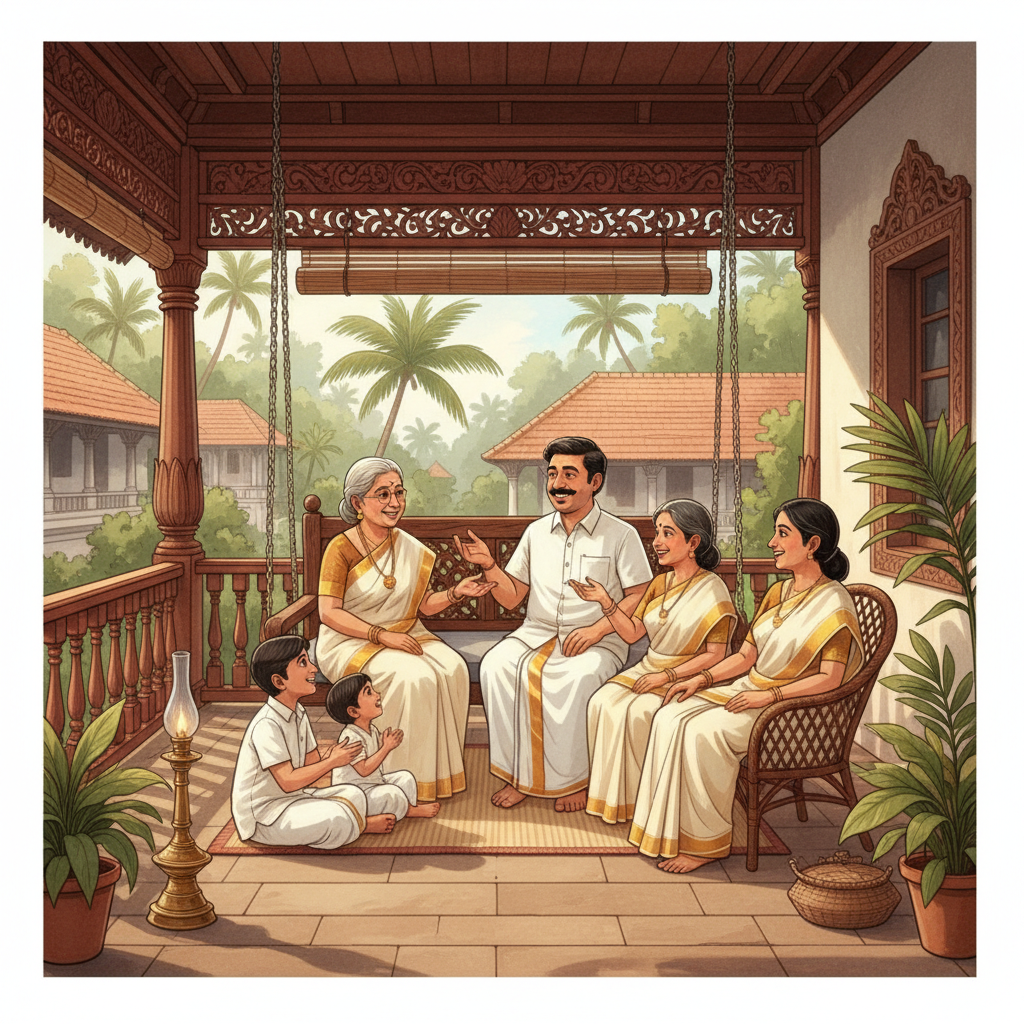
Kerala Culture & Care: A Guide for Healthcare Providers

Learn about Kerala's cultural values, dietary practices, and healthcare philosophy to provide culturally sensitive care for patients and the elderly.

#kerala-culture#healthcare-training#elderly-care#ayurveda#palliative-care#cultural-competence#psw
Watch
Pitch

Module 1 Assignment: Kerala Culture

Group 5: Christianah Olubukola Adewumi, Nnetu Ifeoma Krystle, Diya Sibi, Ojo-Adekolu Oluwaseun, Harleen Kaur

Made byBobr AI

Introduction to God's Own Country

Kerala, a state on the Malabar Coast (formed in 1956), is known as 'God’s Own Country.' It is recognized for its scenic beauty, rich cultural heritage, high literacy rate, and religious harmony. Major religions (Hinduism, Christianity, Islam) coexist peacefully. Cultural values emphasize respect for elders, education, calmness, and hospitality.

Made byBobr AI

Linguistic Dominance in Kerala

Malayalam is the official language and the mother tongue for the vast majority of the population. Understanding this helps PSWs recognize the value of native-language communication for comfort, although English is widely understood in educated circles.

Chart
Made byBobr AI

Dietary Practices & Nutrition

Dietary practices focus on rice-based meals (like appam and puttu), coconut, spices, and seafood. Many follow a vegetarian follower diet based on Sattvic principles. The 'Sadya' is a traditional feast served on a banana leaf. Cleanliness and hospitality are central.

Made byBobr AI

Healthcare & Elderly Care Philosophy

  • Holistic Model: Integrates modern medicine with traditional Ayurveda, focusing on physical, mental, and spiritual balance.
  • Community Responsibility: Care for older adults is viewed as a shared family and community duty, not just a medical obligation.
  • Ayurvedic Prevention: Use of herbal remedies (turmeric, neem) and therapeutic oils to maintain mobility and cognitive health.
  • Palliative Care: Kerala is internationally recognized for its community-based palliative care system supporting home-based needs.
Made byBobr AI

"Older adults are viewed as respected and active family members rather than dependent care recipients. Aging is understood as a period of reflection and spiritual growth."

- Kerala Philosophy on Aging (Tornstam, 2005)

Made byBobr AI

Family Dynamics & Gender Roles

Kerala is characterized by strong traditional bonds where extended families often support one another. Collective decision-making is common. While historical matrilineal systems influenced gender roles, modern society sees increasing female participation in education and social life, balancing tradition with modernization.

Made byBobr AI

Religion & Spirituality

  • Religious Diversity: Hinduism (largest group), Islam, and Christianity coexist with mutual respect and high tolerance.
  • Community Life: Religious festivals and daily prayer practices are central to community interactions.
  • Illness & Comfort: Families often turn to prayer and religious rituals for emotional support during illness.
  • Celebrations: Major festivals like Onam (Hindu origin but secularly observed), Eid, and Christmas are widely celebrated across faiths.
Made byBobr AI

Illness, Death & Funeral Practices

Family members are actively involved in disease management and treatment decisions. Funeral practices vary by religion: Hindus typically practice cremation, while Christians and Muslims practice burial. Regardless of faith, death is handled with dignity, followed by a period of mourning and remembrance rituals.

Made byBobr AI

Important Customs & Festivals (Section H)

Pookalam (Onam)

Mahabali

Vishukkani (Vishu)

Onam Games

Kerala celebrates festivals like Onam (Harvest), Vishu (New Year), Christmas, and Eid with deep cultural significance.

Made byBobr AI

Implications for the PSW

  • Involve the Family: Recognize that care decisions are often collective; respect the family's active role in the client's health.
  • Dietary Awareness: Be attentive to vegetarian preferences and the cultural significance of food (rice, coconut) and fasting periods.
  • Holistic Approaches: Be open to the client using Ayurvedic oils or remedies alongside prescribed medications.
  • Modesty & Gender: Respect traditional gender norms and preferences for same-sex caregivers where possible, particularly for personal care.
Made byBobr AI

Conclusion

Providing culturally competent care to clients from Kerala requires understanding their deep connection to family, spirituality, and holistic well-being. By respecting their traditions—from dietary habits to end-of-life rituals—a PSW can build trust and provide dignified, person-centered support.

Made byBobr AI

References

Admin. (2025). Ayurveda in Kerala. Ayurvedam.

Beauchamp, T. L., & Childress, J. F. (2013). Principles of biomedical ethics.

Bharatonline. (2025). Kerala languages.

Census of India. (2011/2025). Religion & Tables.

Elder, G. H. (1998). The life course as developmental theory.

Encyclopaedia Britannica. (n.d.). Onam.

Government of Kerala. (2024). Ayush final report.

Government of Kerala. (n.d.). Vishu and cultural celebrations.

IndianMirror. (2025). Kerala – Culture and tradition.

Kerala Heritage/Folklore/Tourism. (n.d./2025).

Mouth-Watering Delicacies. (2014). Kerala food culture.

Nightingale, F. (1860). Notes on nursing.

Sharma, P. V. (2001). Charaka Samhita.

Tornstam, L. (2005). Gerotranscendence.

Wikipedia contributors. (2025). Culture of Kerala.

Made byBobr AI
Bobr AI

DESIGNER-MADE
PRESENTATION,
GENERATED FROM
YOUR PROMPT

Create your own professional slide deck with real images, data charts, and unique design in under a minute.

Generate For Free

Kerala Culture & Care: A Guide for Healthcare Providers

Learn about Kerala's cultural values, dietary practices, and healthcare philosophy to provide culturally sensitive care for patients and the elderly.

Module 1 Assignment: Kerala Culture

Group 5: Christianah Olubukola Adewumi, Nnetu Ifeoma Krystle, Diya Sibi, Ojo-Adekolu Oluwaseun, Harleen Kaur

Introduction to God's Own Country

Kerala, a state on the Malabar Coast (formed in 1956), is known as 'God’s Own Country.' It is recognized for its scenic beauty, rich cultural heritage, high literacy rate, and religious harmony. Major religions (Hinduism, Christianity, Islam) coexist peacefully. Cultural values emphasize respect for elders, education, calmness, and hospitality.

Linguistic Dominance in Kerala

Malayalam is the official language and the mother tongue for the vast majority of the population. Understanding this helps PSWs recognize the value of native-language communication for comfort, although English is widely understood in educated circles.

Dietary Practices & Nutrition

Dietary practices focus on rice-based meals (like appam and puttu), coconut, spices, and seafood. Many follow a vegetarian follower diet based on Sattvic principles. The 'Sadya' is a traditional feast served on a banana leaf. Cleanliness and hospitality are central.

Healthcare & Elderly Care Philosophy

Holistic Model: Integrates modern medicine with traditional Ayurveda, focusing on physical, mental, and spiritual balance.

Community Responsibility: Care for older adults is viewed as a shared family and community duty, not just a medical obligation.

Ayurvedic Prevention: Use of herbal remedies (turmeric, neem) and therapeutic oils to maintain mobility and cognitive health.

Palliative Care: Kerala is internationally recognized for its community-based palliative care system supporting home-based needs.

Older adults are viewed as respected and active family members rather than dependent care recipients. Aging is understood as a period of reflection and spiritual growth.

Kerala Philosophy on Aging (Tornstam, 2005)

Family Dynamics & Gender Roles

Kerala is characterized by strong traditional bonds where extended families often support one another. Collective decision-making is common. While historical matrilineal systems influenced gender roles, modern society sees increasing female participation in education and social life, balancing tradition with modernization.

Religion & Spirituality

Religious Diversity: Hinduism (largest group), Islam, and Christianity coexist with mutual respect and high tolerance.

Community Life: Religious festivals and daily prayer practices are central to community interactions.

Illness & Comfort: Families often turn to prayer and religious rituals for emotional support during illness.

Celebrations: Major festivals like Onam (Hindu origin but secularly observed), Eid, and Christmas are widely celebrated across faiths.

Illness, Death & Funeral Practices

Family members are actively involved in disease management and treatment decisions. Funeral practices vary by religion: Hindus typically practice cremation, while Christians and Muslims practice burial. Regardless of faith, death is handled with dignity, followed by a period of mourning and remembrance rituals.

Implications for the PSW

Involve the Family: Recognize that care decisions are often collective; respect the family's active role in the client's health.

Dietary Awareness: Be attentive to vegetarian preferences and the cultural significance of food (rice, coconut) and fasting periods.

Holistic Approaches: Be open to the client using Ayurvedic oils or remedies alongside prescribed medications.

Modesty & Gender: Respect traditional gender norms and preferences for same-sex caregivers where possible, particularly for personal care.

Conclusion

Providing culturally competent care to clients from Kerala requires understanding their deep connection to family, spirituality, and holistic well-being. By respecting their traditions—from dietary habits to end-of-life rituals—a PSW can build trust and provide dignified, person-centered support.

placeholder

  • kerala-culture
  • healthcare-training
  • elderly-care
  • ayurveda
  • palliative-care
  • cultural-competence
  • psw