







Made byBobr AI

Ecological Perspectives on Child Development in NSW ECEC

An analysis of gender, language, and socio-economic factors in NSW Early Childhood Education and Care using Bronfenbrenner’s Ecological Systems Theory.

#child-development#ecec#bronfenbrenner#early-childhood-education#nsw-education#educational-psychology#inclusive-pedagogy
Watch
Pitch

Greeting and Acknowledgement

My name is Rayush Shahi. Today I present on Three Key Perspectives Influencing Children’s Development and ECEC Provision in New South Wales, using Bronfenbrenner’s Ecological Systems Theory.

I would like to begin by acknowledging the Traditional Custodians of the land on which we meet today. I pay my respects to Elders past and present and recognise their ongoing connection to land, culture, and community.

Made byBobr AI

Three Key Perspectives Influencing Children’s Development and ECEC Provision in NSW

A Bronfenbrennerian Ecological Analysis

Rayush Shahi

Global and Contemporary Perspectives in Early Childhood | New South Wales (NSW)

Made byBobr AI

Introduction and Focus

Children’s development involves intricate interactions individual characteristics (gender, language, socio-economic background) and wider social contexts.

This presentation examines these three perspectives using Bronfenbrenner’s Ecological Systems Theory, specifically analyzing how interactions across system levels shape ECEC provision within the NSW context.

Made byBobr AI

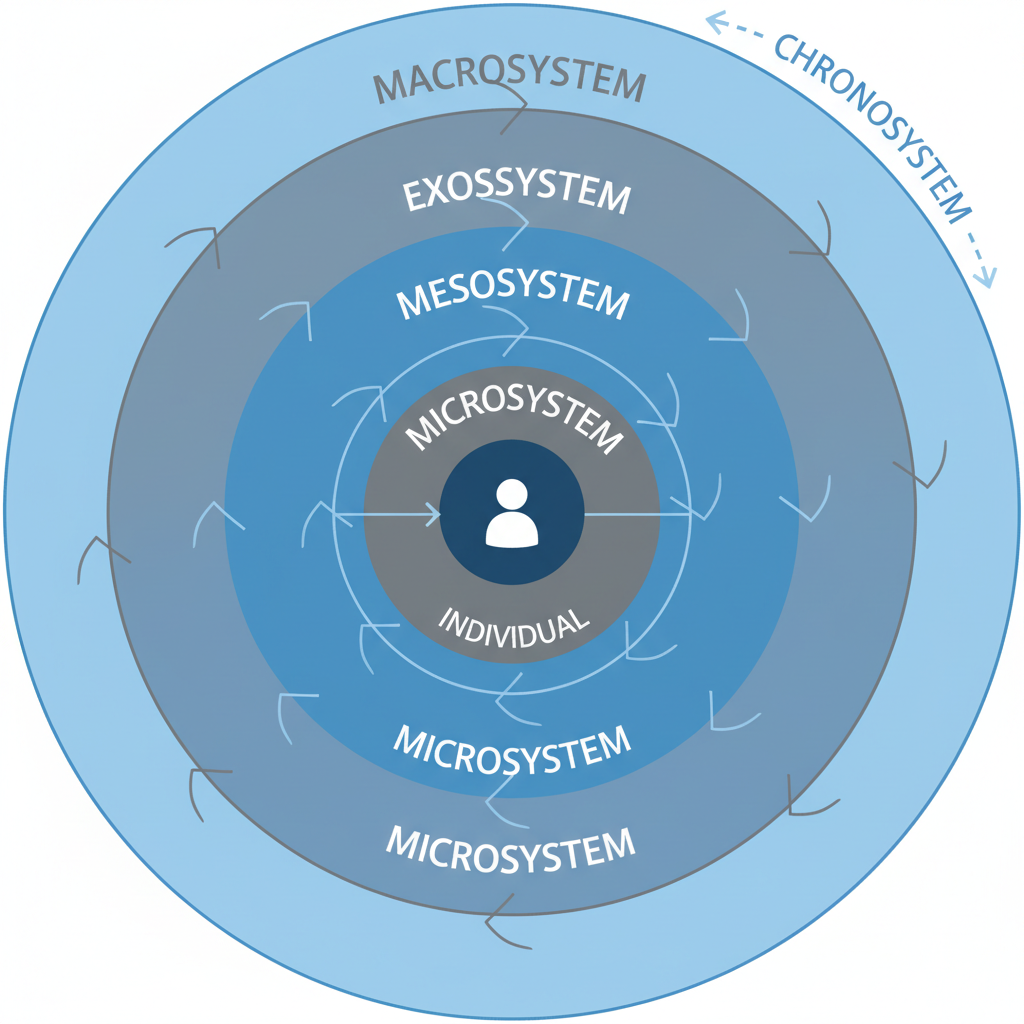
Bronfenbrenner’s Ecological Systems Theory

Development results from interactions between individuals and multiple environmental systems.

Microsystem: Daily interactions (family, educators) shaping identity and wellbeing.
Mesosystem: Connections between microsystems (e.g., family–service partnerships).
Exosystem: Indirect influences like employment, housing, and community services.
Macrosystem: Cultural values and frameworks (EYLF v2.0, NQF).
Chronosystem: Evolution of time, policies, and social attitudes.
Made byBobr AI

Perspective 1: Gender

Gender is socially constructed and learned through everyday interactions within families, peer groups, and early learning environments.

Microsystem: Educator expectations and learning environments can either reinforce or challenge stereotypes.

Mesosystem: Need for respectful family–service partnerships when gender beliefs differ.

Macrosystem: NSW policies (EYLF v2.0, anti-discrimination laws) promote inclusive practices supporting identity and agency.

Made byBobr AI

Perspective 2: Language and Culture

Language is central to identity and belonging. NSW is highly culturally and linguistically diverse.

Microsystem: Responsive interactions support bilingual/multilingual development.

Mesosystem: Emphasizes strong communication between families and educators regarding language barriers.

Macrosystem: EYLF v2.0 recognises multilingualism as a strength and mandates culturally responsive practice.

Made byBobr AI

Perspective 3: Socio-Economic Background

Socio-economic background significantly influences access to resources, stability, and opportunities.

Exosystem Level: Employment conditions, housing affordability, and transport availability directly affect engagement in ECEC.
Macrosystem Level: NSW initiatives like Start Strong funding and the Inclusion Support Program aim to reduce inequities.
High-quality ECEC acts as a protective factor for children experiencing disadvantage.
Made byBobr AI

Implications for ECEC Service Provision in NSW

Gender, language, and SES interact across ecological systems requiring a holistic response.

Inclusive and reflective pedagogy
Strong family–service partnerships
Alignment with EYLF v2.0 and National Quality Standard

Educators play a critical role in translating policy into practice through culturally responsive teaching and inclusive curriculum planning.

Made byBobr AI

Conclusion

Children’s development is shaped by complex interactions across multiple ecological systems. Gender, language, and socio-economic background influence development through daily relationships, community contexts, and government policies.

Bronfenbrenner’s theory highlights the importance of addressing both individual and systemic factors. Meaningful outcomes depend on consistent, reflective, and inclusive practice within ECEC services.

Made byBobr AI

References (APA 7)

Australian Children’s Education and Care Quality Authority. (2020). National Quality Standard. https://www.acecqa.gov.au/nqf/national-quality-standard Australian Government Department of Education. (2022). Belonging, Being and Becoming: The Early Years Learning Framework for Australia (Version 2.0). https://www.acecqa.gov.au Australian Government Department of Education. (2025). Inclusion Support Program. https://www.education.gov.au Australian Institute of Health and Welfare. (2022). Australia’s children. https://www.aihw.gov.au Bronfenbrenner, U., & Morris, P. A. (2006). The bioecological model of human development. In W. Damon & R. M. Lerner (Eds.), Handbook of child psychology (6th ed., pp. 793–828). Wiley. OECD. (2018). Engaging young children: Lessons from research about quality in early childhood education and care. OECD Publishing.
Made byBobr AI

Thank You

This presentation has shown how gender, language, and socio-economic background interact across ecological systems to shape children’s development and ECEC provision in NSW.

I am happy to answer any questions.

Made byBobr AI
Bobr AI

DESIGNER-MADE
PRESENTATION,
GENERATED FROM
YOUR PROMPT

Create your own professional slide deck with real images, data charts, and unique design in under a minute.

Generate For Free

Ecological Perspectives on Child Development in NSW ECEC

An analysis of gender, language, and socio-economic factors in NSW Early Childhood Education and Care using Bronfenbrenner’s Ecological Systems Theory.

Greeting and Acknowledgement

My name is Rayush Shahi. Today I present on Three Key Perspectives Influencing Children’s Development and ECEC Provision in New South Wales, using Bronfenbrenner’s Ecological Systems Theory.

I would like to begin by acknowledging the Traditional Custodians of the land on which we meet today. I pay my respects to Elders past and present and recognise their ongoing connection to land, culture, and community.

Three Key Perspectives Influencing Children’s Development and ECEC Provision in NSW

A Bronfenbrennerian Ecological Analysis

Rayush Shahi

Global and Contemporary Perspectives in Early Childhood | New South Wales (NSW)

Introduction and Focus

Children’s development involves intricate interactions individual characteristics (gender, language, socio-economic background) and wider social contexts.

This presentation examines these three perspectives using Bronfenbrenner’s Ecological Systems Theory, specifically analyzing how interactions across system levels shape ECEC provision within the NSW context.

Bronfenbrenner’s Ecological Systems Theory

Development results from interactions between individuals and multiple environmental systems.

<b>Microsystem:</b> Daily interactions (family, educators) shaping identity and wellbeing.

<b>Mesosystem:</b> Connections between microsystems (e.g., family–service partnerships).

<b>Exosystem:</b> Indirect influences like employment, housing, and community services.

<b>Macrosystem:</b> Cultural values and frameworks (EYLF v2.0, NQF).

<b>Chronosystem:</b> Evolution of time, policies, and social attitudes.

Perspective 1: Gender

Gender is socially constructed and learned through everyday interactions within families, peer groups, and early learning environments.

<b>Microsystem:</b> Educator expectations and learning environments can either reinforce or challenge stereotypes.

<b>Mesosystem:</b> Need for respectful family–service partnerships when gender beliefs differ.

<b>Macrosystem:</b> NSW policies (EYLF v2.0, anti-discrimination laws) promote inclusive practices supporting identity and agency.

Perspective 2: Language and Culture

Language is central to identity and belonging. NSW is highly culturally and linguistically diverse.

<b>Microsystem:</b> Responsive interactions support bilingual/multilingual development.

<b>Mesosystem:</b> Emphasizes strong communication between families and educators regarding language barriers.

<b>Macrosystem:</b> EYLF v2.0 recognises multilingualism as a strength and mandates culturally responsive practice.

Perspective 3: Socio-Economic Background

Socio-economic background significantly influences access to resources, stability, and opportunities.

<b>Exosystem Level:</b> Employment conditions, housing affordability, and transport availability directly affect engagement in ECEC.

<b>Macrosystem Level:</b> NSW initiatives like <i>Start Strong</i> funding and the <i>Inclusion Support Program</i> aim to reduce inequities.

High-quality ECEC acts as a protective factor for children experiencing disadvantage.

Implications for ECEC Service Provision in NSW

Gender, language, and SES interact across ecological systems requiring a holistic response.

Inclusive and reflective pedagogy

Strong family–service partnerships

Alignment with EYLF v2.0 and National Quality Standard

Educators play a critical role in translating policy into practice through culturally responsive teaching and inclusive curriculum planning.

Conclusion

Children’s development is shaped by complex interactions across multiple ecological systems. Gender, language, and socio-economic background influence development through daily relationships, community contexts, and government policies.

Bronfenbrenner’s theory highlights the importance of addressing both individual and systemic factors. Meaningful outcomes depend on consistent, reflective, and inclusive practice within ECEC services.

References (APA 7)

Australian Children’s Education and Care Quality Authority. (2020). <i>National Quality Standard</i>. https://www.acecqa.gov.au/nqf/national-quality-standard Australian Government Department of Education. (2022). <i>Belonging, Being and Becoming: The Early Years Learning Framework for Australia</i> (Version 2.0). https://www.acecqa.gov.au Australian Government Department of Education. (2025). <i>Inclusion Support Program</i>. https://www.education.gov.au Australian Institute of Health and Welfare. (2022). <i>Australia’s children</i>. https://www.aihw.gov.au Bronfenbrenner, U., & Morris, P. A. (2006). The bioecological model of human development. In W. Damon & R. M. Lerner (Eds.), <i>Handbook of child psychology</i> (6th ed., pp. 793–828). Wiley. OECD. (2018). <i>Engaging young children: Lessons from research about quality in early childhood education and care</i>. OECD Publishing.

Thank You

This presentation has shown how gender, language, and socio-economic background interact across ecological systems to shape children’s development and ECEC provision in NSW.

I am happy to answer any questions.

  • child-development
  • ecec
  • bronfenbrenner
  • early-childhood-education
  • nsw-education
  • educational-psychology
  • inclusive-pedagogy