

Made byBobr AI

Introduction to Migrant Worker Poetry in Singapore

Explore common themes in Singaporean migrant worker poetry, including displacement, rootlessness, and resilience. A literature guide for students.

#migrant-poetry#singapore-literature#literature-education#migrant-writers#poetry-themes#social-studies
Watch
Pitch

Introduction to Migrant Poetry

Sec 2 Literature in English

Whitley Secondary School — Department of English Language & Literature
Mr Jerome Lim
poetry icon
Made byBobr AI

What We'll Cover Today

1.
Migrant Workers in Singapore
2.
Migrant Worker Poetry
3.
Before We Read: Exploring Perspectives
4.
Common Themes in Migrant Worker Poetry
5.
Literary Devices Review
6.
The PME Framework
7.
Reading 'Scarecrow' — Next Week Preview
Made byBobr AI
Section 1

Migrant Workers in Singapore

Who are they, and what do they do?

Made byBobr AI

Who Are They?

Around 1 million migrant workers come from less affluent Asian countries
They do manual labour — construction sites, long hours outdoors
Often housed in packed dormitories
Another major group: domestic helpers — employed for household chores & caregiving tasks
Made byBobr AI

Migrant Worker Poetry

Many migrant workers write during their free time
They write about their hopes, dreams, and sacrifices
A thriving migrant worker poetry scene has emerged in Singapore
Spearheaded by groups such as Migrant Writers of Singapore
Some have even been published in books!

"We come with hopes in our hearts, we leave with stories in our words."

Made byBobr AI

Watch & Discuss

Me Migrant — Call and Response

Watch migrant workers respond to comments made by Singaporeans.

youtube.com/watch?v=mwaS5LeMdGc
💬 Discussion Question:

Do you think Singaporeans appreciate our migrant workers enough? Why or why not?

Write your thoughts below!

"

"They are uncivilised and they make Singapore unsafe. They are also dirty and inconsiderate."

Online Comment
Made byBobr AI
Section 2 — Before We Read

Let's Explore Perspectives

What do you already think and feel about migrant workers?

Made byBobr AI

What Do You Think?

Read each statement carefully. Tick the box that best matches your opinion.

Statement
Agree
Unsure
Disagree
Migrant workers are treated fairly in Singapore.
Money can make sacrifices worthwhile.
It is possible to feel lonely in a crowded city.
Home is more than just a physical place.
Singaporeans often overlook these workers.
We'll revisit these at the end of the unit!
Made byBobr AI

Let's Reflect

What are the challenges migrant workers in Singapore might face?

Personal experiences and observations in Singapore
News or stories you have seen
How someone in that situation might feel
Your thoughts:
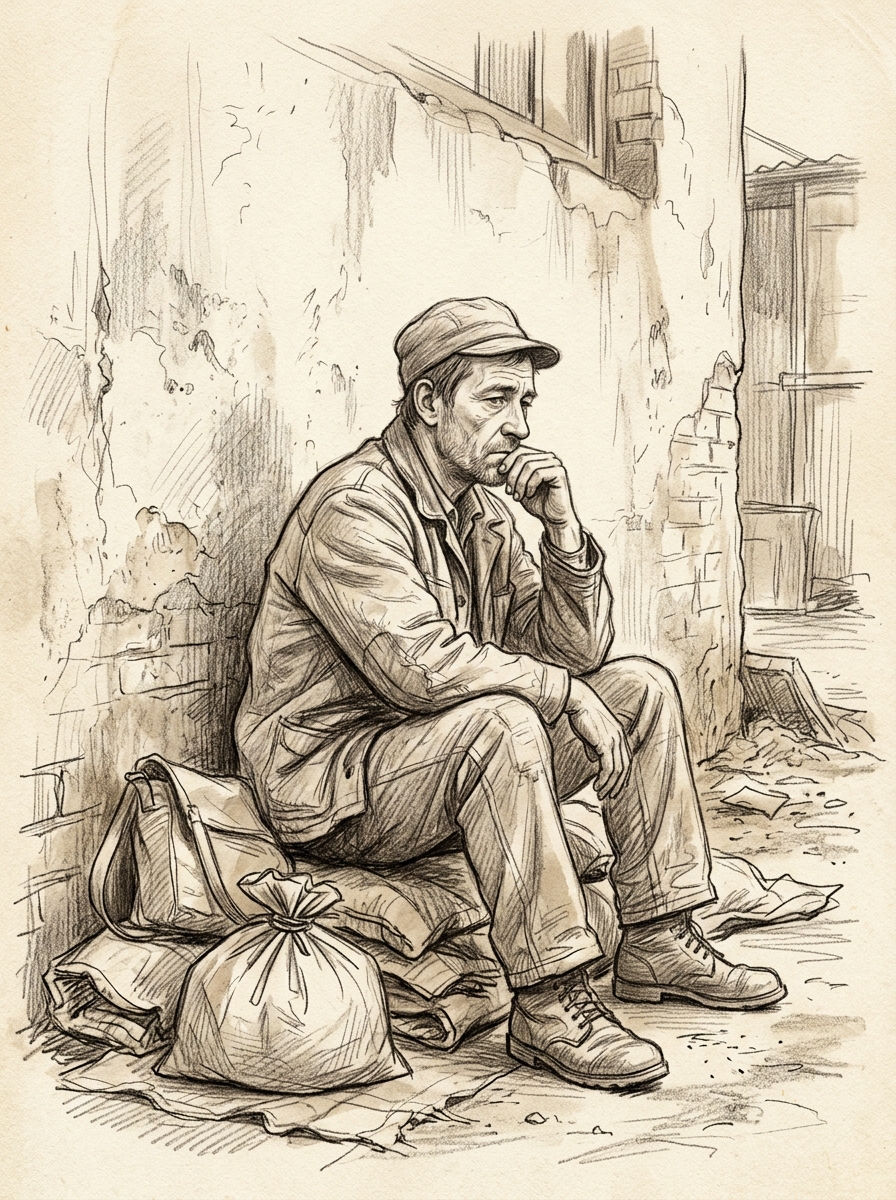
solitary migrant worker sketch
Made byBobr AI

Explore Further

Read these articles and watch these videos to learn more about migrant workers in Singapore.

ARTICLES
"These poems by a migrant worker in S'pore will help you better understand their plight"
Mothership
mothership.sg/2016/05/...
"Maid of poems: She writes poetry to share stories of the lives of migrant workers here"
The Pride
pride.kindness.sg/poems-of-migrant-workers-lives/
VIDEOS
"Life As a Migrant Worker In Singapore" (22:34)
CNA Insider
Migrant worker diary entries and poems entwine the stories of two migrant workers who persevered in Singapore.
"Poets On Permits" (24:30)
Uptake Media
Five migrant poets from Bangladesh, Philippines, India, China and Indonesia share their personal stories.
Made byBobr AI

Looking at the Word Cloud…

1.
Which words stand out to you most? (Google the meanings)
2.
What do these words suggest about the lives of migrant workers?
💬 Share with your partner!
DIGNITY RESILIENCE DISTANCE JOURNEY MEMORY HOME LABOUR SWEAT FAMILY WORK HOPE SACRIFICE LONELINESS DREAMS INVISIBLE STRUGGLE BELONGING SEPARATION ROOTLESSNESS
Made byBobr AI
Section 3

Common Themes in Migrant Worker Poetry

As migrant workers write about their experiences, many poems explore similar emotions, struggles, and hopes.

Made byBobr AI

Theme 1: Building New Lives / Cities

Their labour builds the city; their dreams build a future.

Migrant workers physically construct Singapore's skyline, pouring their strength into the towering monuments of the city. Yet, standing in the shadows of these giants, they are simultaneously working to build better, more secure futures for their families back home.

"My sweat turns villages to metros and metros into civilisation."
— In This City, by M. R. Mizan
Voices. Labour. Dreams. Dignity.
Made byBobr AI

Theme 2: Displacement & Rootlessness

Leaving behind home, carrying memories, seeking belonging.

Migrant workers feel torn between two worlds: the home they left behind and the foreign city they now live in. They carry culture like luggage.
"I've carried my culture, like a suitcase with me along this migrant journey."
— The Elusive Dream of Home, by Rohima Begum
Made byBobr AI

Theme 3: Weather as Metaphor

Rain, sun, and sweat mirror emotions, uncertainty, and endurance.

Poets use weather — rain, heat, sweat, sun — as metaphors for the emotional and physical hardships of migrant life. The harsh Singapore climate becomes a symbol of struggle and perseverance.

"Sweat drops brought me to the addiction of rain. I thought rain was my sweat."
— In This City, by M. R. Mizan
Voices. Labour. Dreams. Dignity.
Made byBobr AI

Theme 4: Racism & Othering

Prejudice, invisibility, and the struggle for dignity.

Many migrant workers experience discrimination and are made to feel unwelcome or invisible. Their poetry confronts these prejudices head-on and asserts their humanity and worth.

"It does not matter if they say my body is too smelly. It does not matter if they don't want to be close to me."
— There's Hope, by Windu Lestari
Voices. Labour. Dreams. Dignity.
Made byBobr AI

Theme 5: Longing & The Divide

Distance from loved ones, homesickness, and a lifelong wait.

Separation from family is one of the most painful aspects of migrant life. Workers are physically here but emotionally elsewhere — always longing for home, for the faces of children, parents, and partners left behind.

"My tears still burst their banks, chasing amber waves of home."
— A Miscellaneous Poem on Singapore Island, by How Wei (trans.)
Made byBobr AI

Themes in Singapore Migrant Worker Poetry

1
Building New Lives / Cities
Their labour builds the city; their dreams build a future.
2
Displacement & Rootlessness
Leaving behind home, carrying memories, seeking belonging.
3
Weather as Metaphor
Rain, sun, and sweat mirror emotions, uncertainty, endurance.
4
Racism & Othering
Prejudice, invisibility, and the struggle for dignity.
5
Longing & The Divide
Distance from loved ones, homesickness, a lifelong wait.
Voices. Labour. Dreams. Dignity. — from the poems of migrant workers in Singapore.
Made byBobr AI
Section 4

Preparing for Deeper Reading

What Literary Devices Should We Look Out For?

Poets use language carefully to express emotions, ideas, and experiences. As you read migrant worker poetry, pay attention to how poets use literary devices to create meaning.

Made byBobr AI

Literary Devices You Need to Know

SIMILE

Formula: A is like B / as A as B

A comparison using 'like' or 'as' to emphasise an idea.

"I am as lonely as a sodium lamp post"

METAPHOR

Formula: A = B

A direct comparison between two things without 'like' or 'as'.

"The bag carries… the migrant dreams"

PERSONIFICATION

Formula: (non-human) A = a B person

Giving human qualities or actions to non-human things.

"My sweat is poured in her streets… I built her a beautiful urban landscape."

HYPERBOLE

Formula: A = EXTREMELY B

Deliberate exaggeration used for emphasis or effect.

"My sweat turns villages to metros and metros into civilisation"

REPETITION

Formula: A … A … A …

Repeating words or phrases to emphasise an idea or feeling.

"She maybe the maid you pay her less / She maybe the maid but full of respect"

Made byBobr AI

Let's Test Ourselves!

Identify the literary device in each quotation. Bonus: Identify the themes!
Literary Device
Quote
"Everyday, with the perfect touch / of the bottomless love of my heart"
"My tears still burst their banks" *banks – sides of a river
"And my dream has further eluded me – / It has run away from me"
"as fluent as the national anthem"
"An all-year season of cruel summer"
"Dust from the site has coloured his hands / grey as ashes, and stained his nails"
Made byBobr AI
P
M
E
Section 5

Crafting Our Analysis

The P–M–E Framework

When analysing poetry, we use the PME framework to explain ideas clearly and precisely.

Made byBobr AI

The PME Framework

Use PME to analyse poetry and explain ideas clearly!

1
P — PART

Identify important words or phrases.

Which part of the poem stands out? Why does it stand out?
Example
as lonely as a sodium lamp post
2
M — METHOD

Explain how the poet uses language or literary devices.

What literary device is used? How does the poet use language here?
Example
simile
3
E — EFFECT

Explain the ideas, feelings, or tone created.

What idea does this emphasise? What feelings are created? What tone is created?
Example
emphasises loneliness and isolation
Poems often create THREE common effects:
1. EMPHASISE IDEAS
draws attention to an important idea.
2. EVOKE FEELINGS
creates emotional responses.
3. CREATE TONE
shows the writer's attitude.
Made byBobr AI

Poems Create Three Common Effects

EMPHASISE IDEAS

Draws attention to an important idea, message or experience.

Example
"Thousand thousand miles away"
→ emphasises the distance and separation.

EVOKE FEELINGS

Creates emotions or emotional responses in the reader.

Example
"I cannot cry / Even though I want to."
→ evokes feelings of sadness and helplessness.

CREATE TONE

Shows the writer's attitude or feelings towards a subject.

Example
"An all-year season of cruel summer"
→ creates a harsh and oppressive tone.
TIP: Use PME together to deepen your understanding of the poem!
Made byBobr AI

Let's Try This Together!

Sample Analysis: 'I am as lonely as a sodium lamp post'

P (PART)
The migrant speaker describes himself as 'as lonely as a sodium lamp post'.
Introduce your quote by inserting it into a sentence.
Give context on who is speaking (speaker).
Choose exact words that stand out — do not quote the whole poem.
M (METHOD)
He uses a simile to compare himself to a lamp post, which is an object that often stands alone.
Label the literary device.
Zoom in on key words or comparisons.
Explain what these important words are doing.
E (EFFECT)
Through this, the poet emphasises the speaker's loneliness and isolation in a foreign city.
Identify the main effect: emphasising an idea, evoking a feeling, or creating a tone?
Remember: the speaker ≠ the poet!
The effect must make sense based on the method.
PME ANALYSIS MODEL
Made byBobr AI

Now You Try!

Practice: "My tears still burst their banks"

P
The migrant speaker describes… (insert quote)
........................................................................................................................................................
M
He uses ......................... (device) to compare ......................... to ......................... which
........................................................................................................................................................
E
Through this, the poet emphasises / evokes / creates … (choose and explain relevant effect)
.......................................................................... because .............................................................................
Hint:
'burst their banks' — banks refers to the sides of a river. What happens when a river bursts its banks? What device compares tears to a flooding river?
Made byBobr AI
Section 6 — Next Week

Reading 'Scarecrow'

Let's Prepare to Practise Our PME Analysis!

In this poem, the poet — a maid — speaks about herself. We will read and discuss this poem next week.

Highlight parts that stand out to you, and identify as many literary devices as you can.

Made byBobr AI

SCARECROW

Rea Maac

A maid speaks about her experience as an invisible worker in a foreign land.

📝 Annotate as you read — highlight devices and key moments!
1 2 3 4 5 6 7 8 9 10 11 12 13 14 15 16 17 18 19 20 21 22 23 24 25 26 27
In the middle of the crowd standing alone in silence because no one notices its presence. Mouth was kept shut piercing cries echoing in its mind trying to be heard but voice has lost its purpose. You think it's nothing only figure to scare away birds its more than that if only you'll open your heart. You can hear the pleading but you choose not to listen you can see its suffering but you were blindfolded by arrogance. Staying quiet, forever alone speaking up may lose a battle afraid of the outcome. Pity for the scarecrow might be thrown after being used without a single compliment to its undying effort. In the affluent crowd being manipulated by the selfish act I know because I'm a scarecrow in a foreign land.
Made byBobr AI

Annotating 'Scarecrow' — Things to Look For

LITERARY DEVICES

  • What similes or metaphors can you find?
  • Is there personification? What is being given human qualities?
  • Find examples of repetition. What effect does it create?
  • Is there hyperbole? What is being exaggerated?

THEMES

  • How is invisibility shown in the poem?
  • What does the scarecrow represent?
  • How does the speaker feel about her situation?
  • What theme of belonging/loneliness is present?

KEY LANGUAGE

  • Which words carry strong emotions?
  • Look at the shift from "it" to "I" — what does this reveal?
  • What is the effect of "a scarecrow in a foreign land"?
  • What tone does the poet create overall?

Come ready to share your annotations next lesson!

Made byBobr AI

What We Learned Today

1
👥 Migrant workers in Singapore — who they are and why they write poetry.
2
📚 Migrant worker poetry — the thriving scene spearheaded by groups like Migrant Writers of Singapore.
3
🎭 Common themes — Work, Home, Dreams, Sacrifice, Loneliness, Dignity, Resilience, and more.
4
🔍 Literary devices — Simile, Metaphor, Personification, Hyperbole, Repetition.
5
✍️ The PME Framework — Part, Method, Effect — for analysing poetry.
💡
Next lesson:We will discuss 'Scarecrow' by Rea Maac and practise our PME analysis together. Come with your annotations ready!
Whitley Secondary School  |  Sec 2 Literature in English  |  Mr Jerome Lim
Made byBobr AI
Bobr AI

DESIGNER-MADE
PRESENTATION,
GENERATED FROM
YOUR PROMPT

Create your own professional slide deck with real images, data charts, and unique design in under a minute.

Generate For Free

Introduction to Migrant Worker Poetry in Singapore

Explore common themes in Singaporean migrant worker poetry, including displacement, rootlessness, and resilience. A literature guide for students.

Introduction to Migrant Poetry

Sec 2 Literature in English

Whitley Secondary School — Department of English Language & Literature

Mr Jerome Lim

What We'll Cover Today

Migrant Workers in Singapore

Migrant Worker Poetry

Before We Read: Exploring Perspectives

Common Themes in Migrant Worker Poetry

Literary Devices Review

The PME Framework

Reading 'Scarecrow' — Next Week Preview

Section 1

Migrant Workers in Singapore

Who are they, and what do they do?

Who Are They?

Around 1 million <span style="color: #DA9E45; font-weight: 600;">migrant workers</span> come from less affluent Asian countries

They do manual labour — construction sites, long hours outdoors

Often housed in packed dormitories

Another major group: <span style="color: #DA9E45; font-weight: 600;">domestic helpers</span> — employed for household chores & caregiving tasks

Migrant Worker Poetry

Many migrant workers write during their free time

They write about their hopes, dreams, and sacrifices

A thriving migrant worker poetry scene has emerged in Singapore

Migrant Writers of Singapore

Some have even been published in books!

"We come with hopes in our hearts, we leave with stories in our words."

Watch & Discuss

Me Migrant — Call and Response

Watch migrant workers respond to comments made by Singaporeans.

youtube.com/watch?v=mwaS5LeMdGc

Discussion Question:

Do you think Singaporeans appreciate our migrant workers enough? Why or why not?

Write your thoughts below!

"They are uncivilised and they make Singapore unsafe. They are also dirty and inconsiderate."

Online Comment

Section 2 — Before We Read

Let's Explore Perspectives

What do you already think and feel about migrant workers?

What Do You Think?

Read each statement carefully. Tick the box that best matches your opinion.

Migrant workers are treated fairly in Singapore.

Money can make sacrifices worthwhile.

It is possible to feel lonely in a crowded city.

Home is more than just a physical place.

Singaporeans often overlook these workers.

We'll revisit these at the end of the unit!

Let's Reflect

What are the challenges migrant workers in Singapore might face?

Personal experiences and observations in Singapore

News or stories you have seen

How someone in that situation might feel

Your thoughts:

Explore Further

Read these articles and watch these videos to learn more about migrant workers in Singapore.

ARTICLES

VIDEOS

"These poems by a migrant worker in S'pore will help you better understand their plight"

Mothership

mothership.sg/2016/05/...

"Maid of poems: She writes poetry to share stories of the lives of migrant workers here"

The Pride

pride.kindness.sg/poems-of-migrant-workers-lives/

"Life As a Migrant Worker In Singapore" (22:34)

CNA Insider

Migrant worker diary entries and poems entwine the stories of two migrant workers who persevered in Singapore.

"Poets On Permits" (24:30)

Uptake Media

Five migrant poets from Bangladesh, Philippines, India, China and Indonesia share their personal stories.

Looking at the Word Cloud…

Which words stand out to you most? (Google the meanings)

What do these words suggest about the lives of migrant workers?

Share with your partner!

DIGNITY

RESILIENCE

DISTANCE

JOURNEY

MEMORY

HOME

LABOUR

SWEAT

FAMILY

WORK

HOPE

SACRIFICE

LONELINESS

DREAMS

INVISIBLE

STRUGGLE

BELONGING

SEPARATION

ROOTLESSNESS

Section 3

Common Themes in Migrant Worker Poetry

As migrant workers write about their experiences, many poems explore similar emotions, struggles, and hopes.

Theme 1: Building New Lives / Cities

Their labour builds the city; their dreams build a future.

Migrant workers physically construct Singapore's skyline, pouring their strength into the towering monuments of the city. Yet, standing in the shadows of these giants, they are simultaneously working to build better, more secure futures for their families back home.

"My sweat turns villages to metros and metros into civilisation."

— In This City, by M. R. Mizan

Voices. Labour. Dreams. Dignity.

Theme 2: Displacement & Rootlessness

Leaving behind home, carrying memories, seeking belonging.

Migrant workers feel torn between two worlds: the home they left behind and the foreign city they now live in. They carry culture like luggage.

I've carried my culture, like a suitcase with me along this migrant journey.

The Elusive Dream of Home, by Rohima Begum

Theme 3: Weather as Metaphor

Rain, sun, and sweat mirror emotions, uncertainty, and endurance.

Poets use weather — rain, heat, sweat, sun — as metaphors for the emotional and physical hardships of migrant life. The harsh Singapore climate becomes a symbol of struggle and perseverance.

"Sweat drops brought me to the addiction of rain. I thought rain was my sweat."

— In This City, by M. R. Mizan

Voices. Labour. Dreams. Dignity.

Theme 4: Racism & Othering

Prejudice, invisibility, and the struggle for dignity.

Many migrant workers experience discrimination and are made to feel unwelcome or invisible. Their poetry confronts these prejudices head-on and asserts their humanity and worth.

"It does not matter if they say my body is too smelly. It does not matter if they don't want to be close to me."

— There's Hope, by Windu Lestari

Voices. Labour. Dreams. Dignity.

Theme 5: Longing & The Divide

Distance from loved ones, homesickness, and a lifelong wait.

Separation from family is one of the most painful aspects of migrant life. Workers are physically here but emotionally elsewhere — always longing for home, for the faces of children, parents, and partners left behind.

"My tears still burst their banks, chasing amber waves of home."

— A Miscellaneous Poem on Singapore Island, by How Wei (trans.)

Themes in Singapore Migrant Worker Poetry

1

Building New Lives / Cities

Their labour builds the city; their dreams build a future.

2

Displacement & Rootlessness

Leaving behind home, carrying memories, seeking belonging.

3

Weather as Metaphor

Rain, sun, and sweat mirror emotions, uncertainty, endurance.

4

Racism & Othering

Prejudice, invisibility, and the struggle for dignity.

5

Longing & The Divide

Distance from loved ones, homesickness, a lifelong wait.

Voices. Labour. Dreams. Dignity.

— from the poems of migrant workers in Singapore.

Section 4

Preparing for Deeper Reading

What Literary Devices Should We Look Out For?

Poets use language carefully to express emotions, ideas, and experiences. As you read migrant worker poetry, pay attention to how poets use literary devices to create meaning.

Literary Devices You Need to Know

SIMILE

A is like B / as A as B

A comparison using 'like' or 'as' to emphasise an idea.

I am as lonely as a sodium lamp post

METAPHOR

A = B

A direct comparison between two things without 'like' or 'as'.

The bag carries… the migrant dreams

PERSONIFICATION

(non-human) A = a B person

Giving human qualities or actions to non-human things.

My sweat is poured in her streets… I built her a beautiful urban landscape.

HYPERBOLE

A = EXTREMELY B

Deliberate exaggeration used for emphasis or effect.

My sweat turns villages to metros and metros into civilisation

REPETITION

A … A … A …

Repeating words or phrases to emphasise an idea or feeling.

She maybe the maid you pay her less / She maybe the maid but full of respect

Let's Test Ourselves!

Identify the literary device in each quotation.

Bonus: Identify the themes!

Literary Device

Quote

"Everyday, with the perfect touch / of the bottomless love of my heart"

"My tears still burst their banks"

*banks – sides of a river

"And my dream has further eluded me – / It has run away from me"

"as fluent as the national anthem"

"An all-year season of cruel summer"

"Dust from the site has coloured his hands / grey as ashes, and stained his nails"

Section 5

Crafting Our Analysis

The P–M–E Framework

When analysing poetry, we use the PME framework to explain ideas clearly and precisely.

The PME Framework

Use PME to analyse poetry and explain ideas clearly!

P — PART

Identify important words or phrases.

Which part of the poem stands out? Why does it stand out?

as lonely as a sodium lamp post

M — METHOD

Explain how the poet uses language or literary devices.

What literary device is used? How does the poet use language here?

simile

E — EFFECT

Explain the ideas, feelings, or tone created.

What idea does this emphasise? What feelings are created? What tone is created?

emphasises loneliness and isolation

Poems often create THREE common effects:

draws attention to an important idea.

creates emotional responses.

shows the writer's attitude.

Poems Create Three Common Effects

EMPHASISE IDEAS

Draws attention to an important idea, message or experience.

Thousand thousand miles away

→ emphasises the distance and separation.

EVOKE FEELINGS

Creates emotions or emotional responses in the reader.

I cannot cry / Even though I want to.

→ evokes feelings of sadness and helplessness.

CREATE TONE

Shows the writer's attitude or feelings towards a subject.

An all-year season of cruel summer

→ creates a harsh and oppressive tone.

TIP: Use PME together to deepen your understanding of the poem!

Let's Try This Together!

Sample Analysis: 'I am as lonely as a sodium lamp post'

P (PART)

The migrant speaker describes himself as 'as lonely as a sodium lamp post'.

Introduce your quote by inserting it into a sentence.

Give context on who is speaking (speaker).

Choose exact words that stand out — do not quote the whole poem.

M (METHOD)

He uses a simile to compare himself to a lamp post, which is an object that often stands alone.

Label the literary device.

Zoom in on key words or comparisons.

Explain what these important words are doing.

E (EFFECT)

Through this, the poet emphasises the speaker's loneliness and isolation in a foreign city.

Identify the main effect: emphasising an idea, evoking a feeling, or creating a tone?

Remember: the speaker ≠ the poet!

The effect must make sense based on the method.

Now You Try!

Practice: "My tears still burst their banks"

The migrant speaker describes…

(insert quote)

He uses

(device)

to compare

to

which

Through this, the poet emphasises / evokes / creates …

(choose and explain relevant effect)

because

Hint:

'burst their banks' — banks refers to the sides of a river. What happens when a river bursts its banks? What device compares tears to a flooding river?

Section 6 — Next Week

Reading 'Scarecrow'

Let's Prepare to Practise Our PME Analysis!

In this poem, the poet — a maid — speaks about herself. We will read and discuss this poem next week.

Highlight parts that stand out to you, and identify as many literary devices as you can.

SCARECROW

Rea Maac

A maid speaks about her experience as an invisible worker in a foreign land.

📝 Annotate as you read — highlight devices and key moments!

1 2 3 4 5 6 7 8 9 10 11 12 13 14 15 16 17 18 19 20 21 22 23 24 25 26 27

In the middle of the crowd standing alone in silence because no one notices its presence. Mouth was kept shut piercing cries echoing in its mind trying to be heard but voice has lost its purpose. You think it's nothing only figure to scare away birds its more than that if only you'll open your heart. You can hear the pleading but you choose not to listen you can see its suffering but you were blindfolded by arrogance. Staying quiet, forever alone speaking up may lose a battle afraid of the outcome. Pity for the scarecrow might be thrown after being used without a single compliment to its undying effort. In the affluent crowd being manipulated by the selfish act I know because I'm a scarecrow in a foreign land.

Annotating 'Scarecrow' — Things to Look For

LITERARY DEVICES

What similes or metaphors can you find?

Is there personification? What is being given human qualities?

Find examples of repetition. What effect does it create?

Is there hyperbole? What is being exaggerated?

THEMES

How is invisibility shown in the poem?

What does the scarecrow represent?

How does the speaker feel about her situation?

What theme of belonging/loneliness is present?

KEY LANGUAGE

Which words carry strong emotions?

Look at the shift from "it" to "I" — what does this reveal?

What is the effect of "a scarecrow in a foreign land"?

What tone does the poet create overall?

Come ready to share your annotations next lesson!

What We Learned Today

👥 <b style="color: #2C2621; font-weight: 700;">Migrant workers in Singapore</b> — who they are and why they write poetry.

📚 <b style="color: #2C2621; font-weight: 700;">Migrant worker poetry</b> — the thriving scene spearheaded by groups like Migrant Writers of Singapore.

🎭 <b style="color: #2C2621; font-weight: 700;">Common themes</b> — Work, Home, Dreams, Sacrifice, Loneliness, Dignity, Resilience, and more.

🔍 <b style="color: #2C2621; font-weight: 700;">Literary devices</b> — Simile, Metaphor, Personification, Hyperbole, Repetition.

✍️ <b style="color: #2C2621; font-weight: 700;">The PME Framework</b> — Part, Method, Effect — for analysing poetry.

<span style="color: #EFC586; font-weight: 700; margin-right: 12px;">Next lesson:</span>We will discuss 'Scarecrow' by Rea Maac and practise our PME analysis together. Come with your annotations ready!

Whitley Secondary School &nbsp;|&nbsp; Sec 2 Literature in English &nbsp;|&nbsp; Mr Jerome Lim