

Made byBobr AI

Ecological Impacts of Submerged Wood Removal in Lakes

Research on historical log-driving legacy and the ecological effects of submerged wood extraction on methylmercury and oxygen levels in Canadian boreal lakes.

#lake-ecology#restoration-ecology#methylmercury#boreal-lakes#environmental-science#limnology#log-driving#water-chemistry
Watch
Pitch
GREMA | IRF-UQAT
GRIL | UdeM
CEF | UQAM
ASLO-SIL 2026

Long-term Ecological Responses
to Submerged Wood Extraction
in Canadian Lakes

Cristiano Vieira
Groupe de Recherche en Écologie de la MRC Abitibi (GREMA), IRF-UQAT | GRIL, Université de Montréal | Centre d'étude de la Forêt (CEF), UQAM
Log-Driving Disturbance & Restoration Ecology
Made byBobr AI
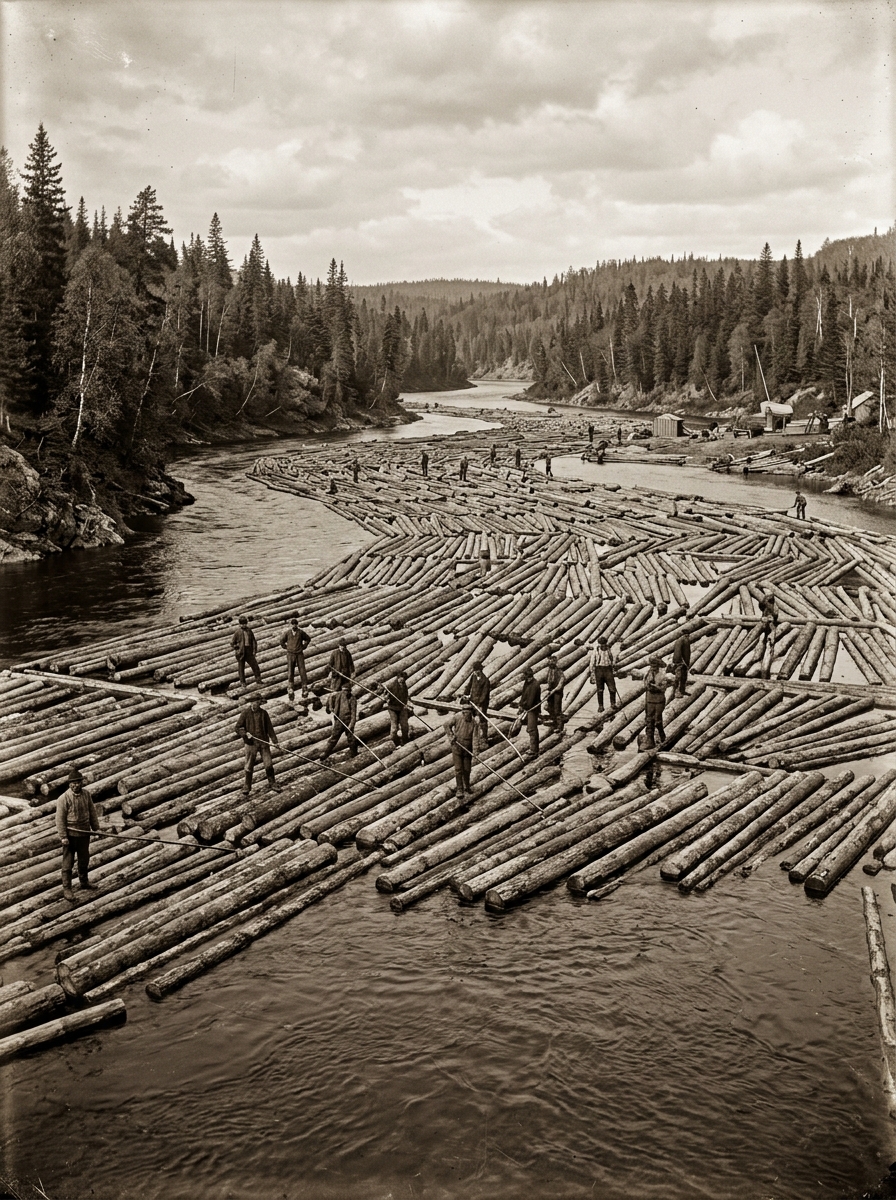
Log driving, Eastern Canada | 19th–20th century
02

Context & Problem

Historical Log Driving & Its Legacy in Lake Ecosystems

A Global Practice with Local Consequences

Log driving practiced across boreal countries: Canada, Finland, Sweden, Russia, USA (Lemay, 2017; Törnlund & Östlund, 2006)
In Canada: ~200 years of activity (1806–1995); most intensive in Québec, Ontario, BC (Labrecque-Foy & Montoro Girona, 2023)
~15% of transported logs sank permanently to lake beds (Marchand & Filion, 2014)

Persistent Physical & Chemical Disturbances

Lake morphology altered: channelization, damming, removal of natural obstacles (Gardeström et al., 2013)
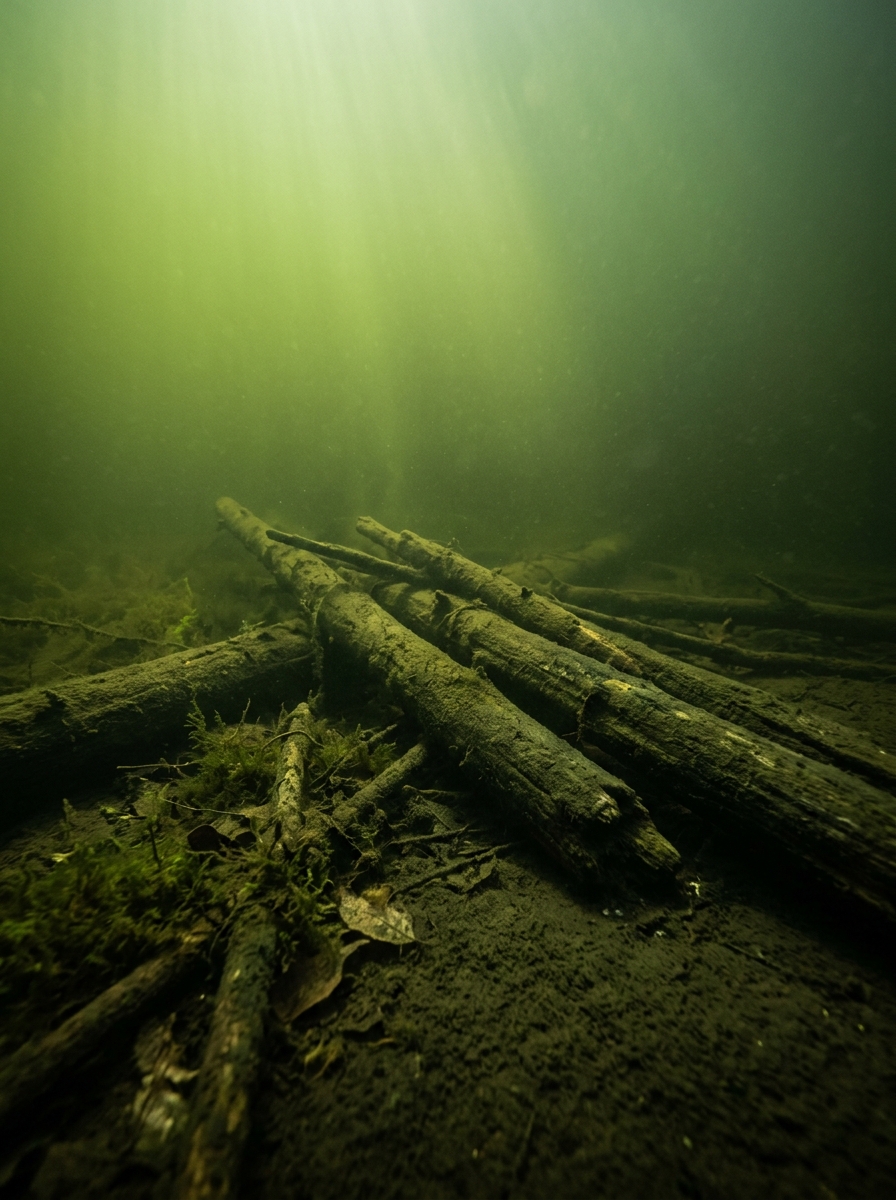
Submerged logs accumulate in cold, low-oxygen hypolimnion → preserved for decades to centuries
Oxygen depletion → anoxia → disruption of C, N, P cycling (Carey et al., 2022)
Release of tannins, lignins, terpenes → toxic to aquatic organisms (Hedmark & Scholz, 2008)

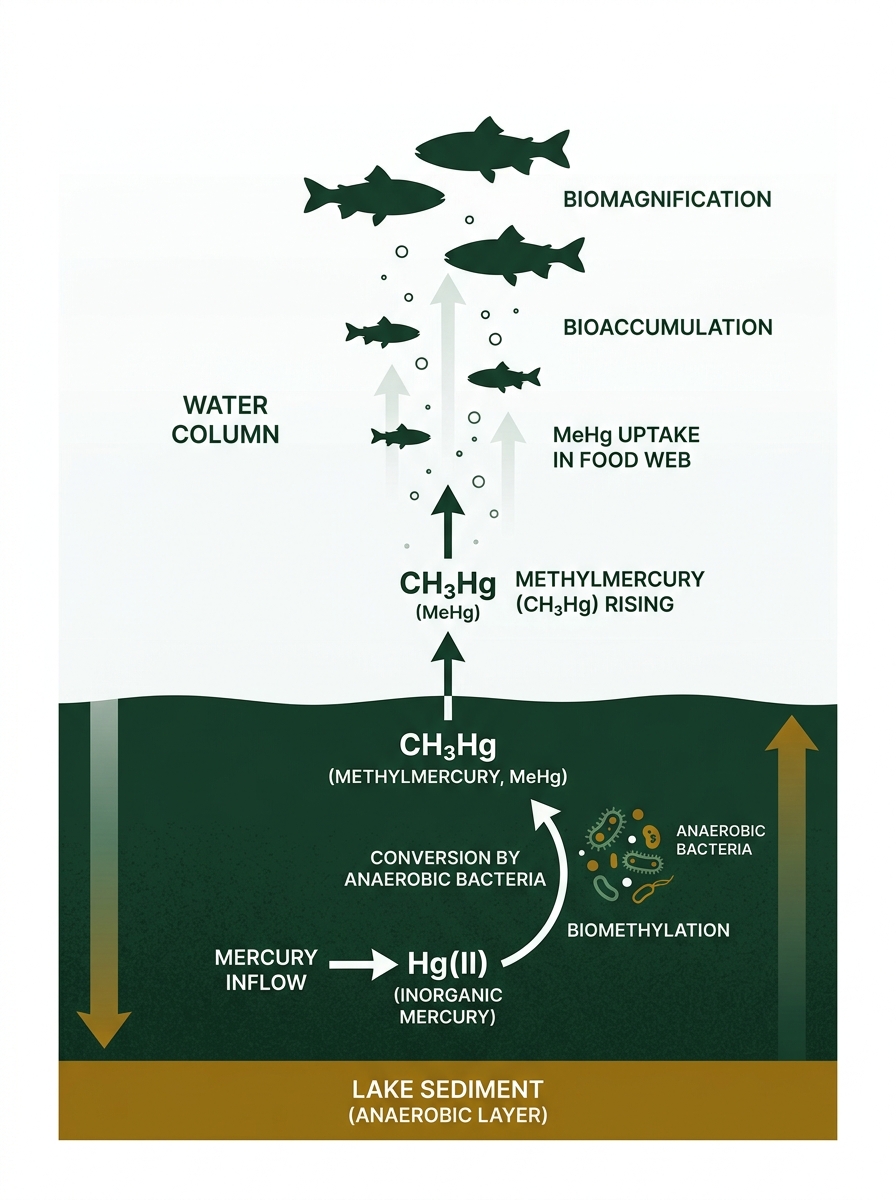
The Mercury Problem

Anoxic conditions promote microbial methylation of inorganic Hg → methylmercury (MeHg)
MeHg bioaccumulates and biomagnifies up food webs (Morel et al., 1998; Murphy et al., 2021)
Hg in fish (perch, walleye, bass) exceeded Health Canada threshold (0.5 ppm) in affected lakes (Houde, 2007)
Why does submerged-wood extraction matter?
Made byBobr AI
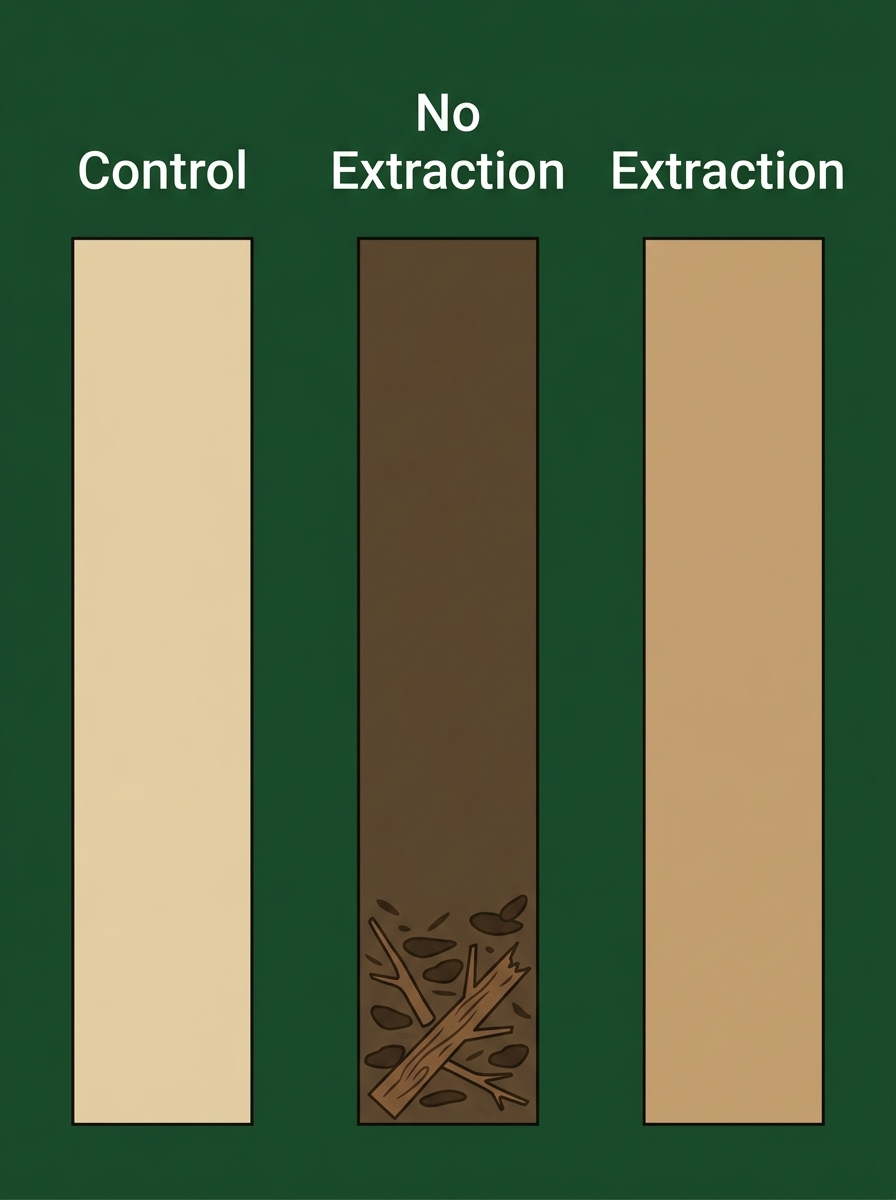
① Control
② Affected — No Extraction
③ Affected — Extraction
03

Objectives & Hypotheses

OBJECTIVES
  • Assess long-term ecological effects of historical log-driving disturbance on boreal lake ecosystems
  • Evaluate submerged-wood extraction as a rehabilitation procedure
  • Compare ecosystem structure and function across three disturbance states:
    • Control lakes (unaffected by log driving)
    • Affected / No Extraction (impacted, no intervention)
    • Affected / Extraction (impacted, wood removed)
HYPOTHESES
H1: Affected lakes (No Extraction) differ significantly from Control lakes in water chemistry, sediment properties, and biological community composition
H2: Extraction partially reverses disturbance effects, shifting affected lakes toward Control-like conditions
H3: Recovery is incomplete or asymmetric — disturbance legacies persist even after wood removal, reflecting long ecological memory
Expected direction: Extraction > No Extraction → Control (recovery trajectory)
Made byBobr AI
Disturbance Categories
Control
Affected / No Extraction
Affected / Extraction
04

Study Area & Methods

STUDY AREA
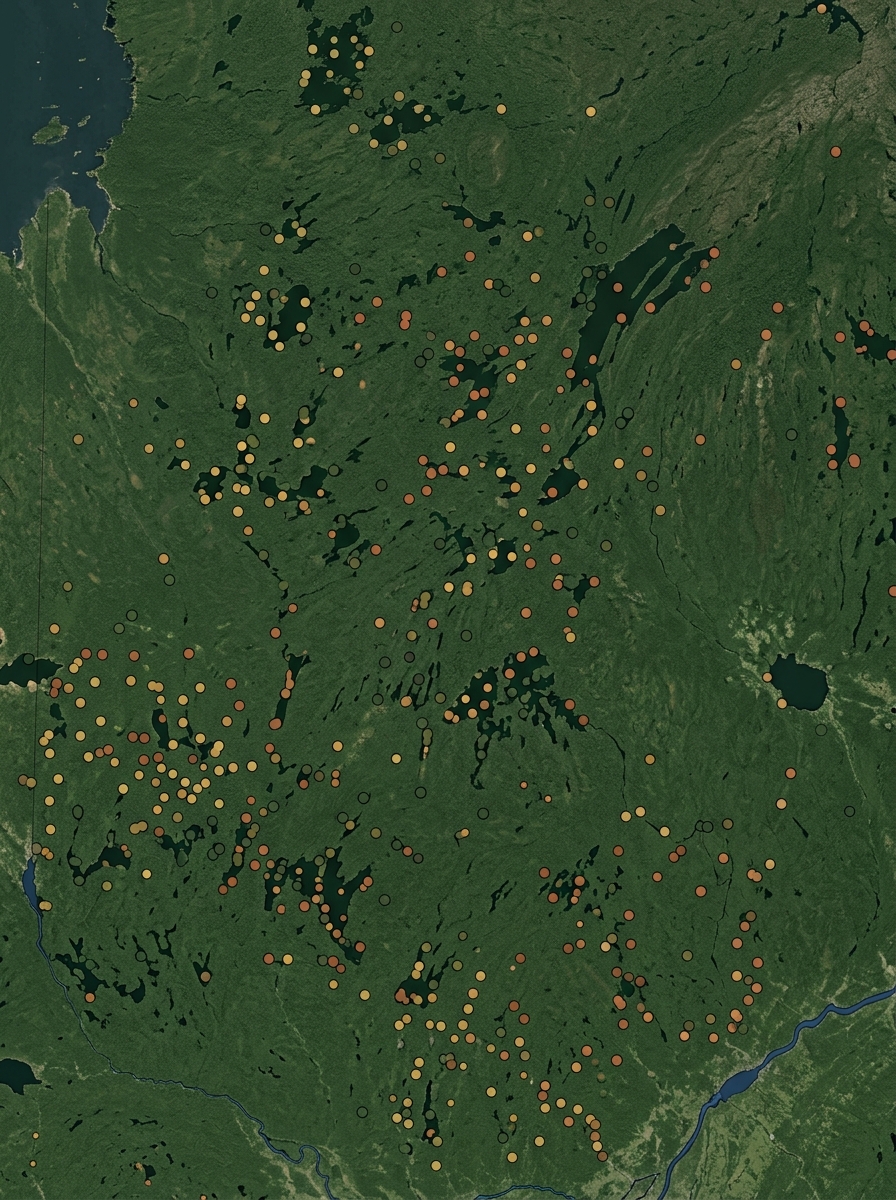
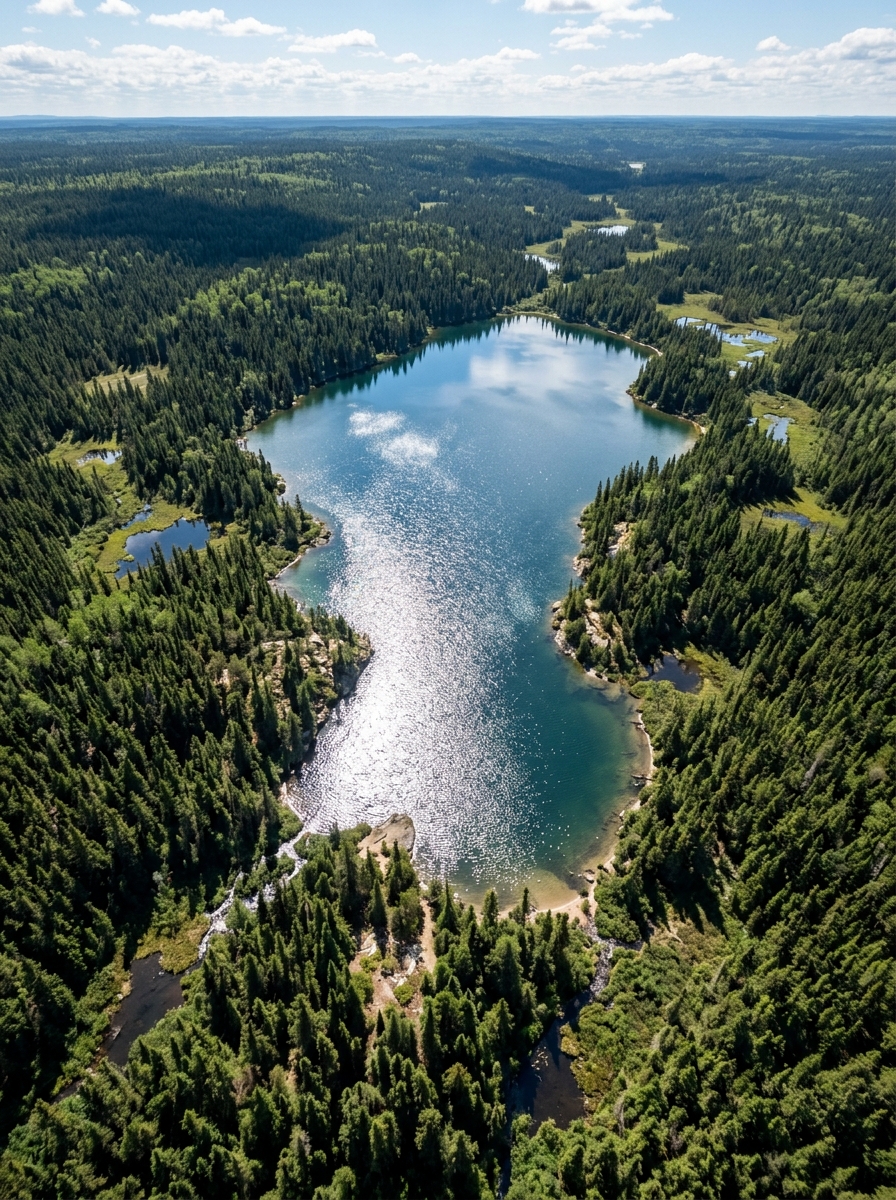
Boreal lakes of Québec, Canada (Abitibi-Témiscamingue region)
Lakes selected based on documented historical log-driving activity (archival records, Lemay, 2017)
Three disturbance categories:
Control (n = 15): no historical log-driving
Affected / No Extraction (n = 12): log-drive history, no removal
Affected / Extraction (n = 14): log-drive history, submerged wood extracted
SAMPLING DESIGN
Sediment cores: characterize organic matter, nutrient profiles, mercury
Water column profiles: dissolved oxygen, temperature, conductivity, pH
Biological sampling: zooplankton, benthic invertebrates, fish
Submerged wood quantification: sonar / diver surveys
ANALYTICAL APPROACHES
Multivariate community analyses (e.g., RDA, PERMANOVA)
Pairwise contrasts among disturbance states
Effect sizes and confidence intervals reported
Statistical software: R
All lakes matched for morphometry (area, depth, catchment) to isolate disturbance effect
Made byBobr AI
05

Results I

Sediment Properties & Water Chemistry
Organic Matter & Sediment Depth
  • ↑ Organic matter content in Affected No Extraction vs. Control [Insert value, p < 0.05]
  • Affected Extraction showed intermediate OM levels → partial recovery
  • Sediment depth greatest in No Extraction lakes (log accumulation effect)
Dissolved Oxygen & Anoxia
  • Hypolimnetic dissolved oxygen significantly lower in No Extraction lakes
  • Affected Extraction lakes showed improved but not full DO recovery vs. Control
  • Duration of seasonal anoxia: No Extraction > Extraction > Control
Nutrients (N & P)
  • Total phosphorus (TP) elevated in No Extraction lake sediments (Carey et al., 2022)
  • Dissolved reactive phosphorus (DRP) release higher under anoxic conditions
  • Extraction associated with reduced nutrient loading in water column
[Insert figure: boxplots of OM%, DO, TP across three groups]
Made byBobr AI
06

Results II

Methylmercury Dynamics Across Disturbance States
Sediment MeHg Concentrations
  • MeHg in surface sediments: No Extraction ≫ Control ≈ Extraction [0.45, 0.12, 0.15 ng/g dw]
  • Pattern consistent with anoxia-driven methylation in wood-rich hypolimnia (Murphy et al., 2021; Watras et al., 1995)
Water Column MeHg
  • Dissolved MeHg elevated in hypolimnion of No Extraction lakes during stratification
  • Extraction lakes: reduced hypolimnetic MeHg, approaching Control levels seasonally
Biotic Exposure
  • MeHg in zooplankton / invertebrates: No Extraction > Extraction > Control [18.5, 8.2, 5.3 ng/g ww]
  • Trophic transfer pathway confirmed: sediment → benthos → pelagic consumers
Key Ecological Interpretation
  • Submerged wood sustains long-term anoxic conditions → chronic MeHg source
  • Extraction disrupts this cycle — reduces in situ methylation potential
  • Short-term risk of MeHg pulse upon sediment disturbance must be considered (Smokorowski et al., 1999)
[Insert figure: MeHg violin plots or bar graphs across three groups + trophic transfer diagram] — Health Canada threshold reference: 0.5 ppm (fish tissue)
Made byBobr AI
07
Control
No Extraction
Extraction

Results III

Biological Community Responses

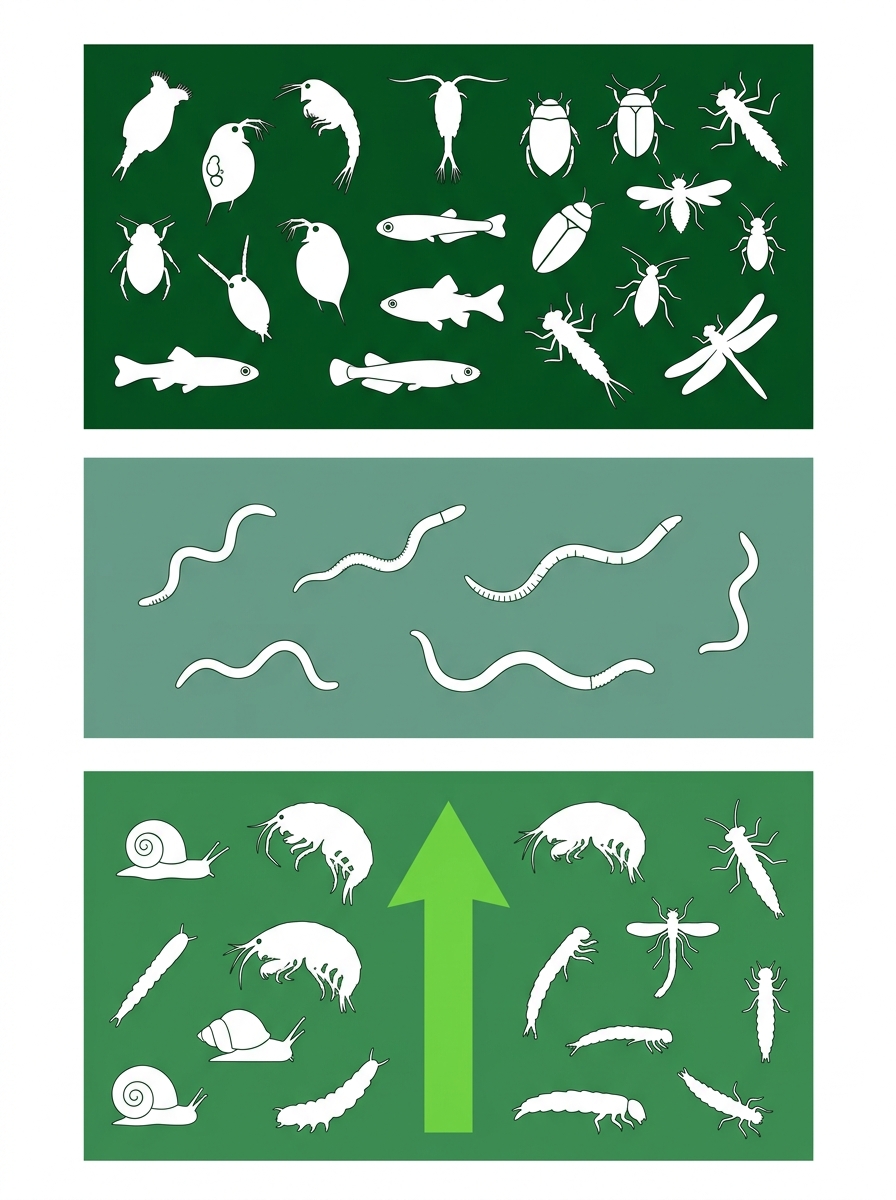
Zooplankton
  • Species richness and biomass: Control > Extraction > No Extraction
  • Community composition shifted in No Extraction lakes toward anoxia-tolerant taxa (Karpowicz et al., 2020)
  • Cladocera:Copepoda ratio altered in affected lakes, partially restored post-extraction
Benthic Invertebrates
  • Chironomid dominance highest in No Extraction lakes (generalist/tolerant taxa)
  • Functional diversity (EPT richness) reduced in No Extraction; intermediate in Extraction
  • Wood-dependent taxa (xylophagous invertebrates) present in No Extraction, absent post-extraction (Smokorowski et al., 1999)
Fish
  • Habitat use altered by submerged wood presence — shelter function vs. anoxia risk trade-off
  • Gill anomalies and tissue Hg content: No Extraction > Extraction ≥ Control
  • Recovery in fish community metrics following extraction (e.g., Houde, 2007: walleye & white sucker density increased post-removal in Saint-Maurice)
[Insert figure: ordination plot (RDA/NMDS) showing community separation across three disturbance states]
Made byBobr AI
↓ reduces
Submerged logs
Wood Extraction
Anoxia
MeHg methylation
OM accumulation
P & N release
Community restructuring
08

Interpretation & Mechanisms

Anoxia as the master driver
Submerged log decomposition depletes hypolimnetic O₂ → creates persistent anoxic zones → shifts redox conditions, enabling anaerobic biogeochemical pathways (Carey et al., 2022; Watras et al., 1995)
Organic matter quality & quantity
Logs release soluble wood compounds (tannins, lignins, terpenes) → increase DOC, reduce light penetration, alter microbial community → dampens primary production and photosynthesis (Hedmark & Scholz, 2008; Lindholm et al., 2015)
Mercury methylation pathway
Anoxia activates sulfate-reducing & iron-reducing bacteria possessing hgcAB genes → Hg(II) → MeHg → rapid adsorption to sediments → trophic transfer (Ma et al., 2019; Regnell & Watras, 2018)
Disturbance legacies & extraction effects
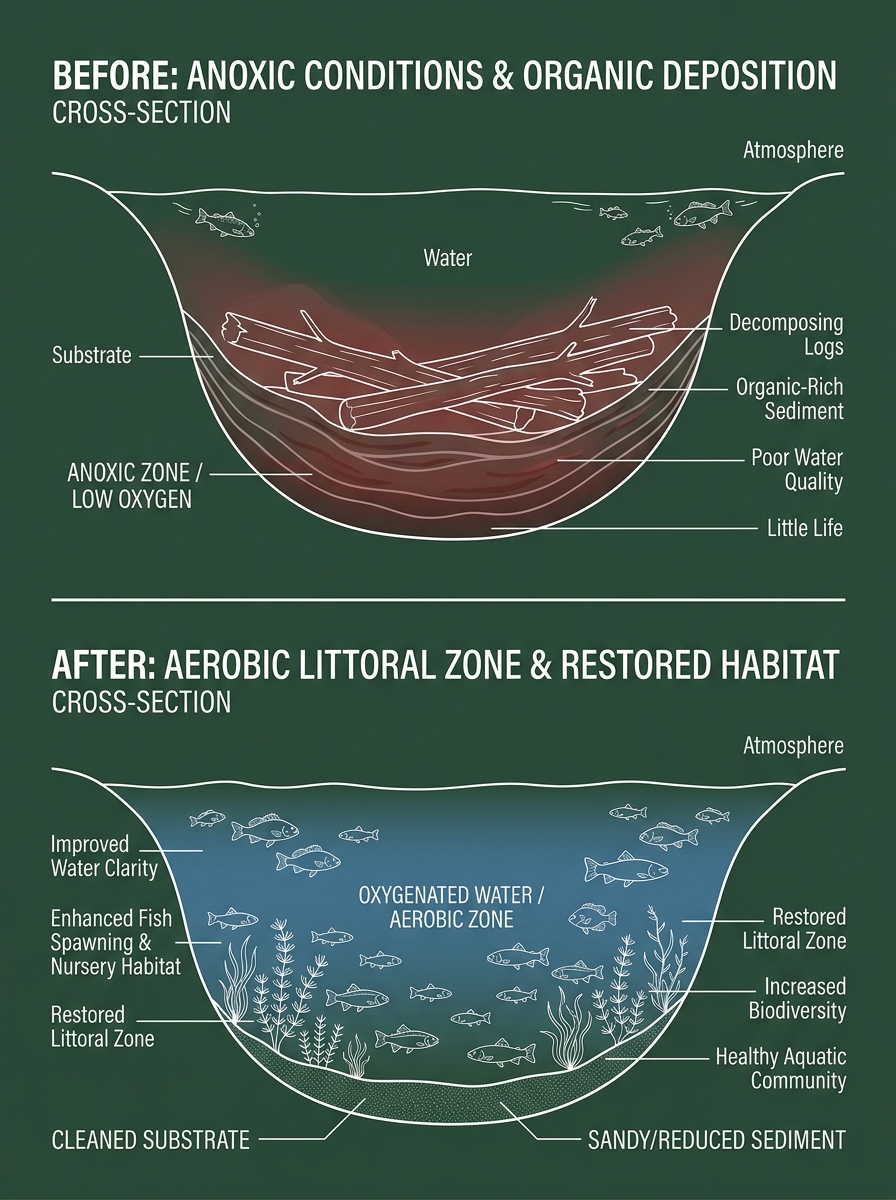
Wood extraction removes the primary anoxia driver → O₂ improves → methylation rates decline
BUT: extraction causes sediment resuspension → transient MeHg pulse, nutrient release (Smokorowski et al., 1999)
Long decomposition timescales mean legacy effects persist decades after logging ended (Gennaretti et al., 2014)
Recovery is real but non-linear — legacy effects create ecological memory
Made byBobr AI
Before and After Illustration
09

Implications for Restoration

Wood Extraction as a Viable Rehabilitation Tool
Results support submerged-wood extraction as an ecologically meaningful intervention
Reduction in anoxia and MeHg levels post-extraction indicates functional recovery
Consistent with "Field of Dreams" hypothesis: restoring abiotic conditions drives biotic recovery (Gardeström et al., 2013)
Long-term Effectiveness
Biological recovery is gradual — complete return to Control state not yet observed
Trajectory of recovery: Extraction lakes moving toward Control across multiple indicators
Time since extraction is a key variable — older projects show stronger recovery signals
Management Relevance
Priority should be given to lakes with highest wood load and documented anoxia
Combined approach: wood extraction + habitat enhancement (e.g., rock addition for spawning) maximizes outcomes (Parks Canada, 2018, 2022)
Log removal programs (e.g., La Mauricie National Park: 100,000+ logs removed since 2004) provide proof-of-concept (Parks Canada, 2018)
Trade-offs to Manage
Short-term sediment disturbance risk: MeHg pulse, turbidity, temporary habitat loss
Extraction must be carefully timed (avoid spawning season) and spatially targeted
Monitoring before/during/after extraction is essential
Made byBobr AI
Monitoring
Temporal
Scale
Spatial
Replication
?
Long-term
trajectory?
10

Limitations & Future Directions

Limitations

  • Spatial scope: results specific to boreal Québec — generalizability to other regions uncertain
  • Temporal constraints: snapshot data may not fully capture long-term recovery trajectories
  • Variability in disturbance history: heterogeneity in log density, species, and submergence duration among lakes
  • Limited empirical data on MeHg pulse dynamics during and after extraction (Smokorowski et al., 1999)
  • Absence of pre-disturbance baseline — paleolimnological inference required
  • Confounding land-use effects (forestry, agriculture) not fully isolated

Future Directions

  • Long-term monitoring programs: track recovery trajectories over decades post-extraction
  • Paleolimnological studies: reconstruct pre-disturbance reference conditions from sediment records
  • Controlled extraction experiments: replicated before/after/control/impact (BACI) designs
  • Quantify MeHg pulse duration and magnitude following extraction events
  • Expand to multiple boreal regions (Fennoscandia, Ontario, BC) for comparative analysis
  • Investigate food-web recovery using stable isotope analyses (δ¹³C, δ¹⁵N, δ²⁰²Hg)
  • Assess climate change interactions: warming may alter anoxia dynamics independently of wood load
Long-term comparative studies are essential to establish evidence-based restoration guidelines
Made byBobr AI
5
take-home messages
11

Conclusions

Historical log driving left long-lasting ecological legacies — anoxia, organic matter enrichment, and elevated MeHg persist decades after logging ceased.
Affected lakes without extraction (No Extraction) show significant divergence from Control lakes across sediment chemistry, water quality, and biological community composition.
Submerged-wood extraction effectively reduces hypolimnetic anoxia and MeHg levels, initiating a measurable ecological recovery trajectory.
Recovery is real but incomplete — extraction shifts lakes toward, but does not fully restore, pre-disturbance (Control) conditions, reflecting persistent ecological memory.
Wood extraction is a scientifically supported and management-relevant rehabilitation tool for boreal lakes historically impacted by log driving — but must be paired with careful monitoring and adaptive management.
Restoration ≠ Recovery. Active intervention accelerates — but cannot guarantee — return to reference state.
Made byBobr AI
12

Acknowledgments & Funding

Collaborators & Supervisors
The authors thank:
  • Supervisors and collaborators: Miguel Montoro Girona & Guillaume Grosbois (co-authors, UQAT/UQAM)
  • GREMA lab members and field assistants
  • Parks Canada (La Mauricie National Park) — field access and log extraction data
  • Divers and field crews involved in submerged-wood surveys
Funding
  • NSERC, FRQNT, Parks Canada, UQAT IRF
  • NSERC Discovery Grant (RGPIN-2023)
Data & Archives
  • Historical log-driving records: Archives nationales du Québec
  • Archival photographs: Julie-Pascale Labrecque-Foy
  • Ecological data: OSF Data Repository (doi:10.17605/OSF.IO/XXXXX)
Cristiano Vieira | cristiano.vieira@uqat.ca | GREMA–IRF–UQAT
Slides & data available upon request
ASLO-SIL 2026
Made byBobr AI
Bobr AI

DESIGNER-MADE
PRESENTATION,
GENERATED FROM
YOUR PROMPT

Create your own professional slide deck with real images, data charts, and unique design in under a minute.

Generate For Free

Ecological Impacts of Submerged Wood Removal in Lakes

Research on historical log-driving legacy and the ecological effects of submerged wood extraction on methylmercury and oxygen levels in Canadian boreal lakes.

GREMA | IRF-UQAT

GRIL | UdeM

CEF | UQAM

ASLO-SIL 2026

Long-term Ecological Responses

to Submerged Wood Extraction

in Canadian Lakes

Cristiano Vieira

Groupe de Recherche en Écologie de la MRC Abitibi (GREMA), IRF-UQAT | GRIL, Université de Montréal | Centre d'étude de la Forêt (CEF), UQAM

Log-Driving Disturbance & Restoration Ecology

Log driving, Eastern Canada | 19th–20th century

02

Context & Problem

Historical Log Driving & Its Legacy in Lake Ecosystems

A Global Practice with Local Consequences

Log driving practiced across boreal countries: Canada, Finland, Sweden, Russia, USA (Lemay, 2017; Törnlund & Östlund, 2006)

In Canada: ~200 years of activity (1806–1995); most intensive in Québec, Ontario, BC (Labrecque-Foy & Montoro Girona, 2023)

~15% of transported logs sank permanently to lake beds (Marchand & Filion, 2014)

Persistent Physical & Chemical Disturbances

Lake morphology altered: channelization, damming, removal of natural obstacles (Gardeström et al., 2013)

Submerged logs accumulate in cold, low-oxygen hypolimnion → preserved for decades to centuries

Oxygen depletion → anoxia → disruption of C, N, P cycling (Carey et al., 2022)

Release of tannins, lignins, terpenes → toxic to aquatic organisms (Hedmark & Scholz, 2008)

The Mercury Problem

Anoxic conditions promote microbial methylation of inorganic Hg → methylmercury (MeHg)

MeHg bioaccumulates and biomagnifies up food webs (Morel et al., 1998; Murphy et al., 2021)

Hg in fish (perch, walleye, bass) exceeded Health Canada threshold (0.5 ppm) in affected lakes (Houde, 2007)

Why does submerged-wood extraction matter?

① Control

② Affected — No Extraction

③ Affected — Extraction

Objectives & Hypotheses

OBJECTIVES

Assess long-term ecological effects of historical log-driving disturbance on boreal lake ecosystems

Evaluate submerged-wood extraction as a rehabilitation procedure

Compare ecosystem structure and function across three disturbance states:

Control lakes (unaffected by log driving)

Affected / No Extraction (impacted, no intervention)

Affected / Extraction (impacted, wood removed)

HYPOTHESES

Affected lakes (No Extraction) differ significantly from Control lakes in water chemistry, sediment properties, and biological community composition

Extraction partially reverses disturbance effects, shifting affected lakes toward Control-like conditions

Recovery is incomplete or asymmetric — disturbance legacies persist even after wood removal, reflecting long ecological memory

Expected direction: Extraction > No Extraction → Control (recovery trajectory)

Disturbance Categories

Control

Affected / No Extraction

Affected / Extraction

04

Study Area & Methods

STUDY AREA

Boreal lakes of Québec, Canada (Abitibi-Témiscamingue region)

Lakes selected based on documented historical log-driving activity (archival records, Lemay, 2017)

Three disturbance categories:

Control (n = 15): no historical log-driving

Affected / No Extraction (n = 12): log-drive history, no removal

Affected / Extraction (n = 14): log-drive history, submerged wood extracted

SAMPLING DESIGN

Sediment cores: characterize organic matter, nutrient profiles, mercury

Water column profiles: dissolved oxygen, temperature, conductivity, pH

Biological sampling: zooplankton, benthic invertebrates, fish

Submerged wood quantification: sonar / diver surveys

ANALYTICAL APPROACHES

Multivariate community analyses (e.g., RDA, PERMANOVA)

Pairwise contrasts among disturbance states

Effect sizes and confidence intervals reported

Statistical software: R

All lakes matched for morphometry (area, depth, catchment) to isolate disturbance effect

Results I

Sediment Properties & Water Chemistry

Organic Matter & Sediment Depth

↑ Organic matter content in Affected No Extraction vs. Control [Insert value, p < 0.05]

Affected Extraction showed intermediate OM levels → partial recovery

Sediment depth greatest in No Extraction lakes (log accumulation effect)

Dissolved Oxygen & Anoxia

Hypolimnetic dissolved oxygen significantly lower in No Extraction lakes

Affected Extraction lakes showed improved but not full DO recovery vs. Control

Duration of seasonal anoxia: No Extraction > Extraction > Control

Nutrients (N & P)

Total phosphorus (TP) elevated in No Extraction lake sediments (Carey et al., 2022)

Dissolved reactive phosphorus (DRP) release higher under anoxic conditions

Extraction associated with reduced nutrient loading in water column

[Insert figure: boxplots of OM%, DO, TP across three groups]

Results II

Methylmercury Dynamics Across Disturbance States

Sediment MeHg Concentrations

MeHg in surface sediments: No Extraction ≫ Control ≈ Extraction <span style="color: #666; font-style: italic;">[0.45, 0.12, 0.15 ng/g dw]</span>

Pattern consistent with anoxia-driven methylation in wood-rich hypolimnia (Murphy et al., 2021; Watras et al., 1995)

Water Column MeHg

Dissolved MeHg elevated in hypolimnion of No Extraction lakes during stratification

Extraction lakes: reduced hypolimnetic MeHg, approaching Control levels seasonally

Biotic Exposure

MeHg in zooplankton / invertebrates: No Extraction > Extraction > Control <span style="color: #666; font-style: italic;">[18.5, 8.2, 5.3 ng/g ww]</span>

Trophic transfer pathway confirmed: sediment → benthos → pelagic consumers

Key Ecological Interpretation

Submerged wood sustains long-term anoxic conditions → chronic MeHg source

Extraction disrupts this cycle — reduces in situ methylation potential

Short-term risk of MeHg pulse upon sediment disturbance must be considered (Smokorowski et al., 1999)

[Insert figure: MeHg violin plots or bar graphs across three groups + trophic transfer diagram] — Health Canada threshold reference: 0.5 ppm (fish tissue)

06

07

Control

No Extraction

Extraction

Results III

Biological Community Responses

Zooplankton

Control > Extraction > No Extraction

Community composition shifted in No Extraction lakes toward anoxia-tolerant taxa (Karpowicz et al., 2020)

Cladocera:Copepoda ratio altered in affected lakes, partially restored post-extraction

Benthic Invertebrates

Chironomid dominance highest in No Extraction lakes (generalist/tolerant taxa)

Functional diversity (EPT richness) reduced in No Extraction; intermediate in Extraction

Wood-dependent taxa (xylophagous invertebrates) present in No Extraction, absent post-extraction (Smokorowski et al., 1999)

Fish

Habitat use altered by submerged wood presence — shelter function vs. anoxia risk trade-off

No Extraction > Extraction ≥ Control

Recovery in fish community metrics following extraction (e.g., Houde, 2007: walleye & white sucker density increased post-removal in Saint-Maurice)

[Insert figure: ordination plot (RDA/NMDS) showing community separation across three disturbance states]

Submerged logs

Anoxia

Wood Extraction

MeHg methylation

OM accumulation

P & N release

Community restructuring

Interpretation & Mechanisms

Anoxia as the master driver

Submerged log decomposition depletes hypolimnetic O₂ → creates persistent anoxic zones → shifts redox conditions, enabling anaerobic biogeochemical pathways (Carey et al., 2022; Watras et al., 1995)

Organic matter quality & quantity

Logs release soluble wood compounds (tannins, lignins, terpenes) → increase DOC, reduce light penetration, alter microbial community → dampens primary production and photosynthesis (Hedmark & Scholz, 2008; Lindholm et al., 2015)

Mercury methylation pathway

Anoxia activates sulfate-reducing & iron-reducing bacteria possessing hgcAB genes → Hg(II) → MeHg → rapid adsorption to sediments → trophic transfer (Ma et al., 2019; Regnell & Watras, 2018)

Disturbance legacies & extraction effects

Wood extraction removes the primary anoxia driver → O₂ improves → methylation rates decline

BUT: extraction causes sediment resuspension → transient MeHg pulse, nutrient release (Smokorowski et al., 1999)

Long decomposition timescales mean legacy effects persist decades after logging ended (Gennaretti et al., 2014)

Recovery is real but non-linear — legacy effects create ecological memory

09

Implications for Restoration

Wood Extraction as a Viable Rehabilitation Tool

Results support submerged-wood extraction as an ecologically meaningful intervention

Reduction in anoxia and MeHg levels post-extraction indicates functional recovery

Consistent with "Field of Dreams" hypothesis: restoring abiotic conditions drives biotic recovery (Gardeström et al., 2013)

Long-term Effectiveness

Biological recovery is gradual — complete return to Control state not yet observed

Trajectory of recovery: Extraction lakes moving toward Control across multiple indicators

Time since extraction is a key variable — older projects show stronger recovery signals

Management Relevance

Priority should be given to lakes with highest wood load and documented anoxia

Combined approach: wood extraction + habitat enhancement (e.g., rock addition for spawning) maximizes outcomes (Parks Canada, 2018, 2022)

Log removal programs (e.g., La Mauricie National Park: 100,000+ logs removed since 2004) provide proof-of-concept (Parks Canada, 2018)

Trade-offs to Manage

Short-term sediment disturbance risk: MeHg pulse, turbidity, temporary habitat loss

Extraction must be carefully timed (avoid spawning season) and spatially targeted

Monitoring before/during/after extraction is essential

Limitations & Future Directions

Limitations

Future Directions

Long-term comparative studies are essential to establish evidence-based restoration guidelines

<svg viewBox='0 0 24 24' width='28' height='28' stroke='white' stroke-width='2.5' fill='none' stroke-linecap='round' stroke-linejoin='round'><circle cx='11' cy='11' r='8'></circle><line x1='21' y1='21' x2='16.65' y2='16.65'></line></svg>

<svg viewBox='0 0 24 24' width='28' height='28' stroke='white' stroke-width='2.5' fill='none' stroke-linecap='round' stroke-linejoin='round'><circle cx='12' cy='12' r='10'></circle><polyline points='12 6 12 12 16 14'></polyline></svg>

<svg viewBox='0 0 24 24' width='28' height='28' fill='none' stroke='white' stroke-width='2.5' stroke-linecap='round' stroke-linejoin='round'><circle cx='18' cy='5' r='3'></circle><circle cx='6' cy='12' r='3'></circle><circle cx='18' cy='19' r='3'></circle><line x1='8.59' y1='13.51' x2='15.42' y2='17.49'></line><line x1='15.41' y1='6.51' x2='8.59' y2='10.49'></line></svg>

<svg viewBox='0 0 24 24' width='34' height='34' stroke='#C24127' stroke-width='2.5' fill='none' stroke-linecap='round' stroke-linejoin='round'><path d='M10.29 3.86L1.82 18a2 2 0 0 0 1.71 3h16.94a2 2 0 0 0 1.71-3L13.71 3.86a2 2 0 0 0-3.42 0z'></path><line x1='12' y1='9' x2='12' y2='13'></line><line x1='12' y1='17' x2='12.01' y2='17'></line></svg>

<svg viewBox='0 0 24 24' width='34' height='34' stroke='#2D4A3E' stroke-width='2.5' fill='none' stroke-linecap='round' stroke-linejoin='round'><circle cx='12' cy='12' r='10'></circle><polyline points='12 16 16 12 12 8'></polyline><line x1='8' y1='12' x2='16' y2='12'></line></svg>

5

take-home messages

11

Conclusions

Historical log driving left long-lasting ecological legacies —

anoxia, organic matter enrichment, and elevated MeHg persist decades after logging ceased.

Affected lakes without extraction (No Extraction) show significant divergence from Control lakes

across sediment chemistry, water quality, and biological community composition.

Submerged-wood extraction effectively reduces hypolimnetic anoxia and MeHg levels,

initiating a measurable ecological recovery trajectory.

Recovery is real but incomplete —

extraction shifts lakes toward, but does not fully restore, pre-disturbance (Control) conditions, reflecting persistent ecological memory.

Wood extraction is a scientifically supported and management-relevant rehabilitation tool

for boreal lakes historically impacted by log driving — but must be paired with careful monitoring and adaptive management.

Restoration ≠ Recovery.

Active intervention accelerates — but cannot guarantee — return to reference state.

12

Acknowledgments & Funding

Collaborators & Supervisors

The authors thank:

Supervisors and collaborators: Miguel Montoro Girona & Guillaume Grosbois (co-authors, UQAT/UQAM)

GREMA lab members and field assistants

Parks Canada (La Mauricie National Park) — field access and log extraction data

Divers and field crews involved in submerged-wood surveys

Funding

NSERC, FRQNT, Parks Canada, UQAT IRF

NSERC Discovery Grant (RGPIN-2023)

Data & Archives

Historical log-driving records: Archives nationales du Québec

Archival photographs: Julie-Pascale Labrecque-Foy

Ecological data: OSF Data Repository (doi:10.17605/OSF.IO/XXXXX)

Cristiano Vieira | cristiano.vieira@uqat.ca | GREMA–IRF–UQAT

Slides & data available upon request

ASLO-SIL 2026

  • lake-ecology
  • restoration-ecology
  • methylmercury
  • boreal-lakes
  • environmental-science
  • limnology
  • log-driving
  • water-chemistry