


India-Pakistan Relations: Military Geography & Strategy
Expert analysis of India-Pakistan military geography, nuclear doctrines, historical conflicts, and the 2025 strategic shift in South Asian security.
INDIA – PAKISTAN
RELATIONS
Military Geography — Strategic Analysis
Defence Studies Curriculum | 2025–26
LINE OF CONTROL • NUCLEAR DYNAMICS • STRATEGIC TERRAIN • HISTORICAL CONFLICTS
CONTENTS
01
Historical Background & Partition
02
Geographic Overview & Shared Borders
03
The Kashmir Dispute & Line of Control
04
Siachen Glacier — The Highest Battlefield
05
Historical Wars (1947, 1965, 1971, 1999)
06
Nuclear Doctrines & Deterrence
07
Indus Waters Treaty & Water Security
08
Terrorist Proxies & Asymmetric Warfare
09
Operation Sindoor 2025 — Case Study
10
Strategic Outlook & Future Scenarios
HISTORICAL BACKGROUND & PARTITION
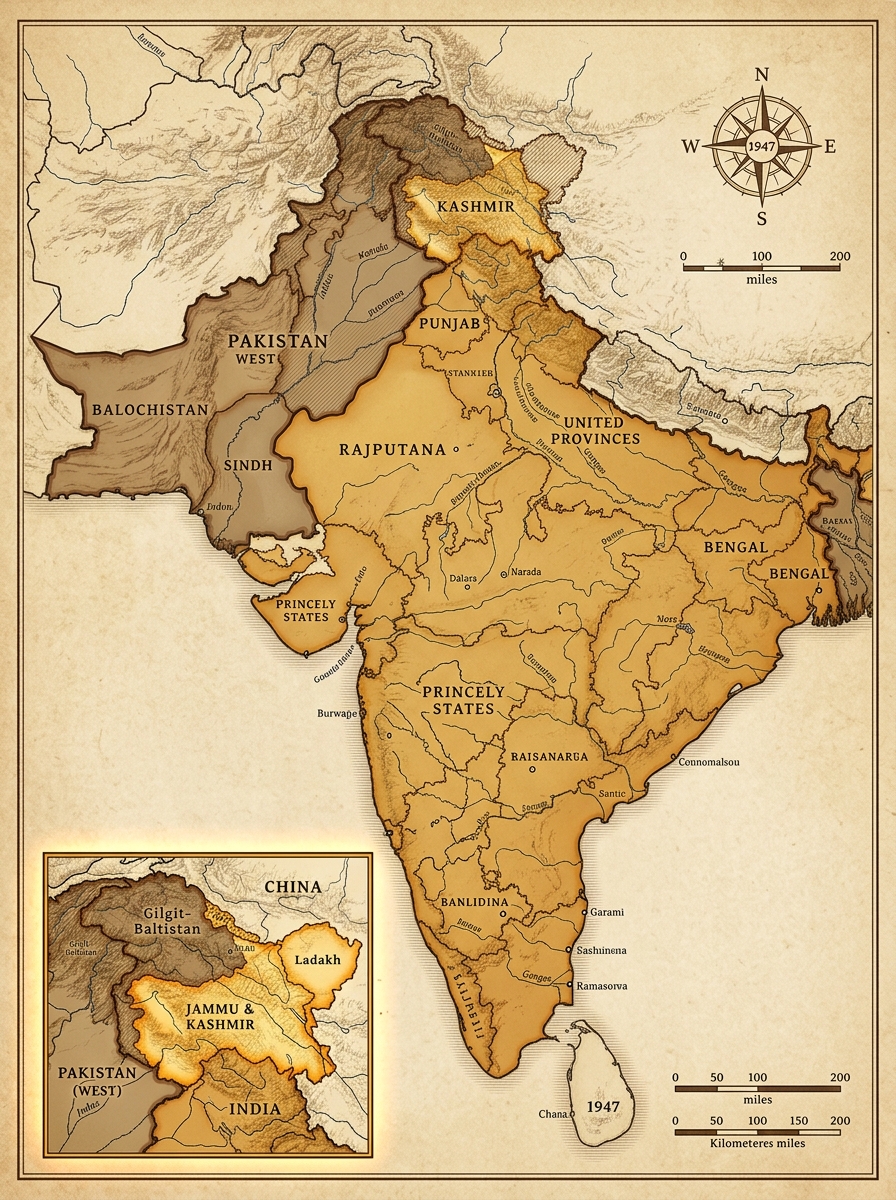
British India partitioned into India & Pakistan under Mountbatten Plan; 562 princely states given choice of accession
Kashmir's Hindu Maharaja Hari Singh sought independence; tribal militias backed by Pakistan invaded → Maharaja signed Instrument of Accession to India
UN Resolution 47 called for plebiscite; never held; ceasefire line established
East Pakistan became Bangladesh after India-Pakistan war
Religion-based partition created structural antagonism: India (Hindu majority, secular) vs Pakistan (Islamic Republic)
Two-nation theory vs secular nationalism — ideological divide persists
The partition of 1947 remains the foundational cause of all subsequent India-Pakistan conflicts.
GEOGRAPHIC OVERVIEW & SHARED BORDERS
STRATEGIC GEOGRAPHY
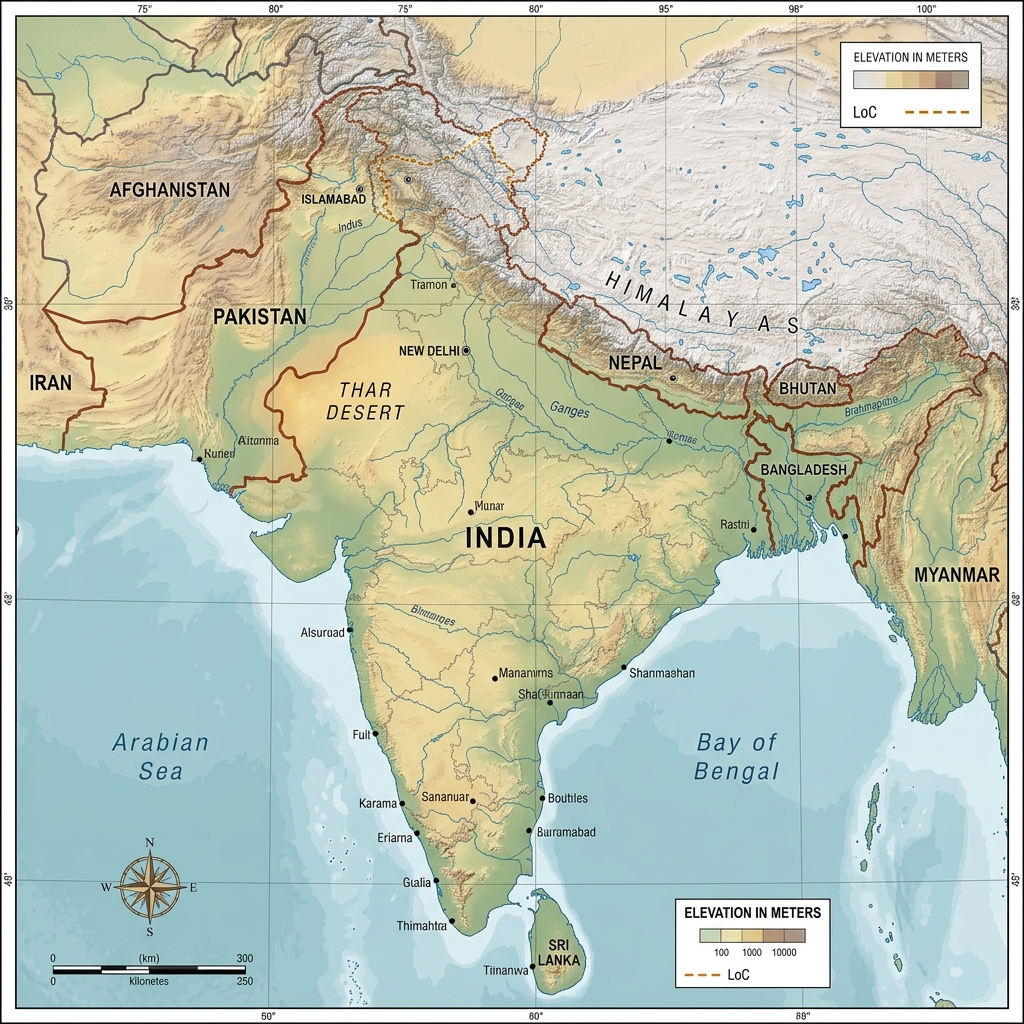
Shared border:
~3,323 km (including LoC)
International Boundary:
~2,000 km (Rajasthan, Punjab, Gujarat, Sindh sectors)
Line of Control (LoC):
740 km in J&K
Line of Actual Control (LAC):
Relevant in Ladakh
Terrain types:
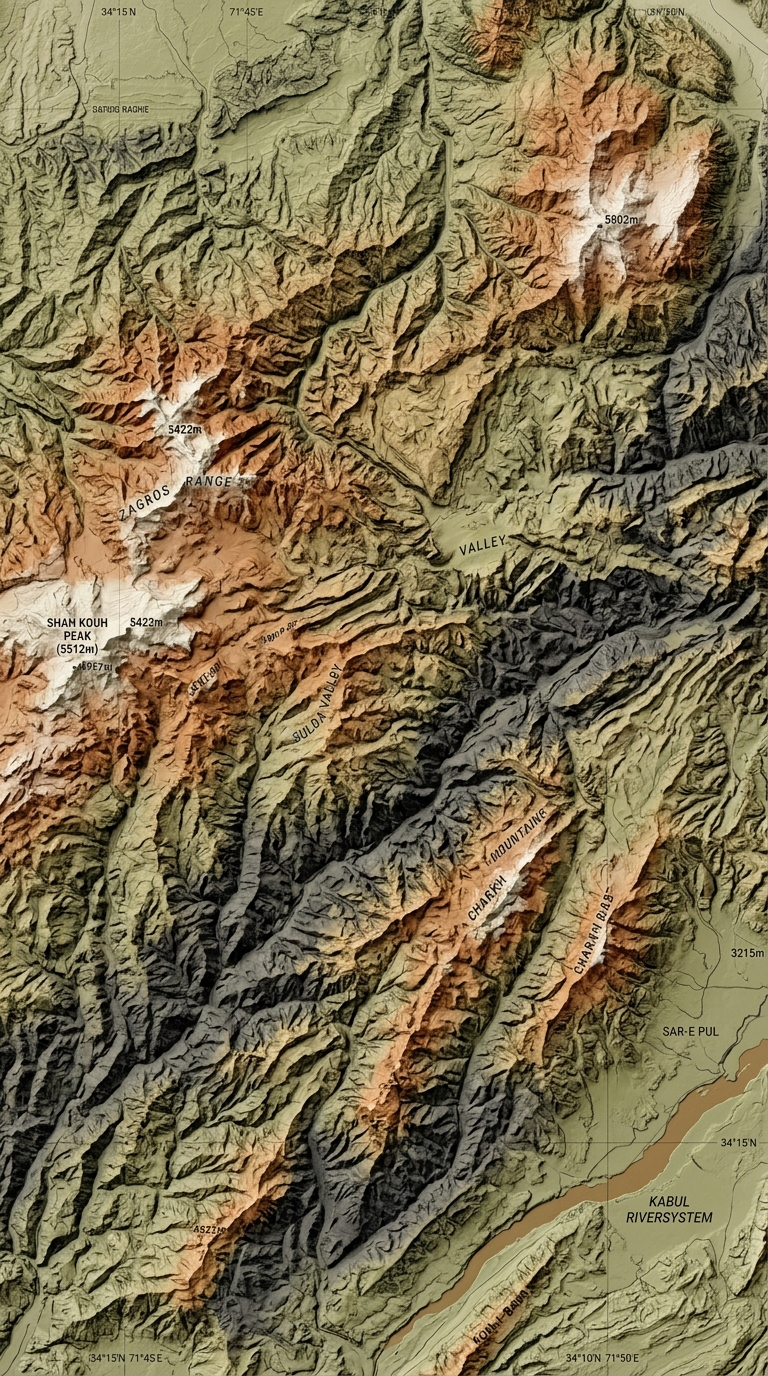
Desert (Thar), Plains (Punjab), Mountains (Himalayas, Karakoram), Wetlands (Rann of Kutch)
Arabian Sea access:
Critical naval dimension for both nations
Geopolitically sandwiched:
India-Pakistan-China triangle
KEY GEOGRAPHIC CHOKEPOINTS
Khyber Pass (NW Pakistan)
Siachen Glacier (Karakoram)
Sir Creek (Gujarat-Sindh maritime boundary)
THE KASHMIR DISPUTE & LINE OF CONTROL
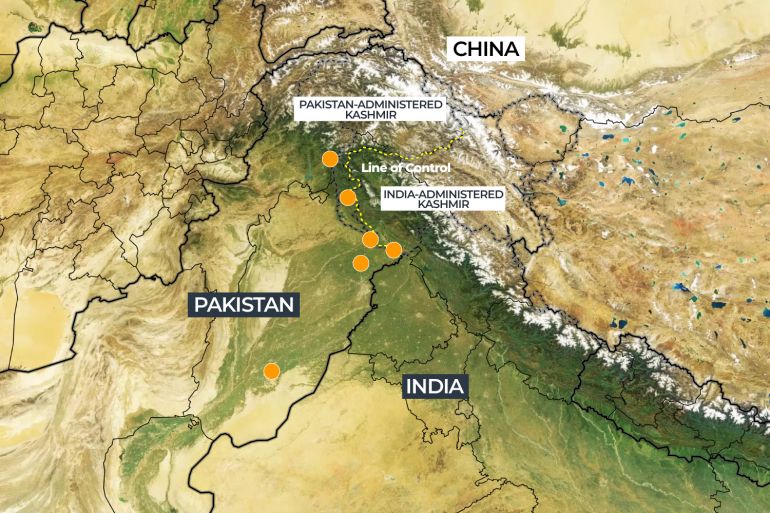
LINE OF CONTROL (LoC)
740 km de facto boundary dividing J&K since 1949 Karachi Agreement
Renamed from Ceasefire Line to Line of Control after 1972 Simla Agreement
Heavily militarized — both armies maintain forward posts
Not an internationally recognized boundary
Frequent cross-border firing, infiltration attempts
Multiple sectors: Uri, Poonch, Rajouri, Kupwara, Keran, Gurez
PAKISTANI CLAIMS
Entire J&K claimed on basis of Muslim majority population
Azad Kashmir & Gilgit-Baltistan under Pakistani administration
CPEC (China-Pakistan Economic Corridor) passes through Gilgit-Baltistan
INDIAN POSITION
Accession to India was legal and final
UN plebiscite conditional on Pakistan withdrawing forces first — never complied
SIACHEN GLACIER — THE HIGHEST BATTLEFIELD
WORLD'S HIGHEST MILITARY CONFLICT ZONE
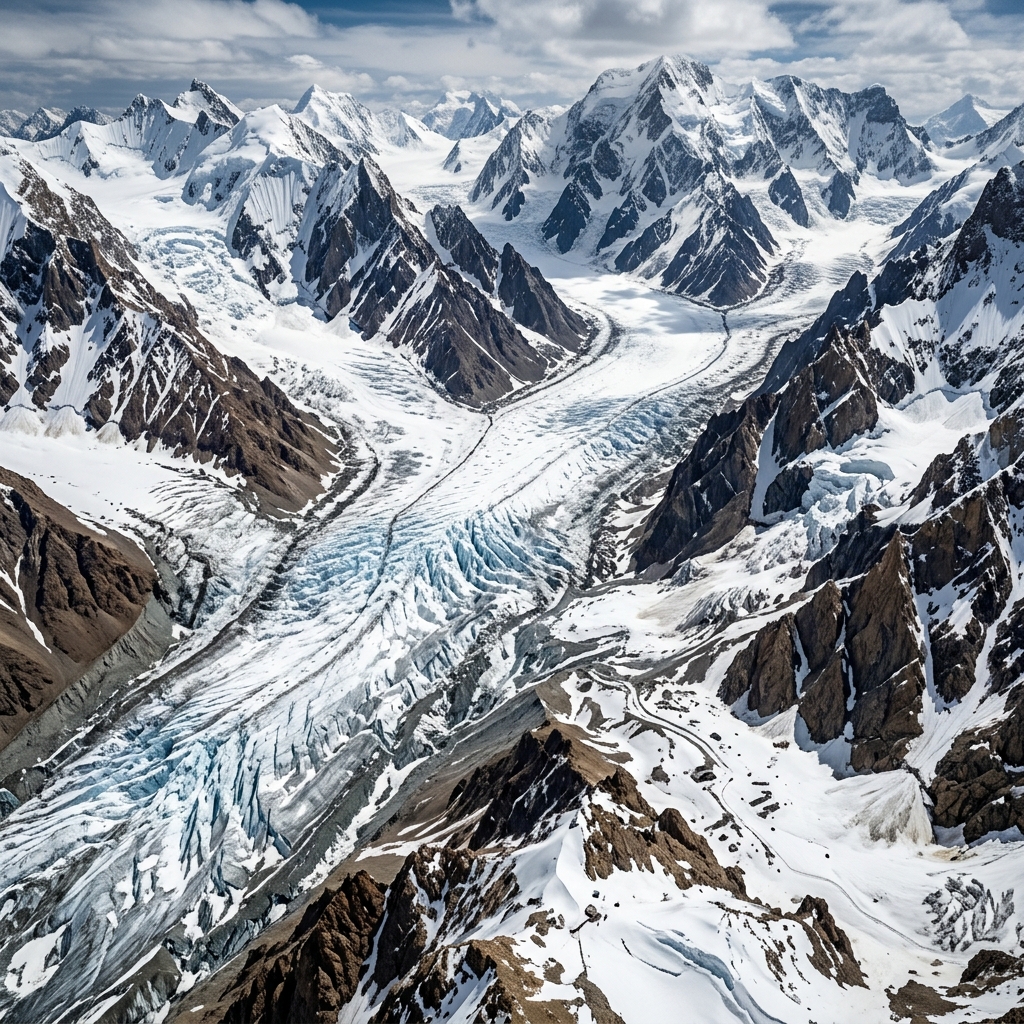
5,400 – 7,000 metres above sea level
Karakoram Range, NE of LoC endpoint (NJ9842)
~70 km glacier with adjoining ridges (Saltoro Ridge)
<strong>India launched Operation Meghdoot (1984)</strong> — secured Siachen preemptively
Pakistan controls lower Gyari Sector; India holds Saltoro Ridge & all major passes
<strong>Temperature:</strong> −50°C in winter; altitude sickness, frostbite are primary casualties
More soldiers die from weather than enemy fire — ~97% casualties from terrain
<strong>Logistics:</strong> Supply by helicopters only; cost ~₹5 crore/day for India
Both sides maintain permanent military posts year-round
Cease-fire in place since 2003 but no demilitarization
Controls access to Karakoram Highway (KKH)
Overlooks Chinese-held Aksai Chin
Key vantage point in India-Pakistan-China triangle
<span style="color: #e67e22;">OPERATION MEGHDOOT (1984)</span> — INDIA'S PRE-EMPTIVE SEIZURE OF SIACHEN DENIED PAKISTAN A STRATEGIC VANTAGE POINT OVER LADAKH
HISTORICAL WARS: 1947 – 1999
FIRST KASHMIR WAR 1947–48
Pakistani tribal militias invaded Kashmir
Maharaja Hari Singh signed Instrument of Accession to India
Indian troops airlifted to Srinagar
UN ceasefire; CFL established
India held ~2/3 Kashmir; Pakistan held ~1/3
INDO-PAK WAR 1965
Operation Gibraltar — Pakistan infiltrated fighters into J&K
India crossed international border (Punjab sector)
Battle of Asal Uttar — India's decisive tank battle victory
Tashkent Agreement (1966) — Soviet-mediated peace
Status quo ante restored; inconclusive
INDO-PAK WAR 1971
Humanitarian crisis in East Pakistan; 10M refugees
Operation Trident (Navy) — Karachi harbor strikes
93,000 Pakistani soldiers surrendered — largest since WWII
Creation of Bangladesh
India's decisive strategic victory; Pakistan split
KARGIL WAR 1999
Pakistan's Operation Badr — covert occupation of Kargil heights
India launched Operation Vijay; recaptured peaks
First war between declared nuclear powers
US pressure forced Pakistan to withdraw
Indian victory; LoC restored
NUCLEAR DOCTRINES & DETERRENCE
INDIA'S NUCLEAR DOCTRINE
PAKISTAN'S NUCLEAR DOCTRINE
<strong style="color:#f5f0e8;">First test:</strong> Pokhran-I (1974 — Smiling Buddha) & Pokhran-II (1998 — Operation Shakti)
<strong style="color:#f5f0e8;">Estimated warheads:</strong> ~172 (2024)
<strong style="color:#f5f0e8;">Doctrine:</strong> No First Use (NFU) policy
Credible Minimum Deterrence
Massive retaliation to any nuclear first strike
<strong style="color:#f5f0e8;">Nuclear Triad:</strong> Agni missiles (land), INS Arihant SSBN (sea), Rafale/Mirage 2000 (air)
<strong style="color:#f5f0e8;">Key platforms:</strong> Agni-V (5,500 km range), K-4 SLBM
<strong style="color:#f5f0e8;">Tests:</strong> Chagai-I & II (May 28–30, 1998)
<strong style="color:#f5f0e8;">Estimated warheads:</strong> ~170 (2024)
<strong style="color:#f5f0e8;">Doctrine:</strong> First Use option retained
Full Spectrum Deterrence (FSD)
<strong style="color:#f5f0e8;">Tactical nuclear weapons:</strong> Nasr/Hatf-9 (60 km) for battlefield use
Designed to offset India's conventional superiority
<strong style="color:#f5f0e8;">Key platforms:</strong> Shaheen-II, Ghauri, Babur cruise missile, J-10C (dual-capable)
<strong style="color:#f5f0e8;">Command:</strong> National Command Authority (NCA) / Strategic Plans Division (SPD)
NUCLEAR STABILITY PARADOX
MAD Paradigm constrains full-scale war
Pakistan's tactical nukes (Nasr) lower the escalation threshold
2025 conflict: Both sides maintained nuclear redline discipline
"Space below nuclear threshold" — grey zone & multi-domain operations
Both nations tested nuclear devices in May 1998 within weeks — permanently transforming South Asian strategic calculus
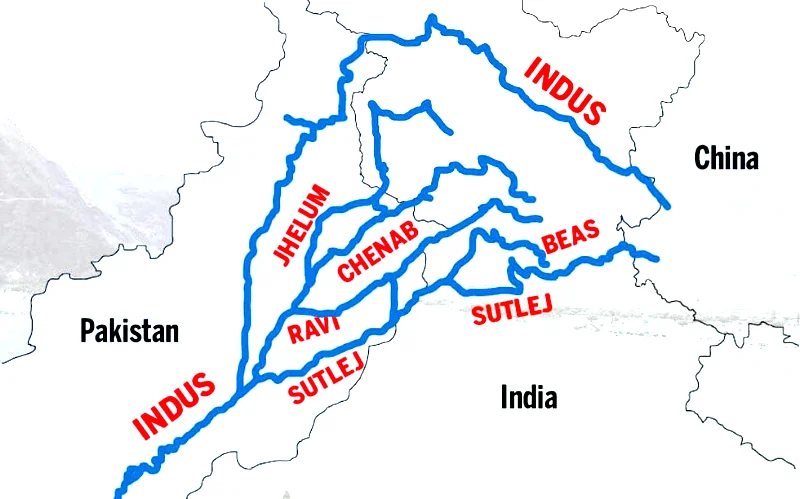
THE INDUS WATERS TREATY (IWT) 1960
SIGNED: SEPTEMBER 19, 1960 — WORLD BANK BROKERED
SIGNATORIES: PM NEHRU & PRESIDENT AYUB KHAN
<strong style='color:#f5f0e8;'>India allocated:</strong> <span style='color:#c0392b;font-weight:500;'>Eastern rivers</span> — Ravi, Beas, Sutlej (unrestricted use)
<strong style='color:#f5f0e8;'>Pakistan allocated:</strong> <span style='color:#e67e22;font-weight:500;'>Western rivers</span> — Indus, Jhelum, Chenab (unrestricted use)
India allowed limited non-consumptive use of western rivers
Treaty survived 3 wars and multiple crises for 65 years
CURRENT STATUS — 2025
India placed IWT "in abeyance" following Pahalgam attack (April 2025)
Pakistan condemned as violation of international law
Court of Arbitration proceedings initiated
Pakistan's agriculture (90% dependent on Indus system) directly threatened
Water as a coercive tool — <strong style='color:#e67e22;'>\"Hydraulic Warfare\"</strong>
Pakistan: 80% of irrigated agriculture depends on Indus rivers
Pakal Dul, Kishanganga, Ratle dams — Indian hydroelectric projects challenged by Pakistan
Water has emerged as a new strategic pressure point — potentially replacing Kashmir as a core issue in India-Pakistan relations.
PROXY WAR, TERRORISM & ASYMMETRIC WARFARE
PAKISTAN-BASED TERROR GROUPS
KEY ATTACKS & RESPONSES
INDIA'S COUNTER STRATEGY
Lashkar-e-Taiba (LeT)
26/11 Mumbai attacks 2008
Jaish-e-Mohammed (JeM)
Pulwama attack 2019
Hizbul Mujahideen (HuM)
Haqqani Network
Kashmir Resistance (LeT offshoot)
Pahalgam 2025
All listed as UN-designated terrorist organizations operating from Pakistani soil
1999
IC-814 hijacking (Kandahar)
2001
Indian Parliament attack (JeM/LeT)
2008
Mumbai 26/11 attacks (166 killed)
2016
Uri attack → India's Surgical Strikes
2019
Pulwama (40 CRPF killed) → Balakot airstrikes
2025
Pahalgam (26 killed) → Operation Sindoor
<strong style="color:#ffffff">Hot Pursuit</strong> doctrine
<strong style="color:#ffffff">2016:</strong> Surgical Strikes across LoC
<strong style="color:#ffffff">2019:</strong> Balakot airstrikes — first strike inside Pakistan since 1971
<strong style="color:#ffffff">2025:</strong> Operation Sindoor — deep strikes into Punjab province
<strong style="color:#ffffff">Multi-domain responses:</strong> drones, missiles, cyber
<strong style="color:#ffffff">Diplomatic:</strong> FATF pressure on Pakistan
<strong style="color:#ffffff">Strategic doctrine shift:</strong> <em>"New Normal"</em> — punitive response guaranteed
Pakistan's use of non-state actors as 'strategic assets' has become the primary driver of military escalation between the two nuclear-armed states.
OPERATION SINDOOR — MAY 2025
CASE STUDY
22 APR
Pahalgam Attack (26 civilians killed by LeT-linked group)
07 MAY
India launches Op Sindoor (9 sites struck in AJK & Punjab)
08-09 MAY
Pakistan retaliates with swarms of 300+ drones & missiles
10 MAY
Pakistan launches Op Bunyan-un-Marsoos (Indian bases targeted)
10 MAY
US-brokered ceasefire officially announced
MILITARY DIMENSIONS
India struck LeT/JeM infrastructure in Bahawalpur, Muridke, Muzaffarabad
First Indian strikes into Pakistan's Punjab since 1971
Aerial: 72 Indian jets vs 42 Pakistani jets deployed
Pakistan claimed 6 Indian aircraft downed (3 Rafale, 1 Su-30, 1 MiG-29, 1 Mirage)
First ever drone warfare between two nuclear states
India moved Western Fleet (aircraft carrier & destroyers) to Arabian Sea
Both sides demonstrated comprehensive deep-strike capability
STRATEGIC LESSONS
India declared "New Normal" — guaranteed military response to future terror attacks
Space below nuclear threshold successfully expanded in South Asia
Multi-domain warfare witnessed: air, drone, missile, cyber, naval signaling
China-supplied J-10C & PL-15 missiles used by Pakistan — interoperability concern
Nuclear deterrence held — both sides exercised careful targeting restraint
Indus Waters Treaty placed in abeyance — leveraging water strategically
OPERATION SINDOOR MARKED THE MOST SIGNIFICANT ENGAGEMENT SINCE KARGIL 1999 — RESHAPING DETERRENCE CALCULUS
MILITARY BALANCE: INDIA vs PAKISTAN
CATEGORY
INDIA
PAKISTAN
Active Military Personnel
1,455,550
654,000
Defence Budget (2025)
$86 billion
$10.4 billion
Battle Tanks
~4,614
~2,627
Artillery
~9,719
~4,472
Combat Aircraft
~600+
~400+
Naval Ships
150+ (incl. 2 aircraft carriers)
23+ (incl. submarines)
Nuclear Warheads
~172
~170
Ballistic Missiles
Agni I-V, Prithvi
Shaheen, Ghauri, Nasr
Paramilitary Forces
2,500,000
302,000
STRATEGIC ASYMMETRY
India spends 8x more on defence — overwhelming conventional superiority
Pakistan compensates with nuclear asymmetry and China's strategic support
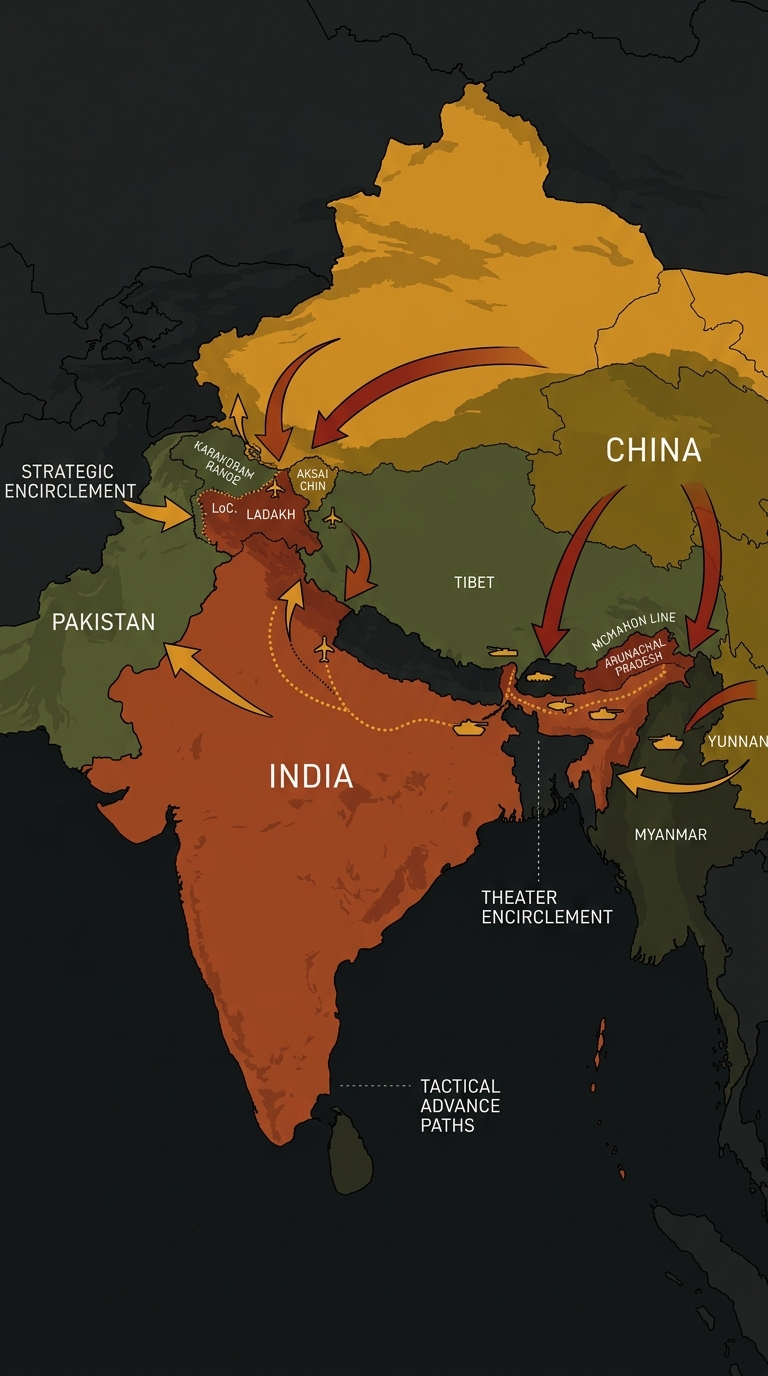
CPEC makes China a direct stakeholder — potential two-front threat for India
CHINA FACTOR & REGIONAL DYNAMICS
CHINA-PAKISTAN STRATEGIC NEXUS
<span style="color: #e67e22; font-weight: 600;">"All-weather friendship"</span> — formal alliance
<span style="color: #e67e22; font-weight: 600;">CPEC:</span> $62 billion China-Pakistan Economic Corridor through Gilgit-Baltistan
China's <span style="color: #e67e22; font-weight: 600;">#1 arms supplier</span> to Pakistan (82% of imports)
<span style="color: #e67e22; font-weight: 600;">Chinese platforms used in 2025:</span> J-10C jets, PL-15 missiles, Songar drones
Joint military exercises: <span style="color: #e67e22; font-weight: 600;">Warrior series</span>
China controls <span style="color: #e67e22; font-weight: 600;">Aksai Chin</span> → India fights on two fronts
China's <span style="color: #e67e22; font-weight: 600;">Gwadar Port</span> — Indian Ocean presence challenge
INDIA'S COUNTER STRATEGY
<span style="color: #e67e22; font-weight: 600;">Quad Alliance:</span> India, USA, Japan, Australia
<span style="color: #e67e22; font-weight: 600;">AUKUS partnership</span> implications for Indo-Pacific
<span style="color: #e67e22; font-weight: 600;">US-India Defence agreements:</span> LEMOA, COMCASA, BECA
<span style="color: #e67e22; font-weight: 600;">Rafale jets</span> (France), <span style="color: #e67e22; font-weight: 600;">S-400</span> (Russia) — diversified sourcing
<span style="color: #e67e22; font-weight: 600;">Act East Policy</span> — countering Chinese String of Pearls
<span style="color: #e67e22; font-weight: 600;">Indo-US-Israel strategic nexus</span> emerged post-2025
<span style="color: #e67e22; font-weight: 600;">Indo-Pacific Command</span> engagement
INDIA'S STRATEGIC CHALLENGE: A POTENTIAL TWO-FRONT WAR AGAINST NUCLEAR-ARMED CHINA AND PAKISTAN — THE DEFINING SECURITY THREAT OF THE 21ST CENTURY
STRATEGIC OUTLOOK & FUTURE SCENARIOS
SCENARIO A: CONTINUED DETERRENCE
Nuclear overhang maintains uneasy stability
Grey zone operations (proxies, cyber, drones) continue
Diplomatic channels remain frozen
Economic costs of hostility mount
Likelihood: HIGH
SCENARIO B: ESCALATION SPIRAL
Another major terror attack triggers military response
Escalation miscalculation risks
First use of tactical nuclear weapons (Nasr)
International community intervenes
Likelihood: MEDIUM — elevated post-2025
SCENARIO C: MANAGED ENGAGEMENT
Back-channel diplomacy resumes
Water/trade confidence-building measures
Kashmir status quo formalized
Regional economic integration (SAARC revival)
Likelihood: LOW in near term
KEY STRATEGIC TAKEAWAYS
Nuclear deterrence has both stabilized and constrained the India-Pakistan conflict
Terrorism remains the primary trigger mechanism for military escalation
China's role transforms a bilateral dispute into a trilateral strategic equation
Water security is emerging as a new and potent pressure point
The 'New Normal' doctrine means future conflicts will be more frequent and multi-domain
DEFENCE STUDIES CURRICULUM | 2025–26
SUMMARY
The 1947 Partition created an enduring strategic rivalry shaped by religion, territory, and identity
Kashmir and the LoC remain the nuclear flashpoint of South Asia
Both nations possess ~170 nuclear warheads — deterrence is fragile but functional
Operation Sindoor (2025) demonstrated India's new punitive doctrine and multi-domain warfare
The China-Pakistan axis and water security are the defining challenges for India's future strategy
DISCUSSION QUESTIONS
Is nuclear deterrence sustainable in South Asia?
Can water disputes replace Kashmir as the primary flashpoint?
How does the China factor alter India's two-front war planning?
FURTHER READING
Sumit Ganguly — Deadly Impasse: India-Pakistan Relations
Ashley Tellis — India as a New Global Power
IISS Military Balance 2025
IDSA Strategic Analysis Quarterly
PREPARED FOR MILITARY GEOGRAPHY SYLLABUS | FOR ACADEMIC USE ONLY
- defense-studies
- geopolitics
- military-geography
- nuclear-deterrence
- kashmir-conflict
- strategic-analysis
- south-asia-security