



Made byBobr AI

Basic Cookery Methods & Stock Control | Kitchen Induction

Master professional kitchen fundamentals: explore 12 essential cookery methods, food storage groups, stock control (FIFO), and food safety induction.

#cookery-methods#stock-control#food-safety#hospitality-training#culinary-basics#kitchen-induction#mise-en-place#fifo
Watch
Pitch
Certificate II in Cookery
Kitchen Induction:
Basic Cookery Methods
& Stock Control
An introduction to professional kitchen practices for beginner hospitality students
Hospitality Training Program | 2026
Made byBobr AI
INTRODUCTION
Why This Matters in a Professional Kitchen
Understanding basic cookery methods and stock control is essential for anyone entering the hospitality industry. This presentation will guide you through the different food types you'll work with, the techniques used to cook them, and how to manage ingredients responsibly. In a professional kitchen, how you cook food is just as important as what you cook — the right method can transform ingredients into outstanding dishes. Stock control ensures food is stored safely, waste is minimised, and the kitchen runs efficiently every day.
Cookery Methods
Food Types
Stock Control
Made byBobr AI
FOOD TYPES OVERVIEW
Major Food Types
Understanding food categories helps you cook, store, and handle ingredients correctly and safely.
🥛
Dairy
Milk, cheese, butter, and products requiring continuous refrigeration.
🌾
Dry Goods
Pantry staples like flour, rice, pasta, and dried spices.
❄️
Frozen Goods
Ingredients preserved at sub-zero temperatures for maximum longevity.
🍎
Fruit
Fresh seasonal fruits, berries, citrus, and tropical varieties.
🥩
Meat
Raw cuts of beef, pork, lamb, and other red meats.
🍗
Poultry
Raw chicken, turkey, duck, and edible game birds.
🐟
Seafood
Fresh fish, shellfish, crustaceans, and edible marine life.
🥦
Vegetables
Fresh leafy greens, root vegetables, stems, and fungi.
Hospitality Training Program | 2026
Made byBobr AI
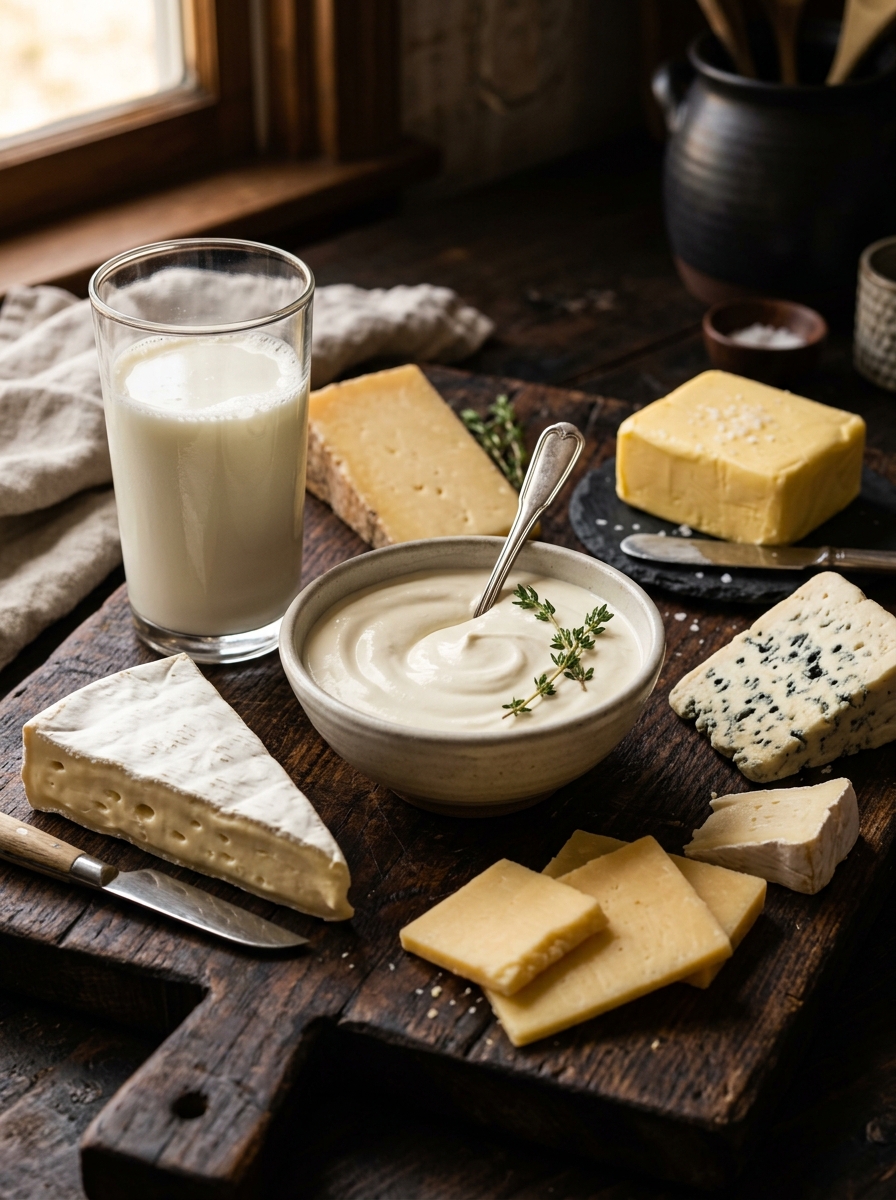
FOOD TYPES — DAIRY
Dairy Products
Dairy products include milk, cream, butter, yoghurt, and a wide variety of cheeses that are used extensively in professional cooking. These products are highly perishable, meaning they spoil quickly if not stored correctly — they must always be refrigerated between 1°C and 5°C. When handling dairy, always check expiry dates and ensure products are stored away from strong-smelling items as they can absorb odours. Dairy adds richness, flavour, and texture to sauces, baked goods, desserts, and many savoury dishes across multiple cuisines.
Perishable
1°C – 5°C
Check Expiry
Made byBobr AI
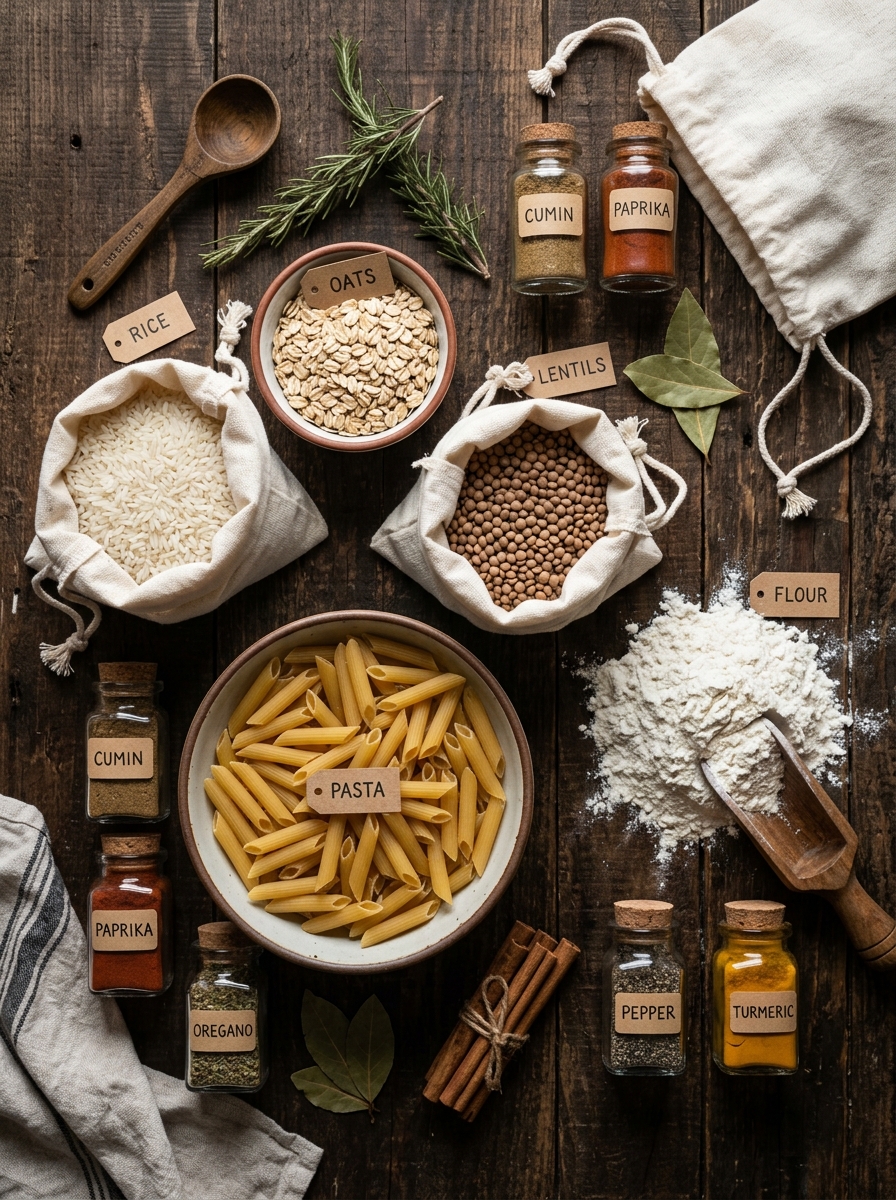
FOOD TYPES — DRY GOODS
Dry Goods
Dry goods are non-perishable pantry ingredients such as rice, flour, pasta, sugar, lentils, oats, and canned products that form the foundation of many recipes. Because they contain very little moisture, dry goods have a long shelf life when stored correctly in sealed containers in a cool, dry place away from direct sunlight. It is still important to check the use-by dates on dry goods, as they can lose quality, flavour, or nutritional value over time. Proper labelling and organised storage of dry goods helps the kitchen run smoothly and reduces the risk of cross-contamination.
Long Shelf Life
Cool & Dry Storage
Check Labels
Made byBobr AI
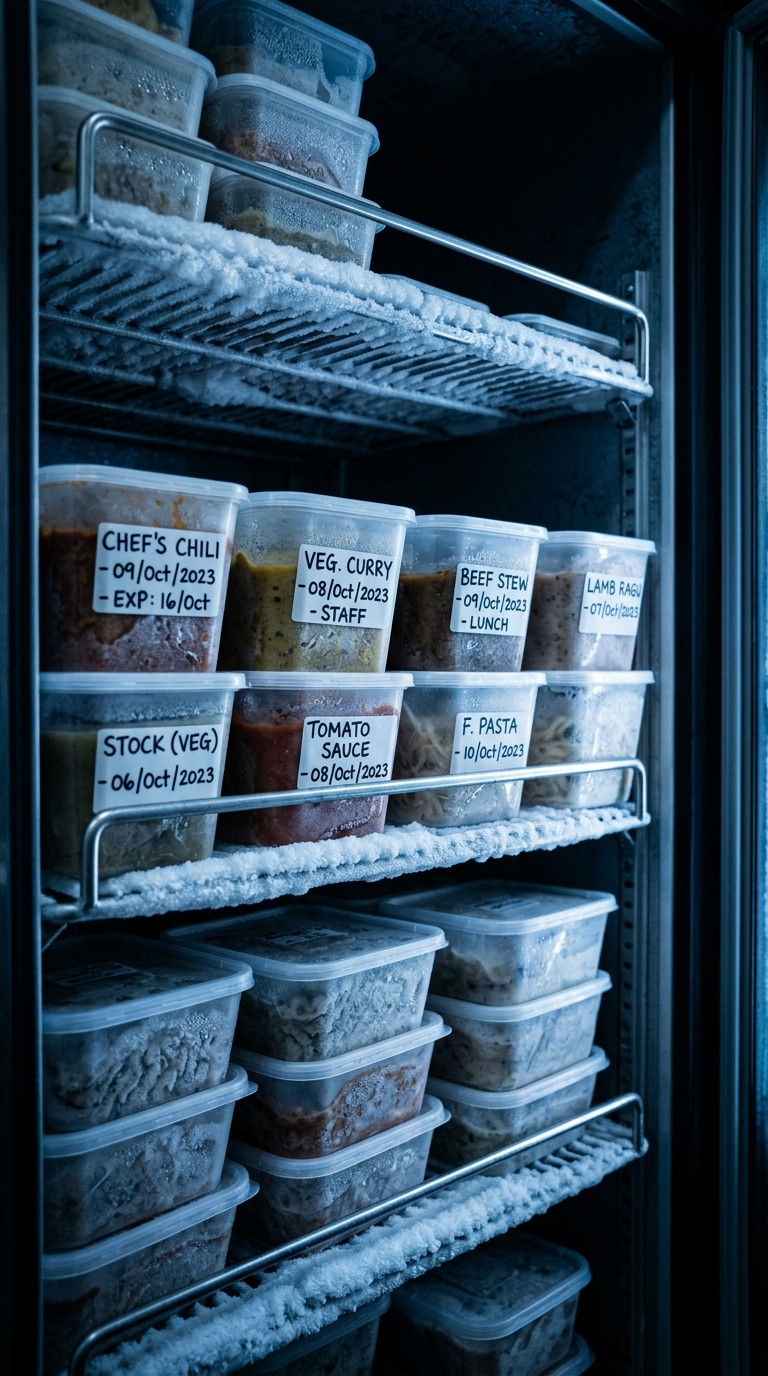
FOOD TYPES — FROZEN GOODS
Frozen Goods
Frozen foods must be stored at or below -18°C to maintain their safety and quality over an extended period of time. Freezing slows the growth of bacteria and other microorganisms, which helps preserve the texture, flavour, and nutritional value of ingredients like meat, seafood, vegetables, and pre-prepared meals. When defrosting frozen goods, always thaw them in the refrigerator or under cold running water — never leave them on a bench at room temperature as this creates a food safety hazard. Once food has been thawed, it should not be refrozen unless it has been thoroughly cooked first.
-18°C or Below
No Re-freezing
Thaw Safely
Made byBobr AI
FOOD TYPES — FRUIT
Fresh Fruit
Fruit is an important ingredient in both sweet and savoury cooking, providing natural sweetness, colour, vitamins, and dietary fibre to dishes and menus. Most fruit is highly perishable and should be handled with care to avoid bruising, which accelerates spoilage and reduces the quality of the product. Some fruits such as bananas, apples, and avocados should be stored at room temperature until ripe, while others like berries and grapes need refrigeration to stay fresh. Always wash fruit thoroughly before use to remove pesticide residues, dirt, and bacteria that may be present on the skin.
Rich in Vitamins
Handle Carefully
Wash Before Use
Made byBobr AI
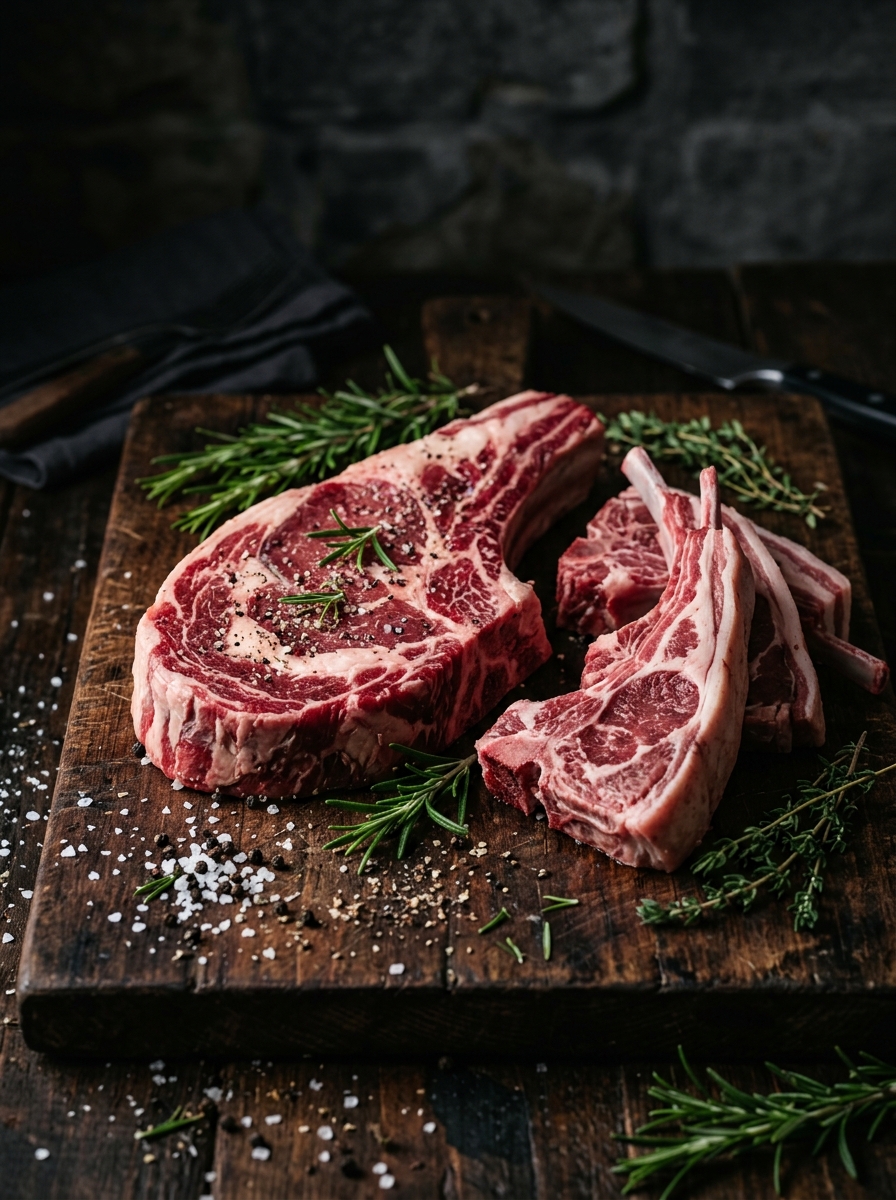
FOOD TYPES — MEAT
Meat
Meat is one of the most important and widely used protein sources in professional cookery, including beef, lamb, pork, veal, and game meats that are used across a wide range of dishes. Raw meat must be stored at 0°C to 5°C, and it should always be kept on the lowest shelf of the refrigerator in sealed containers to prevent blood or juices from dripping onto other foods. Proper handling of raw meat is critical — always use separate cutting boards and utensils for raw meat to avoid cross-contamination with other ingredients. Cook meat to the correct internal temperature to ensure it is safe to eat; for example, beef steaks should reach at least 63°C internally.
0°C – 5°C Storage Separate Boards Cook Thoroughly
Made byBobr AI
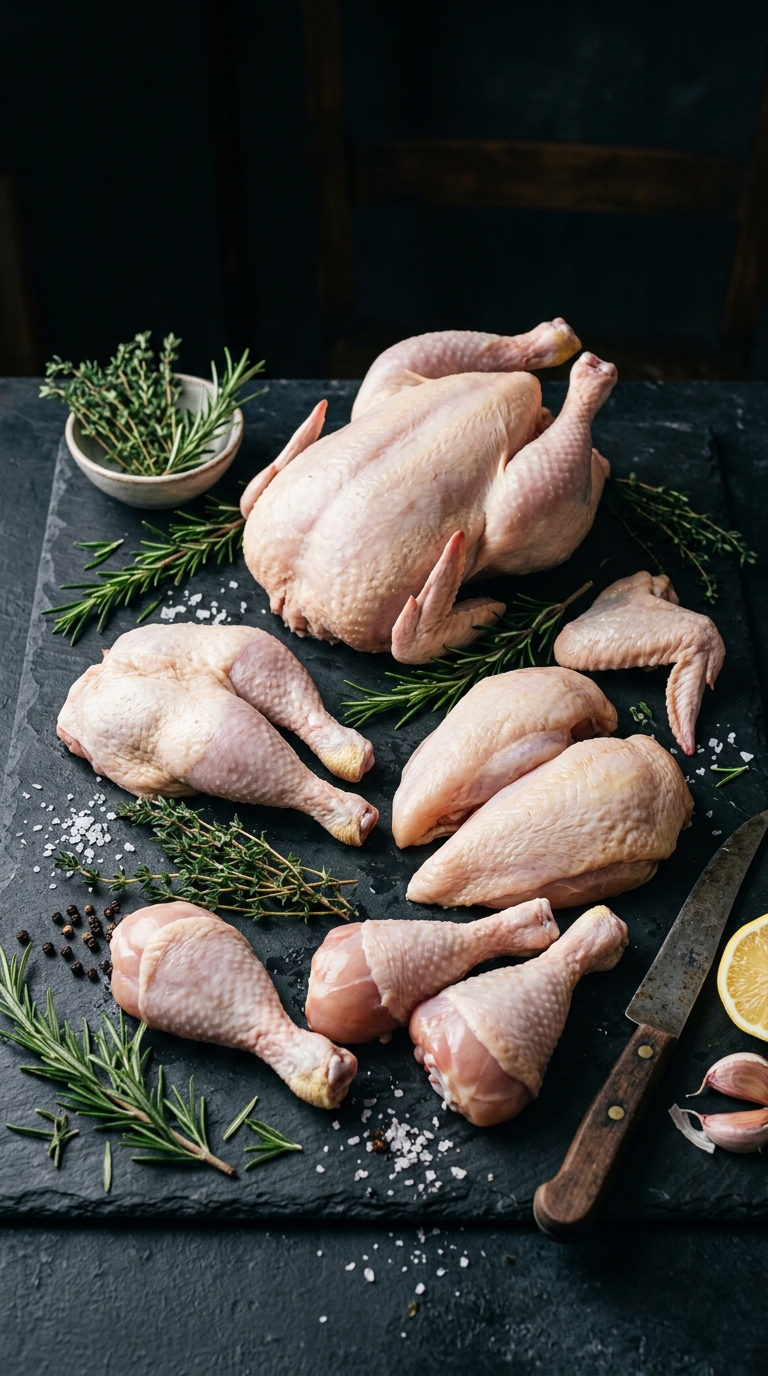
FOOD TYPES — POULTRY
Poultry
Poultry refers to all domesticated birds used as food, including chicken, turkey, duck, and quail — chicken being the most commonly used protein in commercial kitchens worldwide. Poultry carries a high risk of contamination from bacteria such as Salmonella and Campylobacter, which means strict hygiene practices must be followed at every stage from delivery to service. Always store raw poultry separately from other foods, particularly cooked items, and keep it in a sealed container on the lowest shelf of the refrigerator between 0°C and 5°C. Poultry must always be cooked thoroughly to an internal temperature of 75°C or above to ensure all harmful bacteria are destroyed.
High Contamination Risk
75°C Internal Temp
Store Separately
Poultry
Made byBobr AI
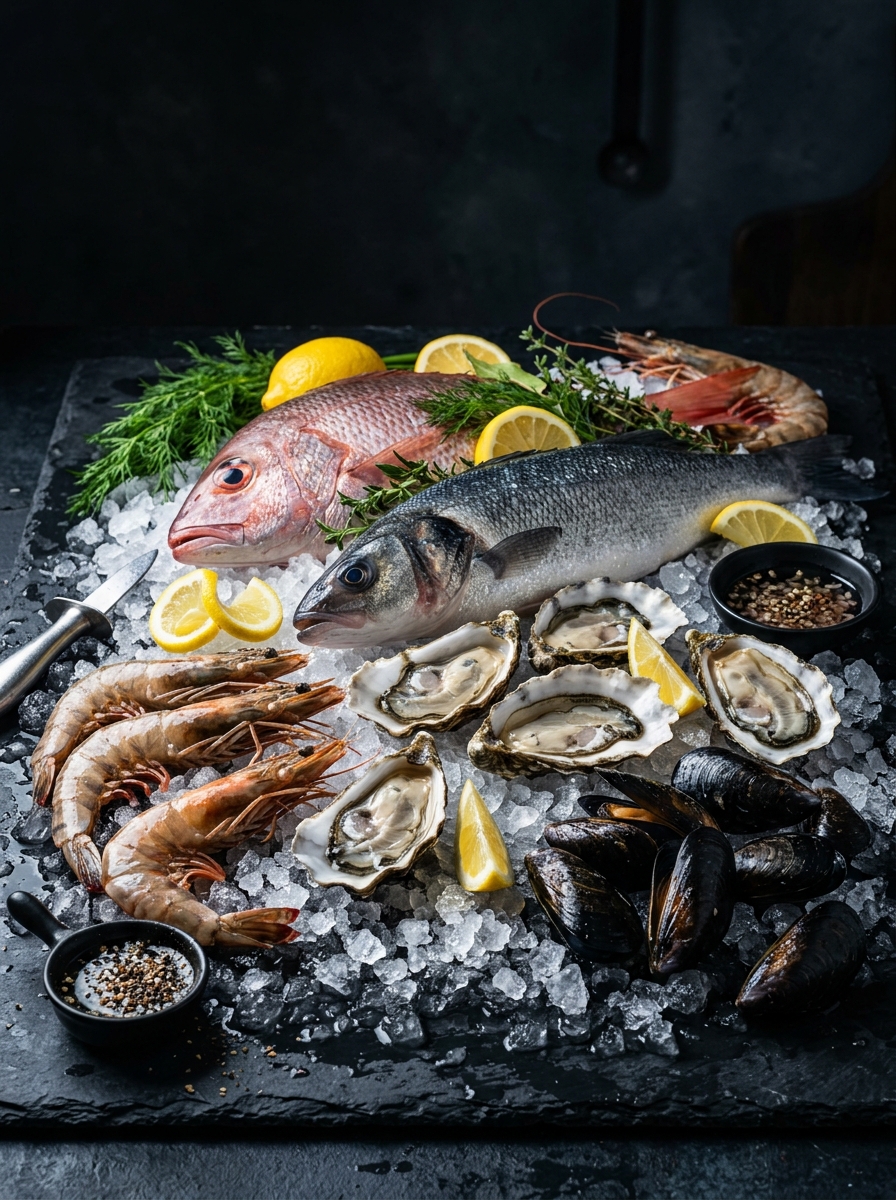
FOOD TYPES — SEAFOOD
Seafood
Seafood includes fish, prawns, crabs, lobsters, mussels, oysters, and squid — all of which are highly nutritious but also among the most perishable foods used in a commercial kitchen. Fresh seafood must be stored at 0°C to 2°C, which is colder than standard refrigeration, and should ideally be used within 1–2 days of delivery to ensure quality and safety. Signs of fresh seafood include bright, clear eyes on whole fish, a mild ocean smell (not a strong fishy odour), firm flesh that springs back when pressed, and moist, shiny skin. Always handle seafood carefully to maintain its quality and prevent contamination — store it covered on ice and separate from other raw proteins.
0°C – 2°C
Use Within 2 Days
Check Freshness
Made byBobr AI
FOOD TYPES — VEGETABLES
Vegetables
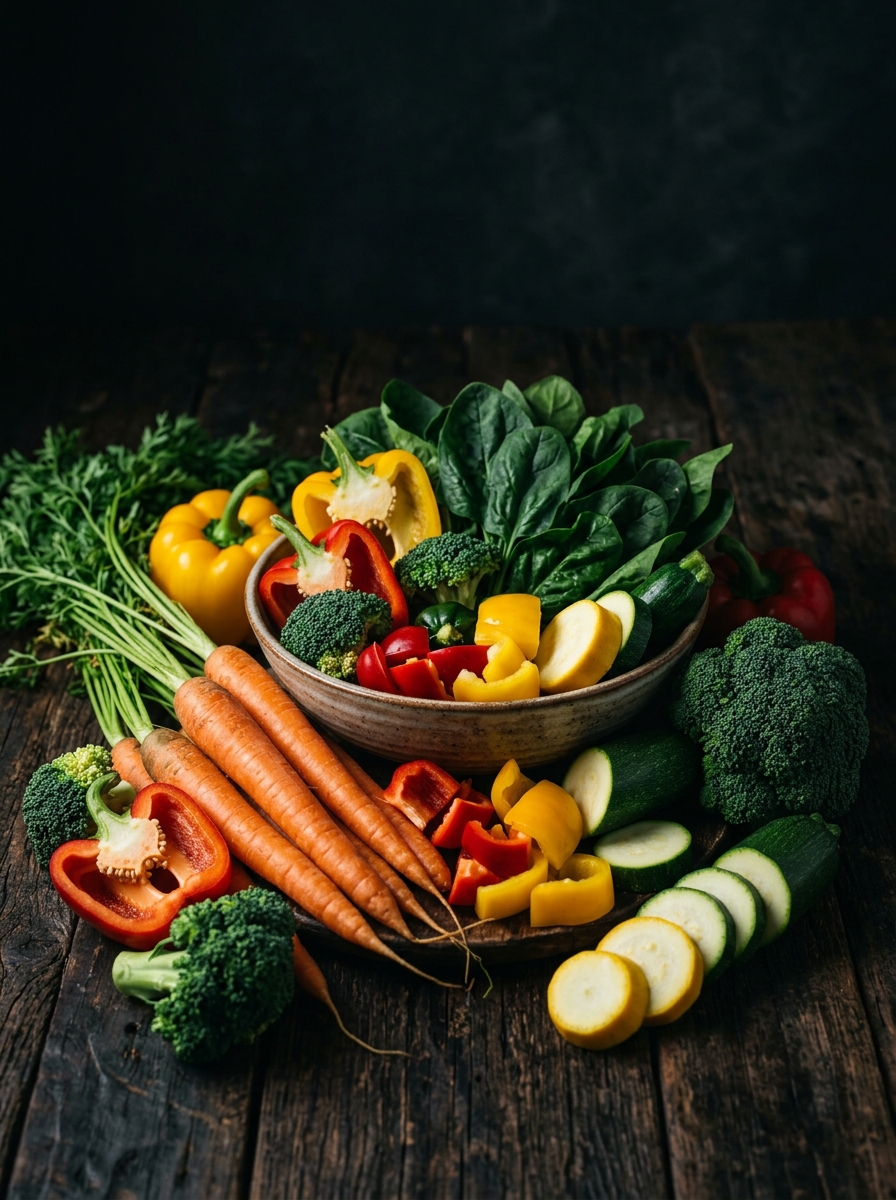
Vegetables are a core component of almost every menu and cuisine, providing essential vitamins, minerals, dietary fibre, and colour that make dishes visually appealing and nutritionally balanced. They can be grouped into categories such as root vegetables (carrots, potatoes), leafy greens (spinach, lettuce), brassicas (broccoli, cauliflower), and alliums (onions, garlic) — each with slightly different storage and cooking requirements. Most vegetables should be stored in the refrigerator between 1°C and 8°C, although some root vegetables and onions can be kept at room temperature in a cool, dark, well-ventilated space. Always inspect vegetables for signs of wilting, mould, or damage upon delivery and before use to ensure you are only serving high-quality produce.
Rich in Nutrients
Cool Dark Storage
Check for Freshness
Made byBobr AI
COOKERY METHODS
Overview of Cooking Methods
A cooking method refers to the specific technique used to apply heat to food, and choosing the right method is one of the most fundamental skills in professional cookery. Different methods produce very different results in terms of texture, colour, flavour, and moisture content — for example, roasting creates a caramelised crust while steaming keeps food moist and tender. Understanding when to use each method will help you prepare a wide range of dishes confidently and consistently in a commercial kitchen environment.
🔥
Baking
💧
Blanching
♨️
Boiling
🥘
Braising
🍳
Deep Frying
🔥
Grilling
🌊
Poaching
🍖
Roasting
🥘
Shallow Frying
🔬
Sous Vide
💨
Steaming
🍲
Stewing
Made byBobr AI
COOKERY METHODS — BAKING
Baking
Dry Heat | Oven Cooking
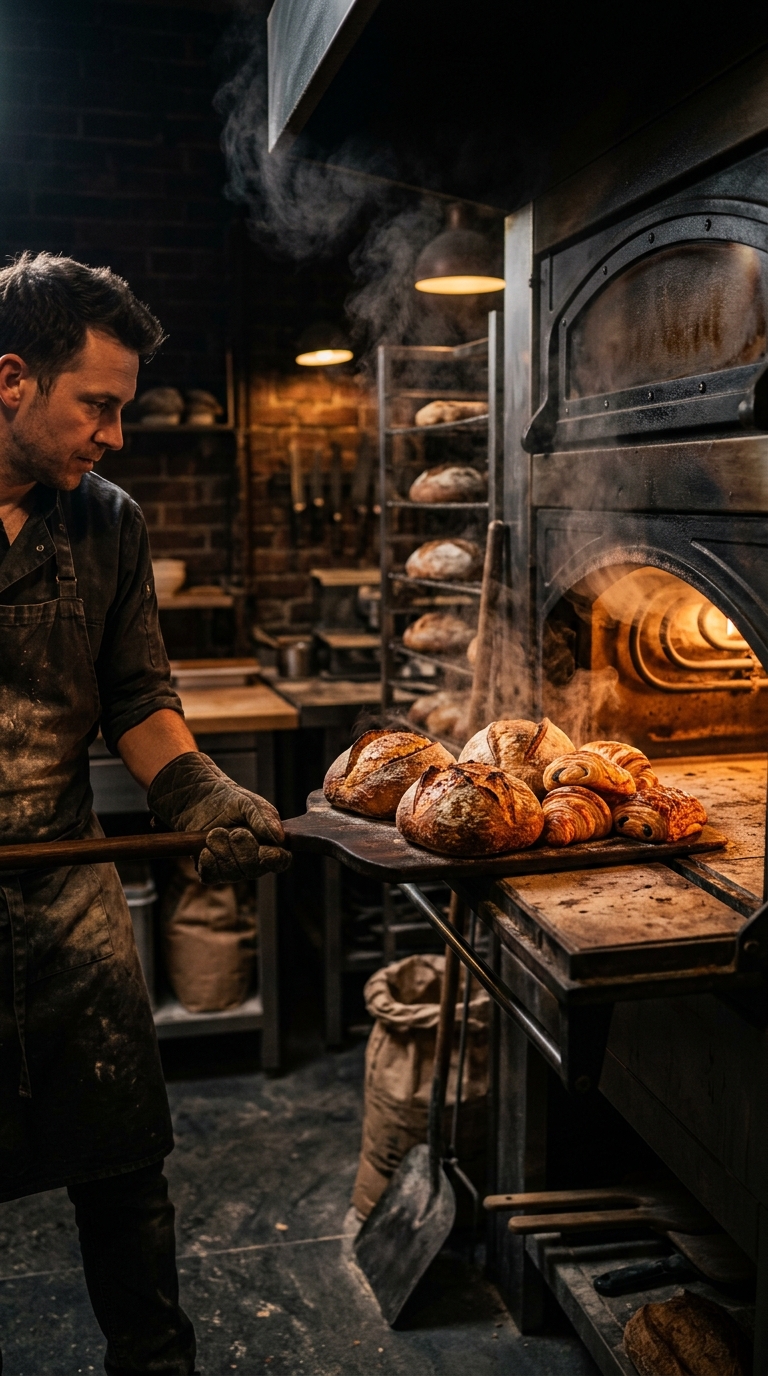
Baking is a dry heat cooking method that uses the enclosed, circulated heat of an oven to cook food without direct contact with a flame or liquid. It is most commonly associated with bread, cakes, pastries, biscuits, and other baked goods, but it is also used for dishes like lasagne, quiches, and roasted vegetables. The dry heat of the oven causes the surface of food to set and form a crust while the inside cooks through, creating a pleasant contrast in texture between a firm exterior and a soft, moist interior. Temperature control is critical in baking — even small variations can affect the rise, colour, and texture of the final product.
Oven Heat
No Added Liquid
Temp Control Critical
Made byBobr AI
COOKERY METHODS — BLANCHING
Blanching
Brief Boil | Ice Bath Shock
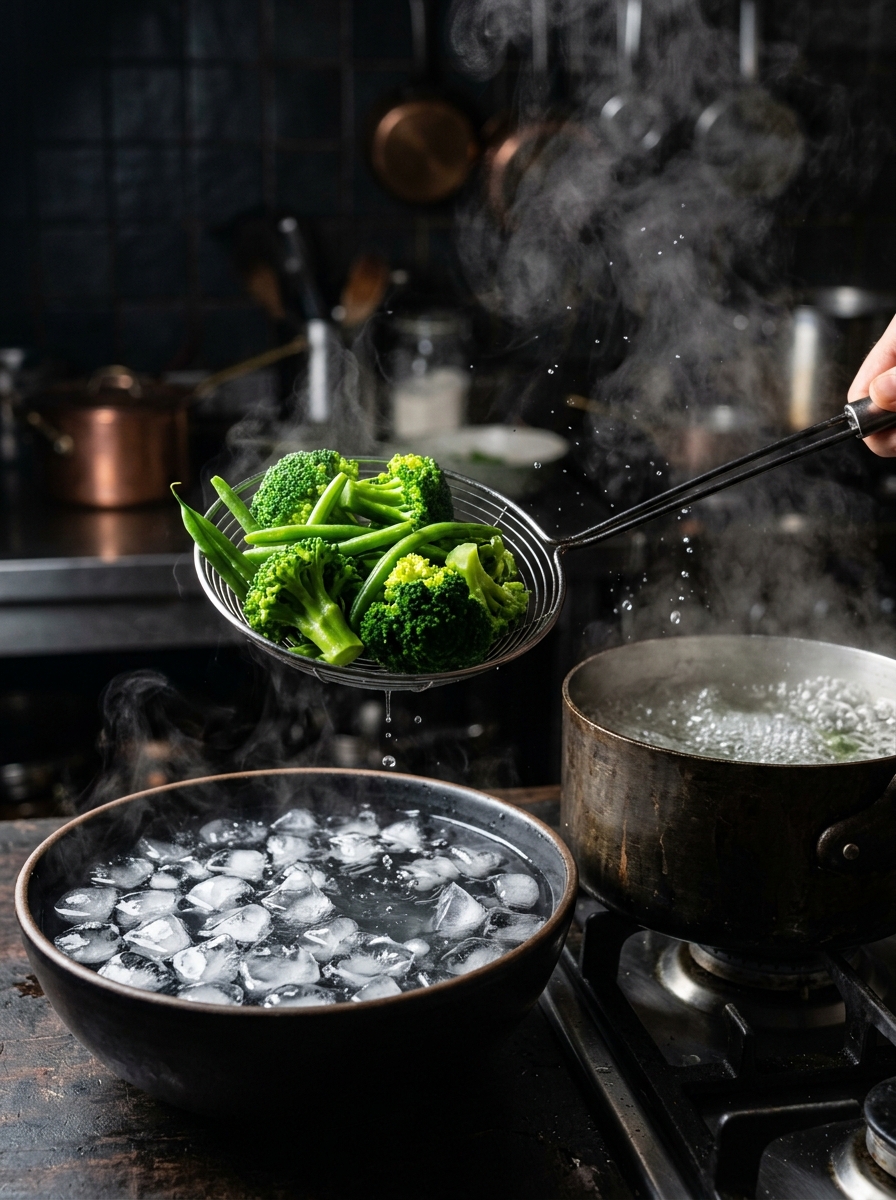
Blanching is a two-step cooking technique where food — most commonly vegetables — is briefly submerged in rapidly boiling water for a short time, usually between 30 seconds and 3 minutes depending on the ingredient. Immediately after boiling, the food is plunged into a bowl of ice-cold water, known as an ice bath, to stop the cooking process instantly and preserve the food's bright colour, crisp texture, and nutritional content. This method is widely used to prepare vegetables for freezing, as blanching deactivates the enzymes that would otherwise cause deterioration during frozen storage. Blanching is also used to loosen the skin of tomatoes or peaches for easy peeling, and to reduce bitterness in some vegetables.
Boil Then Ice Bath
Preserves Colour
Prep for Freezing
Made byBobr AI
COOKERY METHODS — BOILING
Boiling
100°C | Water-Based Cooking
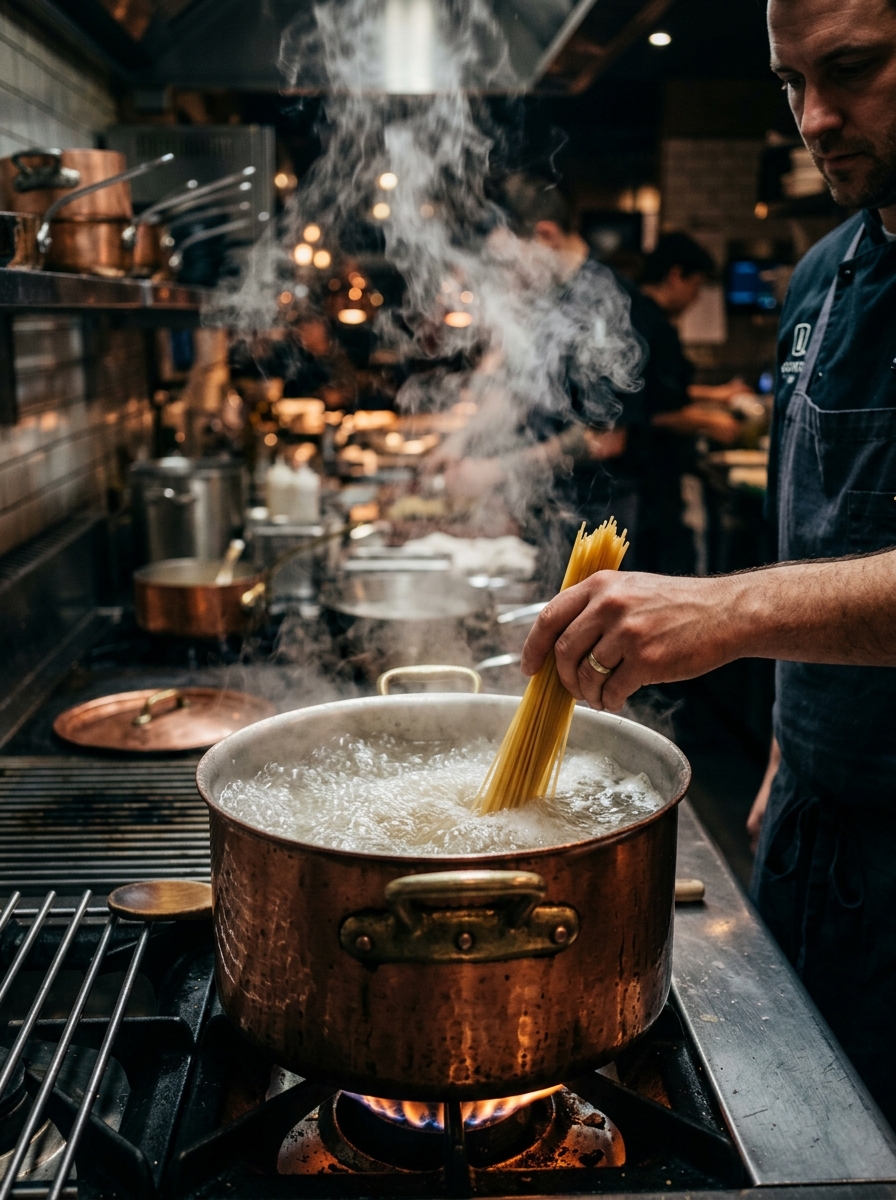
Boiling is one of the most common and straightforward cooking methods, involving submerging food completely in water or another liquid that is heated to 100°C, at which point the liquid reaches a full rolling boil. It is commonly used for cooking pasta, rice, eggs, potatoes, root vegetables, and dried pulses such as lentils and chickpeas that need to absorb water during cooking. The high temperature and constant movement of boiling water ensures food is cooked through relatively quickly, although overboiling can cause some vegetables and proteins to become mushy or lose their nutrients into the water. Salting the boiling water is a common technique to add flavour to pasta and vegetables, and it also raises the boiling point slightly.
100°C Full Submersion Quick Cooking
Made byBobr AI
COOKERY METHODS — BRAISING
Braising
Slow Cook | Moist Heat
Braising is a slow-cooking method that combines two techniques: first, the food (usually a large, tough cut of meat or hearty vegetables) is seared at high heat to develop a rich, caramelised flavour on the surface, then it is cooked slowly in a small amount of liquid in a covered pot. The long, gentle cooking process — which can take anywhere from 1 to 4 hours — allows the tough connective tissues and collagen in the meat to break down, resulting in incredibly tender, flavoursome results. Common liquids used in braising include stock, wine, tomatoes, or a combination of these, which also create a rich, flavourful sauce or gravy as the dish cooks. Braising is ideal for tougher, less expensive cuts of meat such as beef brisket, lamb shanks, osso bucco, and pork belly.
Sear Then Slow Cook
Tough Cuts
Rich Sauce
Made byBobr AI
COOKERY METHODS — DEEP FRYING
Deep Frying
Full Submersion | Hot Oil
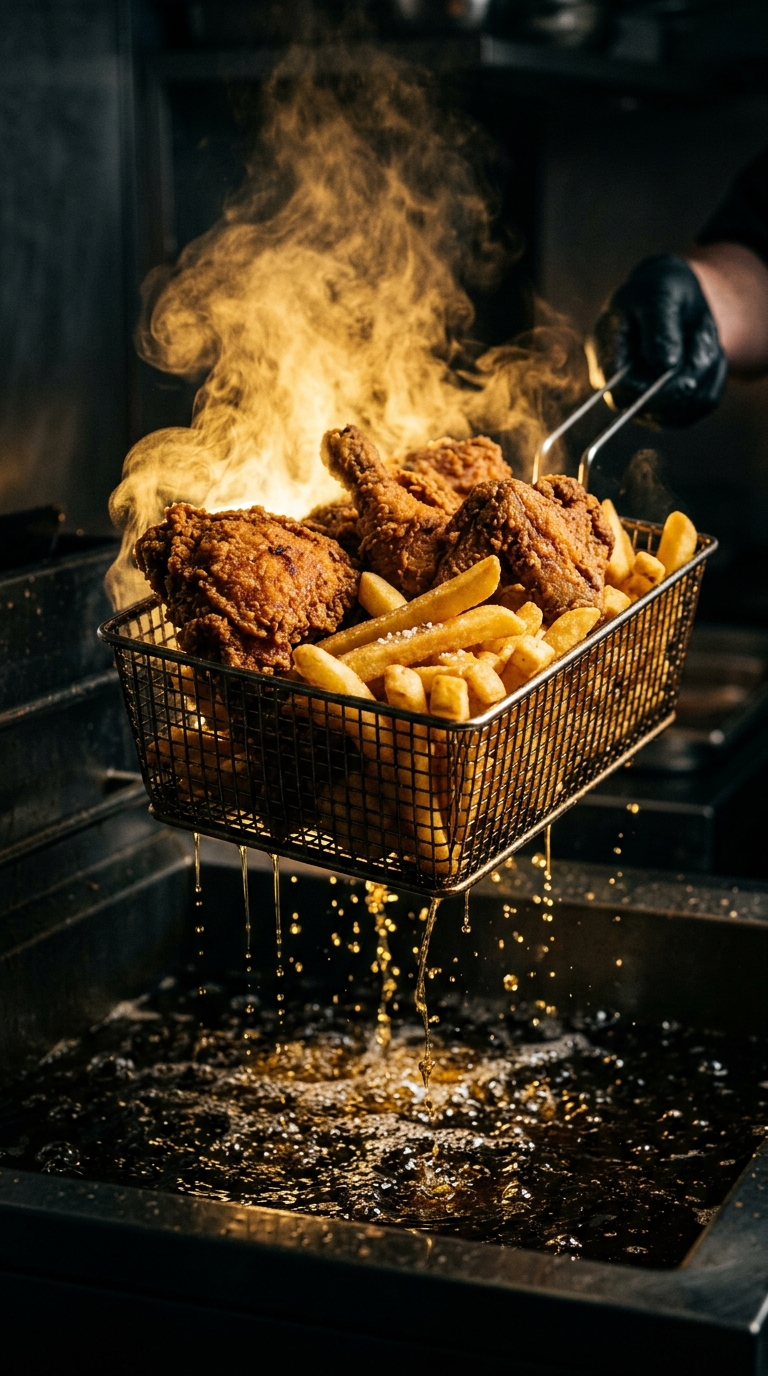
Deep frying involves fully submerging food in hot oil — typically between 160°C and 190°C — which cooks the food rapidly, creating a crispy, golden-brown exterior while sealing in moisture for a tender interior. This method is commonly used for foods such as potato chips, crumbed chicken, fish fillets, doughnuts, tempura vegetables, and spring rolls, where a crunchy coating is a key part of the dish. The oil temperature is critical: if the oil is too cool, the food will absorb too much oil and become greasy; if it is too hot, the outside will burn before the inside is cooked. Safety is extremely important when deep frying — never leave hot oil unattended, do not overfill the fryer, and always dry food before frying to prevent dangerous oil splatter.
160°C – 190°C Crispy Texture Oil Safety Critical
Made byBobr AI
COOKERY METHODS — GRILLING
Grilling
Direct High Heat | Char & Flavour
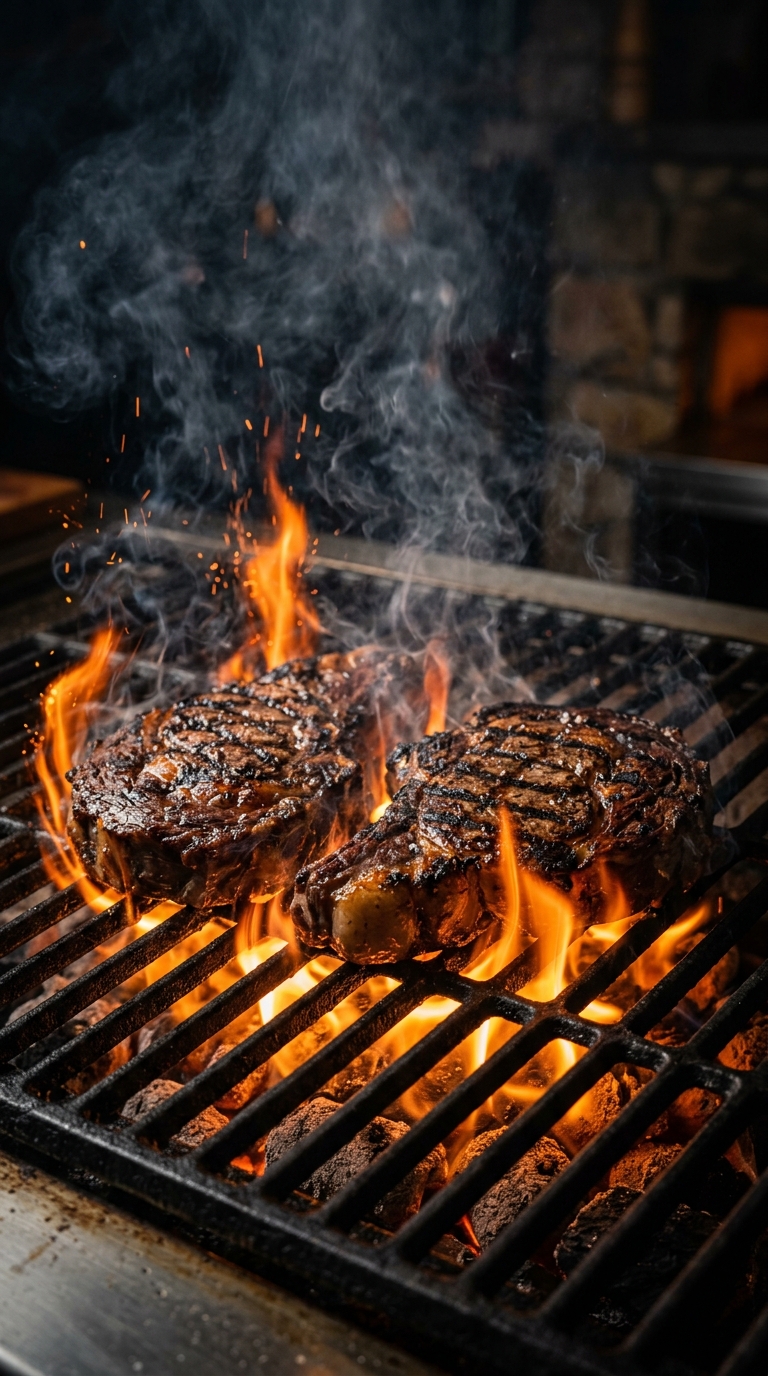
Grilling is a fast, dry-heat cooking method that uses direct, intense heat from below (charcoal, gas, or electric grill) or above (overhead grill/salamander) to cook food quickly and develop characteristic grill marks and a slightly smoky, charred flavour. This method is particularly well suited to tender cuts of meat, chicken breasts, fish fillets, seafood, and vegetables that cook quickly and benefit from the caramelised, slightly crispy exterior that grilling produces. The Maillard reaction — a chemical process that occurs when proteins and sugars are exposed to high heat — is responsible for the rich brown colour and complex flavour that grilling creates. It is important to ensure the grill is clean and well oiled before use to prevent food from sticking and to maintain food safety standards.
Direct High Heat
Grill Marks & Flavour
Maillard Reaction
Made byBobr AI
COOKERY METHODS — POACHING
Poaching
Gentle Heat | 70°C – 85°C
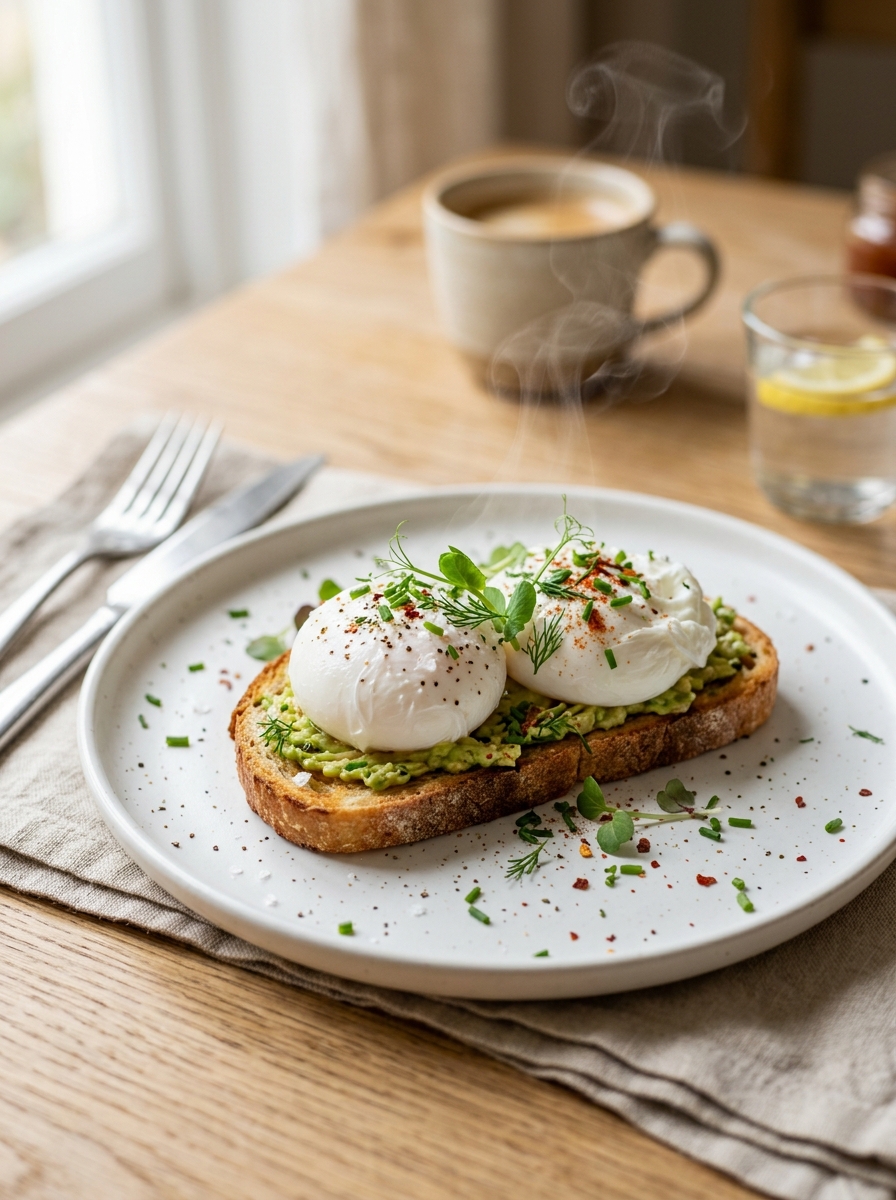
Poaching is a delicate, gentle cooking method that involves simmering food in liquid — usually water, stock, milk, or wine — at a low temperature between 70°C and 85°C, just below the boiling point. Because of the low heat used, poaching is an ideal method for fragile, delicate foods such as eggs, fish fillets, chicken breasts, and pears that would fall apart or become tough under the intense heat of boiling or frying. The liquid used for poaching also acts as a flavour carrier — adding herbs, spices, citrus, or aromatics to the poaching liquid gently infuses flavour into the food as it cooks. Poached dishes are often associated with lighter, healthier eating as the method requires no added fat.
70°C – 85°C
Delicate Foods
Gentle & Healthy
Made byBobr AI
COOKERY METHODS — ROASTING
Roasting
Dry Oven Heat | Caramelised Flavour
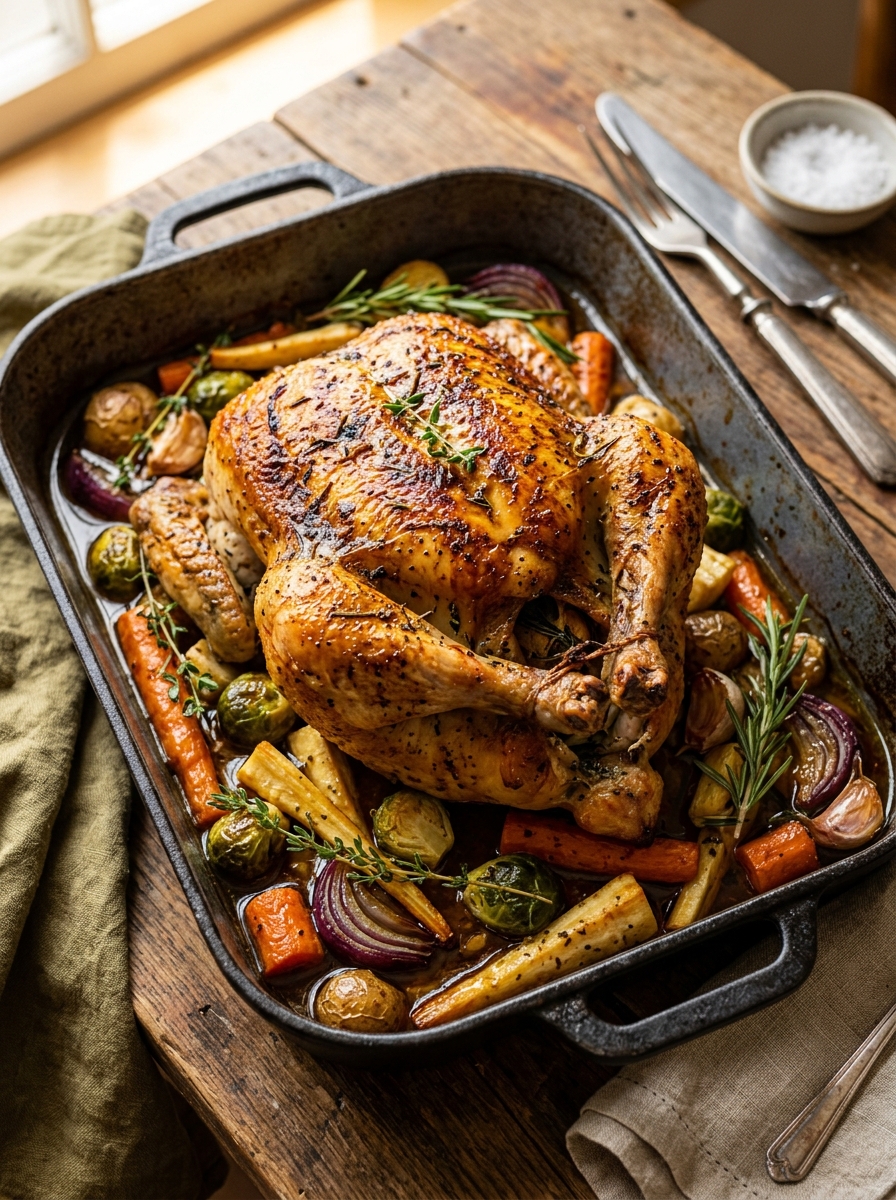
Roasting uses dry oven heat — typically between 160°C and 230°C — to cook food uncovered, allowing the surface to brown and caramelise through the Maillard reaction while the interior cooks through slowly with residual heat. It is most commonly used for large cuts of meat (roast beef, whole chicken, leg of lamb), root vegetables (potatoes, carrots, parsnips), and even some fruits that develop incredible sweetness when roasted. The uncovered cooking environment allows moisture to evaporate from the surface, which is essential for achieving that desirable golden-brown, crispy exterior that is a hallmark of well-roasted food. Resting meat after roasting is an important step — allowing the juices to redistribute throughout the meat before carving results in a much juicier and more flavourful final dish.
160°C – 230°C
Golden Brown Crust
Rest After Cooking
Made byBobr AI
COOKERY METHODS — SHALLOW FRYING
Shallow Frying
Small Amount of Oil | Pan Frying
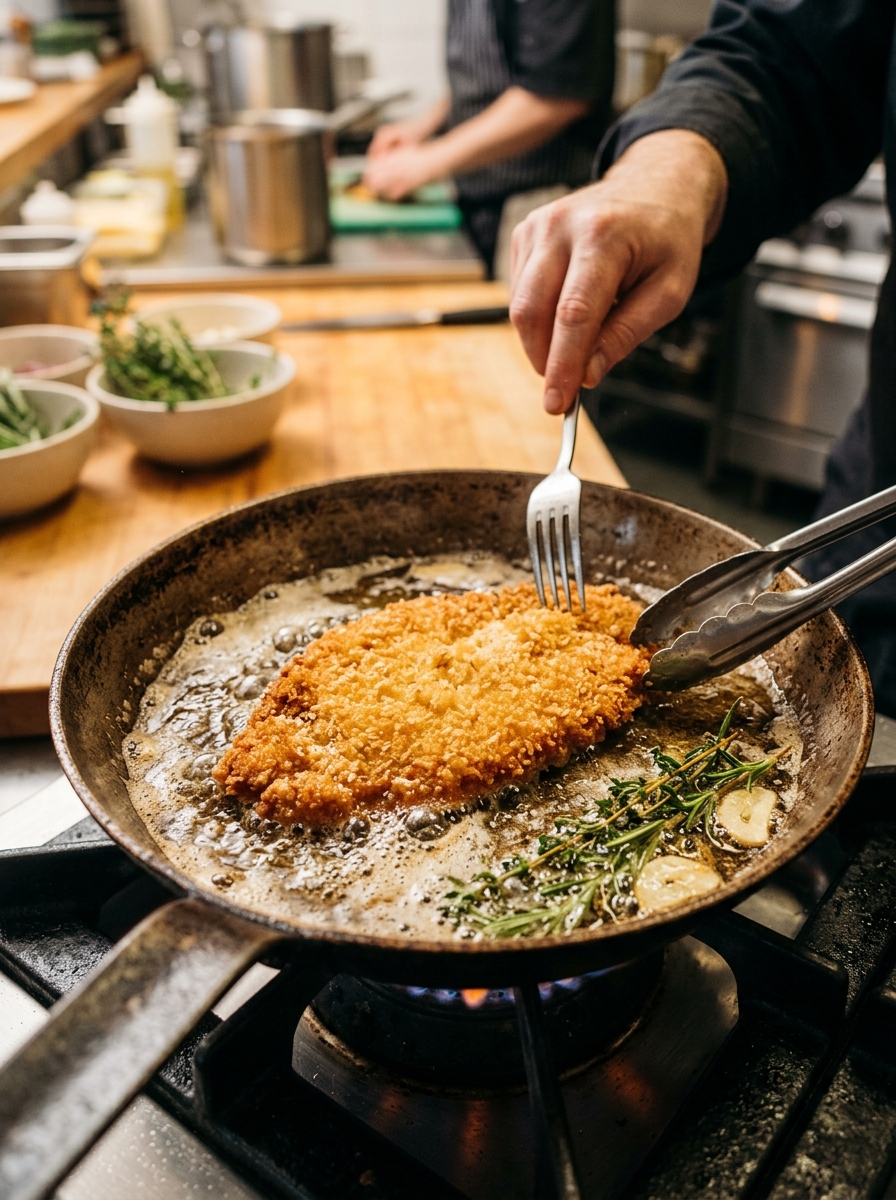
Shallow frying uses a moderate amount of oil (enough to cover the food halfway) in a wide, flat pan over medium to high heat, cooking food on one side at a time before being turned to cook the other side. This method is ideal for foods like schnitzel, fish cakes, pancakes, eggs, and crumbed or battered items where a golden, crispy exterior is desired without the full oil submersion of deep frying. The oil should be heated before adding food — if the food is added to cold oil it will absorb too much fat rather than frying correctly, resulting in greasy, unappealing results. After shallow frying, food should be placed on absorbent paper towel to remove excess oil before plating or serving.
Half-Depth Oil
Turn Once
Drain on Paper
Made byBobr AI
COOKERY METHODS — SOUS VIDE
Sous Vide
Vacuum Sealed | Precision Temperature
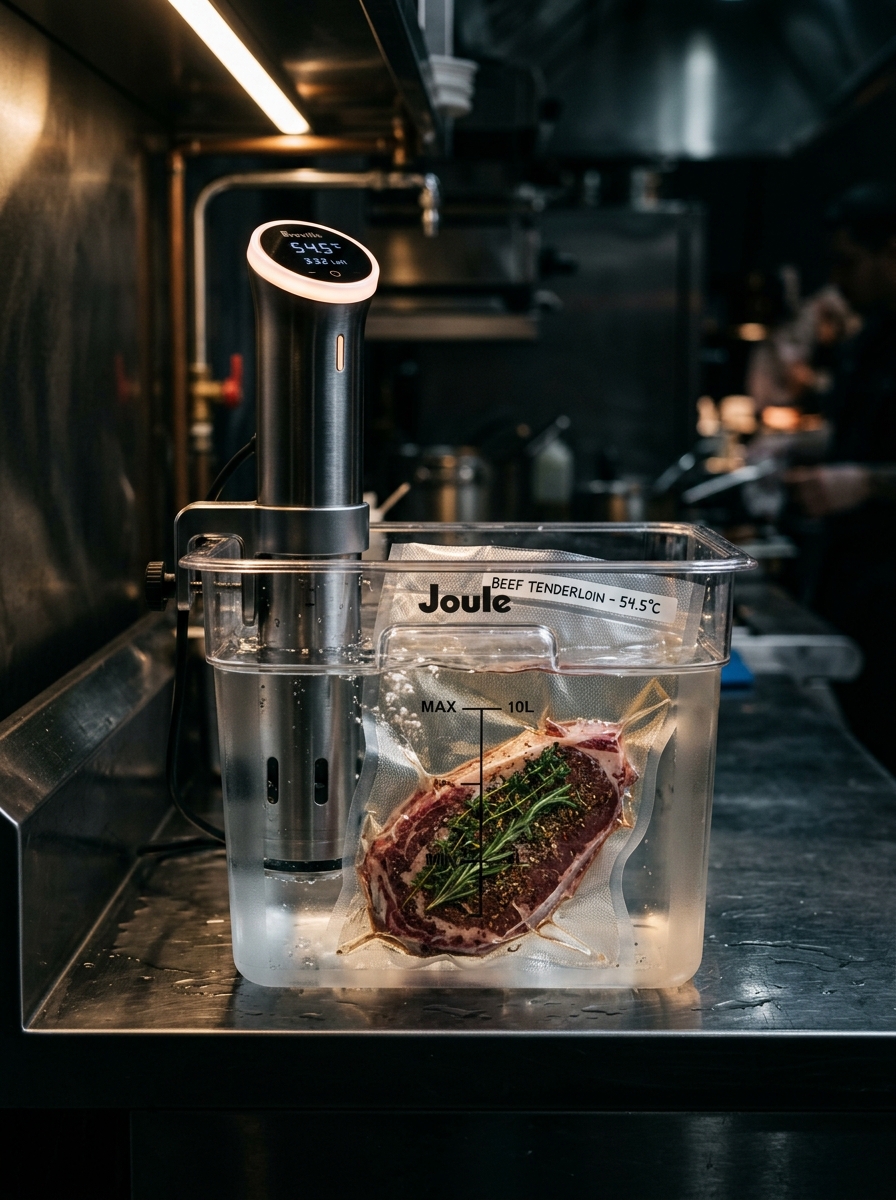
Sous vide (pronounced 'soo-veed') is a modern cooking technique where food is vacuum-sealed in a plastic pouch and then cooked in a precisely controlled water bath at a consistent low temperature, typically between 55°C and 85°C, for an extended period. The French term 'sous vide' means 'under vacuum,' and this method was originally developed for food safety and consistency in high-end restaurants before becoming more widely adopted in commercial kitchens. Because the temperature is so precisely controlled and the food is sealed in its own juices, sous vide produces incredibly consistent results — meat comes out perfectly cooked edge to edge with no overcooked grey band, and vegetables retain their colour and nutrients remarkably well. After sous vide cooking, proteins are often finished with a quick sear in a very hot pan to develop colour and flavour on the surface.
Precision Cooking
Vacuum Sealed
Consistent Results
Made byBobr AI
COOKERY METHODS — STEAMING
Steaming
Moist Heat | Nutrient Preservation
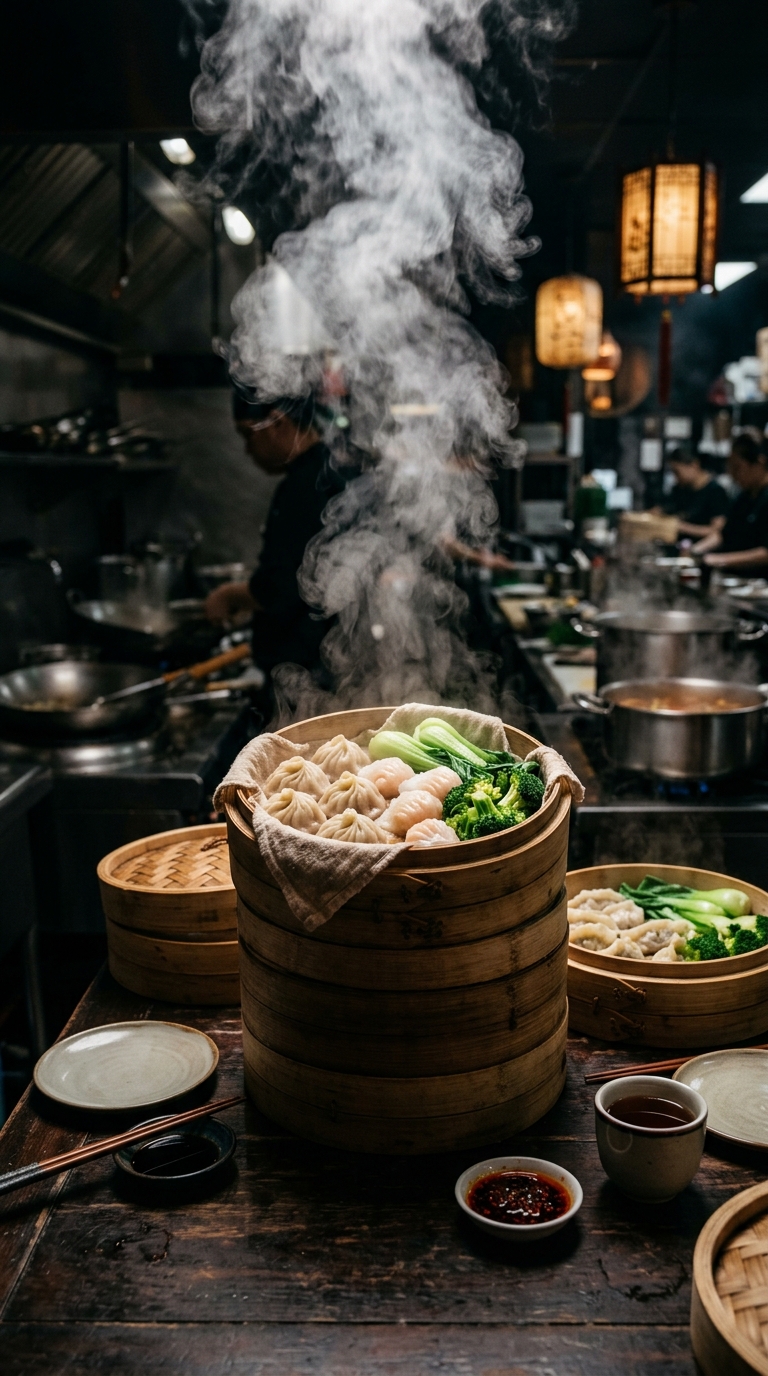
Steaming cooks food using the hot vapour produced by boiling water, with the food held above (not in) the liquid in a steamer basket, bamboo steamer, or commercial steam oven — making it a moist, oil-free cooking method. Because the food does not come into direct contact with water, far fewer water-soluble vitamins and minerals are lost compared to boiling, making steaming one of the healthiest cooking methods available. Steaming is particularly well suited to fish, seafood, dumplings, Asian-style dishes, and most vegetables, which retain their vibrant colour, firm texture, and natural flavour when cooked this way. In a commercial kitchen, combi-ovens with steam settings are widely used to steam large quantities of food efficiently and consistently.
No Added Fat
Preserves Nutrients
Retains Colour
Made byBobr AI
COOKERY METHODS — STEWING
Stewing
Slow Cook | Rich Flavour Development
Stewing is similar to braising but involves smaller, bite-sized pieces of food — usually meat and vegetables — that are fully submerged in liquid and cooked slowly over low heat for an extended time, typically 1 to 3 hours. The slow cooking process allows the flavours from all the ingredients — meat, vegetables, herbs, and cooking liquid — to meld together, creating a rich, deeply flavourful sauce or gravy that is integral to the dish. Stewing is perfect for tougher, more economical cuts of meat such as beef chuck, diced lamb, or pork shoulder, as the extended cooking time breaks down the connective tissue and produces fall-apart tender results. Classic stews include beef and vegetable stew, Irish lamb stew, chicken casserole, and French beef bourguignon, all of which are staple dishes in commercial kitchen training.
Full Submersion
Low & Slow
Deep Flavour
Made byBobr AI
KITCHEN FUNDAMENTALS
Mise en Place (meez-on-plas)
French for: 'Everything in its place'
Mise en place is a fundamental French culinary term and philosophy that describes the practice of preparing and organising all ingredients, tools, and equipment before cooking begins. In a professional kitchen, time is precious — having everything measured, chopped, portioned, and ready before service starts allows chefs to work efficiently, accurately, and calmly under pressure. A well-executed mise en place reduces errors, prevents accidents, ensures consistency in every dish, and helps the entire kitchen team work together seamlessly during a busy service period. Without mise en place, even the most skilled chef can become disorganised, slow, and prone to mistakes — it is truly the foundation of all great cooking.
Prepare
Organise
Execute
Made byBobr AI
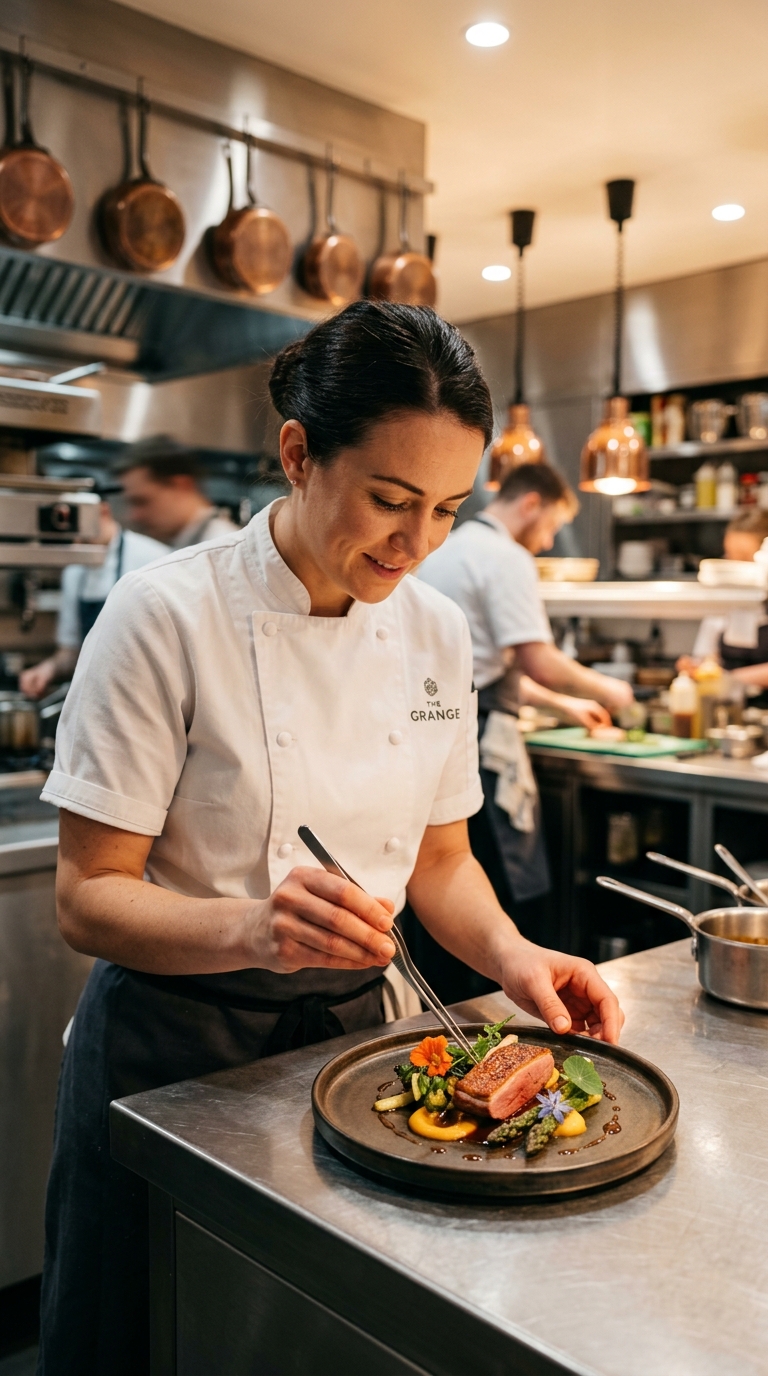
Chef Hat
MISE EN PLACE
Mise en Place in Action
From preparation to presentation — every task has its place in a professional kitchen.
🔪
Preparation
Washing and cutting vegetables
Measuring and weighing ingredients
Marinating proteins
Making sauces and stocks in advance
Pre-heating ovens and grills
Pan
Cooking
Heating oil to the correct temperature
Timing each dish for simultaneous service
Monitoring temperatures carefully
Adjusting seasoning during cooking
Following recipes consistently
🍽️
Presentation
Warming plates before service
Portioning food correctly
Garnishing dishes neatly
Wiping plate edges
Arranging components consistently
Made byBobr AI
KITCHEN SAFETY
Safe Equipment Use
Using kitchen equipment safely is a critical part of working in a professional kitchen — improper use of machinery can cause serious injuries including cuts, burns, and crush injuries that could be easily prevented. Before operating any piece of equipment such as a commercial blender, stand mixer, food processor, or meat slicer, always read the safety instructions, ensure all guards and safety shields are properly in place, and check that the equipment is clean and in good working order. Never place hands or utensils near moving parts while equipment is running, always use the correct setting for the task, and switch the machine off at the power source before cleaning or making adjustments. After use, all equipment must be thoroughly cleaned and sanitised according to the manufacturer's instructions to prevent the build-up of bacteria and food residue.
⚠️ Read Instructions
🛡️ Check Guards
🔌 Switch Off First
🧽 Clean After Use
Made byBobr AI
STOCK CONTROL
Stock Control Principles
Stock control refers to the systems and practices used to manage ingredients and supplies in a kitchen to ensure food quality, safety, and cost efficiency at all times. The most important stock rotation principle is FIFO — First In, First Out — which means that older stock is always moved to the front and used before newer deliveries, preventing ingredients from expiring unused. Regular checking of use-by and best-before dates is essential: items approaching their expiry date should be used immediately or flagged to a supervisor, and any expired product must be removed and discarded immediately. Reducing food waste through careful stock control not only saves the business money but also demonstrates professional responsibility and environmental awareness.
FIFO = First In, First Out
FRONT
BACK
NEW STOCK → BACK
← OLDER STOCK
📋
Check Dates
🗑️
Remove Expired
💰
Reduce Waste
Made byBobr AI
FOOD SAFETY
Key Food Safety Terms
Understanding these fundamental food safety terms is essential for every person working in a professional kitchen.
CONTAMINANT
A contaminant is any substance — biological, chemical, or physical — that is present in food and makes it unsafe or unsuitable to eat. Contaminants can enter food at any stage of the food chain, from growing and harvesting to storage, preparation, and service.
CONTAMINATION
Contamination is the process by which contaminants are introduced into food, making it potentially harmful to the consumer. This can happen through direct contact (e.g., raw meat touching cooked food) or indirectly through surfaces, equipment, or hands.
POTENTIALLY HAZARDOUS FOODS
Potentially hazardous foods (PHF) are foods that support the rapid growth of bacteria because they are moist, high in protein, and have a neutral pH. Examples include meat, poultry, seafood, dairy products, cooked rice, and cut fruits and vegetables. These foods must be kept outside the Temperature Danger Zone (5°C – 60°C).
Made byBobr AI
FOOD SAFETY
Protecting Food from Contamination
Protecting food from contamination is one of the most critical responsibilities of everyone who works in a kitchen — whether you are a student, apprentice, or experienced chef. Contaminated food can cause foodborne illness, which ranges from mild stomach discomfort to serious medical conditions requiring hospitalisation; in severe cases, foodborne illness can be fatal, particularly for vulnerable groups such as the elderly, children, pregnant women, and people with weakened immune systems. The best ways to protect food from contamination include washing hands regularly and thoroughly, keeping raw and cooked foods separated, maintaining correct storage temperatures, using clean utensils and equipment, and ensuring personal hygiene standards are upheld at all times. Australia has strict food safety legislation under the Food Standards Australia New Zealand (FSANZ) framework, and breaching these standards can result in fines, closure of the business, and serious legal consequences.
🤲 Wash Hands
🌡️ Correct Temp
🔀 Separate Foods
✅ Personal Hygiene
Made byBobr AI
FOOD SAFETY
Types of Contamination
Food can be contaminated in three main ways — understanding each type helps you prevent them in the kitchen.
🦠
MICROBIOLOGICAL
The most common and most dangerous type of contamination, caused by harmful microorganisms including bacteria (e.g., Salmonella, E. coli, Listeria), viruses, moulds, and parasites that multiply rapidly in food held at unsafe temperatures.
Prevention
Correct temperatures, good hygiene, thorough cooking.
⚗️
CHEMICAL
Occurs when cleaning products, pesticides, sanitisers, or other chemicals come into contact with food. For example, using a cleaning spray near uncovered food, or storing chemicals in food containers.
Prevention
Store chemicals separately, rinse surfaces thoroughly, use food-safe products only.
🔩
PHYSICAL
Happens when foreign objects such as glass, metal fragments, bone splinters, hair, jewellery, plastic packaging, or pest droppings accidentally enter food.
Prevention
Wear hair nets, remove jewellery, inspect equipment regularly, keep work areas clean and pest-free.
Made byBobr AI
STOCK CONTROL
Storage Conditions
Different food types require specific storage conditions to remain safe, maintain quality, and meet food safety legislation requirements — storing food incorrectly is one of the most common causes of foodborne illness in commercial kitchens.

The Temperature Danger Zone (TDZ) is the range between 5°C and 60°C where bacteria grow most rapidly; food should never be left in this zone for more than 2 hours (4 hours total before it must be discarded).

Refrigerated foods such as dairy, meat, poultry, and cooked meals must be kept between 1°C and 5°C; frozen foods must be maintained at -18°C or below; and dry goods should be stored in sealed containers in cool, dry, well-ventilated areas away from direct sunlight.

Always store raw meats on the bottom shelf of the refrigerator below cooked and ready-to-eat foods to prevent cross-contamination from dripping juices.
Temperature Storage Guide
75°C+ Safe Cooking Temp ✅
60°C+ Hot Holding 🔥
5°C – 60°C ⚠️ Danger Zone (Bacteria grow most rapidly)
1°C – 5°C Refrigerated Foods 🧊
-18°C Frozen Foods ❄️
Made byBobr AI
STOCK CONTROL — FINAL TOPIC
Food Labelling & Spoilage
Proper food labelling is essential in a commercial kitchen — all stored food items should display the product name, date of preparation or opening, use-by date, any allergen information, and the name of the person who prepared it so that any food safety issues can be traced quickly. Use-by dates indicate the last safe date to consume a product, while best-before dates indicate peak quality — after a best-before date the food may still be safe but the quality may have declined. Spoiled food can be identified by a range of warning signs including an unpleasant or 'off' sour smell, unusual or changed colour (greying meat, yellowing vegetables), slimy or sticky texture, visible mould growth, or a bloated or damaged package that may indicate bacterial gas production. Any food showing signs of spoilage must be immediately removed from service, labelled, and reported to a supervisor — never serve or use food you are unsure about.
🔴
Smell
Sour, rotten, or 'off' odour
🔴
Colour
Grey meat, yellow produce, dark spots
🔴
Texture
Slimy, sticky, or mushy
🔴
Mould
Visible fuzzy growth on surface
🔴
Packaging
Bloated, leaking, or damaged
When in doubt — throw it out!
Made byBobr AI
Bobr AI

DESIGNER-MADE
PRESENTATION,
GENERATED FROM
YOUR PROMPT

Create your own professional slide deck with real images, data charts, and unique design in under a minute.

Generate For Free

Basic Cookery Methods & Stock Control | Kitchen Induction

Master professional kitchen fundamentals: explore 12 essential cookery methods, food storage groups, stock control (FIFO), and food safety induction.

Certificate II in Cookery

Kitchen Induction:

Basic Cookery Methods

& Stock Control

An introduction to professional kitchen practices for beginner hospitality students

Hospitality Training Program | 2026

INTRODUCTION

Why This Matters in a Professional Kitchen

Understanding basic cookery methods and stock control is essential for anyone entering the hospitality industry. This presentation will guide you through the different food types you'll work with, the techniques used to cook them, and how to manage ingredients responsibly. In a professional kitchen, how you cook food is just as important as what you cook — the right method can transform ingredients into outstanding dishes. Stock control ensures food is stored safely, waste is minimised, and the kitchen runs efficiently every day.

Cookery Methods

Food Types

Stock Control

FOOD TYPES OVERVIEW

Major Food Types

Understanding food categories helps you cook, store, and handle ingredients correctly and safely.

🥛

Dairy

Milk, cheese, butter, and products requiring continuous refrigeration.

🌾

Dry Goods

Pantry staples like flour, rice, pasta, and dried spices.

❄️

Frozen Goods

Ingredients preserved at sub-zero temperatures for maximum longevity.

🍎

Fruit

Fresh seasonal fruits, berries, citrus, and tropical varieties.

🥩

Meat

Raw cuts of beef, pork, lamb, and other red meats.

🍗

Poultry

Raw chicken, turkey, duck, and edible game birds.

🐟

Seafood

Fresh fish, shellfish, crustaceans, and edible marine life.

🥦

Vegetables

Fresh leafy greens, root vegetables, stems, and fungi.

Hospitality Training Program | 2026

FOOD TYPES — DAIRY

Dairy Products

Dairy products include milk, cream, butter, yoghurt, and a wide variety of cheeses that are used extensively in professional cooking. These products are highly perishable, meaning they spoil quickly if not stored correctly — they must always be refrigerated between 1°C and 5°C. When handling dairy, always check expiry dates and ensure products are stored away from strong-smelling items as they can absorb odours. Dairy adds richness, flavour, and texture to sauces, baked goods, desserts, and many savoury dishes across multiple cuisines.

Perishable

1°C – 5°C

Check Expiry

FOOD TYPES — DRY GOODS

Dry Goods

Dry goods are non-perishable pantry ingredients such as rice, flour, pasta, sugar, lentils, oats, and canned products that form the foundation of many recipes. Because they contain very little moisture, dry goods have a long shelf life when stored correctly in sealed containers in a cool, dry place away from direct sunlight. It is still important to check the use-by dates on dry goods, as they can lose quality, flavour, or nutritional value over time. Proper labelling and organised storage of dry goods helps the kitchen run smoothly and reduces the risk of cross-contamination.

Long Shelf Life

Cool & Dry Storage

Check Labels

FOOD TYPES — FROZEN GOODS

Frozen Goods

Frozen foods must be stored at or below -18°C to maintain their safety and quality over an extended period of time. Freezing slows the growth of bacteria and other microorganisms, which helps preserve the texture, flavour, and nutritional value of ingredients like meat, seafood, vegetables, and pre-prepared meals. When defrosting frozen goods, always thaw them in the refrigerator or under cold running water — never leave them on a bench at room temperature as this creates a food safety hazard. Once food has been thawed, it should not be refrozen unless it has been thoroughly cooked first.

-18°C or Below

No Re-freezing

Thaw Safely

FOOD TYPES — FRUIT

Fresh Fruit

Fruit is an important ingredient in both sweet and savoury cooking, providing natural sweetness, colour, vitamins, and dietary fibre to dishes and menus. Most fruit is highly perishable and should be handled with care to avoid bruising, which accelerates spoilage and reduces the quality of the product. Some fruits such as bananas, apples, and avocados should be stored at room temperature until ripe, while others like berries and grapes need refrigeration to stay fresh. Always wash fruit thoroughly before use to remove pesticide residues, dirt, and bacteria that may be present on the skin.

Rich in Vitamins

Handle Carefully

Wash Before Use

FOOD TYPES — MEAT

Meat

Meat is one of the most important and widely used protein sources in professional cookery, including beef, lamb, pork, veal, and game meats that are used across a wide range of dishes. Raw meat must be stored at 0°C to 5°C, and it should always be kept on the lowest shelf of the refrigerator in sealed containers to prevent blood or juices from dripping onto other foods. Proper handling of raw meat is critical — always use separate cutting boards and utensils for raw meat to avoid cross-contamination with other ingredients. Cook meat to the correct internal temperature to ensure it is safe to eat; for example, beef steaks should reach at least 63°C internally.

0°C – 5°C Storage

Separate Boards

Cook Thoroughly

FOOD TYPES — POULTRY

Poultry

Poultry refers to all domesticated birds used as food, including chicken, turkey, duck, and quail — chicken being the most commonly used protein in commercial kitchens worldwide. Poultry carries a high risk of contamination from bacteria such as Salmonella and Campylobacter, which means strict hygiene practices must be followed at every stage from delivery to service. Always store raw poultry separately from other foods, particularly cooked items, and keep it in a sealed container on the lowest shelf of the refrigerator between 0°C and 5°C. Poultry must always be cooked thoroughly to an internal temperature of 75°C or above to ensure all harmful bacteria are destroyed.

High Contamination Risk

75°C Internal Temp

Store Separately

FOOD TYPES — SEAFOOD

Seafood

Seafood includes fish, prawns, crabs, lobsters, mussels, oysters, and squid — all of which are highly nutritious but also among the most perishable foods used in a commercial kitchen. Fresh seafood must be stored at 0°C to 2°C, which is colder than standard refrigeration, and should ideally be used within 1–2 days of delivery to ensure quality and safety. Signs of fresh seafood include bright, clear eyes on whole fish, a mild ocean smell (not a strong fishy odour), firm flesh that springs back when pressed, and moist, shiny skin. Always handle seafood carefully to maintain its quality and prevent contamination — store it covered on ice and separate from other raw proteins.

0°C – 2°C

Use Within 2 Days

Check Freshness

FOOD TYPES — VEGETABLES

Vegetables

Vegetables are a core component of almost every menu and cuisine, providing essential vitamins, minerals, dietary fibre, and colour that make dishes visually appealing and nutritionally balanced. They can be grouped into categories such as root vegetables (carrots, potatoes), leafy greens (spinach, lettuce), brassicas (broccoli, cauliflower), and alliums (onions, garlic) — each with slightly different storage and cooking requirements. Most vegetables should be stored in the refrigerator between 1°C and 8°C, although some root vegetables and onions can be kept at room temperature in a cool, dark, well-ventilated space. Always inspect vegetables for signs of wilting, mould, or damage upon delivery and before use to ensure you are only serving high-quality produce.

Rich in Nutrients

Cool Dark Storage

Check for Freshness

COOKERY METHODS

Overview of Cooking Methods

A cooking method refers to the specific technique used to apply heat to food, and choosing the right method is one of the most fundamental skills in professional cookery. Different methods produce very different results in terms of texture, colour, flavour, and moisture content — for example, roasting creates a caramelised crust while steaming keeps food moist and tender. Understanding when to use each method will help you prepare a wide range of dishes confidently and consistently in a commercial kitchen environment.

COOKERY METHODS — BAKING

Baking

Dry Heat | Oven Cooking

Baking is a dry heat cooking method that uses the enclosed, circulated heat of an oven to cook food without direct contact with a flame or liquid. It is most commonly associated with bread, cakes, pastries, biscuits, and other baked goods, but it is also used for dishes like lasagne, quiches, and roasted vegetables. The dry heat of the oven causes the surface of food to set and form a crust while the inside cooks through, creating a pleasant contrast in texture between a firm exterior and a soft, moist interior. Temperature control is critical in baking — even small variations can affect the rise, colour, and texture of the final product.

Oven Heat

No Added Liquid

Temp Control Critical

COOKERY METHODS — BLANCHING

Blanching

Brief Boil | Ice Bath Shock

Blanching is a two-step cooking technique where food — most commonly vegetables — is briefly submerged in rapidly boiling water for a short time, usually between 30 seconds and 3 minutes depending on the ingredient. Immediately after boiling, the food is plunged into a bowl of ice-cold water, known as an ice bath, to stop the cooking process instantly and preserve the food's bright colour, crisp texture, and nutritional content. This method is widely used to prepare vegetables for freezing, as blanching deactivates the enzymes that would otherwise cause deterioration during frozen storage. Blanching is also used to loosen the skin of tomatoes or peaches for easy peeling, and to reduce bitterness in some vegetables.

Boil Then Ice Bath

Preserves Colour

Prep for Freezing

COOKERY METHODS — BOILING

Boiling

100°C | Water-Based Cooking

Boiling is one of the most common and straightforward cooking methods, involving submerging food completely in water or another liquid that is heated to 100°C, at which point the liquid reaches a full rolling boil. It is commonly used for cooking pasta, rice, eggs, potatoes, root vegetables, and dried pulses such as lentils and chickpeas that need to absorb water during cooking. The high temperature and constant movement of boiling water ensures food is cooked through relatively quickly, although overboiling can cause some vegetables and proteins to become mushy or lose their nutrients into the water. Salting the boiling water is a common technique to add flavour to pasta and vegetables, and it also raises the boiling point slightly.

100°C

Full Submersion

Quick Cooking

COOKERY METHODS — BRAISING

Braising

Slow Cook | Moist Heat

Braising is a slow-cooking method that combines two techniques: first, the food (usually a large, tough cut of meat or hearty vegetables) is seared at high heat to develop a rich, caramelised flavour on the surface, then it is cooked slowly in a small amount of liquid in a covered pot. The long, gentle cooking process — which can take anywhere from 1 to 4 hours — allows the tough connective tissues and collagen in the meat to break down, resulting in incredibly tender, flavoursome results. Common liquids used in braising include stock, wine, tomatoes, or a combination of these, which also create a rich, flavourful sauce or gravy as the dish cooks. Braising is ideal for tougher, less expensive cuts of meat such as beef brisket, lamb shanks, osso bucco, and pork belly.

Sear Then Slow Cook

Tough Cuts

Rich Sauce

COOKERY METHODS — DEEP FRYING

Deep Frying

Full Submersion | Hot Oil

Deep frying involves fully submerging food in hot oil — typically between 160°C and 190°C — which cooks the food rapidly, creating a crispy, golden-brown exterior while sealing in moisture for a tender interior. This method is commonly used for foods such as potato chips, crumbed chicken, fish fillets, doughnuts, tempura vegetables, and spring rolls, where a crunchy coating is a key part of the dish. The oil temperature is critical: if the oil is too cool, the food will absorb too much oil and become greasy; if it is too hot, the outside will burn before the inside is cooked. Safety is extremely important when deep frying — never leave hot oil unattended, do not overfill the fryer, and always dry food before frying to prevent dangerous oil splatter.

160°C – 190°C

Crispy Texture

Oil Safety Critical

COOKERY METHODS — GRILLING

Grilling

Direct High Heat | Char & Flavour

Grilling is a fast, dry-heat cooking method that uses direct, intense heat from below (charcoal, gas, or electric grill) or above (overhead grill/salamander) to cook food quickly and develop characteristic grill marks and a slightly smoky, charred flavour. This method is particularly well suited to tender cuts of meat, chicken breasts, fish fillets, seafood, and vegetables that cook quickly and benefit from the caramelised, slightly crispy exterior that grilling produces. The Maillard reaction — a chemical process that occurs when proteins and sugars are exposed to high heat — is responsible for the rich brown colour and complex flavour that grilling creates. It is important to ensure the grill is clean and well oiled before use to prevent food from sticking and to maintain food safety standards.

Direct High Heat

Grill Marks & Flavour

Maillard Reaction

COOKERY METHODS — POACHING

Poaching

Gentle Heat | 70°C – 85°C

Poaching is a delicate, gentle cooking method that involves simmering food in liquid — usually water, stock, milk, or wine — at a low temperature between 70°C and 85°C, just below the boiling point. Because of the low heat used, poaching is an ideal method for fragile, delicate foods such as eggs, fish fillets, chicken breasts, and pears that would fall apart or become tough under the intense heat of boiling or frying. The liquid used for poaching also acts as a flavour carrier — adding herbs, spices, citrus, or aromatics to the poaching liquid gently infuses flavour into the food as it cooks. Poached dishes are often associated with lighter, healthier eating as the method requires no added fat.

70°C – 85°C

Delicate Foods

Gentle & Healthy

COOKERY METHODS — ROASTING

Roasting

Dry Oven Heat | Caramelised Flavour

Roasting uses dry oven heat — typically between 160°C and 230°C — to cook food uncovered, allowing the surface to brown and caramelise through the Maillard reaction while the interior cooks through slowly with residual heat. It is most commonly used for large cuts of meat (roast beef, whole chicken, leg of lamb), root vegetables (potatoes, carrots, parsnips), and even some fruits that develop incredible sweetness when roasted. The uncovered cooking environment allows moisture to evaporate from the surface, which is essential for achieving that desirable golden-brown, crispy exterior that is a hallmark of well-roasted food. Resting meat after roasting is an important step — allowing the juices to redistribute throughout the meat before carving results in a much juicier and more flavourful final dish.

160°C – 230°C

Golden Brown Crust

Rest After Cooking

COOKERY METHODS — SHALLOW FRYING

Shallow Frying

Small Amount of Oil | Pan Frying

Shallow frying uses a moderate amount of oil (enough to cover the food halfway) in a wide, flat pan over medium to high heat, cooking food on one side at a time before being turned to cook the other side. This method is ideal for foods like schnitzel, fish cakes, pancakes, eggs, and crumbed or battered items where a golden, crispy exterior is desired without the full oil submersion of deep frying. The oil should be heated before adding food — if the food is added to cold oil it will absorb too much fat rather than frying correctly, resulting in greasy, unappealing results. After shallow frying, food should be placed on absorbent paper towel to remove excess oil before plating or serving.

Half-Depth Oil

Turn Once

Drain on Paper

COOKERY METHODS — SOUS VIDE

Sous Vide

Vacuum Sealed | Precision Temperature

Sous vide (pronounced 'soo-veed') is a modern cooking technique where food is vacuum-sealed in a plastic pouch and then cooked in a precisely controlled water bath at a consistent low temperature, typically between 55°C and 85°C, for an extended period. The French term 'sous vide' means 'under vacuum,' and this method was originally developed for food safety and consistency in high-end restaurants before becoming more widely adopted in commercial kitchens. Because the temperature is so precisely controlled and the food is sealed in its own juices, sous vide produces incredibly consistent results — meat comes out perfectly cooked edge to edge with no overcooked grey band, and vegetables retain their colour and nutrients remarkably well. After sous vide cooking, proteins are often finished with a quick sear in a very hot pan to develop colour and flavour on the surface.

Precision Cooking

Vacuum Sealed

Consistent Results

COOKERY METHODS — STEAMING

Steaming

Moist Heat | Nutrient Preservation

Steaming cooks food using the hot vapour produced by boiling water, with the food held above (not in) the liquid in a steamer basket, bamboo steamer, or commercial steam oven — making it a moist, oil-free cooking method. Because the food does not come into direct contact with water, far fewer water-soluble vitamins and minerals are lost compared to boiling, making steaming one of the healthiest cooking methods available. Steaming is particularly well suited to fish, seafood, dumplings, Asian-style dishes, and most vegetables, which retain their vibrant colour, firm texture, and natural flavour when cooked this way. In a commercial kitchen, combi-ovens with steam settings are widely used to steam large quantities of food efficiently and consistently.

No Added Fat

Preserves Nutrients

Retains Colour

COOKERY METHODS — STEWING

Stewing

Slow Cook | Rich Flavour Development

Stewing is similar to braising but involves smaller, bite-sized pieces of food — usually meat and vegetables — that are fully submerged in liquid and cooked slowly over low heat for an extended time, typically 1 to 3 hours. The slow cooking process allows the flavours from all the ingredients — meat, vegetables, herbs, and cooking liquid — to meld together, creating a rich, deeply flavourful sauce or gravy that is integral to the dish. Stewing is perfect for tougher, more economical cuts of meat such as beef chuck, diced lamb, or pork shoulder, as the extended cooking time breaks down the connective tissue and produces fall-apart tender results. Classic stews include beef and vegetable stew, Irish lamb stew, chicken casserole, and French beef bourguignon, all of which are staple dishes in commercial kitchen training.

Full Submersion

Low & Slow

Deep Flavour

KITCHEN FUNDAMENTALS

Mise en Place

(meez-on-plas)

French for: 'Everything in its place'

Mise en place is a fundamental French culinary term and philosophy that describes the practice of preparing and organising all ingredients, tools, and equipment before cooking begins. In a professional kitchen, time is precious — having everything measured, chopped, portioned, and ready before service starts allows chefs to work efficiently, accurately, and calmly under pressure. A well-executed mise en place reduces errors, prevents accidents, ensures consistency in every dish, and helps the entire kitchen team work together seamlessly during a busy service period. Without mise en place, even the most skilled chef can become disorganised, slow, and prone to mistakes — it is truly the foundation of all great cooking.

Prepare

Organise

Execute

MISE EN PLACE

Mise en Place in Action

From preparation to presentation — every task has its place in a professional kitchen.

Preparation

Cooking

Presentation

KITCHEN SAFETY

Safe Equipment Use

Using kitchen equipment safely is a critical part of working in a professional kitchen — improper use of machinery can cause serious injuries including cuts, burns, and crush injuries that could be easily prevented. Before operating any piece of equipment such as a commercial blender, stand mixer, food processor, or meat slicer, always read the safety instructions, ensure all guards and safety shields are properly in place, and check that the equipment is clean and in good working order. Never place hands or utensils near moving parts while equipment is running, always use the correct setting for the task, and switch the machine off at the power source before cleaning or making adjustments. After use, all equipment must be thoroughly cleaned and sanitised according to the manufacturer's instructions to prevent the build-up of bacteria and food residue.

⚠️ Read Instructions

🛡️ Check Guards

🔌 Switch Off First

🧽 Clean After Use

STOCK CONTROL

Stock Control Principles

Stock control refers to the systems and practices used to manage ingredients and supplies in a kitchen to ensure food quality, safety, and cost efficiency at all times. The most important stock rotation principle is FIFO — First In, First Out — which means that older stock is always moved to the front and used before newer deliveries, preventing ingredients from expiring unused. Regular checking of use-by and best-before dates is essential: items approaching their expiry date should be used immediately or flagged to a supervisor, and any expired product must be removed and discarded immediately. Reducing food waste through careful stock control not only saves the business money but also demonstrates professional responsibility and environmental awareness.

FIFO = First In, First Out

FOOD SAFETY

Key Food Safety Terms

Understanding these fundamental food safety terms is essential for every person working in a professional kitchen.

CONTAMINANT

A contaminant is any substance — biological, chemical, or physical — that is present in food and makes it unsafe or unsuitable to eat. Contaminants can enter food at any stage of the food chain, from growing and harvesting to storage, preparation, and service.

CONTAMINATION

Contamination is the process by which contaminants are introduced into food, making it potentially harmful to the consumer. This can happen through direct contact (e.g., raw meat touching cooked food) or indirectly through surfaces, equipment, or hands.

POTENTIALLY HAZARDOUS FOODS

Potentially hazardous foods (PHF) are foods that support the rapid growth of bacteria because they are moist, high in protein, and have a neutral pH. Examples include meat, poultry, seafood, dairy products, cooked rice, and cut fruits and vegetables. These foods must be kept outside the Temperature Danger Zone (5°C – 60°C).

FOOD SAFETY

Protecting Food from Contamination

Protecting food from contamination is one of the most critical responsibilities of everyone who works in a kitchen — whether you are a student, apprentice, or experienced chef. Contaminated food can cause foodborne illness, which ranges from mild stomach discomfort to serious medical conditions requiring hospitalisation; in severe cases, foodborne illness can be fatal, particularly for vulnerable groups such as the elderly, children, pregnant women, and people with weakened immune systems. The best ways to protect food from contamination include washing hands regularly and thoroughly, keeping raw and cooked foods separated, maintaining correct storage temperatures, using clean utensils and equipment, and ensuring personal hygiene standards are upheld at all times. Australia has strict food safety legislation under the Food Standards Australia New Zealand (FSANZ) framework, and breaching these standards can result in fines, closure of the business, and serious legal consequences.

🤲 Wash Hands

🌡️ Correct Temp

🔀 Separate Foods

✅ Personal Hygiene

FOOD SAFETY

Types of Contamination

Food can be contaminated in three main ways — understanding each type helps you prevent them in the kitchen.

MICROBIOLOGICAL

The most common and most dangerous type of contamination, caused by harmful microorganisms including bacteria (e.g., Salmonella, E. coli, Listeria), viruses, moulds, and parasites that multiply rapidly in food held at unsafe temperatures.

Correct temperatures, good hygiene, thorough cooking.

CHEMICAL

Occurs when cleaning products, pesticides, sanitisers, or other chemicals come into contact with food. For example, using a cleaning spray near uncovered food, or storing chemicals in food containers.

Store chemicals separately, rinse surfaces thoroughly, use food-safe products only.

PHYSICAL

Happens when foreign objects such as glass, metal fragments, bone splinters, hair, jewellery, plastic packaging, or pest droppings accidentally enter food.

Wear hair nets, remove jewellery, inspect equipment regularly, keep work areas clean and pest-free.

STOCK CONTROL

Storage Conditions

Different food types require specific storage conditions to remain safe, maintain quality, and meet food safety legislation requirements &mdash; storing food incorrectly is one of the most common causes of foodborne illness in commercial kitchens.<br><br>The <strong style="color: #EF4444;">Temperature Danger Zone (TDZ)</strong> is the range between <strong style="color: #ffffff;">5°C and 60°C</strong> where bacteria grow most rapidly; food should never be left in this zone for more than 2 hours (4 hours total before it must be discarded).<br><br><strong style="color: #3B82F6;">Refrigerated foods</strong> such as dairy, meat, poultry, and cooked meals must be kept between <strong style="color: #ffffff;">1°C and 5°C</strong>; <strong style="color: #06B6D4;">frozen foods</strong> must be maintained at <strong style="color: #ffffff;">-18°C</strong> or below; and dry goods should be stored in sealed containers in cool, dry, well-ventilated areas away from direct sunlight.<br><br>Always store raw meats on the <strong style="color: #F87171;">bottom shelf</strong> of the refrigerator below cooked and ready-to-eat foods to prevent cross-contamination from dripping juices.

STOCK CONTROL — FINAL TOPIC

Food Labelling & Spoilage

Proper food labelling is essential in a commercial kitchen — all stored food items should display the product name, date of preparation or opening, use-by date, any allergen information, and the name of the person who prepared it so that any food safety issues can be traced quickly. Use-by dates indicate the last safe date to consume a product, while best-before dates indicate peak quality — after a best-before date the food may still be safe but the quality may have declined. Spoiled food can be identified by a range of warning signs including an unpleasant or 'off' sour smell, unusual or changed colour (greying meat, yellowing vegetables), slimy or sticky texture, visible mould growth, or a bloated or damaged package that may indicate bacterial gas production. Any food showing signs of spoilage must be immediately removed from service, labelled, and reported to a supervisor — never serve or use food you are unsure about.

Sour, rotten, or 'off' odour

Grey meat, yellow produce, dark spots

Slimy, sticky, or mushy

Visible fuzzy growth on surface

Bloated, leaking, or damaged

When in doubt — throw it out!

  • cookery-methods
  • stock-control
  • food-safety
  • hospitality-training
  • culinary-basics
  • kitchen-induction
  • mise-en-place
  • fifo