

Made byBobr AI

Autonomous Satellite Docking: GNC Architecture & Missions

A technical study of autonomous satellite docking, GNC architecture, sensor fusion, and missions like ISRO SpaDeX, SpaceX Crew Dragon, and NASA Orbital Express.

#satellite-docking#gnc-system#space-technology#isro-spadex#spacex-dragon#autonomous-systems#aerospace-engineering
Watch
Pitch
Nagarjuna College of Engineering and Technology

AUTONOMOUS SATELLITE DOCKING SYSTEM

A Study of GNC Architecture, Sensor Fusion & Global Missions

Presented by: Nagarjuna College of Engineering & Technology
May 2026
Made byBobr AI
01 / INTRODUCTION

WHAT IS AUTONOMOUS SATELLITE DOCKING?

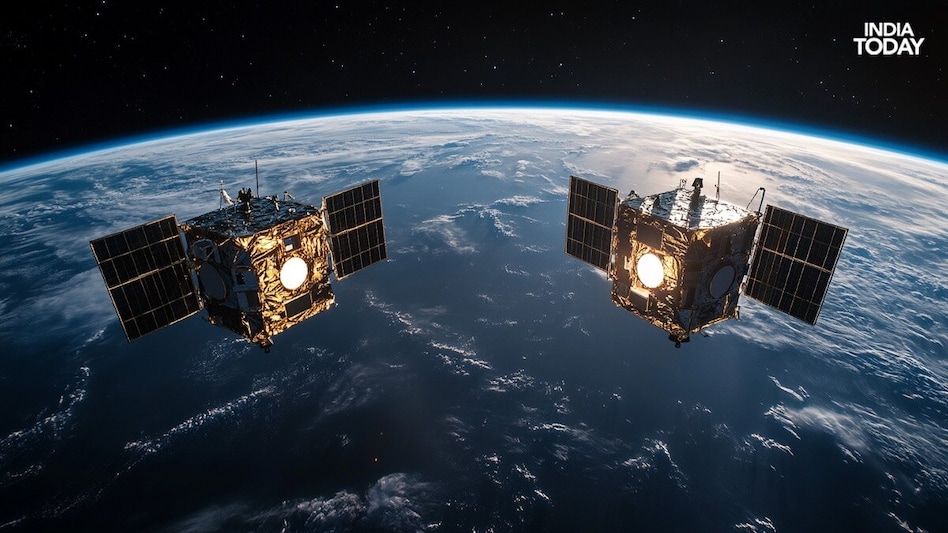
An autonomous satellite docking system enables a chaser spacecraft to approach, align with, capture, and mechanically mate with a target vehicle — WITHOUT continuous human piloting.

🛰️
CHASER → TARGET
One vehicle actively maneuvers toward a passive or semi-passive target
⚙️
GNC SYSTEM
Guidance, Navigation & Control manages the entire approach chain
🔗
SOFT CAPTURE
Low-impact contact (~10 mm/s), rigidization, power & data transfer
Nagarjuna College of Engineering and Technology
Made byBobr AI
02 / TECHNOLOGY

KEY COMPONENTS & TECHNOLOGIES

📡

📡 SENSOR SUITE

GNSS, Laser Range Finder, LIDAR, cameras, videometer, rendezvous sensors, proximity sensors

🧭

🧭 GNC SYSTEM

Guidance: approach path & hold points | Navigation: 6-DOF state estimation | Control: thruster commands

📶

📶 COMMUNICATION

Inter-satellite links (ISL), GNSS-based RODP, VHF/UHF transceivers for state sharing

🤖

🤖 AI & AUTOMATION

Rule-based sequencing, sensor fusion, EKF/UKF filters, fault detection & adaptive control

🔩

🔩 DOCKING MECHANISM

Androgynous peripheral design, soft capture, rigidization, structural hooks, umbilical connection

🛡️

🛡️ FAULT MANAGEMENT

Hold points, retreat modes, redundant sensing, abort logic, non-explosive release

Made byBobr AI
03 / ANALYSIS

ADVANTAGES & DISADVANTAGES

✅ ADVANTAGES

PRECISION UNDER PRESSURE

Tight approach corridors, ~10 mm/s contact velocity, faster than human teleoperation

REDUCED HUMAN INTERVENTION

Lowers crew workload; feasible where comms delay prevents safe manual docking

COST EFFICIENCY & SCALABILITY

Reusable logic across missions; enables fuel depots, orbital factories, space stations

⚠️ DISADVANTAGES

HIGH DEVELOPMENT COST

Extensive HIL, SIL, robotic & OIL testing required; time-consuming validation

SYSTEM COMPLEXITY

Integrated cyber-physical system: sensors, software, propulsion, mechanics — hidden failure modes

FAILURE RISK

Short-range final phase with limited reaction time; sensor faults can cause collision or abort

Made byBobr AI
04 / LITERATURE REVIEW — NASA

ORBITAL EXPRESS & NASA DOCKING SYSTEM

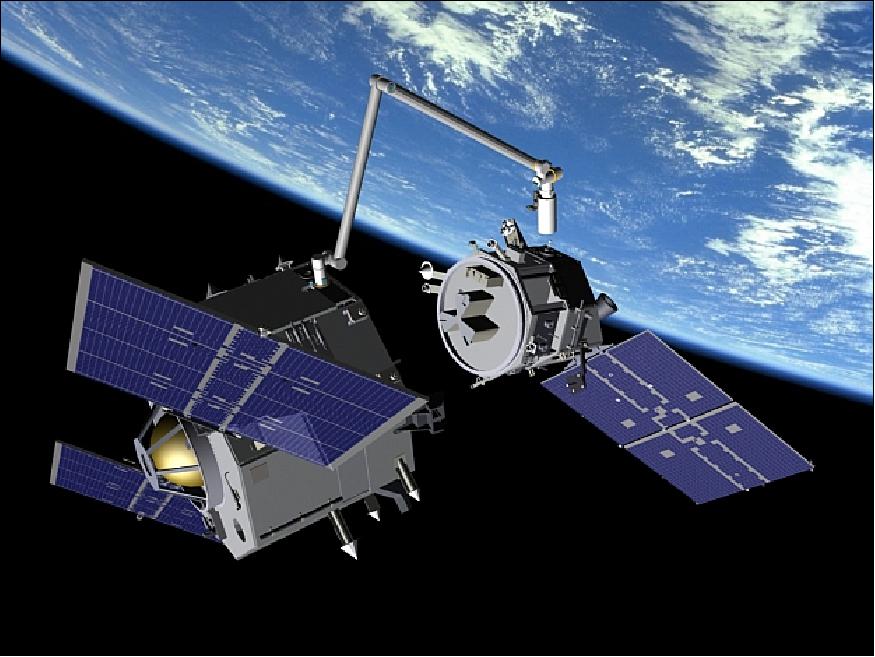
ORBITAL EXPRESS MISSION
Demonstrated fully autonomous rendezvous, docking, hydrazine transfer & orbital unit replacement. Multi-sensor: visible, IR, laser, AVGS.
LESSONS LEARNED
Navigation filter design, sensor behavior under unexpected lighting, and abort-state assumptions are mission-critical design issues.
NASA DOCKING SYSTEM BLOCK 1
Direct-drive electromechanical Stewart Platform with 6 actuators. 12 structural hooks for rigid mate.
CAPTURE ENVELOPE
Axial: 3–6 cm/s | Lateral: ≤4 cm/s | Misalignment: ≤11 cm lateral, ≤5° angular
Source: NASA Technical Reports Server — ntrs.nasa.gov
Made byBobr AI
05 / LITERATURE REVIEW — SPACEX

CREW DRAGON: OPERATIONAL MATURITY

1. 🚀 LIFTOFF — Falcon 9 lofts Dragon to orbit; stages separate
2. 🔄 ORBIT ACTIVATION — Dragon activates propulsion, life support & thermal systems
3. 🔥 PHASING BURNS — Delta-V maneuvers to catch up with ISS
4. 📡 APPROACH INITIATION — Comms link with ISS; final orbit burn
5. 🎯 PROXIMITY OPS — Autonomous approach along docking axis from ~150 m
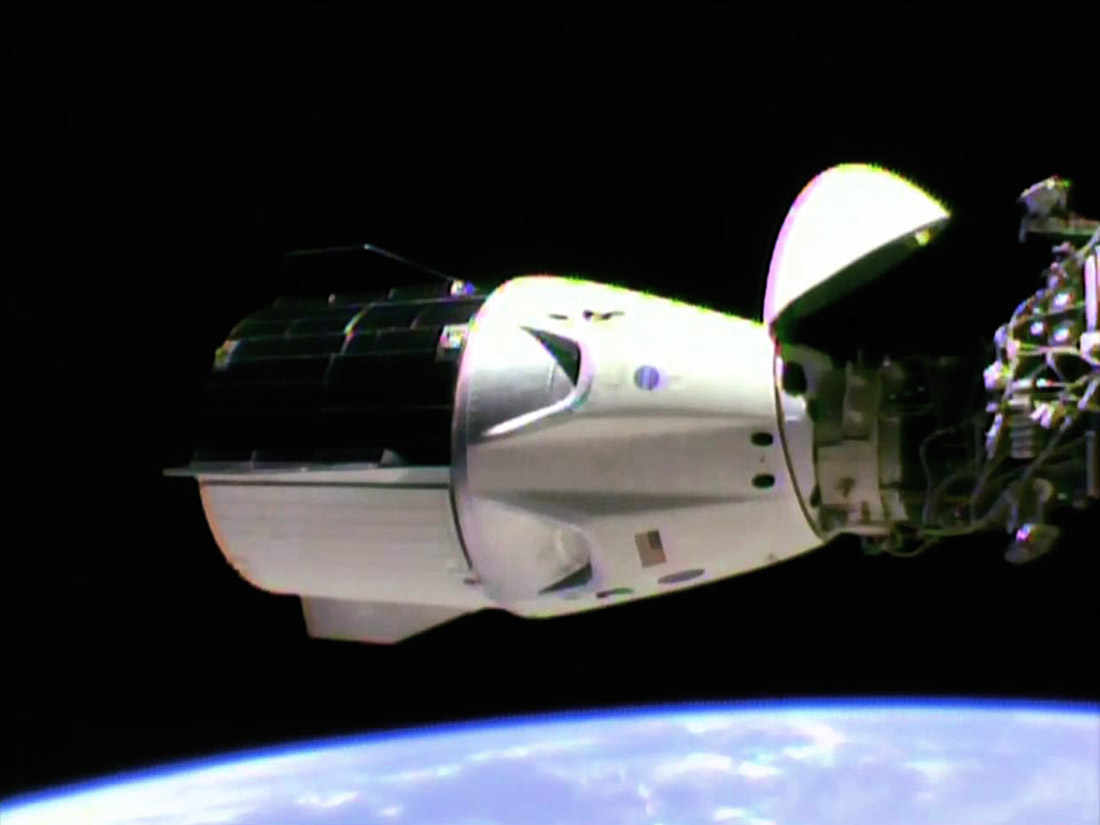
6. 🔗 DOCKING — Final autonomous dock; pressurization, hatch open, crew ingress
KEY FACT: Demo-1: Dragon retreated to ~180 m, then autonomously docked from ~20 m — proving crew-rated autonomous docking.
Source: NASA Space Station Blog / SpaceX Mission ISS — spacex.com
Made byBobr AI
06 / ISRO SpaDeX MISSION

INDIA'S INDIGENOUS SPACE DOCKING EXPERIMENT

SpaDeX — Space Docking Experiment | Launched by PSLV-C60

🗓️ Dec 2024
PSLV-C60 launches both ~220 kg spacecraft into 470 km orbit at 55° inclination
🗓️ Jan 16, 2025
✅ FIRST DOCKING
Successfully demonstrated in LEO
🗓️ Mar 13, 2025
✅ UNDOCKING
Successful separation & post-docking control
🗓️ Apr 20, 2025
✅ SECOND AUTONOMOUS DOCKING
15 m to dock, fully autonomous
🗓️ Apr 21, 2025
✅ BIDIRECTIONAL POWER TRANSFER
~4 minutes between docked satellites
Source: ISRO.gov.in — isro.gov.in/mission_SpaDeX.html
Made byBobr AI
07 / SPADEX — MISSION CONCEPT

MISSION ARCHITECTURE & INDIGENOUS TECHNOLOGIES

Two ~220 kg spacecraft launched simultaneously by PSLV-C60 into 470 km circular orbit (55° inclination). Progressive rendezvous: 20 km → 5 km → 1.5 km → 500 m → 225 m → 15 m → DOCK. After undocking, both satellites operate independently for up to 2 years.

⚙️
⚙️
DOCKING MECHANISM
Low-impact androgynous peripheral system; 450 mm; 2 motors; 10 mm/s approach
📡
📡
SENSOR SUITE (×4)
LRF+retroreflectors (6000–200m), Rendezvous Sensors, PDS, Video Monitor + MES
POWER TRANSFER
Bidirectional electrical power transfer demonstrated between docked satellites
🧭
🧭
RODP PROCESSOR
GNSS-based Novel Relative Orbit Determination & Propagation; carrier-phase differential
📻
📻
ISL COMMUNICATION
Inter-satellite VHF/UHF link with embedded intelligence and state awareness
🤖
🤖
AUTONOMOUS GNC
V-bar strategy with n-Pulse, Glideslope & PV guidance algorithms
🔬
🔬
SIMULATION TESTBEDS
Digital, HIL, SIL, OIL, and robotic simulation validation
Made byBobr AI
08 / COMPARATIVE ANALYSIS

GLOBAL DOCKING MISSIONS — COMPARISON

NASA Orbital Express
Key Feature
Multi-sensor autonomous RPOD
Important Finding
Sensor robustness & filter design are mission-critical
Status
✅ Demonstrated
NASA DS Block 1
Key Feature
Stewart Platform soft capture
Important Finding
Strong tolerance to terminal alignment & rate errors
Status
✅ Operational
ESA ATV
Key Feature
GPS + videometer/telegoniometer
Important Finding
Reliable phased autonomy with high safety supervision
Status
✅ Retired
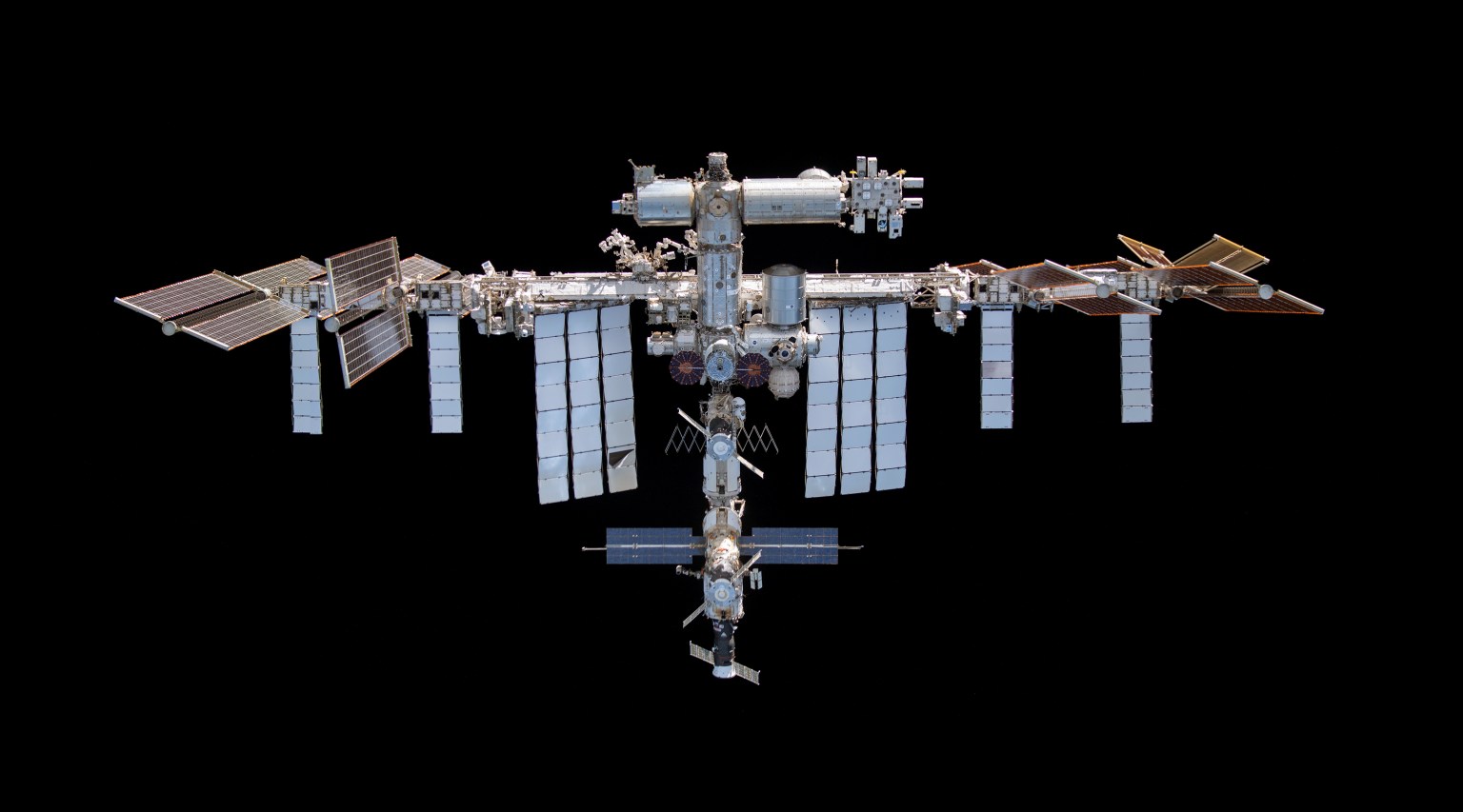
SpaceX Crew Dragon
Key Feature
Autonomous crew-rated ISS docking
Important Finding
Operational proof of mature autonomous docking
Status
✅ Operational
ISRO SpaDeX
Key Feature
Small-sat indigenous sensors + power transfer
Important Finding
National capability with repeat autonomous docking
Status
✅ Achieved 2025
Made byBobr AI
09 / RESEARCH OBJECTIVES

OBJECTIVES OF THE PROPOSED STUDY

01
DEFINE COMPLETE ARCHITECTURE
Design full docking system: sensor suite, relative navigation estimator, guidance logic, attitude & translation control, docking interface, and fault management.
02
ANALYZE NAVIGATION ACCURACY
Study transition from far-range GNSS estimation → close-range optical/laser relative navigation across all approach phases.
03
COMPARE CONTROL STRATEGIES
Evaluate conventional PID & LQR vs. advanced adaptive / AI-assisted control for final approach and disturbance rejection.
04
EVALUATE REALISTIC CONDITIONS
Test under sensor noise, eclipse lighting, comms interruptions, target attitude error, plume disturbance, and actuator uncertainty.
Based on lessons from Orbital Express, ATV, Crew Dragon & SpaDeX
Made byBobr AI
10 / CONCLUSION

KEY TAKEAWAYS

🛰️
LAYERED ARCHITECTURE
Success depends on sensor redundancy, accurate nav, conservative guidance, low-impact capture, & rigorous validation.
🇺🇸
NASA CONTRIBUTION
Contact-tolerant hardware & fault-aware navigation (Orbital Express + DS Block 1).
🚀
SPACEX PROOF
Autonomous docking matured to a highly repeatable operational service.
🇮🇳
ISRO ACHIEVEMENT
SpaDeX: compact, indigenous, cost-effective — docking, undocking, repeat docking, power transfer all proven in 2025.

FUTURE SCOPE

🛢️
Orbital Fuel Depots
🤖
Robotic Servicing
🗑️
Active Debris Removal
🏗️
In-Space Assembly
🌕
Lunar Mission Support (Chandrayaan-4)
A foundation for the future of human spaceflight
Made byBobr AI
11 / REFERENCES
SOURCES & CITATIONS
[1]
ISRO — SpaDeX Mission | isro.gov.in/mission_SpaDeX.html
[2]
ISRO — SpaDeX Undocking Successful, Mar 13, 2025 | isro.gov.in
[3]
ISRO — Second Docking & Power Transfer, Apr 21, 2025 | isro.gov.in
[4]
McFatter et al. — NASA's New Direct Electric Docking System | NASA NTRS 2018 | ntrs.nasa.gov
[5]
Dennehy et al. — Orbital Express Demonstration Mission Summary | NASA NTRS 2011 | ntrs.nasa.gov
[6]
ESA — ATV Rendezvous in Space, Feb 2008 | esa.int
[7]
ESA — ATV Completes Final Automated Docking, Aug 2014 | esa.int
[8]
ESA — State of the Art in Automatic Rendezvous, Apr 2004 | esa.int
[9]
SpaceX — Mission: ISS | spacex.com/humanspaceflight/iss
[10]
NASA — SpaceX Crew Dragon Successfully Docks to Station, Mar 2019 | nasa.gov
[11]
Jasiobedzki et al. — Autonomous Satellite RVD using LIDAR | SPIE 2005
[12]
Guglieri et al. — GNC Algorithms for Spacecraft RVD | Acta Astronautica, 2014
Nagarjuna College of Engineering and Technology — Autonomous Satellite Docking System
May 2026
Made byBobr AI
Bobr AI

DESIGNER-MADE
PRESENTATION,
GENERATED FROM
YOUR PROMPT

Create your own professional slide deck with real images, data charts, and unique design in under a minute.

Generate For Free

Autonomous Satellite Docking: GNC Architecture & Missions

A technical study of autonomous satellite docking, GNC architecture, sensor fusion, and missions like ISRO SpaDeX, SpaceX Crew Dragon, and NASA Orbital Express.

Nagarjuna College of Engineering and Technology

AUTONOMOUS SATELLITE DOCKING SYSTEM

A Study of GNC Architecture, Sensor Fusion & Global Missions

Presented by: Nagarjuna College of Engineering & Technology

May 2026

01 / INTRODUCTION

WHAT IS AUTONOMOUS SATELLITE DOCKING?

An autonomous satellite docking system enables a chaser spacecraft to approach, align with, capture, and mechanically mate with a target vehicle — WITHOUT continuous human piloting.

🛰️

CHASER → TARGET

One vehicle actively maneuvers toward a passive or semi-passive target

⚙️

GNC SYSTEM

Guidance, Navigation & Control manages the entire approach chain

🔗

SOFT CAPTURE

Low-impact contact (~10 mm/s), rigidization, power & data transfer

Nagarjuna College of Engineering and Technology

02 / TECHNOLOGY

KEY COMPONENTS & TECHNOLOGIES

📡

SENSOR SUITE

GNSS, Laser Range Finder, LIDAR, cameras, videometer, rendezvous sensors, proximity sensors

🧭

GNC SYSTEM

Guidance: approach path & hold points | Navigation: 6-DOF state estimation | Control: thruster commands

📶

COMMUNICATION

Inter-satellite links (ISL), GNSS-based RODP, VHF/UHF transceivers for state sharing

🤖

AI & AUTOMATION

Rule-based sequencing, sensor fusion, EKF/UKF filters, fault detection & adaptive control

🔩

DOCKING MECHANISM

Androgynous peripheral design, soft capture, rigidization, structural hooks, umbilical connection

🛡️

FAULT MANAGEMENT

Hold points, retreat modes, redundant sensing, abort logic, non-explosive release

03 / ANALYSIS

ADVANTAGES & DISADVANTAGES

✅ ADVANTAGES

⚠️ DISADVANTAGES

PRECISION UNDER PRESSURE

Tight approach corridors, ~10 mm/s contact velocity, faster than human teleoperation

REDUCED HUMAN INTERVENTION

Lowers crew workload; feasible where comms delay prevents safe manual docking

COST EFFICIENCY & SCALABILITY

Reusable logic across missions; enables fuel depots, orbital factories, space stations

HIGH DEVELOPMENT COST

Extensive HIL, SIL, robotic & OIL testing required; time-consuming validation

SYSTEM COMPLEXITY

Integrated cyber-physical system: sensors, software, propulsion, mechanics — hidden failure modes

FAILURE RISK

Short-range final phase with limited reaction time; sensor faults can cause collision or abort

04 / LITERATURE REVIEW — NASA

ORBITAL EXPRESS & NASA DOCKING SYSTEM

ORBITAL EXPRESS MISSION

Demonstrated fully autonomous rendezvous, docking, hydrazine transfer & orbital unit replacement. Multi-sensor: visible, IR, laser, AVGS.

LESSONS LEARNED

Navigation filter design, sensor behavior under unexpected lighting, and abort-state assumptions are mission-critical design issues.

NASA DOCKING SYSTEM BLOCK 1

Direct-drive electromechanical Stewart Platform with 6 actuators. 12 structural hooks for rigid mate.

CAPTURE ENVELOPE

Axial: 3–6 cm/s | Lateral: ≤4 cm/s | Misalignment: ≤11 cm lateral, ≤5° angular

Source: NASA Technical Reports Server — ntrs.nasa.gov

05 / LITERATURE REVIEW — SPACEX

CREW DRAGON: OPERATIONAL MATURITY

<strong style='color:#ffffff; font-family:Orbitron, sans-serif; letter-spacing:1px;'>1. 🚀 LIFTOFF</strong> <span style='color:#aebdd2;'>— Falcon 9 lofts Dragon to orbit; stages separate</span>

<strong style='color:#ffffff; font-family:Orbitron, sans-serif; letter-spacing:1px;'>2. 🔄 ORBIT ACTIVATION</strong> <span style='color:#aebdd2;'>— Dragon activates propulsion, life support & thermal systems</span>

<strong style='color:#ffffff; font-family:Orbitron, sans-serif; letter-spacing:1px;'>3. 🔥 PHASING BURNS</strong> <span style='color:#aebdd2;'>— Delta-V maneuvers to catch up with ISS</span>

<strong style='color:#ffffff; font-family:Orbitron, sans-serif; letter-spacing:1px;'>4. 📡 APPROACH INITIATION</strong> <span style='color:#aebdd2;'>— Comms link with ISS; final orbit burn</span>

<strong style='color:#ffffff; font-family:Orbitron, sans-serif; letter-spacing:1px;'>5. 🎯 PROXIMITY OPS</strong> <span style='color:#aebdd2;'>— Autonomous approach along docking axis from ~150 m</span>

<strong style='color:#ffffff; font-family:Orbitron, sans-serif; letter-spacing:1px;'>6. 🔗 DOCKING</strong> <span style='color:#aebdd2;'>— Final autonomous dock; pressurization, hatch open, crew ingress</span>

Demo-1: Dragon retreated to ~180 m, then autonomously docked from ~20 m — proving crew-rated autonomous docking.

Source: NASA Space Station Blog / SpaceX Mission ISS — spacex.com

06 / ISRO SpaDeX MISSION

INDIA'S INDIGENOUS SPACE DOCKING EXPERIMENT

SpaDeX — Space Docking Experiment | Launched by PSLV-C60

Source: ISRO.gov.in — isro.gov.in/mission_SpaDeX.html

Dec 2024

PSLV-C60 launches both ~220 kg spacecraft into 470 km orbit at 55° inclination

Jan 16, 2025

FIRST DOCKING

Successfully demonstrated in LEO

Mar 13, 2025

UNDOCKING

Successful separation & post-docking control

Apr 20, 2025

SECOND AUTONOMOUS DOCKING

15 m to dock, fully autonomous

Apr 21, 2025

BIDIRECTIONAL POWER TRANSFER

~4 minutes between docked satellites

07 / SPADEX — MISSION CONCEPT

MISSION ARCHITECTURE & INDIGENOUS TECHNOLOGIES

Two ~220 kg spacecraft launched simultaneously by PSLV-C60 into 470 km circular orbit (55° inclination). Progressive rendezvous: 20 km → 5 km → 1.5 km → 500 m → 225 m → 15 m → DOCK. After undocking, both satellites operate independently for up to 2 years.

⚙️

DOCKING MECHANISM

Low-impact androgynous peripheral system; 450 mm; 2 motors; 10 mm/s approach

📡

SENSOR SUITE (×4)

LRF+retroreflectors (6000–200m), Rendezvous Sensors, PDS, Video Monitor + MES

POWER TRANSFER

Bidirectional electrical power transfer demonstrated between docked satellites

🧭

RODP PROCESSOR

GNSS-based Novel Relative Orbit Determination & Propagation; carrier-phase differential

📻

ISL COMMUNICATION

Inter-satellite VHF/UHF link with embedded intelligence and state awareness

🤖

AUTONOMOUS GNC

V-bar strategy with n-Pulse, Glideslope & PV guidance algorithms

🔬

SIMULATION TESTBEDS

Digital, HIL, SIL, OIL, and robotic simulation validation

08 / COMPARATIVE ANALYSIS

GLOBAL DOCKING MISSIONS — COMPARISON

NASA Orbital Express

Multi-sensor autonomous RPOD

Sensor robustness & filter design are mission-critical

✅ Demonstrated

NASA DS Block 1

Stewart Platform soft capture

Strong tolerance to terminal alignment & rate errors

✅ Operational

ESA ATV

GPS + videometer/telegoniometer

Reliable phased autonomy with high safety supervision

✅ Retired

SpaceX Crew Dragon

Autonomous crew-rated ISS docking

Operational proof of mature autonomous docking

✅ Operational

ISRO SpaDeX

Small-sat indigenous sensors + power transfer

National capability with repeat autonomous docking

✅ Achieved 2025

09 / RESEARCH OBJECTIVES

OBJECTIVES OF THE PROPOSED STUDY

01

DEFINE COMPLETE ARCHITECTURE

Design full docking system: sensor suite, relative navigation estimator, guidance logic, attitude & translation control, docking interface, and fault management.

02

ANALYZE NAVIGATION ACCURACY

Study transition from far-range GNSS estimation → close-range optical/laser relative navigation across all approach phases.

03

COMPARE CONTROL STRATEGIES

Evaluate conventional PID & LQR vs. advanced adaptive / AI-assisted control for final approach and disturbance rejection.

04

EVALUATE REALISTIC CONDITIONS

Test under sensor noise, eclipse lighting, comms interruptions, target attitude error, plume disturbance, and actuator uncertainty.

Based on lessons from Orbital Express, ATV, Crew Dragon & SpaDeX

10 / CONCLUSION

KEY TAKEAWAYS

🛰️

LAYERED ARCHITECTURE

Success depends on sensor redundancy, accurate nav, conservative guidance, low-impact capture, & rigorous validation.

🇺🇸

NASA CONTRIBUTION

Contact-tolerant hardware & fault-aware navigation (Orbital Express + DS Block 1).

🚀

SPACEX PROOF

Autonomous docking matured to a highly repeatable operational service.

🇮🇳

ISRO ACHIEVEMENT

SpaDeX: compact, indigenous, cost-effective — docking, undocking, repeat docking, power transfer all proven in 2025.

FUTURE SCOPE

🛢️

Orbital Fuel Depots

🤖

Robotic Servicing

🗑️

Active Debris Removal

🏗️

In-Space Assembly

🌕

Lunar Mission Support (Chandrayaan-4)

A foundation for the future of human spaceflight

11 / REFERENCES

SOURCES & CITATIONS

ISRO — SpaDeX Mission | isro.gov.in/mission_SpaDeX.html

ISRO — SpaDeX Undocking Successful, Mar 13, 2025 | isro.gov.in

ISRO — Second Docking & Power Transfer, Apr 21, 2025 | isro.gov.in

McFatter et al. — NASA's New Direct Electric Docking System | NASA NTRS 2018 | ntrs.nasa.gov

Dennehy et al. — Orbital Express Demonstration Mission Summary | NASA NTRS 2011 | ntrs.nasa.gov

ESA — ATV Rendezvous in Space, Feb 2008 | esa.int

ESA — ATV Completes Final Automated Docking, Aug 2014 | esa.int

ESA — State of the Art in Automatic Rendezvous, Apr 2004 | esa.int

SpaceX — Mission: ISS | spacex.com/humanspaceflight/iss

NASA — SpaceX Crew Dragon Successfully Docks to Station, Mar 2019 | nasa.gov

Jasiobedzki et al. — Autonomous Satellite RVD using LIDAR | SPIE 2005

Guglieri et al. — GNC Algorithms for Spacecraft RVD | Acta Astronautica, 2014

Nagarjuna College of Engineering and Technology — Autonomous Satellite Docking System

May 2026