






Made byBobr AI

Graph Coloring: Chromatic Numbers & Four Color Theorem

Explore graph theory concepts including chromatic numbers, the Four Color Theorem, and real-world applications in scheduling and networks.

#graph-theory#mathematics#discrete-math#algorithms#computer-science#four-color-theorem#education
Watch
Pitch

Graph Coloring

Chromatic Numbers, The Four Color Theorem & Real-World Applications

Mathematics | Graph Theory
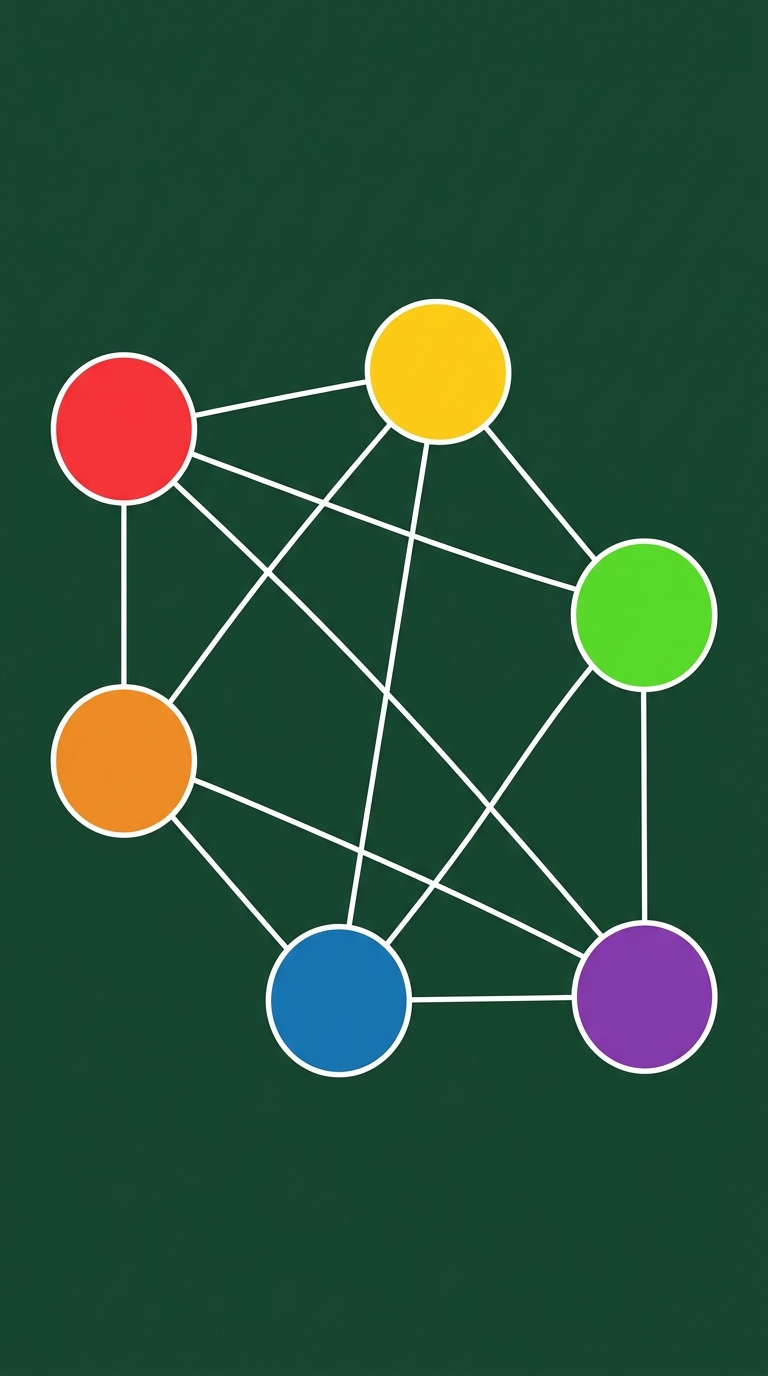
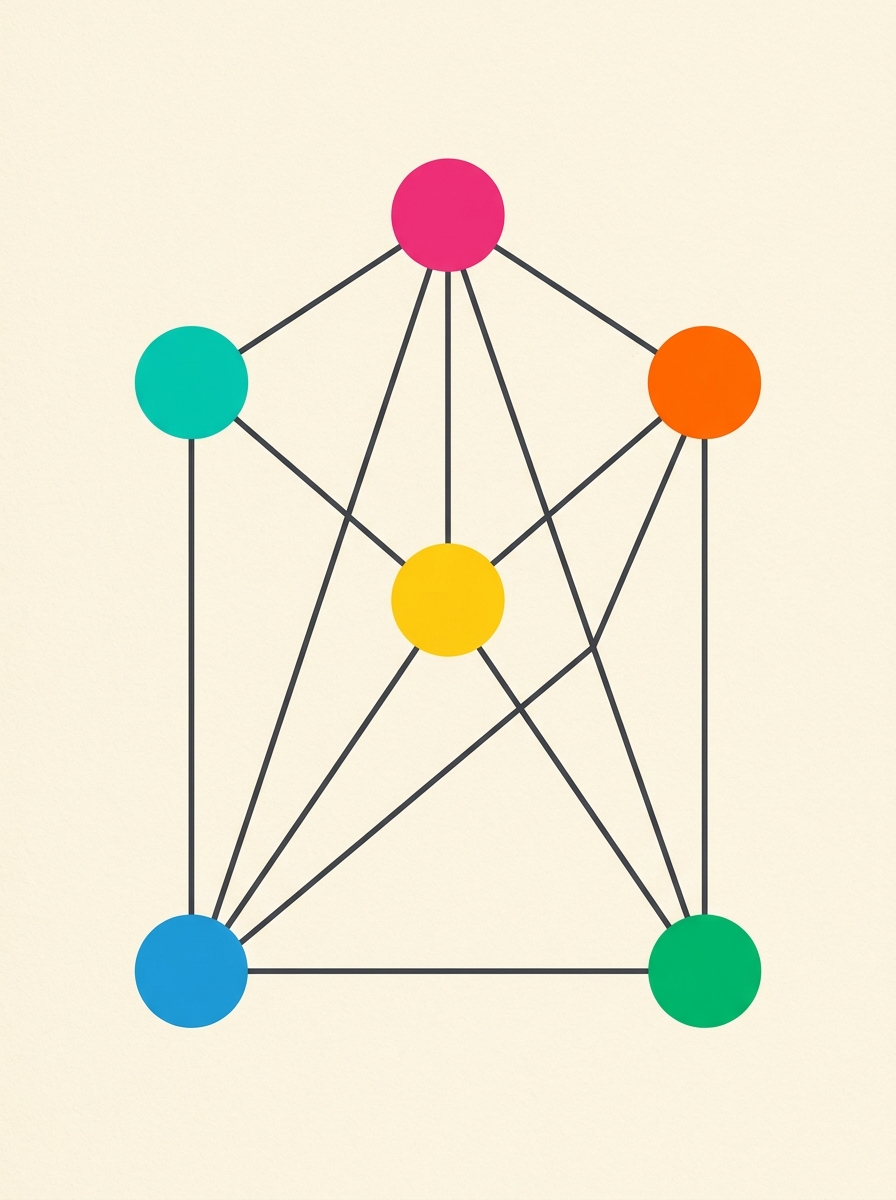
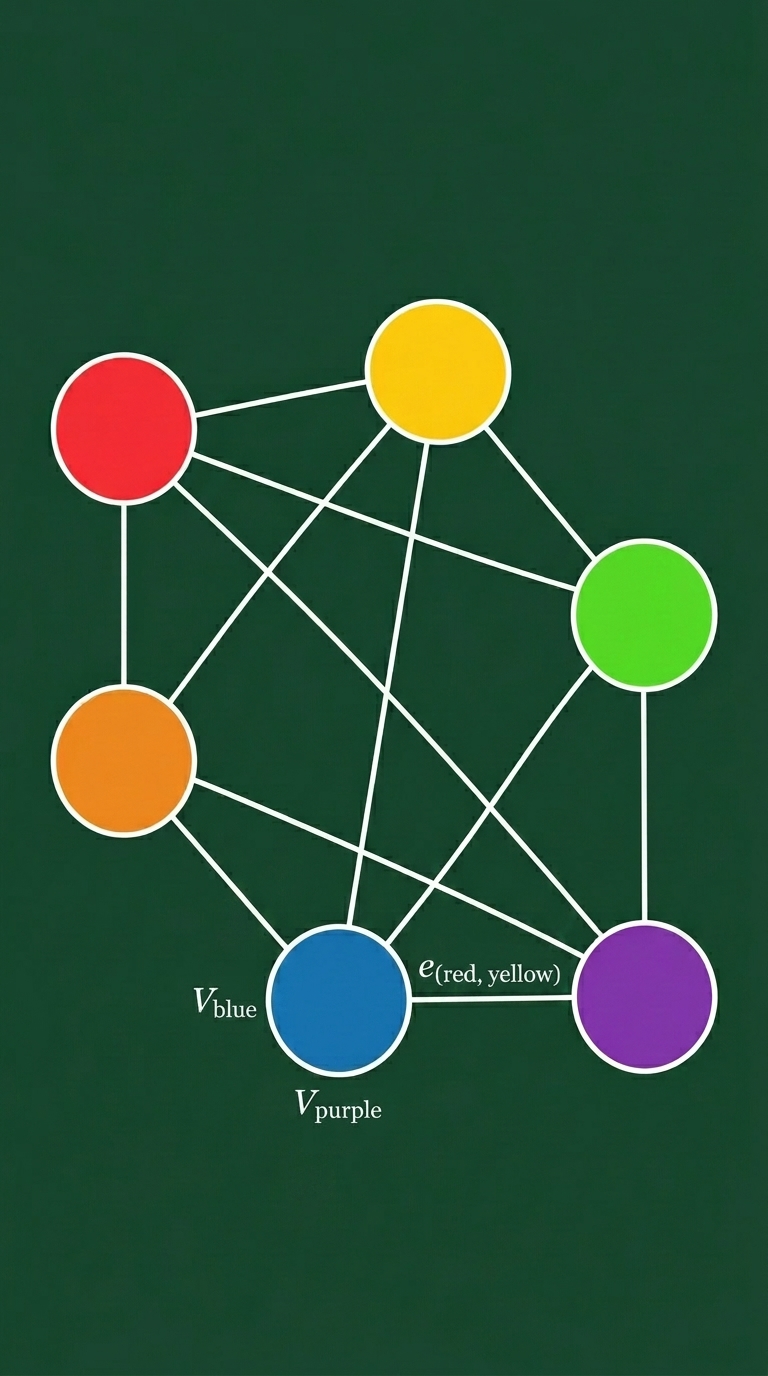
Colorful mathematical graph illustration
Made byBobr AI

Examples of Chromatic Numbers

Path Graph

Vertices connected in a straight line • Alternate two colors

→ χ(G) = 2

Even Cycle

Colors alternate perfectly • Example: Square graph

→ χ(G) = 2

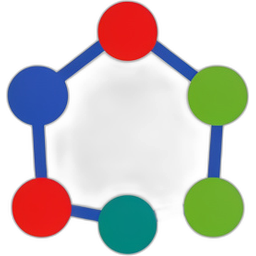
Odd Cycle

Alternating pattern breaks at last vertex • A third color is needed

→ χ(G) = 3

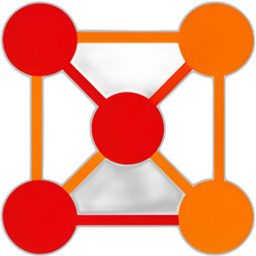
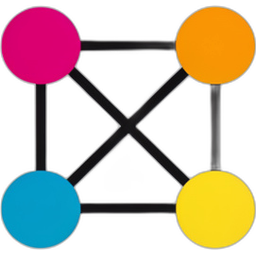
Complete Graph K₄

Every vertex connects to every other • No color can be reused

→ χ(G) = 4

In a complete graph with n vertices, the chromatic number is n.

Made byBobr AI

Applications of Graph Coloring

Real-world conflict problems solved through coloring.

Exam Scheduling Icon

Exam Scheduling

Subjects = vertices. Edge = shared students. Same-color subjects scheduled together.

Compiler Design Icon

Compiler Design

Variables sharing CPU registers are colored differently to avoid conflicts.

Mobile Networks Icon

Mobile Networks

Nearby towers use different frequencies — each frequency acts as a color.

Sudoku Icon

Sudoku

Numbers behave like colors. Constraints mirror graph coloring rules.

Graph coloring converts conflict problems into coloring problems.
Made byBobr AI

Introduction to the Four Color Problem

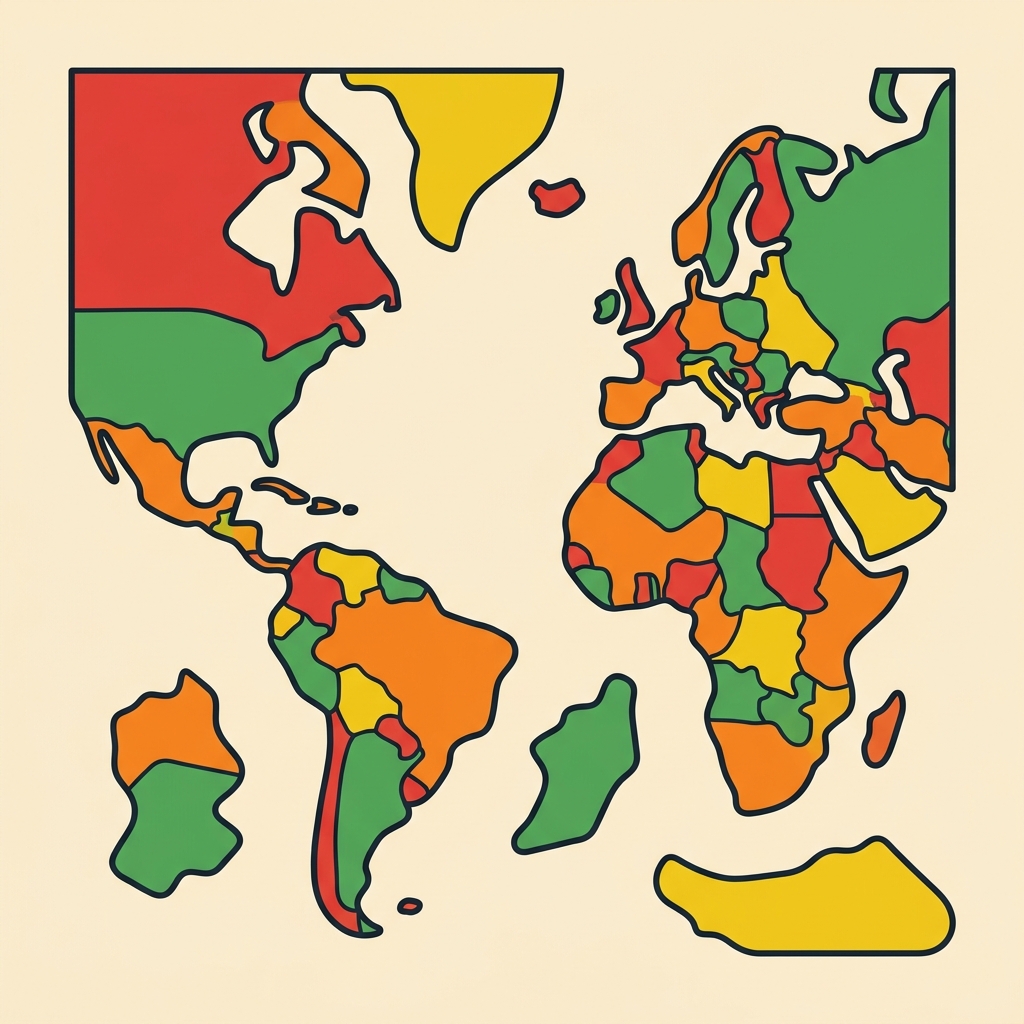
"Can any map always be colored using only four colors?"

Condition: Neighboring countries cannot share the same color.

This became one of the most famous problems in graph theory.

→ Each region = vertex. Shared border = edge.

4-colored map illustration

Example: A 4-colored map

Made byBobr AI

Four Color Theorem

Every planar graph can be colored using at most four colors such that adjacent regions do not share the same color.

Graph Icon

What is Planar?

A graph that can be drawn on a plane without any edges crossing.

Key Insight

Even the most complex maps require only 4 colors. No map has ever required 5 colors.

No map has EVER required 5 colors.
Made byBobr AI

History of the Four Color Problem

1852 Francis Guthrie

First proposed the four color conjecture while coloring a map of England.

1852–1976 Many Failed Proofs

For over 100 years, mathematicians attempted to prove it — all failed.

1976 Kenneth Appel & Wolfgang Haken

Finally proved it using a computer — one of the first major theorems solved with computer assistance.

First major mathematical theorem proved with the help of a computer.
Made byBobr AI

Why Was It Difficult?

1

Infinite possible maps — no finite set of cases to check

2

Complex region arrangements — unpredictable configurations

3

Enormous number of cases — too many for any human to verify

Traditional Proofs

Humans could not manually verify all possibilities

Computer-Assisted

Checked thousands of configurations automatically

Tangled complex graph
Made byBobr AI

Graph Coloring Algorithms

Greedy Coloring Algorithm

1
Pick a vertex
2
Assign the smallest available color
3
Continue sequentially through all vertices
✓ Simple & fast
⚠ May not give minimum colors

Welsh-Powell Algorithm

Sort vertices by degree (highest first)
Color vertices with highest degree first
Usually gives better results than greedy
Applications
Scheduling
Optimization
Network Allocation

Greedy = Fast. Welsh-Powell = Smarter order.

Made byBobr AI
Watermark

Complexity & Challenges

Graph coloring is NP-hard.
As graphs grow larger, finding the exact minimum number of colors becomes exponentially more difficult.
Easy: small graphs Impossible: large graphs
NP-Hard Threshold
The Problem
No fast universal algorithm exists for all graphs.
The Solutions
Approximation algorithms & Heuristics used in real systems.
Made byBobr AI

Modern Applications

AI & Machine Learning

Used in constraint solving, optimization, and resource allocation problems.

Wireless Communication

Prevents signal interference by assigning different frequencies to nearby towers.

Operating Systems

Efficient register and resource allocation for processes running simultaneously.

Transportation

Train scheduling and traffic signal management to avoid conflicts.

Made byBobr AI

Summary

Check

Graph coloring prevents conflicts between connected elements.

Check

The chromatic number gives the minimum colors required.

Check

Planar maps require at most four colors — the Four Color Theorem.

Check

Applications exist across scheduling, networks, AI, and beyond.

Graph Coloring — Key Takeaways
Decorative Graph Image
Made byBobr AI

Quiz Time! 🎯

Let's test what we've learned.

Can a triangle graph be colored using only 2 colors?

Yes ✓
No ✗
Answer Revealed

Answer: No! A triangle is an odd cycle (3 vertices all connected). The last vertex always conflicts — you need 3 colors. χ(G) = 3

Graph Icon

Think before you answer!

Made byBobr AI

Thank You

Any questions?

Graph Coloring — Mathematics & Graph Theory
Colorful mathematical graph illustration
Made byBobr AI
Bobr AI

DESIGNER-MADE
PRESENTATION,
GENERATED FROM
YOUR PROMPT

Create your own professional slide deck with real images, data charts, and unique design in under a minute.

Generate For Free

Graph Coloring: Chromatic Numbers & Four Color Theorem

Explore graph theory concepts including chromatic numbers, the Four Color Theorem, and real-world applications in scheduling and networks.

Graph Coloring

Chromatic Numbers, The Four Color Theorem & Real-World Applications

Mathematics | Graph Theory

Examples of Chromatic Numbers

Path Graph

Vertices connected in a straight line • Alternate two colors

→ χ(G) = 2

Even Cycle

Colors alternate perfectly • Example: Square graph

→ χ(G) = 2

Odd Cycle

Alternating pattern breaks at last vertex • A third color is needed

→ χ(G) = 3

Complete Graph K₄

Every vertex connects to every other • No color can be reused

→ χ(G) = 4

In a complete graph with n vertices, the chromatic number is n.

Applications of Graph Coloring

Real-world conflict problems solved through coloring.

Exam Scheduling

Subjects = vertices. Edge = shared students. Same-color subjects scheduled together.

Compiler Design

Variables sharing CPU registers are colored differently to avoid conflicts.

Mobile Networks

Nearby towers use different frequencies — each frequency acts as a color.

Sudoku

Numbers behave like colors. Constraints mirror graph coloring rules.

Graph coloring converts conflict problems into coloring problems.

Introduction to the Four Color Problem

"Can any map always be colored using only four colors?"

Neighboring countries cannot share the same color.

This became one of the most famous problems in graph theory.

→ Each region = vertex. Shared border = edge.

Example: A 4-colored map

Four Color Theorem

Every planar graph can be colored using at most four colors such that adjacent regions do not share the same color.

What is Planar?

A graph that can be drawn on a plane without any edges crossing.

Key Insight

Even the most complex maps require only 4 colors. No map has ever required 5 colors.

No map has EVER required 5 colors.

History of the Four Color Problem

1852

Francis Guthrie

First proposed the four color conjecture while coloring a map of England.

1852–1976

Many Failed Proofs

For over 100 years, mathematicians attempted to prove it — all failed.

1976

Kenneth Appel & Wolfgang Haken

Finally proved it using a computer — one of the first major theorems solved with computer assistance.

First major mathematical theorem proved with the help of a computer.

Why Was It Difficult?

Infinite possible maps

— no finite set of cases to check

Complex region arrangements

— unpredictable configurations

Enormous number of cases

— too many for any human to verify

Traditional Proofs

Humans could not manually verify all possibilities

Computer-Assisted

Checked thousands of configurations automatically

Graph Coloring Algorithms

Greedy Coloring Algorithm

Pick a vertex

Assign the smallest available color

Continue sequentially through all vertices

✓ Simple & fast

⚠ May not give minimum colors

Welsh-Powell Algorithm

Sort vertices by degree (highest first)

Color vertices with highest degree first

Usually gives better results than greedy

Scheduling

Optimization

Network Allocation

Greedy = Fast. Welsh-Powell = Smarter order.

Complexity & Challenges

Graph coloring is NP-hard.

As graphs grow larger, finding the exact minimum number of colors becomes exponentially more difficult.

Easy: small graphs

Impossible: large graphs

The Problem

No fast universal algorithm exists for all graphs.

The Solutions

Approximation algorithms & Heuristics used in real systems.

Modern Applications

AI & Machine Learning

Used in constraint solving, optimization, and resource allocation problems.

Wireless Communication

Prevents signal interference by assigning different frequencies to nearby towers.

Operating Systems

Efficient register and resource allocation for processes running simultaneously.

Transportation

Train scheduling and traffic signal management to avoid conflicts.

Summary

Graph coloring prevents conflicts between connected elements.

The chromatic number gives the minimum colors required.

Planar maps require at most four colors — the Four Color Theorem.

Applications exist across scheduling, networks, AI, and beyond.

Graph Coloring — Key Takeaways

Quiz Time! 🎯

Let's test what we've learned.

Can a triangle graph be colored using only 2 colors?

Yes ✓

No ✗

Answer: No!

A triangle is an odd cycle (3 vertices all connected). The last vertex always conflicts — you need 3 colors. χ(G) = 3

Think before you answer!

Thank You

Any questions?

Graph Coloring — Mathematics & Graph Theory