



Democracy Explained: Principles, Pillars, and Challenges
Explore the fundamentals of democracy, from its 4 pillars to the separation of powers and modern challenges like misinformation and polarization.
DEMOCRACY: POWER TO THE PEOPLE
A Global Overview of Principles, Mechanics, and Future Challenges
WHAT IS DEMOCRACY?
DEMOS = PEOPLE
KRATOS = POWER
A system of government where the citizens exercise power by voting. In a direct democracy, the people decide on policies directly. In a representative democracy, they elect officials to represent them.
THE 4 PILLARS
FREE & FAIR ELECTIONS
ACTIVE PARTICIPATION
HUMAN RIGHTS PROTECTION
RULE OF LAW
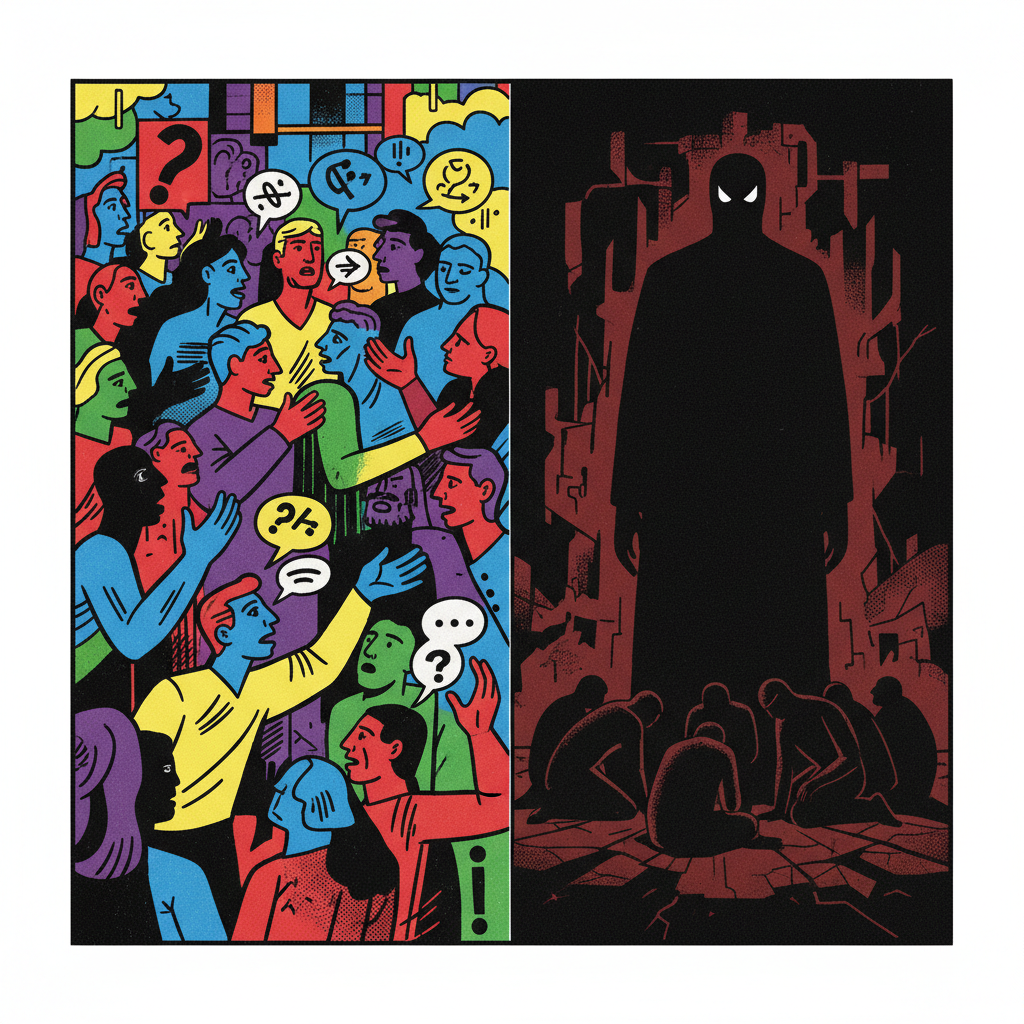
DEMOCRACY vs. AUTHORITARIANISM
• Power is shared<br>• Freedom of Speech<br>• Rulers elected by people<br>• Rule of Law applies to all
• Power is concentrated<br>• Censorship & Control<br>• Rulers hold power indefinitely<br>• Rulers above the law
HOW IT WORKS: SEPARATION OF POWERS
LEGISLATIVE: Makes the laws
EXECUTIVE: Enforces the laws
JUDICIAL: Interprets the laws
LEGISLATIVE
Makes the laws, debates public policy, and allocates budget.
EXECUTIVE
Enforces the laws, leads the armed forces, and runs the state bureaucracy.
JUDICIAL
Interprets the laws and decides if laws violate the constitution.
GLOBAL FREEDOM STATUS (2023)
Data shows the number of countries categorized by freedom level. Only about 43% of countries are considered fully free.
CHALLENGE #1: MISINFORMATION
Fake news spreads 6x faster than truth. Democracy relies on informed citizens. If we don't know the truth, we can't vote effectively.
CHALLENGE #2: POLARIZATION
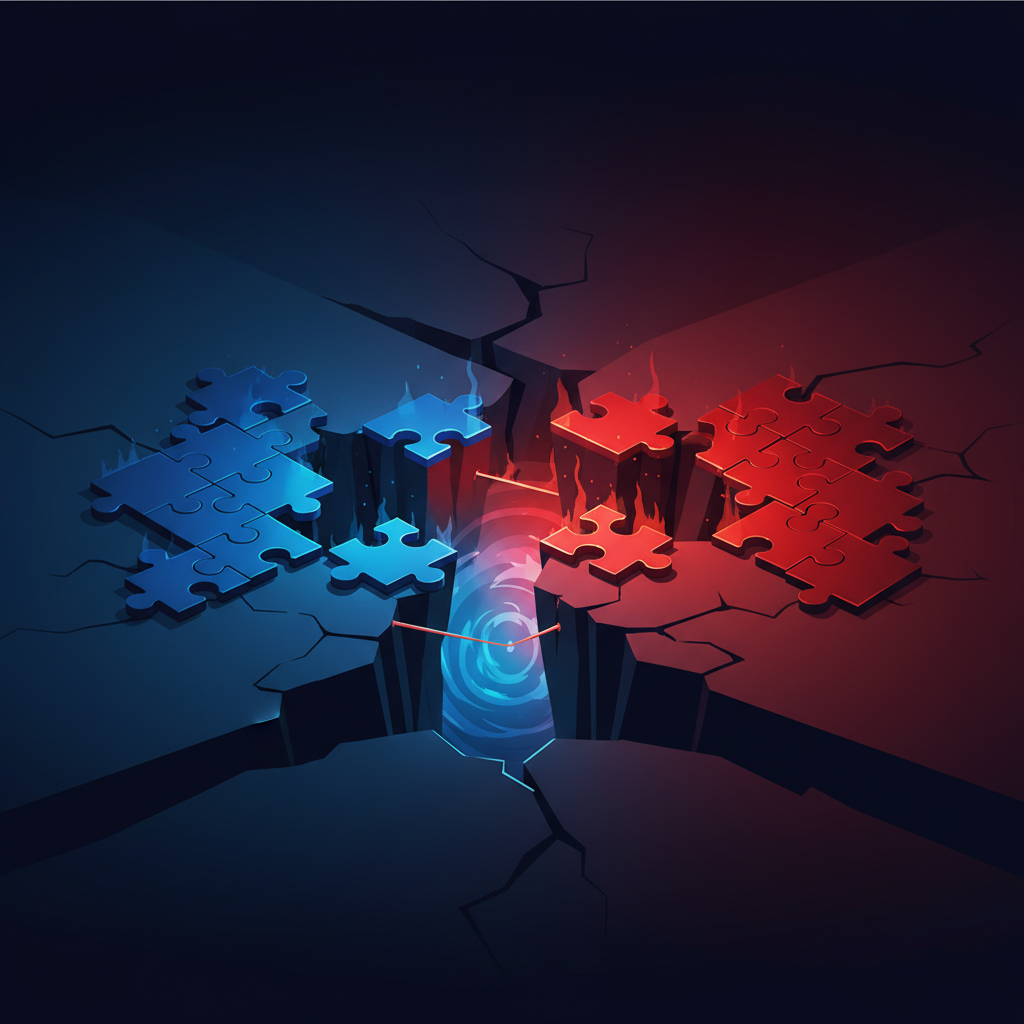
When political groups stop talking to each other, democracy stalls. We need compromise, not conflict.
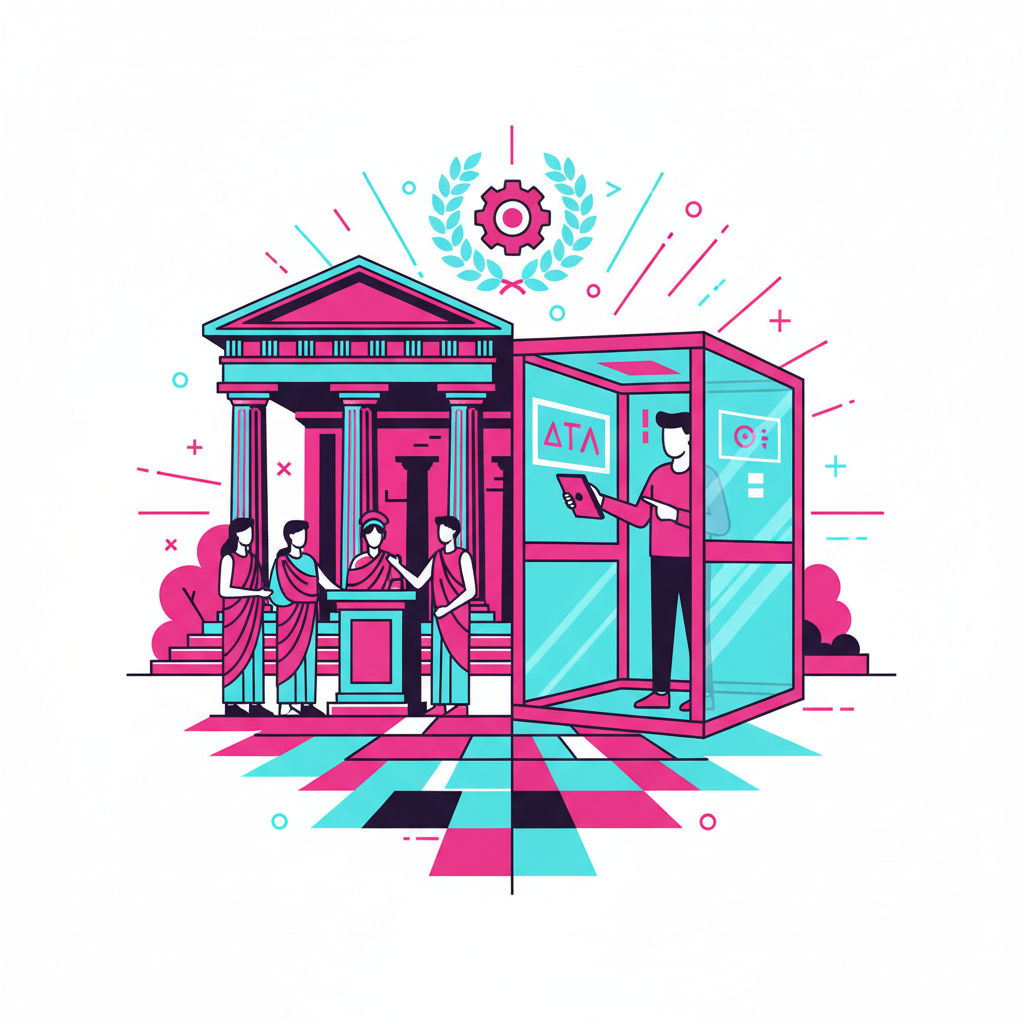
THE FUTURE IS DIGITAL
DIGITAL VOTING
YOUTH ACTIVISM
TRANSPARENCY APPS
YOUR VOICE MATTERS.
Democracy is not a spectator sport. Get informed. Get involved.
- democracy
- civics
- government
- political-science
- human-rights
- rule-of-law
- education