





















Motion of Charged Particles in Electric Fields | High School Physics
Learn about the mass, charge, and spin of electrons, protons, and alpha particles and how they behave in uniform electric fields.
Motion of Charged Particles
in Electric Fields
Exploring electrons, protons, alpha particles & electric fields
Physics | High School Level
What We'll Cover Today
Review of Charged Particles
Basic attributes, electron structure, and fundamental context.
Properties of Charged Particles
Mass, charge magnitude behavior, and isolated systems.
Review of Electric Fields
Visualizing field lines, mapping paths, and field strength.
Motion in Electric Fields
Predicting trajectories, acceleration, and applied forces.
01
Review of Charged Particles
Electron · Proton · Alpha Particle
The Electron ⚡
Symbol
e⁻
Charge
-1.6 × 10⁻¹⁹ C
Mass
9.11 × 10⁻³¹ kg
Spin
1/2
The electron is a negatively charged subatomic particle found in the outer shells of atoms. It is the lightest charged particle.
Did you know?
Electrons can travel at nearly the speed of light!
The Proton 🔴
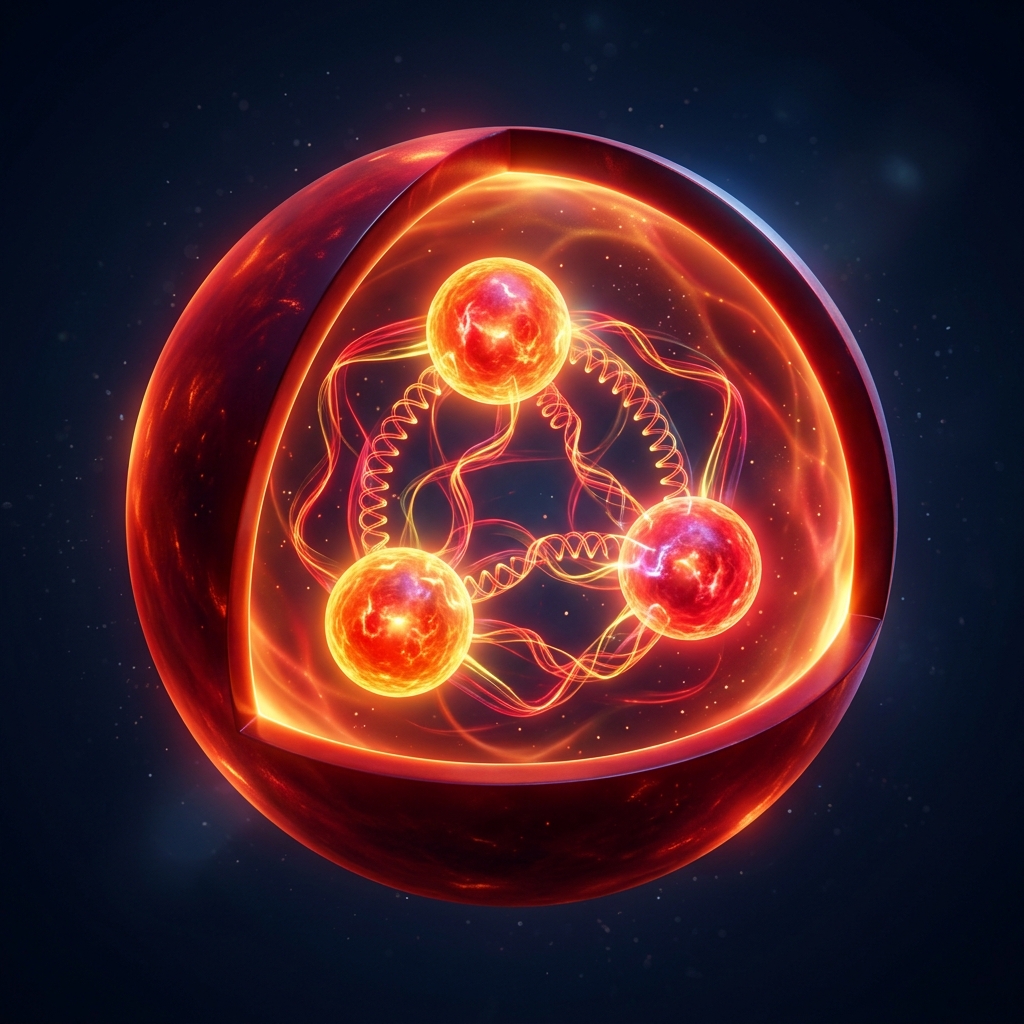
The proton is a positively charged particle found in the nucleus of every atom. It defines the element's atomic number.
p⁺
+1.6 × 10⁻¹⁹ C
1.67 × 10⁻²⁷ kg
(about 1836× heavier than electron)
1/2
A proton is made of 2 up quarks and 1 down quark!
The Alpha Particle
α
An alpha particle is identical to a helium-4 nucleus. It is emitted during alpha radioactive decay.
α or ⁴He²⁺
+3.2 × 10⁻¹⁹ C = +2e
6.64 × 10⁻²⁷ kg
(4× proton mass)
2 protons + 2 neutrons
0
Alpha particles are stopped by a sheet of paper!
Comparing Charged Particles
Physics | High School Level
02
Properties of Charged Particles
Mass · Charge · Spin
Mass ⚖️
Electron
9.11 × 10⁻³¹ kg
Proton
1.67 × 10⁻²⁷ kg
Alpha Particle
6.64 × 10⁻²⁷ kg
Mass determines how much a particle resists acceleration
Heavier particles curve less in a field
The electron is ~1836× lighter than a proton
Alpha particle = ~4× proton mass
Lighter particles accelerate more easily in electric fields!
Electric Charge
Negative Charge
-1.6 × 10⁻¹⁹ C
Electrons carry negative charge — they are attracted to positive poles
Neutral
0 C
Neutrons carry no charge
Positive Charge
+1.6 × 10⁻¹⁹ C
+3.2 × 10⁻¹⁹ C
Protons and alpha particles carry positive charge
The elementary charge e = 1.6 × 10⁻¹⁹ C is the fundamental unit of charge.
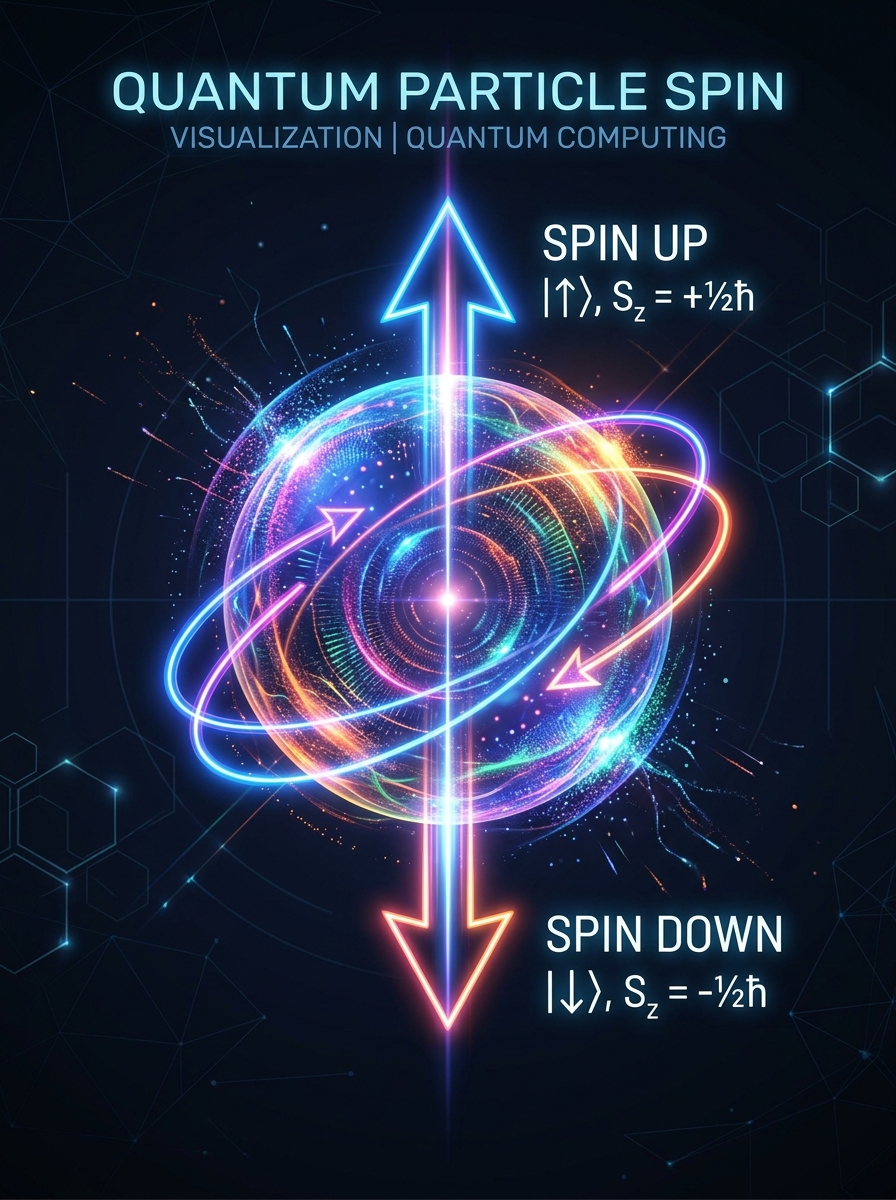
Spin <span style="text-shadow: 0 0 30px rgba(0, 255, 136, 0.8);">🌀</span>
Spin is purely quantum — there's no classical equivalent!
What is Spin?
A quantum mechanical property — like the particle is spinning on its axis (but not literally!)
Electron
Spin 1/2, Fermion
Proton
Spin 1/2, Fermion
Alpha Particle
Spin 0, Boson
Spin affects how particles behave in magnetic fields (Stern-Gerlach experiment)
03
Review of Electric Fields
Definition · Field Lines · Electric Force
What is an Electric Field? ⚡
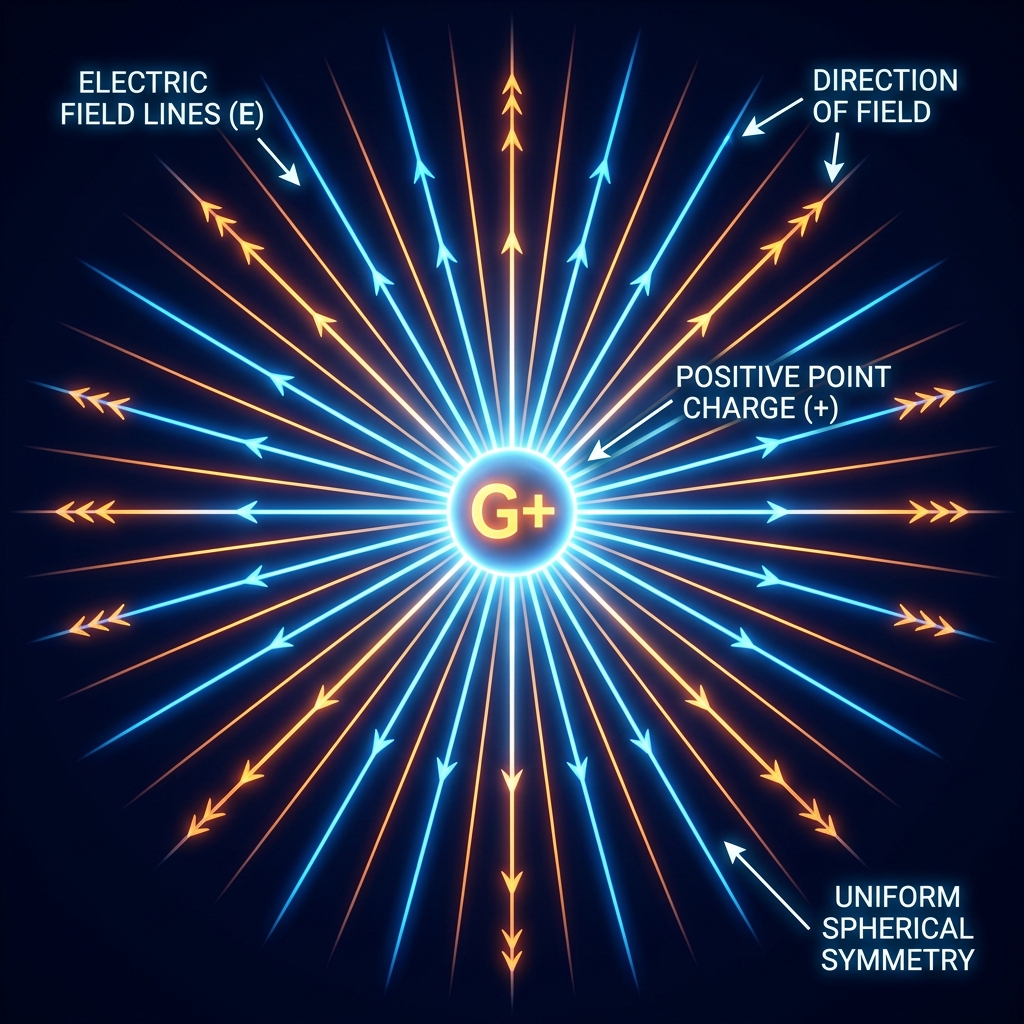
An electric field is a region of space where a charged particle experiences a force.
E = F / q
Electric field (N/C)
Force (N)
Charge (C)
Electric field is a VECTOR — it has both magnitude and direction.
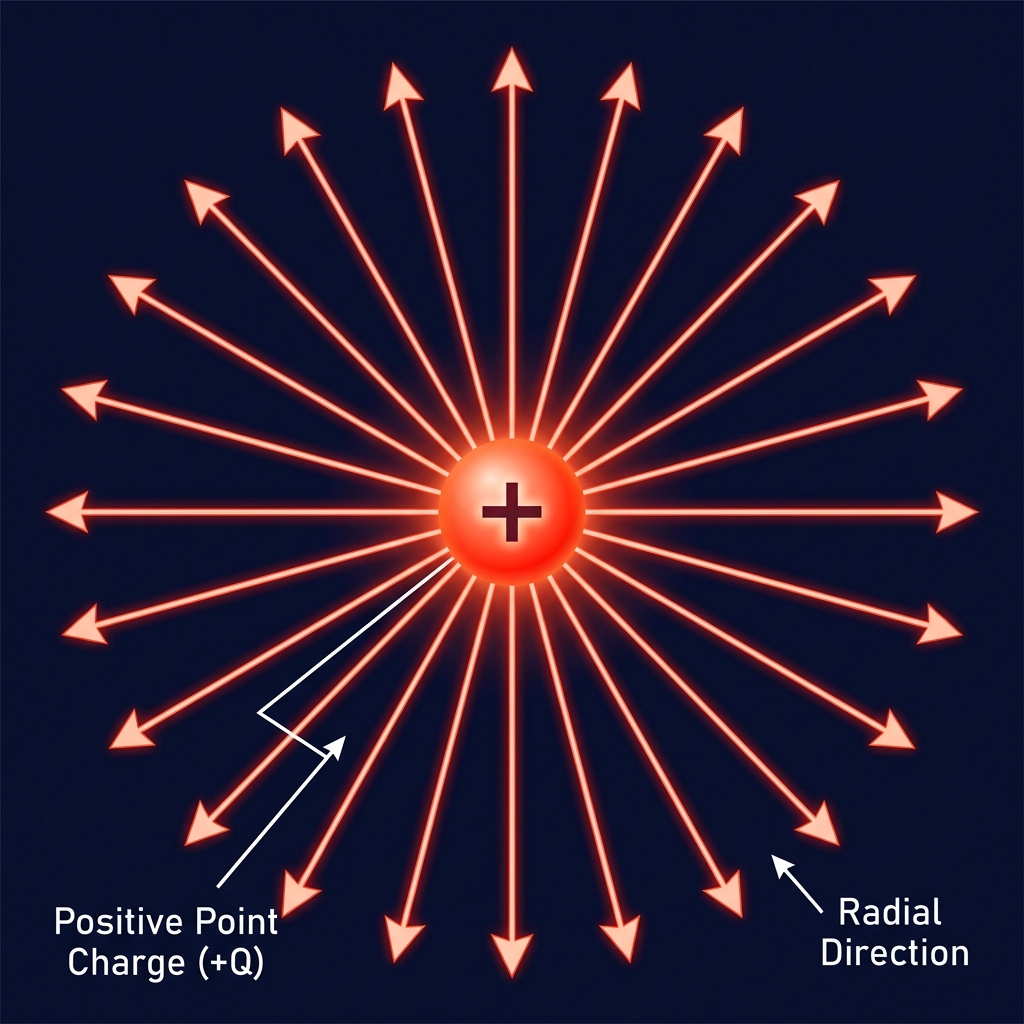
Points away from positive charges
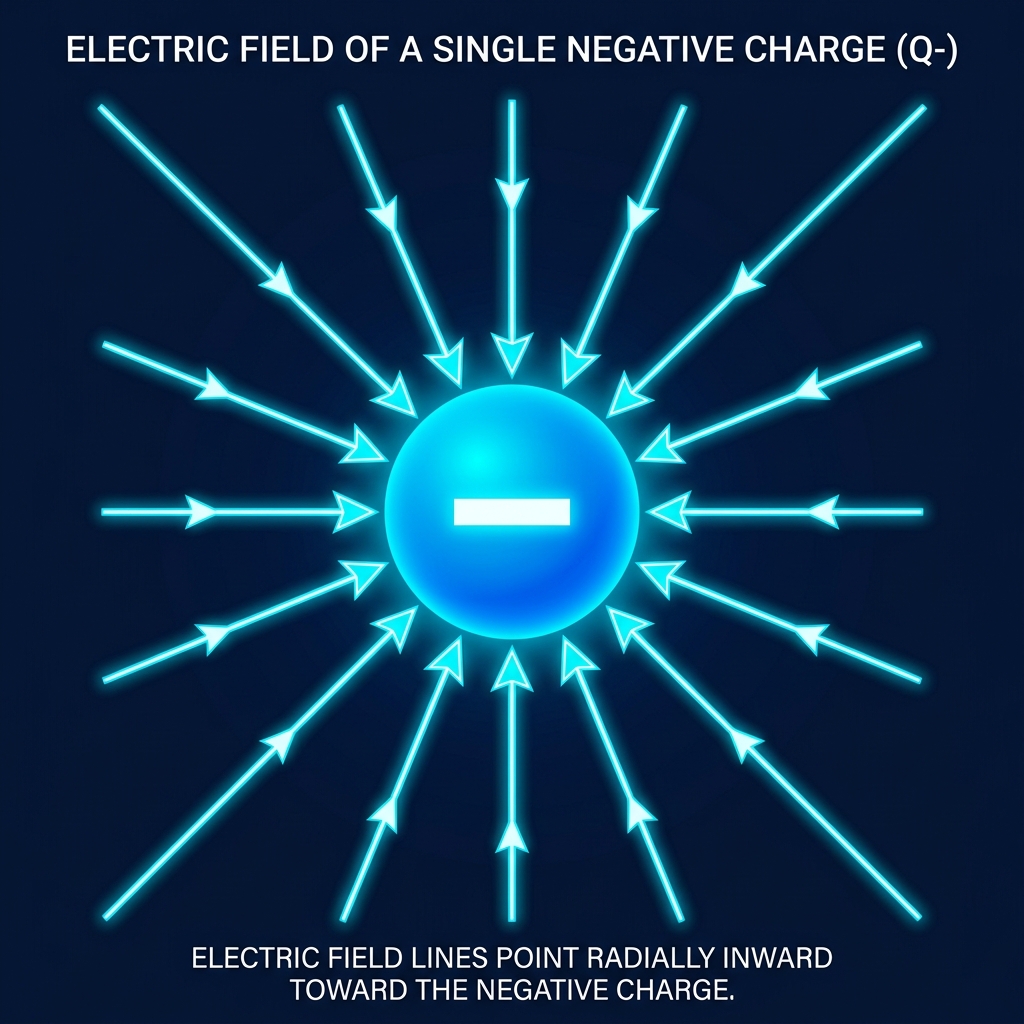
Points toward negative charges
Measured in Newtons per Coulomb (N/C) or Volts per meter (V/m)
Electric Field
Lines
Positive Charge (+)
Negative Charge (−)
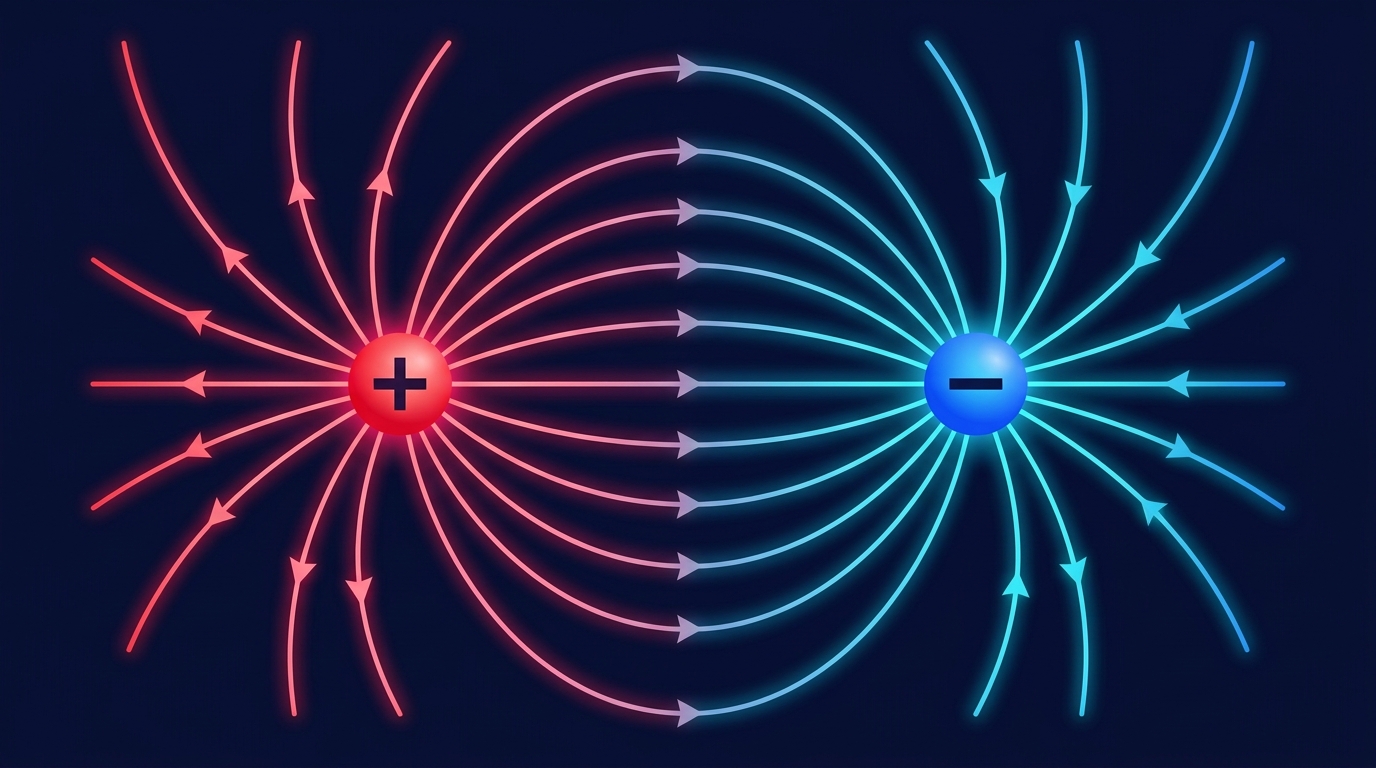
Electric Dipole
Start at positive (+) charges
End at negative (−) charges
Never cross each other
Closer lines = stronger field
Perpendicular to charge surface
The density of field lines shows the strength of the field!
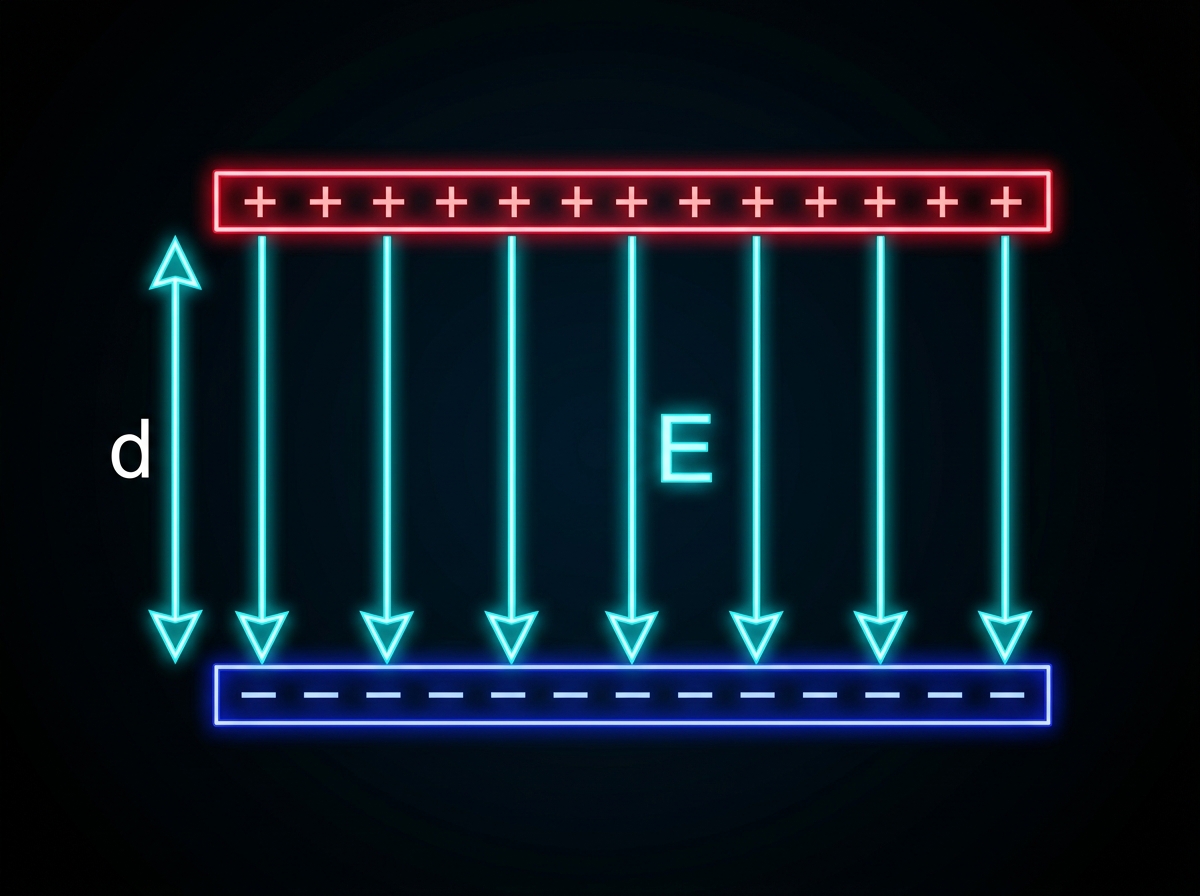
Uniform Electric Field
A uniform electric field has the same magnitude and direction everywhere between the plates.
E = V/d
Field lines are parallel and equally spaced
Created by parallel plate capacitors
Used in cathode ray tubes & particle accelerators
Uniform fields are the simplest case for studying particle motion!
Key Takeaways 🎯
Charged Particles
Electron (−), Proton (+), Alpha (+2e) are the main charged particles we study.
Particle Properties
Each particle has a unique mass, charge, and spin that determines its behavior.
Electric Fields
A vector field where charged particles experience force. E = F/q
Uniform Fields
Parallel plates create a uniform field E = V/d, key for understanding particle motion.
Next: How do these particles MOVE in electric fields?
→ Newton's 2nd Law + F = qE
- physics
- electric-fields
- charged-particles
- electron
- proton
- alpha-particle
- high-school-science
- electromagnetism