




Made byBobr AI

Structure-Based Drug Discovery: SBDD Principles & Methods

Expert guide to Structure-Based Drug Discovery (SBDD), covering molecular docking, virtual screening, X-ray crystallography, and ADMET optimization.

#drug-discovery#medicinal-chemistry#molecular-docking#sbdd#computational-biology#biotechnology#pharmaceuticals
Watch
Pitch

Structure-Based
Drug Discovery

Decoding Molecular Architecture to Design Tomorrow's Medicines

Advanced Course in Medicinal Chemistry & Computational Biology

01 / 30
Academic Presentation | 2026
Made byBobr AI

Table of Contents

01
Introduction to Drug Discovery
02
Fundamentals of Protein Structure
03
Target Identification & Validation
04
Structural Determination Methods (X-ray, NMR, Cryo-EM)
05
Molecular Docking & Virtual Screening
06
Fragment-Based Drug Discovery
07
Lead Optimization & SAR
08
Computational Tools & AI in SBDD
09
Case Studies & Success Stories
10
Challenges & Future Perspectives
02 / 30
Made byBobr AI
01

Section 1: Introduction to Drug Discovery

From Disease Biology to Therapeutic Molecules

03 / 30
Academic Presentation | 2026
Made byBobr AI

What is
Drug Discovery?

The rigorous, multi-disciplinary process of finding new candidate medications, moving from identifying initial disease targets to establishing safe and effective treatments.

Target Identification & Validation
Discovering specific biological mechanisms linked to disease pathology.
Hit to Lead & Lead Optimization
Screening vast compound libraries and chemically refining the best candidates.
Preclinical & Clinical Trials
Testing in laboratory models initially, followed by safely testing in human volunteers.
Regulatory Approval
Detailed review by health authorities to secure marketing authorization.
10,000
Compounds Screened
250
Preclinical Candidates
5
Clinical Trials
1
Approved Drug
04 / 30
Academic Presentation | 2026
Made byBobr AI

Traditional vs. Structure-Based Drug Discovery

Traditional / Phenotypic

  • Trial-and-error screening
  • Blind to molecular mechanisms
  • High attrition rates
  • Slow and expensive

Example: Early aspirin discovery

Structure-Based (SBDD)

  • Rational, target-guided design
  • Uses 3D protein structures
  • Higher hit rates
  • Faster lead optimization

Example: HIV protease inhibitors

SBDD reduces development costs by up to 50% and significantly improves clinical success rates.

05 / 30
Made byBobr AI

HISTORY & MILESTONES OF
STRUCTURE-BASED DRUG DISCOVERY

1970s
First protein X-ray crystal structures solved
1980s
HIV crisis drives SBDD urgency
1994
FDA approves first SBDD drug (Saquinavir)
1996
Indinavir & Ritonavir trigger SBDD revolution
2001
Imatinib (Gleevec) cancer kinase inhibitor
2006
Cryo-EM revolution begins
2012
GPCR structures solved; new drug targets
2020s
AI/ML accelerates SBDD (AlphaFold breakthrough)
06 / 30
Academic Presentation | 2026
Made byBobr AI
02

Section 02

Fundamentals of Protein Structure

The Molecular Targets at the Heart of SBDD

07 / 30
Academic Presentation | 2026
Made byBobr AI

Levels of Protein Structure

PRIMARY

Amino acid sequence; linear polypeptide chain; defined by genetic code

SECONDARY

α-helices and β-sheets; hydrogen bond stabilized; local folding motifs

TERTIARY

3D folded conformation of a single polypeptide; hydrophobic core; binding pockets formed here

QUATERNARY

Assembly of multiple polypeptide subunits; oligomeric complexes; allosteric sites

Key Insight: Binding pockets emerge at the tertiary/quaternary level — these are the targets for SBDD.

08 / 30
Made byBobr AI

Binding Sites
& Pharmacophores

Definition: A specific 3D region of a protein with complementary shape and chemical properties to a ligand

Types of Binding Sites

  • Orthosteric (active) site
  • Allosteric site
  • Cryptic/hidden sites
  • Protein-protein interaction interfaces

Key Properties

Shape complementarity Electrostatics Hydrophobic contacts H-bond donors/acceptors
09 / 30
Advanced Medicinal Chemistry
Made byBobr AI
03

Section 03

Target Identification
& Validation

Finding the Right Biological Lock for Our Chemical Key

10 / 30
Made byBobr AI

Major Drug Target Classes

ENZYMES

Kinases, proteases, phosphatases; inhibit catalytic activity; ~47% of all drug targets

GPCRs

G-protein coupled receptors; ~34% of FDA-approved drugs; 7-transmembrane helices

ION CHANNELS

Voltage/ligand-gated channels; CNS, cardiac targets

NUCLEAR RECEPTORS

Transcription factor regulation; steroid hormones, cancer

PROTEIN-PROTEIN INTERACTIONS

Challenging; large flat surfaces; emerging frontier

NUCLEIC ACIDS

DNA/RNA targeting; antivirals, oncology

Enzymes (~47%)
GPCRs (~34%)
Ion Channels (~9%)
DRUG TARGETS
Nuclear Receptors (~5%)
PPIs (~3%)
Nucleic Acids (~2%)
11 / 30
Made byBobr AI

Target Validation Strategies

1

Genetic Validation

Knockout/knockin models, CRISPR screens, human genetics (GWAS)

2

Biochemical Validation

In vitro binding assays, enzymatic activity, SPR, ITC

3

Cell-Based Validation

Knockdown/overexpression, phenotypic rescue experiments

4

In Vivo Validation

Animal models, disease-relevant endpoints

5

Clinical Biomarker

Target engagement confirmed in patients

Key Validation Criteria

Druggability Disease Linkage Selectivity Potential Structural Data Availability
Druggable
Disease-Relevant
Structurally Characterized
Good Target
Target Validation Overview
12 / 30
Made byBobr AI
04

Section 04

Structural Determination Methods

Visualizing Proteins at Atomic Resolution

13 / 30
Made byBobr AI

X-ray Crystallography

Gold standard for protein structure determination since the 1950s

1
Protein expression & purification
2
Crystal growth (key bottleneck)
3
X-ray diffraction data collection (synchrotron)
4
Phase determination (MR, SAD, MAD)
5
Model building & refinement
6
Deposition to Protein Data Bank (PDB)

Advantages

High resolution (1-3 Å), well-established, large structures possible

Limitations

Requires crystallization, static snapshots, difficult for membrane proteins

14 / 30
Made byBobr AI

Cryo-EM and NMR Spectroscopy

Cryo-EM

  • No crystallization needed
  • Maintains near-native conditions
  • Awarded Nobel Prize in 2017
  • Ideal for large macromolecular complexes
  • Achieves sub-2 Ångström resolution

NMR Spectroscopy

  • Measures solution state dynamics
  • Optimal for small proteins (< 50 kDa)
  • Reveals conformational flexibility
  • Yields detailed chemical shift data
15 / 30
Made byBobr AI
05

Section 05

Molecular Docking & Virtual Screening

Computational Prediction of Ligand-Target Interactions

16 / 30
Academic Presentation | 2026
Made byBobr AI

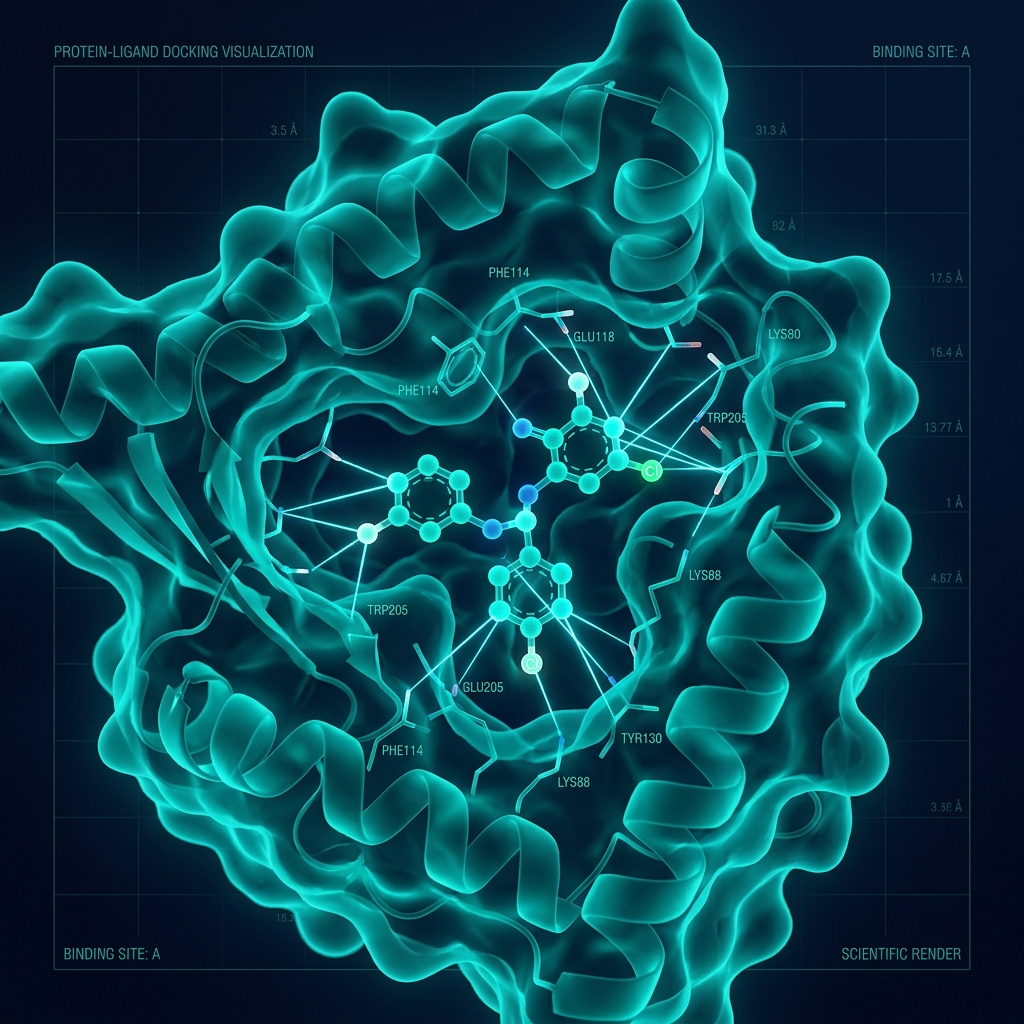
Molecular Docking:

Principles & Scoring Functions

What is docking?

Computational method predicting preferred orientation and binding affinity of a small molecule within a protein binding site

Two Main Components

SEARCH ALGORITHM — explores conformational space (rigid, semi-flexible, fully flexible)
▸ Genetic algorithms, Monte Carlo, systematic search
SCORING FUNCTION — ranks poses by predicted binding affinity
▸ Force-field based, empirical, knowledge-based, ML-based

Key Programs

AutoDock, Glide, GOLD, Vina, rDock

Key Challenges

Protein flexibility, solvation, entropy, scoring accuracy

1
Protein
Structure
2
Define
Grid
3
Place
Poses
4
Score &
Rank
5
Top Poses
Selected
17 / 30
Made byBobr AI

Virtual Screening Workflow

Compound Library
~10M+
Druglikeness Filter
~1M
Pharmacophore Screening
~100K
Molecular Docking
~10K
Re-scoring
~1K
Experimental Validation
5-20 hits
18 / 30
Academic Presentation | 2026
Made byBobr AI
06

Section 06

Fragment-Based Drug Discovery (FBDD)

Building Potent Drugs from Small Molecular Fragments

19 / 30
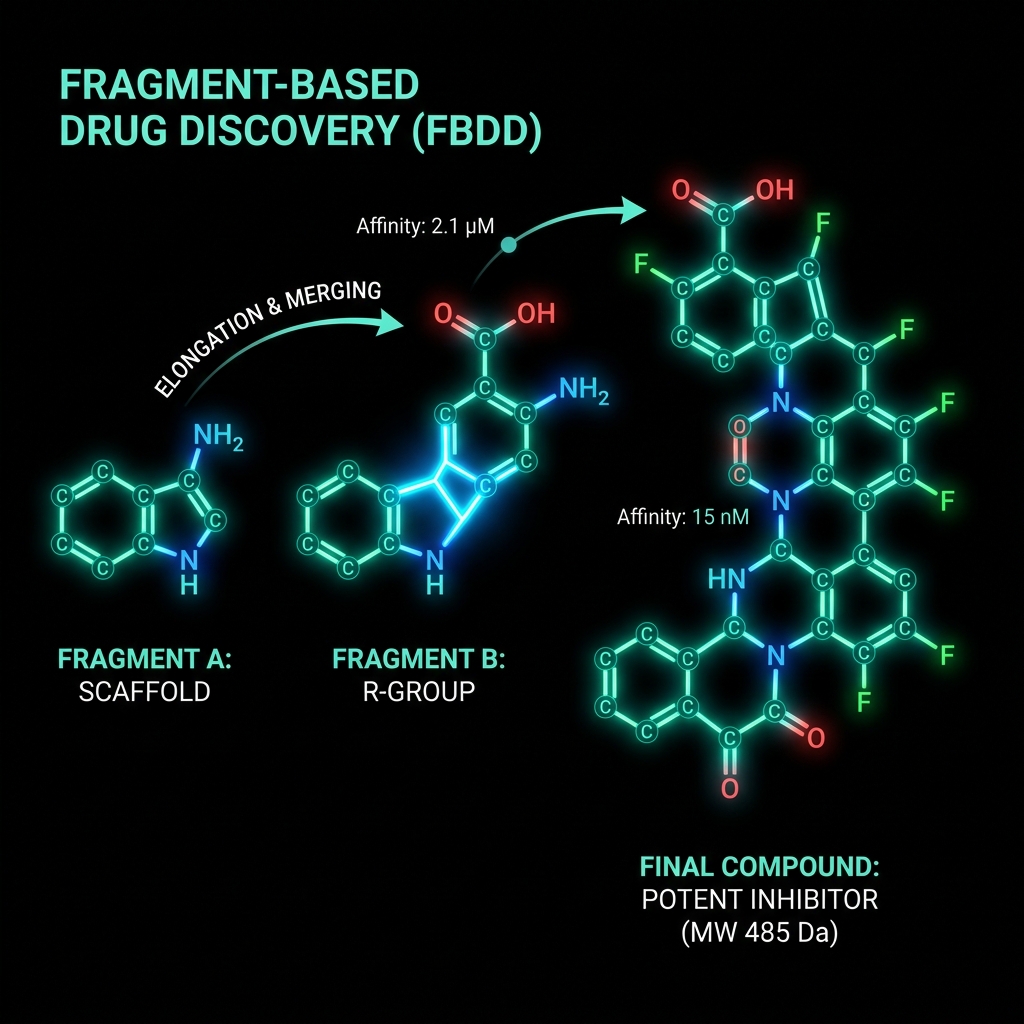
Made byBobr AI

Fragment-Based Drug Discovery (FBDD)

FBDD uses very small molecules (150-300 Da) as starting points, identified by weak but efficient binding, then grown or linked into drug-like leads.

The Rule of Three (Ro3) for Fragments:

MW < 300
logP ≤ 3
H-bond donors ≤ 3
H-bond acceptors ≤ 3

Key Advantages vs HTS:

  • Better chemical space coverage
  • Higher ligand efficiency
  • Fewer compounds to screen (~1,000-10,000 vs millions)

FBDD Workflow

Screen (NMR/SPR/X-ray) Hits Growing / Linking Optimized Lead

Example: Vemurafenib (BRAF inhibitor) originated from fragment PLX4720

20 / 30
Made byBobr AI
07

Lead Optimization &
Structure-Activity Relationships

Fine-Tuning Molecules for Potency, Selectivity & Safety

21 / 30
Made byBobr AI

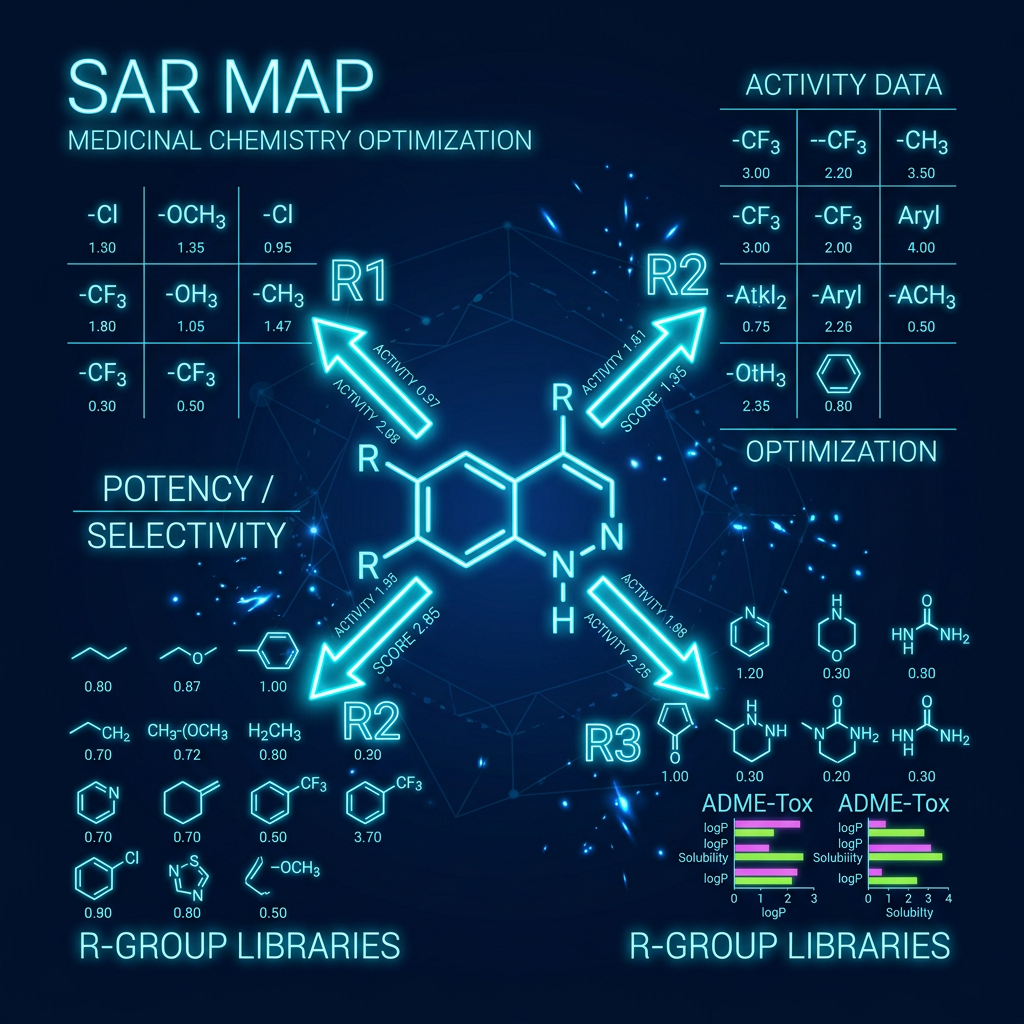
Structure-Activity Relationships (SAR)

Definition: SAR describes how structural modifications to a molecule affect its biological activity at a target.

Bioisosteric replacements — maintain activity while improving ADMET
Scaffold hopping — change core while retaining pharmacophore
Matched molecular pairs (MMP) analysis
Free-Wilson analysis
Activity cliffs — small structural change causes large potency jump

Optimization Goals

Potency (IC50/Ki) Selectivity Metabolic Stability Solubility Permeability Toxicity
22 / 30
Academic Presentation | 2026
Made byBobr AI

ADMET Optimization in SBDD

40%
of all drug candidate failures in clinical trials are directly attributed to poor ADMET properties.
A

Absorption

Entry Mechanisms
  • Membrane Permeability
  • Aqueous Solubility
  • Bioavailability (F)
  • Transporter Effects
D

Distribution

Systemic Transport
  • Plasma Protein Binding
  • Tissue Distribution
  • Blood-Brain Barrier
  • Volume of Distribution
M

Metabolism

Biomodification
  • CYP450 Profiling
  • Metabolic Stability
  • Active Metabolites
  • Hepatic Clearance
E

Excretion

Drug Elimination
  • Renal Clearance
  • Biliary Excretion
  • Half-life (t½)
  • Glomerular Filtration
T

Toxicity

Safety & Profile
  • Hepatotoxicity
  • Cardiotoxicity (hERG)
  • Mutagenicity (Ames)
  • In Vivo Cytotoxicity
23 / 30
Academic Presentation | 2026
Made byBobr AI
Bobr AI

DESIGNER-MADE
PRESENTATION,
GENERATED FROM
YOUR PROMPT

Create your own professional slide deck with real images, data charts, and unique design in under a minute.

Generate For Free

Structure-Based Drug Discovery: SBDD Principles & Methods

Expert guide to Structure-Based Drug Discovery (SBDD), covering molecular docking, virtual screening, X-ray crystallography, and ADMET optimization.

Structure-Based

Drug Discovery

Decoding Molecular Architecture to Design Tomorrow's Medicines

Advanced Course in Medicinal Chemistry & Computational Biology

01 / 30

Academic Presentation | 2026

Table of Contents

Introduction to Drug Discovery

Fundamentals of Protein Structure

Target Identification & Validation

Structural Determination Methods (X-ray, NMR, Cryo-EM)

Molecular Docking & Virtual Screening

Fragment-Based Drug Discovery

Lead Optimization & SAR

Computational Tools & AI in SBDD

Case Studies & Success Stories

Challenges & Future Perspectives

02 / 30

Section 1: Introduction to Drug Discovery

From Disease Biology to Therapeutic Molecules

03 / 30

Academic Presentation | 2026

What is

Drug Discovery?

The rigorous, multi-disciplinary process of finding new candidate medications, moving from identifying initial disease targets to establishing safe and effective treatments.

Target Identification & Validation

Discovering specific biological mechanisms linked to disease pathology.

Hit to Lead & Lead Optimization

Screening vast compound libraries and chemically refining the best candidates.

Preclinical & Clinical Trials

Testing in laboratory models initially, followed by safely testing in human volunteers.

Regulatory Approval

Detailed review by health authorities to secure marketing authorization.

10,000

Compounds Screened

250

Preclinical Candidates

5

Clinical Trials

1

Approved Drug

04 / 30

Academic Presentation | 2026

Traditional

vs.

Structure-Based

Drug Discovery

Traditional / Phenotypic

Trial-and-error screening

Blind to molecular mechanisms

High attrition rates

Slow and expensive

Early aspirin discovery

Structure-Based (SBDD)

Rational, target-guided design

Uses 3D protein structures

Higher hit rates

Faster lead optimization

HIV protease inhibitors

SBDD reduces development costs by up to 50% and significantly improves clinical success rates.

05 / 30

HISTORY & MILESTONES OF

STRUCTURE-BASED DRUG DISCOVERY

1970s

First protein X-ray crystal structures solved

1980s

HIV crisis drives SBDD urgency

1994

FDA approves first SBDD drug (Saquinavir)

1996

Indinavir & Ritonavir trigger SBDD revolution

2001

Imatinib (Gleevec) cancer kinase inhibitor

2006

Cryo-EM revolution begins

2012

GPCR structures solved; new drug targets

2020s

AI/ML accelerates SBDD (AlphaFold breakthrough)

06 / 30

Academic Presentation | 2026

02

Fundamentals of Protein Structure

The Molecular Targets at the Heart of SBDD

07 / 30

Academic Presentation | 2026

Levels of Protein Structure

PRIMARY

Amino acid sequence; linear polypeptide chain; defined by genetic code

SECONDARY

α-helices and β-sheets; hydrogen bond stabilized; local folding motifs

TERTIARY

3D folded conformation of a single polypeptide; hydrophobic core; binding pockets formed here

QUATERNARY

Assembly of multiple polypeptide subunits; oligomeric complexes; allosteric sites

Binding pockets emerge at the tertiary/quaternary level — these are the targets for SBDD.

08 / 30

Binding Sites

& Pharmacophores

A specific 3D region of a protein with complementary shape and chemical properties to a ligand

Orthosteric (active) site

Allosteric site

Cryptic/hidden sites

Protein-protein interaction interfaces

Shape complementarity

Electrostatics

Hydrophobic contacts

H-bond donors/acceptors

09 / 30

Advanced Medicinal Chemistry

03

Target Identification <br/>& Validation

Finding the Right Biological Lock for Our Chemical Key

10 / 30

Major Drug Target Classes

ENZYMES

Kinases, proteases, phosphatases; inhibit catalytic activity; ~47% of all drug targets

GPCRs

G-protein coupled receptors; ~34% of FDA-approved drugs; 7-transmembrane helices

ION CHANNELS

Voltage/ligand-gated channels; CNS, cardiac targets

NUCLEAR RECEPTORS

Transcription factor regulation; steroid hormones, cancer

PROTEIN-PROTEIN INTERACTIONS

Challenging; large flat surfaces; emerging frontier

NUCLEIC ACIDS

DNA/RNA targeting; antivirals, oncology

11 / 30

Target Validation Strategies

Genetic Validation

Knockout/knockin models, CRISPR screens, human genetics (GWAS)

Biochemical Validation

In vitro binding assays, enzymatic activity, SPR, ITC

Cell-Based Validation

Knockdown/overexpression, phenotypic rescue experiments

In Vivo Validation

Animal models, disease-relevant endpoints

Clinical Biomarker

Target engagement confirmed in patients

Key Validation Criteria

Druggability

Disease Linkage

Selectivity Potential

Structural Data Availability

Druggable

Disease-Relevant

Structurally Characterized

Good Target

12 / 30

Target Validation Overview

04

Structural Determination Methods

Visualizing Proteins at Atomic Resolution

13 / 30

X-ray Crystallography

Gold standard for protein structure determination since the 1950s

Protein expression & purification

Crystal growth

(key bottleneck)

X-ray diffraction data collection (synchrotron)

Phase determination (MR, SAD, MAD)

Model building & refinement

Deposition to Protein Data Bank (PDB)

High resolution (1-3 Å), well-established, large structures possible

Requires crystallization, static snapshots, difficult for membrane proteins

14 / 30

Cryo-EM and NMR Spectroscopy

Cryo-EM

No crystallization needed

Maintains near-native conditions

Awarded Nobel Prize in 2017

Ideal for large macromolecular complexes

Achieves sub-2 Ångström resolution

NMR Spectroscopy

Measures solution state dynamics

Optimal for small proteins (< 50 kDa)

Reveals conformational flexibility

Yields detailed chemical shift data

15 / 30

05

Molecular Docking & Virtual Screening

Computational Prediction of Ligand-Target Interactions

16 / 30

Academic Presentation | 2026

What is docking?

Computational method predicting preferred orientation and binding affinity of a small molecule within a protein binding site

Two Main Components

SEARCH ALGORITHM

explores conformational space (rigid, semi-flexible, fully flexible)

Genetic algorithms, Monte Carlo, systematic search

SCORING FUNCTION

ranks poses by predicted binding affinity

Force-field based, empirical, knowledge-based, ML-based

AutoDock, Glide, GOLD, Vina, rDock

Protein flexibility, solvation, entropy, scoring accuracy

17 / 30

Virtual Screening Workflow

Compound Library

~10M+

Druglikeness Filter

~1M

Pharmacophore Screening

~100K

Molecular Docking

~10K

Re-scoring

~1K

Experimental Validation

5-20 hits

18 / 30

Academic Presentation | 2026

Fragment-Based Drug Discovery (FBDD)

Building Potent Drugs from Small Molecular Fragments

19 / 30

Fragment-Based Drug Discovery (FBDD)

FBDD uses very small molecules (150-300 Da) as starting points, identified by weak but efficient binding, then grown or linked into drug-like leads.

Better chemical space coverage

Higher ligand efficiency

Fewer compounds to screen (~1,000-10,000 vs millions)

20 / 30

07

Lead Optimization &

Structure-Activity Relationships

Fine-Tuning Molecules for Potency, Selectivity & Safety

21 / 30

Structure-Activity Relationships (SAR)

SAR describes how structural modifications to a molecule affect its biological activity at a target.

Bioisosteric replacements

maintain activity while improving ADMET

Scaffold hopping

change core while retaining pharmacophore

Matched molecular pairs (MMP) analysis

Free-Wilson analysis

Activity cliffs

small structural change causes large potency jump

22 / 30

Academic Presentation | 2026

40%

of all drug candidate failures in clinical trials are directly attributed to poor ADMET properties.

23 / 30

Academic Presentation | 2026

  • drug-discovery
  • medicinal-chemistry
  • molecular-docking
  • sbdd
  • computational-biology
  • biotechnology
  • pharmaceuticals