

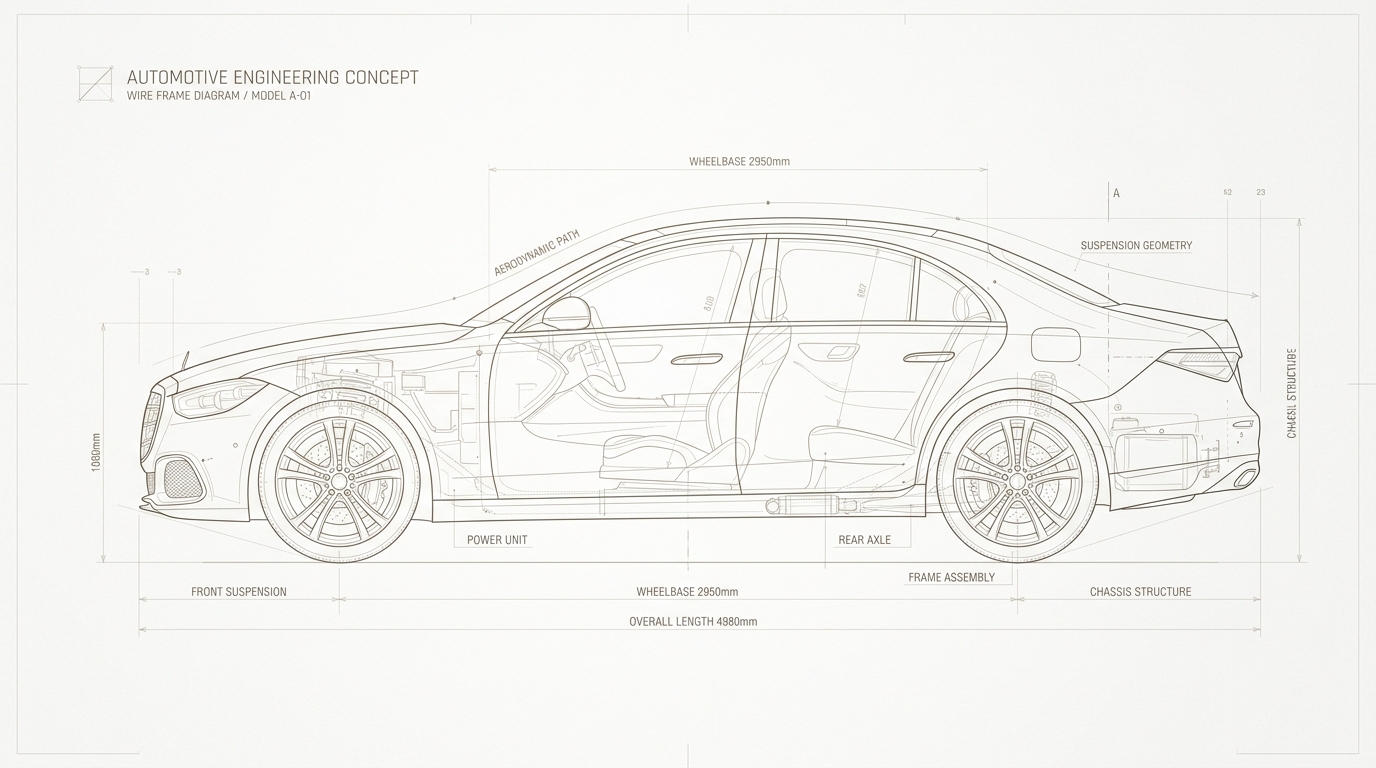
Financial Ratio Analysis of Indian Automotive Companies
A comparative financial study of Maruti Suzuki, Tata Motors, M&M, Hyundai, and Force Motors using liquidity, efficiency, and profitability ratios for FY 2024-25.
Tilak Maharashtra Vidyapeeth
Deemed University | NAAC 'B++' Reaccredited | ISO 21001:2018 Certified
A Comparative Study on Financial Statements of Five Automotive Companies
Through Ratio Analysis
Institute Of Business Studies and Research (IBSAR)
Bachelor of Business Administration (Finance) | 2023–2026
Mr. Shoeb Khan
07123005115
Maruti Suzuki · Tata Motors · Mahindra & Mahindra <br/> Hyundai · Force Motors
Introduction & Purpose of the Study
Introduction
Financial statements record the financial activities of a business and communicate its financial health. Tools like Ratio Analysis simplify and interpret financial data meaningfully. The Indian automobile industry is one of the most capital-intensive sectors — balancing production costs, EV investments, and competitive pricing.
Purpose of the Study
To conduct a systematic financial evaluation of five major players in the Indian automobile industry — Maruti Suzuki, Tata Motors, Mahindra & Mahindra, Force Motors, and Hyundai — through ratio analysis. To translate complex accounting data into standardized metrics for direct performance comparison between companies of varying sizes and business models.
Scope of the Study
Five leading Indian automotive companies
Financial Year 2024–25
12 key financial ratios analyzed
Liquidity, Efficiency, Profitability & Solvency ratios
Based on audited standalone financial statements from MoneyControl
Objectives of the Study
A Comparative Financial Assessment of Five Automotive Companies
Theoretical Framework
Understand the practical application of liquidity, profitability, and solvency ratios in assessing fiscal health of the automobile industry.
Inter-Company Variations
Study liquidity, leverage, and profitability differences to determine how players managed operational costs and capital requirements.
Performance Variance Analysis
Analyze asset utilization rates and shareholder returns among industry participants.
Problem Statement
Evaluate how different financial management strategies impact the stability of major automotive firms amid EV transition pressures.
Capital Efficiency
Determine if companies generate ROCE that sufficiently exceeds cost of capital, indicating value creation.
Sustainable Profit Margins
Assess how effectively companies convert revenue into net profit while absorbing premiumization costs.
Maruti Suzuki | Tata Motors | Mahindra & Mahindra | Hyundai | Force Motors
Data Analysis & Interpretation — A) Liquidity Ratios
1. Current Ratio = Current Assets / Current Liabilities
2. Quick Ratio = (Current Assets – Inventory) / Current Liabilities
Force Motors (1.49), Mahindra & Mahindra (1.49), and Hyundai (1.38) maintain strong liquidity. Maruti Suzuki (0.87) and Tata Motors (0.61) operate lean models relying on high cash flow velocity.
M&M (1.16) and Hyundai (1.08) are liquidity leaders. Maruti (0.68) and Tata Motors (0.48) reflect lean working capital models relying on steady daily sales.
Chapter 6 — Liquidity Analysis
Chapter 6 — Efficiency Analysis (1/2)
Data Analysis & Interpretation — B) Efficiency / Turnover Ratios
1. STR = Cost of Goods Sold / Average Inventory
2. DTR = Net Sales / Trade Receivables
Maruti Suzuki leads with STR of 23.47 (inventory turns every ~15 days). Hyundai (14.87) and Tata Motors (14.35) show balanced performance. Force Motors lowest at 5.07.
Force Motors leads (45.93) — highly efficient receivables collection. M&M has lowest ratio (19.93), indicating longer credit periods extended to customers.
Data Analysis — Creditors Turnover Ratio & Gross Profit Ratio
Chapter 6 — Efficiency (2/2) & Profitability
3. CTR = Net Purchases / Trade Payables
<b>Force Motors (7.60)</b> and <b>Hyundai (7.19)</b> pay creditors most frequently. <b>Tata Motors (3.56)</b> and <b>M&M (3.69)</b> have negotiated longer supplier credit terms — beneficial for working capital management.
C) Profitability Ratios<br/><span style="font-size:22px; color:#666; font-family:'Segoe UI'">1. Gross Profit Ratio = Gross Profit / Net Sales × 100</span>
<b>Tata Motors</b> leads with <b>31.01%</b> GPR due to premium SUV & EV product mix. Maruti Suzuki, Force Motors, and Hyundai cluster around 25%, reflecting competitive mass-market landscape.
Data Analysis — C) Profitability Ratios: Net Profit Ratio & ROCE
Chapter 6 — Profitability Analysis (2/3)
2. Net Profit Ratio = Net Profit / Net Sales × 100
3. Return on Capital Employed = EBIT / Capital Employed
<strong style='color: #7B1113; font-size: 22px;'>M&M leads</strong> with a 10.39% net margin indicating superior cost management. Force Motors is close at 9.99%. Despite the highest absolute profit, Maruti's margin is just 9.62%, while Tata Motors is lowest at 7.92% due to significant finance costs.
<strong style='color: #7B1113; font-size: 22px;'>Hyundai leads</strong> with an exceptional ROCE of 41.15% — demonstrating highly efficient capital deployment. Force Motors is also impressive at 36.33%. Maruti ranks lowest at 19.59% due to its enormously large non-current investment base (~₹68,946 Cr).
<tr style="border-bottom: 1px solid #f0f0f0;"> <td style="padding: 14px 12px; color: #444; font-weight: 500;">Maruti Suzuki</td> <td style="text-align: right; padding: 14px 12px; color: #555; font-weight: bold;">9.62%</td> </tr> <tr style="border-bottom: 1px solid #f0f0f0; background-color: #F8F4F4;"> <td style="padding: 14px 12px; color: #7B1113; font-weight: 700;">Mahindra & Mahindra</td> <td style="text-align: right; padding: 14px 12px; color: #7B1113; font-weight: 700; font-size: 20px;">10.39%</td> </tr> <tr style="border-bottom: 1px solid #f0f0f0;"> <td style="padding: 14px 12px; color: #444; font-weight: 500;">Tata Motors</td> <td style="text-align: right; padding: 14px 12px; color: #555; font-weight: bold;">7.92%</td> </tr> <tr style="border-bottom: 1px solid #f0f0f0;"> <td style="padding: 14px 12px; color: #444; font-weight: 500;">Hyundai</td> <td style="text-align: right; padding: 14px 12px; color: #555; font-weight: bold;">8.27%</td> </tr> <tr style="border-bottom: 1px solid #f0f0f0;"> <td style="padding: 14px 12px; color: #444; font-weight: 500;">Force Motors</td> <td style="text-align: right; padding: 14px 12px; color: #555; font-weight: bold;">9.99%</td> </tr>
<tr style="border-bottom: 1px solid #f0f0f0;"> <td style="padding: 14px 12px; color: #444; font-weight: 500;">Maruti Suzuki</td> <td style="text-align: right; padding: 14px 12px; color: #555; font-weight: bold;">19.59%</td> </tr> <tr style="border-bottom: 1px solid #f0f0f0;"> <td style="padding: 14px 12px; color: #444; font-weight: 500;">Mahindra & Mahindra</td> <td style="text-align: right; padding: 14px 12px; color: #555; font-weight: bold;">23.53%</td> </tr> <tr style="border-bottom: 1px solid #f0f0f0;"> <td style="padding: 14px 12px; color: #444; font-weight: 500;">Tata Motors</td> <td style="text-align: right; padding: 14px 12px; color: #555; font-weight: bold;">20.67%</td> </tr> <tr style="border-bottom: 1px solid #f0f0f0; background-color: #F8F4F4;"> <td style="padding: 14px 12px; color: #7B1113; font-weight: 700;">Hyundai</td> <td style="text-align: right; padding: 14px 12px; color: #7B1113; font-weight: 700; font-size: 20px;">41.15%</td> </tr> <tr style="border-bottom: 1px solid #f0f0f0; background-color: #F8F4F4;"> <td style="padding: 14px 12px; color: #7B1113; font-weight: 700;">Force Motors</td> <td style="text-align: right; padding: 14px 12px; color: #7B1113; font-weight: 700; font-size: 20px;">36.33%</td> </tr>
<div style="position: absolute; top: 0; bottom: 0; width: 100%;"> <div style="position: absolute; left: 0; top: 10px; bottom: 30px; width: 40px; display: flex; flex-direction: column; justify-content: space-between; align-items: flex-end; font-size: 14px; color: #888; font-weight: 600;"> <span style="transform: translateY(-50%);">12%</span><span style="transform: translateY(-50%);">9%</span><span style="transform: translateY(-50%);">6%</span><span style="transform: translateY(-50%);">3%</span><span style="transform: translateY(50%);">0</span> </div> <div style="position: absolute; left: 55px; top: 10px; bottom: 30px; right: 15px; border-left: 2px solid #aaa; border-bottom: 2px solid #aaa;"> <div style="position: absolute; left: 0; right: 0; bottom: 25%; border-top: 1px dashed #e0e0e0;"></div> <div style="position: absolute; left: 0; right: 0; bottom: 50%; border-top: 1px dashed #e0e0e0;"></div> <div style="position: absolute; left: 0; right: 0; bottom: 75%; border-top: 1px dashed #e0e0e0;"></div> <div style="position: absolute; left: 0; right: 0; top: 0; border-top: 1px dashed #e0e0e0;"></div> <div style="position: absolute; left: 0; right: 0; bottom: 0; height: 100%; display: flex; justify-content: space-around; align-items: flex-end; padding: 0 10px;"> <div style="display: flex; flex-direction: column; align-items: center; width: 45px; position: relative; height: 80.17%;"> <div style="position: absolute; top: -30px; font-size: 15px; font-weight: bold; color: #555;">9.62</div> <div style="width: 100%; height: 100%; background-color: #D4AF37; border-radius: 4px 4px 0 0;"></div> <div style="position: absolute; bottom: -30px; font-size: 14px; color: #555; white-space: nowrap; font-weight: 600;">MSIL</div> </div> <div style="display: flex; flex-direction: column; align-items: center; width: 45px; position: relative; height: 86.58%;"> <div style="position: absolute; top: -30px; font-size: 15px; font-weight: bold; color: #7B1113;">10.39</div> <div style="width: 100%; height: 100%; background-color: #7B1113; border-radius: 4px 4px 0 0; box-shadow: 0 0 12px rgba(123, 17, 19, 0.4);"></div> <div style="position: absolute; bottom: -30px; font-size: 14px; font-weight: bold; color: #333; white-space: nowrap;">M&M</div> </div> <div style="display: flex; flex-direction: column; align-items: center; width: 45px; position: relative; height: 66.0%;"> <div style="position: absolute; top: -30px; font-size: 15px; font-weight: bold; color: #555;">7.92</div> <div style="width: 100%; height: 100%; background-color: #D4AF37; border-radius: 4px 4px 0 0;"></div> <div style="position: absolute; bottom: -30px; font-size: 14px; color: #555; white-space: nowrap; font-weight: 600;">TML</div> </div> <div style="display: flex; flex-direction: column; align-items: center; width: 45px; position: relative; height: 68.92%;"> <div style="position: absolute; top: -30px; font-size: 15px; font-weight: bold; color: #555;">8.27</div> <div style="width: 100%; height: 100%; background-color: #D4AF37; border-radius: 4px 4px 0 0;"></div> <div style="position: absolute; bottom: -30px; font-size: 14px; color: #555; white-space: nowrap; font-weight: 600;">HMIL</div> </div> <div style="display: flex; flex-direction: column; align-items: center; width: 45px; position: relative; height: 83.25%;"> <div style="position: absolute; top: -30px; font-size: 15px; font-weight: bold; color: #555;">9.99</div> <div style="width: 100%; height: 100%; background-color: #D4AF37; border-radius: 4px 4px 0 0;"></div> <div style="position: absolute; bottom: -30px; font-size: 14px; color: #555; white-space: nowrap; font-weight: 600;">FML</div> </div> </div> </div> </div>
<div style="position: absolute; top: 0; bottom: 0; width: 100%;"> <div style="position: absolute; left: 0; top: 10px; bottom: 30px; width: 40px; display: flex; flex-direction: column; justify-content: space-between; align-items: flex-end; font-size: 14px; color: #888; font-weight: 600;"> <span style="transform: translateY(-50%);">48%</span><span style="transform: translateY(-50%);">36%</span><span style="transform: translateY(-50%);">24%</span><span style="transform: translateY(-50%);">12%</span><span style="transform: translateY(50%);">0</span> </div> <div style="position: absolute; left: 55px; top: 10px; bottom: 30px; right: 15px; border-left: 2px solid #aaa; border-bottom: 2px solid #aaa;"> <div style="position: absolute; left: 0; right: 0; bottom: 25%; border-top: 1px dashed #e0e0e0;"></div> <div style="position: absolute; left: 0; right: 0; bottom: 50%; border-top: 1px dashed #e0e0e0;"></div> <div style="position: absolute; left: 0; right: 0; bottom: 75%; border-top: 1px dashed #e0e0e0;"></div> <div style="position: absolute; left: 0; right: 0; top: 0; border-top: 1px dashed #e0e0e0;"></div> <div style="position: absolute; left: 0; right: 0; bottom: 0; height: 100%; display: flex; justify-content: space-around; align-items: flex-end; padding: 0 10px;"> <div style="display: flex; flex-direction: column; align-items: center; width: 45px; position: relative; height: 40.81%;"> <div style="position: absolute; top: -30px; font-size: 15px; font-weight: bold; color: #555;">19.59</div> <div style="width: 100%; height: 100%; background-color: #D4AF37; border-radius: 4px 4px 0 0;"></div> <div style="position: absolute; bottom: -30px; font-size: 14px; color: #555; white-space: nowrap; font-weight: 600;">MSIL</div> </div> <div style="display: flex; flex-direction: column; align-items: center; width: 45px; position: relative; height: 49.02%;"> <div style="position: absolute; top: -30px; font-size: 15px; font-weight: bold; color: #555;">23.53</div> <div style="width: 100%; height: 100%; background-color: #D4AF37; border-radius: 4px 4px 0 0;"></div> <div style="position: absolute; bottom: -30px; font-size: 14px; color: #555; white-space: nowrap; font-weight: 600;">M&M</div> </div> <div style="display: flex; flex-direction: column; align-items: center; width: 45px; position: relative; height: 43.06%;"> <div style="position: absolute; top: -30px; font-size: 15px; font-weight: bold; color: #555;">20.67</div> <div style="width: 100%; height: 100%; background-color: #D4AF37; border-radius: 4px 4px 0 0;"></div> <div style="position: absolute; bottom: -30px; font-size: 14px; color: #555; white-space: nowrap; font-weight: 600;">TML</div> </div> <div style="display: flex; flex-direction: column; align-items: center; width: 45px; position: relative; height: 85.73%;"> <div style="position: absolute; top: -30px; font-size: 15px; font-weight: bold; color: #7B1113;">41.15</div> <div style="width: 100%; height: 100%; background-color: #7B1113; border-radius: 4px 4px 0 0; box-shadow: 0 0 12px rgba(123, 17, 19, 0.4);"></div> <div style="position: absolute; bottom: -30px; font-size: 14px; font-weight: bold; color: #333; white-space: nowrap;">HMIL</div> </div> <div style="display: flex; flex-direction: column; align-items: center; width: 45px; position: relative; height: 75.69%;"> <div style="position: absolute; top: -30px; font-size: 15px; font-weight: bold; color: #7B1113;">36.33</div> <div style="width: 100%; height: 100%; background-color: #7B1113; border-radius: 4px 4px 0 0; box-shadow: 0 0 12px rgba(123, 17, 19, 0.4);"></div> <div style="position: absolute; bottom: -30px; font-size: 14px; font-weight: bold; color: #333; white-space: nowrap;">FML</div> </div> </div> </div> </div>
Chapter 6 — Profitability Analysis (3/3)
Data Analysis — C) Profitability Ratios: Operating Expenses Ratio
4.
Operating Expenses
Net Sales
Company
Net Sales
Operating Expenses
Ratio
Maruti Suzuki
1,45,115.20
1,34,114.90
92.42%
92.42
Mahindra & Mahindra
1,14,102.89
99,361.12
87.08%
87.08
Tata Motors
68,869.00
61,408.00
89.17%
89.17
Hyundai
66,423.23
58,905.79
88.68%
88.68
Force Motors
8,006.92
6,979.01
87.16%
87.16
Lower ratio = Better operational efficiency
M&M (87.08%) and Force Motors (87.16%) retain ~13% for profit/depreciation.
Hyundai (88.68%) and Tata (89.17%) show similar cost structures.
Maruti Suzuki highest at 92.42% — high-volume model consuming most revenue in materials and stock-in-trade.
Chapter 6 — Solvency Analysis (1/2)
Data Analysis — D) Solvency Ratios: Debt-to-Equity & EPS
1. Debt-to-Equity Ratio = Total Liabilities / Shareholders' Equity
<strong>Maruti Suzuki</strong> most financially independent (0.34) — nearly ₹3 equity per ₹1 liability. <strong>Tata Motors</strong> highest leverage at 0.96 — nearly equal liabilities and equity. All companies below 1.0, maintaining manageable debt levels.
2. Earnings Per Share (EPS) — from Profit & Loss Statement
<strong>Force Motors</strong> highest EPS (₹607.13) despite smaller absolute profit — due to fewer shares outstanding. <strong>Tata Motors</strong> lowest (₹15.44) consistent with its profit level. High EPS does not always mean highest absolute profit.
Chapter 6 — Solvency Analysis (2/2)
Data Analysis — D) Solvency: Dividend Payout Ratio
3. Dividend Payout Ratio = <span style="color: #D4AF37; font-weight: normal;">Dividend Paid / Net Income × 100</span>
Tata Motors returns highest portion (42.37%) to shareholders. Maruti and M&M maintain moderate payouts (28.16% and 22.13%). Force Motors retains most profit (3.29% payout) for growth. Hyundai records 0% in this period despite 210% declared rate — source data discrepancy noted.
Key Findings Summary
<strong>Liquidity Leaders:</strong><br/>M&M, Hyundai, Force Motors (CR > 1.0)
<strong>Highest ROCE:</strong><br/>Hyundai 41.15%
<strong>Best Net Margin:</strong><br/>M&M 10.39%
<strong>Most Conservative Debt:</strong><br/>Maruti Suzuki D/E 0.34
Chapter 6 — Full Ratio Summary
Comparative Ratio Analysis — Complete Summary (FY 2024–25)
Source: MoneyControl / Standalone Financial Statements FY 2024–25
Recommendations, Conclusions & Suggestions
Chapters 7, 8, 9
Conclusions
Recommendations
Suggestions
No single optimal financial structure — lean vs. conservative liquidity both viable.
High-volume/high-cost model (Maruti) vs. premiumization strategy (Tata Motors 31% GPR).
Hyundai benchmark for capital efficiency: ROCE 41.15% with lean capital structure.
Inventory cycle is a bottleneck for niche players (Force Motors STR: 5.07).
Most manufacturers maintain D/E < 1.0 — critical for EV transition readiness.
Tata Motors & Maruti: Strengthen Quick Ratios (0.48 & 0.68) for EV-transition risk buffer.
Maruti Suzuki: Reduce Operating Expense Ratio from 92.42% through manufacturing efficiencies.
Force Motors: Implement just-in-time manufacturing to improve slow STR of 5.07.
Tata Motors: Balance high dividend payout (42.37%) with debt reduction (D/E: 0.96).
M&M: Tighten credit policies (DTR: 19.93) to improve immediate cash inflows.
EV-ready firms (Tata, Hyundai) should maintain liquidity buffers for high R&D cycles.
Force Motors to explore market expansion to improve inventory velocity.
All firms should track ROCE vs. cost of capital annually for value creation metrics.
Hybrid vehicles recommended as bridge strategy during infrastructure development period.
Appendix & Webliography
Chapter 10 — Appendix
Financial Data Sources — Standalone Financial Statements FY 2024–25
Balance Sheets and Profit & Loss Accounts sourced from MoneyControl (Dion Global Solutions Limited)
Maruti Suzuki India Limited
Mahindra & Mahindra
Tata Motors Passenger Vehicles
Hyundai Motor India
Force Motors Limited
Mar 25
Chapter 11 — Webliography
Times of India Auto — Maruti Suzuki Baleno Facelift
https://timesofindia.indiatimes.com/...
Angel One — Maruti Suzuki FY26 Results
https://www.angelone.in/...
Tata Motors News & Events
https://cars.tatamotors.com/...
Mahindra Newsroom — Auto Sales March 2026
https://www.mahindra.com/...
AutoCar India — Hyundai Venue Knight
https://www.autocarindia.com/...
Markets Mojo — Force Motors
https://www.marketsmojo.com/...
JM Financial Services
https://www.jmfinancialservices.in/...
Live Mint — Govt & Auto Industry
https://www.livemint.com/...
Hindustan Times Auto — Gadkari EV Policy
https://auto.hindustantimes.com/...
Business Standard Report
https://bsmedia.business-standard.com/...
Tilak Maharashtra Vidyapeeth
IBSAR
Mr. Shoeb Khan
07123005115
- automotive-industry
- ratio-analysis
- financial-statements
- maruti-suzuki
- tata-motors
- mahindra
- hyundai
- profitability