




Digital Nostalgia: Kazakhstan vs. Western Internet Memories
Explore a linguistic comparison of early internet culture, from Western MySpace 'cringe' to the collective 'computer club' era in Kazakhstan.
Digital Nostalgia
Language of Memories: Kazakhstan vs. The English-speaking World
A Comparative Liguistic Analysis
Research Purpose & Data Sources
<b>Purpose:</b> To investigate how distinct cultures recall and linguistically frame their early internet experiences.
<b>English Data:</b> Reddit (r/nostalgia), Twitter threads on 'Web 1.0', memes about dial-up internet and MySpace.
<b>Kazakh/Russian Data:</b> Instagram memoir pages, VKontakte archives, forums discussing 'Golden Age of Runet'.
<b>Key Focus:</b> Analysis of emotional keywords, slang, and descriptions of hardware limitations.
English-Speaking Memories
Digital memory in the West often centers on individual experimentation and the awkward phases of early social media.<br><br><b>Key Themes:</b><br>- The 'Cringe' factor (regret over old posts).<br>- Customization (HTML on MySpace).<br>- The transition from anonymity to real-identity (Facebook).
"Don't pick up the phone, I'm downloading a song! It's been at 98% for two hours."
Common motif in Western Millennials' nostalgia
Kazakhstani Context: The 'Computer Club' Era
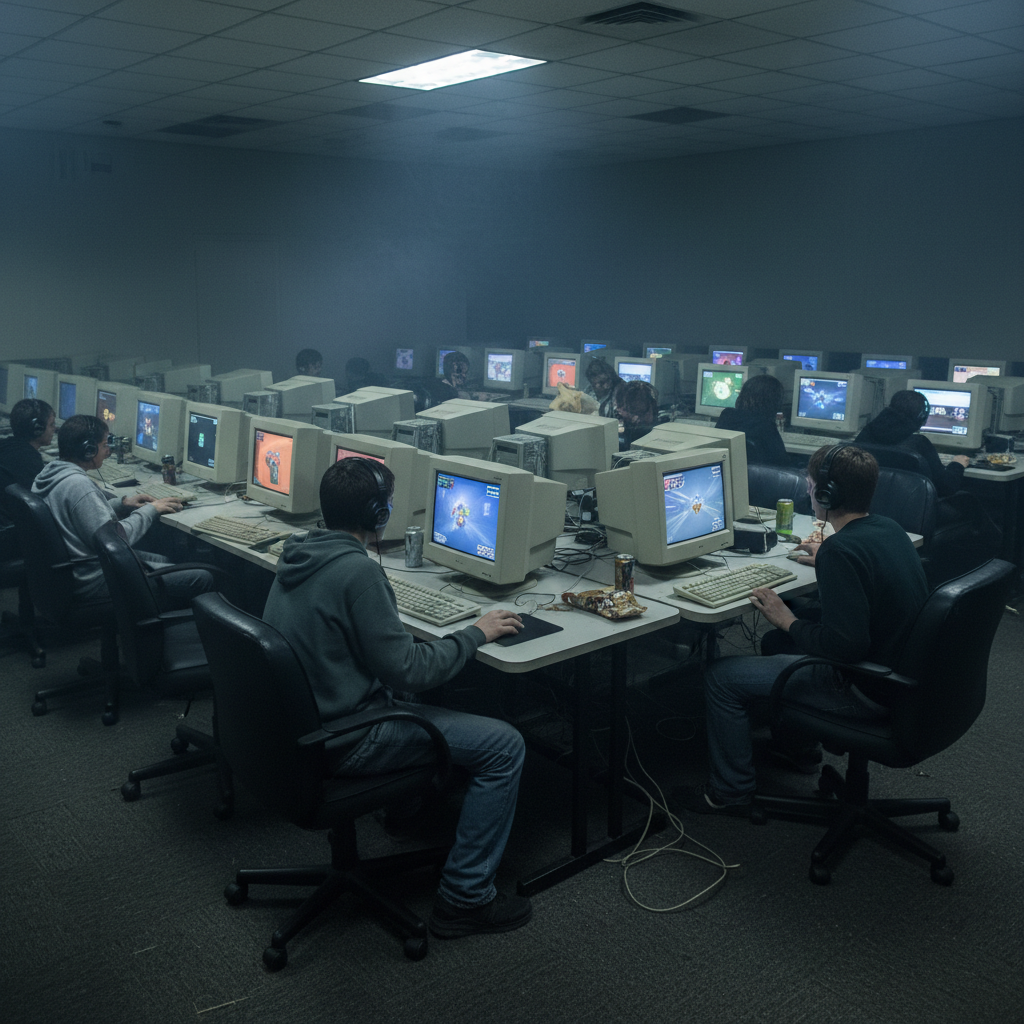
In Kazakhstan, early digital memories are less 'private bedroom' and more 'collective public space'.<br><br><b>Key Themes:</b><br>- <b>Kompyuternye Kluby:</b> Places of socialization, not just gaming.<br>- <b>Resource Scarcity:</b> Sharing limited internet time ('traffic').<br>- <b>Agent Mail.ru:</b> The primary connector before WhatsApp.
"Admin, extend PC number 5 for 30 minutes! Waiting for a free spot in Counter-Strike."
Collective memory of the Kazakhstani 'Kompyuternyi Klub' generation
Cultural Comparison
English-Speaking World
• <b>Focus:</b> Personal identity & self-expression.<br>• <b>Emotion:</b> Embarrassment ('cringe') mixed with fondness.<br>• <b>Access:</b> Home-based, solitary, 'bedroom culture'.<br>• <b>Key artifacts:</b> AOL, MySpace, iPods.
Kazakhstan / Post-Soviet
• <b>Focus:</b> Collective experience & overcoming limits.<br>• <b>Emotion:</b> Warmth, solidarity, 'simpler times'.<br>• <b>Access:</b> Public spaces, internet cafes, shared pirated discs.<br>• <b>Key artifacts:</b> Mail.ru Agent, CS 1.6, Bluetooth transfers.
The Language of Nostalgia
<b>Linguistic Nuances:</b><br><br>• <b>Technical Slang:</b> Kazakh memories use Russified technical slang (e.g., 'Aska' for ICQ, 'Comp' for computer) that signals in-group belonging.<br><br>• <b>Irony vs. Sincerity:</b> English linguistic patterns in nostalgia often use self-deprecating irony (making fun of one's past self), whereas Kazakh narratives often use 'heroic' language about obtaining access to technology.
Reflection & Findings
<b>The Digital Divide:</b> Early memories in Kazakhstan highlighted the digital divide (haves vs. have-nots), making access itself a core memory.
<b>Rapid Acceleration:</b> The Kazakh digital timeline was compressed—jumping from no internet to mobile internet very quickly compared to the West.
<b>Universal Sentiment:</b> Despite context differences, both cultures share a longing for a 'slower', less algorithmic internet where connection felt more intentional.
Thank You
Questions & Discussion
- digital-nostalgia
- internet-history
- kazakhstan-culture
- linguistics
- web-history
- early-internet
- social-media-evolution